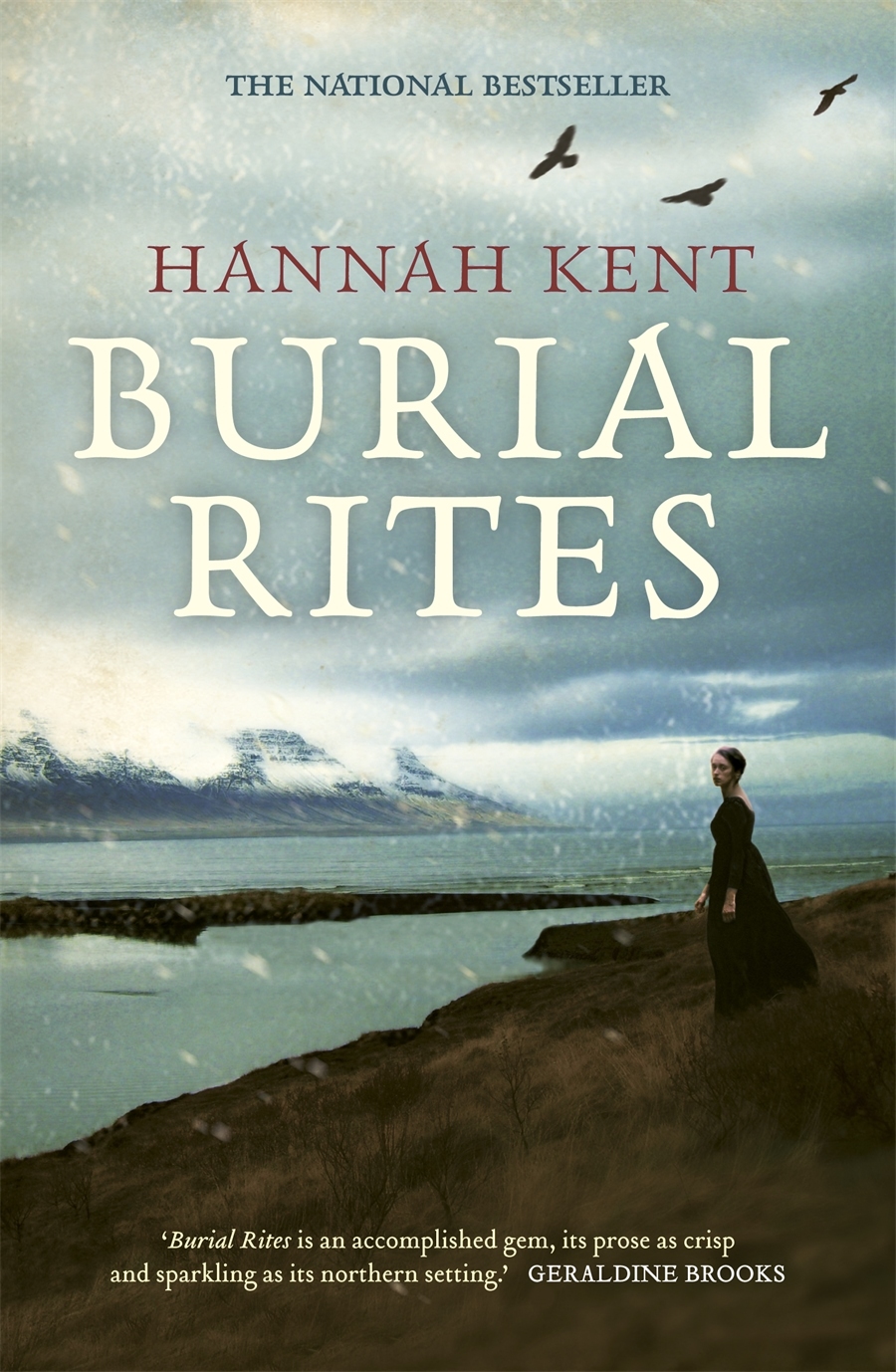
I’ve recently reviewed a couple of books which have won unpublished manuscript awards: Hannah Kent won the inaugural Writing Australia Unpublished Manuscript Award in 2011 for Burial rites (my review), and Margaret Merrilees won the Unpublished Manuscript Award at the Adelaide Writer’s Week in 2012 for The first week (my review).
Now, I’ve discussed awards a few times on this blog, and we’ve had some very interesting discussion in the comments about the value of awards. I’m not going to reiterate all that now because, being the original fence-sitter (!), I can see both sides of the argument. Awards in something so subjective as the arts are inherently problematic I think. I get that! However, I think a special argument can be made for unpublished manuscript awards. It’s hard, as we know, for writers to get published, particularly first-time writers. These awards – particularly those limited to (potential) debut authors – must make a big difference. In fact, in an interview last year, Hannah Kent said “these sorts of awards are so important. They help you get that foot in the door”.
Over the years, I’ve come across many of these awards – at least Australian ones – and they vary a great deal in terms of eligibility and what the award provides. I thought it would be interesting to list some of them here:
- The Australian/Vogel Literary Award: Established in 1979 (first award 1980) in a collaboration between The Australian newspaper, the company which makes Vogel bread, and the publisher Allen & Unwin. Awarded to an unpublished manuscript by writers under the age of 35. Offers $20,000 and publication by Allen & Unwin.
- CAL Scribe Fiction Prize: Established in 2009 by small publisher Scribe with the Copyright Agency Limited’s Cultural Fund. Awarded to an unpublished manuscript by an Australian writer aged 35 and over, regardless of publication history. It’s a Late Bloomer award! Offers $15,000 and a book contract. (My Internet search hasn’t found a winner for this award in 2013, so it may not still exist.)
- Finch Memoir Prize: Established by Finch publishers, and sponsored by Copyright Agency Limited’s Cultural Fund. Awarded to an unpublished life story or memoir and open to previously published and unpublished writers as well as to agented writers. Offers $10,000 and publication.
- Queensland Literary Awards David Unaipon Award of Unpublished Indigenous Writer: Initially established in 1989, and then brought under the Queensland Premier’s Literary Awards in 1999 and, since their cancellation, brought under the independently run Queensland Literary Awards. Open to all unpublished Aboriginal and/or Torres Strait Island writers. Offers $5,000 and guaranteed publication by the University of Queensland Press. The three runners-up are offered mentorships.
- Queensland Literary Awards Emerging Queensland Author-Manuscript Award: Initially established under the Queensland Premier’s Literary Awards in 1999 and, since their cancellation, brought under the independently run Queensland Literary Awards. Open to all unpublished Queensland (resident at the time of the award for at least 3 years) authors. The prize is the same as that for the David Unaipon Award.
- Victorian Premier’s Literary Award for an Unpublished Manuscript: Established by the State Library of Victoria in 2003. Open to any author from the state of Victoria who has not had a work of fiction published.
- Writing Australia Unpublished Manuscript Award: Established in 2011. Award to adult fiction, and is not limited by genre, geographic location or age of author. Offers $10,000 cash and a mentorship worth $2,000 with a mentor of the winner’s choice. Kent chose novelist Geraldine Brooks, who, as I’m sure you know, has written several historical fiction novels.
Hannah Kent’s comment that these awards are important is borne out, rather, by the ongoing success of many winners. The Australian/Vogel Literary award claims, for example, to have launched the careers of Tim Winton, Kate Grenville, Brian Castro, Mandy Sayer and Andrew McGahan. Recent awards have gone to books that quickly became high-profile, namely Hannah Kent’s Burial rites and Graeme Simsion’s The Rosie project (which won the Victorian Premier’s Literary Award for Unpublished Manuscript) (my review). The inaugural winner of the Victorian award was Carrie Tiffany with her gorgeous book, Everyman’s rules for scientific living. (Coincidentally, she was the inaugural winner, last year, of the Stella Award, with her second novel, Mateship with birds.)
These sorts of awards vary, not only in terms of what they offer, but regarding who they aim to help. Many, though not all, are limited – to debut authors, indigenous authors, young authors, or authors from a particular state. Regardless of how they are framed though, I understand that, in many cases, they can and do result in publication not only for the winner but for some of the other well-judged entrants. And that, I think, is the best argument there is for the existence of these awards, don’t you?
- T. A. G. Hungerford Award: Established in 1998 by Fremantle Press. Awarded biennially to previously unpublished writers from Western Australia. Offers $12,000 cash and a publishing contract with Fremantle Press.


 Whispering Gums