Monday musings on Australian literature: Explorers’ journals

In last week’s Monday Musings post I quoted from some explorers’ journals. There’s something wonderful about reading early impressions of a place – which in the case of Australia means the impressions of Anglo-European explorers, by sea in the late 17th and 18th centuries, and by sea and land in the nineteenth centuries. The impressions of our indigenous inhabitants who have been here 40,000 or more years, depending on which region we are talking about and which scientist you listen to, are not written, but passed on orally and in rock art. I won’t be discussing them in this post, but of course theirs is a significant part of our historical record.

I’ve mentioned Project Gutenberg Australia before. Just to recap, it’s a sister (why do we say sister not brother? is sibling better?) site to Project Gutenberg. It provides access to international texts that are in public domain – in Australia. This means you’ll find non-Australian texts here, including, due to different copyright legislations, some texts not yet available via Project Gutenberg. However, its main value is that it provides an entrée to Australian material, through various sections which organise the content by subject/type. One of these sections is the Library of Australiana. Last time I wrote about this I focused primarily on Australian fiction and poetry. This time it’s the Explorers’ Journals.

PGA introduces this section by describing how “the map of the inland of the continent was drawn, first with the discovery, by Blaxland Lawson and Wentworth, of a way across the Blue Mountains”, and then by explorers like Sturt, Oxley, Eyre, Stuart, Giles, Leichhardt, and Burke and Wills, while the continent’s outline was “mapped by navigators including Cook, Flinders, King and Stokes”. PGA continues:

At the time of their discoveries there was great interest in the exploits of these explorers and it was a was a common practice for them to prepare a journal of their expeditions for publication in England. Then, for more than a century afterwards, their exploits were taught in schools.

A reassessment has since taken place, where settlement is seen as invasion and exploration is seen as expropriation. Of course, these were men of their time and as such behaved in a way which would be unacceptable to us now. However, their courage, determination and curiosity shine through in their writing. Furthermore, in reading their journals we are able to take part in the journeys which they made. Sue Asscher, who prepared many of the ebooks listed below, summed it up very well when she commented “I do love and hate the explorers [my emph]: they kill anything that moves, turn turtles over, poke through graves, look up grass skirts, take things for further examination never to be returned, scoff at anything superstitious, etc. taking notes all the time…and then call, with a sneer, some native girls who come to take a look at them, the explorers, ‘the inquisitive sex'”.

And so, for the modern reader, these journals have multiple interest. They tell us about:

  • the landscape as it was (or as it was understood) at the time of exploration;
  • meetings with local indigenous people and how communication with them went; and
  • attitudes, of both the specific explorers and, by a degree of extrapolation, of the times.

This is all important. More than the specific names and dates, it’s useful to know what the country looked like (compared with now, for example) and how those early contacts went. It surely helps us better understand and manage the present and prepare for the future. I wonder how much of this is taught in schools, today. In my day it was more the “heroic” stuff – the first to discover this (path, lake, river, mountain, or whatever it was), the tragedy of the near miss, and so on. We learnt little of the details and the experience.

PGA contains the journals of nearly 30 explorers, some well-known, and others less so. They are listed alphabetically, starting with Gregory Blaxland (chronicling his trip across with Blue Mountains in 1813 with William Wentworth and William Lawson) and ending with William John Wills (member of the tragic Burke and Will expedition). His journal, edited and published by his father in 1863, is poignantly titled, Successful exploration through the interior of Australia, from Melbourne to the Gulf of Carpentaria. From the journals and letters of William John Wills. It was successful, measured by its goal of reaching the Gulf, but not so if your measure of success includes the safe return of the party!
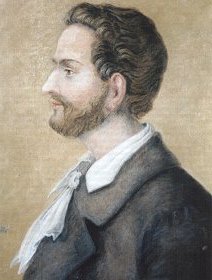
"Ludwig Leichhardt" by Friedrich August Schmalfuß (1791–1876), (Leichhardt-Museum, Trebatsch) - http://www.nvn-cottbus.de/themen/t_leichhardt.htm. Licensed under Public Domain via Wikimedia Commons

“Ludwig Leichhardt” by Friedrich August Schmalfuß (1791–1876), Licensed under Public Domain via Wikimedia Commons

Another tragic explorer was Ludwig Leichhardt. I’ve chosen him for my example because of his link to literature – he was the inspiration for Patrick White’s wonderful novel Voss – and because for a few years in my childhood, I lived in a town on the Leichhardt River. Unlike Wills’ posthumously published journal, this one by Leichhardt is for a trip from which he returned – Journal of an overland expedition in Australia: From Moreton Bay to Port Essington, a distance of upwards of 3000 miles, during the years 1844-1845. (Don’t you love the long, descriptive titles of these journals!).

Leichhardt prefaces his journal with a quote from Goethe:

Die Götter brauchen manchen guten Mann
Zu ihrem Dienst auf dieser weiten Erde.

(“The upper powers – Gods?- need many a good man for their service on this wide earth”.)

Presumably Leichhardt saw himself as, or aimed to be, such a good man, and saw his exploration as “service”. In chapter 2, he describes a meeting with “friendly natives” in southern Queensland:

On the 30th October, towards evening, we were hailed by natives, from the scrub; but, with the exception of one, they kept out of sight. This man knew a few English words, and spoke the language of Darling Downs; he seemed to be familiar with the country round Jimba; and asked permission to come to the camp: this, however, I did not permit; and they entered the scrub, when they saw us handle our guns, and bring forward two horses to the camp. On the 3rd of November they visited us again, and communicated with us, behaving in a very friendly way: they pointed out honey in one of the neighbouring trees, assisted in cutting it out and eating it, and asked for tobacco; it was, however, impossible to make any presents, as we had nothing to spare. They particularly admired the red blankets, were terror-struck at the sight of a large sword, which they tremblingly begged might be returned into the sheath, and wondered at the ticking of a watch, and at the movement of its wheels. The greater part were young men of mild disposition, and pleasing countenance; the children remained in the distance, and I only saw two women.

According to their statements, the scrub extends to the Condamine.

Intersting … the continuing friendly disposition despite what seems to be little coming back from the explorers.

There are many references to such meetings, and learnings, from “the natives”. Here are excerpts from chapter 5:

The natives had, in my absence, visited my companions, and behaved very quietly, making them presents of emu feathers, bommerangs, and waddies. Mr. Phillips gave them a medal of the coronation of her Majesty Queen Victoria, which they seemed to prize very highly. They were fine, stout, well made people, and most of them young; but a few old women, with white circles painted on their faces, kept in the back ground. They were much struck with the white skins of my companions, and repeatedly patted them in admiration. Their replies to inquiries respecting water were not understood; but they seemed very anxious to induce us to go down the river. (from Feb 27)

In consequence of the additional fatigues of the day, I allowed some pieces of fat to be fried with our meat. Scarcely a fortnight ago, some of my companions had looked with disgust on the fat of our stews, and had jerked it contemptuously out of their plates; now, however, every one of us thought the addition of fat a peculiar favour, and no one hesitated to drink the liquid fat, after having finished his meat. This relish continued to increase as our bullocks became poorer; and we became as eager to examine the condition of a slaughtered beast, as the natives, whose practice in that respect we had formerly ridiculed. (from Feb 29)

So interesting … and so wonderful that this material is now available for reading by anyone with access to the internet.

Kavita Nandan, Home after dark (Review)

NandanHomeUSPWhen Kavita Nandan offered me her novel to review I was happy to accept because its setting – Fiji, Australia and India – intrigued me. I’ve read several novels set in India, and by Indian writers, but none set in Fiji or by Fijiindian writers. Moreover, as Nandan wrote in her email, and as the back cover blurb says, the novel is “set against the backdrop of the first Fijian coup of 1987”. I certainly hadn’t read any literature about that!

Nandan is, as you have probably gathered, a Fijiindian Australian. She was born in India, grew up in Fiji, and migrated to Australia in her teens after the 1987 coups. She currently lectures in Literature and Creative Writing at Charles Darwin University. This is her first novel, and like many first novels it is told first person and has strong autobiographical elements.

The novel starts with a story about the Colonel’s involvement in saving the main character Kamini’s life from choking, and then jumps 18 years to the coup when that same Colonel places Kamini’s father, a politician in the Fijian parliament, under house arrest along with other Fijiindian ministers. The stage is set then for a story about the fine balance between love/loyalty and betrayal. There’s humour, as well as pain, in Nandan’s description of the coup:

Most of us only had a vague idea of what a coup was and even after it happened, the word sounded foreign in our mouths as we ignorantly clucked out the “p” like chickens on my cousin Ravi’s farm.

Nandan conveys the unreality of the coup (or coups), but it was not a happy situation and, as Wikipedia says, it resulted in a strong wave of migration from Fijiindians. Nandan (and her character) were part of that wave.

The narrative tos-and-fros a little – taking us to her childhood village life in Fiji and her grandmother’s home in India – but it is mostly chronological. In chapter 3, having set the scene with the coup, Nandan jumps the story forward to when Kamini is 35 years old and returning to Suva, with a husband, to work at the University as a lecturer. It becomes quickly clear that her relationship with her husband, Gavin, is fraught. Gavin suffers from depression and hasn’t worked since their marriage three years previously. This, it appears, is not a marriage of mutual support and respect, and most of Kamini’s family do not understand why she had married Gavin in the first place.

It’s an interesting story, though I wondered at times why Nandan had decided to write it as a novel. This is a critical decision, and one I’ve seen several authors discuss and change their minds about. Kate Grenville, famously, started her novel The secret river as a non-fiction work about her ancestor, but felt she had too many gaps in knowledge about the things she wanted to explore, so turned to fiction to explore them. Anna Funder, on the other hand, intended Stasiland to be fiction but, having done her research, felt the best way to honour the stories was to make her book non-fiction. Nandan’s book is strongest in her descriptions of life in India and Fiji, and less so in the story of the relationship between Kamini and Gavin, which I suspect is the main fictional component of the novel. Kamini is negative about Gavin most of the book, while continuing to want to make the marriage work. It didn’t quite gel emotionally for me, so the links Nandan tries to draw between the personal and the political felt tenuous.

Nandan does, however, have some evocative turns of phrase, such as this of the relationship between her Indian grandmother, Nani, and her aunt:

She had always craved better connection with her youngest daughter, but what passed through the gap was mostly cold air.

Or this, about the pull of the past:

I had run my fingernail along those ancient walls of memory and now I was being disturbed by strange echoes.

And she understands the paradox of immigration. Here’s her description of her great-grandfather leaving India on a boat for Fiji:

He felt his back alert and alive. His legs held their ground on a swaying ship. His entire body was seeking a new life.

The act of leaving his parents, his sisters, his brothers, his old grandmother and voyaging to a faraway place changed my grandfather forever. Building upon the memories of the old, he created the foundations of a new home and a new language. His single intent had been a courageous one. He was not to know that the new shore would give not only life but a new kind of death to his children.

Early in the novel, Nandan writes:

My father created a universe of hope through books and reading. But he was careful to remind us that life was always more important than anything read in books.

In Home after dark, the most powerful sections are those that seem to be drawn most closely from life, that is, those detailing the effect of multiple migrations on an extended family. It is in this theme of dislocation and loss, rather than in the story of a relationship, that Nandan’s heart is clearest, her hand surest. I’d like to see her develop it more.

awwchallenge2015Kavita Nandan
Home after dark
Suva: USP Press, 2014
185pp.
ISBN: 9789820109216

(Review copy supplied by the author)

Monday musings on Australian literature: Let’s get physical – The Red Centre

A couple of years ago I wrote three Let’s get physical posts in which I focused on physical descriptions of places in Australia. Since, I am currently in Central Australia (for my third time), I thought it would be good to write another post or two in this series. Central Australia – or the Alice Springs Region, or the Alice-MacDonnell Ranges area – comprises the southern part of the Northern Territory, and includes the famous sites of Uluru and Kata Tjuta.

Alice Springs, itself, is the second major city in the Northern Territory, after the capital, Darwin. My introduction to the Alice was through Nevil Shute’s novel A town like Alice, but but in fact very little of the book is set in Alice Springs. Eleanor Hogan author of Alice Springs in New South’s Cities series said recently in a Wheeler centre interview:

I was particularly interested in the idea of Alice as a microcosm of national identity and history. It’s not a metaphor that you can take to literal extremes, but there are plenty of conundrums and paradoxes about life in Alice as the premier outback town at the heart of the country that intrigued me.

Central Australia is the quintessential outback. It’s geologically old – very flat with low mountain ranges which were formed 350-300 million years ago – and the earth is red. Population is sparse and distances great. It’s replete with heroes and “characters” like explorer-prospector Lasseter, missionary and Flying Doctor Service founder John Flynn, anthropoligist Ted Strehlow, and indigenous artist Albert Namatjira. It has been criss-crossed by many explorers, and it is where Robyn Davidson started her across-desert trek with camels, chronicled in her book (and the later film), Tracks. And it is, most importantly, home to large communities of indigenous people, who, according to Wikipedia, make up about 50% of the region’s population.

Since my focus here is the physical, though, I won’t go further into the history (or we’ll be here all day). The most famous (white) explorer of colonial Australia in this region was John McDouall Stuart, whose south-north expeditions resulted in the establishment of the Australian Overland Telegraph Line and of the main route from Port Augusta to Darwin (now known as the Stuart Highway). Stuart’s journals (covering 1858 to 1862) are available at Project Gutenberg Australia. I’ll share a couple of excerpts from the Journal of Mr Stuart’s fourth expedition – fixing the centre of the continent. From March to September, 1860. These entries describe the landscape a little south of the Alice:

At eight miles the red sand hills commence, covered with spinifex; and on the small flats mulga scrub, which continues to the base of the hill. Red loose sand; no water (Tuesday, 3 April)

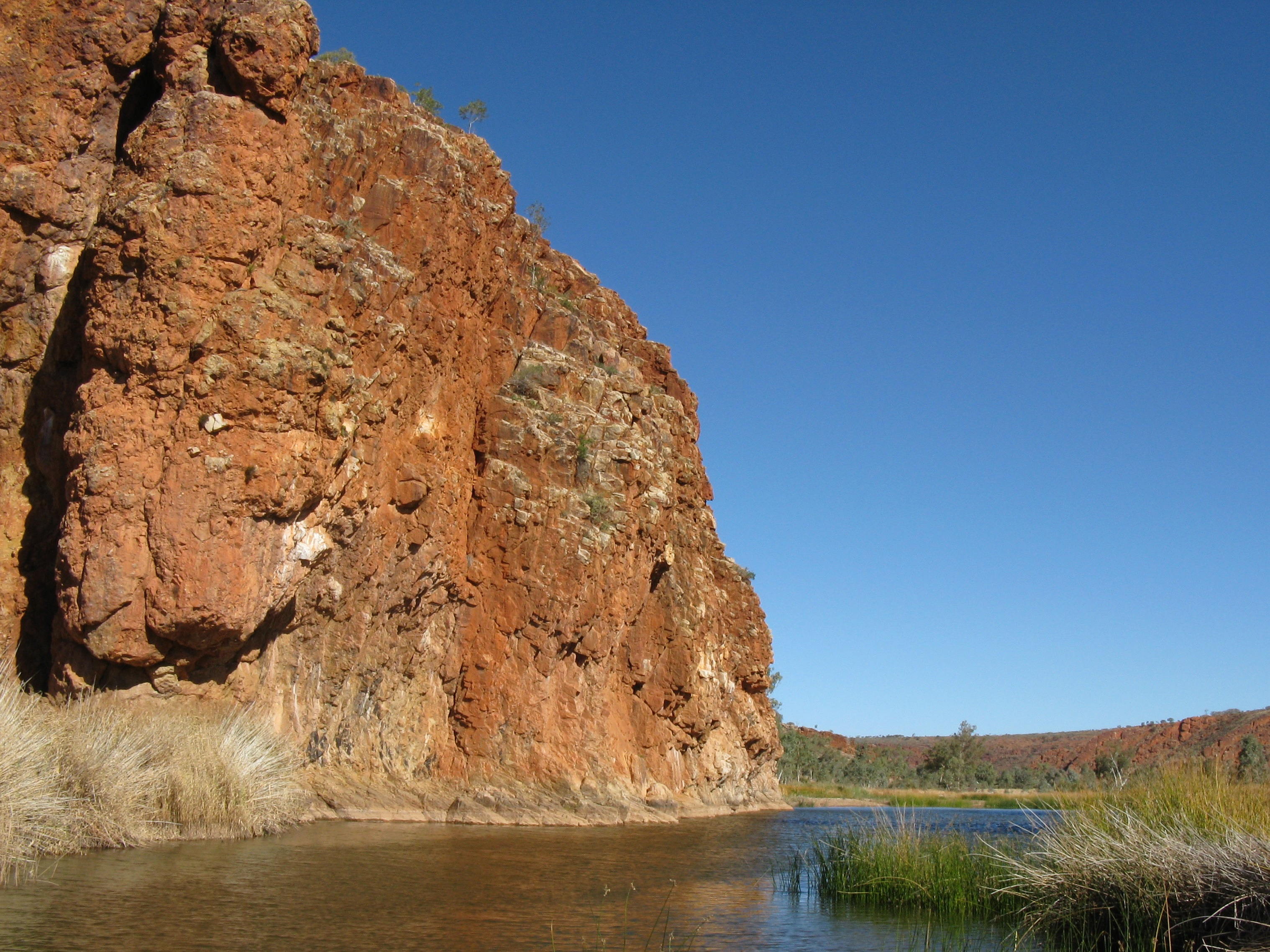
Finke River

Finke River, Glen Helen Gorge, West MacDonnells

The creek is very large, with the finest gum-trees we have yet seen, all sizes and heights. This seems to be a favourite place for the natives to camp, as there are eleven worleys in one encampment. We saw here a number of new parrots, the black cockatoo, and numerous other birds. The creek runs over a space of about two miles, coming from the west; the bed sandy. After leaving it … we passed over a plain of as fine a country as any man would wish to see–a beautiful red soil covered with grass a foot high; after that it becomes a little sandy. At fifteen miles we got into some sand hills, but the feed was still most abundant. I have not passed through such splendid country since I have been in the colony. I only hope it may continue. The creek I have named the Finke, after William Finke, Esquire, of Adelaide, my sincere and tried friend … (Wednesday 4 April)

It was he who “named” the MacDonnell Ranges. His journals are beautiful in their description of the geology, plants and fauna of the region. He also notes the presence of local indigenous people (either by seeing them or their tracks or campsites).

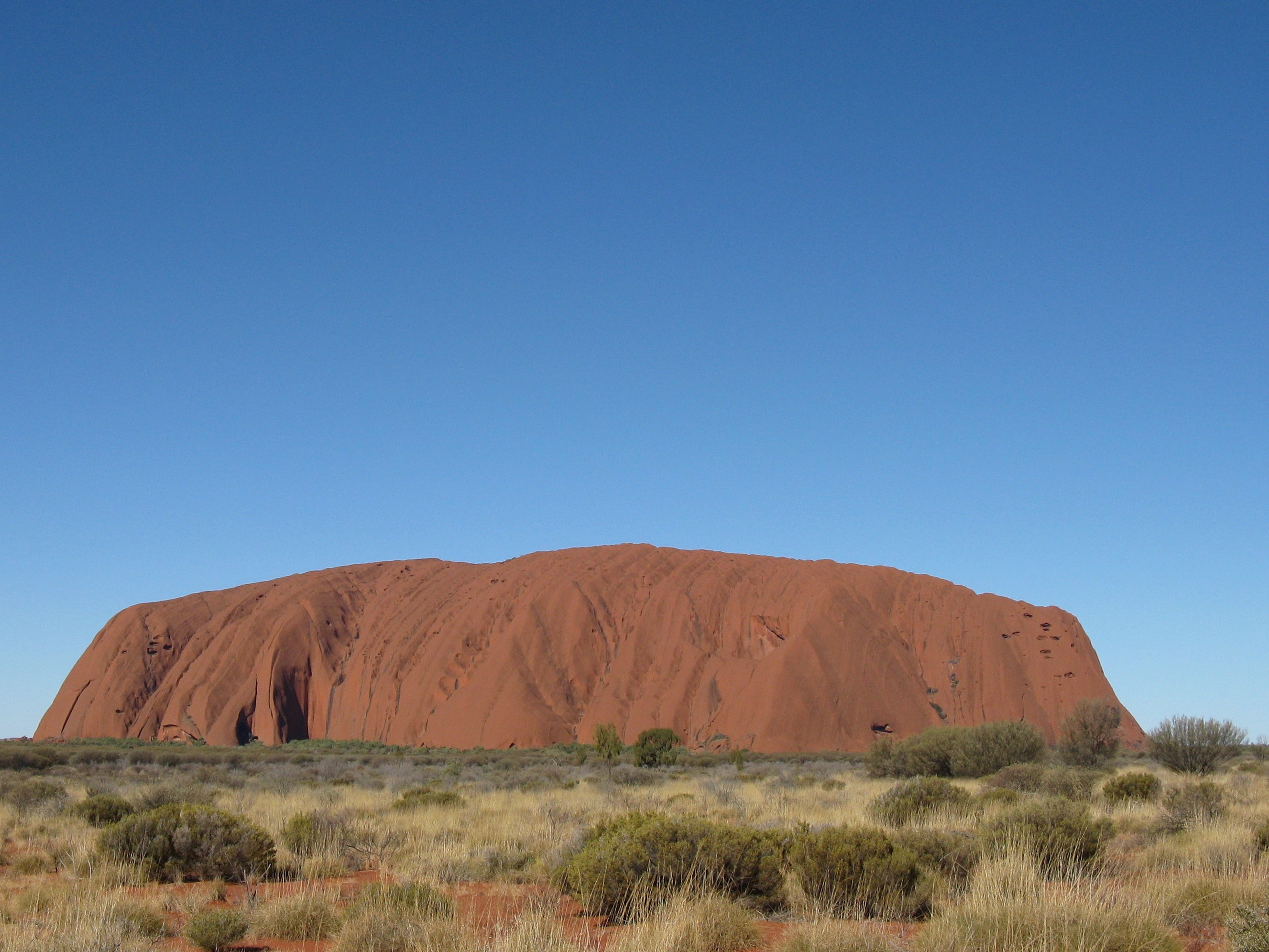
Uluru

Uluru – what more can you say. Ancient and sublime!

A little later came Ernest Giles, who “named” Mount Olga (now returned to the indigenous name of Kata Tjuta). The following comes from his Australia twice traversed:

Its appearance [Ayers Rock, now Uluru] and outline is most imposing, for it is simply a mammoth monolith that rises out of the sandy desert soil around, and stands with a perpendicular and totally inaccessible face at all points, except one slope near the north-west end, and that at least is but a precarious climbing ground to a height of more than 1100 feet. Down its furrowed and corrugated sides the trickling of water for untold ages has descended in times of rain, and for long periods after, until the drainage ceased, into sandy basins at its feet. The dimensions of this vast slab are over two miles long, over one mile through, and nearly a quarter of a mile high. The great difference between it and Mount Olga [now Kata Tjuta] is in the rock formation, for this is one solid granite stone, and is part and parcel of the original rock, which, having been formed after its state of fusion in the beginning, has there remained, while the aged Mount Olga has been thrown up subsequently from below. Mount Olga is the more wonderful and grotesque; Mount Ayers the more ancient and sublime. (July 1874)

And now, something written by an indigenous woman from a book titled Women of the centre (edited by Adele Pring, 1990). The story-teller is Ruth Mackenzie (b. 1919), an Aranda/Aluritja woman, born just south of the Northern Territory border. This particular description is of country a little further south again, but is still relevant. I’m including it because she’s describing traditional Aboriginal knowledge:

He [husband] told us stories … All this country was jungle. That’s a long way back and there used to be big snakes but the seasons changed. Drought and that came and buried everything up and what they call Yandama sandhills the other side of Lake Frome – all those sandhills – that’s all the trees that’s covered up. I think they’ve found animals there. Animals were bigger – wombat, kangaroo. Everything was a lot larger than what they are now. That’s what he said. Australia was different from what it is now, like it’s all barren country now. It was like Darwin I suppose.

For those of you inspired to read about the region, the following books may be of interest:

Many more books are listed on Wikipedia’s Australian outback literature of the 20th century page.

The majority of Australians live on the coast and are drawn to the sea. Not me. I am drawn to the deserts and the Outback. Maybe this post has explained why?

Note: An excellent discussion of “literary constructions” about the Centre can be found in Chapter 8 of The Cultural Values of the Central Ranges: a preliminary report (for the region’s inclusion as a World Heritage area) (2008).

.

Monday musings on Australian literature: Guest post by Annette Marfording of the Bellingen Writers Festival

Courtesy: Annette Marfording

Courtesy: Annette Marfording

Having been intrigued by comments made by Annette Marfording, Program Director of the Bellingen Readers and Writers Festival, about running a literary festival, I approached her about writing a guest post for my blog. I thought her experience might intrigue at least some of my readers here too.

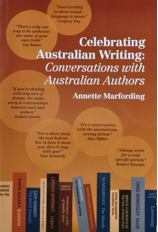
Marfording chairs one-on-one conversations and panels at the Festival, and is also a broadcaster at Bellingen’s community radio station 2bbb fm for which she created a monthly program on Australian writers and their work. Marfording’s recently published book, Celebrating Australian Writing: Conversations with Australian Authors, is based on in-depth interviews broadcast on this program. All profits from the sale of the book will go to the Indigenous Literacy Foundation. What a generous gesture! I have bought a copy of this book, which includes writers like David Malouf, Cate Kennedy and Larissa Berendt. You can too at lulu.com.

Now, here’s Annette’s post …

Some time ago, Sue asked me as Program Director of the Bellingen Writers Festival (full name Bellingen Readers and Writers Festival) to do a guest post for her wonderful blog on the joys and challenges of organising a writers’ festival. I’m delighted to do so.

This year the Bellingen Writers Festival (full name Bellingen Readers and Writers Festival) had its fifth birthday. In the period since our first in 2011, there’s been an explosion of new literary festivals all around Australia. With the exception of big city specialised sub-festivals, such as the Sydney Jewish Writers’ Festival and its Festival of Speculative Fiction, and some school or suburb festivals, such as the Abbotsleigh Literary Festival and the Sutherland Shire Writers’ Festival, most of the new festivals are in small regional towns and not specialised in any particular genre. Even though not all of them survive (for example the Gloucester Writers Festival), at the time of writing there are at least nine such regional festivals in New South Wales alone in addition to the big ones: the Sydney Writers’ Festival, the Byron Bay Writers’ Festival and the Newcastle Writers Festival.

On the one hand, this proliferation of festivals is wonderful for readers and book sales and demonstrates that the book is not dead. On the other, for several reasons, it is cause for concern:

  1. All these festivals compete for government grants and sponsorships.
  2. They also compete for authors, and understandably authors tend to prefer the greater publicity and book sales associated with the big festivals. Our invitations are often declined on the grounds that the author is overseas at the time/wants to concentrate on her/his next book/can’t possibly attend every writers’ festival in the country.
  3. Several of the festivals are scheduled in winter, enhancing the competition for authors during those months.
  4. Sadly these difficulties are compounded when other regional festivals choose to schedule theirs at the exact same time as another, as the newer Batemans Bay Writers Festival did with the Bellingen Writers Festival. Thus two of the authors we had invited appeared in Batemans Bay instead. Similarly it is confronting to find that other regional festivals have copied your advertising slogan, as the Southern Highlands Writers’ Festival in Bowral did with their adoption of ‘Be a part of the story‘ (in comparison to Bellingen’s ‘Be part of the story.’

Even if there were only one literary festival in the country, organising a festival is not for the faint hearted. The large festivals attract big money from government agencies and sponsors while the smaller ones have to make do with far less. That usually means that large festivals have a large number of paid staff, while the smaller ones tend to be organised and run by volunteers.

In Bellingen all festival committee members work as unpaid volunteers, which means they have to be brimming with passion and enthusiasm for there is a lot of work to be done: books must be read, authors and chairs selected and invited, contracts drawn up, funding applied for, sponsorship sought, venues booked, an experienced bookseller chosen, transport and accommodation organised, possibly a schools program organised, the program put together and proof-read multiple times for print and website, newsletters written for the website, social media and print publicity employed to spread the word. For the event itself, you need an event producer/organiser, sound engineers, microphones for all venues and multiple speakers, additional volunteers and an organiser for those volunteers. After each festival there are clean-up tasks, author payments and accounting to be done. Over the five years we have lost several festival committee members due to burn-out or the need for an income-generating job. We have also gained a few new ones each year, but they don’t always stay. Only four members have been involved since the beginning.

Government funding bodies often demand the introduction of a new aspect or theme for each year’s festival. For 2013 the Bellingen Writers Festival chose Celebrating Women Writers and Women’s Stories, because 2012 marked the beginning of a conversation about gender in literary culture. In 2013 the Stella Literary Award was awarded for the first time. As the readers of this blog may remember, a number of women authors, critics and publishers pushed for the introduction of an award for women writers after women had been left off the shortlist for the Miles Franklin Literary Award for Fiction for two years in a row. Another response was the creation of the Australian Women Writer’s Challenge. For 2015 the Bellingen Writers Festival chose Politics and Society and attracted a number of politicians, journalists, screenwriters and fiction writers exploring social issues and added three forums on mental health issues with Professor of Psychiatry Gordon, clinical psychologist David Roland and author of Australia’s first memoir on youth suicide Missing Christopher Jayne Newling.

Festival visitors often don’t realise that authors need to be paid not only for their transport costs and accommodation, but also earn a fee for every festival appearance (in accordance with standards set by the Australian Society of Authors). In small regional towns such as Bellingen, where small businesses often struggle, it is very difficult to attract sponsorship from local businesses, especially since Bellingen hosts several music festivals as well. Government grants are difficult to obtain on a recurring basis, especially in these times of funding cuts to the arts. This means that smaller festivals become ever more reliant on ‘big name’ authors to attract visitors prepared to pay for tickets. The further away authors live from the festival location, the higher the authors’ transport costs. This means that authors who live on the other side of Australia, in Tasmania, let alone the US, are unaffordable for the Bellingen Writers Festival.

I think it’s obvious from the above that the challenges are formidable. The joys of organising a writers’ festival require far fewer words, but nevertheless win in the end for those who are engaged and passionate about reading and/or writing. The joys of introducing favourite authors to new readers, observing the audience’s enthusiastic faces, rapt attention, and long queues for books and autographs. Even better if the authors have a good time, too, and in Bellingen, they always do. For me personally, involvement in the festival has also made it easier to interview some of the authors in my recently released book Celebrating Australian Writing: Conversations with Australian Writers which has sold 80 copies in the first two weeks – to the benefit of the Indigenous Literacy Foundation, which will receive all the profits from the sale.

****

Thanks so much Annette for this wonderful behind-the-scenes insight into running a festival. Readers like me owe a big debt to people like you who are willing to undertake the hard yakka of putting on a regional festival. I wish I lived closer to Bellingen!


Monday musings on Australian literature: David Unaipon Award

David Unaipon (Courtesy State Library of NSW, via Wikipedia. Public Domain)

David Unaipon (Courtesy State Library of NSW, via Wikipedia. Public Domain)

I’ve mentioned the David Unaipon Award several times in passing but have never devoted a post specifically to it. Today seemed to be a good time to do it, as it would mean I’ve bookended this year’s NAIDOC week with Monday Musings posts devoted to indigenous literature.

Just to recap, David Unaipon is credited as the first indigenous author to be published, with a commissioned book on Aboriginal Legends in the early 1920s. He is featured on Australia’s $50 note. To commemorate him, the David Unaipon Award for unpublished Aboriginal and Torres Strait Islanders was established in 1988, and has had a rather chequered career. In 1999, it became part of the Queensland Premier’s Literary Awards. When those awards were abolished in 2012 by new Premier Campbell Newman, it was carried over to the new Queensland Literary Awards.

I have read and reviewed several past winners on this blog: Ellen van Neerven’s Heat and Light (2013), Jeanine Leane’s Purple Threads (2010), Marie Munkara’s Every Secret Thing (2008), and Tara June Winch’s Swallow the Air  (2004, originally titled Dust on Waterglass). 

But this is only a start. The list of winners, from the first award made in 1989, represents a useful list for anyone looking for works by indigenous authors to read. Here are a few writers that I’m keen to follow up:

  • Samuel Wagan Watson, a poet, who won in 1999 with Of Muse, Meandering and Midnight. According to the New South Wales Writers’ Centre this work is “a collection of moments: snatches of life in urban Brisbane, glimpses into childhood recollections”. Watson is a well-known raconteur, and during NAIDOC Week last week, I heard him recite a very entertaining, gently subversive poem “A message to my publisher”. It reminded me that I need to keep him high in my TBR list, either this book or one of his later ones.
  • Larissa Berendt, a writer, lawyer and academic, who won in 2002 with her novel Home. This novel also won the Commonwealth Writers Prize for Best First Novel in the south-east Asian/South Pacific region. It explores the complex notion of “home” for people for whom home has become a fraught notion: they’ve been dispossessed, stolen, or separated for a variety of reasons from their roots and significant connections. Her second novel, Legacy, won the Victorian Premier’s Literary Award for Prize for Indigenous Writing in 2010. She is frequently recommended to me, and so is also high on my TBR list.
  • Gayle Kennedy, a writer who won in 2006 with her “road trip” novel Me, Antman and Fleabag. It was also shortlisted for the Victorian Premier’s Literary Award and Deadly Award. She was featured in a Guest Post on the Australian Women Writers Challenge last week so, rather than add my own words here, I’ll just point you to there! Fair enough? (There’s an added incentive for visiting that post. If you read and review a work by an indigenous Australian in July you can go in the draw to win a copy of Me, Antman and Fleabag.)
  • Dylan Coleman, a more recent winner of the award, winning in 2011 with Mazin’ Grace. It was also shortlisted for the Commonwealth Book Prize and longlisted for the 2013 Stella Prize. Like Marie Munkara’s Every secret thing, its subject is mission life, a significant part of indigenous Australian experience and a story that needs to be told.

These are just four from a much longer list. I have no idea how many of these books are still in print, but hopefully most if not all are available in libraries. I wonder?

Monday musings on Australian literature: NAIDOC Week 2015

Australians will be aware that this week, July 5 to 12, is NAIDOC Week. NAIDOC originally stood for National Aborigines and Islanders Day Observance Committee, the committee that was once responsible for organising national activities during NAIDOC Week. However, this acronym has now become the name of the week, which suggests just how significant, and well-accepted, this week is now on Australia’s calendar.

The Week aims, as you would expect, “to celebrate the history, culture and achievements of Aboriginal and Torres Strait Islander peoples”, and in doing so, to encourage all Australians to recognise and better understand indigenous Australians. Each year the week has a theme, and this year it is We all Stand on Sacred Ground: Learn, Respect and Celebrate.

This theme, according to the NAIDOC website

highlights Aboriginal and Torres Strait Islander peoples’ strong spiritual and cultural connection to land and sea. The theme is an opportunity to pay respects to country; honour those who work tirelessly on preserving land, sea and culture and to share the stories of many sites of significance or sacred places with the nation.

Uluru

Uluru, taken August 2009

The site also tells us that this theme was particularly chosen this year “to highlight and celebrate the  anniversary of the ‘Handback’ of Uluru, one of these sacred sites, to its traditional owners on 26 October 30 years ago”. To that I say, wonderful, as I am visiting Uluru for my third time later this month.

I know my ways of celebrating and supporting indigenous Australian culture are pretty tokenistic in the scheme of things, but in the spirit of this week I thought I’d share with you some of the rather eclectic things I do throughout the year as the opportunities arise:

  • engage with local indigenous culture when I travel, mostly through tours led by indigenous Australians;
  • attend exhibitions featuring indigenous Australian art and culture, ancient, traditional and contemporary;
  • donate to the Indigenous Literacy Foundation;
  • attend performances by the Bangarra Dance Theatre; and,
  • read Indigenous Australian literature (though I don’t seem to read anywhere near as much as I’d like to).

It’s this last way, of course, that is most appropriate to my blog, so to mark this NAIDOC Week, I’m sharing links to posts written by me, and, with her permission, Lisa Hill (ANZLitLovers), on Indigenous Australian literature:

Some of you will know that Lisa has for the last few years run an Indigenous Literature Week during NAIDOC week but, as she wrote recently, this year she plans to run it to coincide with the First Nations Australia Writers’ Network Workshop which will be held in Melbourne next month. Watch out for that.

Meanwhile, Lisa and I hope our links help you discover more about Indigenous Australian culture through literature.

Emma Ashmere, The floating garden (Review)

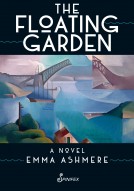
Emma Ashmere, The floating gardenI had a little chuckle when, fairly early in Emma Ashmere’s novel, The floating garden, we discover that our main character, Ellis Gilbey, writes a gardening column under the name Scribbly Gum! Good name, I thought. If it hadn’t been for my school song inspiration, this would have been the name for me!

There’s another synchronicity for me, though, and it relates to the setting of this story. Last week I did a presentation on old Australian ads for an organisation I’m involved in. One of those ads was The charmed cup*. It was made in 1929, runs for around 8 minutes (can you believe it?), and is for Bushells tea. It also, coincidentally, contains footage of the Sydney Harbour Bridge mid-construction. It’s this construction which sets the scene for Ashmere’s story … so now, let’s get to it.

The floating garden is set in Sydney in 1926 when construction on the Sydney Harbour Bridge had started and houses in Milson’s Point on the north of the harbour were being  demolished with little or no compensation to the residents of those homes. One of those residents is middle-aged Ellis Gilbey, who has run a boarding house for over twenty years. At the novel’s opening the last of her boarders has left and she, with other residents in the street, is hoping against hope that some compensation will be offered. Meanwhile, in a well-to-do part of Sydney, south of the harbour, is 30-something Rennie Howarth, a young English artist who had “taken the outstretched arm of an Australian man she hardly knew and had sailed from everything cold, sad and stale”. Unfortunately that Australian man, Lloyd, who had brought her to a life of luxury, was also abusive.

Part 1 of the novel alternates the story of these two women, with more of the chapters devoted to Ellis. Whether these two women are connected, or are going to be connected, we don’t discover until Part 2 of this three-part novel. While we are wondering about this, Ashmere is busy drawing some parallels between the women – both have experienced brutal men in their lives, Ellis her father and then an employee in a house where she’d lived as a young woman, and of course Rennie her husband; both had toyed with theosophy; and both find themselves house hunting. Another parallel occurs within Ellis’s life when, destitute, she is taken in by an older woman, and then, when that doesn’t work out, destitute again, she is taken in by another older, but this time kinder, woman. These parallels are not laboured, but provide a subtle foundation to the story being told, and help hold it together.

Ashmere’s main focus is Ellis. In her story, we shift between past and present, while Rennie’s story is focused on her present. Ellis, we discover, had run away from her farm home, when she was a teen, after her mother died, and had found herself, rather by accident, in the home of theosophist, Minerva Stranks, aka Strankenstein, around the turn of the century. It was out of the frying pan and into the fire for Ellis, as Minerva is a cruel taskmaster and a charlatan, to boot. Ellis is sexually attracted to Minerva’s other protégé, the pretty Kitty Tate. Her belief that Kitty cares for her helps her survive her time in the house until … well, I won’t give this away, but by the novel’s opening, Ellis had been carrying guilt and regret for twenty-seven years.

We are not given the same depth of background for Rennie’s life before the present, but we learn that she’d had a couple of exhibitions in London before fleeing to Australia with Lloyd, and that she’d been a lively, fun woman before her marriage to a man who physically abused and emotionally manipulated her. In Australia her art changes from “polite English watercolours” to “bolder, flatter, earthier colours” that are all-round too confronting for Lloyd. She represents, as Ashmere explained in an interview on ABC’s Books and Arts Daily, the new modernist art movement, a movement which rejected tradition for something bolder. That’s certainly Rennie.

So, despite the parallels in their lives, Rennie works largely as a foil for Ellis, not only because of their class difference, but because she’s lively and risk-taking against Ellis’ more cautious approach to life, which is understandable given her greater age and particular experiences. If I have a frustration with the novel, it would be that Rennie’s story is not as developed as Ellis’s and that perhaps her main role is to be this foil or plot-device to move Ellis on rather than a character in her own right. This is more observation, though, than complaint, because overall the writing is evocative without being overdone, and the characters are engaging,

What I particularly enjoyed about the novel is that Ashmere does for the underprivileged of 1920s Sydney what Ruth Park did for the 1950s in Harp in the south. They are very different books in terms of their narratives and themes, but both exude warmth and sympathy for their motley crew of marginalised characters, and both are valuable for their social history. In The floating garden this includes evoking the about-to-be dispossessed Milson’s Point community, the charlatan fringe of theosophy, the colour of Paddy’s Markets, the energy of the artistic/bohemian community, and the opening up of land in the rural outskirts of Sydney, in Lane Cove.

The novel’s overall theme has to do with memories, guilt and grief, with the idea that you really can’t move on if you haven’t resolved your past. Late in the novel, as Ellis starts to understand the truth of what had happened all those years ago, Ashmere writes:

She’d grown used to her memories for all these years and now her grief – her guilt – had grown around them in the same way a tree’s trunk grew around a rock until both the rock and the tree risked mutual destruction if prised apart.

But sometimes, there can only be progress if they are prised apart – and prised apart they eventually are, of course.

The floating garden is a very enjoyable book. It deals with real issues honestly but gently, and it brings to life a past world in a way that enhances our understanding of the present.

awwchallenge2015Emma Ashmere
The floating garden
North Melbourne: Spinifex Press, 2015
243pp.
ISBN: 9781742199368

(Review copy supplied by Spinifex Press)

* Unfortunately, the ad is broken into three clips on this page. Clip 2 contains the Bridge footage.

Monday musings on Australian literature: Black Inc’s Best 100 Poems

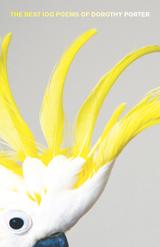
I’ve been feeling rather guilty about a book sent to me in late 2013 by Black Inc. I’m usually very conscientious about reading and reviewing books that I’ve accepted for review – not so much for those sent to me “on spec” – but I slipped up with Black Inc’s The best 100 poems of Dorothy Porter. As I recollect, it came just after a major overseas trip and got caught up in the run-up to Christmas. I did read much of it, but just didn’t bring it to conclusion in order to review. So, I thought I’d talk about it “right here, right now”, to use some current vernacular.

The bee hut, by Dorothy Porter

Cover image (Courtesy: Black Inc)

Black Inc, which won ABIA’s Small Publisher of the Year award this year, is a small publisher that actively supports Australian poetry. Not only have they now produced three “best 100 poems” volumes, but they have published the annual Best Australian poems volumes for several years, as well as individual poetry collections like Les Murray’s Waiting for the past, Robert Gray’s Coast road, and Dorothy Porter’s The bee hut (which I reviewed a few years ago now). All these books, as far as I can tell, are published in print and electronic format.

Now, the topic in hand. Here are the three “best 100 poems” volumes published to date, listed in order of publication.

The best 100 poems of Les Murray (2012)

I bought the e-version of this after hearing Murray (b. 1938) speak last year at Poetry at the Gods. As the only living poet of the three, Murray made his own selection. Unlike the Porter collection, in which the poems are grouped in some way, Murray’s selection is simply (though some thought is sure to have gone into the order) a list of 100 poems with no reference to their original context. Murray’s oeuvre is huge – his career has been very long – so without extensive research I don’t know where every poem comes from or how each fits into his career. As you would expect from a “best 100” they  are diverse in subject and style.

The first poem is “Driving through sawmill towns”, from the 1990s I think. Read it and see what you think. I like its understanding of human behaviour – the “tall youths look away” while “it is the older men who/come out in blue singlets and talk softly to you”. Meanwhile, “all day in calendared kitchens, women listen/for cars on the road/lost children in the bush,/a cry from the mill, a footstep -/nothing happens”. I like the sense of resignation in the inhabitants, but no judgement from driver driving through. A later poem, “Mirrorball”, from 2010, describes travellers on a bus riding up the Hume Highway through old towns full of history, but when the driver sets off again “half his earplugged sitters wear/the look of deserted towns”. Oh dear. Not all Murray’s poems are about country towns, but rural life is one of his ongoing subjects.

I’m not sure I really like reading poems in e-format, in which I bought this book, but the upside is that you can carry some poetry with you wherever you go.

The best 100 poems of Dorothy Porter (2013)

PorterBest100BlackIncThis is a posthumous collection selected by Porter’s (1954-2008) partner, the novelist Andrea Goldsmith. It includes a small selection of poems from her verse novel The monkey’s mask which I’m ashamed to say I’ve never read. (Having now read the few poems Goldsmith included here, I’m inspired to rectify this.) It also contains poems from her verse novels El Dorado and Akhenaton, as well as from various other collections of her rather extensive oeuvre. The poems range, for me, from beautiful, heart-rending, funny, and/or wicked to rather obscure. But that’s probably the nature of poetry. Those that draw on classics and mythology sometimes lose me, I have to admit, with their erudition, but her heart, her imagery and the way she can cheekily play with rhyme and rhythm are what I love about Porter.

I’ll just share one of Porter’s poems. It’s called “Circular Quay” and expresses discomfort with perfection, because experience has taught her so: “This perfect day/makes me uneasy … I breathe easier/spying some scum/floating/on a lovely green wave./Nothing’s perfect”. In the middle of this short tight poem she is reminded of the past. It’s the sort of poem that makes me write “Oh, yes” in the margins.

I’m tempted to suggest that Murray writes more of People while Porter’s poetry is more about the Personal. This is a rather coarse generalisation I know. These poets are highly diverse, but it’s how their writing, such as I’ve read in recent years, strikes me.

The best 100 poems of Gwen Harwood (2014)

Gwen Harwood (1920-1995) is the oldest of the three, and is the one I know least, so I won’t say much. I’ve heard her described as one of Australia’s finest poets, and readers I respect speak positively of her, but I really only discovered her when I started researching Australian poets for Wikipedia a few years ago. Why is this? I certainly didn’t study her at school or university, and since then, I must admit, my poetry reading has been very erratic. This selection was made by her son, John Harwood, who is also a writer. Her recurring themes, according to Wikipedia, include motherhood and the “stifled role of women”. Music, the Tasmanian landscape and Aboriginal dispossession also recur in her work.

From the compilers of these collections – the poet himself, the partner, the son – it appears that Black Inc has aimed to make these “best 100” volumes personal rather than academic in flavour, which is lovely I think.

Given these three volumes were published in the last three Novembers, I’m presuming another will be published this November. I wonder who it will be? Meanwhile, I’ll close by saying that these are gorgeously produced books – with lovely covers. They would suit those wanting an introduction to the specific poets as well as their fans.


Delicious descriptions: Kate Llewellyn on Aussie authors

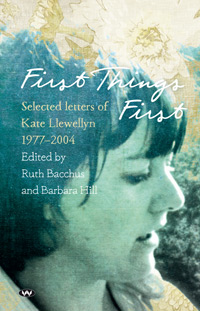
Ruth Bacchus and Barbara Hill, First things firstSince I couldn’t cover everything in my review of Kate Llewellyn’s lettersFirst things first, edited by Ruth Bacchus and Barbara Hill, I decided that a follow-up Delicious Descriptions on a specific aspect of the book, her discussion of her reading, would be in order. I’m making the assumption that, like me, you’re interested in what writers think about the work of other writers.

Llewellyn mentions many writers – poets and novelists – in her letters, and is generally positive. I can’t (and shouldn’t) share them all, of course, so have selected a few that particularly interested me.

Christina Stead

I was tickled to find myself reading Llewellyn’s letters in which she was reading Christina Stead’s. It twas in a letter dated 19 June 1992, so I think she was reading R.G. Geering’s Christina Stead, a life in letters, which was published in 1991/1992. Llewellyn writes – all the three-dot sets are hers (and not my ellipses):

I have three books, Angela Carter’s last … and C. Stead’s Letters … really, a wonderful book … she is a wizard … so queer, mad, right, sweet, hopeless … not unlike Jean Rhys in some ways … you know, the hopeless, feckless, blighted genius who good things avoid in spite of her almost starving … but gracious, always gracious … a bed-sitter, no money … Basically, Christina is a woman who married her father and who was mad, mad as you know, who had a funny kind of genius to boot … cruel to women … feminist and scathing of that same thing … fawning to men in a way that is quite painful to read in the letters … but generous, encyclopaedic, lusty and full of paradoxes … her husband Bill Blake was in the fur business for a time … can you believe it … and she left money to the conservation foundation … plus had a white ermine coat … Basically, Bill was a wonderful loving brilliant man whose books did not sell and who had a wife and child for thirty years of their life (his and Christina’s) together while she longed to marry … sound familiar …

Well, that’s rather a breathless flow, but it captures quite a lot about what Llewellyn gleaned about Stead from the letters, about Llewellyn’s reaction to that, and about Llewellyn herself. In another letter, in 1993, she comments on a negative drawing of Stead in The Australian which described Stead as “monstrum extremum”. Llewellyn’s response to that was a “4,000 word piece on Stead and the way Australia treats its artists”. Go Llewellyn, eh?

Elizabeth Jolley

Elizabeth Jolley (Photo: Courtesy Fremantle Press)

Elizabeth Jolley (Photo: Courtesy Fremantle Press)

Llewellyn clearly admires Jolley, as I do. On 3 July 1992, she writes:

I read Cabin Fever at 3am and felt like you … I like this strange book … I wrack my brains to trace how it is done … but I am lost … I need a writing class … I long for one …

Besides the fact that she so loved a Jolley book, I was fascinated to read about a writer admiring another writer so much she wanted to do a writing class to improve her own writing. It reminded me that we never stop learning or wanting to hone our skills.

Robert Drewe

I haven’t reviewed Drewe here, though I have a book of his short stories next to my bed, The body surfers, that I love. I like his writing, but I was fascinated by the strength of Llewellyn’s comment (in a letter on 7 July 1992):

I am reading R. Drewe’s A Cry in the Jungle Bar (Picador). I am not mad about this book but will read anything of his to see how he arrived at Our Sunshine … We had a talk at the book fair and I told him how sorry I was he did not get any of the prizes (the Banjo was announced that day) for Our Sunshine. He said he needed the money … When he is dead the country with laud him to the skies and sell his book by the thousands and make a film of it and maybe his son will benefit … but until then, it is slim pickings for him.

Our Sunshine is Drewe’s novel about Ned Kelly, and is a book I’m keen to read. The 2003 Ned Kelly film was based on it, but it wasn’t exactly an adaptation. Anyhow, here again is the issue of writers struggling to survive. I know there are those who are uncomfortable about literary awards but they clearly have practical value to many writers.

Marion Halligan

Halligan is the recipient of some of the letters in the book, including the one I’m going to quote from, written on 5 August 1992. Halligan also wrote the Foreword to the book. I tell you this, because it suggests a relationship between the two. I don’t, however, think this undermines the validity of Llewellyn’s admiration of Halligan’s writing. In this letter she talks of Lover’s knots, which was my first Halligan (and which inspired me to read more):

Really, Marion, you know I admire your writing because the thing has a will of its own … […] … because long before I ever met you, I said so in print … and you just get a firmer and firmer grip on your style and wide range … no, range wider and wider … also your quite encyclopaedic knowledge is impressive, but not just that, as that would be a bore if it was only that, but it is illuminating and lovely to read and I learn and that’s a real pleasure … mictouricious (?) or some such word … from micturition … the verb to pee … no micturate is the verb I suppose … I barely went to school and it constantly shows … music and spelling were on the days I didn’t go.

How better to end this post than on praise of our wonderful local writer, Halligan, that is written with such generosity and self-deprecating humour. I’m sure you can see why I enjoyed reading this book.

Monday musings on Australian literature: The Conversation’s Writing History

This is the post I planned for last week, when Jessica White hijacked me. Like that post, this one too was inspired by another person, this time my historian brother who sent me a link to an article in a new series by The Conversation called Writing History. This series aims to “examine the links, problems and dynamics of writing, recording and recreating history, whether in fiction or non-fiction”. A topic, as regular readers here will know, of interest to me.

I’m not sure how many articles are planned for the series, but here are the five that have been published to date:

I haven’t read them all yet, but I have read the first two, and dipped into another. In the first one, Nelson and de Matos explain that the series draws from essays that were published in a special issue of TEXT, an open-access academic journal. The issue is titled Fictional Histories and Historical Fictions, and its aim is to “get beyond … the often acrimonious exchanges between writers and historians that have been such a characteristic of the History Wars of the last ten years, with its boundary-riding rhetoric.”

The secret River cover

Now, if you are an Australian interested in this subject, you won’t be surprised to hear that both articles I’ve read refer to the conflict between historians and novelists inspired by Kate Grenville’s award-winning, best-selling novel The secret river – or, to be honest, by comments Grenville made about history in relation to her novel. Nelson and de Matos write that the question of who should interpret and write about the past and how the past should be taught or written about has been around for centuries but it was “made palpable” in the tussle over The secret river.

Nelson and de Matos discuss the accessibility of history – and the fact that historians can write accessible history, as proved by writers like Clare Wright in her award-winning The forgotten rebels of Eureka (my review). And they talk about the politicisation of history, referring to comments by politicians like Christopher Pyne bemoaning “the ostensible disappearance of western civilisation from the curriculum” and John Howard’s critiquing of “the black armband view of history”. While political interference is not a good thing, they suggest that in a sense, all history – in its relationship to debates about democracy, identity and social justice – is public history. It makes it even more critical, then, doesn’t it, that we understand what we are talking about and the grounds upon which we are doing it.

In the second article, Tom Griffiths tackles the intertwining of fiction and history. He argues that it was Eleanor Dark, a novelist, who confronted the complacent imperial view of history in Australia’s sesquicentenary, a view that ignored the place of “Aborigines, convicts and women”. She led the way in rethinking our history. Paradoxically, the poet Judith Wright, a few decades later, wrote a history, Cry for the dead, which “gave a secure scholarly foundation to the political campaign of the Aboriginal Treaty committee”. His point is that both writers chose the form that best suited their needs at the time. “Like Eleanor Dark”, he writes, “Judith Wright carefully set about becoming a historian”.

By 1990s, the idea of “frontier conflict” was an accepted part of our historiography but there was a conservative backlash which tried to discredit research by arguing detail such as the number of people who died “as if it decided the ethics of the issue”. It was into this “moral vacuum”, Griffiths writes, that books like Inga Clendinnen’s history Dancing with strangers (2003) and Kate Grenville’s novel The secret river (2005) appeared.

Unfortunately, Grenville’s comments on the value of fiction to history –

The voice of debate might stimulate the brain, the dry voice of ‘facts’ might make us comfortable, even relaxed. It takes the voice of fiction to get the feet walking in a new direction.

– got her involved in the wrong debates, in discussions about history and fiction rather than the topic she wanted, frontier violence. Griffiths suggested this occurred partly because of the timing, because the conservatives were interested, at that time, in debating the “precise, grounded, evidenced truths of history”. To debate on that ground you needed “time, place and specificity”. Grenville, in other words, “found herself at the centre of a debate that goes to the heart of the discipline of history”. I like this explanation. It explains for me some of the reactions to Grenville that never completely made sense, it explains why historians I admired came out so strongly against Grenville, whose story seemed to make a valid contribution to the discussion.

Griffiths concludes that history and fiction are “a tag team” in the study of the past, “sometimes taking turns, sometimes working in tandem”. “History doesn’t own the truth”, he writes, “and fiction doesn’t own the imagination”. We need to understand the distinctions and how they play out, but we shouldn’t see this discussion as “defending territory”.

I look forward to reading the other articles. But for now, I’ll close on a quote my brother also sent me last week. It’s from Jose Saramago’s The Elephant’s Journey (2008):

… that is how it’s set down in history, as an incontrovertible, documented fact, supported by historians and confirmed by the novelist, who must be forgiven for taking certain liberties with names, not only because it is his right to invent, but also because he had to fill in certain gaps so that the sacred coherence of the story was not lost. It must be said that history is always selective, and discriminatory too, selecting from life only what society deems to be historical and scorning the rest, which is precisely where we might find the true explanation of facts, of things, of wretched reality itself. In truth, I say to you, it is better to be a novelist, a fiction writer, a liar.

And so the discussion continues …