Monday musings on Australian literature: Book industry awards

How to title today’s post was my first challenge – and I hope the title I settled on covers it well enough. What I am wanting to cover here are those awards that don’t go to books (or manuscripts) or writers, but to those in the industry – people and organisations – that support writers and their books. The ABIAs, or, Australian Book Industry Awards, have been doing this for some years.

ABIAs

Established in 2006, these awards are, says Wikipedia, ‘publishers’ and literary awards held by the Australian Publishers Association annually in Sydney “to celebrate the achievements of authors and publishers in bringing Australian books to readers”‘. I have only written on them once before, and that was to highlight some of the winners in the 2019 awards that interested me. However, these awards also recognise others working in the industry. The categories change over the years, but since 2017 there have been awards for (listed with the winners in the years they were made):

  • Book Retailer of the Year: Readings (2020); Readings (2021); Harry Hartog Bookseller, Burnside Village, Adelaide (2022); Big W (2023)
  • Bookshop of the Year: Books Kinokuniya (2020); Avid Reader, Brisbane (2021); Avenue Bookstore, Albert Park, Melbourne (2022); Matilda Bookshop (2023); Fullers Bookshop, Hobart, Tasmania (2024)
  • Commissioning editor of the Year: Jane Palfreyman (Allen & Unwin) (2023); Catherine Milne (HarperCollins Publishers) (2024)
  • Independent Book Retailer of the Year: Readings Potts Point Bookshop (2017); Readings (2018); Mary Martin Bookshops (2019)
  • Marketing Strategy of the Year: Bloomsbury for Johann Hari’s Stolen Focus (2023); Affirm Press for Pip Williams’ The Bookbinder of Jericho (2024)
  • National Book Retailer of the Year: Booktopia (2017); Dymocks (2018); Booktopia (2019)
  • Publisher of the Year: Pan Macmillan Australia) (2017); HarperCollins (2018); Pan Macmillan Australia (2019); Allen and Unwin (2020); Penguin Random House Australia (2021); Penguin Random House Australia (2022); Allen and Unwin (2023); Penguin Random House Australia (2024)
  • Rising Star Award: Shalini Kunahlan, marketing manager at Text Publishing (2018); Ella Chapman, head of marketing communications at Hachette Australia (2019); Hazel Lam, senior book designer at HarperCollins (2020); Pooja Desai, head of design at Hardie Grant Children’s Publishing (2021); Emily Hart, Commissioning Editor, Hardie Grant Books (2022)
  • Small Publisher of the Year: NewSouth (2017); Thames & Hudson Australia (2018); Affirm Press, with Honourable Mention to Magabala Books (2019); Magabala Books (2020); UQP (or University of Queensland Press) (2021); UQP (or University of Queensland Press) (2022); UQP (or University of Queensland Press) (2023); Magabala Books (2024)

As you can see, the categories move around a bit, but there are awards for publishing companies, booksellers, and book industry professionals. I like seeing designers, commissioning editors and marketers being recognised in what is an awards-rich field.

ABDAs

The Australian Book Design Awards aim to “showcase the best of the best in book design in this country”. They are open to books designed and first published in Australia, in the year preceding the awards. They are offered in multiple categories. In 2024, some 19 categories are in the mix, including Best Designed Commercial Fiction Cover, Best Designed Literary Fiction/Poetry Cover, Best Designed Non-fiction Cover, and so on. There are awards for covers only and for overall book design. I have written about them once, in the past, for the 2017 Shortlist.

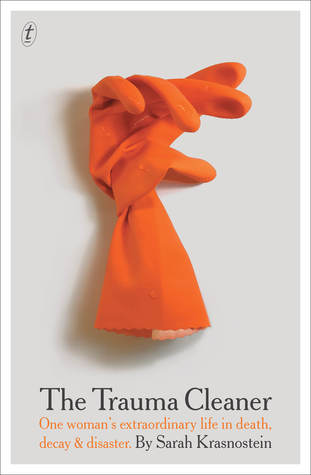
Sarah Krasnostein, The trauma cleaner

Their Awards Archive site takes a bit of navigation, and doesn’t always present the information in the most ideal way, but you can find some gorgeous covers there, including Sandy Cull’s award winning cover (2017) for Heather Rose’s The museum of modern love. Another award winner – cover and overall design (2018) – was W.H. Chong’s work on Sarah Krasnostein’s The trauma cleaner. Back in 2018, I attended and wrote up a Canberra Writers’ Festival event involving W.H. Chong.

Specialist Awards

There are also awards run by specialist or special interest publishers, like the Educational Publishing Awards Australia (or EPAAs). These were co-founded in 1993 by the APA (Australian Publishers Association) and the late Professor Mike Horsley, and are organised by the APA which also manages the ABIAs. Most of the award categories are for specific books/educational titles, but they also include Primary and Secondary Publisher of the Year, which, in 2023, were won by SevenSteps (Primary) and Cambridge University Press (Secondary). Publisher Jacaranda has been a regular winner of these awards.

Are you aware of these awards, or of similar awards in your location or area of interest? I’d love to hear about them.

Monday musings on Australian literature: Untangling the tangles

Introducing last week’s Monday Musings, I mentioned that the article I was sharing in that post contained a clue to a curly identification I was working on for my upcoming Australian Women Writers blog post. I said that I might share that puzzle this week, and that is what I am doing.

I will get to that soon, but as I also explained last week, that very article that I shared came with its own identification puzzle. That article was signed W.M., and best I cold find was W.M. Kyle, M.A. (or, William Marquis Kyle). He was a loose fit, because while he was a contemporaneous Queenslander, and did write newspaper articles, his interests seemed more philosophy than literature. Fortunately, some of my regular commenters took up the challenge. (How great is this!)

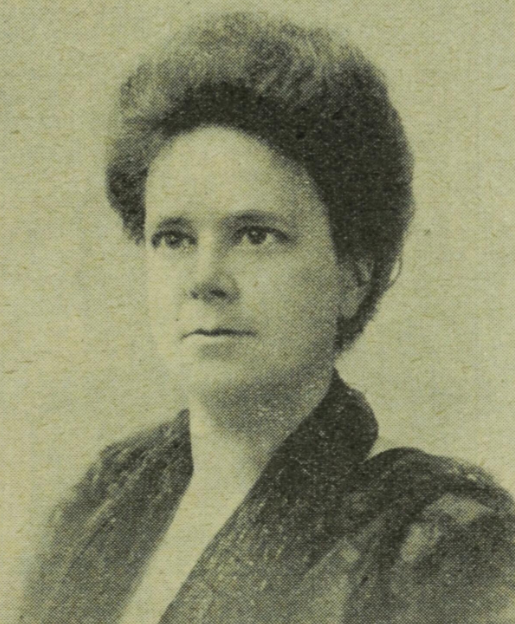
Melanie (Grab the Lapels) posited William Montgomerie Fleming but, while his dates fit, he seems unlikely in terms of his location and focus. I’m glad, though, to add him to my knowledge bank. Meg, however, came up with Winifred Moore, whom she found in Women Journalists in Australian History in a discussion about “the confinement of women journalists to the women’s pages”. Meg wrote that this article said that “under the direction of Winifred Moore from the 1920s, the Brisbane Courier’s ‘Home Circle’ section included a political column of sorts, profiling public personalities in Australia and abroad, alongside the usual recipes and serialised novels.” (You can read more about Moore at the Australian Women’s Register.)

So, of course, I researched Winifred Moore a little more (pun unintended). She wrote the “Home Circle” pages under the pseudonym of “Verity”. But, I also found references to a paper she had given on women writers in 1927 (three years after the article I posted on last week) . So, thanks to Meg, I think there is a good chance that she may be our W.M. I plan to share more on her later. Meanwhile, the original puzzle …

The mysterious J.M. Stevens

I had chosen a story by J.M. Stevens to be my May post for the Australian Women Writer’s Challenge, but, as we find all too frequently, identifying our writers can prove tricky. So it was for J.M. Stevens.

A major source for Australian writers is the (fire-walled) AustLit database and I was delighted to find that J.M. Stevens did have an entry there. It gave me some of her background, including her parentage, and identified an apparently better-known sister as Maymie Ada Hamlyn-Harris, who was a writer and convenor of the Lyceum Club literary circle. It also said that Stevens married John Frederick Stevens around 1917 which means, of course, that her last name stayed the same.

Book cover for The mad painter

Austlit gives her dates as 1887 to 30 May 1944, and uses J.M. Stevens as their name heading for her. They add that she also wrote under other names: Joan Marguerite Stevens, Janie M. Stevens, Joan M. Stevens. The University of Melbourne’s Colonial Australian Popular Fiction digital archive agrees with Austlit’s dates, but uses Janie M. Stevens as their name heading. They list one book for her, The mad painter and other bush sketches, by J.M. Stevens.

All well and good. It seemed pretty straightforward, but I like to find more if I can and this is where things came a bit unstuck because on 31 May 1944, Brisbane’s The Telegraph reported on the death of Mrs Joan M. Stevens. It says:

Mrs Joan M. Stevens, whose death look place yesterday afternoon at her home, Bylaugh, Glenny Street, Toowong, had been an invalid for many years. She was the fifth daughter of the late Mr E. J. Stevens MLC and the late Mrs Stevens, and had lived practically the whole of her life in Brisbane and Southport. Mrs Stevens was gifted musically, showed considerable talent as a painter and like several members of her family possessed distinct literary gifts, two of her books having been accepted for publication in the south. The late Mrs Stevens, who was the wife of Mr John F. Stevens, is survived by her husband, one daughter, three sons, and one granddaughter. Mrs Stevens was the third sister in the same family to die within six months; Miss Alys Stevens died in November last in Melbourne, and her eldest sister, Miss J. M. Stevens, died in Brisbane a few weeks ago.

So, this seems like “our” J.M. Stevens – same death date, and married to Mr John F. Stevens. But, they also mention a sister, “Miss J.M. Stevens”. Oh oh! Who is this? Three months later, on 17 August, this same newspaper announced the posthumous publication of a novel This game of murder, and says it

was written by the late Joan M. Stevens (Mrs J. F. Stevens), whose death took place a short time ago. The late Mrs Stevens, who was the fifth daughter of the late Mr E. J. Stevens, MLC, a former managing director of the “Courier,” belonged to a literary family. Her sisters included the late Miss J. M. Stevens, the writer of short stories and nature studies, whose death occurred earlier in the year. Another sister is Mrs M. Hamlyn-Harris, who has published several books of verse.

Now, AustLit had said that J.M. Stevens (remember, aka Joan M. Stevens and Janie M. Stevens) was a freelance journalist, with articles and short stories appearing in the leading magazines and weeklies in Australia and New Zealand in the earlier part of her life. In her later years, it says, she wrote a long series of nature studies for the Sunday Mail.

I was starting to feel confused. We have a Mrs. J.M. Stevens and a Miss J.M. Stevens. We have a Joan M. Stevens and a Janie M. Stevens. And it seems that despite AustLit’s entry, they are not the same person, but sisters who both wrote. We know that Joan wrote This game of murder, but who wrote The mad painter and other bush sketches? The cover says J.M. Stevens. It sounds like a nature-related work – the sort of writing that Miss J.M. Stevens did. Certainly Brisbane’s The Week writing about this book on 7 January 1927 describes its author as “Miss Stevens … nature lover and also something [of] a humorist”.

Then I found it! The Brisbane Courier, in an article on Queensland writers on 15 October 1927 identifies Janie Stevens as The mad painter’s author. So, clearly we have two sisters here with the initials J.M. One (Miss Janie) wrote The mad painter, and the other (Mrs Joan) wrote This game of murder. The life dates (at least, the death date) given by AustLit for J.M. Stevens and the Colonial Australian Popular Fiction archive for Janie Stevens, are for Joan. I have shared all this with the AustLit researchers who are always happy to receive feedback. Their challenge now, besides confirming my deduction, will be to identify who wrote which of the newspaper articles ascribed to J.M. Stevens!

I really should be doing more reading …

Monday musings on Australian literature: Queensland’s women writers, 1920s

Yesterday, as I was trying to untangle a curly identification for my next Australian Women Writers blog post, I came across an interesting article in The Brisbane Courier. Published on 15 October 1927, and penned by one W.M., the 1300-word article is titled “Queensland Women Writers: Poets and Novelists“. Of course, it caught my attention, and not only because buried within was an important clue for my puzzle (about which I might write next Monday).

Although I’ve written several Trove-inspired posts about Australian literature in the 1920s and 30s, this one caught my attention for two reasons – it is focused on just one state (Queensland) and is limited to women writers. I don’t know whether W.M. wrote separately about Queensland’s men writers, because it’s hard to search on by-lines like “W.M.” I did try to identify him. He may be William Marquis Kyle, whom I came across via an announcement for a lecture to be given by “Mr. W.M. Kyle, M.A.” He was appointed Professor of Philosophy at the University of Queensland in 1938. The best record I found for him included that “he gave public lectures, wrote and reviewed newspaper articles and was well known as a broadcaster”.  So, on this slim basis, I am going to refer to “W.M.” as he/him.

Queensland women writers

W.M. commences by talking about poetry, arguing that

When we contemplate the work of Australian writers, we can hardly fail to be impressed with the large proportion who have chosen poetry rather than prose as their medium. May it not be that a young nation, like a young writer, turns to poetry as more fitting than prose to express wonder and joy in a country which inspires emotions and sensations most appropriately uttered in lyrical form?

He goes on to say that whether his reasoning is true or not, “there is a larger amount of creditable verse than prose in the imaginative literature of Australia” and this is “apparent in any survey of the women writers of Queensland and their work”. But, he says, two novelists do occupy the first and last positions in his chronological list of Queensland women writers: Mrs Campbell Praed and Mrs Dorothy Cottrell. Both have appeared on my blog before.

W.M.’s article starts with brief paragraphs on the older writers. They are (links go to their Wikipedia pages):

For these six writers, W.M. identifies a work or two, and adds some assessment or description. I’m not sure why he allows Sumner Locke her own name, given she married Henry Logan Elliott. Perhaps it’s that most if not all her works were published before she married, and she died the following year. Anyhow, he praises her, saying “her style was forcible and direct, as shown in her novels”.

He has positive words for all these writers. Of Rosa Praed, he says:

Her style was simple and illustrative, and she had the faculty of making her characters “live.” Her descriptions of the social life of early Brisbane, centring in Government House, show that in many respects the social life of the present time still resembles that of 30 years ago.

Mary Hannay Foott’s “poetic style was simple, but distinguished by considerable lyrical power”, and he praises her versatility. Mabel Forrest’s early promise, evident in a story published when she was 10, “has been fulfilled by an exceptionally large output of poetry, short stories, descriptive articles, and novels”. And, while her novels “contain many descriptive passages of outstanding charm and sincerity, upon her verse rests her claim to rank among the foremost writers of Australia to-day.” Her novel The wild moth was adapted to screen by Charles Chauvel in The moth of Moonbi.

Emily Coungeau had, he says, “a mind attuned to the beauty of Nature and the best in human hearts” which enabled her “to produce verse of much charm and sensibility”. Emily Bulcock’s poetry, on the other hand, was characterised by a “strong spiritual note”.

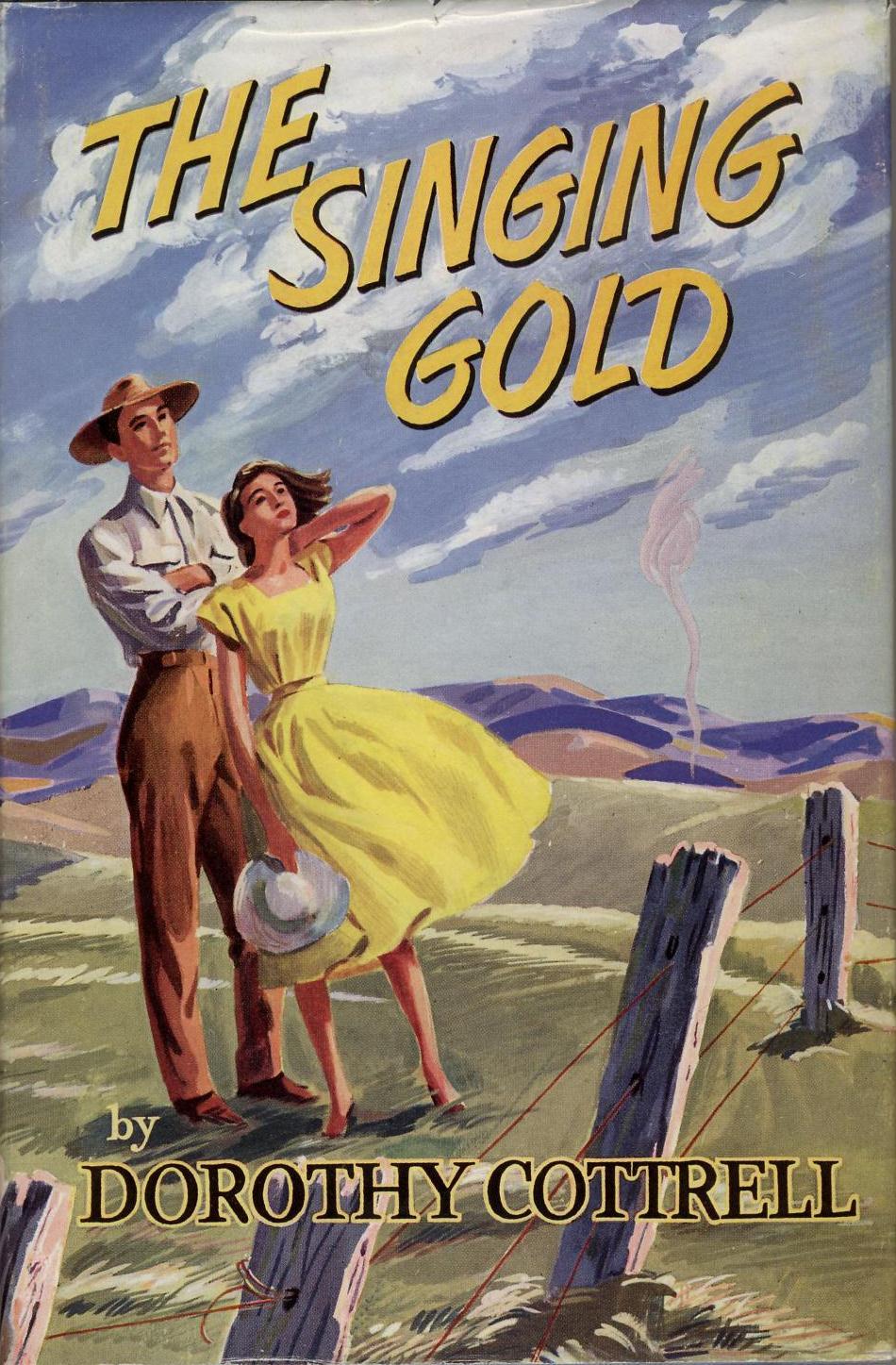
The rest of the writers, listed under the heading “Other writers”, are given one sentence or less, with the exception of the first in the list, Zora Cross. Her reputation has lasted more than most of the above. The reason for the short shrift given to her seems to be that she made her home in Sydney, so, not really a Queensland writer it seems! Few of the others are remembered today, except perhaps for the last on his list, the aforementioned Mrs Dorothy Cottrell. She, he writes, “is hailed by American publishers as a writer of exceptional power”. Her novel The singing gold was first serialised in The ladies home journal. The cover here is the 1956 edition (obvious from the fashion!) which suggests she remained popular for some time. A later story of hers became Ken Hall’s 1936 film, Orphan of the wilderness.

However, I will comment on one other. Wikipedia and the ADB have an entry for Nelle Tritton (1899-1946) whom Wikipedia writes as Lydia “Nellé” Tritton, and ADB as Lydia Ellen (Nell) Tritton. She had an interesting life. She was born in Brisbane in 1899, but in her mid-20s, she went to London and toured Europe, gained “a reputation for knowledge of international affairs”, and married a former officer of Russia’s White Army. The marriage ended in 1936, and in 1939, she married the exiled Russian prime minister Alexander Kerensky in Pennsylvania. ADB writes of their time in America that “their life, when they were together, was idyllic, with numerous visitors and games of croquet”. W.M. tells us none of this – much of which happened after 1927 – but it’s interesting that he’s included her, given she was barely in Australia. All he says of her is that “while still in her teens” she wrote a booklet of “Poems”. Curious – but fascinating. 

W.M. concludes that, from his brief survey, “it is evident that the work of Queensland writers has reached a standard which justifies and claims adequate attention from the reading public”, and he quotes literary critic Bertram Stevens, who had died in 1922 but had apparently said:

Australia has now come of age, and is becoming conscious of its strength and its possibilities. Its writers to-day are, as a rule, self-reliant and hopeful. They have faith in their own country; they write of it as they see it, and of their work and their joys and fears in simple direct language.

Monday musings on Australian literature: Trove treasures (12), A rare humorous novel

I was unsure about whether to make this post part of my Trove Treasures or Forgotten Writers series, but Wikipedia tells me that in 2006, the historian John Hirst, writing in The Monthly, included this author’s book, The colonial Australians, in a brief list of the best Australian history books of all-time. That probably means he’s not quite forgotten, wouldn’t you think? So, a “Trove Treasure” it is. The author is David Forrest, which is the name used by historian David Denholm for his fiction.

David Denholm was born in Maryborough, Queensland, in 1924 – the place where I, also, was born but, more significantly, it was the birthplace of P.L. Travers, the creator of Mary Poppins. Denholm died in Wagga Wagga, just 3-hours drive from where I live now, in 1997. He has an entry in Wikipedia and in AustLit. From these I gleaned that he served in the Australian army, in New Guinea, during World War 2 and worked in the banking industry until 1964. (I can’t resist adding here that Pamela Travers’ father was a banker, as was my own.) He was a mature age student when he went to university, first to the University of Queensland and then the Australian National University, where he gained a Ph.D in history. He ended his career as an academic in history at the Riverina College of Advanced Education.

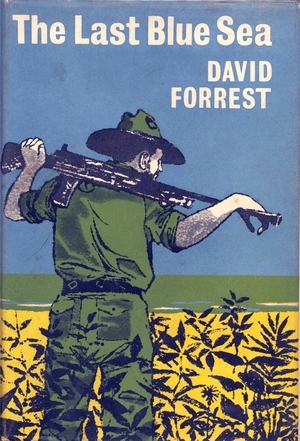
He wrote two novels. His debut novel, published in 1959, was The last blue sea. It is set in New Guinea during World War 2. It focuses, in particular, on the difficulty the Australians faced in fighting in the heat and rain of New Guinea. Wikipedia shares that it has been called “the classic short novel of the New Guinea campaign.” It apparently won the first Mary Gilmore Prize. I wrote last year about his winning this award, but it wasn’t clear in my research that he was the first winner. Now I know.

However, the book which inspired this post, was …

His humorous novel

The Trove Treasure I found was in Sydney’s Tribune on 12 September 1962 and was written by someone signing as R.W. S/he started with:

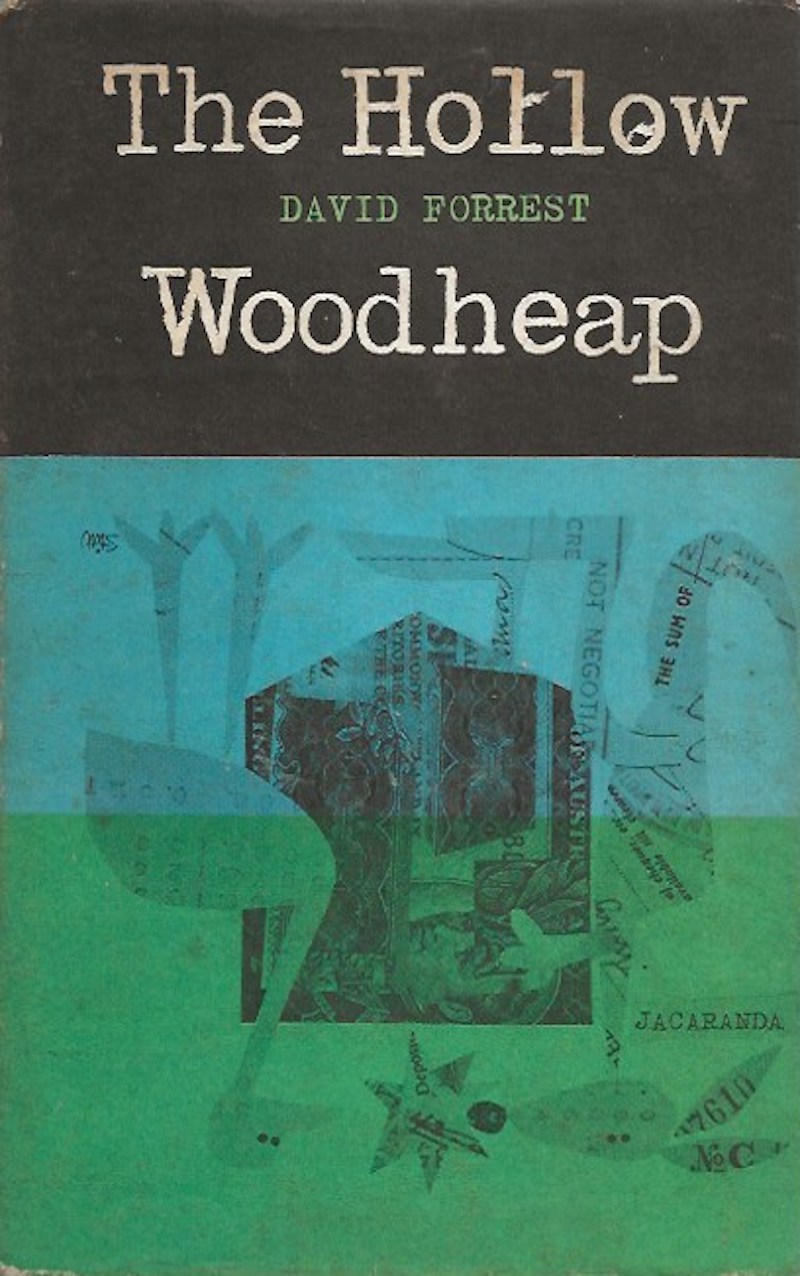
Humorous novels are not particularly common in Australian literature, or for that matter in any other. This is all the more reason why we should be grateful for such a deliciously humorous work as David Forrest’s new novel, “The Hollow Woodheap”. Not since Lower’s famous “Here’s Luck” has the Australian reader’s sense of humour been so titillated.

It seems that Forrest took to heart the advice to “write what you know”, because his first novel was set during World War 2 in New Guinea, where he had served, and this novel, says R.W., “deals with life in the branch office of a bank in Brisbane” which is where he was working at the time. Critiquing the book, R.W. says that the “the plot is rather flimsy” with the humour deriving “mainly from the personalities and behaviour of the characters in their office environment”. Forrest “reveals a sense of the ridiculous and a capacity for irony, of which there is not the slightest trace in his war novel”. My question is, does the humour have a point? R.W. continues,

The new novel is not a work of profound social criticism, but in his lightly humorous way, the author makes many a sharp jibe at the snobbery and red tape of banking institutions, and at the soulless careerism which corrupts those who cannot resist the lure of money, power and status.

I found little else about the book, but I did find a review-rebuff in a Letter to the Editor in The Canberra Times (14 August 1962). Unfortunately, I could not find the actual review, but Maria Reah did not agree with some criticisms the reviewer had made. I’ll just share one paragraph from her letter:

It is true that most of the characters—the bank manager (The Keg), the bank inspector (The Drummer), the savings bank officer (St. Joseph the Bloody Worker), and the three models of managerial material (Mark One, Mark Two and Mark Three)—are caricatures, but Forrest is not the first creative artist to use caricature to good purpose. If these characters were developed more fully they would lose their value as symbols. For The Hollow Woodheap is more than an attempt to poke fun at “the establishment,” though it does this very successfully. It presents a novelist’s impression of Australian society. The sociology is impeccable, but unobtrusive. The young man who wrote the book is not angry enough to lose sight of either the patterning of social life or the lighter aspects of this patterning. His humour is never plodding, as it appears to your reviewer.

Finally, I’ll return to R.W. He hopes that Forrest will write more humorous novels. As it turns out, while he lived another thirty or so years, Forrest wrote no more novels, humorous or otherwise. Wikipedia , however, does say that he wrote a notable and humorous short story, “The Barambah mob” (1963), which has been often anthologised.

I could say more about Denholm/Forrest, but my point for this post is simply this little “treasure”. I agree with R.W. that good humorous novels are hard to find, but they add so much to our literary environment.

Do you have a favourite humorous novel, and would you share it with us?

Monday musings on Australian literature: Reading groups aka bookgroups

Many litbloggers, I know, also belong to reading groups or bookgroups. (I use the terms interchangeably.) Jonathan (Me fail? I fly!) regularly writes engaging posts about his groups and their discussions, such as this most recent one on Paul Murray’s The bee sting. And I often refer to mine, though not with the same detail that Jonathan does.

A good bookgroup is a special thing, and those of us in successful groups often receive requests from others to join them. Unfortunately, most of those requests get turned away. There are only so many people a group can sustain – both physically in terms of the homes where most of us meet, and practically in terms of managing discussion. There is a sweet point between too big and too small, but I digress. This post is not about discussing these bookgroups. Instead, I want to focus on what those people looking for a bookgroup can do if they can’t find one or start one of their own. So, here are some ideas that might help you know where to start looking …

Public libraries

Some public libraries, as you would expect, do run or host reading groups. An example is the City of Parramatta library system in Sydney. They meet monthly at different branch libraries to “to discuss books, share ideas and have fun in a casual friendly environment”.

Other public libraries offer book club sets or kits for use by reading groups, but these tend to be for off-site pre-existing reading groups. They can be useful if you are in a group, or even if you want to start a group. The ACT Library Service offers this service, as indeed does the City of Parramatta.

The website, Australia Reads, lists, by state, many such library book clubs, so it’s a good place to start if you are in Australia.

Sometimes, public libraries provide a venue for reading groups that are run by an external group. A special example of this is Melbourne’s (and maybe Australia’s) longest running book group, the Ivanhoe Reading Circle which started in 1920. This group, these days at least, is a large group at which, I understand, a member presents on the chosen book, and then the floor is opened for questions and discussion. One day, when I am in Melbourne, I hope to get to it.

Adult education

Adult education services have been in the business of encouraging and supporting book discussion in Australia since the early days of the colony. Mechanics Institutes and Schools of Art developed libraries for use by their members, who were often workers with few resources for books. Many also ran courses and some have organised, and still do, reading groups. For example the Sydney Mechanics’ School of Arts badges itself as supporting members since 1833. They currently have many members-only interest groups, and these include a Mystery and Crime Reading Group. Likewise, the Ballarat Mechanics Institute offers a reading group (though I’m not sure that it has survived COVID.)

Then, there are discussion groups run or offered by organisations like Sydney’s WEA (the Workers Education Association, established in 1913) and the U3A (University of the Third Age). These groups tend to be member run, so you join and then try to find a group near you. They can have waiting lists, but they are a good option. Teresa, who often comments here, has been running a U3A Landmarks in Australian literature discussion group in Melbourne for years. I notice that on the same webpage is another group which discusses American literature. My mother was a member of a Canberra U3A reading group, until she died.

And, rather like the public library book services mentioned above, there are groups like Victoria’s Council of Adult Education which has been providing books to reading groups, around Australia, since 1947. My own group used this service for a few years. They also offer a reading group finding service. How good is that!

Bookshops

And then, of course, there are bookshops. Pam (the Travelling Penguin) belongs to one at Fuller’s Bookshop in Hobart. They run quite a few groups, in fact. In her most recent post, Pam not only mentions what she’ll be reading next, but shares that Fuller’s has just won the Best Bookshop in Australia at this year’s Australian Book Industry Awards. The judges praised the store for its “first-class events program and investment in fostering literacy”. (It just so happens that I met Pam last year in the Fuller’s cafe when I went to Hobart for my brother’s book launch and exhibition opening.)

Muse bookshop
Muse bookshop (before an event)

Closer to home is our very own Muse, about which I have posted many times, because they also run author conversations as well as two book groups. Unfortunately, I have not attended the bookgroups because they clash with my commitments. But, I regularly check out what they are discussing and, if I can catch him, talk to bookseller Dan about the chosen books and anything else we are reading. The two bookgroups Dan runs are the Translation Book Club and the OzLit Book Club.

Then, moving north up to Queensland, there’s the active Avid Reader bookshop in Brisbane. They have a Bookclubs Manager, and offer several bookclubs, including Fiona’s Open Bookclub, the High Noon Bookclub, the Her Voice Bookclub and, even, an Online Bookclub. The onsite bookclubs are free if you purchase your book from Avid Reader, or $10 if you don’t.

So…

This is not meant to be at all comprehensive – how could it be – but to provide some starting points for those who might be looking for a reading group. Or, just give you a sense of the breadth and depth of the book-ish world. You – and we – are not alone!

I’d love to know if you have had experience of looking for a reading group, and/or if you can add to the ideas here or just share your favourites.

Monday musings on Australian literature: Stella Prize 2024 Winner

The 2024 Stella Prize winner was announced last Thursday, the 2nd of May, but that was the also the day my blog turned 15, and I didn’t want to flood cyberspace with too many posts. Then this weekend was the SixDegrees meme which meant another post coming at you. So, I decided to do my Stella 2024 post, this year, as a Monday Musings. It makes sense to do so, in fact, because it’s an historic win. First though, the winner, for those of you who haven’t heard yet:

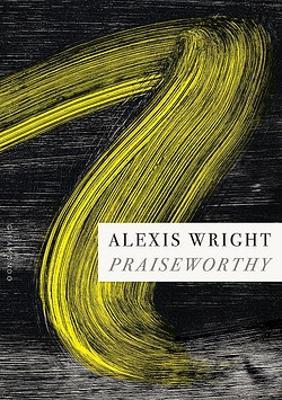
Alexis Wright’s Praiseworthy

Why historic? Again, some of you will already know this, but Alexis Wright, one of our leading First Nations writers, is the first writer to win the Stella twice in its 12 year history. An impressive achievement by any measure. I am embarrassed to say, however, that of the now four Stella winners I haven’t read, Wright’s two are among them. This is not because I don’t want to read them, but because they are big tomes, and my life doesn’t seem to lend itself these days to chunksters. I read and loved her multi-award winning novel Carpentaria (my post), which was big enough – at over 500 pages – but that was before blogging when time pressures felt different! Clearly, though, I should make time for this because, from what I can tell, its subject matter is something I care about and it has the wit and playfulness, passion and imagination, that I loved in Carpentaria.

Praiseworthy has already been recognised by the literary establishment. Last year it won the Fiction Book Award in the Queensland Literary Awards. Further, as publisher Giramondo shares, it has been shortlisted for many other awards: The Dublin Literary Award 2024; the People’s Choice Award, the Christine Stead Prize for Fiction and the Indigenous Writers Prize in the 2024 New South Wales Premier’s Literary Award; The James Tait Black Prize for Fiction 2024; and the Queensland Premier’s Award for a Work of State Significance in the 2023 Queensland Literary Awards.

The chair of the judging panel said this about the book:

Praiseworthy is mighty in every conceivable way: mighty of scope, mighty of fury, mighty of craft, mighty of humour, mighty of language, mighty of heart. Praiseworthy is not only a great Australian novel – perhaps the great Australian novel – it is also a great Waanyi novel. And it is written in the wild hope that, one day, all Australian readers might understand just what that means. I do not understand. Not yet. But I can feel history calling to me in these pages. Calling to all of us. Imagine if we listened.

Giramondo’s (above-linked) page for the book, includes excerpts from other critics and reviewers. Samuel Rutter of the New York Times Book Review describes it as “the most ambitious and accomplished Australian novel of this century”, while Jane Gleeson-White wrote in The Conversation that “Praiseworthy is Alexis Wright’s most formidable act of imaginative synthesis yet…a hero’s journey for an age of global warming, a devastating story of young love caught between two laws, and an extended elegy and ode to Aboriginal law and sovereignty”. More than one references Ulysses, such as Ruth Padel, who describes it in The Spectator as “an impassioned environmental Ulysses of the Northern Territory… Playful, formally innovative, multi-storied, allegorical, protean and dizzyingly exhilarating, it is long, lyrical and enraged”. Several, in fact, praise the language; and many comment on its satirical aspect, its lyricism, its comedy. Lynda Ng, in Meanjin, calls it:

The finest distillation yet of Wright’s themes – a bold assertion of Aboriginal sovereignty that successfully encompasses all areas of life: culture, economy, and jurisprudence.

Of course, Giramondo has selected excerpts that praise, but the sources of that praise are impressive.

There are those who think that she should/may/will be Australia’s next Nobel Laureate for Literature.

Returning to the Stella, you can read more on the Stella website, including a link to Alexis Wright’s acceptance speech, and an expressive video performance of a brief scene from the novel by Boonwurrung actor Tasma Walton.

Just to remind you, this year’s Stella judges were writer, literary critic, Artistic Director of the Canberra Writers Festival and this year’s chair, BeeJay Silcox; Filipino-Australian poet, performer, arts producer, and advocate, Eleanor Jackson; First Nations award-winning poet and arts board member, Cheryl Leavy; novelist, occasional critic and full-time dad, Bram Presser; and writer and historian, Dr Yves Rees.

Wikipedia offers a well-presented complete list of the winners and all the short and longlisted books.

Thoughts anyone?

Monday musings on Australian literature: Forgotten writers 4, Kate Helen Weston

In 2021, I started my Monday Musings sub-series on forgotten Australian writers, with posts on Helen Simpson and Eliza Hamilton Dunlop. This year I added Marion Simons, who was my first post on the Australian Women Writers (AWW) blog this year. As I explained then, Elizabeth Lhuede and I have decided to focus this year on sharing public domain works published in 1924 – or written by writers who died in 1924. So today, I am introducing another writer I’ve posted on there, Kate Helen Weston.

As with Marion Simons, I am not including here the piece written by Simons that I published at AWW. It is an entertaining piece titled “The ubiquitous apostrophe”. If love discussions of grammar and punctuation, do check it out at AWW.

Kate Helen Weston

Kate Helen Weston (1863-1929) was born Kate Helen Carter in Ballarat, Victoria, to British parents who came to Australia for the gold rush, but she died in Adelaide. Indeed, one “L.B.” described her in The Australian Woman’s Mirror (of 24 February 1925) as “one of the best-known of Adelaide’s feminine inky-wayfarers”. She has an entry in AustLit, and in Debra Adelaide’s Australian women writers: a bibliographic guide, but not in the Australian dictionary of biography or Wikipedia. Adelaide’s News (10 December 1924) provided a brief biography of her in their “Pen Portraits of People” series, after she was elected president of the Liberal Women’s Educational Association.

These sources aren’t quite in tune with each other. AustLit says that she married John Samuel Weston “in Adelaide in 1885, and moved there in 1892”. Adelaide’s News says she married “Mr. J.T. Weston … and later came to Adelaide”. AustLit says that she was widowed in 1894, and “turned to writing to provide financially for herself and her children. She contributed to many Australian newspapers, and published fiction between 1911 and 1928”. They also say that “she was Lady Superintendent of the Elder Conservatorium in Adelaide between 1900 and 1914”. The News, on the other hand, says that “after her husband’s death she accepted the position of secretary to the Elder Conservatorium, which she held for 22 years”. So, some minor differences in detail here – in the name of her husband and in her Elder Conservatorium role. These would be good to clarify, but for now I’m noting them and moving on.

The News tells us that she “developed literary and artistic tastes” and had published three novels in London. In fact, she published four novels, one a few years after the News’s article. Her novels were The partners (1911), The man MacDonald (1913), The prelude (1914) and The vagabond soul (1928). The man MacDonald, says News, “had a wide vogue”. Melbourne’s Table Talk (26 July 1928), announcing the publication of The vagabond soul, said that “the story, which contains a dramatic situation of some originality, is entirely Australian in setting, and it is written with the same facile spontaneity which characterises Mrs Weston’s other novels”. But, her novels have not lasted.

Both AustLit and the News mention her other literary and journalistic work, but AustLit is more specific, telling us that she contributed to many Australian newspapers. They say she was “music and art critic for The Register, contributed to The Woman’s Record – a monthly publication – and, according to her obituary in The Advertiser, she was the ‘founder of community singing in Adelaide’.” She received a Commonwealth Literary Fund Fellowship in 1915, and was also actively involved in the National Council of Women.

Weston was clearly well-known in Adelaide’s literary circles. The News (9 September 1924) reports on an address she gave at the monthly meeting of the Liberal Women’s Educational Association. (Th Association aimed to educate women in political and social matters, but, said The Register on 2 March 1926, it could also become active in social reform, “when necessary”.)

Anyhow, the focus of Weston’s talk was Australian Women Writers. The News starts with:

It was not until one began to reckon up the women writers of Australia, said Mrs. Weston, that it was realised how many there were and what a contribution they had made to the literature of Australia in poetry, prose, and journalistic work, though it was only of late years that woman had met man on equal ground in the field of journalism. 

Turning then to poetry, she said that Australian men were credited with being better poets than Australian women, but she believed that the work of women poets was “possibly much more original in style as it bore the impress of no old world stylist, and invariably expressed the writer’s personal outlook on life”. Mary Gilmore, for example, “spoke always with a woman’s voice and wrote, not of things but of humanity and the home”. She named, and apparently read from many, contemporary Australian poets.

She then talked about fiction, arguing that it’s through fiction that the life of an age is chronicled. She named many novelists including those we still recognise today, like Mary Gaunt, Ada Cambridge, Mrs Campbell (Rosa) Praed, and Ethel Turner. She also mentioned – and I think this is an astute and significant recognition – the “many letter writers, whose small contributions fitted into the interstices of the wall of literature which was being built”. 

She concluded by arguing that the Commonwealth Government needed to more actively encourage Australian literature. She pointed to the lack of Australian publishing houses and the small market. She said, writes the News, that “writers of fiction could not afford to remain in their own country, but were forced to go to the fogs of London or the bustle of America, where they lost their nationality and their English”. And she urged would-be writers “to read all styles, and copy none” – and to practise constantly. 

The News and AustLit both describe her other, considerable, community involvements and achievements. These included having a tilt at politics. The News writes that she stood for a ward in municipal elections in 1923, and “polled the highest percentage of votes ever gained by a woman in the elections in this State”. Her death, after falling from a tram from which she never regained consciousness, seems tragic.

So far I have written on four women writers for this year’s AWW project. Two, Marion Simons and Alice Tomholt, never married, and two, Kate Helen Weston and Lillian Pyke, were widowed with young children. All, it seems, managed to eke some sort of living from writing. 

Monday musings on Australian literature: 1937 in fiction (2) – and Trove

Karen’s (Kaggsy’s Bookish Rambling) and Simon’s (Stuck in a Book) “Year Club” officially finished yesterday, but I focused so much in last week’s post on the issue of the state of Australian criticism, that I didn’t get to share some other ideas I found. So, I’ve decided to bookend the week with Monday Musings posts!

Trove

First, though, I’d like to explain a little about how I use Trove. For those who don’t know what Trove is, it is an online library database managed by the National Library of Australia. It is a fantastic resource for researchers because it contains an extensive – in depth and breadth – range of digital resources, including newspapers, journals and gazettes; official and personal archives and manuscripts; images; archived websites; and more. I mostly use the digitised newspaper collection, so I’m going to focus on it.

The process for putting non-born-digital newspapers online involves scanning the papers (from print or microfiche form) and then using OCR (optical character recognition) to produce readable text. On Trove, we see both the original and the OCR-ed texts. The quality or accuracy of the OCR text varies greatly, depending on the quality of the original from which the scanning was done. Trove’s solution to this has been to use crowdsourced (aka volunteer) text-correction.

Of course, as a librarian, I can’t use a service like this without doing my bit, so whenever I search Trove I end up doing corrections. This can be a tedious business when the original was poor, and can take a large amount of time. But, I don’t want to link in my blog an article that my readers will find hard to read, so, to do the time! The result is that I may not always research Trove as much as I would like in order to write my posts, but I hope that I research enough to make what I say valid or worthwhile!

I do sometimes cut corners. Where the item I am interested in is, say, part of a multi-subject column, I will, occasionally, only correct the section of interest to me. That’s a pragmatic decision I just need to make sometimes. (Just telling you in case you click on one of these links and wonder what I have been doing!!)

Back to 1937

On developing Australian literature

In my last post I focused on discussion about the importance of a good critical culture to the development of an Australian literature, but other thoughts about the state of Australian literature were also shared during the year. For example, in February, commenting on a gathering – attended by “many prominent men” – to commemorate Henry Lawson, the Williamstown Advertiser observed that Lawson’s “Australianism” is a heritage to be treasured, and that Australians need to

encourage home writers whose individuality cuts through the meshes of old-world hyperorthodoxy in literature, which conveys an assumption that the “blawsted colonials” are mere vulgarians.

Two months later on 10 April, Melbourne’s The Herald ran an article discussing the development of Australian literature, comparing it with the the challenges faced by American literature. It looked at the two nations, and commented on the problems faced by Australian writers. It suggested that America had now developed its own style. From the realism of Dreiser and Anderson, “the American literary spirit has taken lucid shape in the works of Ernest Hemingway and John Dos Passos”. It says that this new spirit represents “a revolt against nineteenth century English romanticism” and that the new style encompasses “typical Americanisms, the characteristic speech, the special vocabulary, the distinctive syntax and, above all, the natural mode of expression”.

Is Australia ready for “the emergence of a style in which an Australian outlook is implicit, and which would incorporate the characteristic speech, syntax and vocabulary of Australia?” Creating this, it argues, “is a labor of love; there is no material reward in it, at present”. Unfortunately, Australia, it says, has not recognised its similarity to America, and “is still awed by the heaped-up riches of the English literary tradition”. This does not, it concludes, prevent our making an “intelligent assessment of the lines upon which distinctively Australian writing should, develop”.

A week later, 17 April, there was a lengthy riposte in The Herald. You can read it at the link provided, because it covers several issues, but it starts by arguing that the most important issue is

that people read books not because they are written by Englishmen, or Americans, or Australians, but because they are entertaining.

So there, you writers! Write what the readers want! “Patriotism,” it says, “does not enter into the plain man’s choice of books”. It accepts that there’s a critical minority of readers who are interested in the technical experiments needed to improve literary standards, but

A critical minority … does not make a best-seller. For that the writer must look to the reading public as a whole, to the suburban libraries, to the man who has never heard of James Joyce or Aldous Huxley— except when one of his books is banned.

The article then argues that Australian artists have developed an Australian style, and suggests how Australian writers might proceed. It concludes that “it would be absurd to believe that the public is hostile or the Australian scene barren” (which I don’t believe the previous article argued.)

Education

Education is critical to encouraging interest in local literatures. At least, it is, I’d argue, for those whose culture has been – or risks being – swamped by larger cultures. The issue of education popped up a few times in 1937.

A pointed reference came from Brisbane’s The Catholic Advocate of 14 October. Written, I believe, by “Pasquin”, it opens with:

Is there a Chair of Australian Literature in any one of our six Universities?

It notes that “the University of Queensland tacks on to the course of English literature half-a-dozen lectures or so on Australian letters”, but then says

Surely it is a disgrace to Australia that in none of our seats of learning is our literature considered worth anything more than a digression or an aside.

It then goes on to ask how many Professors of English Literature are Australian? Go Pasquin, eh? “It is no wonder we have an inferiority complex”. Pasquin then pushes on:

How many are English ex-patriates like Professor Cowling of Melbourne, who in a recent article in the Sydney Morning Herald declared that he was at a loss to name a single Australian novel suitable for the classroom.

Hmm … Many journalists in 1937 could name “good” Australian writers, like, Henry Handel Richardson and Katharine Susannah Prichard! Pasquin concludes by saying that “Even J. T. Lang has been moved to describe the Senate of the Sydney University as “the most un-Australian body in Australia.”

Meanwhile, grass roots action was occurring. The Sydney Morning Herald reported (14 October) that the Workers’ Educational Association (WEA) had organised “a tutorial class in Australian Literature” for the summer. It was to be run by Fisher University librarian and critic H. M. Green, and Hartley Grattan, an American literary critic, with expertise in Australian literature.

On 9 November, Sydney’s The Workers Weekly reported that a Central Cultural Council had been established as the result of a conference convened by Sydney’s Writers’ Association. Indeed, it appears this conference had not only inspired the abovementioned WEA course but the Teachers’ Federation deciding to give more attention to the teaching of Australian literature in schools!

Keeping to the subject of schools, my last 1937 article comes from Queensland’s The Northern Miner on 18 December. It reported on a speaker at a Sydney luncheon. Dr. G. Mackaness, described by the ADB as “educationist, author and bibliophile”, made an “appeal for a better appreciation of Australian literature”. He saw the education system as one of the problems, and said “it was appalling that over a period of five years only one Australian writer was included in the books which had been chosen for Leaving or Intermediate Certificate examinations”. This report concluded that:

The fault of lack of appreciation of Australian literature was equally divided among those who had the selection of certain literature for studies, the non-progressiveness of Australian publishers to help the Australian writer, and the uneducated mind of the average Australian to the culture obtainable from Australian authorship.

We have come a long way since then, but there’s always more to do…

Previous Monday Musings for the “years”: 1929, 1936, 1954, 1940, 1962 and 1937.

Monday musings on Australian literature: 1937 in fiction

Once again it’s Karen’s (Kaggsy’s Bookish Rambling) and Simon’s (Stuck in a Book) “Year Club” week. This time the year is 1937, and it runs from today, 15th to 21st April. As I’ve been doing for a while now, I am devoting my Monday Musings to the week.

If the 1960s, from which our last “year” came, were exciting for many of us, the late 1930s were very different, particularly for those living in Europe. Of the 1930s, in general, Wikipedia writes that “the decade was defined by a global economic and political crisis that culminated in the Second World War”. For my purposes here, that just about says it all. It certainly provides a flavour for what concerned the major writers of the period. Realist fiction was still in force, and in Australia writers like Marjorie Barnard, Flora Eldershaw, Frank Dalby Davison, Eleanor Dark, and Katharine Susannah Prichard were expressing their ideas about social and economic injustice, for example. Many were pacifists, and many supported or worked for the trade union movement. It was, generally, an unsettled time, here and abroad. (By way of contrast, the best-selling book in the USA in 1937 was, apparently, Gone with the wind! But this was also the time of John Steinbeck, et al!)

I found books published across all forms, but as my focus here is Australian fiction, I’m just sharing a selection of novels published in 1937:

There were very few literary awards at the time, but the ALS Gold Medal went to Seaforth Mackenzie’s The young desire it. He is now among the least known of the authors listed above.

Writers born this year include novelist Colleen McCullough (died 2015) and political scientist and writer Don Aitkin (died 2022). I didn’t find many deaths, but novelist Catherine Martin (born, 1848) died this year.

Finally, also in 1937, the Commonwealth Literature Censorship Board replaced the Book Censorship Advisory Committee. It temporarily lifted the ban on James Joyce’s Ulysses – only to re-apply it again in 1941 after pressure from church groups.

The state of the art

As always, I checked Trove to see what newspapers were saying about Australian literature, fiction in particular. In addition to references to specific books and events, what I found overall was concern about the state of Australian literature, along with discussions about causes and remedies. This is similar to 1936, which I wrote about in my Monday Musings for the 1936 Club, so I’ll try to supplement – rather than repeat – what found then.

One issue discussed several times through the year concerned the importance of a good critical culture, so that’s my focus for this post. The Telegraph (14 April) took up this issue, arguing that the “leading articles” papers publish at the end of the week, versus the reviews published during the week, make a “considered contribution” to “strengthening … literary values among the numerous readers who look to the daily Press for guidance among a vast and ever-changing array of books”. The article comments on the importance not of comparing (“grading”) writers, but of offering

a consideration of their absolute quality as writers. The practice of relative appraisal too often leads to confusion where the authors considered are admittedly worthy of critical study, but derive their literary strength from different sources. The wise newspaper critic of fiction — it is with fiction that for the moment we are primarily concerned — is he who endeavours to establish the qualities which explain his attraction to, or repulsion from, a writer and then evaluates those qualities by the degree and consistency of his own sensibility.

That’s a nice, clear description of criticism – to establish one’s criteria and then evaluate them.

The Telegraph makes the point that Australia is capable of producing good literature. It believes that while achievement is uneven across the different forms, there is “no cause for pessimism about the future of Australian literature”. Indeed, the article says that:

A country that has produced, among living novelists*, Henry Handel Richardson, Vance Palmer, Katherine Susannah Prichard, Miles Franklin, Helen Simpson, the Barnard-Eldershaw combination, and Brian Penton is not deficient in generative power …

And adds that more writers could be added to this list.

Meanwhile, “Norbar” (Dr Norman Bartlett) in The West Australian (7 August) also discussed critical culture, observing that

One of the great disadvantages under which those in Australia who are genuinely interested in national literature suffer is the lack of guidance. Other national literatures have reliable historical and critical signposts. 

His point was that in Great Britain, for example, “reputable literary periodicals, with critical traditions”, help readers make choices. Critics, he admits, “are often wrong, and commercialism has tainted the trade of criticism, but there is a tradition of judgment”. No-one, he says, who is interested in Virginia Woolf would buy books by romance novelist Ethel M. Dell. He then discusses the work of two critics, the American expert on Australia, C. Hartley Grattan, and the Australian, H.M. Green. Speaking of Grattan, Norbar makes an important point about the role of critics:

To accept him as a guide is not to accept his judgments, but he serves the purpose that competent introductions to English literature serve, by erecting signposts in the wilderness of letters.

In other words, it’s not the “absolute” lists of names that are important but the guide they provide to the literary landscape – and, thus, presumably, encouragement for debate.

The final two articles I’ll refer to come from The Age. The first (18 September) is ascribed to R.G. (presumably, the academic and founding editor of Southerly, Robert Guy Howarth), and the second (2 October) is a response from poet and critic, Furnley Maurice (Frank Wilmot), who takes offence at R.G.’s analysis of the state of Australian literature.

R.G. commences by arguing that:

Contrary to the opinions of some critics, Australian literature is not a dependent off-shoot of English literature, but is a vital entity in process of achieving expression of its individuality.

He has very clear opinions about the development of a truly Australian literature, much of which we would agree with now. He talks about its needing to pursue its own course, to be released “from the curb of nineteenth century influences, which have so long entrammelled imagination and held it in subservience to traditional forms and ideas”. While he names some writing that he believes is truly Australian, such as that of Henry Lawson, he believes things have stagnated:

Lack of canonical criticism is responsible to an unfortunate degree for this stagnation, because contemporary Australian criticism stands equivocally in the midst of several schools of thought. A false standard of values has been created by the persistent determination of many commentators to include everything written since Wentworth’s “Australasia” in the category of literature.

Unfortunately, as well as taking criticism to task, he also finds failings in Australian writers! Some have attempted to capture Australian experience, he says, but have failed, and he gives his reasons. These Maurice does not like, so he fights back:

One fact to bear in mind is that the shortcomings of our criticism are as great as the shortcomings of the writing, if not greater. The chief fault of the criticism is one that “R.G.” appears to share — that of making sweeping general statements and giving no particulars. Surely our writers have not all “failed because they lacked technical equipment,” because they “chose banal themes,” or because they “did not possess the basic culture necessary!” Such statements would suggest that “R.G.” has the bad national habit of forming definite opinions before he assembles the facts.

Take that, R.G! He then goes on to identify what he sees as quality Australian literature, and includes* Price Warung, Vance Palmer, Brent of Bin Bin (Miles Franklin), Martin Mills (Martin Boyd), M Barnard Eldershaw, Eleanor Dark and Capel Boake. He challenges R.G. to provide evidence for his statements, and then discusses “the facts” as he sees them, identifying the “difficulties” and “practical conditions” under which Australian writers “must work”.  

He is pleased though that ‘”R.G.” supports a proper national principle in writing even if he has not much to say for the work done to date’. 

While I think Maurice over-reacted somewhat, as R.G. makes some good sense, both writers have something useful to add to the debate, and if you are interested, the articles make good reading. Meanwhile, I will close here – but may very well write a second post next Monday.

* Links are to my post/s on these writers.

Sources

  • 1937 in Australian Literature (Wikipedia)
  • Joy Hooton and Harry Heseltine, Annals of Australian literature, 2nd ed. OUP, 1992

Previous Monday Musings for the “years”: 1929, 1936, 1954, 1940 and 1962.

Do you plan to take part in the 1937 Club – and if so how?

Monday musings on Australian literature: The mysterious 6×8

In a long past Monday Musings I mentioned the names of several people who had commented on the state of Australian literature. Many of these were pseudonyms, including the intriguingly named “6×8”. I decided to dig further, and back in 2015, I pretty quickly discovered that his “real” name was Dick Holt. (It’s not always easy to track down pseudonyms used in the newspapers.)

First published, The Bulletin, 29 October 1898, from Middlemiss

I didn’t find a lot about him back then – besides his own writings – but from what I could gather, I ascertained that Dick Holt had travelled the outback doing charcoal drawings and writing articles for the Bulletin and other journals and newspapers of the time. I presume his “6×8″ pseudonym refers to the old (non-metric) picture size of 6″ x 8”, and the fact that he included drawings in his articles. Presumably there’s a metaphorical layer to this pseudonym, too, in that his stories provided little windows on his world.

In the 1890s, according to a 1934-written reminiscence by “Stockwhip”, Holt travelled with Henry Lawson. “Stockwhip” describes him as ‘the jocular writer and “charcoal” artist, Dick Holt” and says he was “a well-known writer to the Sydney Bulletin and Western Herald of Bourke”. He had his own newspaper column “On the Wallaby”. This title references the phrase “on the wallaby track”, which is Australian slang for travelling from place to place looking for work, which is exactly what he and Lawson were doing in Stockwhip’s anecdote. His columns, at least those I’ve seen, ran anywhere from 1500 to 3000 words, and tended to comprise a collection of anecdotes.

I haven’t found a biography for him – he doesn’t appear in the Australian Dictionary of Biography, for example – but returning to my old draft post this week in order to actually post it, I found that AustLit has documented him a little more. They give him as Richard Holt (a.k.a. Dick Holt, and also writing as 6 x 8), and say that he “wrote a weekly column called ‘On the Wallaby’ in the North Queensland Register from January 1899 to August 1920″. So, over twenty years. AustLit says he was born in 1868, and died ca. 1923 in Tasmania (though a reference to him in February 1923 said he was now “living near Melbourne”.) Anyhow, this roughly accords with my research, which had uncovered that he had died by the mid 1920s. The reference came from columnist, Bill Bowyang (pseudonym of Alexander Vindex Vennard, 1884-1947), who wrote the following little anecdote about him in 1926 in his column, “On the track”:

It was the late Dick Holt (‘6×8’) of ‘On the Wallaby’ fame in the ‘N.Q. Register’ who once stated that when he visited a bush township he always gazed into the jail yard to see if there was a load of wood within. If the wood was there it was a certainty that the police would be searching for some inebriated individual to use the axe or crosscut. The sight of that wood was sufficient for Dick Holt, and without wasting any time he always passed on to another town where there was no lone wood piled up in the jail yard.

Holt was, it seems, a character – but one of his time. I’ve only read a tiny proportion of his voluminous output, much of which is in a jocular vein. (Indeed, a 1923 article, identifying Bill Bowyang as his successor, describes them as writing “racy bush yarns”.)

In the post that inspired this one, I shared that “6×8” had criticised Australian literature as being characterised by too much exaggeration of characters and incidents, to which another had replied that the problem was not this sort of exaggeration but a “diseased hankering after the abnormal”. Anyhow, “6×8” clearly didn’t think he was exaggerating character and incident – and perhaps not. But he did like to put a humorous spin on his wanderings about the bush, commenting on anything from a terrible Australian stamp design to what you can read from the newspaper in which the butcher has wrapped your meat. He also saw the poverty that often attended life in the “backblox” noting that country people didn’t like to pay newspaper subscriptions (which affected him), school masters, and parsons. He frequently makes comments like “do these people expect parsons [or whomever] to live without food and clothes?”

However, there’s a problematic side too. Given he’s an outback “wallabist”, he comes across many characters, including non-white Australians. He identifies First Nations Australians with terms like “black fellows” or “dusky brethren” or “dark son of the forest” or, even, “n****r”, and the Chinese are “chows”. In one instance, when listing people of Asian and Islander origins, he adds “and other colored abominations”. I looked for anything that suggested an awareness of the racism implicit in these terms, but I didn’t see it. This makes distressing reading, but for contemporary readers it’s instructive about the attitudes of the day to those they saw as other. Also, by mentioning these “others”, he also tells us about the people who populated Australia and something about their relationships with each other, which I’d argue is better than rendering them invisible.

You can see, perhaps, why I’ve taken a while to write this post, but in the end I thought there was value. Hope you agree …