Monday musings on Australian literature: Introducing Uninnocent landscapes

You heard it here first – or, first(ish) anyhow, as the webpage is up and orders are already coming in for a new, beautiful book, Uninnocent landscapes: Following George Augustus Robinson’s Big River Mission. Yes, I admit it isn’t out yet so I haven’t actually seen it, but I know it is beautiful because I’ve seen some of the content over the years, and I’ve seen the cover on the website. It looks stunning.

Of course, I’m biased because the creator is my brother, Ian Terry. However, it goes without saying that I wouldn’t be writing this if I didn’t feel his project was worthwhile.

So, the project … Ian introduces his motivation on the publisher’s website:

Without invasion, colonisation and the near destruction of lutruwita’s First People, without Robinson’s ‘Friendly Mission’, I would not have had the opportunity to feel so much at home on this island. This is a reality that, as much as we might try to ignore it, non-Indigenous Tasmanians cannot escape. How do we come to terms with our privilege and its Janus face, the violent and continuing dispossession of palawa/pakana?

Now, Ian’s last job before retirement was a senior curator of history at the Tasmanian Museum and Art Gallery, during which time, among other things, he mounted exhibitions on First Nations history. He has, for nearly three decades, been an active and contributing member of THRA, the Tasmanian Historical Research Association. History was his undergraduate major, and in the early 1990s he complemented these studies with a Graduate Diploma in Cultural Heritage Management, after which he began working as a freelance history consultant – in lutruwita/Tasmania. History, you could say, is in his blood – and was not going to stop flowing after he retired. Enter the project …

But first, I need to add that in addition to his love of history, Ian has been a photographer since early adulthood. Way back in the the fall of 1983, he joined Mr Gums and me on a road trip through New England and Eastern Canada. We all took photos, but Ian was the one who would climb the hill behind the gorgeous white-spired church, or run across the bridge to the other side of a pretty river, to get the best shot. That interest has never waned and he has honed his skills to the point that he is now achieving recognition in photographic competitions.

This project, which involved his following the steps of George Augustus Robinson’s 1831 Big River Mission (brief description), combines these two passions. It has required historical research to identify Robinson’s movements and actions. It also called on Ian’s negotiating skills when, for example, he needed to enter private property to take the desired photos. It used his well-developed bush skills when he needed to explore more difficult landscapes. And, it depended on his photographic skills because photographs form the core of the book.

Of course, Ian’s tracing of Robinson’s path was not aimless. As the above-linked publisher’s website says, he had various questions in his head as he worked through his project, questions like

What memories do the landscapes of lutruwita/Tasmania hold? What stories are embedded in the rocks, the trees and grasses, the waters of rivers and lagoons? What could the landscape tell us about invasion, colonisation and the destruction of First People’s life and culture? What could it tell us about our own lives here on this island?

Uninnocent landscapes, the book, comprises a selection of Ian’s photographs documenting the landscape in a way that also expresses his ideas about it. It also contains an introduction by Tasmanian art historian, curator, essayist and commentator on identity and place Greg Lehman (a descendant of the Trawulwuy people of north-east Tasmania), and four essays, one by him and three he commissioned from:

  • Rebecca Digney (manager, Aboriginal Land Council of Tasmania)
  • Roderic O’Connor (woolgrower and Connorville custodian)
  • Nunami Sculthorpe-Green (activist/artist and proud palawa and Warlpiri woman)  

I can’t wait to see and read it – and, isn’t it a great title?
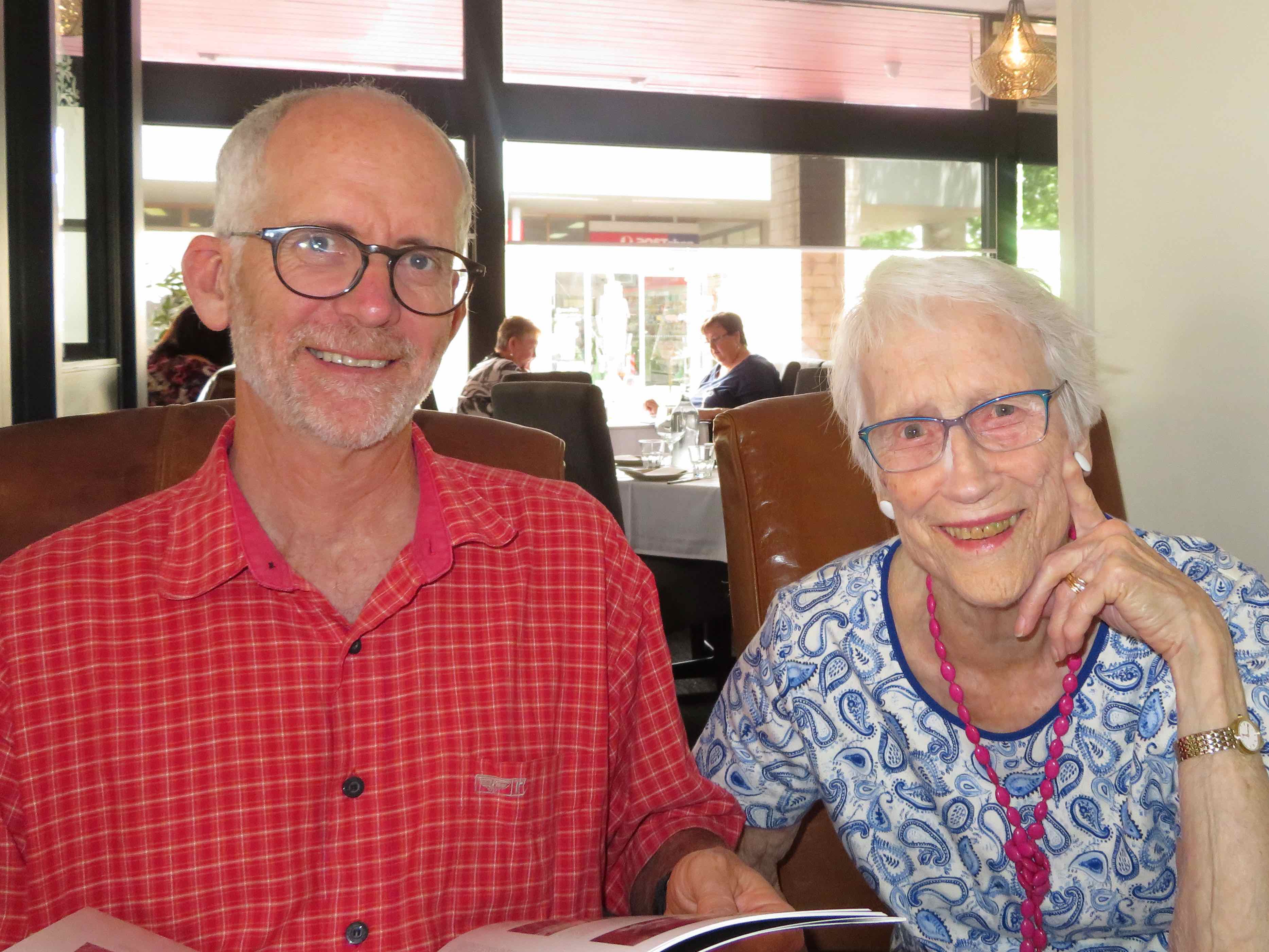
Ian with our mother, 2017

But wait, there’s more … there is also Uninnocent landscapes, the exhibition. It will feature large-scale archival prints from the book, and will be held in the Sidespace Gallery at Salamanca Arts Centre in nipaluna/Hobart from 2–14 November 2023. I will be there at the opening.

Uninnocent landscapes is published and distributed by OUTSIDE THE BOX / Earth Arts Rights under their imprint An Artist’s Own Book, and will be available from early November. It costs $65, and all proceeds will go to the Aboriginal Land Council of Tasmania’s Giving Land Back fund. You can preorder here.

To fully disclose: Ian did not pay (or even ask) for this announcement, but he is accommodating me (I hope) on my trip to lutruwita to attend the exhibition opening!

 

Monday musings on Australian literature: Series or standalone?

I started my recent post on Shelley Burr’s crime novel Ripper with a statement that crime novels are often written in series and that I am not a big series fan. Ripper looked at the start to be a standalone novel, but a few chapters in the protagonist from her first novel Wake appears. From then on, his voice is irregularly alternated with the novel’s main voice. But, more on that anon.

When I started reading Ripper, then, and thought it was going to be a standalone novel, I considered starting my post with singing the praises of standalones, but then, finding it wasn’t as it seemed, I shelved that issue for another day – like today. I did a little browser searching on the topic and found some useful discussions. They included ideas I’d considered, but some new ones too.

This topic is not specifically Australian, but there are many Australian crime novelists, and most of the ones I know, which is a smidgeon of what’s out there, write series. Crime is not the only genre in which series are common, of course, but it’s the one I’m using to exemplify the issue.

Here is a small selection of Australian crime, mostly authors I have reviewed or would like to read:

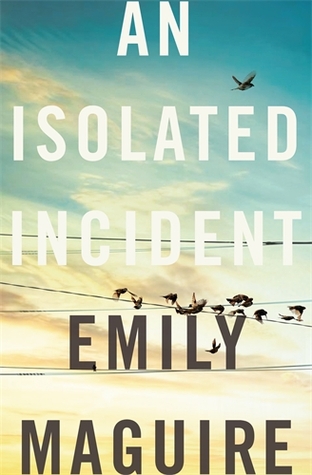
I have also read some Australian stand-alone crime – Emily O’Grady’s The yellow house and Emily Maguire’s An isolated incident, being examples. These are more likely to be promoted as “literary crime” as against “genre crime”, though the distinction is loose and not necessarily helpful.

Anyhow, here are some ideas on the subject…

On series

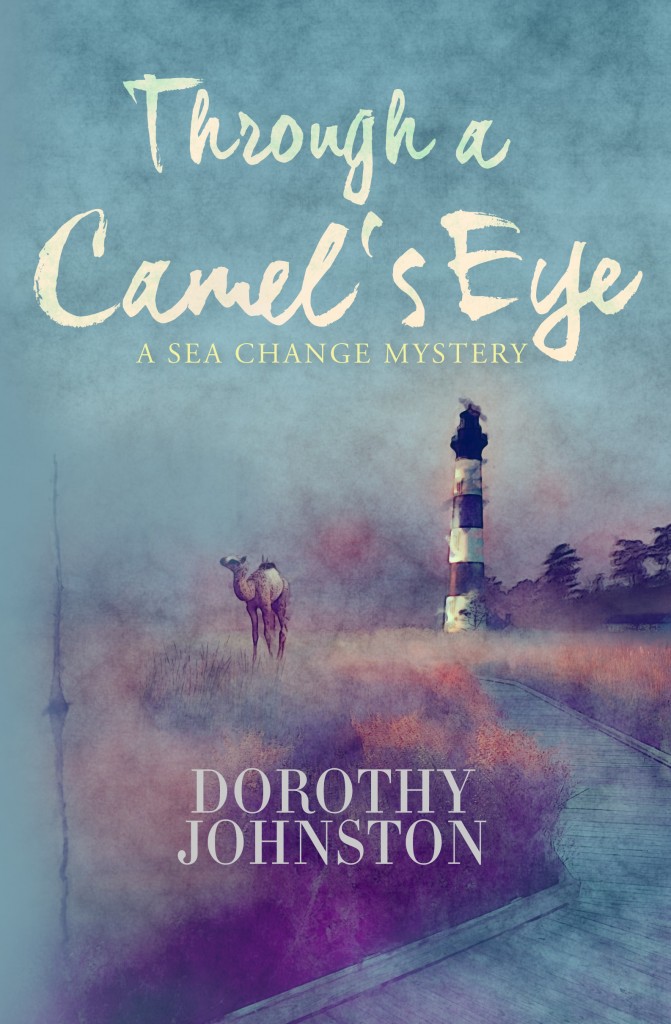
Dorothy Johnston, Through a camel's eye

My non-preference for series is based on a few things, the main one being that I read to hear different voices in different settings about different people, places and ideas. Series novels tend to be set in the same place and milieu, with some continuing characters. Another reason is that I like to be challenged by different approaches to story-telling a story, but series novels tend to follow a formula. It might be a good formula, the writing and characterisation might be great, but it risks becoming familiar rather than challenging or exciting.

These reasons relate in fact to what the Kill Zone named as the single biggest advantage to a series, for both writer and reader. Series, they say, provide “comfort food for the imagination”. However, they also recognise the risk that series can become formulaic.

Another issue for me is the amount of backstory that novels in series tend to include. I guess that’s for readers who start a series in the middle, but if you have read the previous novels, it can be irritating. The Kill Zone suggests that this backstory aspect is a challenge for writers too: “How much backstory does the author include in subsequent books without boring the dedicated series fan or confusing the mid-series pick-up reader?” Good question. The Career Authors site looks at it this way: “You want to make sure,” it says, “that each series title is a potential standalone, so that you can tell readers you don’t have to read my books in order!”

British crime writer Carol Wyer writes about the work involved in writing a series. She says:

You’ll need to know your characters inside out, especially those who will appear in each book, and you must continue their personal stories, weaving them in between each storyline and… you need a theme, one that permeates each book and links them all. It must be something that hooks your readers, so they will want to read the next book, maybe another overriding storyline or simply reader investment in each of your main characters.

She has “notebooks and manilla files” for every character, recording their likes and dislikes, how they pronounce things, and so on. The Career Authors site also describes in some detail what writing a series involves for an author. You can’t kill the main character off, for example!

Still, says Wyer, “the rewards are huge” because authors are usually bereft when they end a book and have to “say goodbye to the characters”. With a series they don’t have to!

On standalone

Emily Maguire, An isolated incident

I’ve already implied why I like standalone novels. The Kill Zone, looking at it particularly from the series author’s point of view, says that “the advantage of writing a standalone … is it can bring on a breath of fresh air for you and the reader”. A standalone, that is, lets a writer explore or experiment with new approaches, techniques, subjects, and it lets the reader see new talents in a loved writer. However, the Kill Zone warns writers to not stray so far from their norm that their fans won’t recognise them.

On a Kindle discussion board, I found the warning that “standalone genre novels can be harder to sell”.

Happy mediums

Series vs Standalone looks like an either-or situation, but, is there a happy medium? Well, yes, there is. One is the approach that Shelley Burr took in Ripper. It is set in a different location, and has a different main protagonist, but the protagonist from her first novel plays a subsidiary investigating role from another location. The Kill Zone, in fact, suggests something like this when it recommends that authors could “touch on something” in their new book that had “appeared in a previous series”.

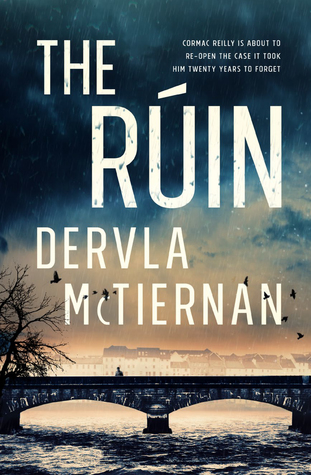
Dervla McTiernan, The ruin, book cover

The other idea, one that has a foot firmly planted in both camps is the “trilogy”. While she didn’t frame it in terms of this debate, Dervla McTiernan, in the meet-the-author event I attended, said about writing her Cormac Reilly trilogy, that she didn’t want to write a long procedural series, because they tend to be episodic without overall narrative arcs. She wanted to challenge her character Cormac; she wanted him to have a narrative arc which would see him changed by the end. That said, she did admit that Cormac might re-appear some time in the future!

Some sources

I found a few discussions on the internet that made some good points regarding the series vs stand-alone debate. The main ones were the Kill Zone blog (a joint blog), Carol Wyer, and Career Authors.

I’d love to hear your thoughts, whether you are author or reader. Do you prefer one or the other, or don’t you care? Over to you …

Monday musings on Australian literature: Elizabeth Webby (1941-2023)

This might be a first for me, an obituary-style post for an academic/literary scholar rather than for an author. However, this post seemed appropriate as, Elizabeth Webby, who died last month, is someone whom I’ve mentioned several times in my blog due to her having written in areas that are of interest to me. Specifically, these areas were colonial Australian literature and contemporary Australian writers, particularly women writers. I heard about her death from the Association of the Study of Australian Literature, for which she was a founding member and of which she was President from 1988 to 1990.

A significant legacy

Julieanne Lamond, current president of ASAL and co-editor of its online journal, Australian Literary Studies, has posted a tribute to her on ASAL’s website. It is well worth reading, because it outlines her major roles and achievements, which include her being Professor of Australian Literature at the University of Sydney from 1990 to 2007. This involved her “supporting works of scholarly infrastructure including the AustLit Database, numerous scholarly editions, and the online Australian Poetry Library”. I have often used AustLit (albeit much of the content is paywalled) and the Australian Poetry Library (which seems not to be currently available, perhaps due to lack of ongoing support?) Webby also edited the Southerly literary journal for over a decade.

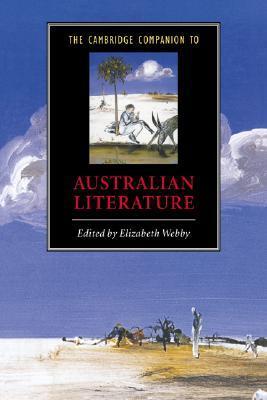
However, my “experience” of Webby has also been more specific. While I had come across her before, I became seriously aware of her through The Cambridge companion to Australian literature (1996), which she edited. This book is a little different from those “companion” style books which contain alphabetic encyclopaedic entries related to their chosen topic. Rather, it comprises essays which provide a partly chronological, partly thematic, survey of Australian literature starting with “Indigenous texts and narratives”. It works, in other words, more like a text book or history than a reference book. I often dip into it, when I am researching specific aspects of Australian literature, and find it sometimes useful sometimes not, depending on how well my particular interest has been covered.

However, I had came across Webby earlier via her essay on colonial poets in Debra Adelaide’s A bright and fiery troop (1988), which is another book of essays on Australian literature, but this one limited to 19th century women writers. It’s another book I often dip into when researching earlier writers.

Both these books, though, were in my ken before I started blogging. Skip a couple of decades to 2018 when I wrote a Monday Musings post titled Literary culture in colonial Australia drawing on Webby’s work. It was fascinating research, both for what she found and for the sorts of sources she used and their varying levels of completeness. Then in 2021, I wrote another Monday Musings on the Irish-Australian poet, Eliza Hamilton Dunlop (1796-1880), using research by Elizabeth Webby and another academic, Anna Johnston. These are just two examples of Webby’s work but, as Lamond of ASAL writes, her research interests spanned the breadth and depth of Australian literature, from early colonial literature, through early 20th century writers like Miles Franklin and Barbara Baynton, and mid-20th century ones like Patrick White, to those more contemporary to her own times like Frank Moorhouse, Elizabeth Harrower and Joan London. She was also, apparently, a loved and respected teacher, academic supervisor and mentor.

All this is important and significant, but another measure of who she was can be found in the funeral notice for her in the Sydney Morning Herald where can be found the following request, “In lieu of floral tributes, please consider a donation to the Indigenous Literary Foundation”. Presumably that was her own request – or from her family based on their knowledge of her passions. Either way, it’s the icing on the cake. Vale, indeed, Elizabeth Webby.

Monday musings on Australian literature: 2023 Mark and Evette Moran Nib Literary Award shortlist

Occasionally, as you know, I use my Monday Musings post to make awards announcements, particularly if the announcement is made on Monday, as this award usually is. And so it happened again today, a Monday, that the shortlist for this award was announced.

I have written about it before and so if you are interested to read about its origins and intentions please check that link. In a nutshell, it celebrates “excellence in research and writing”, and, like the Stella Prize, it is not limited by genre. However, given its research focus, nonfiction always features heavily.

The new thing, though, that is worth sharing in today’s post is that in April this year, Waverley Council which manages the award announced that the winner’s prize had doubled in value from $20,000 to $40,000, thanks, they say on their website, “to an ongoing multiyear commitment by the award’s principal sponsors, Sydney philanthropists, Mark and Evette Moran, Co-Founders/Co-CEOs of the Mark Moran Group”. This is a significant prize. The Council’s announcement also said that it had “also increased the People’s Choice Prize to $4000 and will be offering six shortlist prizes of $1,500 each”.

The Award is also supported by community partner Gertrude and Alice Bookshop and Café.

The judges for the 2023 award are Katerina Cosgrove (author), Jamie Grant (poet and editor), and Julia Carlomagno (publisher).

The 2023 shortlist

  • Alison Bashford, An intimate history of evolution: The story of the Huxley family (family biography, Allen Lane)
  • André Dao, Anam (debut novel, Hamish Hamilton) (Brona’s review)
  • Jim Davidson, Emperors in Lilliput: Clem Christesen of Meanjin and Stephen Murray-Smith of Overland (dual literary biography, The Miegunyah Press)
  • Fiona McMillian-Webster, The age of seeds: How plants hacked time and why our future depends on it (science nonfiction, Thames & Hudson Australia)
  • Ross McMullin, Life so full of promise: further biographies of Australia’s lost generation (multi-biography, Scribe)
  • Brigitta Olubas, Shirley Hazzard: A writing life (literary biography, Virago, on my TBR)

Waverley Council Mayor, Paula Masselos, said that the shortlist was chosen from more than 230 nominations, a number that, she said, reinforces “the importance and gravitas of this award”.

As commonly happens with this award, life-writing features heavily in the shortlist, with just one work of fiction. It is not as diverse as other awards are increasingly becoming, but most of these books wold interest me.

The winner of the overall prize and the People’s Choice Award will be announced on 9 November. For information on how to vote for the People’s Choice Award, check out the shortlist announcement page.

Do you know any of these books?

Monday musings on Australian literature: Masterpieces of fiction, 1910-style

A straightforward post this week, and one shared in the spirit that readers love lists of books. This list is not Australian (despite my posting it in my Monday Musings series) but it was shared in multiple Australian newspapers in 1910 which makes it part of Australia’s literary history, don’t you think?

The list was headed in most newspapers as “A short list of masterpieces of fiction” and the explanation provided was essentially this, “An American paper offers the following as an excellent though, of course, limited list of the best books for one to read”. The papers don’t value add, so we don’t know which American paper produced the list or under what circumstances. However, I thought it was a fun one to share because it’s not just a list of recommended books, but of the “best” in different categories. Here they are:

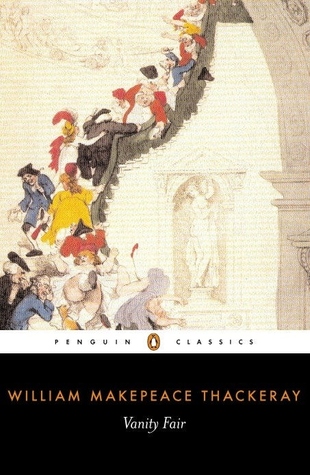
William Makepeace Thackeray, Vanity Fair
  • The best historical novel — Ivanhoe (Sir Walter Scott, Scottish) 
  • The best dramatic novel — The Count of Monte Cristo (Alexandre Dumas, French)
  • The best domestic novel — The vicar of Wakefield (Oliver Goldsmith, English)
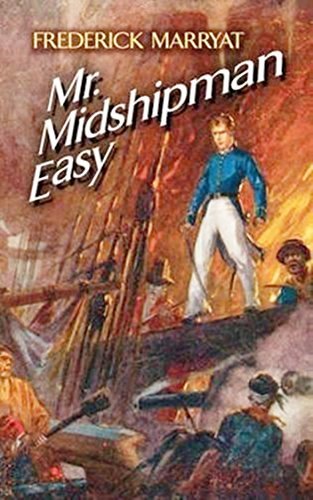
  • The best marine novel — Mr. Midshipman Easy (Frederick Marryat, English)
  • The best country life novel — Adam Bede (George Eliot, English)
  • The best military novel — Charles O’Malley (Charles Lever, Irish)
  • The best religious novel — Ben Hur (Lew Wallace, American) 
  • The best political novel — Lothair (Benjamin Disraeli, English)
  • The best novel written for a purpose — Uncle Tom’s Cabin (Harriet Beecher Stowe, American)
  • The best imaginative novel — She (H. Rider Haggard, English)
  • The best pathetic novel — The Old Curiosity Shop (Charles Dickens, English) 
  • The best humorous novel — The Pickwick Papers (Charles Dickens, English) 
  • The best Irish novel— Handy Andy (Samuel Lover, Irish) 
  • The best Scotch novel — The heart of Midlothian (Sir Walter Scott, Scottish)
  • The best English novel — Vanity Fair (William Thackeray, English)
  • The best American novel — The scarlet letter (Nathaniel Hawthorne, American)
  • The best sensational novel — The woman in white (Wilkie Collins, English) 

And:

  • The best of all — Vanity Fair (William Thackeray, English)

I was interested, and infuriated, that the authors’ names were not included in the over ten published versions I saw, so I’ve added them in parentheses. I don’t care whether readers at the time knew the names of the authors or not, the authors should be identified. It is a little soap-box issue of mine that there is often not enough recognition of the authors of the books we read. This is why I always start my review posts with the name of the author not the title of the book. It’s my little bit of literary activism!

Like all such lists, this one is interesting for what is and isn’t there. Where are Austen or the Brontes for example, while other authors like Dickens and Scott appear twice? Clearly their popularity hadn’t waned. More to the point, perhaps, why only one non-English language book? No Russians, for example? It’s also interesting to see which books have dropped off the radar. Does anyone know Mr Midshipman Easy for example? Wikipedia tells me that it’s been adapted to film twice,

The “best” categories also tell us about the interests and reading habits of the time – “best pathetic novel” anyone? Or “best religious”? Or “best novel written for a purpose”? And so on.

Anyhow, I’ll leave it there … and ask you,

Just for fun, what categories would you suggest for a similar list today?

Source: The first paper in which I saw the list was Victoria’s The Elmore Standard, 12 February 1910.

Monday musings on Australian literature: Thoughts on literature’s moral purpose

I struggled with titling this post because I don’t want it to sound like a thoroughly thought through treatise on the topic. However, I jettisoned my original plan for today’s post to respond to Angela Savage’s question on my CWF post on the Robbie Arnott interview because it seemed worth exploring.

If you haven’t read that post, the gist is that Robbie Arnott talked about why he writes fiction and what he likes to read. Responding to a question about whether fiction does something, he made clear that for him it does (or at least that he would like it to.) Fiction, he said, can expand our consciousness, can make us feel things. We come away a different person after reading it. In this way fiction shapes who we become. Later in the interview, he talked about there being a moral aspect to everything we do, which for him, includes writing. This translates into his feeling a strong responsibility, for example, to tell stories about the land in a way that improves our country. My response to this was that I loved Arnott’s absolute commitment to fiction – to its ability to change us, and to its moral (but not didactic) heft.

Enter the lovely Angela Savage, award winning novelist, former director of Writers Victoria, and current CEO of Public Libraries Victoria who comments occasionally on my blog. She commented on the post with:

Interestingly, I just read an article arguing against the premise that literature/fiction needs to be moral or change us. Would be interested in your opinion.

The article appeared in last Friday’s The Conversation, and is by Dan Dixon, Adjunct Lecturer at the University of Sydney. It’s titled “Friday essay: what do publishers’ revisions and content warnings say about the moral purpose of literature?” It was inspired by two recent issues: the controversy about the rewriting of passages from authors like Roald Dahl to remove “potentially offensive material”, and the “precautionary measure” being adopted by some publishers of adding content warnings and disclaimers to some older books.

It’s a thoughtful piece, and I recommend it to you because I only going to discuss bits of it here, the bits that relate to my answer to Angela’s question.

Dixon makes the point that the media only becomes interested in literary stories when there are “moral concerns” and that these discussions are part of a “moral battle which encourages the application of the same ethical criteria to books that might be apply to elected officials or ministers of religion.” He then suggests that writers’ festival programs demonstrate that we “struggle” to talk about books on any other terms.

Dixon looks at the economic drivers behind these controversies and how they can commodify books. He recognises that literature is affected by the marketplace but argues that it also pushes back against that. Do read his argument if you are interested. Meanwhile, I want to focus on his exploration of what literature is about.

A common question, he says, is:

is there a necessary connection between a work’s literary value and its moral quality? When we read a book do we expect a degree of moral instruction, as to how we should or should not live?

He believes this is a worthwhile question, but that it is not the only question. Literature is more than this. Indeed, he argues that limiting discussion to moral debates encourages “definitive judgements” which enables us, he says, to

avoid what Keats described as negative capability: “being in uncertainties, mysteries, doubts, without any irritable reaching after fact and reason”.

This is where I want to come in, because I am perfectly happy with what Dixon calls “the unpleasantness of irresolution” – and so, I believe, is Robbie Arnott. In Limberlost, for example, Ned’s daughters confront him with being a farmer on stolen land. Arnott believe it was important for Ned to be confronted with this fact, that to ignore the issue would not be real. But he offers no resolution, no moral closure; it just sits there, as it often does in life.

I’m not sure what Arnott meant exactly by his statements, but I think he’s right that there’s a moral aspect to everything. However, I don’t think he means, as a result, to provide the moral answers. In fact, I’m confident that he knows there aren’t necessarily any, or at least not easy ones. Rather, I understood him to mean that he is aware of the moral implications of the way we live and wants to include those in his books, because that’s real. This is subtly different from saying there must be a moral to the story (to literature, to any art).

Now, I’ll return to Dixon and some things he says about literature. First:

The best literature can be spiky, ambiguous, difficult, cruel, strange, unpredictable, hectoring and unpleasant. It is not the job of a book to ease the life of its reader. Reading a good book might mean having a terrible day, a day in which you are scared, sad, distressed. 

I can agree with this. Arnott’s point that you come away changed could work with this!

Then Dixon says:

But literature does not have an obligation to be useful; we do not have to learn anything from it. It need not produce anything except a readerly response.

I also agree with this. My belief is that, at the purest level, the only thing literature (art) needs to be is whatever its creator wants it to be. It is then up to the reader/viewer/listener (whatever the art form is) to decide whether they appreciate the art. I know this is simplistic as creators are, for a start, constrained by any mix of economic, legal, social, political and practical factors, but this is my theoretical starting point.

Returning to Dixon one more time, he says near the end of his piece that “any argument that treats literature as fundamentally therapeutic, self-improving or society-improving, risks reducing literature to self-help”. This is a bit trickier, but I think it hangs on the word “treat”. And it takes me back to my previous point. If I argue that literature doesn’t “need” to be anything, then by definition I should not “treat” it as needing to be something. I can, however, prefer literature that tries to improve or change things. A fine line perhaps but I think it’s defensible.

I therefore like Dixon’s conclusion that the best way to think about literature might be as a “conversation”. He expands this to say that conversations “can be morally nourishing or deadening … neither good nor bad”. Seeing literature this way suggests for him that “reading resembles conversation … an ongoing exchange between reader and writer”. Which brings me back to Arnott who sees novels as a two-way communication between author and reader, one in which he’d love to know whether what he feels resonates with the reader. 

I hope I’ve answered Angela’s question, and I also hope I have accurately represented Arnott in terms of the question. What do you think?

Monday musings on Australian literature: Australian literary biographies (2, poets)

Eight years ago, I wrote a Monday Musings on Australian literary biographies, but the main focus there was on novelists. With this month being National Poetry Month and with, coincidentally, this year’s National Biography Award going to a biography of a poet, it seemed a match made in heaven. In other words, it seemed appropriate to share some biographies of Australian poets, on those writers, that is, for whom poetry was their main literary output.

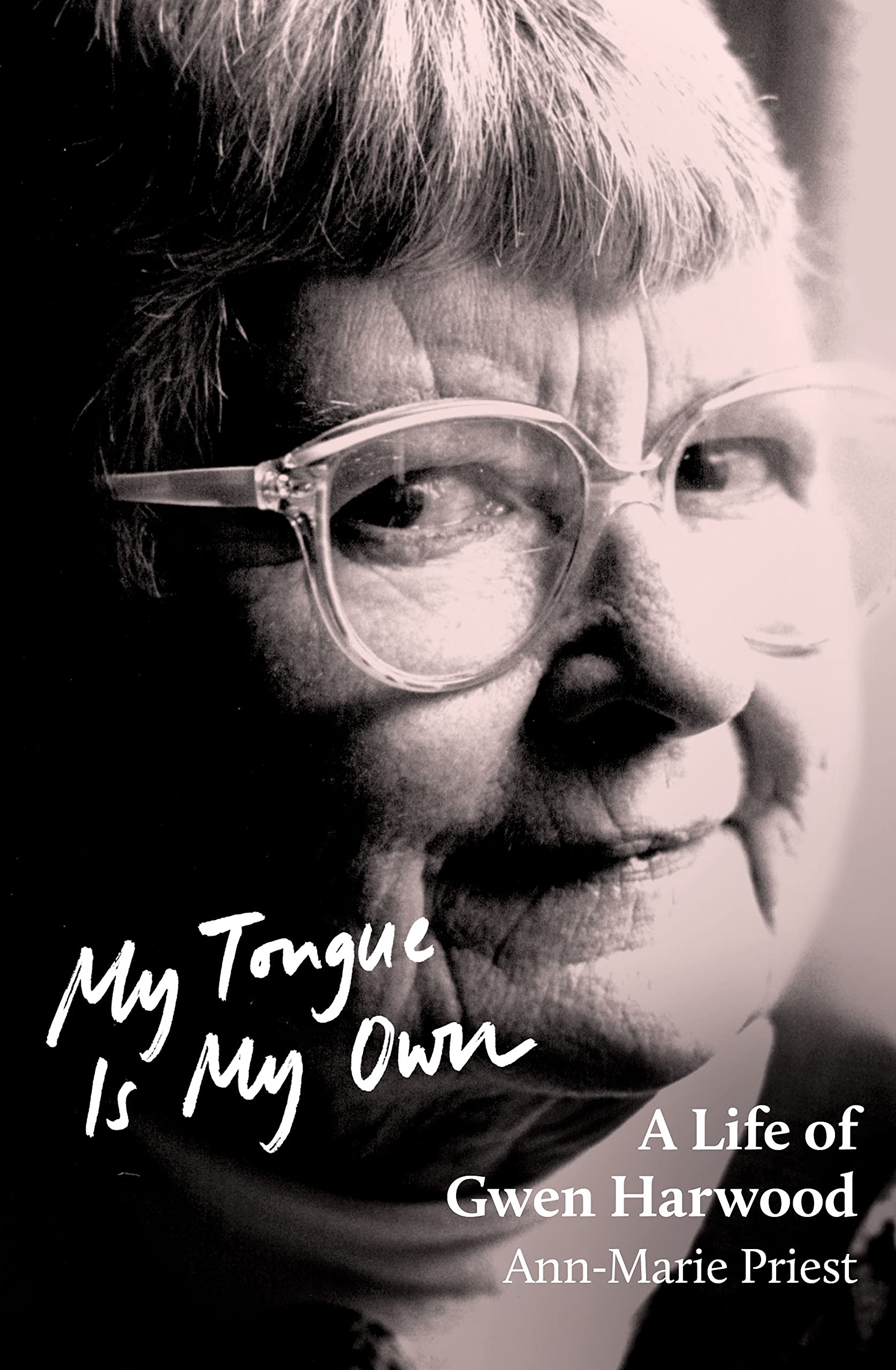
In his latest emailed newsletter, Jason Steger, Literary Editor of the Sydney Morning Herald and The Age, writes about this year’s National Biography Award winner, Ann-Marie Priest’s, My tongue is my own: A life of Gwen Harwood (2020). Harwood, some of you might remember, was one of Edwina Preston’s inspirations for her novel Bad art mother (my review). As a woman poet, she had to fight hard for recognition by the male-dominated publishing world. Steger explains that “Harwood’s was a complex life and Priest had to persevere to sort it all out”. Two would-be biographers, Alison Hoddinott and the late Gregory Kratzmann, who edited her collected poems, were, he explains, defeated by the task. Not Priest, though, for which we should be grateful. One of the judges, Suzanne Falkiner, says Steger, put it this way:

Ann-Marie Priest has captured completely the sprite-like nature of one of Australia’s finest poets; a woman who used a fierce intellect and penchant for trickery to upend dusty institutions that steadfastly refused to see women as capable or talented. Through these pages, the great poet feels so alive.

To completely capture the nature of their subject must surely be a biographer’s goal, by which I mean it is not to fill up the pages with unending chronicling of carefully researched facts, albeit facts are important, but to give readers a sense of who the person was. Sounds like Priest has done this.

Selected biographies of Australian poets

These are listed, in the time-honoured vein of biography sorting, by the last name of the poet being written about. It’s a small select list to get us started:

  • Sarah Mirams, Coasts of dream: A biography of E.J. Brady (2018): I had never heard of Edwin Brady (as a poet or otherwise) when this turned up in my search, but he was apparently “a socialist and bohemian who knew Henry Lawson and many other well-known writers”. He was mainly a composer of sea ballads. I haven’t read this but I am hoping to do a post on him next week, now that I’m on a Poetry Month roll.
  • Cathy Perkins, The shelf life of Zora Cross (2019, on my TBR): on poet and journalist Cross, who could be provocative and should, I think, be better known than she is. (See article by Jonathan Shaw on AWW.)
  • Phillip Buttress, An unsentimental bloke the life and work of C.J. Dennis( 2014): (my review)
  • W.H. Wilde, Courage, a grace: A biography of Dame Mary Gilmore (1985)
  • Gregory Bryan, Mates: The friendship that sustained Henry Lawson and Colin Roderick, Henry Lawson: A life (1999)
  • Deborah Fitzgerald, Her sunburnt country: The extraordinary literary life of Dorothea McKellar (2023, available for pre-order): apparently “the first definitive biography” of the author of one of Australia’s most favourite poems
  • Kathie Cochrane and Judith Wright, Oodgeroo (1994, on Oodgeroo Noonuccal)
  • Georgina Arnott, The unknown Judith Wright (2016) and Veronica Brady, South of my days: A biography of Judith Wright (1998)

“Enjoyably controversial” (John Docker)

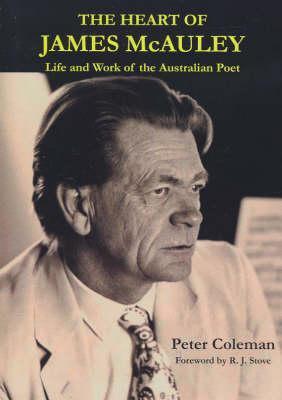
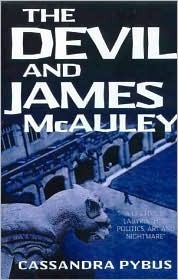
Biographies, of course, can be quite the battleground when there is disagreement about the legacy of the subject, particularly when that subject may have been controversial to start with. I found such an example in my research. It concerns the poet James McAuley, who was known for the Ern Malley modernist poetry hoax. I came across two biographies of him. One, The heart of James McAuley: life and work of the Australian poet, was published in 1980 and is by Peter Coleman. He was editor of Australia’s conservative journal Quadrant – which was founded by McAuley – and is on record as saying of McAuley that “no one else in Australian letters has so effectively exposed or ridiculed modernist verse, leftie politics and mindless liberalism”. The other was by Cassandra Pybus who could be described as Coleman’s political opposite. Her biography, published in 1999, was provocatively titled, The devil and James McAuley. Coleman wrote an excoriating review of it in which he detailed multiple inaccuracies and called it “a silly book degrading a great writer”. Literary critic and cultural historian, John Docker, launched Pybus’ “enjoyably controversial” book, concluding with:

Cassandra has written a lively, entertaining and enjoyable book, very alive to the conflicts and differences within conservative groupings. She has the daring to break with the stifling convention of Australian literary criticism, which bizarrely is that critics should abandon the critical function, they should be obsequious to Australian writers living and dead, they should puff and promote and endlessly praise them – as Leonie Kramer, Cassandra points out, has tirelessly effected for her friend McAuley.

Now that was a book launch! Not having read either book, I can’t make any judgements. It is possible that Pybus, writing 19 years after Coleman, had found more information on McAuley’s life that was not available to Coleman. It’s also possible that Coleman’s sharing political values with McAuley affected his assessment, just as Pybus’ different political views may have affected hers. Whatever the merits of this particular situation, it reminds readers of biographies to consider who is writing the biography and why. I do like biographies in which the biographer introduces their book with this sort of background.

(A revised edition of Coleman’s book was published in 2008, and Coleman spoke at the launch. Pybus still rankles. Ignore Tony Staley’s and Tony Abbott’s comments, if you like, and move on down to Coleman. I enjoyed his closing story.)

Can you share any favourite biographies of poets?

Monday musings on Australian literature: Poetry Month 2023

This year Red Room Poetry is running their third annual National Poetry Month. How excellent is that? I don’t know how successful it is at reaching its goal of increasing “access, awareness and visibility of poetry in all its forms and for all audiences” but sometimes you just have to hang in there and build recognition. Poetry Month runs throughout August.

They are offering similar events and activities to last year with their 30in30 daily writing competition with prompts from Red Room commissioned poets, poetry ambassadors, online workshops, showcases, a community calendar, and more. Do check their page, for events that might interest you.

National Poetry Gala … and more

This year they also, they said, returned their National Poetry Gala to celebrate Red Room’s 20th anniversary. It was held, unfortunately, on 4 August! It was emceed by Benjamin Law, and was held at the Australian Chamber Orchestra’s new venue near Sydney Harbour Bridge. It featured some of Australia’s “finest contemporary poets” including Jazz Money, Sara Saleh, Freya Daly Sadgrove (NZ), Rebecca Shaw, Red Room’s 2023 Fellow Charmaine Papertalk Green, and this year’s Stella Prize winner, Sarah Holland-Batt.

There was also to be a musical performance by First Nations choir Mudjingaal Yangamba and the current Minister for the Arts, Tony Burke, was a special guest.

Also to commemorate their 20th anniversary, Red Room has published a poetry anthology titled A line in the sand: 20 years of Red Room Poetry. Its introduction is by Ali Cobby Eckermann, and it contains “over eighty pieces from leading poets and public figures in a retrospective that covers twenty years of the best commissioned Australian poetry”. They include writers I have heard of, and some of whom I’ve read, though not always their poetry, like Yassmin Abdel-Magied, Maxine Beneba Clarke, Tony Birch, Dorothy Porter, Eloise Grills, Sarah Holland-Batt, Jazz Money, Omar Musa, Bruce Pascoe, Maria Tumarkin and Uncle Archie Roach AC. Tomorrow night, Tuesday 8 August, they are holding an online showcase via Facebook. The event is free but you need to book.

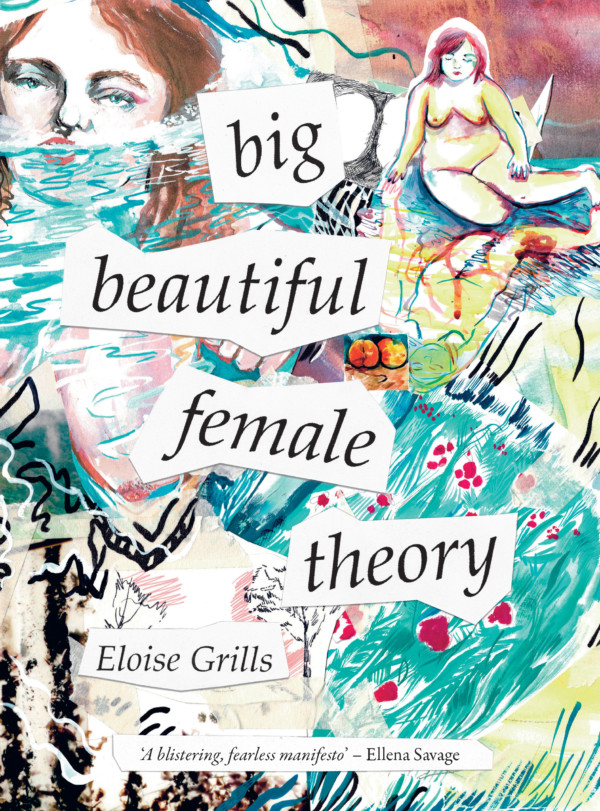
Meanwhile, if you missed the National Poetry Gala, you might be interested to know that the Victorian Poetry Month Gala has not been held yet. It is scheduled for 17 August at the Wheeler Centre. The host is a poet-playright I haven’t heard of before, Izzy Roberts-Orr, and the event will feature, says the promotion, “new work from a dazzling line-up of poets working across forms – from spoken word and performance to music and multimedia”. I don’t know many of the names those I do include Andrea Goldsmith reading unpublished poems by Dorothy Porter, and Eloise Grills whose book big beautiful female theory has been shortlisted for several literary awards this year. There is also a mention of “a collaboration” between journalist and author Erik Jensen and musician Evelyn Ida Morris. For other state and regional showcases and galas, check Red Room’s Showcases page.

These are just three of many events – online and live – scheduled during the month. If you are interested, check out the Community Calendar which lists events from across the country.

Do you attend poetry events – of any sort?

Monday musings on Australian literature: Miles Franklin Award 2023 Shadow Jury

Some of you have probably heard of “shadow juries”. I took part in one a decade ago, for the now defunct Man Asian Literary Prize. It was great, but I haven’t taken part in any blogger-inspired shadow juries again because of the time commitment needed. If I was already impressed by the work of literary award juries, I was even more so after that experience. But, had any of you heard of a Shadow Jury for the Miles Franklin Award? I hadn’t.

It was a project of the University of Queensland’s Writing Centre. Their jury is a bit different to the blogger-run ones I’ve seen, because their aim was not to select a winner. Here is how they describe their idea of a shadow jury, its composition and its aims:

A shadow jury is an independent panel of passionate readers, critics, and literary enthusiasts who come together to review a longlist of books. While the official judging panel ultimately determines the award-winning book, the shadow jury offers an alternative lens through which to appreciate and analyse the longlisted works. 

In this post, we present reviews from our shadow jury, which included students, writers and critics from UQ who delved into each longlisted book. Through these reviews, we aim to provide readers with a multifaceted understanding of the longlisted works and spark engaging conversations about their literary significance.

So, what I am going to do here is add an excerpt from the Shadow Jury’s reviews, for each book, to whet your appetite. You might then go on and read the review (which you can find at the UQ link above) and/or, perhaps, the book itself! I’ve added UQ’s reviewer’s name in brackets at the end of the excerpt

  • Kgshak Akec, Hopeless kingdom (UWAP): “This impressive first novel is less about immigration itself, and more about family as a living organism that once uprooted, wills itself to do more than survive.” The reviewer also comments on the losses that come with immigration, such as “the normalcy of being Black in Sudan, [which is] replaced by minority status and the accompanying racism in Egypt and Australia” (Doreen Baingana)
  • Robbie Arnott, Limberlost (Text): “The first chapter is a revelation and a masterclass in the economy of words”. The whole novel is, I’d say. “Would I go as far as to declare that Arnott is Tasmania’s Tim Winton? Yes, I would, and I am willing to die on that hill. Limberlost is a superb rendering of a coming-of-age story. Tender, evocative, brutal and radiant.” (Carly-Jay Metcalfe)
  • Jessica Au, Cold enough for snow (Giramondo): “The novel’s elliptical tone plays constantly with time and memory. How much we can know another person, even those as intimately connected as mother and daughter, haunts the book, as does how much we can know our (past, present, future) self…New Australian fiction, especially from the second- and third-generation diasporic communities of Western Sydney, is quietly but determinedly shattering the white male ceiling of Australian literature, as Maxine Beneba Clarke notes elsewhere, creating a provincial literature that is both local and global in scale. ” (Professor Anna Johnston)
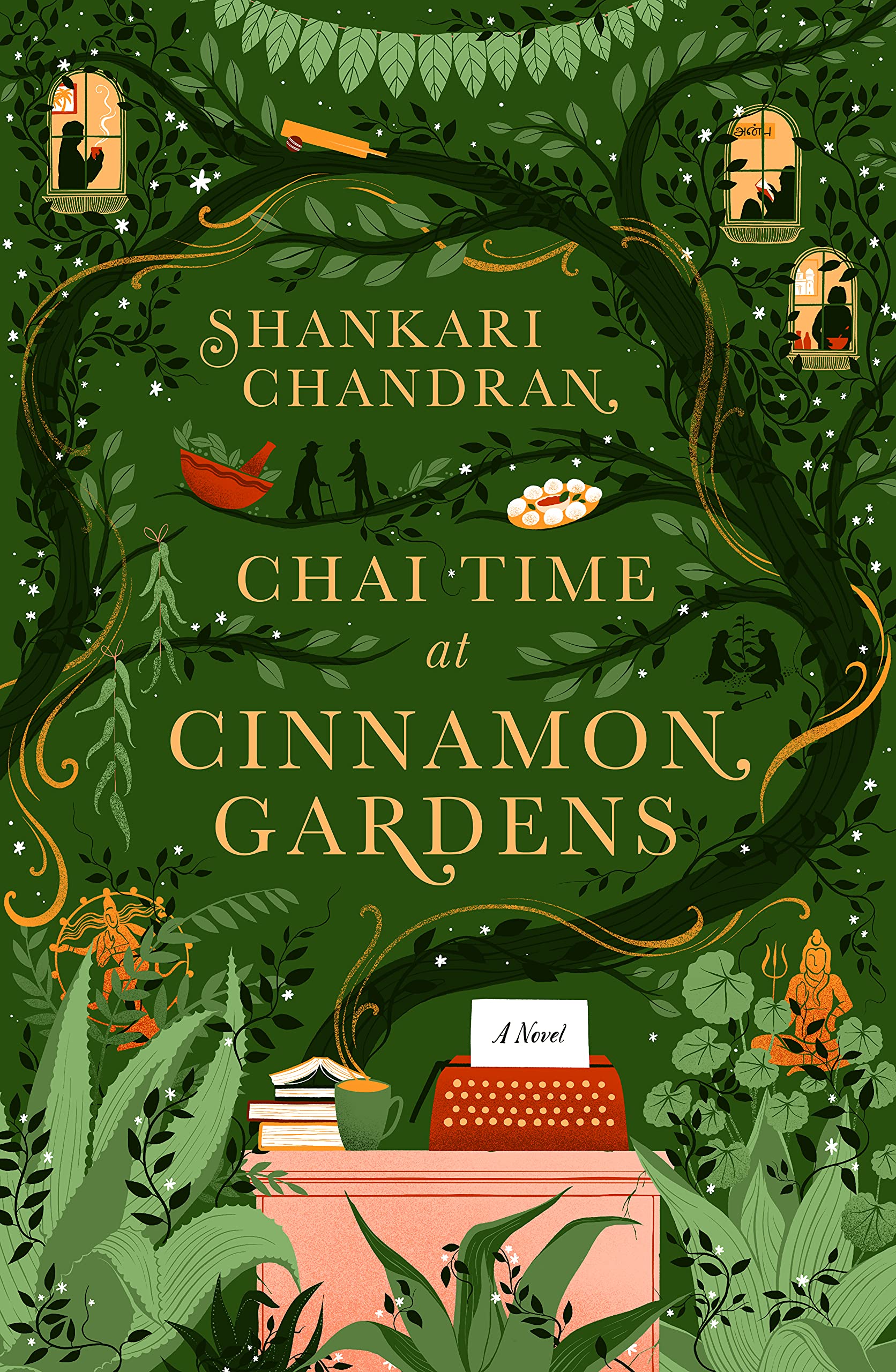
  • Shankari Chandran, Chai time at Cinnamon Gardens (Ultimo Press): “What does it mean to be Australian in the 21st century? Shankari Chandran’s Miles Franklin shortlisted novel Chai Time At Cinnamon Gardens ponders this question with grace, humility, and confronting depictions of racism raging with Shakespearean levels of drama and tragedy…Chai Time at Cinnamon Gardens is an important and enthralling read. While it lacks subtlety on some occasions, the message it evokes is damningly clear.” (Olivia de Silva)
  • Claire G Coleman, Enclave (Hachette): “Few works of speculative fiction have been considered for Australia’s most prestigious literary award, a symptom of the genre’s uneasy relationship to literary fiction and culture…In addition to its literary merits, Enclave is concerned with decolonising Australia’s stories about itself and its future. In the process, the unexamined racism still driving speculative fiction’s narratives of empire, progress, or pastoral idyll are also decolonised.” (Dr Natalie Collie)
  • George Haddad, Losing face (UQP): “Ivan and Joey’s romance is what makes this an understated, lovely book with an episode of Special Victims Unit wedged inside. It’s the unusual parts of Losing Face that make it a remarkable Australian novel, not the parts ripped from the headlines.” (Pierce Wilcox)
  • Pirooz Jafari, Forty nights (Ultimo Press): “Forty Nights is a debut work of literary fiction by Pirooz Jafari, who has fictionalised his own life story in this novel…Insightful, tender and whimsical, Forty Nights is a standout novel on this year’s longlist.” (Martine Kropkowski)
  • Julie Janson, Madukka: The river serpent (UWAP): “While at times I struggled to understand how Janson’s first foray into crime writing had qualified for the longlist of the Miles Franklin, Madukka’s handling of issues of racism, climate change, drug use, and the ongoing First Nations’ struggle for land back and recognition ultimately makes it worthwhile. I’ll end with my initial thought; I actually think I’d really enjoy seeing this story adapted for the screen.” (Rani Tesiram)
  • Yumna Kassab, The lovers (Ultimo Press): “I expected a modern fable underscored by Arabic folklore with more traditional, less didactic conventions. What I found instead was something far more poignant, raw and real…Irrespective of whether The Lovers is the recipient of the 2023 Miles Franklin, its nomination speaks to the state and tenor of contemporary Australian literature embracing the novel as an experimental form.” (Bianca Millroy)
  • Fiona Kelly McGregor, Iris (Pan Macmillan Australia): “The blurb of this book asks a simple question: is Iris Webber innocent or guilty? At the end of some 430 pages, however, such a dichotomy feels terribly pale. It is the larger questions of history, reclamation, oppression, and humanity that mark McGregor’s work and transform the form of the historical novel into something alive and urgent, innovative and instructive. At its heart, Iris is (as Peter Doyle notes) a remarkable work of conjuring. With charm and grit, Iris conjures up Sydney of the 1930s, in all its grim glory. And Fiona Kelly McGregor, in a feat of sensitivity and skill, has conjured Iris Webber.” (Madeleine Dale)
  • Adam Ouston, Waypoints (Puncher & Wattmann): “an anxiety dream of a novel… In a breathless spiralling narrative told (more or less) in a single feverish paragraph, Cripp [the protagonist] pinballs from one association to another, circling back to grasp at his bearings before bouncing off again into further tangents, digressions, curlicues and cul-de-sacs. In lengthy, slippery sentences, he details the history of Houdini’s failed record-breaking attempt, he dips into Victorian showmanship, the swirl of misinformation around the disappearance of MH370, the history of powered flight, Alzheimer’s disease and Australia itself…It’s a strange, ambitious, reckless thing. But it flies; it really flies…” (Vince Haig)

It is damning – but true to our time – that so many these novels address racism. But there are other subjects here too, plus a variety of forms, and, it seems, some bold new writing. I enjoyed these reviews, particularly because, as you’d expect, they critiqued the books as literary works, as content, and against the forms or styles they represent.

Shankari Chandran won the official jury’s prize with Chai time at Cinnamon Gardens – as most of you know.

Thoughts?

Monday musings on Australian literature: on 1923: 6, A postal controversy

Who would have thought that the cost of postage would generate controversy in the book world? And the sorts of issues that would be raised as a result?

Help Books Clker.com
(Courtesy OCAL, via clker.com)

In my research of Trove for book-related issues in 1923, I came across a letter to the editor opposing some proposed changes in postal rates for books and other printed matter. Of course, I researched it a bit more, and discovered that the issue had started in 1922 (or perhaps even earlier. I didn’t look further, as my aim here is to document some issues that seem interesting rather than use all my reading time on detailed research!)

As far as I can work out, investigating postal rates had started perhaps in 1921, but it was in early 1922 that the Postmaster General promulgated new regulations. They are described in detail in Melbourne’s Age of 25 January, which explains why they were needed:

These regulations are the outcome of prolonged conversations between Postal officers and those interested in the trade, and are designed to put an end to the confusion which has existed for many months past, while removing some anomalies which caused great irritation, and were responsible for considerable loss. Up to the present none has been able to say definitely what constitutes a book from the stand point of the Post Office. The new regulations, while opposed by some who are engaged in the book selling and book buying business, will at least establish uniform practice throughout the Commonwealth. 

The article describes the new regulations in detail, which I won’t repeat here. You can click on the link above if you are interested. I will just share the main contentious issues:

  • the definition of a book for postal purposes: a cookbook, for example, isn’t one, and nor is one containing advertisements.
  • the requirement to register books that are wholly printed in Australia (because they will get a favourable rate). The article tells us that books printed in Australia would cost 1d. per 8oz to post, while those printed outside Australia would cost twice that, at 1d. per 4oz. 

Now, let’s jump forward to 29 January 1923 which is when I first clocked the issue. It was in a letter to the editor in Brisbane’s Telegraph by one E. Colclough who was the Hon. Secretary of the Queensland Authors’ and Artists’ Association. His beef primarily concerned the issue of advertisements preventing a book’s “registration” as a book:

Such a regulation renders it prohibitive for a poor individual to undertake the publishing of his own works because it frequently happens that only by the assistance of the kindly advertiser is he enabled to finance his literary venture.

His association wanted Australian writers to be “encouraged and assisted in every way possible”, and asked for the regulations to be amended.

A few months later, on 13 June 1923, W.T. Pike, President of the Booksellers’ Association, wrote a letter to Melbourne’s The Argus in which he enumerated seven changes the association wanted made to the regulations. Number three was for the book rate to be applied to

all books printed in Australia without regard to subject or where the author lives. At present books printed in Australia are subject to the pernickety whims of officials. For instance, postal officials say a “cookery book is not a book but printed matter.

The Association wanted “a reasonable number of general advertisements to be allowed” and for books to not have to be registered. They argued that this was an “unnecessary time waster” because the printer’s name and address always appear on books, and books are “automatically sent under the Copywright [sic] Act to two public libraries”. They also wanted reciprocity with New Zealand in terms of rates, and suggested the reduction of overseas postage rates from the “absurd” 8d per lb to 4d per lb would be beneficial. “Quite a lot of books would be sent South Africa if postal rates were reduced”, wrote Pike.

The Commonwealth’s proposed rates bill was moved in Parliament in August 1923, and reported in Adelaide’s The Register. It makes for some entertaining reading, with some arguing against the changes because the money could be spent on other things, such as improving the actual post offices. Do read the report, as it’s short and entertaining.

Meanwhile I will end with two things, one being that the bill was passed, and the other being The Register’s report of one MP’s contribution:

Dr. Maloney (V.) supported the measure, but pleaded hard for an increase to pay to officials in allowance post offices. Some of the women, he said, worked for eight hours daily, under great difficulties, and only got 20/ to 25/ a week, or less than messenger boys.

I like this Dr Maloney, who, according to Serle in the ADB, “loved humankind, fought inequality and pressed the rights and needs of the poor”. I’ve moved away from my topic here a bit but, you know, this little series is as much about serendipity as about books!

I hope you like serendipity as much as I do?

Other posts in the series: 1. Bookstall Co (update); 2. Platypus Series; 3 & 4. Austra-Zealand’s best books and Canada (1) and (2); 5. Novels and their subjects