Monday musings on Australian literature: Vale Yasmine Gooneratne (1935-2024)

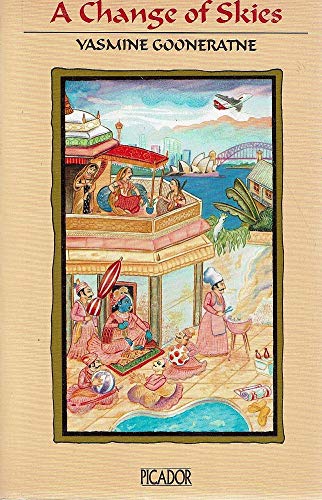
It was through the Jane Austen Society of Australia’s (JASA) newsletter, Practicalities, that I learned of the death of Yasmine Gooneratne, a woman with whom I have crossed paths – one way or another – three times. She was an academic at Macquarie University, where I did my undergraduate degree; she wrote a novel, A change of skies (1991), which my reading group discussed back in 1996; and, she was the patron of JASA (and you know how I love Jane).

You can find quite a lot about Yasmine Gooneratne on the Internet, if you are interested, so I’m just going to focus on a few points that struck me, and I hope will interest you.

“No nonsense”

A site called The Modern Novel provides a useful potted biography, so I will start with that. It says that she was born in Sri Lanka (then Ceylon) in 1935 as Yasmine Bandaranaike, which means she was “a member of the well-to-do Ceylonese family which included Sirimavo Bandaranaike, the first woman prime minister in the world”. She studied at the University of Ceylon and Cambridge University, and in 1962, she married the doctor and environmentalist Dr Brendan Gooneratne (who died in 2021). They emigrated to Australia in 1972, where she lived for 35 years, according to Wikipedia, before returning to Sri Lanka. It was here, in her home country, that she died on 18 February this year.

AustLit provides more detail, which includes that she was founding Director of Macquarie University’s Post-Colonial Literatures and Language Research Centre from 1989-1993, and that she was awarded an AO (Order of Australia) in 1990 “for her distinguished contribution to Sri Lankan and Australian literature”. She won (or was listed for) a number of awards in Australia and elsewhere.

Gooneratne wrote over twenty books, including novels, some poetry and short story collections, as well as many works of non-fiction, but she seems little known outside academic circles (and JASA). Indeed, my initial – and general – search for this post brought up many references to her but no news items on her death. I had to search a little more specifically for that. This was interesting given that, on the several internet sites I found, she is described as widely known. DBpedia* calls her a “Sri Lankan poet, short story writer, university professor and essayist” and says that “she is recognised in Sri Lanka, Australia and throughout Europe and the U.S.A., due to her substantial creative and critical publications in the field of English and post-colonial literature”.

When I did find something about her death, I was delighted to find an obituary written by her daughter Devika Brendon. Initially posted in the Sunday Times on 18 February 2024, it has been shared on many other sites including the blog I am quoting from. It provides a loving and personal tribute to her mother, but one which I suspect also rings true to the person Gooneratne was. Devika Brendon tells us that:

Yasmine Gooneratne as a private individual left clear instructions about what she wished regarding her funeral. Her directives show a great deal about her character and her values. ‘No public notices. No public viewing. No public funeral. No memorial lectures. No fuss. No feathers. No posturing. No performativeness. No photographers. No selfies. No celebrities. No nonsense.’

I have mentioned Gooneratne a few times on this blog, including in a brief Monday Musings post I wrote in 2013 on Migrant literature. It had been a long time since I’d read A change of skies (and it’s even longer now), but I wrote that the novel was about “educated middle class migrants – like herself I presume – who work to find a balance between fitting into the new culture while at the same time preserving their Sri Lankan identity”. If you want a better flavour of this work, check out this post written in 2012 by someone called Elen on a blog called the southasiabookblog. Elen says that Gooneratne’s “portrayal of the immigrant experience is as funny and poignantly ironic as Jhumpa Lahiri’s work on a similar topic is earnest”. I wish I could remember it that well, but I read it when I was immersed in parenting and my memory is general. This description of Gooneratne’s tone, however, sounds like the writing of an Austen-lover!

I will end with another paragraph written by her daughter because, not only does it tell us a lot about Gooneratne but, if you are an Austen fan, you will love the final line:

She had great contempt for hypocrisy and cruelty. She had a great sense of humour and a lively sense of fun. As she was a person of moral integrity, the repulsive conduct of people who prey upon the vulnerable saddened her, especially as she grew older. While always choosing to believe the best in people, she found herself unable to accept the lies that are spun by opportunists and predators on a daily basis. Her good opinion, once lost, was lost forever.

* DBpedia describes itself as “a crowd-sourced community effort to extract structured content from the information created in various Wikimedia projects”

Monday musings on Australian literature: Trove treasures (11), A short list of masterpieces of fiction

Today’s post is not especially Australian, but it was published in Australian newspapers as a recommended list of “masterpieces” or classics for Australians to read. It is in that sense that I am posting it in my Monday Musings series!

The list was published in 1910, with the heading “Best novels: A short list of masterpieces of fiction”. It explains that “an American paper offers the following as an excellent though, of course, limited list of the best books for one to read”. The interesting thing is that the books are categorised. See what you think.

It was replicated in many newspapers but the one I used for this post, because it needed little editing (as I recollect), is from Victoria’s Elmore Standard of 12 February (accessed 10 July 2023).

The list

I have value added with the author’s name, as this – curiously – was not included. Sure, most people probably knew the authors of these classics, but that’s not the point. The authors deserve recognition! I’ve also added first publication date, for interest.

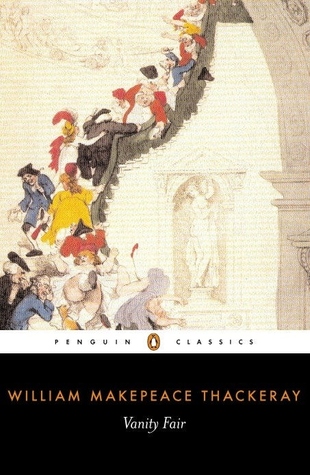
William Makepeace Thackeray, Vanity Fair
  • The best historical novel: Ivanhoe (Sir Walter Scott, 1820)
  • The best dramatic novel: The Count of Monte Cristo (Alexandre Dumas, 1844-46 serialised)
  • The best domestic novel: The Vicar of Wakefield (Oliver Goldsmith, 1766)
  • The best marine novel: Mr. Midshipman Easy (Frederick Marryat, 1836)
  • The best country-life novel: Adam Bede (George Eliot, 1859)
  • The best military novel: Charles O’Malley (Charles James Lever, 1841)
  • The best religious novel: Ben Hur (Lew Wallace, 1880)
  • The best political novel: Lothair (Benjamin Disraeli, 1870)
  • The best novel written for a purpose: Uncle Tom’s Cabin (Harriet Beecher Stowe, 1852)
  • The best imaginative novel: She (H. Rider Haggard, 1887)
  • The best pathetic novel: The Old Curiosity Shop (Charles Dickens, 1840-41 serialised)
  • The best humorous novel: The Pickwick Papers (Charles Dickens, 1836-37 serialised)
  • The best Irish novel: Handy Andy (Samuel Lover, 1841)
  • The best Scotch novel: The Heart of Midlothian (Sir Walter Scott, 1818)
  • The best English novel: Vanity Fair (William Makepeace Thackeray, 1848)
  • The best American novel: The Scarlet Letter (Nathaniel Hawthorne, 1850)
  • The best sensational novel: The Woman in White (Wilkie Collins, 1859)
  • The best of all: Vanity Fair (William Makepeace Thackeray, 1848)

Don’t you just love these categories?

I’ve read some of these authors, but only a few of these particular books. Some I had to check who the authors were, like the author of Handy Andy. It is a male dominated list, though we do have George Eliot and Harriet Beecher Stowe, but what about Jane Austen! Ok, I’ll leave it there because my point is not to reconsider the list but share it as one reflection of the times, and what some American paper, apparently thought (though we don’t really know the provenance of the list).

All thoughts on any aspects of this list are welcome.

Monday musings on Australian literature: Blak and Bright, 2024

Eight years ago, I wrote a post about a new festival called Blak and Bright, which was described at the time as “the debut event of the Victorian Indigenous Literary Festival”. I am thrilled to find that eight years later, this festival is still going strong. So often festivals, and literary initiatives in general, appear on the scene, but soon falter. Not this one. Now formally named the Blak and Bright First Nations Literary Festival, it is held annually in Naarm (Melbourne). This year’s dates are March 14 to 17, making it a four-day event.

Their “mission statement”, to use my terminology, is simple and to the point:

We believe that Blak stories are for everyone.

The Festival, they say, is unique, “with over sixty First Nations artists front and centre”. It celebrates “the diverse expressions of First Nations writers and covers all genres from oral stories to epic novels and plays to poetry”. In 2024, they are offering new events, alongside favourite events from past Festivals. Most sessions are free and some will be live-streamed, so you can register to receive the link. This is why I am posting on it now – there is still time to register!

The theme for 2024 is Blak Futures Now, with the tagline reading “Stories, epics, poems, monologues, history, activism. Embrace the diversity of expression, paving the way for Blak futures now.” This year’s keynote address, State of the Nations, will be delivered on opening night by Goa-Gunggari-Wakka Wakka Murri woman from Queensland, Leah Purcell (whose versions of The drover’s wife I posted on in 2022). This session does have an admission fee, as do a few, mostly performance-oriented, sessions.

To whet your appetite, here are some of the sessions (all of them free, but bookings are essential):

  • Yung, Blak and Bold: a festival regular, this year’s session is promoted as “get a glimpse into the minds of young writers who are shaping the future of Blak literature. With John Morrissey, Stone Motherless Cold, Susie Anderson and moderated by Neika Lehman”.
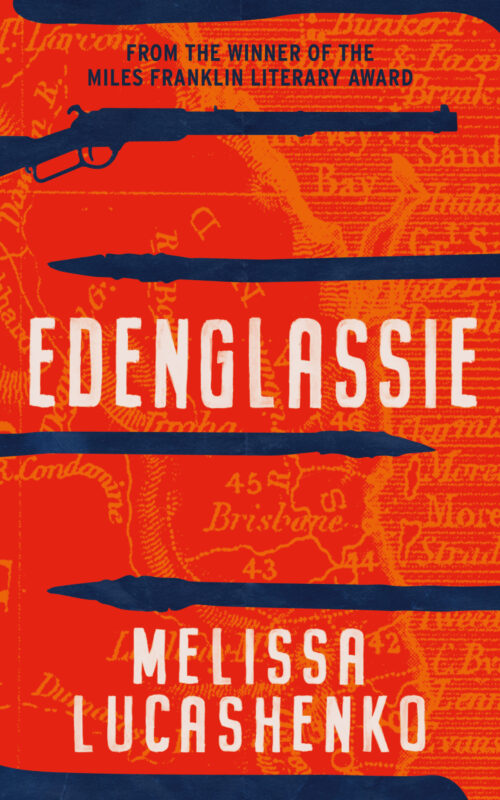
  • Blak Book Club: another regular, with this year’s club discussing Melissa Lucashenko’s Edenglassie and Jane Harrison’s The visitors, moderated by Daniel Browning.
  • YA Awesome: this session is just what its name implies, that is, it’s about writing “compelling narratives that young adult readers love to read”. It will feature some writers I don’t know, which is probably not surprising given my reading interests – Gary Lonesborough, Graham Akhurst, and Melanie Saward.
  • Sistas Are Doin’ It: another regular, with this year’s women being Deborah Cheetham Fraillon, Helen Milroy, and Debra Dank (see my review of her book We come with this place). They will talk about how they write “while juggling the many roles Aboriginal women fulfil in their communities”,

These next sessions are also free but I want to list them separately because their topics cross over all the others! They are:

  • Language Lives: the program describes it as follows, “What role do First Nations languages play in Australia’s creative outputs? You might be surprised. With Kim Scott, Kirli Saunders, and moderated by Philip Morrissey”. (I have written about a lecture Kim Scott gave on recovering languages.)
  • Blak Imprints: I don’t know which imprints the participants will be discussing, but we all know how critical supportive publishers are for getting diverse/minority writers out there. In this session, Rachel Bin Salleh, Tisha Carter, and Yasmin Smith will “discuss the importance of First Nations imprints in publishing. What else is needed in the publishing ecology?”
  • Who Can Critique Blak Work: I’d especially love to be at this one. We talk a lot about “own” story-writing, but I have raised a few times here the issue of critiquing the work of cultures very different from my own. How can I do it, or, in fact should I do it? What would it mean if I didn’t? The session is described as follows, “Should only Blak critics critique Blak work? What does the Blak lens bring to the process? With Bryan Andy, Daniel Browning, Declan Fry, Tristen Harwood and moderated by Davey Thompson”.

These are just a few of many sessions being offered. There are sessions on poetry and songwriting, there are readings, and more. Check out the program at this link if you are interested. You can see the names of all the artists, and the sessions they are appearing in, at this link.

Are you likely to attend – in person, or online?

Monday musings on Australian literature: Stella Book of the Month

Most readers here know the origins of the the Stella Prize. I have written about it many times before, but it was in my post on the inaugural longlist in 2013 that I described its origins and goals in a little detail. I wrote then that:

The award was created by a group of 11 women, including the writer Sophie Cunningham, in response to what many of us felt was an abysmal under-representation of women writers in Australia’s major literary awards and other literary activity (such as reviewing and being reviewed). The Stella Prize people want to turn this around …

And I then listed their goals as they expressed them at the time. These goals have remained roughly the same but are expressed on their website now in more depth and with clarity about how they are working to achieve them. They make it very clear that they are about more than the prize. Stella, they say,

delivers a suite of year-round initiatives which actively champion Australian women writers, tackle gender bias in the literary sector, and connect outstanding books with readers. (Accessed 26 February 2024)

As most Australian readers of my blog will know, many of the original drivers have been achieved, quantitatively speaking at least. There is better representation of women writers in our literary awards, and in the reviewing sector, as the Stella Counts of 2019 and 2020 showed.

Most of my posts, however, have been about the annual prize. I have rarely mentioned the other initiatives Stella has implemented, but they are important because Stella knows – we know – that achievement in the social justice arena can never be taken for granted. Their initiatives are many and you can read about them on the Initiative pages on their site. They range in size and reach, but include events, residencies, and a lot of work in education to encourage more reading of books by Australian women writers in schools because, really, that’s where reading habits very often start.

Stella Book of the Month

One of their more recent initiatives was announced in December last year, “the book of the month”. As far as I can tell – as there’s not much that I can find specifically about the initiative – the aim is to shine a light each month on a book which has been listed for, or won, the Stella Prize. We all know how easily books – no matter how good they are – disappear from the shelves and then from public consciousness. With this initiative, Stella is staying true to its aim of keeping Australian women’s writing to the fore, which means not just the latest writing, but the body of writing by women. Of course, the Stella prize is just over 10 years old, so a blip on the radar of Australian women’s writing, but 11 years worth of lists is not inconsequential either, and has a chance of still being available. They list the books on their own site, and on their Facebook page.

It’s a new initiative, so there just three books have been chosen to date:

  • December 2023: Carrie Tiffany’s Mateship with birds (my review): Tiffany’s book, as the prize’s first winner in 2013, is an obvious choice for kicking off this initiative.
  • January 2024: Georgia Blain’s Between a wolf and a dog: Stella introduces this choice by saying it “celebrates … a heartfelt and intelligent book shortlisted for the 2017 Stella Prize, and the life of its author, the late Georgia Blain”. They say that this, Blain’s last novel before she died, has been republished with an introduction by Charlotte Wood. This is what we like to hear, eh?
  • February 2024: Maxine Beneba Clarke’s The hate race (my review): The reason for choosing this memoir seems to be its having been “adapted to the stage”. It was shortlisted for the 2017 award along with Blain’s novel. Clarke was the first author to be shortlisted for the Stella Prize twice, after her short story collection, Foreign Soil, was listed in 2015

Each “book of the month” page (linked on the titles above) contains useful content about the books, such as interviews, and links to reviews and reading notes. This may not be the most exciting of their initiatives, like, say, their Stella Day Out program, but not all initiatives have to be exciting. They just have to play their part in achieving their overall vision. I have chosen it for my post tonight because we are readers, and we all love a list!

I wonder what will be next – and why? In the meantime, all being well, I will be posting on this year’s longlist next Monday, in lieu of Monday Musings.

What do you think about initiatives like this, and, is there a Stella winning or listed book you’d like to see as a “book of the month” selection?

Monday musings on Australian literature: Lothian Book Publishing Company

As I research for my 1924 Monday Musings series, I am coming across articles that don’t neatly fit into 1924-dedicated posts but that I want to document. The most recent one concerned the Lothian Book Publishing Company. It was about a specific initiative, which I will discuss at the end of this post, but I was intrigued to find out more about the publisher itself.

AustLit tells us that, while now an imprint of Hachette Australia, Lothian has a long history, starting well over a century ago, in 1888 in fact, when it was founded by John Inglis Lothian. Then it was a Melbourne-based book distribution company, but it started publishing in December 1905 under John’s son, Thomas Carlyle Lothian. During its first three years, it produced 40 books and four periodicals. AustLit then jumps to the interwar years (the 1920s and 30s) and says that it “was particularly notable” for publishing Australian poets, such as Bernard O’Dowd and John Shaw Neilson. Lothian also represented Penguin Books in Australia until the end of the Second World War. Cecily Close, in her article on Thomas Carlyle in the ADB, provides more information, and adds other authors to their list, like Miles Franklin and Ida Outhwaite.

The company was active, and by 1945, it had offices around Australia and in Auckland, and had literary agents in London and New York. It remained a family-run affair, with Thomas Carlyle Lothian being followed by his son Louis Lothian, and then Louis’ son Peter Lothian.

Austlit says that the company moved into children’s publishing in 1982, which has remained a big part of its activity since. Then the take-overs started. In December 2005, the Time Warner Book Group acquired Lothian and formed the Time Warner Book Group (Australia), with Lothian Books becoming an imprint of Time Warner. Very soon after, in February 2006, Hachette Livre acquired the global Time Warner business, with Lothian Books now becaming an imprint of Hachette Livre Australia. Lothian Books’ CEO Peter Lothian retired in July 2006.

The focus on children’s books has continued with Hachette Australia expanding its children’s publishing, and branding its children’s books with the Lothian imprint. AustLit says that as part of the new arrangement, some adult publishing would continue, as a ’boutique’ list of Australiana titles, both already published and to be commissioned, but I’m not sure that this eventuated, or, if it did, that it lasted. Hachette Australia’s website does not clearly differentiate its imprints.

Lothian stories

It was a story about Lothian that inspired this post, but while researching it, I found another intriguing story, so I’m closing with two little anecdotes about Lothian.

Lothian and Henry Lawson

The State Library of Victoria’s La Trobe Journal carries an article by John Arnold about the relationship between Lothian founder, Thomas, and Henry Lawson. You can read the article yourself as the story is not a short one but, essentially, it started in 1907 when, on a business trip to Sydney, Thomas Lothian signed a contract with Henry Lawson to publish two collections of his writing, one of prose and one poetry. The contract was signed in James Tyrrell’s bookshop in Castlereagh Street, Sydney.

I won’t go into the details but it was a standard Lothian printed contract. The author would receive a 10% royalty for each title. Lawson was to deliver the completed manuscript of both titles to the publisher, two weeks after the signing of the contract, and Lothian was to publish the two books no later than three months from receipt of manuscript. The contract “declared that the author was the proprietor of the copyright of the material proposed to be published and it gave the publisher the world serial, translation and dramatic rights to the material in question”.

This is not what happened, and Arnold writes that “this commercial agreement … was in a short time revised, revised again, then broken, leading to false promises, abuse of copyright, and a falling out between author and publisher. The proposed books were not to appear for six and a half years”.

It was a tortuous process, due largely to Lawson’s “erratic behaviour” but also affected by Lothian’s busy and ambitious workload. Arnold concludes his article with:

Despite his unrewarding and frustrating dealings with Henry Lawson, Lothian was still willing to chip in when the Lawson hat was sent round after the author’s death. In 1928 he became a Life Member of the Footscray-based Henry Lawson Memorial Society, and in 1931, as one of Lawson’s publishers, wrote a one-page testimonial to be read at the society’s annual meeting.

The handsome certificate with which Lothian was presented by the Henry Lawson Society in 1938 stated that Life Membership was awarded for ‘Unselfish and Generous Services rendered to this Society and Australian Literature generally’ …

Lothian and Nettie Palmer

Finally we get to the article that inspired this post, the announcement in The Argus of 8 May 1924 that Nettie Palmer had won a “prize of £25 offered by the Lothian Book Publishing Company for the best critical essay dealing with Australian literature since 1900”. Her essay was titled “Australian literature in the Twentieth Century” and was to be published in June. On 18 July, The Albury Banner and Wodonga Express, reports on this work, now titled Modern Australian literature, describing it as ‘an interesting “measuring up” of Australian literary work from 1900 to 1923’. Vivian Smith, editor of UQP’s Nettie Palmer anthology, which includes this work, says the piece “is significant for what it reveals of the expectations and hopes of the time”, and also that

Nettie, like Vance, was concerned for the relationship between a national literature and the national experience behind it, but both explored this relationship in a tentative and programmatic way and had no readymade formula to account for it.

Nettie has appeared here several times, and will again, but I’ll leave her here for now. (Except, I’ll share that the Goulburn Evening Penny Post (23 October 1924) reported that she gave her prize money to the “Blinded Soldiers”.)

My initial idea was to write a post about this Lothian Prize, but I’m not sure it continued. However, I’ve written posts about publishers before, and Lothian seemed perfect for another.

Monday musings on Australian literature: Forgotten writers 3, Marion Simons

Back in 2021, I started a Monday Musings sub-series on forgotten Australian writers, but to date have only written on two – Helen Simpson and Eliza Hamilton Dunlop. I have been intending to get back to it and with this year’s slight revamp of Elizabeth Lhuede’s and my contributions to the Australian Women Writers blog, now is the time. In the revamp, Elizabeth and I are going to focus on sharing public domain works published in 1924 – or written by writers who died in 1924. My first contribution was by Marion Simons.

This post expands on that blog post – but doesn’t include the piece written by Simons, a short column titled “To the old gumtree”, that I included there. To see that, please go to AWW. It is a short piece and worth reading!

The more we research Australia’s earlier women writers, the more we become aware of just how many used pseudonyms – sometimes more than one. Marion Simons was one such. Using pseudonyms was, as we know, not uncommon for women. Often it was to hide their gender, so they would be published and/or read, or to protect themselves from criticism for stepping outside the expectations of their gender and daring to write in the public domain. Sometimes, though, writers used pseudonyms – still do, in fact – to keep their different styles of writing separate. Unfortunately, we don’t know a lot about Marion Simons, so we can’t be sure of her motivation. However, she did use several pseudonyms, and some at least seem to have been used to differentiate different writing personas.

Marion Simons

So, who was Marion Simons? Most of what I’ve found has come from the (partly paywalled) AustLit database, and from Trove, mostly from pieces by her and but I did also find the occasional brief reference to her. The fourth of seven children, Simons was born in 1883 in Crystal Brook, South Australia, and spent her childhood years there and in Port Germein and Port Pirie. She never married, and when she died in 1952, she was living with one of her brothers in Mile End, a suburb of Adelaide.

It’s difficult to know exactly when or how her writing career started. AustLit, which describes her as a freelance radio script writer and journalist, says that she wrote radio plays for school broadcasts for the ABC between 1939 and 1949, including adaptations of classics. For these, AustLit says, she used her birth name, “Marion Simons”, but they add that she also wrote short stories and articles under the pseudonym “Stella Hope” and radio talks as “Lady Tulliver” (a reference, it seems, to George Eliot’s Milll on the Floss character, Maggie Tulliver). She used other pseudonyms too, including Quilp, Robin Adair and Nardoo. These were difficult to research, “Quilp” and “Nardoo”, for example, being used by more than one writer.

Book cover

Simons was clearly versatile – she probably had to be to make a living as a writer – as she also wrote plays for the theatre, including  “Casablanca”, which won the 1932 Repertory Prize, and a small 1941-published book, The Innkeeper’s wife, that was based on the Thomas Hardy poem “The oxen”Adelaide’s News (22 November 1941), reported that this story, then unpublished, won first prize in a short story competition conducted by the South Australian branch of the Fellowship of Australian Writers. (Read it online at the State Library of Victoria). It’s not clear exactly when she moved to Adelaide, but from Trove, I’d day she was there by the early 1930s, if not in the 1920s. Simons was active in Adelaide’s literary society, with various Trove articles dated from the 1930s to the 1950s reporting her being on the Poetry Society’s Council, the last librarian of the University Shakespeare Society (before it folded), Vice-President of the Adelaide Dickens Fellowship, and President of the Y.M.C.A. Dinner Club which would feature speakers at their dinners.

In addition to revealing her involvement in the above organisations, Trove also told me that she was cousin to one J.J. Simons. She may not appear in Wikipedia, but he does. He was born in Clare, South Australia, in 1882, and, says Wikipedia, “was an Australian businessman and politician, best known for establishing the Young Australia League” (in 1905), which started as a football league but, says Wikipedia, “diversified to include literature, debating, band music, sport and theatrical performances, as well as outdoor pursuits such as hiking and camping”. It still exists. He was also active in publishing, but all this was in Western Australia where he moved in 1896, and I am digressing a bit too much now, so back to Marion. (You can read about him at ADB, if you are interested.)

Given Simons’ use of pseudonyms, it’s difficult to identify her earliest writings. However, Port Pirie’s Recorder (10 November 1934) says that she wrote as “Quilp” while living in Port Pirie, and I found a “Quilp” writing the “Comment and Criticism” columns in the Port Pirie Recorder and North Western Mail of 1906. I believe this is Simons because this “Quilp” mentions not having been long out of school. (I found some earlier columns by a “Quilp” in a Port Augusta paper but they were dated 1902 when Simons was 19 and they seem to have been by an older man.) In late 1907, “Quilp” seemed to be also writing a column “Odds and Ends from the Oracle” in the Quorn Mercury and the Petersburg Times. A letter to the editor, referencing one of “Quilp’s” columns, describes “Quilp” as “your comic writer”. Certainly “Quilp” used a humorous tone used for reporting local events and activities, much as you find in modern columnists. Take for example this from her “Comment and Criticism” column in the Port Pirie Recorder and North Western Mail (of 5 December 1906):

I went to a garden fete the other day and helped to damage a very nice garden…

“Quilp” was also referenced in another (1907) report as delivering a paper on David Copperfield to Port Pirie’s St Barnabas Literary Society.

The “Stella Hope” by-line appeared in South Australian newspapers in the early 1920s. These pieces included general interest columns, also delivered with a touch of humour, and short stories. The first piece I found was “February the Fourteenth, St Valentine’s Day” in The Journal (17 February 1923).

My first in this series were novelists, which Marion Simons was not, but she was prolific enough across a number of forms to make her worth including here. I’d love to know more about her life but, despite her active involvement in Adelaide’s literary community, I have not yet located an obituary. I’ll keep looking though.

Monday musings on Australian literature: Secrets from the Green Room

I have planned to write about the Secrets from the Green Room podcast series pretty much since it started in late 2020, but for one reason or another time has got away from me and here we are, some four years later … and I’m finally there. The good thing is that it is still going so, you know, better late than never.

Book cover

This podcast series was created by two (then) Canberra-based writers, Irma Gold and Craig Cormick (links on their names go to my posts featuring them), and first went to air, mid-pandemic, in November 2020. The latest episode, no. 40, went live just a week ago, on 30 January. During this time, Irma Gold moved to Melbourne, and Craig Cormick handed over his baton to another Canberra author, Karen Viggers, but, the show went on …

As I’m sure you all know, there are thousands of literary podcasts out there. I don’t listen to many because, despite my enthusiasm for literary matters, when I get a spare moment I tend to go for quiet. You just can’t do everything. But, for podcast lovers, it can be hard to track down what to listen to. Early this year The Conversation shared “15 literary podcasts to make you laugh, learn and join conversations about books”. The article’s writer, Amber Gwynne, quotes another writer Tom McCallister who claims that ‘while traditional reviews may be in decline, literary podcasts are not just “filling the void”. They’re “fracturing and reshaping” the “world of book discussion”’.

Gwynne adds that

like community reviews and the more recent surge of #BookTok and #Bookstagram content on social media, literary podcasts feed the rich social networks that form around books. They transform what’s often a solitary activity – reading – into a widely (but intimately) shared experience.

These networks are what keep most of us bloggers involved in social media, aren’t they? But, back to Gwynne. She explains that the format’s mainstays are author interviews and criticism that ranges from comprehensive reviews to casual banter, with the end result being that they “invite audiences to engage with books and writing in all kinds of ways”.

Some podcasts work primarily for readers. They introduce us to loved authors or to new authors; they show us other ways of finding out about the literary landscape; and they offer us options to focus narrowly on specific genres or to cast our nets more widely. Whatever your reading interest, there is likely to be a podcast out there. Many of these podcasts have a side-benefit for authors. By providing opportunities for writers to do readings and/or engage in conversations, podcasts can help promote authors. Indeed, as Gwynne says, podcasts “can be a valuable platform for emerging authors, providing exposure and amplifying diverse voices.”

Other podcasts, though, focus specifically on the writers. Their aim is to support writers and help them develop their craft. This latter is where Secrets from the Green Room primarily slots. The title, in fact, gives that away. Promotion for the series explains that in each episode the hosts

chat with a writer about their experience of the writing and publishing process in honest green room-style, uncovering some of the plain and simple truths, as well as some of the secrets — whether they be mundane or salubrious — and having a lot of fun in the process.

The episodes usually start with the hosts chatting about their own practices and experiences – such as whether they find writers’ retreats useful, or how much (or whether) they plot out their stories in advance, or whether they take notes and if so how, and so on. Then they move onto, mostly, a conversation with a single author, who is drawn from across the spectrum (literary, crime, cli-fi, to name a few). The conversation focuses on the craft aspect – how do they write, how did they get published, how did they find the editing process, and so on. But, there are also episodes devoted to other aspects of the trade that could be useful to writers, such as conversations with booksellers, a sales rep and a festival director. Again, the focus is on what writers need to know about these activities and functions. Should writers, for example, turn up at a bookshop offering to promote their book? Are there right and wrong ways to go about approaching a bookshop? This must surely be gold (excuse the pun) for writers, but for readers like me who are interested in – nay fascinated by – the wider literary landscape, this “stuff” is just wonderful to hear.

Book cover

Gwynne’s The Conversation article starts with Australian podcasts, and has Secrets from the Green Room second in the list. Her description is that Irma and Karen “invite guests to candidly share their own experiences navigating the world of publication, landing on topics as varied as ghostwriting [Aaron Faaso and Michell Scott Tucker], the “creep” of imposter syndrome [Nikki Gemmell], and the challenges of teaching writing at university [Tony Birch]”.

Secrets from the Green Room is available, free of charge and from multiple platforms, like most podcasts that I know, but here is the Spotify entry with list of episodes.

Do you listen to literary podcasts, and, if so, care to make a recommendation or two?

Monday musings on Australian literature: Gloomy books

As I did last year for 1923, I plan a series of posts through this year about Australian literature in the year 1924. What I write about will be driven by what I find. So far, I’ve found articles on the Platypus Series, but I wrote about that inititiative last year, and of course about new releases, which I will feature in a future post. However, out of the blue I found a little article titled “Gloomy books” which I’m sharing this week. It’s a one-off rather than part of an ongoing discussion as far as I can tell, so I’m not including it in my 1924 series.

The article was written by one W.M.S. in Sydney’s The Land newspaper. I’m building up quite a list of mysterious by-lines that I’d like to identify one day, but it is often difficult. W.M.S. is an example. I found a reference to a W.M.S. in Wagga Wagga’s Daily Advertiser (10 October 1928). They identify him as W.M. Sherrie, and say that he had been an editor of the paper (for ten years) but was by 1928 a contributor. The paragraph says that he was “equally at home on a wide variety of subjects, and to his advocacy may be largely attributed the healthy tone of public life in Riverina”. This W.M.S. was ‘bred in “the bush,”‘. He “cultivated a love of nature” and wrote “delightful nature stories” which were popular state-wide. Trouble is, I can’t find much about this W.M. Sherrie.

However, I did find at the Mitchell Library transcriptions of letters written in 1916 and 1917 by Noel Hunter Sherrie, who was “wounded at Gaza taken by Turks & died in Damascus”. The addressee was his mother, Mrs. W.M. Sherrie, of Wagga Wagga. I believe this Wagga Wagga Sherrie is the W.M.S. who published in The Land, because while The Land‘s W.M.S. wrote occasionally about literature, most of the pieces I found were from his “Bush Notes” column.

So now the article (The Land, 18 January 1924). It starts with:

Book cover

The brilliant Marcus Clarke wrote that the dominant note of the Australian bush “was weird melancholy.” If Clarke had known Australia better he would not have written that erroneous estimate of the bush. But the mental attitude of the author of “His Natural Life” towards the Australian bush seems to find parallel these days in the mental attitude of most of our fiction writers to life itself. There was a time when all the intolerably gloomy and unhappy books were turned out by Russians and Scandinavians. To-day we find a similar tendency among English writers.

You can see in this opening his love of the bush – but it’s also clear that he was a man of his those optimistic early Federation times. The way he sees it, life can be gloomy or unhappy enough at times, “without having the same thing served up to us in our literature.” He doesn’t name contemporary names, but says, for example, that ‘much of the “new humour” of the Americans is more depressing than the gloom-saturated works of such great Russians as Turgeniev, Tolstoy, and Dostoievsky’. He’s talking, presumably, about the early 20th Century realists and modernists, such as D.H. Lawrence (whom we will meet in our 1924 Aussie Lit travels), and T.S. Eliot. Did he include, in this, Katharine Susannah Prichard who’d started publishing by then but wasn’t really in full swing? I must admit that most of the writers I’ve read from these schools were published in the second half of the 1920s and into the 1930s and 40s, but the trend was well under way by the early 1920s, and W.M.S. didn’t like it.

As far as he was concerned, “life is not all gloom”. What the nation needed, he wrote, was “more light and shade in literary work”, because without it, “no work of the imagination can be entirely true”. Unfortunately, though, what he saw rising was “a new school of fiction writers” in which “the lens of the camera, register[ed] nothing but the dark patches of the object upon which it [was] focussed.”

I understand his point, but I don’t fully agree that every work needs some right amount of “light and shade” to be “true”. I share this because I know several readers who, like W.M.S. back then, worry about negativism in much of our contemporary literature. I see it a bit differently. When life gets challenging, as it was in those between wars years, and is again now with climate disaster looming, among a host of other challenges I’m sure I don’t need to elaborate, our writers want to capture and/or explore it. Some see hope, while others don’t. C’est la vie?

What do you think?

Monday musings on Australian literature: My favourite (Australian) fictional character(s)

Over the last twelve months or so, The Conversation has published occasional articles titled “My favourite fictional character“. In each article the writer names a character and justifies their choice.

As far as I can tell, there have been six so far, and most have chosen non-Australian characters. The choosers and their choices have been:

Ethel Turner, Seven Little Australians
  • Carol Lefevre, whose Murmurations I’ve reviewed: Ivy Eckdorf in William Trevor’s O’Neill’s Hotel (1969), for her “crazed, compelling voice”.
  • Edwina Preston, whose Bad art mother I’ve reviewed: Judy in Ethel Turner’s Seven little Australians (1894), who was “wild … equipped to conquer the world, but not to survive it”.
  • Melanie Saward: Queenie in Candice Carty-Williams’ Queenie (2019), who is “complex, funny, broken, fun”.
  • Jane Gleeson-White, whose book, Australian classics: 50 great writers and their celebrated works, is in my reference collection: Lyra in Philip Pullman’s Northern lights (1995) AND (she cheekily chose two) Lila Cerullo in Elena Ferrante’s My brilliant friend (2011), for being “half-wild, ‘too much’ heroines”.
  • Amy Walters, who was a blogger in the New Territory program: Esme Lennox in Maggie O’Farrell’s The vanishing act of Esme Lennox (2006), who “refuses to be the ‘perfect victim’ – even in an asylum”.
  • Alexander Howard: John Le Carré’s George Smiley (first appeared, 1961), who is “unattractive, overweight, a terrible dresser – and a better spy than James Bond”

If you are interested in their justifications, you can find all the articles at the link in my opening paragraph. I note that to date only Preston has chosen an Australian character. Also, her character is the only one from a bona fide classic, which surprised me a little. So far, there have been five female choosers to one male, and their choices have matched their genders. Telling?

Meanwhile, I’ll share a few (yes, I’m allowing myself a few) of my favourite Australian fictional characters. It’s a challenge not just because it’s always hard to choose favourites, or because “favourite” is a slippery concept, but because favourite characters don’t necessarily come from favourite books. Most do, but, for example, a longtime favourite novel of mine is Voss, but I wouldn’t say the characters were favourites.

I’m giving you my favourites in six random categories:

Favourite childhood character: Ethel Turner’s Judy in Seven little Australians. I’m with Edwina Preston. How could any red-blooded Australian girl not want to be the brave, warm-hearted, rebellious Judy.

Kim Scott That Deadman Dance

Favourite First Nations character: Bobby Wabalanginy in Kim Scott’s That deadman dance (my review). While not the only voice in the book, young Nyoongar boy Bobby is our guide, and he fulfils that role with wit, intelligence and honesty. But I have others, like the flawed Kerry in Melissa Lucashenko’s Too much lip (my post) and the motherly Odette in Tony Birch’s The white girl (my post).

Favourite older character: Kathleen in Thea Astley’s Coda (my post). Being a woman of a certain age, I’m interested in women traversing the closing decades of their lives. There are more around in our literature than you might think, and I’ve liked many of them, but Kathleen is a favourite because she’s a memorable, wily, acerbic, old woman, a self-styled “feral-grandmother”, who is not ready to be, as she says, “corpsed”. She knows the “four ages of women: bimbo, breeder, babysitter, burden” and she’s doing her darnedest to rise above it. I’m not really like her, but that doesn’t mean I can’t love her.

Favourite nice guy: Russell Bass in Trevor Shearston’s Hare fur (my review). OK, I admit it. I’m a sucker for “nice guys”, in fiction as well as in life. I’m not one of those (see below) who find nice guys boring or unbelievable. Fiction is full of unpleasant men, or, if not that, of dull, dithery, helpless, “dun-coloured” (to quote Patrick White) men. But there are good men too, like Will the doctor in Eleanor Limprecht’s The coast (my post). I’m going with Russell Bass, however, because of how, with humanity, he navigates the tricky human, legal and moral territory of supporting kids who are hiding from welfare authorities.

Favourite villain: Father Pearse in John Clanchy’s In whom we trust (my review). What makes a villain a favourite? Their villainy? Their redemptive qualities? Or, that they are only villainous because of their circumstances? For me, certainly not their villainy. I was never one of those girls who liked “the bad boys”, though “favourite” doesn’t necessarily mean “like” does it? Grenouille in Patrick Süskind’s Perfume could be a favourite character because he is pure villainy perfectly rendered, but I don’t like him. Father Pearse is not the worst character in Clanchy’s book, so is perhaps not, literally, a “villain”, but he is a weak man whose cowardice impacts the the children in his charge, until he is confronted.

Favourite independent woman (in a nod to Bill): Sybylla in Miles Franklin’s My brilliant career, of course. Like Ethel Turner’s Judy, she’s impossible to go past. She set the standard. But I must also give a nod to two femocrats, Cassie Armstrong in Sara Dowse’s West block (my review) and Edith Campbell Berry in Frank Moorhouse’s Edith trilogy. I’ve only read and reviewed the third, Cold light, since blogging, but she has energy and force that might land her in trouble at times but she keeps on going.

So, an eclectic lot, really, and I’ve sidestepped – because I can – the challenge of choosing ONE favourite character, but I hope I’ve got you thinking.

Would you care to share one or two favourite characters (and, if you are Australian, I’d really love to hear your Australian ones!)

Monday musings on Australian Literature: the Story Factory

In last week’s Monday Musings on Parramatta’s inaugural Laureate for Literature, I mentioned that Parramatta had been chosen as the second location for the non-profit organisation, the Story Factory. I said I’d do a separate Monday Musings on it, and have decided it might as well be now.

So, who or what is the Story Factory?

I love that like any good storyteller, and unlike many websites, they have a page on their history – and it’s a good one, the history I mean, because it has an inspiration that is truly inspiring. This inspiration comes from San Francisco, where, in 2002, the novelist Dave Eggers and educator Ninive Caligari founded something called 826 Valencia. This is “a creative writing centre for under-resourced young people” in the city.

Apparently, the idea spread quickly across the USA, “with seven more 826 chapters in places including New Orleans, Boston and Brooklyn, New York”. From here, the idea has spread internationally, with similar creative centres set up, some also by or with the help of successful authors. These include London’s the Ministry of Stories (with help from Nick Hornby); Dublin’s Fighting Words in Dublin (with Roddy Doyle); and Melbourne’s 100 Story Building, which started life in 2009 as Pigeons, becoming 100 Story Building in 2012.

The Story Factory was also founded in 2012 – in Sydney – after Sydney Morning Herald journalists Cath Keenan and Tim Dick had visited 826 Valencia in 2011. Their aim, says the website, was “finding a solution to the growing concern about writing skills rates and limited creative opportunities among marginalised children”. That year, a Board was established. Members included Michael Gonski, the Chair and “a solicitor and leading young philanthropist”; educator and well-known First Nations author to us, Professor Larissa Behrendt (my posts); and Professor Robyn Ewing, “an expert in creativity in education”. They launched in May 2011, but were not officially opened at the Redfern premises until July 2012. Their initial focus was the Redfern/Waterloo area, but increasingly they were asked to work in Western Sydney, resulting in Parramatta being opened in 2018. They make very clear on their website that they “only work with young people from communities that are under-resourced”.

They are part of over 60 organisations that form the International Alliance of Youth Writing Centres, which they describe as “a coalition inspired by 826 and united by a common belief that young people need places where they can write and be heard, and where they can have their voices polished, published, and amplified”. The organisations names vary, but there are places over the US, the UK, and in places like Chile, Argentina, Denmark, Italy, the Netherlands, Iceland, and Pakistan. There is even a travelling program, Story Board, based in the Northern Rivers of New South Wales.

So, what do they do?

They offer a wide range of programs, which mostly sit under the following umbrellas::

  • Digital Programs: online interactive programs, across many age levels, run via Zoom and bookable by classroom teachers.
  • School Programs: face-to-face, “one-off, term-long, and year-long, curriculum-aligned writing programs”.
  • Special Projects: often run in collaboration with other arts organisation, and bringing students together from different schools.
  • After School and Holiday Programs: in-person and online.

Clicking on their Programs link and navigating around will give you a sense of the sorts of programs they offer – in different forms; for different age-groups, from primary to secondary; and exploring different ideas, from magic to cli-fi, from literary form to developing the imagination.

They also produce stuff! You can read some of the stories produced by young writers, online on the Stories pages. Or, you can buy books, because they also publish writings. For example, they run annual programs like Year of Poetry and Year of the Novella, and publish selected output. You can see 2023’s here, but to see all their publications, this link will take you to the first of NINE pages.

Maya Jubb’s I still remember the end of the world was one of the books published from the 2023 Year of the Novella program. This year long program aims for the participants to complete a novella. The page says that “Maya is a 17-year-old writer who loves to write fantasy novellas”. All the books look gorgeously designed, which is probably at least partly due to “the unstinting support of the editorial and production teams at Penguin Random House”. So nice to see a big publisher helping out.

As for how effective they are at achieving their goals, that’s harder to tell:

  • the University of Sydney wrote in 2016 about a formal impact evaluation that had commenced in early 2014. This was very early days, but they said that “focusing on case study methodology, the preliminary findings of the longitudinal evaluation suggest that some students have demonstrated substantial development in their creative writing and literacy skills, as well as improved problem solving, persistence, collaboration and discipline – all important indicators of creativity”. This is somewhat qualified, “some students”, but it’s indicative of potential.
  • Canterbury Boys High School was clearly so happy with the Story Factory’s role in their “literacy achievements” in 2017 that they continued the partnership in 2018. (They reference an independent evaluation which concluded the partnership had been “a huge success”, but the link is broken).
  • Better Reading shared some statistics in 2018, saying that the Story Factory had had “16,000 enrolments from young people, with 20% Indigenous and 40% from language backgrounds other than English”. 

But the best piece of evidence I can give readers is the achievement of Vivian Pham. Her debut novel, The coconut children, which is set in 1990s Cabramatta, was published by Penguin Random House in 2020 when she was just 19. Some of you might remember it as it made quite a splash. She was named one of the Sydney Morning Herald’s Best Australian Novelists in 2021 (my post) and won ABIA’s Matt Richell Award for New Writer of the Year. The novella was also shortlisted for that year’s Victorian Premier’s Prize for Fiction and the Voss Literary Prize. In an interview for Writing NSW, she said that:

Every Sunday when I was in Year 11, I attended Story Factory’s Novella Project workshops at the local arts centre.

Her book was published as part of that year’s program, and she thought that was it. But through the intercession of others, it was picked up by Penguin and, after more editing, was published. There’s more in the interview, but I’ll just share her answer to the question about “marginalised voices in Australian society” and “the responsibility of fiction authors to explore diverse perspectives in their writing”:

I don’t think of this as a responsibility so much as an imperative.

How better to conclude a post on the Story Factory?

Do you know of other organisations like this? I’d love to hear about them.