Monday musings on Australian literature: Forgotten writers 6, Constance Clyde

“Forgotten” is a subjective thing, as I suggested with my fifth post in this series on Lillian Pyke whose reputation as a children’s writer has survived in niche circles at least. My next subject, Constance Clyde, like Lillian Pyke, has entries in both AustLit and Wikipedia suggesting some notability, but I had not heard of her before.

Like my last three Forgotten Writers, Clyde was the subject of one of my posts on the Australian Women Writers (AWW) blog this year. Once again, I am not including here the piece written by Clyde that I published there, but it’s a little different from the more romantic stories I’ve published. Titled, “The paying back”, it references a failed romance but its subject is the relationship between a mother and her unmarried daughter … check it out at AWW.

Constance Clyde

Constance Clyde (1872-1951), born Constance Jane McAdam, is another writer who wrote under a few names, but Constance Clyde seems to be the name by which she was best known, as well as the name she mostly wrote under. However, for the record, AustLit says that she also wrote under Clyde Wright, Pen, C.C. and C. Clyde. Christopher Dawson, writing in the Inside Boggo Road Gaol blog, describes her as the “author of a novel, contributor to high-class English reviews, sometime social editress of a Christchurch (N.Z.) newspaper, and in 1906 one of Emmeline Pankhurst’s Suffragettes”. He sums her up, in his 2023 article, as “a formidably independent woman”.

Clyde was born, the 11th child in her family, on 25 Jul 1872 in Glasgow, Scotland, and died in Brisbane, Queensland, on 30 Aug 1951. The “Clyde”, both Dawson and I suspect, comes from Glasgow’s Clyde River. She moved to Dunedin, New Zealand, with her family when she was 7, and was schooled there. According to Australian writer and journalist Zora Cross (writing as Bernice May), Constance Clyde’s first poem, called “Blighted Hopes,” was published in the Otago Witness when she was twelve, and she won second prize in a story competition for adults when she was still at school.

She arrived in Sydney in 1898, where she continued her career in literature and journalism, contributing to Australian and English newspapers, including the Sydney Bulletin. Cross says that Clyde was one of the first women to contribute to the Bulletin regularly, and that it was the Bulletin that gave her “the idea that one can and should write from the soul”. She also says that “Possessed of a rippling sense of humor, a pen as strong and vigorous as a man’s at times, it is because she does write with her soul that this writer has so many admirers.” Cross, adds later that Clyde

thoroughly mastered the tense, compressed drama the pink-covered weekly [The Bulletin] favored, and her work earned the admiration of the reader and the envy of the aspiring writer of the day.

Meanwhile, Dawson says New Zealand academic Kirstine Moffatt describes Clyde’s subject matter as encompassing “social, feminist and literary questions”. Wikipedia says that, in an essay entitled “The Literary Woman”, Clyde urged women to continue “to make brilliant discoveries in the realm of the emotions”.

In 1903, Clyde went to London to pursue a literary career, and her only novel, A pagan’s love, was published there in 1905. Anti-Puritan, it apparently explored ideas about women’s dependence, which included the heroine considering an extra-marital relationship with a man. Cross writes that while in London, Clyde met leading writers like HG Wells and Bernard Shaw.

In 1907, she was imprisoned in Holloway Prison as one of the suffragettes who ’caused a disturbance’ in the House of Commons. She wrote about this experience – which I found in Hobart’s The Mercury (June 24 1907) – from how she went about ensuring that she was arrested through to her release after thirteen days incarceration. It’s worth reading, not only for its firsthand experience but for its insight into who she was, but I’ll just share this little reference to Australia and Australian literature. She says one visitor was not allowed to give her a rose, but another was

permitted to leave a book. It is Tom Collins’s “Such is Life,” and she had previously reviewed it as a volume “suitable for reading in a desert, island, or gaol.” I find its acid philosophy, flavoured by eucalyptus, thoroughly refreshing!

Some time later, she returned to New Zealand, and in 1925 co-authored a travel book with journalist Alan Mulgan. In 1928, while living in Auckland, she was described by Sydney’s Smith’s Weekly as “one of the most brilliant and versatile of Australasian women journalists”. The article explains that:

In order to understand officialdom, Miss Clyde in recent years accepted appointments in New Zealand institutions, being on the staff of a backward school, sub-matron of a women’s gaol, and attendant at a mental asylum of 1500 inmates. She is strongly opposed to the new N.Z. Child Welfare Act, which she contends gives the official too much power over family life. Her great desire is to have proper Montessori teachers in New Zealand for such backward children as do come into the hands of the State.

In 1931, she was ejected from the New Zealand Parliament for protesting against the 1925 Child Welfare Act. She was a true activist, in other words.

Sometime after this, in the early 1930s, she returned to Australia, to Brisbane, where she was again imprisoned in 1935, this time for refusing to pay a fine for fortune-telling using tea-leaves. Dawson reports that, when in court for this offence, she said, “I thought that I could do some good in this depression by sympathy, kindness and advice, and especially by telling people that there is nothing wrong with this world except the monetary system.” As Dawson added, “even reading tea leaves could become a political platform” for Constance Clyde. Somehow, in between all this she wrote prolifically, with AustLit listing over 130 works by her, most of them short stories, the latest dated 1938.

Sadly, as Dawson chronicles, her life ended quietly, petering out “in the mundane concerns of suburbia after such an ambitious foray into the bohemian literary circles of turn-of-the-century Sydney and London”. There was no obituary. Forgotten already it seems!

Sources

  • Bernice May (aka Zora Cross), “Constance Clyde“, Constance Clyde”, The Australian woman’s mirror, 3 July 1928 (Accessed: 22 July 2024[
  • Christopher Dawson, Constance Clyde of Dutton Park: Author and Suffragette, 16 May 2023 [Accessed 22 June 2024]
  • Christopher Dawson, “A Suffragette Recalls Boggo Road Gaol“, Inside Boggo Road blog, 17 June 2018 [Accessed: 22 June 2024]
  • Constance Clyde, Wikipedia (citing several sources) [Accesed; 21 June 2024]
  • Constance McAdam, AustLit (sourced from A. G. Stephens, ed., Australian Autobiographies, vol.2) [Accessed 21 June 2024]

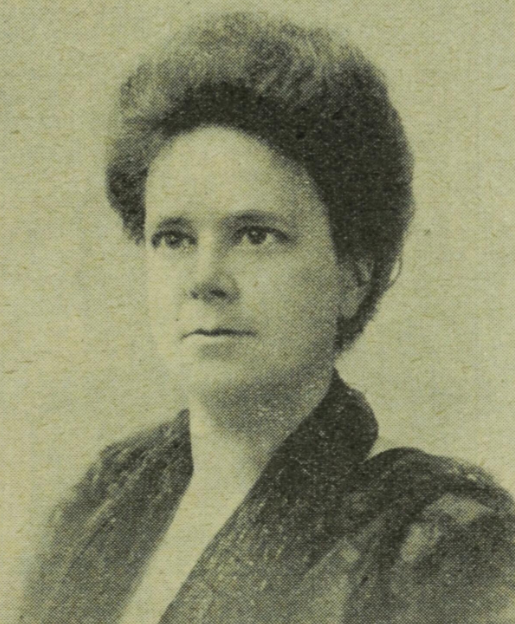
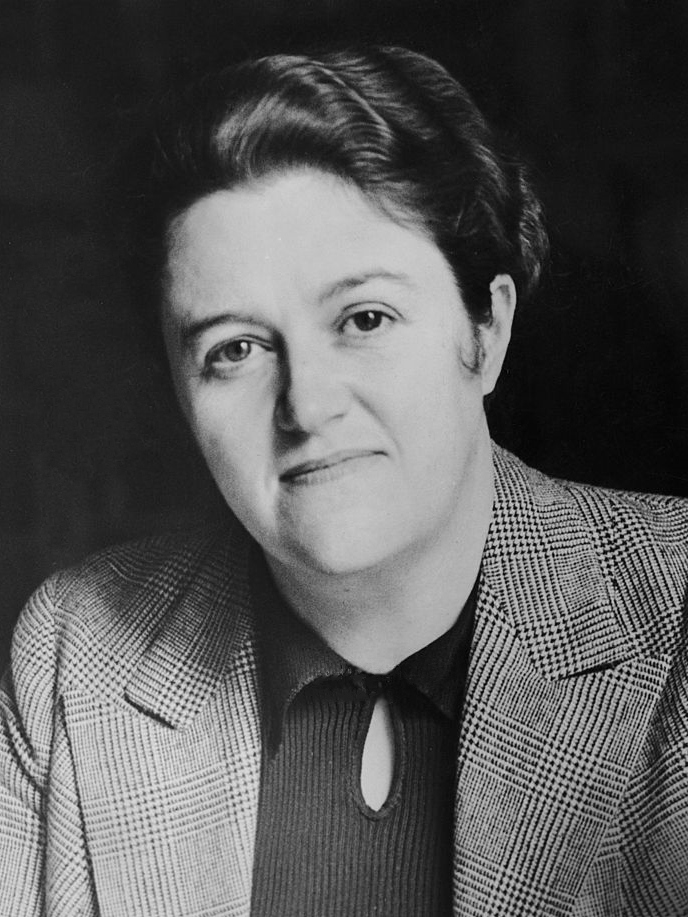
Image: Constance Clyde in her suffragette days, circa 1914, from Australian Women’s Mirror 1928. Public Domain from Wikipedia.

Monday musings on Australian literature: Forgotten writers 5, Lillian Pyke

The subjects for my Monday Musings sub-series on forgotten Australian writers vary in the degree to which they’ve been forgotten, but those still remembered are only so in niche areas. Today’s subject Lillian Pyke is one of these, in that although no longer well-known, her reputation as a children’s writer has survived somewhat.

Pyke, like my two most recent Forgotten Writers, Marion Simons and Kate Helen Weston, was the subject of one of my posts on the Australian Women Writers (AWW) blog this year. As with these two, I am not including here the piece written by Pyke that I published at AWW. It is a sweet romance titled “Mary’s mother”, which means it’s not in the genre for which she is best known, but it offers an insight into the times while showing how, in some ways, times haven’t changed all that much … check it out at AWW.

Lillian Pyke

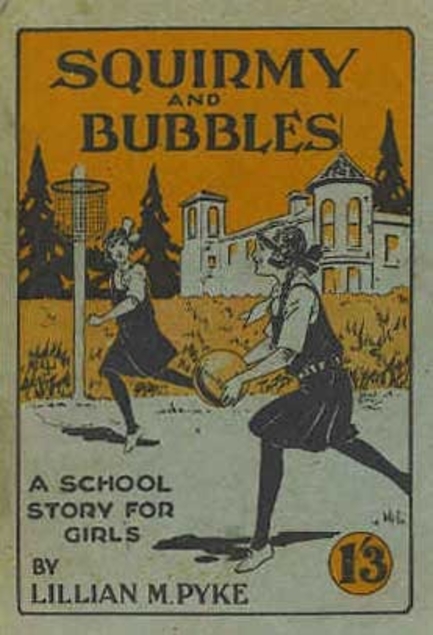
Lillian Pyke (1881-1927) was an Australian children’s writer, who also wrote adult novels under the pseudonym of Erica Maxwell. However, the adult short story I published at AWW was published under her real name, Lillian Pyke.

Pyke was born Lillian Maxwell Heath, the tenth child to her English-born parents, on 25 August 1881 at Port Fairy, in Victoria. She went to school in Melbourne, and then worked as a teacher and journalist there until she married Richard Dimond Pyke on 7 April 1906. According to her obituary in The Queenslander, Richard’s brother was W. T. Pyke, manager of Melbourne’s famous Cole’s Book Arcade. The couple moved to Gympie, Queensland, where he worked as an accountant for a railway construction company. (And where I lived for a brief time during my childhood.) They had three children, before he died by suicide in 1914. Pyke then returned to Melbourne where she took up writing again to support her family. In other words, like my previous subject in this series, Kate Helen Weston, she was widowed with young children and also seems to have managed to eke some sort of living from writing.

Pyke appears both in Wikipedia and the Australian dictionary of biography, and Trove searches also produced a few articles about her, so she clearly made some mark on her times. Kingston, in the ADB, says that between 1916 and 1927 she wrote sixteen books that were classified as children’s books, though today they’d probably be classified as Young Adult. She also wrote three novels for adults, as Erica Maxwell. One of these, A wife by proxy (1926), apparently contained Esperanto themes. It was translated into Esperanto, and published in 1930 as Anstataria Edzino. She also wrote A guide to Australian etiquette, edited short story collections, and adapted an Ethel Turner story.

Kingston writes that “most of her stories for both children and adults came out of her experience of Queensland railway construction camps or her involvement in education, and had an improving intention”. A Heath family tree webpage quotes the Oxford Companion to Australian Children’s Stories as saying of her school stories that her “educational ideas… are notably enlightened and ahead of her time”, and that her “novels about railway construction camps in Queensland are realistic insights into the life of construction workers and their families.” It’s worth noting, too, that in the list of her works on this page are three “Cole’s” books.

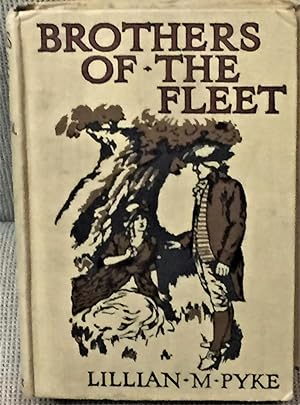
Contemporary reviewers and columnists were generally positive about her books. The Queenslander wrote (17 November 1923) that her “stories of public school life in Australia are becoming famous” and suggests that perhaps her “best work is in her descriptive novels with a railway construction camp for a back-ground; but there is no doubt her stories of school life in Australia are almost unrivalled”. The same paper, writing a year later (15 November 1924) says her latest novel Brothers of the fleet is set in “those far-off and almost forgotten days of Australia’s beginning” and is her first attempt at an historical novel. They hope that it’s “the beginning of another rich vein of her imagination”.

Pyke died of renal failure at Brighton, Victoria, on 31 August, 1927. Her obituary in Brisbane’s The Telegraph (8 September) provides a biography, and concludes that they understand that one of her latest books, Three bachelor girls, was being filmed. However, I can find no evidence that that eventuated. Launceston’s Examiner (22 October) offers a more effusive obituary, explaining that having been widowed young, she

gallantly took up the pen as a means of livelihood and it was not long before her name was bracketed with those of Ethel Turner and Mary Grant Bruce as the most popular authoress of minor fiction in this part of the world.

Big praise. The Examiner also makes an interesting political point. Having just commented on her having had to work to support her children, it suggests it’s “ironical”

that her death should have occurred just before the first Australian Authors’ Week, which may be the beginnings of better things for those who try to live by the pen out here. In a popularity plebiscite held in connection with this “week” Mrs. Pyke polled remarkably well.

It concludes:

Mrs. Pyke’s work has a rare charm, which is all the more to be appreciated when it is realised that most of her writing was done under great difficulties. She was young always in her outlook, and by no means old in years, and her death at a time when she still had years for development before her is a regrettable loss to Australian literature. She has left a name of which her children can be proud.

Sources

  • Beverley Kingston, ‘Pyke, Lillian Maxwell (1881–1927)‘, Australian Dictionary of Biography, National Centre of Biography, Australian National University, 2005, accessed online 22 April 2024.
  • Lillian Pyke, in Wikipedia, accessed 22 April 2024
  • Other sources are linked in the article

Monday musings on Australian literature: Forgotten writers 4, Kate Helen Weston

In 2021, I started my Monday Musings sub-series on forgotten Australian writers, with posts on Helen Simpson and Eliza Hamilton Dunlop. This year I added Marion Simons, who was my first post on the Australian Women Writers (AWW) blog this year. As I explained then, Elizabeth Lhuede and I have decided to focus this year on sharing public domain works published in 1924 – or written by writers who died in 1924. So today, I am introducing another writer I’ve posted on there, Kate Helen Weston.

As with Marion Simons, I am not including here the piece written by Simons that I published at AWW. It is an entertaining piece titled “The ubiquitous apostrophe”. If love discussions of grammar and punctuation, do check it out at AWW.

Kate Helen Weston

Kate Helen Weston (1863-1929) was born Kate Helen Carter in Ballarat, Victoria, to British parents who came to Australia for the gold rush, but she died in Adelaide. Indeed, one “L.B.” described her in The Australian Woman’s Mirror (of 24 February 1925) as “one of the best-known of Adelaide’s feminine inky-wayfarers”. She has an entry in AustLit, and in Debra Adelaide’s Australian women writers: a bibliographic guide, but not in the Australian dictionary of biography or Wikipedia. Adelaide’s News (10 December 1924) provided a brief biography of her in their “Pen Portraits of People” series, after she was elected president of the Liberal Women’s Educational Association.

These sources aren’t quite in tune with each other. AustLit says that she married John Samuel Weston “in Adelaide in 1885, and moved there in 1892”. Adelaide’s News says she married “Mr. J.T. Weston … and later came to Adelaide”. AustLit says that she was widowed in 1894, and “turned to writing to provide financially for herself and her children. She contributed to many Australian newspapers, and published fiction between 1911 and 1928”. They also say that “she was Lady Superintendent of the Elder Conservatorium in Adelaide between 1900 and 1914”. The News, on the other hand, says that “after her husband’s death she accepted the position of secretary to the Elder Conservatorium, which she held for 22 years”. So, some minor differences in detail here – in the name of her husband and in her Elder Conservatorium role. These would be good to clarify, but for now I’m noting them and moving on.

The News tells us that she “developed literary and artistic tastes” and had published three novels in London. In fact, she published four novels, one a few years after the News’s article. Her novels were The partners (1911), The man MacDonald (1913), The prelude (1914) and The vagabond soul (1928). The man MacDonald, says News, “had a wide vogue”. Melbourne’s Table Talk (26 July 1928), announcing the publication of The vagabond soul, said that “the story, which contains a dramatic situation of some originality, is entirely Australian in setting, and it is written with the same facile spontaneity which characterises Mrs Weston’s other novels”. But, her novels have not lasted.

Both AustLit and the News mention her other literary and journalistic work, but AustLit is more specific, telling us that she contributed to many Australian newspapers. They say she was “music and art critic for The Register, contributed to The Woman’s Record – a monthly publication – and, according to her obituary in The Advertiser, she was the ‘founder of community singing in Adelaide’.” She received a Commonwealth Literary Fund Fellowship in 1915, and was also actively involved in the National Council of Women.

Weston was clearly well-known in Adelaide’s literary circles. The News (9 September 1924) reports on an address she gave at the monthly meeting of the Liberal Women’s Educational Association. (Th Association aimed to educate women in political and social matters, but, said The Register on 2 March 1926, it could also become active in social reform, “when necessary”.)

Anyhow, the focus of Weston’s talk was Australian Women Writers. The News starts with:

It was not until one began to reckon up the women writers of Australia, said Mrs. Weston, that it was realised how many there were and what a contribution they had made to the literature of Australia in poetry, prose, and journalistic work, though it was only of late years that woman had met man on equal ground in the field of journalism. 

Turning then to poetry, she said that Australian men were credited with being better poets than Australian women, but she believed that the work of women poets was “possibly much more original in style as it bore the impress of no old world stylist, and invariably expressed the writer’s personal outlook on life”. Mary Gilmore, for example, “spoke always with a woman’s voice and wrote, not of things but of humanity and the home”. She named, and apparently read from many, contemporary Australian poets.

She then talked about fiction, arguing that it’s through fiction that the life of an age is chronicled. She named many novelists including those we still recognise today, like Mary Gaunt, Ada Cambridge, Mrs Campbell (Rosa) Praed, and Ethel Turner. She also mentioned – and I think this is an astute and significant recognition – the “many letter writers, whose small contributions fitted into the interstices of the wall of literature which was being built”. 

She concluded by arguing that the Commonwealth Government needed to more actively encourage Australian literature. She pointed to the lack of Australian publishing houses and the small market. She said, writes the News, that “writers of fiction could not afford to remain in their own country, but were forced to go to the fogs of London or the bustle of America, where they lost their nationality and their English”. And she urged would-be writers “to read all styles, and copy none” – and to practise constantly. 

The News and AustLit both describe her other, considerable, community involvements and achievements. These included having a tilt at politics. The News writes that she stood for a ward in municipal elections in 1923, and “polled the highest percentage of votes ever gained by a woman in the elections in this State”. Her death, after falling from a tram from which she never regained consciousness, seems tragic.

So far I have written on four women writers for this year’s AWW project. Two, Marion Simons and Alice Tomholt, never married, and two, Kate Helen Weston and Lillian Pyke, were widowed with young children. All, it seems, managed to eke some sort of living from writing. 

Monday musings on Australian literature: Forgotten writers 3, Marion Simons

Back in 2021, I started a Monday Musings sub-series on forgotten Australian writers, but to date have only written on two – Helen Simpson and Eliza Hamilton Dunlop. I have been intending to get back to it and with this year’s slight revamp of Elizabeth Lhuede’s and my contributions to the Australian Women Writers blog, now is the time. In the revamp, Elizabeth and I are going to focus on sharing public domain works published in 1924 – or written by writers who died in 1924. My first contribution was by Marion Simons.

This post expands on that blog post – but doesn’t include the piece written by Simons, a short column titled “To the old gumtree”, that I included there. To see that, please go to AWW. It is a short piece and worth reading!

The more we research Australia’s earlier women writers, the more we become aware of just how many used pseudonyms – sometimes more than one. Marion Simons was one such. Using pseudonyms was, as we know, not uncommon for women. Often it was to hide their gender, so they would be published and/or read, or to protect themselves from criticism for stepping outside the expectations of their gender and daring to write in the public domain. Sometimes, though, writers used pseudonyms – still do, in fact – to keep their different styles of writing separate. Unfortunately, we don’t know a lot about Marion Simons, so we can’t be sure of her motivation. However, she did use several pseudonyms, and some at least seem to have been used to differentiate different writing personas.

Marion Simons

So, who was Marion Simons? Most of what I’ve found has come from the (partly paywalled) AustLit database, and from Trove, mostly from pieces by her and but I did also find the occasional brief reference to her. The fourth of seven children, Simons was born in 1883 in Crystal Brook, South Australia, and spent her childhood years there and in Port Germein and Port Pirie. She never married, and when she died in 1952, she was living with one of her brothers in Mile End, a suburb of Adelaide.

It’s difficult to know exactly when or how her writing career started. AustLit, which describes her as a freelance radio script writer and journalist, says that she wrote radio plays for school broadcasts for the ABC between 1939 and 1949, including adaptations of classics. For these, AustLit says, she used her birth name, “Marion Simons”, but they add that she also wrote short stories and articles under the pseudonym “Stella Hope” and radio talks as “Lady Tulliver” (a reference, it seems, to George Eliot’s Milll on the Floss character, Maggie Tulliver). She used other pseudonyms too, including Quilp, Robin Adair and Nardoo. These were difficult to research, “Quilp” and “Nardoo”, for example, being used by more than one writer.

Book cover

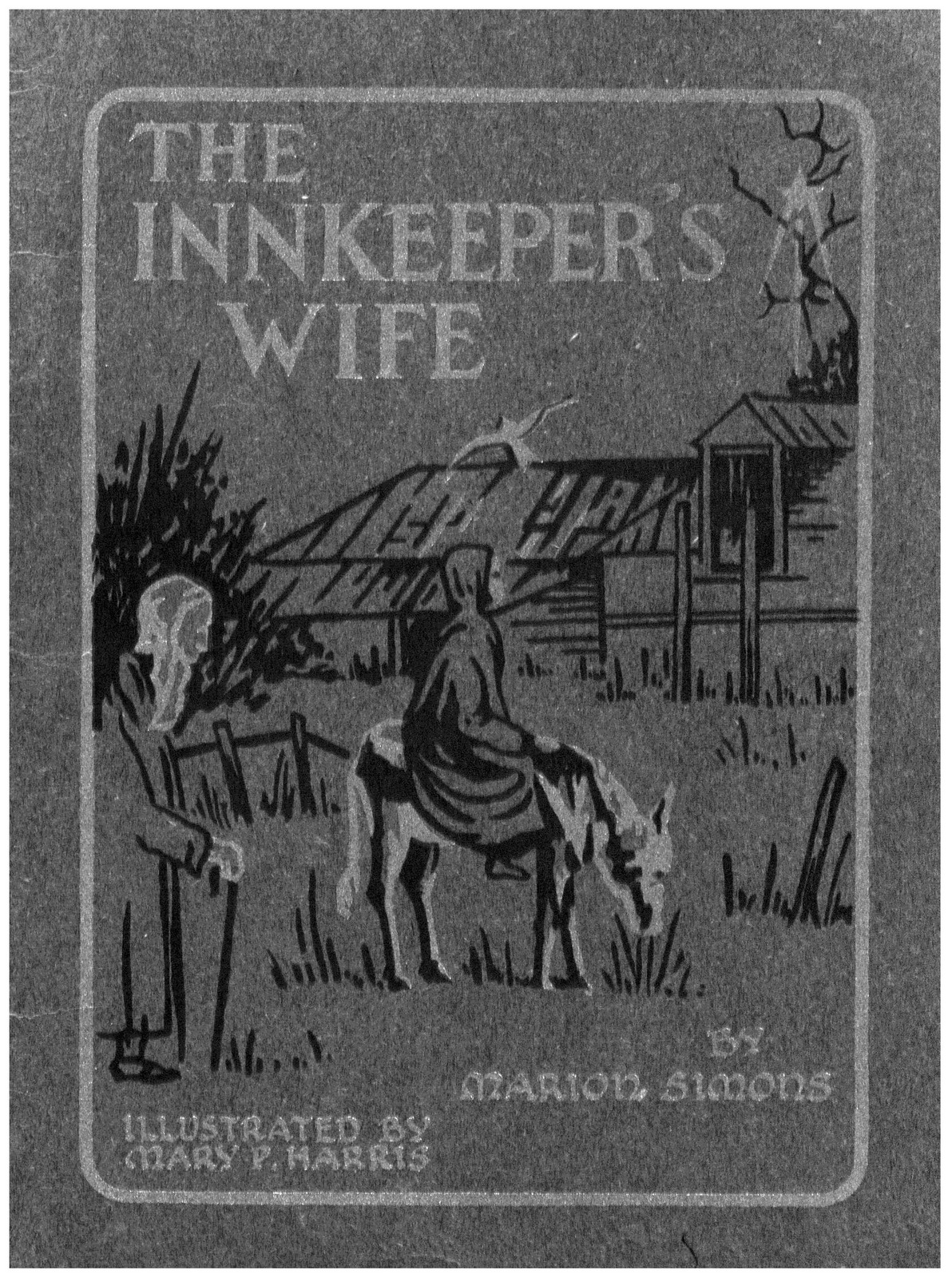
Simons was clearly versatile – she probably had to be to make a living as a writer – as she also wrote plays for the theatre, including  “Casablanca”, which won the 1932 Repertory Prize, and a small 1941-published book, The Innkeeper’s wife, that was based on the Thomas Hardy poem “The oxen”Adelaide’s News (22 November 1941), reported that this story, then unpublished, won first prize in a short story competition conducted by the South Australian branch of the Fellowship of Australian Writers. (Read it online at the State Library of Victoria). It’s not clear exactly when she moved to Adelaide, but from Trove, I’d day she was there by the early 1930s, if not in the 1920s. Simons was active in Adelaide’s literary society, with various Trove articles dated from the 1930s to the 1950s reporting her being on the Poetry Society’s Council, the last librarian of the University Shakespeare Society (before it folded), Vice-President of the Adelaide Dickens Fellowship, and President of the Y.M.C.A. Dinner Club which would feature speakers at their dinners.

In addition to revealing her involvement in the above organisations, Trove also told me that she was cousin to one J.J. Simons. She may not appear in Wikipedia, but he does. He was born in Clare, South Australia, in 1882, and, says Wikipedia, “was an Australian businessman and politician, best known for establishing the Young Australia League” (in 1905), which started as a football league but, says Wikipedia, “diversified to include literature, debating, band music, sport and theatrical performances, as well as outdoor pursuits such as hiking and camping”. It still exists. He was also active in publishing, but all this was in Western Australia where he moved in 1896, and I am digressing a bit too much now, so back to Marion. (You can read about him at ADB, if you are interested.)

Given Simons’ use of pseudonyms, it’s difficult to identify her earliest writings. However, Port Pirie’s Recorder (10 November 1934) says that she wrote as “Quilp” while living in Port Pirie, and I found a “Quilp” writing the “Comment and Criticism” columns in the Port Pirie Recorder and North Western Mail of 1906. I believe this is Simons because this “Quilp” mentions not having been long out of school. (I found some earlier columns by a “Quilp” in a Port Augusta paper but they were dated 1902 when Simons was 19 and they seem to have been by an older man.) In late 1907, “Quilp” seemed to be also writing a column “Odds and Ends from the Oracle” in the Quorn Mercury and the Petersburg Times. A letter to the editor, referencing one of “Quilp’s” columns, describes “Quilp” as “your comic writer”. Certainly “Quilp” used a humorous tone used for reporting local events and activities, much as you find in modern columnists. Take for example this from her “Comment and Criticism” column in the Port Pirie Recorder and North Western Mail (of 5 December 1906):

I went to a garden fete the other day and helped to damage a very nice garden…

“Quilp” was also referenced in another (1907) report as delivering a paper on David Copperfield to Port Pirie’s St Barnabas Literary Society.

The “Stella Hope” by-line appeared in South Australian newspapers in the early 1920s. These pieces included general interest columns, also delivered with a touch of humour, and short stories. The first piece I found was “February the Fourteenth, St Valentine’s Day” in The Journal (17 February 1923).

My first in this series were novelists, which Marion Simons was not, but she was prolific enough across a number of forms to make her worth including here. I’d love to know more about her life but, despite her active involvement in Adelaide’s literary community, I have not yet located an obituary. I’ll keep looking though.

Monday musings on Australian literature: Forgotten writers 2, Eliza Hamilton Dunlop

When I started my Monday Musings sub-series on forgotten Australian writers a couple of months ago, I had a few writers in mind, including the first one I did, Helen Simpson. However, a couple of weeks ago, The Conversation published the latest in their Hidden Women of History series, and the subject was an Irish-Australian poet, Eliza Hamilton Dunlop. I figured that, being a poet, she also qualifies for my Forgotten Writers series. I hadn’t heard of her, but she has become well-known in academic circles, because of … well I’ll let The Conversation explain.

Anna Johnston, co-editor with Elizabeth Webbey, of the recently published collection of essays Eliza Hamilton Dunlop: Writing from the colonial frontier, launches her The Conversation article with

Eliza Hamilton Dunlop’s poem The Aboriginal Mother was published in The Australian on December 13, 1838, five days before seven men were hanged for their part in the Myall Creek massacre.

Dunlop, Johnston continues, had arrived in Sydney in February and was “horrified by the violence” she read about in the papers. Her poem was inspired by the evidence given in court about an Indigenous woman and baby who survived the massacre. In it, she condemns “settlers who professed Christianity but murdered and conspired to cover up their crime”.

The poem made Dunlop “locally notorious”, but “she didn’t shrink from the criticism she received in Australia’s colonial press”. She hoped

the poem would awake the sympathies of the English nation for a people who were “rendered desperate and revengeful by continued acts of outrage”.

So, who was this outspoken, confident woman?

She was born in Ireland in 1796. Her father was a lawyer, but her mother died soon after her birth. Soon after, her father moved to India, to be a Supreme Court judge, so she was raised by her paternal grandmother. Johnston writes that she grew up in a “privileged Protestant family with an excellent library”, and “grew up reading writers from the French Revolution and social reformers such as Mary Wollstonecraft”. She started writing at a young age, and had poems published in local magazines in her teens.

These poems reflected her interest in the Irish language and in political campaigns to extend suffrage and education to Catholics. After travelling to India in 1820, she wrote poems about the impact of British colonialism. Then, in 1823 she married book binder and seller David Dunlop, in Scotland. His family history inspired poems about the bloody suppression of Protestant radicals in the 1798 Rebellion.

According to ADB, she had previously married an Irish astronomer in Ireland and had two children, one born in Coleraine, Northern Ireland, in 1816. They don’t mention what happened to this husband, but they concur with Johnston about her marrying Dunlop in 1823. Johnston says that Eliza and David had five children in Coleraine, and that they were engaged there “in political activity seeking to unseat absentee English landlords”. Clearly, Dunlop was politically engaged from an early age.

The family left Ireland in 1837, arriving in Australia, as mentioned above, in February 1838. Husband David worked first as a magistrate in Penrith, before, in 1839, becoming police magistrate and protector of Aborigines at Wollombi and Macdonald River, where he remained until 1847. ADB’s Gunson says that “as a minor poet Mrs Dunlop contributed to the literary life of the Hunter River circle” and that “her acquaintance with the European literary world gave her a place of prestige, and though neither as talented nor radical as, for example, Charles Harpur, her contribution was original”.

Songs of an exile

She may not have been, as “talented” or “radical” as others, but Sydney University Press deems her a worthy subject. Their promo for the above-mentioned book says that, after the publication of “The Aboriginal mother”,

She published more poetry in colonial newspapers during her lifetime, but for the century following her death her work was largely neglected. In recent years, however, critical interest in Dunlop has increased, in Australia and internationally and in a range of fields, including literary studies; settler, postcolonial and imperial studies; and Indigenous studies.

One of those interested is Katie Hansord, who has an essay in the book and who has written about her on the Tinteán online magazine website. Hansord’s article is titled – surprise, surprise – “a forgotten colonial woman poet”. Hansord says that in addition to being a poet she was “a playwright, a writer of short stories, and a passionate advocate of human rights with a keen interest in politics”. She writes that

Dunlop’s poetry reflects her concerns with both gender and nationalism. It should be remembered that in its original publication, ‘The Aboriginal Mother’ was the fourth poem in the series ‘Songs of an Exile’ which Dunlop published in The Australian from October 1838.

The poem is easily found on the web, and has been included in many anthologies, but it is also in Hansord’s article, linked above. The poem was, as were many of Dunlop’s poems, set to music by Isaac Nathan, and performed in concerts at the time.

However, the point I wish to end on concerns the reception of “The Aboriginal mother” because it was, of course, controversial. Leading the negative charge was, apparently, The Sydney Herald, which essentially believed that Dunlop had “given an entirely false idea of the native character”(29 November 1841), that, in effect, the Indigenous people were not capable of such deep feelings.

Hansord says more about this in her article:

Elizabeth Webby has also pointed out that the Sydney Morning Herald* ‘which had strongly opposed the execution of the men involved in Myall Creek was for many years very hostile to her [Dunlop] and her work’ (Blush 45). This hostility seems also to have reflected a growing white masculinist nationalist agenda.

Hansord briefly discusses the construction of “Australianness” during the nineteenth century, a construction that privileged white Australian-born men. For immigrant Irishwoman Dunlop – who was also actively engaged in capturing Indigenous language and translating Indigenous songs – this was clearly not good enough. (You can find an example of an Indigenous poem captured in the original language and translated by Dunlop, in The Band of Hope Journal and Australian Home Companion (5 June 1958)).

Dunlop died in Wollombi in 1880, and is buried in the local Church of England cemetery. There is clearly much more to this woman, but let this be a little introduction to another interesting, independent colonial Australian woman!

* The Sydney Herald, founded in 1831, was renamed The Sydney Morning Herald in 1842.

Monday musings on Australian literature: Forgotten writers 1, Helen Simpson

Do you often wonder how many of the writers we love now will still be read a few decades on? How good are we at identifying those who will continue to be read? So-so, I think you’ll agree if you’ve noticed the many unfamiliar, but well-regarded-at-the time, names amongst the authors mentioned in my various historical posts. It is this that has inspired me to start a new, occasional, Monday Musings sub-series on forgotten Australian writers.

Helen de Guerry Simpson, ca 1935, photographer unknown. (Public Domain, via Wikipedia)

First up, I’ve chosen an interesting one because of her complex relationship with Australia. She’s Helen Simpson, or, more fully, Helen de Guerry Simpson, who was born in Sydney, Australia, in 1897 and died in Worcestershire, England, in 1940.

I’ll start with a brief bio. Simpson was born in Australia and lived here until 1914, when, at 16 years old, she went to England to join her mother who had separated from Simpson’s father several years previously. After that, Simpson spent very little time in Australia, as far as I can tell from the Australian Dictionary of Biography. She returned in 1921 for her brother’s wedding, but was back in England by February 1924. She was in Australia again briefly in 1927, but was back in England that year, as she married there in 1927. Her husband was Australian-born Denis Browne, interesting to us because his uncle was Thomas Alexander Browne (aka Rolf Boldrewood). However, he was significant in his own right as the Father of Pediatric Surgery. Simpson came back to Australia in 1937, to give a series of lectures for the ABC, but was gone again by 1938. Sadly, she died of cancer in 1940.

So, she was Australian, even though Arnold Haskell wrote in 1944 that Katharine Susannah Prichard, Helen Simpson and Henry Handel Richardson “are so well known in England that they are accepted as English writers”! Colin Roderick included her in his 1947 book Twenty Australian novelists, and Zora Cross includes Simpson in her list of writers who started here but then moved abroad.

Starting here is a bit of a moot point. The ADB says that she published several short plays and founded the Oxford Women’s Dramatic Society before her 1921 Australian visit. However, in 1921, Angus and Robertson did publish her Philosophies in little, “a collection of her own verse with her translations from French, Italian and Spanish”. In 1922, ADB also says, she entered a play about Benvenuto Cellini, A man of his time, in the Daily Telegraph literary competition. It was staged the next year by Australian theatrical producer Gregan McMahon. ADB says he only produced four Australian plays between 1920 and 1927, so that’s surely a feather in her cap.

Novels

Simpson wrote 13 novels between 1925 (Acquittal) and 1940 (Maid no more). A few were collaborative works, including a couple of detective novels written with Clémence Dane. She also wrote verse, plays, short stories and non-fiction works.

The Oxford companion to Australian literature (2nd ed.) devotes almost a full column to her. It says that two of her novels had Australian content – Boomerang (1932) and Under Capricorn (1937) – and that her “trio of fantastic novellas”, The woman on the beast (1933), includes one set in Australia in 1999! (Links are to Project Gutenberg Australia.) Two of her novels, one being Under Capricorn, were filmed by Alfred Hitchcock.

So, how good was her writing? Let’s start with Miles Franklin who mentions her in her diaries. She writes in August 1936:

Helen Simpson: one of the giants. Perhaps she would have wiped Brent [of Bin Bin, or Miles herself] out of his field had she not relinquished it. The lively vitality and inherent understanding of the Australian scene in Boomerang show what we lost, what England has gained. Again, in the third division of The woman on the beast in a sketchy, impressionistic effort, she indicates what she could have done to take Australia by the back of the collar and shake her to a sense of her asininity, her pathetic enslavement to an old sectarian controversy–a worse importation than the foxes and other noxious weeds. But H.S. left her country for her own great literary success.

Australian writer Coralie Clarke Rees, in an extensive article in The Sydney Morning Herald (1 June 1937), agrees, calling this “third division”

an imaginative “tour de force,” showing Australia, as the last stronghold of the old order of religion and politics, being invaded by a woman evangelist of the new totalitarian order, whose character seems an ingenious compound of that of Aimee Semple MacPherson and Mary Baker Eddy.

However, Miles Franklin later (around March 1940) modified her view of Boomerang, noting its “melodrama and disjointedness”, and Katharine Susannah Prichard, writing to Miles Franklin on 1 July 1932, says that

HM Green [see my recent Monday Musings post], of Sydney, writing to me the other day, said he liked it [Back to Bool-Bool] much better than Boomerang

Now, here I’m going to share the opening of Boomerang, which won the 1932 James Tait Black Memorial Prize:

Life can afford extravagance, books cannot; for this reason nobody will dream of believing in my two grandfathers. They are too true to be good–good fiction, at any rate; if I try to give some kind of picture of them, it is because they frame between them a vision of a golden age, which could only have existed in brand-new countries, among brand-new circumstances and laws. It was not a golden age for everybody, wives or servants for instance, but for these two it was; they were, to use a word which is almost dead, characters.

I am sorry to think what would happen to these two old gentlemen if they had the misfortune to live now; it would be something legal, that is certain, falling heavily to crush their magnificent egotism and eccentricity. Their wives, who in the ‘seventies put up with them with the uncomprehending patience accorded by Insurance Companies to Acts of God, would nowadays divorce them. Servants would bring, and win, actions against them for assault. As for their families, these would scatter immediately after the first row or two, and go forth to earn their livings with all the horrid freedom that the post-war period accords …

I love this cheeky tone, and her reference here (and in the Foreword) to the fact that fiction cannot be as “extravagant” as life! The Oxford companion says that Boomerang and Under Capricorn “have involved, highly coloured plots, lightly sketched but credible characters, and a lively, humorous and sophisticated narrative style”. This, in fact, summarises what I found in Trove.

So, for example, The Sydney Morning Herald reviewing (16 February 1932) Boomerang describes its rather wild episodic plot and thinks its characters are not particularly well-drawn, but argues that:

It can safely be said that no Australian novelist for many years has provided such an exciting tale, or handled separate scenes and episodes with such liveliness and wit.

I particularly enjoyed respected academic of the time T. Inglis Moore who wrote that:

it is in the romances, Boomerang and The woman on the beast in particular, that Helen Simpson has found her metier. In them she stands out amongst Australian writers as a witty romantic, a teller of vivid tales spiced with satire, tinged with wit.

His article (linked on his name above) in the Sydney Morning Herald (7 August 1937) offers a thoughtful, even-handed analysis of her, and is well worth reading. He recognises that she can be “romantically theatrical, artificial, escapist”, but, assessing her place in Australian literature, he says:

Amongst the contemporary novel-writers one stands supreme. No other Australian comes within cooee of Henry Handel Richardson. Then comes, well, Katharine Prichard, shall we say, along with Brent of Bin Bin? And here, somewhere, must come Helen Simpson.

He concludes with:

Taking her all in all, she is perhaps the most “intelligent” of contemporary Australian novelists in the sophisticated sense, and, along with Christina Stead, the wittiest.

This is strong praise. So what happened? Where did she go? Was her style not strong enough overall to overcome her plots and characters? Or, is it just a matter of fashion? Whatever, I have greatly enjoyed reading about this woman, and may very well share a bit more about her in the future because she was quite a character.

Printed sources

Brunton, Paul (ed.) The diaries of Miles Franklin (2004)

Ferrier, Carole (ed.) As good as a yarn with you (1992)

The Oxford companion to Australian literature, 2nd ed. (1994)