My literary week (11), in the theatre

I thought I’d join the world of fake news – why not? – and make my post title a lie, a double lie in fact. It’s not really “literary” (though it has its moments) and it’s not about a week (spanning, in fact, May 24 to June 13). However, the lies end here, as this post is number 11 in my “literary week” series, and it is all about theatre – of all sorts, the concert hall, the movie theatre, the dance theatre, and the drama theatre. Here goes …

Tafelmusik (Llewellyn Hall)

JS Bach, Leipzig

In May, we saw our third concert by the exciting Canadian baroque or early music ensemble, Tafelmusik. They are exciting, because their performances tend to be multimedia – comprising images and/or props, and, often, narration – because, uncommon for ensembles, they play from memory. That’s impressive on its own. The also play on period instruments.

This latest concert was titled Bach and his world and so, not surprisingly, was devoted to the music of JS Bach. But – and here comes a literary bit – it was tied together with a narration, presented by Blair Williams, telling the story of Leipzig and Bach’s time there. The narration started by introducing us to the patron gods of Leipzig, Apollo (the god of music) and Achilles (the god of trade and invention). From here we learnt about the invention of early musical instruments – and about those who made them – and about the making of the paper and pens needed to write the music. And so on … Given Bach was a church musician, we were intrigued by the focus on Greek Gods – but the reason was valid, and it was certainly illuminating.

It was a delightful and engaging concert – perhaps particularly so for us because we visited Leipzig and Bach’s St Thomas Church in 2013, but the buzz throughout the audience suggested we were not the only ones who enjoyed the concert.

The Merry Widow (Canberra Theatre)

A few days later and we were out again, this time to see the Australian Ballet’s latest performance, The Merry Widow, which was created for them in 1975. It’s a delightfully light ballet – a nice change from the dramas of Giselle (one of my favourites) and Swan Lake – and it was performed with a lovely sense of fun. The widow was danced by Dimity Azoury, who hails from neighbouring Queanbeyan.

One of the highlights for us, was seeing, in character roles, two older dancers we loved seeing in our earlier ballet-going days, David McAllister (now the Ballet’s artistic director) and Steven Heathcote. A delight.

We stayed for the post-show Q&A – good for avoiding the post-show car-park jam, as well as for learning something about the ballet. Four company members turned up – David McAllister, Dimity Azoury, another dancer, and the orchestra’s conductor. I got to ask my question about adapting to different stages, and we learnt about how much dancers eat, despite their slim appearance. It’s all that dancing you see!

Sense and sensibility (The Playhouse)

Then, two days after the ballet, it was back to the theatre to see a theatrical adaptation of Jane Austen’s Sense and sensibility. What a surprise that was. Adapted by New York playwright, Kate Hamill, and performed by the State Theatre Company of South Australia, it started off with a bang, and never let up until the end. (Check out this promo for the play’s Canberra season.) We lost a few audience members at interval, but most of us got into the style quickly and enjoyed Hamill’s take, which was …

… subversive in terms of the traditional Regency look, with its use of kazoos, roller skates, tricycles, and the like, and highly comic in tone. The unusual props effectively managed time and space, but also captured Austen’s cheeky humour. Best thing though was that all the fun and silliness didn’t detract from the core of the original. I loved how close the production stayed to Austen’s main themes – the havoc that can be wrought on people’s lives (both men and women) by lack of economic independence, the need to balance sense with sensibility, and the challenge of staying moral and true to self in a world where money is used to wield power over others. It was a hoot from beginning to end – but a throughtful, provocative hoot, for all that.

Tea with the Dames (Hoyts, Woden)

And then, phew, I had a break of nearly a week, until this week when I went to see the documentary, Tea with the Dames, not once, but twice – first with a friend, and then with Ma Gums. It was just as good second time around.

The Dames are four doyens of the British theatre – Dame Joan Plowright (b. 1929), Dame Maggie Smith (b. 1934), Dame Judi Dench (b. 1934), and Dame Eileen Atkins (b. 1934). They are filmed at Joan Plowright’s country home, talking to each other, and answering questions from the crew (off camera). There’s a lot of joyful, knowing laughter indicating long professional and personal friendship between the women; much sharing of stories and experiences; and, occasionally, wariness or even reluctance to talk about certain subjects (like ageing!) The documentary feels natural (even where they admit to feeling unnatural), but that’s not to say there’s no art here. It takes work to make something look natural.

In addition to providing insight into the acting life, the film is particularly delightful for the way it exposes the women’s individual personalities: the calm, philosophical Joan (you can tell why she appealed to Laurence Olivier after the dramas of his life with poor manic-depressive Vivien Leigh); the forthright, sometimes acerbic, but also occasionally vulnerable Maggie; the cheeky, light-hearted but also reflective Judi; and the quietly observant, precise Eileen.

Their conversations are interspersed with some wonderful, albeit often poor quality, archival footage, including of early film and stage performances, and more personal images such the women with their children.

The end result is a picture of four women who have lived long, who have survived a tough business, and who continue to engage actively with the world and each other – and who plan to do so until they shuffle off their mortal coils!

The beginning of nature (Premiere @ Canberra Theatre)

Finally, we attended the premiere of the Adelaide-based Australian Dance Theatre’s work, The beginning of nature. What a powerful, enthralling experience. We love modern dance, and this was mesmerising. We’d happily see it again – partly to draw more meaning out of it, though perhaps “meaning” is not the right word. It’s about, the program says, the “rhythms of nature”, rhythms that “permeate all aspects of the material universe.”

And so the 80-minute performance involved the nine dancers creating beautiful forms – sometimes using props like stones, sticks, plants, a conch shell – waving, flowing, leaping, crawling, forming one shape and then breaking apart to form another, and so on. Some of the movements/forms were so beautiful that I didn’t want them to end. The value in seeing the work again would be to rise above the spectacle to better “see” the nature, if that makes sense.

Garry Stewart, Australian Dance TheatreThe dancers wore gorgeous, dark teal-green androgynous costumes; the strong but not intrusive music, composed by Brendan Woithe, was played at the back of the stage by the Zephyr Quartet; and vocalists Karen Cummings and Heru Pinkasova, also at the back, sang in Kaurna (pronounced “garna”), the language of the people of the Adelaide Plains. Apparently, Kaurna was extinct until the local people started reconstructing it from the 2000 words documented in diaries by two German missionaries. (Another wonderful example of a project to recover indigenous language.) We were addressed by the company’s artistic director, Garry Stewart, at the end, and he paid tribute to their indigenous consultant, Jack Buckskin.

Stewart writes in the program that from the beginning he wanted to include human voices, and that “it made much more sense to work with the Kaurna language in a dance work that explores the patterns of nature, than English” because “indigenous languages have been spoken on the Australian continent for some 60,000 years, whereas English for only 230 years.” Fair point, and clearly the local indigenous people were on board with the collaboration. I should say here there’s no sense that the work aims to replicate or represent indigenous dance, but I would also say that in representing nature’s rhythms, it incorporates a sort of universal dance language that we can also see in indigenous dance.

And that, folks, is it for now.

Do you have any cultural outings to share?
A lovely night out … at the theatre

You know the year has really started when the concerts and shows start up again – and for us they’ve started with a bang. We had three events in four days: A Pacifist’s Guide to the War on Cancer (Playhouse) on Saturday night, The Weight of Light (Street Theatre) late Sunday afternoon, and the first Musica Viva concert (Llewellyn Hall) on Tuesday night. This post, though, will just discuss the middle one, because it’s Australian, having been written by local author Nigel Featherstone who has featured on this blog several times. I’m not, however, an experienced theatre reviewer. I don’t have the language, and as a reader, I find it challenging seeing something only once, and not being able to go back to check something out, as you can with a book!

The Weight of Light

I’ve been surprised in recent years to discover how many Australian novelists are also librettists. David Malouf, Peter Goldsworthy, Dorothy Porter (ok a poet but also a verse novelist), and Louis Nowra immediately spring to mind – and now, local novelist and short story writer Nigel Featherstone can also claim this title. Described as a song cycle, The Weight of Light had its origins in a residency the very peaceful, non-warlike Featherstone had at the Australian Defence Force Academy in late 2013. I remember it well because he wrote about it on his blog. It all came to a head in 2014, when time came for him to do a presentation on his three months. He wrote:

I already had the questions – What is a man?  Who is a good man?  Who is a good being? – but I didn’t have the stories, or anything remotely resembling stories.  Bearing in mind that my intention in doing the residency wasn’t to write about war as such; I’m disinterested in guns, and the infinitely complex political contexts require a much bigger brain than mine.  I was interested in the small moments, the hidden fears and thoughts and dreams.

So there, in 2014, he had an idea in mind about soldiers. Then, later that year, as Featherstone tells it, Paul Scott-Williams from the Goulburn Regional Conservatorium met Nigel and told him that he wanted to create “an original song cycle”. He felt that “art song did not have much of an Australian tradition”, and wanted to do something about it, starting with Nigel as librettist. From there, the project slowly grew. Nigel has documented the process on his blog. The end result was the highly moving performance we saw on Sunday afternoon.

How to describe it? We entered the lovely Street Theatre to be faced with a minimally lit stage, comprising a minimal set. There were two large crisscrossed beams, a wire wending across the stage like a fence, brown fabric on the floor emulating a river, and, to the right, a grand piano. The show started with Alan Hicks on piano, with singing starting up soon after from somewhere backstage. The voice, coming from baritone Michael Lampard, turned out to be a mother calling her soldier-son home to the farm.

From here Lampard, with Hicks at the piano, took us on a journey, through fourteen songs, in which the soldier faces a tragedy at home which recalls to his mind a secret tragedy that had occurred during his tour (that’s a weird word really, isn’t it, for a military posting) of Afghanistan. It’s a dark story, a grim one at times, as the soldier confronts a number of challenges in his life. But, it’s also a beautiful show. If that makes sense.

This was the whole package – words, music, performance, set and lighting. Lampard’s vocal range was impressive, enabling him to differentiate characters (his mother, father, girlfriend) as they interacted with him. The lighting remained dark throughout, in keeping with the theme, though placement and levels did vary with the mood. The set was in that modern minimalist style in which a few objects are used to convey different ideas or places at different times – in this case, both the field of war and the fields of a farm. The two large semi-reclined crossed beams also, I thought, conveyed an idea of the cross, which, at one of the darker points in the performance, our soldier seemed to shoulder, recalling Christ’s journey to Calvary.

And then there was James Humberstone’s music. It included elements, we felt, of art-song, opera and church music, and was completely involving – both the sound of it and the performance of it, which included both Lampard and Hicks bowing the piano strings to create a mournful atmosphere. Other effects included paper being laid across the strings creating a fluttery, buzzing effect, and Hicks hitting the strings with small mallets. None of these were tricks for tricks’ sake, but enhanced the meaning or mood of the story.

I found these demos below on SoundCloud. They’re from earlier in the development when the program was still called Homesong, but they give an idea of the range we heard, from the sweetly lyrical to the more sombre, minimalist pieces.

I would love to be able to share some of the words with you, but not having the libretto and having only seen the performance once, that’s not possible. I did find it hard to hear them all with so much going on, but I loved the poetry of them, the use of repetition, and the imagery – of birds in particular. In the second last song, I think it was, our soldier needs to make a decision. Can he be strong, or will he give up? “Be brave enough to stay” is the call to him. The program ends, happily, on a note of hope.

Mr Gums, two acquaintances and I enjoyed, at the end, sharing notes on the performance, combining our various impressions. We all felt we’d experienced something special. I’d say Paul Scott-Williams has got what he wanted – a quality contribution to Australia’s art-song repertoire, with a story that’s right up to the moment in its concerns. I hope it gets more outings.

The Weight of Light
Words by Nigel Featherstone
Music by James Humberstone
The Street Theatre, 4 March 2018, 4pm

Monday musings on Australian literature: Reading aloud in colonial Australia

At the end of last week’s Monday Musings post on literary culture in colonial Australia, I commented that author Elizabeth Webby had also discussed the practice of reading aloud, and that I might do a future post on that. Well, not only might I, but I’ve decided to do it this week because I was fascinated. (Just to recap, last week’s post drew from Webby’s lecture titled “Reading in colonial Australia”, which is available online). And, would you believe, February 1 is World Read Aloud Day!

So, I’ll start briefly with Webby’s discussion and then move on to some of my own research, from Trove of course. She starts by saying that reading aloud remained popular throughout the nineteenth century alongside a rise in silent, individual reading. She writes:

Those worried about the excessive reading of fiction by women and young people were particularly keen to encourage the domestic practice of reading aloud. A father reading aloud to his family in the evening formed an ideal Victorian domestic scene: he could monitor what was being consumed by his wife, sons and daughters; they had the advantage of his company and attention.

(There’s that gender issue again!) She shares information gleaned from diaries. One mother, for example, would not allow Shakespeare while another was very happy to read from Dumas’ 8-volume Celebrated crimes (1839-1841). Webby says this “reminds us that individual readers have always been free to set their own rules about what should be read, ignoring the more restrictive norms of their times.” She also discusses the encouragement of reading aloud for women (“as an alternative to idle gossip as they sewed or carried out other more sedentary household jobs”) and bush-workers (“as a more profitable alternative to gambling and yarning”), and the ongoing concern about what was read (but I discussed some of that last week.)

A modern author reading: Malouf reading from Ransom, NLA, 16/8/2009

Webby then describes the rise of “penny reading” in the second half of the nineteenth century. This is the practice of attending public readings for the cost of a penny. While Dickens never toured Australia, as he had Britain and the USA, readings from his books were popular at these penny readings, which were apparently popular in Victoria. There were also “philanthropic” souls who read, free-of-charge, to hospital patients and prison inmates. Webby suggests that regarding readings for prisoners, the authorities would have seen them as having value as “cheap entertainment combined with a controlled use of fiction as a means of moral reformation”. There was, she says, a strong continuing belief in “the humanising value of literature”.

What I found in Trove*

Having read Webby’s discussion, I was keen to see if the topic was discussed in newspapers of the time – and my, was it! It seemed particularly popular in papers of the later nineteenth century, with much of the commentary I found coming from the 1870s. It was generally earnest, and had two main threads: the importance of reading aloud well; and the value of reading aloud (along with a concern that people weren’t doing enough of it).

A long article by Sarah Ellis in the Sydney Morning Herald on 21 January 1870 starts with:

Amongst the accomplishments which belong to education of the highest order, reading aloud ought certainly to hold a prominent place – that is, the art of reading aloud so as to give the full meaning of what is read, and at the same time to charm the ear of those who listen.

She then discusses how reading aloud is so often unsatisfactory, how people adopt a voice that doesn’t change or adapt to the meaning of what they are reading. She suggests that one of the causes is the reduction of reading aloud in the home. Poor education is another cause but an article in the Mount Alexander Mail (25 October 1878) reports on a lecture by Mr T.P. Hill, a well-known elocutionist of the time, who discusses the finding of school inspectors “that this neglected, but important branch of elementary education was moving forward in the right direction”. Unfortunately, though, “in a few districts … complaints were made of the monotonous and sing-song manner in which the voice was allowed to degenerate”.

My final example regarding the issue of reading aloud well, raises again the gender issue. It comes from the Avoca Mail (26 June 1877):

It is much to be regretted that the charming accomplishment of reading aloud is not more cultivated by ladies. … To do this well, a certain amount of study is requisite. First of all, it is necessary to acquire a habit of sustaining the voice; then one must learn to modulate the tones, to attend to the punctuation, and, above all, the reader must have a fair appreciation of the author’s meaning. This involves a study of English literature, which is so sadly needed by most young ladies who are supposed to have a finished education.

Oh dear, those “young ladies”, eh? Gender also comes up in the aforementioned Sarah Ellis’s article, and here I shift into the issue of why people should read aloud. Reading aloud, she says, can “increase the number of our innocent enjoyments”, “make the social hours of life glide pleasantly along”, and “prevent them from becoming vapid or wearisome”. She then separately identifies the value for women and men:

Amongst women, this accomplishment might go far to help them in filling their homes with interest; amongst men, it would help them on all public occasions, when called upon to speak or read.

Oh well, that was then – a woman’s place was in the home. We wouldn’t expect anything different, would we? I should add that Ellis spends some time discussing the best book to read aloud, the Bible, which Webby says would have been the “most-read” book in colonial Australia.

So, reading aloud was seen as good for family togetherness, for entertainment, for education, and for usefulness in the outside world. Indeed, in terms of the latter, the writer in the Ovens and Murray Advertiser (13 October 1877), reporting on another lecture by Mr T.P. Hill, describes it as “an art which at the Bar might save lives, which in the Senate might save nations, and which in the Pulpit might save souls”. Meanwhile, in terms of the former more recreational value, Ellis overlays a moral value, describing it as a “counter charm of a social and intelligent nature to take the place of pleasures which are purely sensational”!

I will end, though, with another reason which you mightn’t have seen coming. It’s from the Queenslander (6 February 1897):

The late Sir Henry Holland says in his ‘”Medical Notes” that persons who have a tendency to pulmonary disease should methodically practice “those actions of the body through which the chest is in part filled or emptied of air.” He advises that those whose chests are weak should read aloud at stated intervals …

World Read Aloud Day 2018See, reading aloud really is good for you!

Do you have any experience of reading aloud as an adult, either reading or listening (besides, that is, reading to children), and if so, I’d love to hear about it? Audiobooks? Live reading?

* Note that when I say Trove, I mean its digitised newspapers subset, because Trove, in fact, currently covers over 560 million “Australian and online resources: books, images, historic newspapers, maps, music, archives and more”. Note, too, that many of the articles I found appeared in many newspapers around the country.

Monday musings on Australian literature: Literary culture in colonial Australia

National Library of Australia
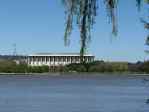
National Library of Australia, from the other side of Lake Burley Griffin

Bill of The Australian Legend’s AWW Gen 1 Week, which has just finished, focused on the authors and the books they wrote about colonial Australia. However, what about the readers? I’ve been planning to write a post on literary culture in colonial Australia for some time, and today seems to be just the right time! My post draws heavily on retired academic Elizabeth Webby’s 2011 John Alexander Ferguson Memorial Lecture titled “Reading in colonial Australia” which was published in the Journal of the Royal Australian Historical Society (vol. 97, pt. 2) in December 2011 (available online). Webby starts by recognising the work done by lawyer-book collector-bibliographer Ferguson whose much-researched collection is at the National Library of Australia and who is commemorated there by the Ferguson Room.

It’s a fascinating lecture, for the content and for the discussion of the information sources Webby used to discover who read what in colonial Australia (1788 to 1901). (I’m always interested in the research process.) There are letters, of course, from colonists back to home, asking for books. Then there are advertisements listing personal libraries for sale. Early explorer George Bass’s library for example contained mostly books on medicine, science, law, theology plus classical authors like Horace, Virgil and Homer. A library typical of “gentlemen’s libraries of the period”. It contained very little fiction.

Another explorer, a couple of decades later, was John Oxley. His library was sold in 1828, and, Webby writes, it

displayed a decidedly stronger taste for fiction, indicating the shift towards novels as the main form of recreational reading which began in this period, although still deplored by many. When John Oxley’s library was sold by auction in Sydney in August 1828 about half of the 330 or so lots listed in the catalogue were works of fiction. They included such recent publications as Sir Walter Scott’s Tales of the Crusaders (1825), the American novelist Fenimore Cooper’s The Prairie (1827), as well as Gothic thrillers like Anne Radcliffe’s Gaston de Blondeville (1826) and Mary Shelley’s early science fiction tale Last Man (1826). Oxley clearly was a regular purchaser of the latest English books.

Later in the article, discussing attitudes to women readers, she refers to the sale of “a lady’s library” in 1833. While she didn’t see a list, it was described as comprising ‘upwards of six hundred volumes, chiefly standard Works, by the most esteemed ancient and modern authors, forming altogether a collection of English Literature rarely to be met with out of Europe'”. She uses this to counter the belief that women only read fiction!

Another fascinating source of information about what people were reading are advertisements for missing books. Fascinating. Besides providing information about what people had in their libraries, they also tell us how precious books were. In some of the ads she found, people threatened legal action or offered rewards. So, of course, I went to Trove to see what I could find. I found some of those Webby describes, but I also found one from June 1830 that seemed to be about recalling books that had been lent out and were now needed back for an estate auction. The list is fairly long, and looks like one of those aforesaid typical “gentlemen’s collections”. It has classics, sermons, theological works, essays, dictionaries and so on, but very little fiction, except for Sir Walter Scott, who’ll appear again later! The list ends with the statement that “The Public are also informed, that this extensive and valuable Library will in a short time be sold by Public Auction, of which due notice will be given. As Mr. HOWE’S Library is well known, it would be useless to make further comments at this time.” Clearly they expected the books to be returned, but I wonder what sort of comments it was useless to make?

Webby also explores lending libraries. They varied greatly. Some were set up by churches, and focused on morality and religion, with “frivolous” or “pernicious” publications being excluded. Some were created for “the colonial elite”, such as the Hobart Town Book Society and Sydney’s Australian Subscription Library. And some were set up to provide reading matter for working people. These were the Mechanics’ Institutes and Schools of Arts whose buildings are still familiar sights in Australian country towns. The short-lived Hobart Town Mechanics Institute was founded in 1827, and Sydney had established its Sydney Mechanics’ School of Arts in 1833. By 1834, it had “upwards of five hundred volumes … consisting of works on science, history and general literature, chiefly contributed by the liberal donations and loans of members and friends.” Indeed, Webby makes several references to people being asked to donate books from their own libraries to, for example, make them available to “the enquiring mechanic, who can find time to dive into their contents.” In truth, though, mechanics did not comprise the main memberships of these organisations.

And here is a good point to discuss what Webby calls the fiction debate. Those of you interested in the history of reading will know that novels were disparaged for a long time. I’ve written before about Jane Austen’s famous defence of the novel in Northanger Abbey, in which she described them as works

in which the greatest powers of the mind are displayed, in which the most thorough knowledge of human nature, the happiest delineation of its varieties, the liveliest effusions of wit and humour, are conveyed to the world in the best–chosen language.

Northanger Abbey was published in 1817 so Austen’s defence is contemporaneous with the period we are discussing. Webby quotes James Ross, editor of the Hobart Town Courier, as supporting novel-reading in 1831. He defended the so-called “frivolous” reading tastes of members, arguing that recreational reading was valid after the “toil of a long day in some official, public or private arduous operation.” He also argued that reading English novels was, as Webby puts it, “almost a patriotic duty”, because these books

keep alive in no small degree that amor patriae, that attachment to our mother country and that familiarity with the manners and relish for the habits of our countrymen which is at all times so desirable.

Sir Walter Scott, Ivanhoe
Ivanhoe, first published 1819.

Webby identifies some of the fiction that was being read – including Jane Austen, Charles Dickens and Bulwer Lytton – but the author who pops up most frequently in her survey of the early to mid-nineteenth century is Sir Walter Scott. The first book order from the 1826-established Australian Subscription Library, for example, included only one novelist, Scott.

And the 1836 report of the Sydney Mechanics’ School of Arts defended the inclusion of novels in its library, with the argument, you’ll see, that is still used to defend, for example, the reading of comics. The report says:

… it ought to be remembered, that a taste for reading has to be formed before works of a more philosophical character will be relished or appreciated, and that if any book is likely to accomplish this more speedily than another, it is the works of Scott–containing, as they do, a vast fund of historical information, mixed up, in an agreeable shape, with the manners and customs of different periods.

Webby discusses much more, including the role of periodicals and newspapers in reading culture. She also writes about “reading aloud”, but I might save that for another post.

It’s clear from Webby’s lecture that the information available was scattered and incomplete. She praises Evandale Subscription Library in Tasmania which “stands out for the completeness of its records”. Please note this any of you who are currently involved in organisations, such as reading groups: keep your records! One day, some researcher will want them!

Bruce Beresford, The best film I never made (#BookReview)

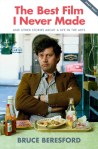
Bruce Beresford, The best film I never madeBruce Beresford, author of The best film I never made, is of special interest to me for a couple of reasons, besides the fact that I’ve enjoyed many of his films over the years. One is that after a few years of taking (or, perhaps, “dragging” is more accurate) our then young son to various classic movie “experiences”, like, say, a silent movie accompanied by live theatre organ, we finally hit pay dirt with Bruce Beresford’s Breaker Morant. He loved it, and I’d say his love of film was born then. The other is that I’ve known for some time that Beresford has wanted to film his old university friend Madeleine St John’s novel The women in black (my review). I want to see that film! According to the brief bio opposite the title page, it is being made now. At last!

All this is to explain why I was keen to read Bruce Beresford’s collection of stories when I saw it appear in Text Publishing’s New Releases list. But, what does “collection of stories” mean in the context of non-fiction? These are not essays or even newspaper columns that have been published before, and, disappointingly, there’s no Introduction, Author’s Note or Afterword providing context. There is, though, in that aforementioned brief bio, the address for his website, and there I found a tab called “Articles”. So this is where they are published? Yes, some anyhow, including some in an earlier form, but not all. However, from this, and from their personal, rather chatty style, I’d liken these articles to blog posts, which in his case comprise musings on things relating to his film and opera directing career and his related cultural interests.

The best film I never made, then, is a collection of these blogpost-cum-stories, organised for the book into four parts: I Family, Journeys, Memories; II Making and Not Making Movies; III Behind the Screen; IV Operas, Painters, Writers. The stories are all dated, ranging from 2004 to 2017. Some have brief updates at the end. The 2010 piece on Jeffrey Smart, “Smart lessons”, for example, has a final annotation noting that Smart died in 2013. The stories are not presented chronologically.

And now, because this is not a book with a narrative structure that can be spoiled – though there is some logic nonetheless to the order – I’m going straight to the end. You’ll guess why when I tell you that the title of the last article is “Australian literature and film”, but that literature connection is not the only reason. Other reasons are that it provides a good introduction to the style and tone of the whole, and also to the way he imparts his experience and understanding of filmmaking.

The main point of this last article is to discuss the idea, put forward he says by the press, that “Australian films would benefit if more adaptations were made from acclaimed literary works. Comparisons are inevitably made with foreign films, particularly English and American …” Commenting that he can understand why writer-directors might want to tell their own stories, he admits that probably a majority of English-language films are adaptations of novels but suggests that many of these would be from popular fiction rather than “literary successes”. He unpicks why:

Many novels are famous for their prose style, various colourful characters, their themes and so on: factors which can obscure the fact that other useful ingredients – a coherent plot for example – may be absent. In film, most of the characteristics that distinguish a literary work – such as a striking prose style – are stripped away and this can reveal the lack of a well-constructed story, or convincing dialogue, and be fatal to the effectiveness of the film.

He then provides examples of English and American adaptations, about which, of course, every reader-filmgoer will have different opinions – but I think his principle stands. He comments for example about the difficult of transferring “the satire and dry cynicism” of Waugh to film, and says Patrick White is notoriously difficult “because his novels like Conrad’s, are psychological studies, intense and profound, and not easy to transfer to a film script”. (Interestingly, though, he suggests that Happy Valley, which I’ve reviewed, could be a good candidate because of its “more conventional narrative”.) Filmmakers do better he argues “to adapt novels which rely on a few strong characters and a compelling narrative” like, for example, Kenneth Cook’s Wake in fright (albeit “won no literary prizes”).

So, this article demonstrates Beresford’s grasp of filmmaking, which, unsurprisingly, runs throughout the book, but it also exemplifies his tone and style, including his willingness to share his own prejudices. He’s not a fan of Tim Winton, for example, describing his books “as bargain-basement Patrick White: stylistically derivative, they are far more savage, full of unpleasant characters, and weakly plotted”. And Christina Stead, he says, is “a turgid writer, in my worthless opinion”. This possibly false but not pompous self-deprecation is another feature of his tone. In the same paragraph as the Stead comment, he writes that he’d filmed Henry Handel Richardson’s The Getting of Wisdom, but that “critics did not share my admiration for the result”! (Other films of his, he agrees, aren’t the best.)

And finally, this chapter also reveals his ability to “tell-all” without being gossipy. He suggests that another reason why classic novels aren’t adapted in Australia (as they are in England) is that they are just not well-known, “certainly the word of their excellence has not reached all of those in charge of making financial decisions.” (The challenge of financing films is a theme running through the book, in fact.) Beresford wrote, he tells us, an adaptation of Henry Handel Richardson’s epic, The fortunes of Richard Mahony. He says he hadn’t expected potential investors to have read it, but he “did at least expect them to have heard of it – and her. But this was not the case.” Oh dear! He backs up this example of philistinism with another:

when I was planning a film about Mahler, a Hollywood executive said, ‘What I can’t understand is why you would want to make a film about a nonentity.’ I said  nothing, but perhaps should have told him that one of the most gifted composers of all time could not accurately be described as a ‘nonentity’ – except by someone of overwhelming stupidity.

To his credit, Beresford does not name this person of “overwhelming stupidity”.

If you’ve enjoyed my discussion of this article, then you are likely to enjoy the book. I loved his discussion of the filmic qualities of the artist Caravaggio, and of his friendship with luminaries like Barry Humphries, Clive James, and the late Jeffrey Smart. His Behind the Scenes section provides fascinating insight into the role of cinematographers, composers and designers in the filmmaking process. And so on.

However, because this is a book of collected articles written over a decade or more, there is the occasional repetition, particularly in the first section about his personal life. And, he does come across somewhat as an unreconstructed male. There are several references to his chasing, or his friends’ marrying, beautiful women, which focus I find out-of-date (but that’s just my worthless opinion!)

The best film I never made is an enjoyable book. It’s more chatty and informative than reflective, but if you have followed Bruce Beresford’s films over the years – including Breaker MorantDriving Miss Daisy, Tender Mercies, Black Robe, Mao’s Last Dancer – and you are interested in the practice of filmmaking and in the arts more generally, this book has a lot to offer. And makes, methinks, a good summer read.

Bruce Beresford
The best film I never made, and other stories about a life in the arts
Melbourne: Text Publishing, 2017
281pp.
ISBN: 9781925603101

(Review copy courtesy Text Publishing)

Joy Eadie, Discovering Charles Meere: Art and allusion (#BookReview)

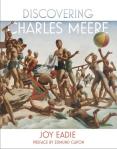
Joy Eadie, Discovering Charles MeereThe award for my last review of the year goes to something a little left field for me, Joy Eadie’s Discovering Charles Meere: Art and allusion. I say left field because it is, essentially, a book of art criticism, and I don’t do much of that here (or anywhere, for that matter!) However, when Halstead Press offered me a copy for review a few months ago, I was intrigued, so accepted the book. And here is why I was intrigued …

In the email offering me the book, the publisher wrote:

Australian Beach Pattern is Meere’s most famous work and hangs in the Art Gallery of NSW. However, despite its popularity and recognition, it has been labelled by critics as an unimaginative work which glorifies an Aryan ideal of mid-twentieth Australia, and Meere’s name is hardly known.

And thus my interest was aroused, because earlier this year I had been to the Brave New World: Australia 1930s exhibition at the National Gallery of Victoria. One of the sections was titled “Body culture” and the commentary noted that “the evolution of a new Australian ‘type’ was also proposed in the 1930s – a white Australian drawn from British stock, but with an athletic and streamlined shape honed by time spent swimming and surfing on local beaches.” The notes referred to the problematic aspects of this idea in an era when eugenics was on the rise in Germany.

While the exhibition didn’t, in fact, include Charles Meere, it is in this context that his most famous work, “Australian Beach Pattern” (online image) dated 1940, has been seen and it is this interpretation that Joy Eadie refutes by offering her own reading of the painting. She does this by analysing the painting and comparing it with like works from his oeuvre to develop her ideas about his themes and world view.

Eadie’s thesis is, essentially, that within Meere’s coolly formal application of an Art Deco-cum-neoclassical style lie recurring features including “a certain dry wit, irony, the use of allusion and appropriation, oblique reference to the historical context and to being in a certain time and place, while recalling other times and places”. These features, she argues, are not easily apparent in one work, such as “Australian Beach Pattern”, but they become evident in the context of several works.

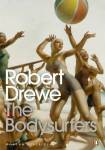
Robert Drewe, The bodysurfersHowever, before I discuss the book, I should explain for those who don’t know that “Australian Beach Pattern” is one of Australia’s iconic images. It was used on the program for the 2000 Sydney Olympics, on the cover of Robert Drewe’s The bodysurfers, and apparently features in curriculum materials about democracy in Australian schools. Merchandise featuring it is also amongst the most popular at the Art Gallery of News South Wales, where the painting has resided since 1965. But now, to the book …

It starts with a brief biography of the little-known British-born Meere (1890-1961), then moves on in Chapter 2 to analyse the poster (“1978 … 1938 150 Years of Progress”) he created for NSW’s 1938 Sesquicentenary celebrations. Referencing some of the tensions of the anniversary planning and using the careful eye for detail needed by an art critic, Eadie identifies features of the poster which depart from traditional poster style, and proposes that Meere’s aim was to subvert the “nationalistic hubris” of the anniversary story. Her analysis includes the suggestion that Meere alludes to Hieronymous Bosch’s “Ship of Fools” painting to comment on the practice of sending British outcasts to the other side of the world. She notes his inclusion of tall strong Aboriginal people on the shore, his placing of his own signature in proximity to these figures, and argues that his “choice of black to proclaim the joyous message of progress” was “deliberate and ironic”.

In this vein – analysing Meere’s painting style, use of colour, allusions to European paintings, historical context, and so on – Eadie discusses picture after picture, including of course “Australian Beach Pattern”, to build up her argument concerning Meere’s more subversive commentary on contemporary culture, and she is, overall, convincing. Her close reading of the paintings, mirrors, really, the close textual analysis literary critics do. And her challenge with Meere reminded me of that issue regarding the value to criticism of knowing the creator that I raised in my recent review of Bernadette Brennan’s book, because, in Meere’s case, it appears there are “no diaries or notebooks recording his artistic practice” so, says Eadie, “one can only speculate”.

And speculate she does, sometimes drawing long bows. These show the depth of her research, but with little evidence for what Meere actually knew, saw, experienced or thought, these bows rely on our agreeing with her assumptions – particularly regarding his alluding to other works. Her analysis of his “Diamonds are a girl’s best friend” painting is fascinating but relies on our making a number of leaps with her. In her chapter discussing the origins of the large number of “copies” of “Australian Beach Pattern” which regularly hit the market, the speculations build, but, as she does elsewhere, she admits to them, calling one idea “highly speculative”. Other times, she explains that she had to work from digital or reproduction copies of works in private hands, and that her analysis could change on seeing the work itself. None of this, however, gets out of hand, and her arguments are clear.

Discovering Charles Meere might sound dry and suited only to specialists, but not so. Eadie’s writing is engaging and refreshingly free of academic jargon and meaningless polysyllabic words. The book is short, nicely produced, and is well-illustrated, making it easy to follow her argument. As for the content, it should appeal to anyone interested in Australian art and 20th century Australian culture. I enjoyed my foray into the outfields of my reading interests!

aww2017 badgeJoy Eadie
Discovering Charles Meere: Art and allusion
Braddon: Halstead Press, 2017
96pp.
ISBN: 9781925043389

(Review copy courtesy Halstead Press)

Monday musings on Australian literature: Queensland Writers Centre

Today’s Monday Musings is the fourth in my little series on our writers centres, and it’s to Queensland I’m turning this time, partly because next month GenreCon will be held at the State Library of Queensland. But, more on that later in the post. First, I’ll introduce the Centre.

The Queensland Writers Centre was founded in 1990, as a membership organisation, with “the aim of nurturing Queensland literature and building a community of writers”. On its About page, they say:

… we love stories. We love the writers who tell the stories and the readers who give them life. We love the way they help us to understand and connect with those around us and gain a greater understanding of ourselves.

QWC … supports, celebrates and showcases Queensland writers and writing in all its forms. We work with our members and partners to promote a vibrant and diverse writing community across Queensland.

Like all writers centres they offer a wide range of programs, including workshops, seminars and online courses, magazine and newsletter, mentorship and manuscript assessment program (aka The Writer’s Surgery), and fellowships and prizes. Here though, as in previous posts, I’ll highlight a few programs that particularly caught my attention.

(I was going to start with their Regional Events, which seemed worth promoting, but when I clicked on the Regional Events link, I was taken to an Events page for July to December 2017, which seems to have only one event outside Brisbane, “Thriller Writing with James Phelan” in Townsville. That was a little disappointing, but I know these Centres run on minimal funding, and servicing a physically large state would be a challenge.)

Events

In fact, following from the paragraph above, the About page lists a number of activities under What we do which all link to the Events page. These activities are:

  • Regional Events
  • In Conversation Events
  • Salons and Reading Events

Over the second half of 2017, their events include, in addition to the above mentioned James Phelan on Thriller Writing:

  • a panel (“in conversation”) with Jane Harper (whose book The dry has been one of this year’s big publishing successes) and Matthew Condon;
  • a seminar on writing about music and musicians;
  • a four-part course for beginners on developing narratives;
  • workshops for intermediate and established writers, such as one on public speaking and another on editing (given by Melina Marchetta); and
  • workshops on other topics such as speechwriting, writing romance fiction, writing media releases.

A diverse program don’t you think?

if:book Australia (The Future of the Book)

This is a QWC initiative which:

explores new forms of digital literature and investigates the changing relationship between writer and reader.

It’s not, as you might think, about eBooks. The medium is not the point. Instead it’s about the interaction or relationships forged between writing and reading, and looks at such topics as “the purpose of the book”, “new forms” that can expand how stories “are discovered and shared”, interactions between old and new technologies, and “what changes when we change the book”. The program extends beyond Queensland, and links internationally with programs in the USA and UK.

If this sounds a bit mystifying, the following examples of their projects should help:

Rod Howard, A forger's tale

Rod Howard’s book on Henry Savery

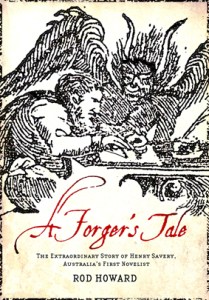
  • the tweets of Henry Savery (probably Australia’s first novelist, about whom I wrote a couple of years ago) in the Rumours of Death project: a live Twitter feed by Christopher Currie, undertaken during the 2105 Brisbane Writers Festival. You can read the tweets at the link above. (Such as, “I will be most interested to see how the Australian literary landscape has changed since I founded it some 184 years ago. “)
  • lost in track changes: the title provides a hint. Five writers (Cate Kennedy, Ryan O’Neill, Krissy Kneen, Robert Hoge and Fiona Capp) were asked “to create a short piece of memoir, a vignette” each of which was then “passed onto another author within the group” who then had to transform the piece into something else, with if:book tracking the changes! You can download the ebook version from the link above.
  • Writing Black: new Indigenous writing from Australia: an interactive book using the iBooks platform, edited by Ellen van Neerven, and including writing, photography, audiovisual, and twitter fiction, from such creators as Bruce Pascoe, Tony Birch, Tara June Winch, Kerry Reed-Gilbert, Sylvia Nakachi, Siv Parker and Marie Munkara (several of whom I’ve reviewed here, in traditional formats!) You can download Writing Black from iBooks.
  • Memory makes us: ever thought of writing as performance? Well, this is it, but it’s “distinct from other performative aspects of literature: this isn’t a reading of a prepared work, nor is it freestyle poetry. It’s improvisation not with speech but with text and the tools of contemporary writing: keyboard and cut-and-paste.” This “event” has involved several North American and Australian writers, including Paddy O’Reilly, Marie Munkara, Angela Meyer and Maxine Beneba Clarke (all of whom you’ll find on my blog). if:books says that “For most readers, Memory Makes Us is a web site. For festival visitors, it’s a live event. We have also taken it to print. But none of these individual ‘formats’ capture the whole project.”

I love all this – I mean, I love the exploration. I can’t imagine these forms will replace traditional reading but, like most new media, some might stick around as an alternative form. In the meantime, the process must surely help both creators and readers/consumers break “normal” patterns, and that can only be good for literature.

GenreCon

I wrote about GenreCon in 2013. It’s actually called AWM GenreCon, AWM being the Australian Writer’s Marketplace which I understand is managed by the Queensland Writers Centre. GenreCon is a three-day biennial conference comprising panels, talks and workshops with Australian and international genre fiction writers, editors and agents – across all genres. It also offers one-on-one pitching sessions.

This year’s conference runs from 1oth to 12th November, at the State Library of Queensland. The “special guest” is Australian Garth Nix, and one of the international guests is Fiji-born New Zealand writer Nalini Singh. (I had to laugh because the brief bio names her books but not her genre, which apparently we should know. Unfortunately I don’t! Oh dear. Ah, Wikipedia tells me she writes paranormal romance.) Other Australian speakers include debut author and Noongar woman Claire Coleman, award-winning crime writer Emma Viskic, and award-winning fantasy author Angela Slatter, all of whose names I do know I’m happy to say.

… and that’s about it for another clearly active and inspiring Writers Centre.

Monday musings on Australian literature: Tasmanian Writers Centre

Continuing my little series on our writers centres, I’ve chosen the Tasmanian Writers Centre for my next post, largely because it is holding its Tasmania Writers and Readers Festival next month. Might as well give that a plug in case for my Tasmanian readers, though I’m sure they know!

The Tasmanian Writers Centre was established in 1998 and must have one of the loveliest locations in Australia, the Salamanca Arts Centre. It has a lovely bright webpage which announces that its aim is

Supporting writers to tell powerful stories, connecting with readers and building sustainable careers.

To do this, the Centre does the sorts of things that other writers centres do, and as before I’ll list their main programs …

A Writer’s Journey

Danielle Wood, Mothers Grimm, book coverThis seems to be an annual program comprising monthly workshops, with the overall topic changing each year. In 2017, the topic is “the challenges and rewards of a variety of non-fiction formats. Topics include memoir and life writing, environmental journalism, how to research for non-fiction and freelance feature writing.” The presenters include Danielle Wood (whose memorable Mothers Grimm I’ve reviewed here), Anna Krien (whom I’ve reviewed here a few times and whose topic was, appropriately, Environmental writing and journalism), and Maria Tumarkin.

Erica Bell Mentorship Program

This program, which started in 2016, provides “one-on-one mentorship with an established writer over a six month period.” Applicants submit a 10,000 wd excerpt from their manuscript and a letter explaining why they believe they would benefit from a professional mentor. Unfortunately, for nosey me, the site doesn’t say who the professional mentor/s might be.

Young Writers Program

The Centre seems to have an active program for supporting and encouraging young writers:

  • Twitch: This is the overall name the Centre gives to its youth program. It includes workshops, “Hot Desk residencies”, and the Young Writer in the City program.
  • Young Writer in the City: I came across the first year of this program on a visit to Hobart in 2015, and wrote about it then. The idea was that writers, under 30 years old, would set up “their chairs, laptops and notepads in the midst of shoppers and surrounds to compose essays between 1500 and 5000 words”. It was apparently successful, because after that first one in Hobart, the project has been offered in Launceston, Devonport and, most recently, Glenorchy. You can find links to some of the recent writing on the project’s page. One, for example, found her inspiration for writing about MONA in her childhood love of Charlie and the Chocolate Factory, in “Willy Wonka and his fascinating factory full of wonder and surprises”. Anyone who has been to MONA could understand that reference.

Emerging Tasmanian Aboriginal Writers Award

This award is being offered for the first time in 2017 – as part of the Festival. It is open to writers 16 years and older, and offers prize money of $1200. The lovely thing is that it accepts a wide variety of writing forms: poems or songs, short fiction, non-fiction (essay, autobiographical or biographical work), a play excerpt, or an illustrated story. There are different length limits depending on the form.

Tasmanian Writers and Readers Festival

Tasmania’s festival is a biennial one, and like most such festivals includes “masterclasses, discussion forums, spoken word events, children’s programs”. It’s nice, I think, that it’s framed as a “writers and readers” festival. This year’s festival runs from September 14 to 17. At this year’s festival, masterclasses are being run by writers like Bradley Trevor Greive, Ashley Hay, Arnold Zable, and Alec Patrić (on Advanced Short Fiction). There’s also a delightful sounding session titled “Miles and Stella in Conversation”. Of course, I had to read more about that one, and this is what it said: “What do two prize-winning authors talk about when they talk about writing? Alec Patrić (2016 Miles Franklin winner) and Heather Rose (2017 Stella Prize winner) quiz each other on words, prizes, literature and life. A unique opportunity to get an inside glimpse into the friendship of writers.” This is followed by, in parentheses, the note that “(Cosmopolitans and Bellinis on sale for this session.)” Is there something I don’t know? Did our Miles love these cocktails? And what if I’d prefer a simple glass of wine? What a hoot.

It is also at this Festival that the shortlist for the biennial Tasmanian Premier’s Literary Awards will be announced – so, we’ll be looking out for that. The winners will be announced in November.

Monday musings on Australian literature: Northern Territory Writers’ Centre

Back in June, I wrote a post on the ACT Writers Centre, and indicated then that I would gradually write about other state centres. So, today I am writing about the other pseudo-state aka territory centre, the Northern Territory Writers’ Centre. I’ve chosen this as my second one because I think the Northern Territory is often overlooked in terms of cultural activity – and yet, there’s clearly quite a lot going on in this region.

On its website, the NT Writers’ Centre describes its goals:

The NT Writers Centre encourages vibrant literary activity in the Northern Territory, developing and supporting writers in all genres at all stages of their careers. We value quality NT writing as a unique component of Australia’s literary wealth and recognise Indigenous writers and storytellers as a core component of this.

Its main activities are:

  • NT Writers’ Festival, its “cornerstone event”, which alternates between Darwin & Alice Springs
  • Territory Read, its biennial book awards
  • Andrew McMillan Memorial Residency and Eco House Residency, which are two writers residencies
  • Workshops and other events

NT Writers’ Festival

This year the Festival was held in Alice Springs, in May. Its theme was Crossings/Iwerre-atherre (with Iwerre-atherre being an Arrernte, word for “two roads meeting, neither blocking nor erasing the other; two-way learning or travelling together.” Speakers included Kim Mahood and Bruce Pascoe (both of whom I’ve reviewed on my blog), plus many indigenous and other writers (including Indonesian writer, Agustinus Wibowo.) A lovely diverse line-up.

Olive Pink Botanic Garden

Olive Pink Botanic Garden

This year they also, for the first time, shared festival sessions via live streaming to “libraries and other venues across the NT.” A great initiative, but I wonder how successful this was – technologically, I mean.

Many of the events were held in the gorgeous Olive Pink Botanic Garden, which I’ve visited a couple of times. One event, for example, was titled “Up with the Birds: Poetry readings at the café”. I reckon I could have made that, as it wasn’t too early at 8am! The poets were Anthony Lawrence, Meg Mooney, Bruce Pascoe, Kaye Aldenhoven, and the poems were apparently about “how our feathered companions have crossed the hearts and minds of poets.”

Territory Read (and other literary prizes)

These are biennial awards, with the next ones due in 2018. They are not wealthy awards, with the total prize money offered in 2016 being $9000, and are only offered for works by NT residents. The awards are:

  • Chief Minister’s Book of the Year Award: can be won by a book in any genre. The 2016 prize of $5000 was won jointly by Clare Atkins for Nona and Me (published by Black Inc.) and Mary Anne Butler for Highway of Lost Hearts (published by Currency Press)
  • Best Non-Fiction: for non-fiction prose: for any non-fiction prose work.
  • Best Young Adult or Children’s Fiction: for a published book in either genre, and they say that if a picture book wins, the prize money is split between author and illustrator.

The Writers Centre supports or contributes to other literary competitions, including, for example, the Darwin Poetry Cup. In fact, from reading their site, and searching the ‘net, I sense that poetry is quite a going thing in the Territory. Australian Poetry, for example, supports (or, has supported) a Cafe Poet residency in the above-mentioned Olive Pink Botanic Garden.

Writers Residencies

The two residencies they offer are:

  • the Eco House Residency at the Darwin Botanical Gardens which is for “all writers outside Darwin” and is a three-week residency which involves staying in “an old-style elevated house” inside the Gardens.
  • the Andrew McMillan Memorial Residency which is “open to any emerging writer who is an NT Writers’ Centre member” (or, a member of any other of the national writers centres). It’s funded by a bequest from writer/journalist/museum Andrew McMillan, and is at Larrimah which is a tiny settlement around 500 kilometres south from Darwin. McMillan often stayed here to write away from distractions.

I was intrigued to note that, as well as work on their project, the writers from both residencies must “write a 500-word blog post for the NT Writers’ Centre website”.

Workshops, etc

Like all writers centres, the NT Writers’ Centre runs all sorts of workshops, and they are clearly aware that writers need to be skilled for contemporary consumers of literature. So, for example, one of this year’s workshops was on podcasting, and was run in conjunction with the 2017 Darwin Fringe Festival. The end result was Podcasts from the Fringe.

Another upcoming workshop uses modern technology to reach writers, which is probably particularly important in such a relatively large but sparsely populated state. It’s an online writing group, which will run for three months from September 2017. It’s for writers in all genres or forms, will provide feedback, and is about “drafting, reflection and constructive criticism in a structured and supportive online setting.”

I’ve enjoyed this little foray into another part of Australia and discovering what seems to be another vibrant literary environment … I hope you’ve enjoyed it too.

Monday musings on Australian literature: ACT Litbloggers under way

A few weeks ago I posted on the ACT Litblogging program for which I am a mentor. But, I’ll just recap in case you missed that post. Titled ACT Lit-bloggers of the Future, this is a collaborative program between the ACT Writers Centre and the National Library of Australia (NLA). It provides for two emerging ACT-region writers to attend events at the National Library of Australia and post their experience on the Writers Centre’s Capital Letters blog, as well as for that mentorship from me.

The two bloggers, playwright and performance maker Emma Gibson, and blogger/podcaster and writer Angharad (Tinted Edges), are now well underway. They have posted on three events, and more posts, I know, are scheduled for the next month. The posts to date reveal the variety of programs offered by the National Library, an impressive variety really, when you know that the bloggers, due to their work and other life commitments, have not been able to attend every event available.

Here are the posts published to date:

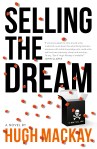
  • Hugh Mackay, Selling the dreamAuthor talk with social commentator and prolific writer Hugh Mackay, held on 6 June, and posted by Angharad. The book was Selling the dream, on the advertising industry, and Angharad, who loves attending author talks – as most keen readers do – enjoyed both the overall experience and what she learnt about advertising, including its increasing role in political campaigns. As you usually do at author talks, she bought the book and had it signed!
  • Presentation on the life and death of botanical illustrator Dorothy English Paty by curator Nat Williams, on 28 June, and posted by Emma. Emma, who has always liked botanical illustration, was throughly engaged by this introduction to Paty (1805-1836), a little-known early Australian amateur artist. The Library has two of her Newcastle sketchbooks in its Nan Kivell Collection and this talk focused on presenter Williams’ research. As Emma says, although there are many gaps in our knowledge about her, the survival of these notebooks, together with research by people like Williams, will ensure that she (and the contributions she made) are not lost to us.
  • NAIDOC 2017 week collection talk titled Our voice, presented by librarian Ryan Stoker on 6 July, and posted by Emma. Described as a collection talk, this event involved Stoker highlighting “a variety of interviews, social histories and folklore recordings” that the Library has collected from Aboriginal and Torres Strait Islanders. As a playwright, Emma is attuned to things aural, and takes her own audio recordings when travelling. Not surprisingly then, she found the talk illuminating, particularly in relation to how this collection at the NLA might help keep indigenous languages alive.

More posts, as I said in my introduction, are coming, including one from Angharad on an author talk by the popular and successful Australian fantasy and historical fiction writer Kate Forsyth. Look for that, and others by our two bloggers, on the Capital Letters blog. You can subscribe to it via the box in the right sidebar.

Meanwhile, our two bloggers would love it if you read these current posts and left them a comment!

You are very likely to hear more about this program later in the year, but I did want to share what’s been done to date – and give a little heads up to the good work being done by the NLA, ACT Writers Centre, and our two bloggers.

A short post today, but I’m sure you won’t complain about that!