Myra Morris, The inspiration (#Review, #1940 Club)

As I have done for some previous “year” reading weeks*, I decided for 1940 to read a short story by an Australian author. After a bit of searching I settled on Myra Morris, and her story “Inspiration”, because … let me explain.

My last two Australian contributions for these reading weeks were works by men – Bernard Cronin and Frederic Manning – so this time I wanted to choose one of our women writers. I found a few in Trove, but the one that caught my eye was by Myra Morris, because she was already known to me: in my Monday Musings for the 1929 year, and back in 2012 in another Monday Musings where she was listed by Colin Roderick in his Twenty Australian novelists. She also has an entry in the ADB. Clearly she had some sort of career at least, even if she is not well remembered now.

Who was Myra Morris?

ADB‘s article, written by D.J. Jordan in 1986, gives her dates as 1893 to 1966. She was born in the Mallee town of Boort, in western Victoria, to an English father and Australian mother. Her literary abilities were encouraged by her mother and an English teacher at Rochester Brigidine Convent, and she had verse published in the Bulletin. From 1930 she was part of Melbourne’s literary, journalistic and artistic circles, and “was active in founding and organising the Melbourne branch of P.E.N. International”. Her circle of friends, it appears, included Katharine Susannah Prichard.

While she wrote book reviews, novels and essays, her favourite form was, apparently, short stories. She was published in newspapers, and her short stories have been anthologised, but there is only one published collection of her stories, The township (1947). Translations of her work were published in Germany, Austria and Switzerland.

Jordan writes that she:

has been acclaimed as one of Australia’s best short-story writers. Her clear pictures of life in country and town contain a wide range of characters and reveal her tolerance and understanding of humanity in its struggles. Like her novels, her stories combine earthy realism, poetic imagery and a broad humour. Sometimes her plots are marred by the demands of the popular market, but her often beaten-down and defeated people always contrast with her lyrical evocation of landscapes. 

“The inspiration”

I picked “The inspiration” primarily because it was by Myra Morris, but I was also attracted to it because it’s set in Melbourne and its protagonist is a musician. Both of these interest me. The plot centres on violinist, Toni Pellagrini, who, as you can tell by his name, is of Italian background. Every afternoon, he plays in a 5-piece ensemble in the cafe at “Howie’s emporium”. It’s when he is happiest, we are told. When he is playing, he is “a different creature entirely from the little dark, harassed person who at other times sorted out vegetables in his father’s fruit shop”. You sense the immigrant life. Indeed, at one point Toni realises that without his music he could be seen as “a fat, oily little Dago”.

Toni is ambitious. He wants to play somewhere better than the cafe, in Kirchner’s Orchestra for example. At the cafe, however, the customers are “indifferent”, and offer only “inconsequential applause”. They are more interested in their chatter, in being seen, than in the music. You know the scene. Toni’s distress starts to affect his playing, so much that the other players notice, until one day a young girl appears. She provides him with the needed inspiration (hence the title). She listens with an “absorbed gaze” and breaks into “furious clapping” when the music ends. Toni has his mojo back. Then, they hear that the famous Kirchner is looking for players and is at the cafe. But, as they begin to play, the girl is not there, and Toni is unable play well anymore without her, his inspiration …

What happens next is largely predictable – except that Morris adds a delightful little twist that doesn’t spoil the expected ending but adds an unexpected layer.

Like Jordan, the Oxford companion to Australian literature particularly praises Morris’ short stories, saying that “her talent for domestic realism and naturalistic description, especially of rural environments, is best suited to the short story”. “The inspiration” is not one of these stories – it is urban set, and is not domestic – but its immigrant milieu (both in Toni’s family and the gypsy-inspired ensemble in which he plays) and its resolution suggest a writer interested in capturing the breadth of Australian life as she saw it.

* Read for the 1940 reading week run by Karen (Kaggsy’s Bookish Rambling) and Simon (Stuck in a Book). This week’s Monday Musings was devoted to the year.

Myra Morris
“Inspiration”
Published in Weekly Times (2 March 1940)
Available online via Trove
Monday musings on Australian literature: 1940 in fiction

As many of you know by now, Karen (Kaggsy’s Bookish Rambling) and Simon (Stuck in a Book) run “reading weeks” in which they nominate a year from which “everyone reads, enjoys, posts and shares wonderful books and discoveries from the year in question”. The current year is 1940, and it runs from today, 10-16 April. As has become my practice, I am devoting a Monday Musings to the week.

1940 is a bit of a landmark year in Australian literature because it was the year that our significant literary journal, Meanjin, was first published – in Brisbane, by Clem Christesen. Its name comes from the Turrbal word for the spike of land where the city of Brisbane is located.

My research located books published across all forms, but my focus is fiction, so here is a selection of 1940-published novels:

  • E.C. Allen, Old Eugowra
  • Martin Boyd, Nuns in jeopardy
  • Roy Connolly, Southern saga
  • Frank Dalby Davison, The woman at the mill (short stories)
  • Dulcie Deamer, Holiday
  • Arthur Gask, The house on the fens and The tragedy of the silver moon
  • Beatrice Grimshaw, South Sea Sarah; Murder in paradise: Two complete novels
  • Michael Innes, The secret vanguard; There came both mist and snow; and The comedy of errors
  • Bertha A. Johnstone, Stream of years
  • Josephine Knowles, Leaves in the wind
  • Will Lawson, Red Morgan rides
  • Eric Lowe, Framed in hardwood
  • Nevil Shute, Landfall: A channel story and An old captivity (both of which I read in my teens)
  • Helen Simpson, Maid no more (see my post on Helen Simpson)
  • Christina Stead, The man who loved children (Lisa’s review)
  • F.J. Thwaites, Whispers in Tahiti
  • Arthur W. Upfield, Bushranger of the skies
  • Franks Walford, The indiscretions of Iole
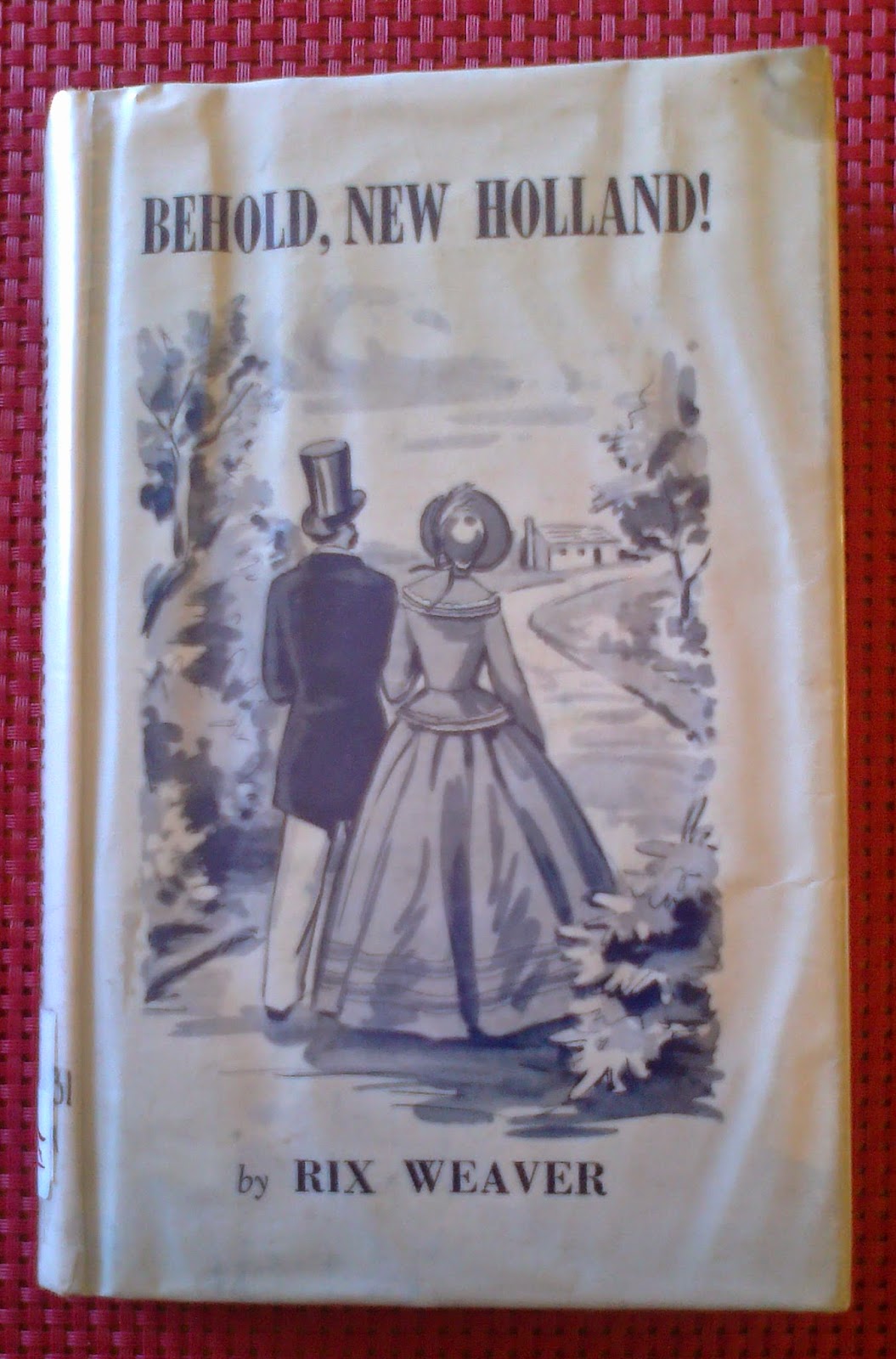
  • Rix Weaver, Behold, New Holland (A Darned Good Read’s review)

Children’s literature was going strongly at the time, with books published by four authors still remembered as writers of our children’s classics, Mary Grant Bruce, May Gibbs, P.L. Travers, and Dorothy Wall.

I wasn’t going to focus on poetry and drama, but Bill, who checked my list against the Annals for me (as my copy is in Canberra, thanks Bill) added that Katharine Susannah Prichard’s play Brumby Innes also appeared in 1940.

There were very few literary awards at the time. The ALS Gold Medal went to William Baylebridge’s poetry collection, This vital flesh, though it was announced in 1941. The award actually announced in 1940 was for the 1939 winner, Xavier Herbert’s Capricornia, so I think I can also mention it here.

Writers born this year include some favourites, whom I’ve reviewed here, Carmel Bird, Marion Halligan and Geoff Page. J.M. Coetzee who migrated to Australia partway through his literary career was also born in 1940.

The state of the art

Of course, I checked Trove to see what newspapers were saying about Australian literature, and fiction in particular. In the last “year” I did, 1929, I found great enthusiasm to support and promote Australian literature, and this was still evident to some degree in 1940. It was war-time, but interestingly that didn’t feature heavily in the book-related articles I found.

“Fictional magazines” banned

One news item that did reference the war was reported by many papers in April. It concerned the Federal government’s decision to ban the importation of “fiction magazines from non-sterling countries”. The stated aim was “to conserve our overseas’ credit” (Queanbeyan Age, 23/4/1940), with The Forbes Advocate (16/4/1940) reporting that “it is estimated that this will save £100,000 a year in dollar exchange”. Exceptions to this ban were, as Adelaide’s The Advertiser (2/4/1940) reported, “magazines dealing with current news topics or technical and instructional publications”. Many newspapers added brief commentary to their reporting. The Advertiser, for example, commented that these banned recreational magazines had “little or no literary value” and that some had already been banned “because of their false accentuation of sex, horror and crime”. But, the point made by many, and I’ll quote The Advertiser again, was the benefit to Australian writers and illustrators:

Besides its wartime value in conserving dollar exchange, the restriction of imported fiction will, it is hoped, create a wider home market for Australian writers and illustrators.

And thus Australian stories for Australians! The Forbes Advocate took the argument further, arguing that ‘”Made in Australia” on nearly everything required in the Commonwealth would bring abounding prosperity’ – and make this continent, “mighty”.

Australianness

Some reviewers commented on the “Australianness” of Australian novels they reviewed. Tasmanian Bertha A. Johnstone’s immigrant story, Stream of years, was described by her home state’s Mercury (6/4/1940) as “truly Australian and truly good” while Adelaide’s The Advertiser (28/5/1940) says of one of its denizen’s debuts, Josephine Knowles’ Leaves in the wind:

A FIRST novel by an Australian writer, apart from its intrinsic value, is of importance because of the proof that it furnishes that literary talent in this country is not stagnant.

The Argus (28/10/1940), on the other hand, reviewing Rix Weaver’s pioneer fiction, Behold New Holland, concludes that “Miss Weaver has wisely avoided any aggressive Australianism. She makes it a romance of pioneering adventure, vividly told, that would appeal to an English or an American reader”.

Many of these 1940-published novels were set in the bush, or in exotic locations further afield. Indeed, Echuca’s The Riverine Herald (24/6/1940), writes that one of Australia’s “most prolific” writers, Will Lawson, had ‘”gone bush” at Tahmoor (N.S.W.)’ in order to “complete his newest novel without any city distractions”. The novel was Red Morgan rides, a bushranging story.

What about the city?

I did find, however, one reference to the city-versus-bush issue. The article, in Sydney’s The Daily Telegraph (7/4/1940), written by one Sam Walpole, was pointedly headed “Let’s buy a yearbook for our authors”, and commences:

IT is remarkable how little impression seems to have been made on Australian authors by a curious fact recorded in the Commonwealth Year Book —that nearly two-thirds of the population of Australia live in towns. A foreigner would hardly suspect this fact from some stories, a collection short stories by ten Australian writers, mostly of the elder school.

The collection was “Some stories, by ten Australian writers”, and includes some writers we’ve come across before like J. H. M. Abbott and G. B. Lancaster. Walpole continues:

There are some lively pieces in the book — and some, less lively — but only one story (by Ethel Turner, about a hot day in Sydney) makes any serious attempt to describe the urban life which millions of Australians lead. It is odd that so many of our writers either escape into fantasy, or cling in spirit to the days when a steer ripped up Macpherson at the Cooraminta Yard. These days it is more likely that a taxi ripped up Macpherson in Pitt Street. It is time we had an O. Henry to chronicle the pangs and pleasures of Marrickvllle or Balmain, a W. Burnett to write about the Sydney underworld, a Sinclair Lewis to show our more smugly prosperous citizens how ludicrous they really are.

So, we go from those supporting the banning of “fictional magazines” (which primarily came from America) to a yearning for more relevant writing like that being produced in America! A good place to end, I think, this little survey of 1940.

Additional sources:

  • 1940 in Australian Literature (Wikipedia)
  • Joy Hooton and Harry Heseltine, Annals of Australian literature, 2nd ed. OUP, 1992 (with Bill’s help)

Previous Monday Musings for the “years”: 1929, 1936 and 1954.

Meanwhile, do you plan to take part in the 1940 Club – and if so how?

Robert Drewe, Nimblefoot (#BookReview)

Nimblefoot is Robert Drewe’s eight novel, but is the first of his that my reading group has done. Drewe is a prolific and versatile writer, having written memoir and other nonfiction, as well as short stories and novels, both. contemporary-set and historical. In other words, he is not easy to compartmentalise. He has appeared before in my blog, with his 2015 Seymour Biography Lecture and in a Monday Musings Spotlight post in 2019, and now, finally, he comes in a review.

Nimblefoot is historical fiction. It was inspired by the story of Johnny Day (1856-1885), who is described by the book’s promotion as Australia’s first international sports hero. He was a “pedestrian” (the fore-runner of racewalking) and, as a 9- and 10-year-old, he won several races, becoming World Champion. But this wasn’t Johnny’s only sporting claim to fame. In 1870, at the age of 14 and by then an apprentice jockey, he won the Melbourne Cup on a horse named Nimblefoot (which was surely a “give” of a title for Drewe, considering Day’s speed-walking career as well!)

Anyhow, here was another situation where I was keen for an author’s Afterword. Drewe explains his inspiration, saying that “several years ago Nat Williams, Treasures curator at the National Library of Australia, and Dr Sarah Engledow, senior historian at the National Portrait Gallery, showed me a portrait of a small boy named Johnny Day”. They clearly knew the reason for this portrait, but continues Drewe, “research into his life after his Melbourne Cup victory proved fruitless”. He thought it strange “that the famous walker and rider had left no cultural footprint”. Hence, his decision to imagine what might have become of him. A member of my reading group pointed out that Wikipedia does complete Johnny Day’s story. However, that page was written in late 2022, after the publication of this novel. Information on Johnny Day is now findable through Trove, but this letter to the editor of Sportsman after his death suggests that there really wasn’t much written about him. Further, Drewe took many years to write this novel so it’s likely that, when he started at least, Trove did not have the content it does now.

So now, that out of the way, on with the post … except that I will say one more thing about Trove. It looks like Robert Drewe loves Trove as much as I do, because Nimblefoot is full of delicious anecdotes from the period – mid-1860s to around 1880 – in which the novel is set. They were so delicious that I checked a couple – including one about the explorer John Horrocks being shot by his camel. Sure enough, there they were. Indeed, if I have a criticism of the novel, it’s that at times it felt like Drewe let his research – let these delicious little stories – get in the way of his own story, resulting in not so quite as tight a novel as, say, Eleanor Limprecht’s The Coast.

However, I did thoroughly enjoy the novel. Nimblefoot, like much of Drewe’s work, is an evocative read about “colourful” (euphemistically-speaking) time in Australian history. Drewe mixes real personages of the time, like Prince Alfred and the Chief Commissioner of Police Frederick Standish, with fictional characters, and takes our hero, Johnny Day, from his home in Ballarat and Melbourne to Perth and southwest Western Australia where he goes on the run after some seedy happenings involving the aforesaid Prince Alfred and Standish put him in danger. Along the way, we glean much social history, particularly about life on the land and in small town Australia, where Johnny takes on many jobs, including yardman, ostler and swamper. It was in some of these sections that I felt Drewe digressed somewhat from his centre, but the picture he built engaged me, nonetheless.

It engaged me not just because of the character of Johnny, whom you can’t help liking and wanting to keep safe, and not just because of his depiction of the times, but also because of his writing (laced, I must say, with wry humour). From his earliest books, Drewe has been able to capture the essence of a place beautifully. Here is a Pedestrian race-day:

It’s a cloudless February afternoon, so still the air’s vibrating. One of those windless country afternoons with cicadas buzzing and crows gagging and whiffs of dead things in the bushes. (“This hot, humming afternoon”)

How can you not “feel” that? In this chapter, Drewe also makes all sorts of social commentary, but subtly, so that you are just aware of it as you pass through:

And around they go. Past the first billboard. Pears Soap. A black kid sitting in a tin bath, while a white boy in a sailor suit, all blond and curls and dimples, scrubs the blackness off him.

What were they thinking? We know, don’t we?

Anyhow, moving on. In the first third of the novel, the scene is set, with Drewe setting us up for Johnny’s life after winning the Melbourne Cup. It’s a story of exploitation (at best) and corruption (at worst) with Johnny being used and abused for the benefit of others, including his father who makes money on his races, Nimblefoot’s owner who manages to not pay him his jockey winner’s fee, and Prince Albert (and his cronies, including Standish) who take him like a trophy to Melbourne’s seamy and seed sites, the bars and brothels frequented by the powerful. It is after this night, when Johnny witnesses violence and murder, that he goes on the run, ending up in Western Australia.

Nimblefoot is many novels in one. It’s an adventure story with a picaresque element, which we takes to many locations and introduces many characters. It’s a man-hunt thriller. It’s a coming-of-age story in which Johnny experiences love and gains wisdom: “Never seen my father looking helpless and weak before. It’s him in another different light. The older I get, the more different lights there are”. And it’s a social history …

But why, besides the inspiration to imagine Johnny Day’s life, did Drewe write this novel? In my Monday Musings Spotlight on him, I refer to a 2009 interview with Drewe which discusses his interest in writing both novels and short stories. He essentially said that in novels he’s “interested in ideas” while short stories are easier for “relationships … and conflicts between people”. So, what are the ideas Drewe explores here? My sense is that it has something to do with exposing Australian society of the period. Larrkinism would be a generous way of putting it, but Drewe delves deeper, showing the way power, masculine power, to be precise, so easily bends to exploitation, corruption and lawlessness. Along the way, references are made to the roles played by women (in brothels, hospitals, and on properties), to Nyoongar history and culture, and to “better” men. It’s a realistic picture and one that feels authentic to the milieu in which the novel is set.

Nimblefoot is not the most perfect novel I’ve read. Besides the many historical digressions, there is also a curious switching between third and first person voices throughout the novel. They surprised at times, but they did give freshness and reality to Johnny’s experience. Overall, Nimblefoot proved to be a good read that managed to keep me engaged from its opening words to its end, despite the moving stress I was under. Not all books would have achieved that.

Lisa has also reviewed this novel.

Robert Drewe
Nimblefoot
Hamish Hamilton, 2022
315pp.
ISBN: 9781760143749 (eBook)

ACT Book of the Year Award 2022 shortlist announced

For some reason – perhaps because I don’t write about every award every year – I’ve only written once before about the ACT Book of the Year Award. It is an award presented by the ACT Government. Unlike most of the state government awards, the award is limited to ACT Writers, and, like the Stella, it is not limited to genre or form. The award was first made in 1993 – shared by poet AD Hope and novelist Marion Halligan – so this is its 30th year.

The shortlist for the 2022 award – for books published in 2021 – was announced on the weekend by Tara Cheyne*, the Minister for the Arts. The seven finalists were selected from the 43 eligible nominations.

The shortlist

  • Dylan van den Berg, Milk (play, also won the 2021 Nick Enright Prize for Playwriting, in the NSW Premier’s Literary Awards)
  • Merlinda Bobis, The kindness of birds (short story collection; on my TBR; Lisa’s review)
  • Tim Bonyhady, Two afternoons in the Kabul Stadium: A history of Afghanistan through clothes, carpets and the camera (social history, also shortlisted for the 2022 Mark & Evette Moran NIB Literary Award)
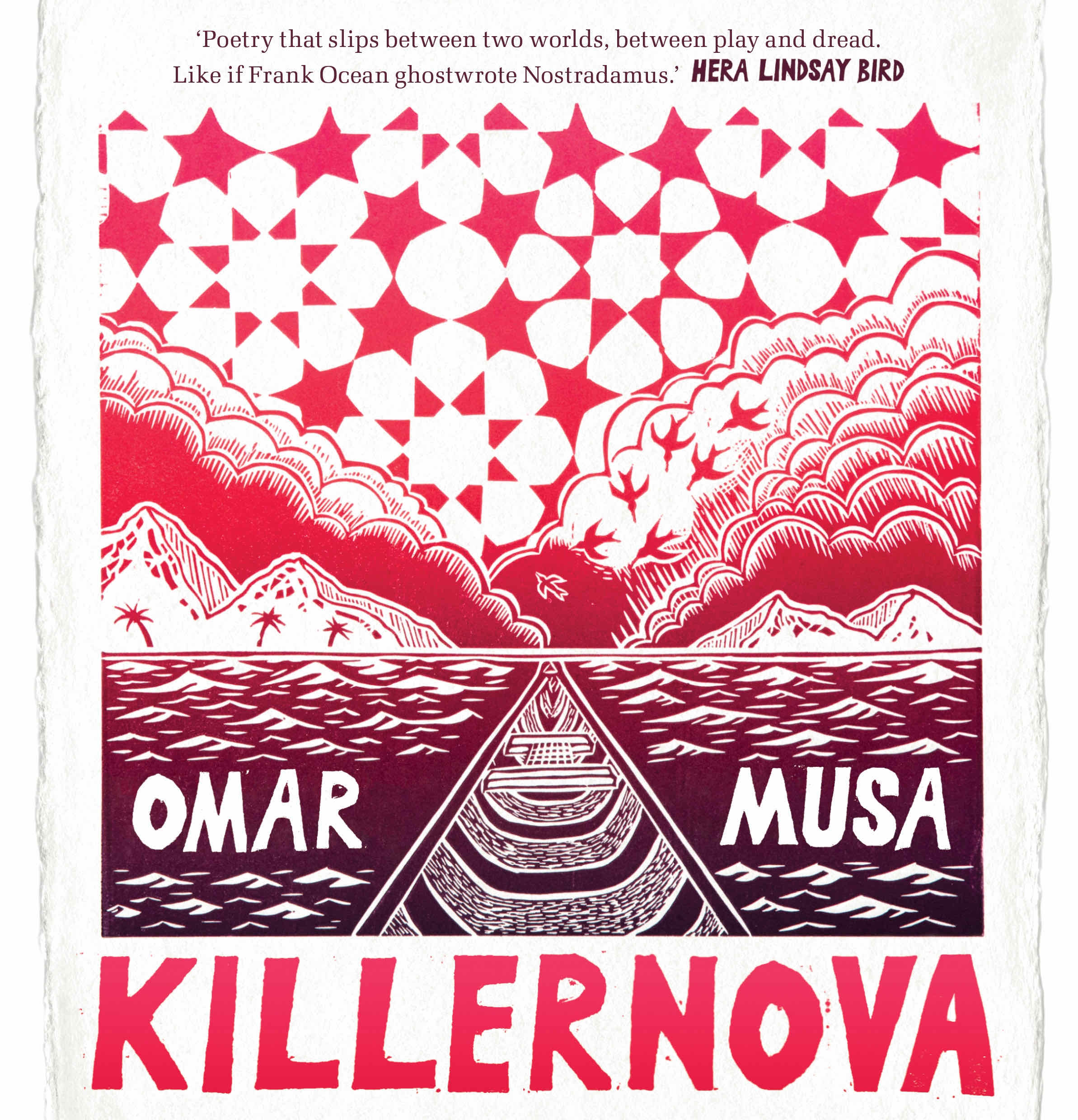
  • Omar Musa, Killernova (poetry and woodcuts; on my TBR, my book launch post)
  • Lucy Neave, Believe in me (novel; my review)
  • Hugh Poate, Failures of command: The death of Private Robert Poate (war history)
  • Kaya Wilson, As beautiful as any other: A memoir of my body (memoir)

The winner will apparently be announced in the coming weeks, but no actual date has been given, and I can’t find any information about the judging panel. 

In addition to these awards, the ACT also has annual awards presented by the ACT Writers Centre (now called Marion).

* Tara Cheyne first became known to me as the delightful blogger behind In the Taratory, but she stopped blogging – unfortunately but understandably – when she decided in 2016 to stand for the ACT Legislative Assembly. I love that she is our Minister for the Arts.

Monday musings on Australian literature: on 1923: 5, Novels and their subjects

On the basis that what novelists write about provides some sort of insight into their times, I’ve done a little survey of the books published by Australian writers in 1923 to see what their subject matter might tell us about Australian life and literature 100 years ago.

First, here are the books I found, mostly via Trove:

  • J. H. M. Abbott, Sydney Cove
  • Vera Baker, The mystery outlaw
  • Marie Bjelke-Petersen, Jewelled nights
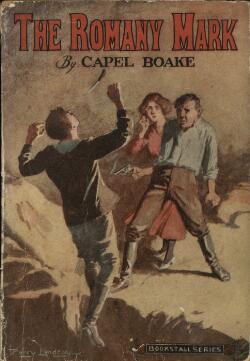
  • Capel Boake, The Romany mark
  • Roy Bridges, Green butterflies
  • Dale Collins, Stolen or strayed
  • Arthur Crocker, The great Turon mystery
  • Bernard Cronin, Salvage
  • A.R. Falk, The red star 
  • J.D. Fitzgerald, Children of the sunlight
  • Frank Fox, Beneath an ardent sun
  • Mary Gaunt, As the whirlwind passeth
  • Jack McLaren, Fagaloa’s daughter
  • Mary Marlowe, Gypsy Royal, adventuress
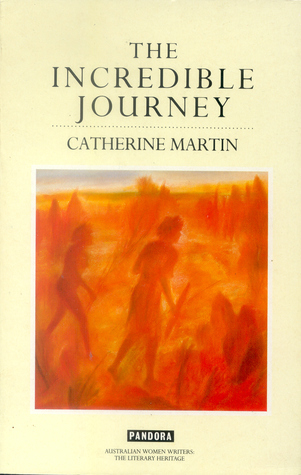
  • Catherine Martin, The incredible journey
  • Jack North, Son of the bush
  • Ernest Osborne, The plantation manager
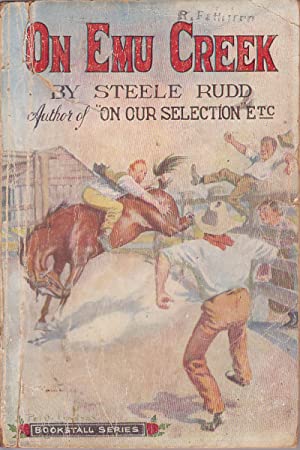
  • Steele Rudd, On Emu Creek
  • Charles L. Sayer, The jumping double
  • H.F. Wickham, The Great Western Road

Twenty books in total, six of them by women. Unfortunately, I am not at home so can’t check these against 1923 in the Annals of Australian literature (but I’m sure Bill will when he sees this post!) Wikipedia’s page 1923 in Australian literature includes a few others: D.H. Lawrence’s Kangaroo, but he’s not Australian though the book was set here; Arthur Gask’s The red paste murders, but Project Gutenberg Australia says it was published in 1924; and Nat Gould’s Beating the favourite, but he died in 1919, and I can’t find much on this book. Further, from his biography, he is as much English as he is Australian. However, it is worth sharing that Andrews in the ADB says that Gould “inaugurated the Australian sporting novel”. Charles L. Sayer’s 1923-published The jumping double represents this new genre.

For this post, I’m sticking with my neat 20! Of these, around a third seem to be historical novels. J.H.M. Abbott’s and Mary Gaunt’s were set in the early days of the colony, while those by Vera Baker, Capel Boake, Arthur Crocker and H.F. Wickham encompass bushrangers in some way. Roy Bridge’s Green butterflies is an interesting member of this “historical” group. J.Penn (writing in Adelaide’s Observer, 5 May 1923) explains:

There is something decidedly unusual in a story which starts in Tasmania in 1830, and ends in Victoria at the present time. The title is the weakest thing about “Green Butterflies” … In this book, Mr. Roy Bridges fulfils much early promise, and shows himself definitely one of the novelists who count.

Bridges spans this almost 100-year period by telling the story across two or three generations of a family, taking its readers from the horrors of colonial Tasmania, with its “savage blacks and even more savage bushrangers … being put down by Governor Arthur”, to the “dirty settlement” of Melbourne, and then on to the present day, when, says a character, “the war has changed everything; we’re not narrow as we used to be”. So, a recognition here of the impact of World War 1 on Australian society, although war novels didn’t become popular for another few years.

Bushrangers were prevalent in the historically-set novels. The worst of the bushranger era had ended by the 1880s, but they were clearly still foremost in the public imagination, particularly in terms of escapist adventure. Further, with bushrangers being a particularly Australian form of outlaw, their presence would have appealed to those wanting Australian stories.

The rest of the novels were, as far as I can tell, set in more contemporary times, though some of the synopses were not completely clear about their period. The majority were adventure and/or mystery novels. (We know Australians love mystery and adventure!) A couple were set in New Guinea (including New Britain). One is Jack McLaren’s Fagaloa’s daughter, which Hobart’s World (8/11/1923) described as “a tale of stirring venture among the savages of Papua and adjacent islands, with white men doing deeds of unusual daring afloat and ashore”. The titular daughter ‘is given a European education, and is clever and beautiful, and “white all through,” despite the fact (or perhaps because of it) that she is the offspring of colored parents’. She apparently proves her worth when her white trader husband is attacked by a “cannibal hill-tribe”. Meanwhile, Ernest Osborne’s The plantation manager was described in The Armidale Chronicle (11/4/1923) as “adventure on a North-Western Pacific plantation” that “gives a striking account of the difficulties a manager encounters in developing tropical estates. A bright love story is interwoven throughout the adventures with the head-hunters”. You get the picture! White colonialism, fear of other…

Of the mystery novels, Stolen or strayed by Dale Collins received more attention than most, partly because he was already a journalist, but also because this novel, like several in this post, were part of the Bookstall series. I plan to feature him specifically in a later post. Stolen or strayed moves between underworld Melbourne and the Murray River, and received mixed reviews. Another Bookstall mystery, The red star by A.R. Falk, is set in Sydney’s underworld. The Brisbane Courier (23/6/1923) wrote that Australian writers hadn’t “developed the field of detective fiction to any extent”, but that Falk had

written a far better detective story than the majority of those that are imported. The scene is laid in Sydney, and the fight between detectives and a clever gang of thieves and murderers is told in a very convincing manner. The ending, perhaps, is forced, but otherwise the story takes a high place among current detective fiction.

Bushrangers in the country and the underworld in the cities, plus the occasional offshore exotic location, were popular settings and subjects at the time, suggesting that the focus on “the bush” was at least lessening as the Australian nation developed. That said, Steele Rudd’s On Emu Creek was about a city man turned farmer, and followed his pattern of using humour rather than mystery or adventure to tell its tale.

But, I’m going to conclude on something quite different, Catherine Martin’s The incredible journey. Bill has reviewed her second novel, An Australian girl, published in 1890. The incredible journey was her last. Margaret Allen writes in the ADB:

Catherine published, under her own name, The Incredible Journey (London, 1923) which, written very effectively from an Aboriginal woman’s point of view, was about a desert journey to recover her son, taken by a white man. H. M. Green found it a most interesting and realistic novel.

Interestingly, but perhaps not surprisingly, I struggled to find a review of this novel in the newspapers in Trove. Far better to write about mystery and adventure novels, it seems, than one attempting to represent a First Nations’ experience. While I don’t imagine it was First Nations assessment that the novel was written “very effectively from an Aboriginal woman’s point of view”, it is at least encouraging to see someone recognising the cause. (I have now ordered the book.)

So, there you have it. I could write more on my 20 books, but I think this gives you a flavour.

Thoughts anyone?

Other posts in the series: 1. Bookstall Co (update); 2. Platypus Series; 3 & 4. Austra-Zealand’s best books and Canada (1) and (2)

Six degrees of separation, FROM Born to run TO …

April already, and I am back in Melbourne to spend Easter with the family (and feed grandchildren too much chocolate probably!) But that’s a week away. Today is Six Degrees time. If you don’t know how the meme works, please check meme host Kate’s blog – booksaremyfavouriteandbest.

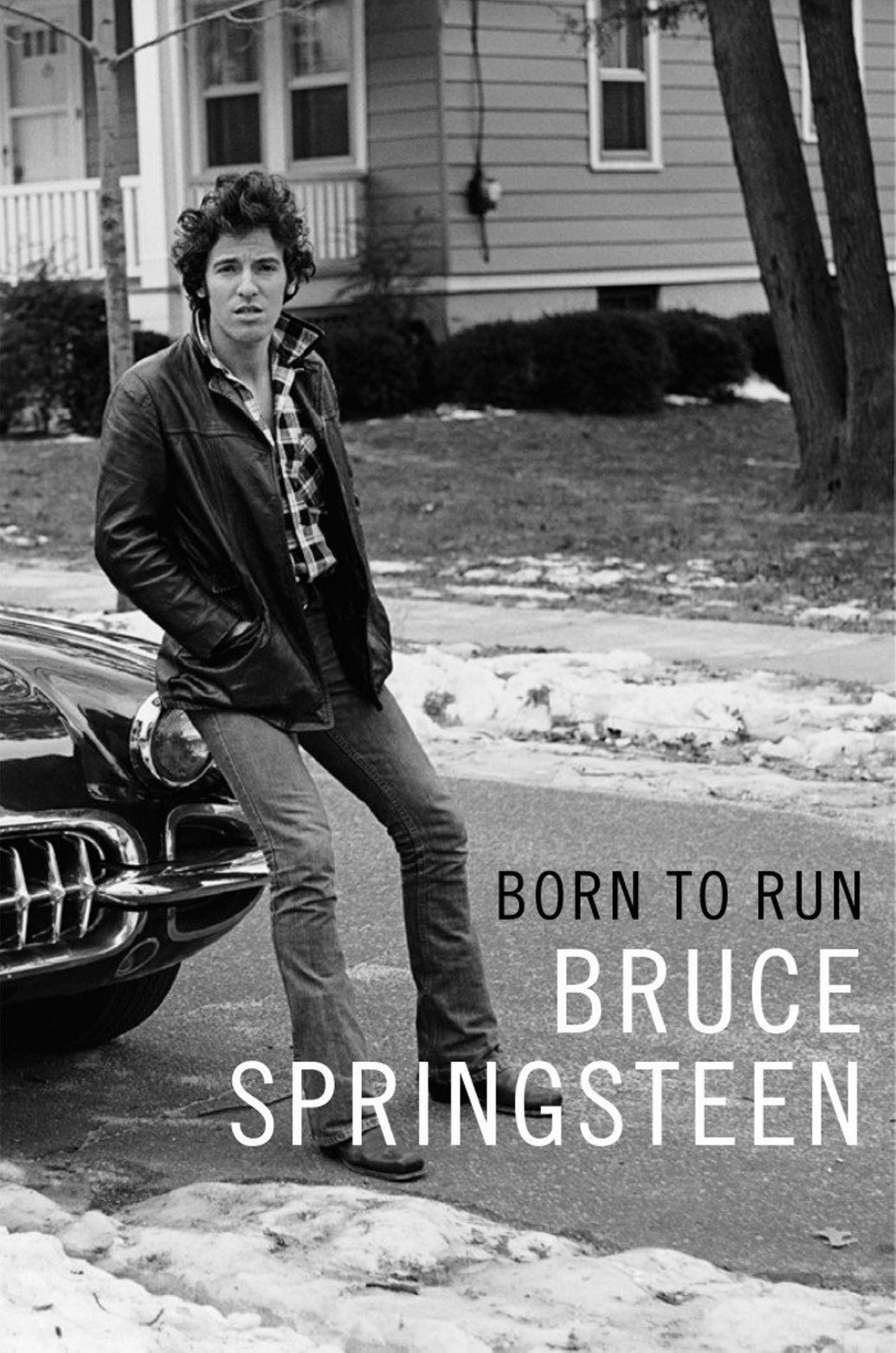
The first rule is that Kate sets our starting book. In April, yep, it’s a book I haven’t read – again – Bruce Springsteen’s autobiography, Kate calls it, Born to run. I make that point about “autobiography” because so often these days the books people write about their own lives tend to be “memoirs” but I presume Springsteen’s book covers more than a memoir typically does?

Book cover

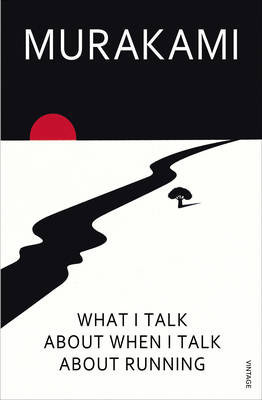
For my first link I’ve gone with something pretty obvious, a memoir with “running” in the title, Haruki Murakami’s What I talk about when I talk about running (my review). This is definitely not autobiography because it really does focus on his running. I had hoped – despite the title – for a bit more about his writing!

Book cover

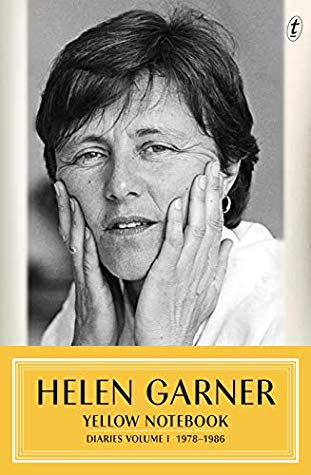
As I recollect, Murakami’s book takes a bit of a log-cum-diary form, so I’m going to another memoir that really is diary form, Helen Garner’s Yellow notebook: Diaries, Volume 1, 1978-1987 (my review). She is a mistress of the form and I hope to get to volume 3 next year – if life would just slow down a bit.

Book cover

In her book, Garner mentions many authors whom she admires. One of these is Christina Stead, whom she calls “a visionary”. I’m linking to her novel For love alone (my review).

The women in black, Madeleine St John, book cover

Christina Stead left Australia in her 20s, and made her name as a writer after she left our shores. Another Australian writer who made her name as a writer after leaving Australia is Madeleine St John, but it’s to her Australian-set novel, The women in black (my review), that I’m linking.

Jane Austen, Emma, Penguin

The women in black was adapted to film, but its title was slightly changed to The ladies in black. My next link is a bit cheeky, but not, I think, as cheeky as my last link will be. Jane Austen’s Emma (one of my posts) has been adapted several times to film and TV, but one of my favourites is the one Wikipedia describes as a ““reworking and updating”, Clueless. (Now, that’s a big change in title!)

Book cover

And now for, perhaps, my cheekiest link yet! Alicia Silverstone, who starred in Clueless as Cher (the updated Emma) left the movie world and became interested in animal activism and organic eating/veganism. Australian poet/novelist/essayist/academic David Brooks wrote a memoir-cum-reflection about his journey to vegetarianism and then veganism, The grass library (my review), in which he also talks at length about his relationship with some farm animals.

So, I could argue that I’ve achieved a bit of a circle this month, taking us from Springsteen’s autobiography to Brooks’ sort-of memoir? A circle is not required for the meme, so let’s not argue the point and just move on! We have covered a lot of ground from running, to diary-writing, to Aussie expats, before taking Jane Austen over to the US and ending up on a small farm in Australia’s Blue Mountains.

Now, the usual: Have you read Born to run? And, regardless, what would you link to?

    Stella Prize 2023 Shortlist announced

    It says something about my discombobulated year that I didn’t post on the Stella Prize longlist. And then, I was packing for Melbourne this morning while I listened to the shortlist announcement on ABC RN Breakfast. (Something new I think for Stella.) I didn’t have time to stop and write my post, then, but here I am overnighting in Wangaratta – don’t laugh truckie Bill – and have a few minutes to write a post.

    I haven’t read any of the shortlist, you probably won’t be surprised to hear, but as I heard the announcement, I remembered that I had one on my TBR, so I immediately swapped out one of the books I had selected for my holiday reading pile to include it.

    This year’s judges are author Alice Pung, in the chair, with her co-judges bibliophile and host of The Garrett podcast (among many other roles) Astrid Edwards; essayist and literary critic BeeJay Silcox; writer, editor, broadcaster, and Walkley award-winning journalist Jeff Sparrow; and First Nations poet, essayist and legal advisor Alison Whittaker. None of these were on last year’s panel. Stella, in fact, does a stellar (sorry!) job of keeping its panels fresh.

    You may remember that poetry was added as an eligible form for the prize last year. Indeed, a poetry collection won last year

    The shortlist

    The 2023 Stella Prize shortlist is:

    • Debra Dank, We come with this place (Echo Publishing, memoir)
    • Eloise Grills, big beautiful female theory (Affirm Press, graphic memoir for want of a better description): Kate’s review
    • Sarah Holland-Batt, The jaguar (University of Queensland Press, poetry collection): Jonathan’s review
    • Adriane Howell, Hydra (Transit Lounge, novel): Lisa’s review
    • Louisa Lim, Indelible city (Text Publishing, memoir)
    • Edwina Preston, Bad art mother  (Wakefield Press, novel): on my TBR, Lisa’s review

    The announcement this morning included an interview with Stella Prize CEO Jaclyn Booton and shortlisted author Edwina Preston who said that her book had been rejected 25 times before it found a publisher. She said that if she hadn’t had an agent who kept plugging away, she would have given up. Good on Wakefield! It’s a lovely little independent press in Adelaide, which publishes across an impressive range of fiction and nonfiction forms. I visited them once, many years ago, and have reviewed many of their books. 

    So, three nonfiction works/memoirs, one poetry collection, and two novels, continuing wonderful diversity of form that characterises the Stella Prize. I must say – though I haven’t included them all here – the covers for these books are stunning – strong, expressive covers that eschew those book cover cliches so often associated with books by or featuring women.

    Alice Pung says of the shortlist:

    Although all the books on our shortlist are very different, common themes emerge about a woman’s relationship to her art and to the world around her. All our shortlisted books also explore with moving complexity some of the most pivotal relationships in a woman’s life, and their roles as daughters, partners, wives, and mothers.

    Each shortlisted author will receive $4,000 in prize money. The winner will receive $60,000 (through the support of the Wilson Foundation). There’s more on the shortlist on the Stella website.

    The winner will be announced on 27 April.

    Comments?

    Monday musings on Australian literature: Trove treasures (4), Impatient readers

    Time is short tonight as my downsizing move has hit a little roadblock. In a nutshell, our furniture and some of our goods are sitting on a truck awaiting transfer to our new apartment where the lift went out of service the same time that the truck was being loaded. That was last Thursday. We spent Friday waiting for news about when the repair could be done, and then all day today waiting for the repair to be done. By the end of the day, the new part was installed but the lift was still not working …

    All this is to say that for tonight’s post I’m just sharing one little piece that I found during my recent Trove research, because that’s all the time I have.

    The reading of novels and curiosity

    Such is the title given to the column I found in Perth’s The Daily News of 30 August 1912. It starts with

    Woman reading with cushion

    This is an age of curiosity, of impatience. We no sooner take up a book than we look at the end to satisfy ourselves as to whether “they shall live happily ever afterward,” or whether the heroine shall marry some other man.

    It suggests that “we are so sure of ourselves, so sure of our ability to forecast the termination of a tale that we perchance miss a couple of important chapter [sic], only to find that we had jumped at a wrong conclusion”. And then it gives what seemed to me to be a strange “concrete example of this spirit”:

    we may cite the cases of dozens of people who, the instant they begin to read an interesting short article in the paper, immediately look to see whether The Commercial Tailoring Company, 794 Hay-street (upstairs), have had anything to do with it. Very often they are right, but sometimes they are quite wrong. Even when they are right, they have deprived themselves of a vast amount of pleasure and profit. For the article was designed, even as the clothes of the Company are designed, for their pleasure and well-being. It pays to read right through to the end.

    What the? So, of course, I did some research, and it seems that The Commercial Tailoring Company advertised itself through little circa 250-word “stories” in the paper, stories which they twist at some point to refer to their clothing. Stories which, our columnist tells us, are designed for the reader’s “pleasure and well-being”. Stories of which, indeed, this very article is one. Here are some others: The stranger’s mistake (2 August), The North Pole (16 August), The art of the funny man (17 August), and The gentle rain (31 August). Do read a couple, but I dare you to not peek at the end!

    I wonder how effective their stories were. Anyhow, you probably know what I am going to ask:

    Do you ever peek at the end of a story you are reading? Why or why not?

    Eleanor Limprecht, The Coast (#BookReview)

    I love to read Author’s Notes, Afterwords, or whatever they are called, at the end of novels, and particularly so when the novel is historical fiction. This is because these notes will often explain the author’s thought process, the line they have drawn between fiction and fact, the sources used, the level and type of research undertaken, and so on. It helps me understand “how” to read the book, if that makes sense. I was consequently pleased that Eleanor Limprecht had provided such information at the end of her fourth novel, The Coast, which is set in the former Coast Hospital lazaret in Little Bay, Sydney. This hospital was established in the 1880s for the treatment of infectious diseases, including small pox, tuberculosis, and the subject of this novel, leprosy (or Hansen’s Disease).

    The Coast is set primarily in the first three decades of the twentieth century, and focuses on the story of Hilda/Alice who is nine when she is brought to the lazaret. However, while she provides the novel’s narrative and emotional centre, hers is not the only story told. We hear about other members of her family, including her mother Nellie/Clea who is at the Coast when she arrives. We also hear about one of the Hospital’s doctors, Will Stenger, who takes special interest in his lazaret patients. And, we have a story that somewhat parallels Alice’s, that of Jack/Guy, a Yuwaalaraay man, who also ends up at the lazaret, though not until he is an adult. I should explain here the dual names: leprosy patients would be given (or choose) a new name when they entered the hospital because, as Alice’s mother tells her, it’s better for their family if they disappear, “it’s better that no-one can find us”. Leprosy, at the time, was a reviled disease and sufferers were secluded under the Leprosy Act of 1890.

    What author afterwords tell us

    So, Limprecht’s words. I wanted them because I wanted to know whether she would address her First Nations character and, of course, being the thorough historical fiction writer she is, she does indeed discuss the issue. She had advice and feedback from Yuwaalaraay reader Nardi Simpson (whose Song of the crocodile I’ve reviewed) and Gamilaraay and Yuwaalaraay reader Frances Peters. She visited Angledool, Jack’s home, with the help of local First Nations people, and was shown around the Goondee Keeping Place at Lightning Ridge by First Nations people there. Her manuscript was also read by First Nations people associated with the La Perouse Aboriginal Land Council. All this supports my sense that she has rightly and respectfully included First Nations experience in her story.

    Limprecht’s words provide other insights too, but I’ll mention just two of them. One is that she acknowledges various grants, including the Neilma Sydney Literary Travel Grant (see my post), which helped her visit another lazaret location, Peel Island. The other is that she acknowledges the History of Medicine Library at the Royal Australasian College of Physicians where she “found the records that inspired this story”. This interested me because the story contains many details about the lives of the patients at the lazaret, details that were so specific that I felt (and hoped) they were based on documented records – on reports, letters, and so on. This suggests that they were.

    “nothing to look forward to” (Alice)

    Limprecht also tells us in her words that she got the idea for this novel while researching her second novel, Long Bay (my review), making it before 2015. However, she also tells us that she finished writing it during the pandemic, which helped her “consider the continuing repercussions of stigmatising illness and the long-term effects of isolation”.

    So now, the novel itself. The story is told in first person and third person voices – Alice’s in her voice, with the stories of the other three in third person. These four stories are interspersed with each other, and are told chronologically, but each starts at a different point in time, beginning with Jack (1905), then Alice (1910), Nellie (1892) and Will (1910), until they coalesce in 1926. Jack’s story encompasses his experiences as a stolen child and a soldier in the Middle East in World War 1. Through him, Limprecht ensures that First Nations’ lives are part of the life of the time she’s chronicling, something that many of our majority-culture-written histories and historical fiction have consistently omitted.

    Jack’s story – of being taken from his family, returning to it, going to war and returning as an amputee who soon after ends up at Peel Island – conveys not just these facts, but the emotional impact of being stolen, of displacement, of racism (albeit his injured returned soldier status sometimes earned him begrudging recognition.) By sending him to Peel Island, Limprecht also documents the differential treatment at that lazaret between “white” and “others” (or, the “coloured camp”). This is a difference that he does not experience at The Coast under the more humane Dr Will.

    Alice’s story follows, presumably, a typical trajectory of those who were isolated at a young age and spent the rest of their lives that way. (It’s a coming-of-age story as moving and as tragic as that of Anne Frank’s real one). As quarantine places go, The Coast lazarets – men’s and women’s – are humane. The patients live in cottages, they have access to a beach where they can swim and fish, and they can socialise with each other (though the women’s lazaret does not have a communal cottage like the men’s has!) But, “it’s no place to grow up”. Alice is an intelligent young woman, who quickly engages us with her warmth and honesty, but she also articulates the physical and emotional experience of this disease. Told first person, her story of resilience and resignation carries the novel.

    Nellie’s and Will’s stories add additional depth and breadth to the lazaret community and thus the history. Both appear in the epilogue dated 1967. It didn’t feel narratively necessary to me, but historically it rounds out how leprosy treatment progressed and what happened to the Coast lazaret.

    The coast is the sort of historical fiction I like, a well-researched, expressively-written story about an historical time and place I know little about, one that is worth knowing. It reminds us how far we have, or haven’t, come in our management of feared diseases, like AIDS, like COVID-19. It evokes with warmth and clarity the costs of ostracism and isolation. And, it puts First Nations people into the historical frame – naturally. A good read.

    Lisa (ANZLitLovers) also liked this novel.

    Eleanor Limprecht
    The Coast
    Sydney: Allen & Unwin, 2022
    319pp.
    ISBN: 9781760879402

    (Review copy courtesy Allen & Unwin)

    Monday musings on Australian literature: Trove treasures (3), Novel reading and health

    My second post in this Trove Treasures subseries shared some arguments against novel reading. I do have a pro-novel-reading post, but today I thought I’d go a bit lighter – I think it’s lighter! – and some of the ideas I came across discussing the impact of novel reading on health.

    Novel-reading disease

    Woman reading with cushion

    I found two articles that discussed addiction to novel reading, going so far as to liken those in its thrall to drunkards. One goes back to 1855, and is in fact a Letter to the Editor (31 March 1855) of The People’s Advocate and New South Wales Vindicator. What a title for a paper! According to Wikipedia it was published in New South Wales from 1848 to 1856, and advocated on issues of importance for the working classes. In fact, Wikipedia says that it was “the first colonial paper to demand that the workers, as producers of all wealth, receive a fairer share of labour’s produce”. Great stuff, but this is not the subject of the Letter to the Editor.

    Written by F.R. Surveyor (of Shoalhaven River) it expresses concern, not with occasional novel reading which simply represents a “criminal waste of time”, but with habitual novel reading which Surveyor describes as “detrimental to the health and vigour of the body”:

    Novel reading tends to inflame the passions, pollute the imagination, and corrupt the heart. Moral sense is weakened by the false sentiment which novel writers inculcate. Novel reading is objectionable, because it creates an unnatural and morbid taste. It frequently becomes an inveterate habit, strong, fatal, as that of the drunkard. 

    In this state of intoxication, great waywardness of conduct is almost sure to follow.

    It also “destroys all taste for solid reading”.

    Sixteen years later, on 2 November 1871, The Sydney Morning Herald published an article from The Examiner, titled “The Novel-Reading Disease”, and does it go to town. It commences by stating that “physicians are familiar with a complaint which, although sufficiently specific, has yet no name of its own” but it is caused by “over-indulgence in three-volume novels”. The article then chronicles the progression of this disease, explaining that at first the reader is simply found reading “at unnatural hours”, like “the early morning, or in the middle of a beautiful summer’s afternoon”. In this stage, readers exercise some discrimination in their reading choices, preferring Trollope, for example, over lesser authors. But soon, “the taste becomes deadened and blunted, and all power of distinction and appreciation is lost. In this stage the unhappy patient can no more go without her novel than can a confirmed dipsomaniac without his drain”. (There’s the equating with drunkenness again.) Quality goes out the window, quantity is everything. Indeed, “in the worst stages” of the disease, “novels are got through at the rate of three or four, or even five, a week, or at an average, in a severe and chronic case, of some two hundred and fifty or three hundred a year”.

    And what does this disease do to its sufferers? Well, “the conversation of the patient becomes flabby and limp” leading eventually to “the last stage – that of absolute imbecility” unless “very powerful remedies” are applied. By this point in the article, all reference to sufferers are in the female gender. Indeed, the writer then says:

    It is curious and interesting to observe that as this comparatively new female disease has grown more virulent and intense the old disease of scandal talking has become comparatively rare. It is, of course, physically difficult to talk scandal and to read a novel at one and the same time. 

    True! Finally, the writer suggests that the cause of all this is the same as that for why “some young men smoke and drink bitter beer”. It’s the “sheer want of something to do”. The solution?

    What a woman needs is an education which shall enable her to read and follow the Parliamentary debates instead of the police and divorce reports; and, when women are thus educated, then feeble novels and feeble novelists will vex our souls no longer to the horrible extent to which they irritate us at present.

    I wanted to believe this article was tongue in cheek, it’s so extreme, but I don’t think it is. At least the writer recognises that women ought to receive an education!

    Novel reading and wrinkles

    Now for something lighter. I was astonished – and, I admit, delighted – to find an article titled “Novels and wrinkles”. I found it in multiple regional newspapers from South Australia and Victoria, but I’m using the Euroa Advertiser (12 February 1909). The article opens:

    Excessive novel-reading (says a well-known beauty doctor) is responsible for the bad complexions, wrinkled foreheads, and sunken eyes of many young women.

    Why specifically novel reading, do I hear you asking? Well, here’s the answer:

    Many young women cause premature wrinkles to form on their fore heads by reading exciting novels. They sit for hours, often in an imperfect light, their brows furrowed, and if the book is a thrilling one, expressing on their faces unconsciously the emotions it excites. 

    Our unnamed “beauty doctor” continues:

    In a tram or railway journey one can notice the different expressions of a man reading a newspaper, and a woman – or a man, for that matter – reading a novel. The newspaper reader’s face is quite normal; but the expression on the novel-reader’s face is quite different. 

    Priceless, really. Anyhow, fortunately, our “doctor” does not try to stop people reading novels, but “strongly” advises against reading novels “for hours at a stretch”. Have a break, he (it’s probably a “he”) says, and “above all, do not allow yourself to get too much excited by the book you are reading”. You heard it here, folks!

    Reading in bed

    Here is one relevant to many of us. It appeared in the Richmond Guardian (22 May 1926) and is “by a Medical Officer of Health”. Essentially, our MO believes this is a bad habit:

    Beds were made to sleep in. The healthy man or woman who has never formed the bad habit of reading in bed, but, on the contrary, the good one of going to bed to sleep, finds little difficulty in wooing repose within a few minutes of his or her head touching the pillow.

    So, if you “woo sleep easily” you “should studiously refrain from cultivating the habit of reading in bed”. However, there are those (besides invalids) for whom the practice might be useful. These include the “large number of apparently healthy people who find great difficulty in allowing sleep to overcome them”. There are many reasons for this, and you should try to remedy them first, but if the cause is not so easily removed, like “business and domestic worries”, then reading in bed may be a good not bad habit! These brains need something to switch them “into a different train of thought”.

    But, our MO does have recommendations – about lighting (it must not strain the eyes), about position (do not lie on your side which “imposes considerable strain on the eyes”), and about reading matter. On this he is not prescriptive, saying “the choice may be safely left to individual tastes” except it should not relate to what is keeping you awake.

    Finally, no reading in bed for children:

    Children should not be encouraged to read in bed. The healthy child should be a little animal, and the healthy animal soon sleeps.

    Reading and death

    And now, the biggie! Does reading cause death? I came across two articles addressing this issue. The first, sadly, concerned a suicide, and was reported in The Bowral Free Press (19 July 1884). Titled “Effect of reading trashy novels” it reports that a young 20-year-old man had committed suicide by “shooting and hanging”. It briefly describes the manner, before concluding:

    The cause of his suicide was reading sensational and trashy novels, which unsettled his brain.

    On what authority this was decided, we are not told. Meanwhile, we do hear from a coroner in Perth’s The Daily News (27 November 1909) which contained a similarly brief report of a death. Titled “Coroner on novels”, it concerned the death of an 18-year-old nurse “who died from poisoning by spirits of salts”. The par concludes with:

    the Coroner, commenting on the statement that the girl was given to the reading of novels, said he did not know whether novel-reading was evidence of weakness of mind. The practice, however, was generally confined to people who had little to do and had not much mind.

    Over to you!