Canberra Writers Festival 2025: 4, Finding Elizabeth Harrower

Susan Wyndham with Julieanne Lamond

The program described the session as follows:

A literary biography can be a truly fascinating exploration of the life of an author beyond their pages, and so it is with Susan Wyndham’s Elizabeth Harrower: The woman in the watch tower. Harrower wrote some of the most original and highly regarded psychological fiction of the twentieth century. Then she abruptly stopped writing in the 1970s and became one of the most puzzling mysteries of Australian literature. Why didn’t she continue? What part did her circle of famous friends play? Why is her work now enjoying a remarkable renaissance? Join ANU Associate Professor of English, Julieanne Lamond and writer, journalist and former literary editor of The Sydney Morning Herald, Susan Wyndham for this conversation.

Julieanne Lamond, who teaches English at the ANU, introduced Susan Wyndham, journalist, literary editor and author, most recently, of the biography of Elizabeth Harrower: The woman in the watch tower.

There wasn’t a lot that was new for me in this session, because I’ve read a good proportion of her letters with Hazzard (not reviewed yet, because not finished) and Helen Trinca’s Harrower biography (my review). But I’ll document my notes for the record – and, reiteration always helps the memory.

Julieanne started with the obvious question to a biographer …

Why write about Elizabeth Harrower?

Susan first heard of Harrower when she won the Patrick White Award in 1996, but didn’t read her books until 2014 when Text was publishing her novels, including talking Harrower into publishing the shelved novel, In certain circles. This was Susan’s impetus to read and interview Harrower. She found her novels vivid, and was stunned by their power. But, over the years, she had many questions that were left hanging.

After Harrower’s death in 2020, her papers became available. Susan also knew that Brigitta Olubas was working on Shirley Hazzard with whom Harrower had a long and deep correspondence, so her interest was sealed.

On her childhood – and its influence on her writing

Harrower, like Trinca, found many holes in Harrower’s story. She was able to fill some through her research, but not necessarily fully. Harrower painted over her origins, saying she was born in Sydney not Newcastle. She always called herself a “divorced child” and said she “never saw happy marriage” when she was young.

Susan jokingly said that if you are writing a biography, pray for a messy family, because stories about divorces, crime, deaths will be documented in government and other records. After her parents’ divorce when she was 4, Harrower lived with her grandmother, which inspired her novel The long prospect (my review). She was an only child, and solitary, though Susan did track down a childhood Newcastle friend. Overall, she had to make her own way through her childhood – and was a great reader.

Her childhood was divided in two parts – up to 12 in Newcastle, then she joined her mother in Sydney, with her mother’s new partner (and perhaps husband). This “stepfather”, R.H. Kempley was the model for Felix in The watchtower (my review), a book which still feels modern, and certainly relevant.

Julieanne segued into asking about Felix and Harrower’s intense psychological portrait of a coercive controlling relationship. Susan didn’t want to take away from Harrower’s creativity, because she was a great observer of people – hence the biography’s title. Indeed, Harrower said, “I wouldn’t have survived if I experienced everything in my novels”.

Susan described R.H. Kempley, whose name she tracked down through a brief mention she found in Trove about Harrower’s parents expecting her arrival back from England with her friend (and cousin) Margaret Dick. Her research into him found much evidence of crime – selling moonshine and blackmarket alcohol, debtor’s courts, and the like. Harrower felt shame, but he was a gift to her as a writer if not as a child.

Harrower, Susan believes, ran away from domesticity, determined to be independent and not controlled by anyone, but money was always a problem.

On whether she saw herself as a feminist

Harrower resisted the term, didn’t connect with it, but the way she wrote and lived her life showed she “knew it all”. Anne Summers included her in Damned whores and God’s police in her chapter on women writers.

On the shape of her career or, why she didn’t become the writer she set out to be

Those of you who know Harrower’s trajectory will know that she did not publish a novel after The watchtower in 1966, until Text Publishing republished her novels in the early-2010s, and talked her into publishing her unpublished manuscript, In certain circles (2014, my review).

There is no easy answer to this question said Susan (as Trinca also explored). Her novels were well received critically, and after The watchtower, which was published in Australia, everyone was waiting for her next. She received a Commonwealth grant, but was uncomfortable about it. She always said she wrote under difficult circumstances. She did write short stories and plays, but Susan thinks she’d lost her drive. She was trying something different, but it didn’t “come from her heart or her guts in the same way” as the four published novels had.

She was disappointed not to win the Miles Franklin Award for The watchtower. Also, her mother died, which paralysed her emotionally. She never got her momentum back. She became emotionally involved in politics. Having always been a great Labor supporter, she threw herself into supporting the party with Whitlam’s win in 1972. She was visiting Christina Stead in 1975, when the dismissal happened and was outside Parliament House when Whitlam made his speech. Also, she was enjoying her social life.

On seeing other writers through the lens of Harrower

However, although she only published one novel in Australia after her return from London in the 1960s, she moved in literary circles. She was not a big personality, but people loved her parties and she was a devoted, loyal, “almost too attentive” friend.

This is where her letters with Shirley Hazzard – from the 1960s to 2008 – come in, with their coverage of Harrower’s significant role in caring for Hazzard’s mother Kit. It took up a lot of time. She was willing, but resentment did build up. The supportive picture we see in her letters to Hazzard, is not the same one seen in her letters to and conversations with others. She didn’t like conflict, but she didn’t like feeling put upon, either. This – along with the fact that she was a giver but didn’t like accepting generosity – was probably behind the break in the friendship that occurred during her visit to Hazzard and her husband on Capri.

Harrower had many writer friends, including, significantly Patrick White, Kylie Tennant and Judah Waten. There was some discussion about these, particularly about White who was “a bit of a big brother figure”. They talked on the phone every Sunday, went to shows together, shared an intellectual life together. During the Q&A, Susan added that they had arguments, and shouted at each other, but, although he hurt her at times, she was a peacemaker. It was a genuine friendship.

On Susan’s research, including her Fellowship at the NLA

The National Library not only has Harrower’s papers but those of many in her circle, which provided a wonderful mosaic that offered different ways of looking at Harrower. Cross-referencing enabled her to solve mysteries, such as who she went on a cruise with – a cruise to Japan from which she jumped ship in Brisbane. (Harrower doesn’t provide the person’s name in her Hazzard letters, but did elsewhere. She was “annoyingly discreet”, and didn’t always name people. In this case, she named “Kylie” in a letter to Christina. Her relationship with Kylie was long and fraught.)

Unfortunately, like many writers, Harrower also destroyed papers, such as diaries and letters to her mother.

Q&A

On her relationship with readers: back in the 1950s and 60s, there were no public events, but she was reviewed and did have champions in the literary world. However, after being republished in the 2010s, she did her first ever public events, always with her publisher Michael Heyward, and she loved it. Her responses were always “beautifully formed, but left a whole lot out”. The 2017 Adelaide Writers Week was dedicated to her. She said there, that the greatest human quality was kindness.

On not continuing to write: Susan reiterated some of what she’d said during the conversation, but added that caring for Kit was probably also an issue. Susan thinks nothing was going to get her to write.

On which book to start reading Harrower: Probably The watchtower (her fourth novel), and then The long prospect, which is exactly my order! But Susan is becoming more fond of The Catherine wheel, the only one set in London

I enjoyed the session, though more on biography-writing itself would have been interesting. I could have asked a question, I guess!

Canberra Writers Festival, 2025
Finding Elizabeth Harrower
Saturday 25 October 2025, 1-1:30pm

Canberra Writers Festival 2025: 3, Reckoning

Kate Grenville and Paul Daley with Craig Cormick

The program described the session as follows:

Kate Grenville’s ancestors were ‘the sharp edge of the moving blade’ of colonisation through the Hawkesbury region – the subject of her bestseller The Secret River. Now in Unsettled: A Journey Through Time and Place, she reflects on the reckoning that comes with truly confronting the past and her family story. She’s joined by Paul Daley, whose novel The Leap examines fear and violence in a frontier town. Two years after the Voice referendum, this timely conversation is about non-Indigenous Australians doing the work and personally reckoning with the past. This conversation, moderated by author Craig Cormick (Warra Warra Wai) will reflect on the role of non-Indigenous authors in contemporary writing exploring Indigenous issues.

You know you are not with the zeigeist when the session you choose is not in the big venue. This was the case for me with my last two sessions of the day, and to be honest, I was unsure about whether I wanted to attend this session. Did I want to hear more of us white peole talking about our guilt. It’s not about us. And yet I’m a white person so I decided there might be something new for me to think about, or another way of thinking about the issue. As it turns out, there was … read on …

Craig Cormick started the usual way – by acknowledging the traditional owners but also asking us to say hello – Yuma – in the local language. He then introduced the writers, noting in particular that Kate Grenville’s The secret river was ranked 20 in the ABC’s Top 100 books of the 21st Century. He then explained that we would be talking about white fellas writing black stories, black history.

On how a white writer writes respectfully about black issues (to Kate)

There is no simple answer, but it involves a big cloud of context requiring awareness – of truthful knowledge of a dark history, of what might be the effect of what you write on First Nations people (which can include grief, insult, rage), and of how non-Indigenous readers will read what you write. The respectful way might be not going there, or engaging in consultation, or …

Do we need more than good intentions (to Paul)

Paul thinks of the journalists and anthropologists who wanted to save, hoard stories and culture – the equivalent of what literary writers want to do – so he asks himself the question “why am I going there?” He turned to fiction after years of journalism, as medium to tell about an Australia that is not seen enough. He said that both fiction and nonfiction requires respect, but fiction can be more “arbitrary”. Who do you consult when you are writing a character. It can be laborious. You need to forget deadlines.

On writing from an Aboriginal perspective (to Kate)

She never has – except very briefly in her novel Joan makes history. She wouldn’t do that now. She wrote 25 drafts of The secret river. The consciousness of the book was based on her white ancestor, but is about his relationship with local indigenous people. She started by giving them some dialogue, but felt she was othering or diminishing them, so she tried to individuate them without stepping into their world. Her latest book is nonfiction involving a road trip, which sort of mirrors Craig’s (in Warra warra wai). It was about private soul-searching, which she feels must be done before we talk to First Nations people.

On writers not including First Nations people in rural noir (to Paul)

The three main reasons writers give are: they don’t want to locate their book, or, they don’t want to upset their conservative readers, or, it’s just too hard! But, said Paul, many books are about white people’s crimes against white people on lands owned by others who are never mentioned. The leap is like an update of Wake in fright, which was reflective of the white male Australia of the time.

Is it too hard to go there (to include First Nations people) (to Kate)

She looked at Eleanor Dark’s 1941 The timeless land, in which Dark entered the consciousness of an Aboriginal character. It would be wrong now, but at the time Dark was “writing into a profound silence”. She was, in fact, revolutionary.

But, as long as white writers are aware of boundaries, they can “go there”.

Are there boundaries writers shouldn’t cross (to Paul)

Yes, he wouldn’t write in a First Nations first person voice, would not get into secret sacred areas/places/topics, and would not embed a story in a First Nations community.

The conversation then further explored this idea of boundaries, and issues like consultation.

Craig shared a comment made by Harold Ludwick (with whom he collaborated on the novel On a barbarous coast, my review) that “we earnt your way of thinking more than you learnt ours”.

Kate said that with her road trip, she did not speak to First Nations people. She believes that we want to jump too quickly to reconciliation, to forgiveness, but she believes we need to do soul-searching (a bit like you do in “time-out”) about what it means to be a non-indigenous person in Australia. She didn’t want to ask for things from First Nations people, like asking them to explain their feelings to us or to forgive us. She talked about the first time she asked Melissa Lucashenko to read a book (as a sensitivity reader I presume). Lucashenko said, “Sure, but pay me”. Another time, she said, “Yes, but first read White privilege“. In other words, she asked for something in return.

Paul picked up this idea of “wanting” things from First Nations people. He said he will ask friends to read his manuscript. He realises it is burden, and he explains that the end product is his, not their responsibility. If, after consultation, they say they don’t want him to do it, he wouldn’t.

Paul drew an analogy between Australian writers’ current concern about AI ripping off their work, and how First Nations’ people’s stories have been ripped off for so long.

The discussion turned to some examples of “ripping” off, such as last year’s controversy over Jamie Oliver’s children’s book, and its egregious depictions of First Nations people and their practices.

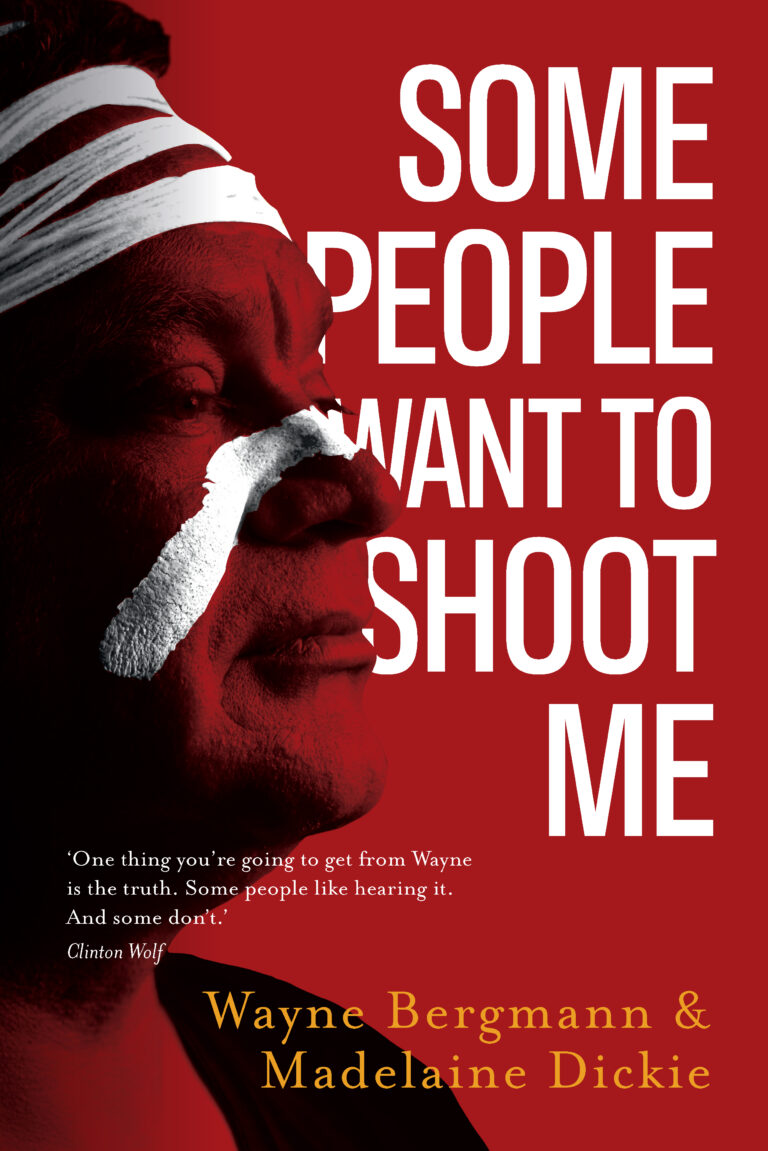
Overall, consultation is a difficult thing. Who you consult, can be a fraught issue. It is often, for example, not the Land Council. They do not necessarily represent the elders. Consultation can exacerbate divisions. (Some of this issue about who speaks for whom was covered in Wayne Bergman and Madelaine Dickie’s Some people want to shoot me, my review.)

There was a Q&A, but most of it revisited ground already covered. For example, one audience member spoke of writing a story inspired by a First Nations person. He had consulted the relevant elders and descendants, and they were comfortable. He had checked his motivation. But AIATSIS had said it wasn’t his story to write. The panel agreed this was difficult. There are no answers. Sometimes, said Kate, you just have to take a risk. Paul agreed, but gave the example of Jesus Town. He had a misgiving on the eve of publication, so pulled back, reworked and published later.

There was agreement that it was great to see First Nations people now telling their own stories, and about experienced writers doing all they can to help them.

The discussion ended on two points that encapsulated the discussion perfectly and validated my decision to choose this session:

  • that writing in the voice of a person in which you don’t have lived experience [however you define that] would not be adding to the sum of human knowledge
  • that in relation to our history, there is no atonement. We have to live with that.

Canberra Writers Festival, 2025
Reckoning
Saturday 25 October 2025, 12-1pm

Canberra Writers Festival 2025: 2, What happened in the outback

Garry Disher and Gail Jones with Michael Brissenden

The program described the session as follows:

Join two of Australia’s most highly regarded writers speak about the lure of the Australian outback with its landscapes, characters and unsettled complexity. Here we have different tales of desperate searches to uncover what has happened to two women in the outback. Stories multiply. Heart and horror beat in tandem. Cops try to do their best. Gail Jones (The Name of the Sister) and Garry Disher (Mischance Creek: The new Hirsch novel) will together explore the power of beautifully written outback crime. Moderated by Michael Brissenden (Dust)

Journalist and novelist Michael introduced the authors, outlining their work and achievements before getting onto the discussion which centred, of course, around two concepts – the outback and writing about crime. It was an intriguing if sometimes slightly odd discussion, with Gail Jones talking almost as much about Disher’s work as her own, and an underlying (but also explicitly explored) tension between literary writing and crime (or genre) writing.

The session started with the usual question asking the writers to précis their novels. Gail Jones described hers as non-genre, and said it was set in Sydney, Broken Hill and Berlin. It starts not with a death of a woman but with a woman being found. It doesn’t have a traditional crime plot, and is about people whose stories and identities are lost.

Garry Disher’s book, on the other hand, does have a crime plot. It’s the 5th in his Hirsch series, but Hirsch doesn’t match the common tropes of crime. Most crime fiction, for example, is closely related to place – think Bosch in LA and Rebus in Edinburgh, for example. Hirsch, however, is from Adelaide, and is an outsider in the small town he has retreated to (though of course, the novels are imbued with this new-to-him place). Most crime fiction protagonists are relatively senior in rank, but Hirsch is lowly. And finally, most crime protagonists are troubled, dark, while Hirsch is genial.  The driver for the novel, Garry said – though it was written before the 2025 Porepunkah incident – was the idea of sovereign citizens and their capacity for violence, but there is another plot involving a woman who has come to town, unhappy with the investigation into a case concerning her parents.

The discussion proper then started with that question that won’t go away concerning whether a distinction still exists between literary and crime fiction. Gail said “good writing is good writing”, and that the concept of “literary” is less a judgement of writing than about subject and mode. She is interested in writers who “don’t stay in their lane”. She has also been interested in crime and guilt for a long time, but is less interested in plot than in exploring consciousness, and the covering over or hiding of crime, and secret guilt. When it was suggested to her that she write a crime story, she thought about loss and the dissolution of marriage (which she admitted is probably a more common “literary fiction” subject). Her novel intersects between crime and literary.

Garry addressed Brissenden’s question concerning how crime fiction is changing and where it is now. He delved back into the past, and how in planning for the Spoleto Festival (which has now morphed into the Melbourne Writers Festival) he had suggested inviting Peter Corris, the popular and successful Sydney crime writer at the time, but was firmly told “no, this is a literary festival”. There is still a sense of this divide. He would like to talk about fiction more broadly but he is always invited onto crime panels at festivals – organisers, take note! He senses that there’s a feeling crime writers would embarrass other writers if they appeared together (though didn’t explain what he meant by “embarrass”). His early writing was not crime, and writing craft is important to him. What matters most to him is the characters not the plot.

The conversation then got onto the outback, the session’s subject. Garry said that the term “outback noir” was coined by a journalist talking about the early work of Jane Harper and Chris Hammer, but feels that it has had its day. Writers jumped on the bandwagon, resulting in some copycat (my word) novels that were not necessarily good. Good crime, all agreed, deals with prevailing social values and conditions – well-written and in an entertaining way, said Brissenden.

So, what is this thing called the outback, and to what degree does it play into the concept of place and character? This is where the session became particularly interesting to me, because we bandy around this term, often without a great deal of thought.

Gail thinks it is an antiquated term that she believes began with Lawson’s 1893 poem “Out back”, which has words like “blistering”, “furnace”, and concludes with “Where the bleaching bones of a white man lie by his mouldering swag Out Back”. The poem implies “out back” is homicidal to white men, and “extinguishes”, said Gail, First Nations people. It flattens and reduces the land to one idea, one, more often than not, reduced to a sort of psychodrama. It’s interesting that we (as in non-Indigenous Australians) use “outback” rather than “country”. Our usage – incorporating a sense of being in “the middle of nowhere” – denies the fact that it is other people’s “somewhere”.

Garry agreed with Gail, building on it and adding his own thoughts. Most of us, he suggested, have a vision of the “outback” as vast and encompassing long drives, but also with a mythical overlay, as reflected in “we of the never never” (Mrs Aeneas Gunn) and “the great Australian loneliness” (Ernestine Hill). The sense – also conveyed in paintings by artists like Russell Drysdale and Sidney Nolan – is that it is remote, not pleasant, even though it is home to someone. The outback (like the beach) suggests loss – lost children, lost travellers, the lost women in their novels. On the other hand, there’s the “outback” that is romanticised by travel companies.

Gail added that the challenge is learning about the Indigenous world view, their knowledge of and regard for land. White Australia has not come to terms with the mysticism and animism associated with First Nations’ understanding of the land, a place rich with meaning. The travel idea of “adventure” misrepresents what the land is, but has extraordinary persistence. Similarly, she said, the ideas of “noir” and “gothic” (which originated in 18th century England and Walpole’s Castle of Otranto) come from other lands and cultures, and are a mismatch with the outback. She likes that Garry’s Hirsch is richly human and that his novels include women and Indigenous people.

We then moved onto the idea of loneliness in a sparse place. Garry reiterated that Hirsch is an outsider, without deep friendships (though he has a lover living outside the town). He has to be all things to all people. Gail’s character Angie is a freelancer which can be a lonely occupation, but Gail is more interested in solitariness rather than loneliness.

Gail didn’t want to have cop character in her novel because she doesn’t know police stations and procedures, but she had to “get out of Sydney”. She is interested in mining towns – her father was a miner, one of the “labouring poor” – so she could relate to the harshness of Broken Hill. She commented on the profound masculine overlay there created by films/novels like Wake in fright and the Mad Max movies, while Hirsch, she said, despite being a male cop in a small town, is aware there are other meanings – layers – in the place. She likes crime that has this social complexity.

Talking fathers, Garry said his told him that farming was a mug’s game and to get an education, which he did. This included researching the landscape writers of the 1930s with their complicated messages about the outback (including towards Indigenous people who were either feared or treated as children). However, his brother became a small town cop. He can go to him for practical questions (like would a paddy wagon be air-conditioned?)

There was more, including readings by both from their novels, and a comment from Gail about liking it when policemen/detectives in crime novels are also readers! Hirsch for example mentions Helen Garner’s diaries.

Oh, and for those interested, there will be another Hirsch novel, but he does write standalone novels in between. The next one draws on children’s fears (like his in the 1960s about Russians and communists.)

There was no Q&A. And we didn’t really need it after this thoughtful, deep dive into “the outback”.

Canberra Writers Festival, 2025
What happened in the outback
Saturday 25 October 2025, 10-11am

Canberra Writers Festival 2025: 1, ACT Book of the Year

A preamble

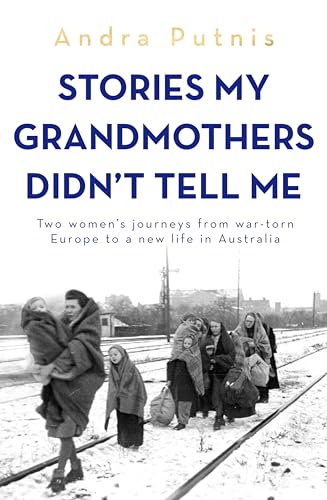
The Canberra Writers Festival is back in 2025, with a new Artistic Director, author Andra Putnis whose biography-memoir, Stories my grandmothers didn’t tell me I reviewed earlier this year. The Festival’s theme continues to be “Power Politics Passion”, albeit not as dominating in promotion as it used to be.

The ACT Book of the Year

The ACT Book of the Year is broad-based award, meaning that it encompasses fiction, nonfiction, plays, and poetry. It is presented by the ACT Government, and was first made in 1993. I have written on this award in a Monday Musings, so won’t say more here!

The winner announcement has been made in various ways over the years. In 2023, for example, I attended the presentation at Woden Public Library. This year it was announced during the first full day of the Canberra Writers Festival, which feels fitting.

But first, there was the shortlist, which was announced on 7 September:

  • Theodore Ell, Lebanon days: memoir, based on Ell’s experience when he accompanied his wife on her diplomatic posting to Lebanon and witnessed a country on the brink of collapse
  • Andra Putnis, Stories my grandmothers didn’t tell me (my review): biography/memoir about the author’s two Latvian grandmothers, their experiences during the war, their subsequent emigration to Australia and the family they built here.
  • Qin Qin, Model minority gone rogue: memoir, by a young high-achieving Asian-Australian woman and her break from suffocating expectations to find the life she wants to lead.
  • Darren Rix & Craig Cormick, Warra warra wai: history, focusing on First Nations people’s experience of James Cook’s exploration of the east coast of Australia in 1770, in order to ensure the complete story is told.

All shortlisted books this year, are nonfiction, three being memoirs.

The panel

The event comprised two parts – a panel discussion featuring the shortlisted authors followed by the winner announcement.

Cover

So, the panel. It was moderated delightfully by science fiction writer, Daniel O’Malley. His questions were perfect for the shortlisted books, and generated some enlightening responses. Unfortunately – or fortunately, for those of you who know how longwinded I can be – I had some technological challenges so didn’t capture some of the thoughtful ideas and experiences shared with us. Hmm, this has still ended up being long!

On their 30-second pitch for their books

Darren said it all when said he would tell people Warra Warra Wai was “a great read”. This is true, I think, for each of the books.

On whether the book they produced was the book they started out writing

Darren and Craig started travelling up the east coast of Australia gathering stories, wanting to contribute to truthtelling, to expose the history of dispossession and share the story of rebirth, to “record history in the right manner”, but it ended up being a much bigger story. Qin Qin said she always wanted to be a writer, but that her story started to take form and gel during COVID when Chinese people were being demonised. Andra was in Darwin and can pinpoint the time when she decided to write her story, when she realised that what she wanted to write was how her family came to Australia and become the people they were (are). Theodore probably had the most circuitous route. His book started as an essay that was more successful than he expected. (In fact, my friend, the writer Sarah St Vincent Welch, told me, that this essay, “Façades of Lebanon”, won the 2021 Calibre Essay Prize). He realised he had more to tell. He could have writte more essays, choosing a theme at a time, but he realised that Australians know little about Lebanon – its history and its beauty – so a book it was.

On what they did and didn’t include

Theodore provided the most intriguing answer. His book is written in five parts, and he wrote it backwards, that is, he started with part 5 which covered the most recent memories. Then he worked on part 4, and he knew what was needed to set up part 5! Ingenious. Andra knew she wanted to include the arc of her grandmothers’ lives. What she cut was a lot about herself! She realised she only needed enough about herself to sustain interest in the grandmothers. Qin Qin spoke like the Type A person she admits to being. She kept a diary as a child, and this provided some content, but her publisher and editor helped a lot. When she submitted her draft, hoping it was pretty much done, she was told she could write good dialogue and that it read like something written to get an HD! That brought a laugh from the audience. However, with editorial guidance, she eventually produced something that broke open her heart. Darren and Craig talked about their process, which included Craig doing the archival research, and both interviewing First Nations people up the coast. Darren said they interviewed young people as well as elders, to get a full picture.

On major challenges or any resistance they experienced

Qin Qin described her writing as “one continuous showdown” involving her constantly deprogramming herself from the limiting pressures and expectations she felt as the eldest daughter. She said anyone writing about race will get pushback, and at one stage she contacted the police about emails she was getting. Andra said she had been very afraid about how her story would be perceived, by the family and the Latvian community. The fear was so great she nearly gave up. But the response has been good, and the family has responded with such grace. Theodore did not face any real opposition or obstacles but there were ethical challenges. He’s not Lebanese, no one in his family is Lebanese, so he has no true stake in what happens to Lebanon. He wanted to avoid ventriloquising Lebanese points of view. The ethical core of the book is what people told him, in their words, but to protect their privacy he gave them pseudonyms. Also, as his wife is a diplomat – the reason he was there – he had to be careful about doing anything “unbecoming”. Even the simplest thing can be spun the wrong way, so he had a delicate path to tread. Fortunately DFAT was happy with the manuscript. Craig said the commonality between all the shortlisted books is that they are open to pushback, but books threaded with a respectful element of truth are protected. He and Darren said that some communities rejected their approach, but that with many, once they sat down and explained what they were doing – that they weren’t from “the government” or “a university” – they were accepted. This was then passed on, like traditional message sticks, to other communities. They explained they wanted to produce a woven black and white history. Also, many communities had not been asked these sorts of questions by an Aboriginal man.

On where they write and how (a writer’s question)

Andra can’t write just anywhere, but needs a place to base herself. She started with vignettes, like squares in a patchwork, which she then assembled. She was helped by the fact that Nana Aline had already started reflecting on her life. As for Qin Qin, it’s a lovely thing when, as you sit through panels like this, authors reveal themselves as the real – and individual – people they are. So, her response was not surprising. She said the writing process was an ongoing journey of becoming more aware of herself, but she finds it easier to let herself, rather than others, down. So, she needs deadlines, which her publisher gave her regularly. She then wrote anywhere, anytime, to meet those deadlines. She works best when there’s accountability. Darren and Craig spent lots of time together in planes and cars, during which they talked about what they were doing, their structure, the way they would incorporate different timelines (like dreamtime and white time). Once they got the structure, the writing was easy. Makes sense to me. Theodore said he must have a room. He has a room at home and one at the ANU. The latter is where he does the hard yards, the welding of the words.

On what was most satisfying

For Darren it was travelling country, particularly those he hadn’t been to before. Craig added that communities wanted their own stories in a form they could read, and their book has provided this. Qin Qin said that with each rewrite she felt she shed layers, she felt weight lifting. Her book is a spiritual memoir, one about deprogramming herself from living up to expectation. She was glad to find she had her own voice. Andra said getting to the end was satisfying, but she also related to the idea of shedding layers. What moved her most, however, was when Nana Aline told her that she had felt “seen” by her granddaughter. Theodore had two. One was that while much of his story is dark it also contains fun, because Lebanese people are witty and satirical. These scenes and those of real friendship mean a lot to him. Also, he liked, during revision, how much spontaneously came back in memory, enabling him to relive the many stunningly beautiful places.

On their next project

Craig and Darren are working on two books, which they call “batmen” (about the Aboriginal cricket tour of England in 1868) and “Batman” (about Treaty, involving Victoria, Tasmania and New South Wales)! Qin Qin’s sole (deprogramming) journey is to have no goals, so she will see what comes up. Andra can’t wait to write something else but didn’t say whether she had a project, while Theodore’s main longterm project is a biography of Les Murray.

The announcement

Michael Petterson, ACT Government’s Minister for Business, Arts and Creative Industries, made the announcement, including sharing comments from the judges, but this is long enough. He did say, however, that there was a record number of 56 books entered for this year’s award.

The winning book was Darren Rix and Craig Cormick’s Warra Warra Wai, which the judges praised for providing a “unique lens on history, land and identity”. Theodore Ell’s Lebanese days was highly commended. I hope the ACT Government will share the judges comments on their website.

At the end of the announcement Craig said that he and Darren had decided that, should they win, they would pronounce it a four-way tie, which they did, and handed each author a medal to document it! The audience loved this spirit.

The session ended with afternoon tea served in the National Library foyer. A lovely treat for us who attended this free event!

Canberra Writers Festival, 2025
The ACT Book of the Year
Friday 24 October 2025, 2:30-4:30pm

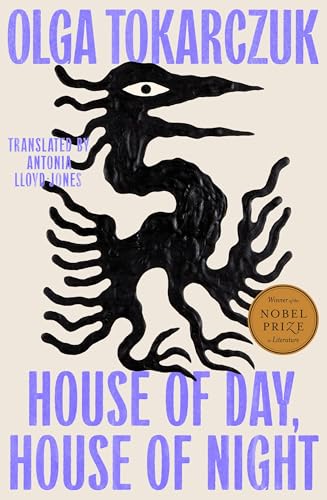
Olga Tokarczuk, House of day, house of night (#BookReview)

About 30 pages into Olga Tokarczuk’s novel, House of day, house of night, I turned to Mr Gums and said, I have no idea what I am reading, which is unusual for me. I certainly don’t pretend to understand everything I read, but I can usually sense a book’s direction. However, something about this one was throwing me, so …

I had a quick look at Wikipedia, and found this “synopsis”:

Although nominally a novel, House of Day, House of Night is rather a patchwork of loosely connected disparate stories, sketches, and essays about life past and present in … a Polish village in the Sudetes near the Polish-Czech border. While some have labeled the novel Tokarczuk’s most “difficult” piece, at least for those unfamiliar with Central European history, it was her first book to be published in English. [Accessed: 1 October 2025]

That made me feel better! I am more than comfortable with “loosely connected disparate stories” but am only generally-versed in Central European history. So, I decided to relax and go with the flow. From that point on, I started to enjoy my reading more, but it was slow going, because the “disparate stories” demand attention. It’s not a book you whizz through for story, but one you savour for thoughts and ideas, and for the connections you find along the way.

Tokarczuk calls it, in fact, a “constellation novel”, which I understand builds on thinking by the German critic and philosopher, Walter Benjamin (1892-1940). According to academic Louis Klee, who has written on “the constellational novel”, “these novels are recognizable by the presence of a first-person narrator committed to drawing affinities and making connections among disparate things”. They can be non-linear and incorporate various forms of writing from essayistic to lyrical to fragmentary, and encourage readers to find their own connections (like finding patterns in a constellation).

This well encapsulates House of day, house of night. It comprises numerous individually titled chapters (or sections or parts), some just a few paragraphs long, and others several pages. At first it felt disjointed, but it wasn’t long before an underlying structure started to reveal itself, one held together by a first-person narrator, a woman who had come to live in a small Polish village with her partner R – just like Tokarczuk and her husband did – three years before the novel opens. She tells of life in the village, and particularly of the relationship she develops with her neighbour, a somewhat mysterious old woman named Marta, who embodies a wisdom that she sometimes shares but other times must be gleaned from what she doesn’t say.

Interspersed with our narrator’s story, are other stories – some real, some magical, some past, some present – about the region and people in it. There’s a gender-fluid monk named Paschalis who is writing the life of the female saint Kummernis. There’s the unnamed couple who think they have it all, until each is visited by the same lover, a female for “he” and a male for “she”. There’s a religious community called the Cutlers who make knives and believe that “the soul is a knife stabbed into the body, which forces it to undergo the incessant pain that we call life”. There’s the wonderfully named Ergo Sum who had tasted human flesh in frozen Siberia, where he’d been deported in 1943, and believes he is turning into a werewolf. And so on. Some of these stories continue, for several chapters, woven around our narrator’s story, while others stand alone. Some are about people who think they have life worked out, while in other stories, the people don’t have a clue.

There’s more though, because scattered through the stories are ruminations on disparate things like dahlias, nails, comets and grass allergies. And threading through it all are various motifs, usually providing segues between chapters, encouraging us to see links and to ponder their meaning for us. These motifs include dreams, names, time, death, borders, mushrooms (potentially deadly), and knives. The more you read, the more connections you see between them and the stories. Many are philosophically-based, but are not hard to understand. In other words, the challenge is not in understanding, but in how we, individually, process the links we see. You might have already noticed some in my examples above, such as the idea of identity. Even the mysterious Marta, who disappears every winter, is unsettling. Who is she really?

“people are woefully similar”

This is the sort of book you would expect of a Nobel prizewinner. The writing is simple but expressive, and is accompanied by a rich, dark, and often ironic humour. We have border guards who don’t want to deal with a dead body so they quietly shove it to the other side of the border. And Leo the clairvoyant who says “Thank God people have the capacity for disbelief — it is a truly bountiful gift from God”. That made me splutter.

Underpinning all this – the thing that gives the book its heft – is a quiet but somewhat resigned wisdom. It interrogates some big questions – our willingness (or not) to see what is happening in front of us, our relationship to place, how we comprehend time, and who we are. These are explored through universal binaries, not only the night-and-day contained in the title, but life and death, change and stasis, ripening and decay. How do we live with – and balance – these parts of ourselves, of life?

But, House of day, house of night is also set in a particular place and time, southwest Poland, just post World War 2. This area, explains the Translator in her note, was part of the German Reich until 1945, when the Allies agreed to move Poland’s borders west. Many Poles left their old lands of the east (now part of the USSR), and resettled in this once German area in the west, occupying homes left by the evacuated Germans. This specific history is also found in the book, with Polish families hopefully, greedily, digging up German treasures, for example, and Germans sadly returning to see their old places.

House of day, house of night offers no answers, but it sure asks a lot of questions – about how, or whether, we can move forward into more humane, and hence more fulfilling lives.

This brings me to the ending. I won’t spoil it – it’s impossible in a story like this anyhow – but we close, appropriately, on the idea of constellations and finding patterns, and a hope that it is possible to find a pattern that explains it all. It is deliciously cheeky. And, on that note, I will end.

Olga Tokarczuk,
House of day, house of night
Translated from the Polish by Antonia Lloyd-Jones
Melbourne: Text publishing, 2025 (Orig. pub. 1998; Eng trans. 2002)
298pp.
ISBN: 9781923058675

Review copy courtesy Text Publishing

Monday musings on Australian literature: 1925 in fiction

Once again it’s Karen’s (Kaggsy’s Bookish Rambling) and Simon’s (Stuck in a Book) “Year Club” week. This week, it is 1925, and it runs from today, 20 to 26 October. As for the last 8 clubs, I am devoting my Monday Musings to the week.

The 1920s were wild years, at least in the Western World. The First World War was over, and neither the Depression nor Second World War were on the horizon. It was a time of excess for many, of the flappers, of

A brief 1925 literary recap

Books were, naturally, published across all forms, but my focus is Australian fiction, so here is a selection of novels published in 1925:

  • Martin Boyd (as Martin Mills): Love gods
  • Dale Collins, The haven: A chronicle
  • Erle Cox, Out of the silence
  • Zora Cross, The lute-girl of Rainyvale : A story of love, mystery, and adventure in North Queensland
  • Carlton Dawe, Love: the conqueror
  • Carlton Dawe, The way of a maid
  • C.J. de Garis, The victories of failure
  • W. M. Fleming, Where eagles build
  • Nat Gould, Riding to orders
  • Jack McLaren, Spear-eye
  • Henry Handel Richardson, The way home (the second book in the The Fortunes of Richard Mahony trilogy)
  • M. L. Skinner, Black swans: Rara avis in terris nigroque simillima cygno
  • E. V. Timms, The hills of hate
  • Ethel Turner, The ungardeners
  • E. L. Grant Watson,  Daimon
  • Arthur Wright, The boy from Bullarah

EV Timms had a long career. Indeed, he also appeared in my 1952 Year Club list. Zora Cross has reappeared in recent decades due to renewed interest in Australia woman writers. Both Bill and I have written about M.L. (Mollie) Skinner, a Western Australian writer who came to the attention of D.H. Lawrence. And then of course there are those writers – Martin Boyd, Henry Handel Richardson and Ethel Turner – who have never “disappeared” from discussions about Australia’s literary heritage.

While my focus here is fiction, it’s worth noting that many of Australia’s still recognised poets published this year, including Mary Gilmore, Henry Lawson, Dorothea Mackellar, Furnley Maurice and John Shaw Neilson.

The only well-recognised novelist I could find who was born this year was Thea Astley.

The state of the art

As for previous club years, I checked Trove to see what newspapers were saying about Australian fiction. Because 1925 is a century ago, I had already started researching the year for the little Monday Musings Century ago subseries I started in 2022. So far, I have written just one post on 1925. It focused on two literary societies which were active at the time, the Australian Literature Society and Australian Institute of the Arts and Literature, so I won’t repeat that here.

I found a few interesting tidbits to share, including, in a couple of newspapers, a brief report of a talk given to Melbourne’s Legacy Club by local bookseller, C. H. Peters, manager for Robertson and Mullens. He reported that the English publisher, John Murray the Fourth, said

that the Australian consumption of fiction was enormous, compared with the English market, and that, making allowances for differences in population, the Australian read five novels to every one read by the Englishman. 

Some of the other items of interest I found were …

On a cult classic?

One of the surprising – to me – finds during my Trove search was the book Out of the silence by Erle Cox. It was, says The Argus (9 October) and the Sydney Morning Herald (28 November), first published in serial form around 1919, but there were many requests for it to be available in book form, which happened in 1925. The story concerns the discovery of a gigantic, buried sphere, which contains the accumulated knowledge of an ancient civilisation. The Argus’ reviewer says that the sphere’s aim “was to exemplify the perfection attained in a long past era and to assist the human race of the time of discovery towards similar perfection”, with the finder being helped in this goal by the “dazzling Earani”, a survivor of that civilisation.

The reviews at the time were positive. The Argus says that “the story is carried on with much ability”, while The Age (17 October) describes it as “brilliantly conceived and charmingly written … original and weird, maybe a little far-fetched”. Edward A. Vidler writes for the Sydney Morning Herald that “Mr. Cox is to be congratulated on a story of rare interest, which holds the attention from beginning to end”.

It has been republished more than once since 1925, including in other countries. For example, in 1976, it was republished in a series called “Classics of Science Fiction” in 1976, by Hyperion Press, and in 2014 an ePub version was published “with an Historical Afterword by Ron Miller”, who featured it in his “The Conquest of Space Book Series.” The promo for this edition describes it as “the classic lost race novel” in which a pair of amateur archaeologists “inadvertantly revive Earani, the survivor of an ancient race of superbeings”. But this is not all. It was also adapted for radio, and turned into a comic strip. You can read all this on Erle Cox’s Wikipedia page.

On reviewing

I enjoy seeing how reviewers of a different time went about their business. Some reviews in this era – the 1920s – tell the whole story of the novel, and do little else. Others, though, try to grapple with the book, finding positives as well as negatives, and sometimes discussing the reason for their criticisms.

Reviews for Dale Collins’s island adventure The haven are a good example. It seems that Collins had decided to have the main character – the male protagonist – tell his story. The reviewer in The Age (31 October) didn’t feel it worked, writing that Collins

repeats the experiment of blending psychology and sensation which he caried out so successfully in ‘Ordeal.’ It is a very clever and original story, but the reader who wants sensation will find there is too much psychology in it; and the reader who is interested in psychological studies will discover that the author has handicapped himself by making the central figure tell the story. As a result the psychology becomes monotonous …

The Argus (6 November) on the other hand was positive about the technique of Mark telling his own story:

Mr Collins has skilfully worked out the effect of the situation on each one of his characters, but especially on that of Mark, who reveals himself through a diary of their life on the island … The author has set himself a very difficult task in the carrying out of which he has been remarkably successful.

The reviewer in The Age (25 July) – the same one? – was disappointed in Zora Cross’s The lute-girl of Rainyvale, seemingly because of its supernatural subject matter concerning Chinese vases and curses, after the quality of her previous novel Daughters of the Seven Mile, but ended on:

The story has some vivid descriptive writing, which serves to emphasise that Zora Cross’s real gifts are wasted on fiction of this character.

Mollie Skinner’s Black swans was reviewed twice in the same column in The Age (12 September) with slightly different assessments. The first writes that it is “a very readable story founded on historical events in the convict days of Western Australia” and goes on to say that she had collaborated with D. H. Lawrence on The boy in the bush but that “her unaided work is preferable”. The review concludes that Skinner had “drawn her picture strongly and produced a good novel”.

Later in the same column, the reviewer (presumably a different one?) references Skinner’s work with Lawrence and then says of this new book that the story begins in Western Australia’s Crown colony days of 1849. Skinner “sends her childish heroine and hero on adventures amongst blacks and Malays, in company with an escaped convict” then “takes them to England for the social and love interest”. The reviewer concludes that

Miss Skinner writes well, with a special anxiety to set down striking phrases and epigrams. To quote a common, phrase, she is more interesting than convincing. 

Hmm … there’s a sense between the lines here that the story doesn’t hang together, but that Skinner, like Cross, has some writing skills.

As for Henry Handel Richardson, although her novel came out in mid-1925, I found only a couple of brief references to it. Martin Mills (Martin Boyd), on the other hand, fared better with some quite detailed discussions, including in the West Australian (4 July). The reviewer explored it within the context of being part of a rising interest in the “religious novel” and ended with:

Love Gods, with its old story of the unending conflict between the Pagan deities and the restraining influences of Christianity, is a novel of unusual insight, and most uncommon power of literary expression.

There’s more but I’ve probably tired us all out by now! I will post again on this year.

Sources

(Besides those linked in the post)

  • 1925 in Australian Literature (Wikipedia)
  • Joy Hooton and Harry Heseltine, Annals of Australian literature, 2nd ed. OUP, 1992

Previous Monday Musings for the “years”: 1929, 1936, 1937, 1940, 1952, 1954, 1962 and 1970.

Do you plan to take part in the 1925 Club – and if so how?

Alice Dunbar-Nelson, Sister Josepha (#Review)

It’s a year since I’ve posted on a Library of America (LOA) story, but I was driven to post on this one for two reasons. I have just posted a review of “The scapegoat” by Dunbar-Nelson’s first husband, Paul Dunbar, and, earlier this year, I reviewed “A carnival jangle”, written by Alice Dunbar-Nelson, before marriage when she was Alice Ruth Moore.

Alice Dunbar-Nelson

In my post on “A carnival jangle”, I provided a brief biography of Dunbar-Nelson, so I won’t repeat that here, except to remind us that she was a poet, journalist and political activist, born to a black mother and white father. She was prominent in the Harlem Renaissance, and lived in New Orleans for 21 years, as well as Boston, New York, and elsewhere.

In that bio, I also wrote that racism was an important issue for her, but that she also took a wider view of human rights. It is this point that I would like to explore further in this post, due to some ideas raised in LOA’s introduction to her story. They focus quite a bit on her relationship with Paul Laurence Dunbar, noting that the two communicated with each other by letter for a couple of years before meeting. Dunbar asked for her opinion on using “Negro dialect in Literature”, which he sometimes did. LOA shares her response, which was that she saw no problem with using dialect if you knew it and had “a special aptitude for dialect work” but that she saw no necessity to do so just because “one is a Negro or a Southerner”, and if, like her, you were absolutely devoid of the ability to manage dialect“. This makes good sense, but the main thing I want to share is what she says next:

Now as to getting away from one’s race—well I haven’t much liking for these writers that wedge the Negro problem and social equality and long dissertations on the Negro in general into their stories. It’s too much like a quinine pill in jelly—I hope I’m not treading on your corns. Somehow, when I start a story, I always think of my folks (characters) as simple human beings, not as types of a race or an idea—and I seem to be on more friendly terms with them.

After detailing more of Dunbar-Nelson’s biography, LOA returns to the issue of subject matter, saying that “the ambiguity of racial identity for the Creole characters” in her stories resulted in several critics in recent decades arguing that

she “camouflaged the issue of race,” that she “spurned that racialized element of her identity,” or that she “shaped her tales of Creole life for white audiences.” In “Sister Josepha,” which we reprint below as our Story of the Week selection, the reader realizes that the lead character is not white only through descriptive hints (“brown hands,” “tropical beauty”) and by what the other nuns do not say about her.

However, continues LOA, another commentator, Caroline Gebhard had noted in a recent article that Dunbar-Nelson

“presumes that readers already read her work as ‘black.’” In the 1890s and early 1900s, most of Dunbar-Nelson’s stories, essays, and poems appeared in Black newspapers and magazines; The Monthly Review, for example, advertised itself as “the only illustrated periodical published by Negroes in this country.” … “Dunbar-Nelson knew she would be read as a Black author and never tried to pass in print,” Gebhard concludes. “To read Dunbar-Nelson’s fictions as addressing only white readers, which the accusation of passing implies, is to dismiss the fact that Dunbar-Nelson’s first and most loyal readers were African Americans.”

This point reminded me of the discussion my American friend Carolyn and I had about “The scapegoat” concerning the fact that it is almost completely set in the black community. White people are not identified, except for the Judge, so we have to work out, between the lines, who else might be white in that story. I think Paul Dunbar assumed we’d know – just as Alice Dunbar-Nelson did, according to Gebhard. It’s a lesson in how difficult it is to read out of one’s own time and culture.

It also reminded me of something more contemporary, a post I wrote in 2021. The focus was memoir, but the point was that ‘diverse writers’ are expected to write narrowly about their diversity, and their frustration that they are not encouraged to write, as Dunbar-Nelson explained, about “simple human beings, not as types of a race or an idea”.

“Sister Josepha”

“Sister Josepha” appeared in Dunbar’s 1899 short story collection, The goodness of St Rocque and other stories, and can be read at the link below. It tells the story of a young three-year-old orphan named, Camille, who was left at a convent orphan asylum. The story opens 15 years later when this orphan has just finished her novitiate and is a fully-fledged sister, but she’s unsettled.

Dunbar tells us that when she was 15, and still Camille, she had “almost fully ripened into a glorious tropical beauty of the type that matures early” and had attracted the attention of a couple who offered to take her in. Her Mother Superior calls her in and makes the offer:

Camille stole a glance at her would-be guardians, and de­cided instantly, impulsively, fi­nally. The ­ woman suited her; but the man! It was doubtless intuition of the quick, vivacious sort which belonged to her blood that served her. Untutored in worldly knowledge, she could not divine the meaning of the pronounced leers and admiration of her physical charms which gleamed in the man’s face, but she knew it made her feel creepy, and stoutly refused to go.

To justify her decision to Mother Superior, who did not force her to go, she announces that she loves the convent and sisters, and would like to be one too. However, three years later, the life is palling for this lively young woman. She’s tired, and bored, and plans her escape, but this is a story about the few opportunities available to a young woman in her situation. Should she live the confining but secure life of a nun, or could she make it out in the world where she has no identity, no name other than Camille, and “a beauty that not even an ungainly bonnet and shaven head could hide”.

What lifts this story out of the large body of often cliched stories about young nuns like Camille/Sister Josepha is the situation and Dunbar’s expressive writing that subtly conveys the reality of our sister’s position. Race is never mentioned but there are hints regarding Camille’s background. This is a different story to “A carnival jangle” but no less powerful.

Alice Dunbar Nelson
“Sister Josepha” (1899)
First published: in The goodness of St Rocque and other stories
Available online: Library of America

Monday musings on Australian literature: Quiet achievers 2, Barry Scott of Transit Lounge

Back in August, I wrote the first post in my Monday Musings sub-series on Quiet Achievers in Australia’s literary landscapes, meaning people like publishers, for example. My first post was on Terri-ann White from Upswell Publishing.

Of course, most of these people aren’t really Quiet Achievers. Those in the industry will know them, often well. However, for the general reading public, people in the industry are not necessarily well-known, hence this new little sub-series.

Barry Scott (Transit Lounge)

I have read and reviewed many books published by Transit Lounge over the years because they publish the sorts of books and authors I like. According to Wikipedia, Transit Lounge was founded in Melbourne in 2005 – 20 twenty years ago – by two librarians Barry Scott and Tess Rice. It is an independent Australian literary small press, which publishes literary fiction, narrative and trade non-fiction. Its focus is to “show the diversity of Australian culture”. Their website says they are

dedicated to the publication of exciting new fiction and non-fiction.  Our tastes are broad and encompass literary fiction and upmarket genre writing such as  psychological thrillers.  We have a particular interest in creative literary publishing that explores the relationships between East and West and entertains and promotes insights into diverse cultures.

As far as I can tell, Scott works full-time on the press, while artist and photographer Rice works part-time. In 2018, Scott was interviewed by Books+Publishing, and said their books:

go in search of the outsider, the marginalised, the immigrant, the different or the disappearing. We are always searching for what seems beautiful, unique, true, and isn’t afraid to push beyond the current zeitgeist in terms of themes or genre tweaking.

AS Patric, Black rock white city

And, they have been successful in doing so. AS Patrić won the Miles Franklin Award in 2016 for his immigrant story, Black rock white city (my review), and Jane Rawson’s “genre-tweaking” From the wreck (Bill’s review), won the 2017 Aurealis Award for best science fiction novel, with its blend of historical and science fiction. Many other Transit Lounge books have been listed or won significant awards, including, recently, Lisa Kenway winning the Ned Kelly Award for Debut Crime Fiction with All you took from me (my post).  We often wonder about the impact of awards on sales, so I was interested to see a comment by Scott, in the Sydney Morning Herald (SMH) after Patrić’s win, that the company overall “will be more visible” and that he had “already noticed more people following the company on Twitter and wanting to see its books”.

In 2023, Scott was interviewed by ABR (the Australian Book Review), and here we hear his motivation for getting into publishing:

I was involved with administering the Victorian Premier’s Literary Awards in 2003 when the Unpublished Manuscript Prize was conceived. … I became acutely aware that there were many talented writers unable to achieve publication. Transit Lounge always has been and always will be about giving some of those new writers a voice, as well as publishing more established authors.

A bit like Terri-ann White! That said, Transit Lounge’s focus in terms of what they publish has changed a little over the years. In the above-mentioned SMH article, Scott said that he initially ‘wanted to publish Australian authors writing about other cultures and people writing from overseas about here. “We have moved away from that a bit; we were a bit more travel based than we are now”.’

Once in the publishing game, it seems that Barry Scott was fully invested, that is, he became involved in the industry. He was a director of the Board of the now-unfortunately-defunct Small Press Network. In 2009, he visited the US for several weeks, under a Copyright Agency Limited grant to find out about small independent publishers there, including the state of the industry. You can read his report at Overland.

Meanwhile, I’ll return to the ABR interview. Over the years, it has run several interviews with publishers, and I will refer to those – if or when I focus on those people. It’s illuminating to see their different reactions to the questions. For example, when asked about the significance of book reviews, Scott replied:

They are gold, even when negative. As Oscar Wilde said, ‘There’s only one thing in the world worse than being talked about, and that is not being talked about.’

Not all publishers responded so positively to this question, although most recognised that reviews mean something to authors. I recently listened to the interview with Graeme Simsion and Anne Buist on the Secrets from the Green Room podcast, and Simsion, a “data person” who has researched bookselling at some length, said that the main impact on sales comes from “word of mouth”. He didn’t talk about how you get that word-of-mouth started, but surely reviews, as Scott implies, are a contributing factor? I wonder whether the current fragmentation of book “reviewing” across traditional media, websites, blogs and social media, is, in fact, resulting in increased “word of mouth” exposure?

I have a few Transit Lounge books on my TBR, as I write, including Carmel Bird’s latest novel – a foray into historical fiction with Crimson velvet heart, set in Versailles at the end of the 17th century.

I’ll conclude, however, with a comment made by another author. In the blog, In Their Own Write, Mandy Sayer says

Barry Scott at Transit Lounge is a truly collaborative publisher, and I’m grateful for the opportunity to work with him.

This was August 2025, just before the publication of her memoir, No dancing in the lift. It seems that the fire is still burning in Scott.

Finlay Lloyd 20/40 Publishing Prize 2025: Winners announced

In August I wrote a progress report on Finlay Lloyd’s 20/40 Publishing Prize, a prize in which I have special interest because I love novella-length writing and the publisher behind this prize, Finlay Lloyd.

So just a quick recap on the prize: 20/40 is a manuscript award, with the prize being publication. It is not limited to debut or young or women or any other subgroup of writers, as some manuscript awards are. However, it does have its own criteria, which is implied in its name. It is for prose writing that is between 20,000 and 40,000 words. Outside these criteria – prose and length – the submissions can be from “all genres … including hybrid forms”. The aim is to choose two winners, preferably one fiction and one non-fiction, as they did last year.

And now, the Shortlist and Winners

The shortlist, announced on Finlay Lloyd’s website, was:

  • Angus GauntAnna: a novel which “steps with deep insight into the dire circumstances of a girl who has little more than her own inner resources to deal with sustained privation and the threat of violence”.
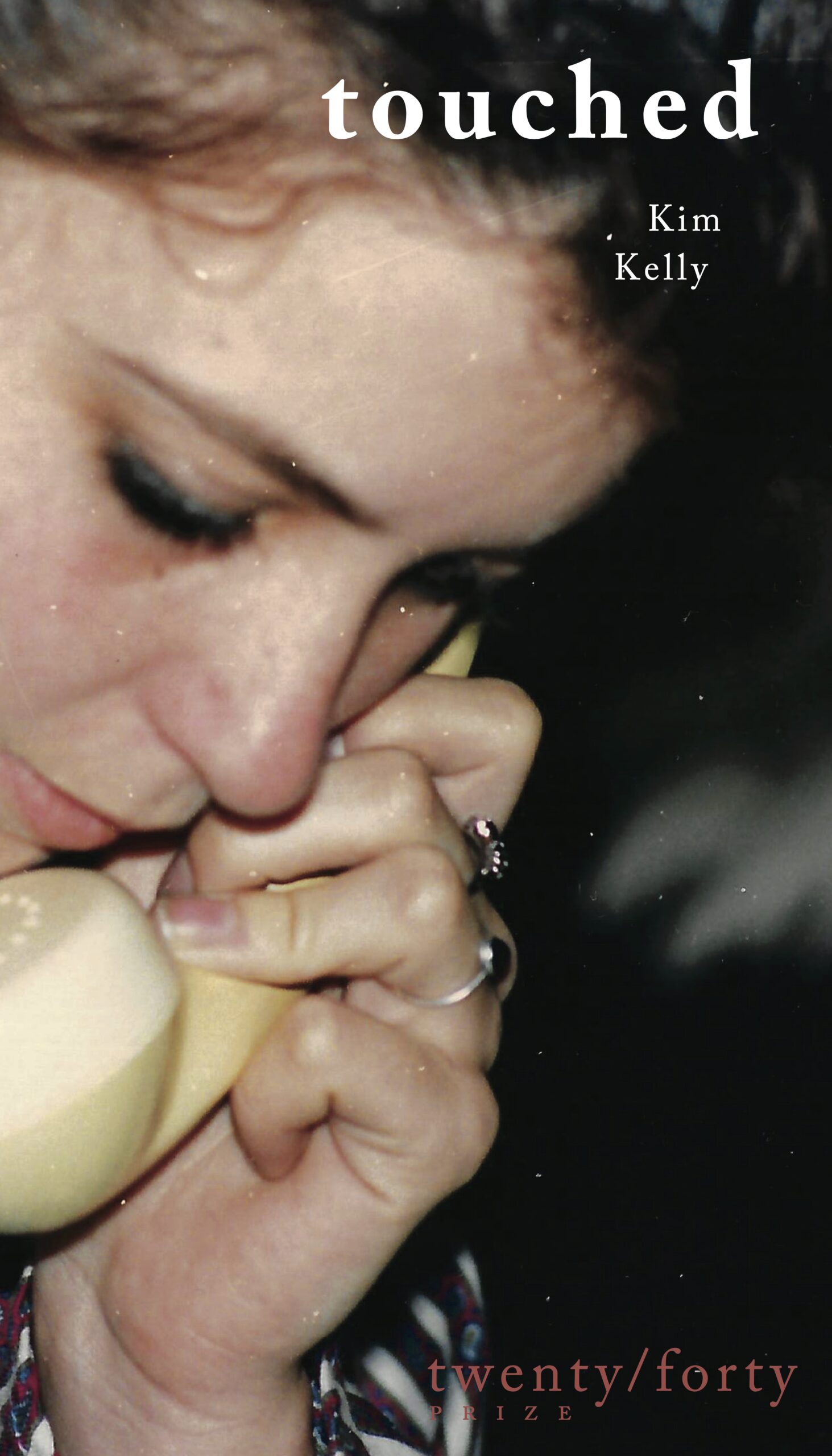
  • Kim KellyTouched: “a memoir that uses self-deprecation and humour to turn her own experience of intense panic attacks into a lively and profound reflection on the prevalent role of anxiety in so many of our lives.”
  • Monica RaszewskiMystic Vera and Lottie the shadow puppet: another novel, this one “centred on eccentric, flighty, Vera who dances with happy abandon around her sister, Lottie’s flailing attempts to control her excesses.
  • Paul TooheyBad face: an historical novel “set on the late 19th Century US frontier, where totemic violence between settlers, cattle ranchers and rustlers, and native Americans is played out with vital gothic intensity”.

And the winners are Angus Gaunt’s Anna and Kim Kelly’s Touched. You can read more about them on the Winner Announcement page. The judges were last year’s winners – Sonya Voumard, Penelope Cottier and Nick – plus Finlay Lloyd author John Clancy and the publisher Julian Davies.

The judges liked Gaunt’s novel because “the extreme circumstances of this story are written with a quiet yet incisive humanity”. Gaunt as born and educated in England, coming to Australia in 1987. He now lives in Dharug/Guringai country on the northern edge of Sydney. He has been published and nominated for awards in Australia, England and Ireland.

They liked Kelly’s memoir because of its “breadth of understanding—of the author’s own crazily complex family, of the wider issue of anxiety across society, and of her own voyage as a highly competent yet vulnerable being in a worryingly unhinged world”. Kelly was one of the two inaugural winners of this prize with her historical fiction novella, The Ladies Rest and Writing Room (my review). She lives and works on Wiradjuri and Eora lands in central west NSW and Sydney. Kelly has written historical fiction, short stories and essays, and is completing a PhD in Literature at Macquarie University. She is also a book editor (as Kim Swivel).

I was able to attend the launch of the 2023 and 2024 winners, as they were held in Canberra. This year, however, because both authors have Sydney bases, the launch will be held there next week when I’m in Melbourne, so I will not be able to report on the winners’ conversation, unfortunately. However, I do have the books and plan to read both for this year’s Novellas in November. And, there is an excellent interview with the authors available RIGHT NOW on the above-linked Winner Announcement page!

I am thrilled that this prize has now passed its third year, and hope it continues for many years more. If you like the sound of these books, and would like to support them (and the prize), you can order the books at Finlay Lloyd (though great bookstores will carry them too.) The recommended retail price is AUD26, but you can buy them from FL at AUD23.40 each (plus postage).

Congratulations to Finlay Lloyd and this year’s winners.

Paul Laurence Dunbar, The scapegoat (#Review)

Paul Laurence Dunbar’s short story “The scapegoat” is the fourth in the anthology Great short stories by African-American writers, which my American friend Carolyn sent me. Compared with the previous author, Gertrude H. Dorsey Browne, Dunbar is much better known.

Paul Laurence Dunbar

Paul Dunbar c. 1890, from The African-American Experience in Ohio, 1850-1920, Public domain, via Wikimedia Commons

The biographical note at the end of the anthology provides good background, and Wikipedia has a detailed article on him. Dunbar (1872-1906) was, says Wikipedia, “an American poet, novelist, and short story writer of the late 19th and early 20th centuries”, and “became the first African-American poet to earn national distinction and acceptance”. In fact, it is through his poetry, which is frequently anthologised, that I recognised him when he popped up in the book. He was born in Dayton, Ohio, to parents who had been slaves. Indeed, his father had escaped slavery before the Civil War ended, and fought with the Union Army.

Dunbar, says Wikipedia, wrote his first poem when he was six, and gave his first public recital at nine. Both sources say he was the only African-American in his high school. He was apparently well-accepted, being elected president of the school’s literary society, as well as being the editor of the school newspaper and a debate club member.

Wikipedia provides much detail about his work and publishing history, his health issues (particularly with tuberculosis which killed him), and his failed marriage to Alice Ruth Moore, whose story, “A carnival jangle” (my review), opened this anthology. He was a prolific writer, and was famous for his use of dialect, although he also wrote in standard English. Recognised in his own time, his influence and legacy continues. Maya Angelou titled her book I know why the caged bird sings, from a line in his poem “Sympathy“. But I will conclude with an assessment from his friend, the writer James Weldon Johnson (1871-1938), who wrote in his 1922 anthology, The book of American Negro poetry:

He was the first to rise to a height from which he could take a perspective view of his own race. He was the first to see objectively its humor, its superstitions, its short-comings; the first to feel sympathetically its heart-wounds, its yearnings, its aspirations, and to voice them all in a purely literary form.

We see some of this in the short story chosen for this anthology.

“The scapegoat”

“The scapegoat” is the opening story in Dunbar’s 1904-published collection The heart of Happy Hollow. My anthology describes it as “Dunbar’s story of an ambitious and intelligent young man who sees no reason to sell himself short or accept defeat”. This is accurate, but only half the story.

It is told in two parts, the first before the protagonist Mr Robinson Asbury goes to prison, and the second after his release. The opening paragraph, after referencing the saying that the law is “a stern mistress”, chronicles young Asbury’s fast rise from a bootblack, through porter and messenger in a barber shop, to owning his own shop. The second and third paragraphs describe the story’s setting, the “Negro quarter” of “the growing town of Cadgers”. Here Asbury sets up his barber shop, and attracts customers with his ‘significant sign, “Equal Rights Barber Shop”‘, which our third person narrator says

was quite unnecessary because there was only one race about to patronise the place but it was a delicate sop to the peoples vanity and it served its purpose.

Whatever the reason, he was successful, and his shop became “a sort of club”, where the men of the community gathered to socialise and discuss the news. As a result Asbury soon comes to the notice of “party managers” who, seeing his potential to win them black votes, give him money, power and patronage. This Asbury accepts, and his power and status in the community grows. He then decides he’d like to join the bar, which, with the help of the white Judge Davis, he does.

And so the story continues. With success, he does not “leave the quarter” to “move uptown” as expected, though Judge Davis is prescient:

“Asbury,” he said, “you are–you are–well, you ought to be white, that’s all. When we find a black man like you we send him to State’ prison. If you were white, you’d go to the Senate.”

By now, Asbury’s success is arousing jealousy among his peers, particularly at a local coloured law firm. Two, Bingo and Latchett (great names eh?), are alarmed by Asbury’s fast rise to the top, but his putting out his shingle is “the last straw”. They plan to pull him down, and engage the services of another to lead an opposing faction in the community. However, with the continued help of the “party managers”, Asbury holds the day.

Now politics is messy, and allegiances switch. Along the way Bingo comes over to Asbury’s side. There’s an election, and Asbury’s side wins, but our narrator says:

the first cry of the defeated party was, as usual, “Fraud! Fraud!”

Was there fraud? Certainly there’s intimation of skulduggery, but without evidence it’s decided a “scapegoat” must be found – a big man – and so Asbury is deserted by the party “Machine”, and by his peers including Bingo, and charged. After the jury finds him guilty, Asbury seeks leave to make his statement, which Judge Davis allows:

He gave the ins and outs of some of the misdemeanours of which he stood accused showed who were the men behind the throne. And still, pale and transfixed Judge Davis waited for his own sentence.

It doesn’t come, because Asbury recognises Davis as “my friend”, but he exposes “every other man who had been concerned in his downfall”. He is sent to prison, for the shortest sentence the Judge can give, and is away for ten months, just long enough for him not to have been forgotten and, in fact, to be recognised as “the greatest and smartest man in Cadgers”. (This rehabilitation of Asbury in the eyes of the community while he is absent is just one of the many astute insights Dunbar makes about the way humans think and behave.) Part Two details Asbury’s revenge, but you can read it for yourself at the link below.

“The scapegoat” is a well-written, well-structured story set primarily within the black community, though the “party managers” who want the “black vote” are clearly white. Its main theme concerns political ambition and corruption, and racial oppression. It shows Asbury’s peers working to bring him down, putting their own ambition ahead of the good of the community, and overlays this with oppression by the string-pulling “Machine” uptown. I particularly liked the measured, neutral tone Dunbar employs which, together with his frequent insights into political behaviour and human nature, enables this story to read almost like a fable, a morality tale that says something in particular about this community, about the unfortunate behaviour of people who should support each other, but also something universal about politics and oppression.

It’s unemotional, clever, true – and, unfortunately, still relevant.

Paul Laurence Dunbar
“The scapegoat” (first published in The heart of Happy Hollow, 1904)
in Christine Rudisel and Bob Blaisdell (ed.), Great short stories by African-American writers
Garden City: Dover Publications, 2015
pp. 45-56
ISBN: 9780486471396
Available online (you can find the whole collection at this site)