Monday musings on Australian literature: Weird fiction

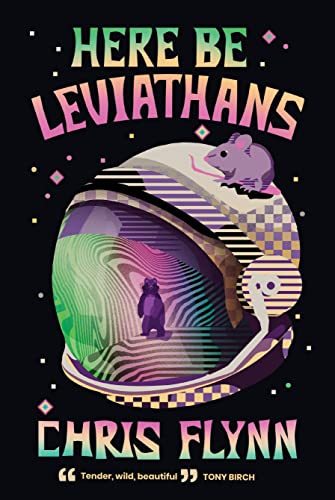
All being well, my next post – or, a very near future one – will be on Chris Flynn’s astonishing short story collection, Here be Leviathans. As I was reading it, I came quite serendipitously across Nina Culley’s article titled “Weird is in“, in Kill Your Darlings*. The article references Chris Flynn’s collection and some other works I’ve read recently that are a bit, well, off-centre.

Culley opens the article with:

Australian fiction has long been dominated by the realist novel. A new wave of writers continue the avant-garde tradition—but are experimental and offbeat stories always destined to be relegated to a literary niche? 

Now, I do tend to prefer realist (or realistic) novels. I am not much into the various forms/subgenres of speculative fiction (though I don’t mind dystopias, which just seem to me to be future realism!) However, this is not to say that I don’t occasionally venture into the more imaginative, surreal or even fantastical. I like Murakami, for example; I loved Jane Rawson’s A wrong turn at the Office of Unmade Lists (my review); and in more recent times I enjoyed Chris Flynn’s Mammoth (my review). I am certainly enjoying his Here be Leviathans. Would Culley’s article, I wondered, explain why?

She follows her intro with the point that “experimental and strange fiction is often viewed as a niche of the literary world, reserved for audacious writers who dare push the boundaries of storytelling and their open-minded readerships”. Such writing is also, she says, “frequently subjected to mixed reception – some ardent, some bamboozled”. I can understand the latter, because, almost by definition, weird writing tends to subvert, if not actively eschew, the conventions against which many of us think about what we read. When that happens, we can struggle to work out how to assess it. or example, if our benchmark is realistic characters, what do we do with characters who are determinedly not so?

Culley, who actively sought out unusual fiction, was surprised to find that there was more out there than she’d thought. It’s hard to categorise but she found it under genre labels like “bizarro fiction” and “new-weird fiction”. She suggests that these genres seem “to have a lot in common with post-modernism and early avant-garde movements, with self-reflexive tendencies towards satire, irony and pastiche”. They “playfully comment on their own artifice” and challenge readers with “bold questions”. I often enjoy writing like this. I have no problem with writers reminding me that it is art I’m consuming, not a representation of reality, because, well, it is art I’m reading and I want to think about the art.

Anyhow, she argues that Australian literature has moved on from a focus on ‘bush and beach’ to something she calls ‘urban existentialism’. Much of this is “wonderful” albeit often “bleak”, but it is also Euro-centric. She characterises it as being concerned with “weaving together a character’s multi-faceted relationship with their country—how it’s threatening and how it’s beautiful, notions with complex colonial implications”. The problem is that this writing might be significant to a point, but it is also homogenising. It “undermines the demand and presence of a diverse literary scene”.

And now, before you jump in with but, but, but, she agrees that Australia has “fostered bold voices and innovation” from the likes of Patrick White through Helen Garner, Gerald Murnane, Murray Bail, and that fascinating import from South Africa, JM Coetzee, to newer writers like Alexis Wright, Robbie Arnott, Ellen van Neerven and Evelyn Araluen. I’ve reviewed all of these writers here at lest once (and admit that while I have enjoyed their writing, most have challenged my reviewer faculties! Which is no bad thing!)

Culley then discusses the publishing of weird writing – who is publishing it and why enough isn’t publised – but I want to explore a little about why read “weird” fiction.

Take weird narrators, for example. Some readers don’t like them, they don’t like, say, skeletons (in Carmel Bird’s Family skeleton) or foetuses (in Ian McEwan’s Nutshell) but in the hands of authors who know what they are doing, weird narrators can jolt us with fresh perspectives on an idea or issue. Chris Flynn’s Mammoth, as I wrote in my review, tells the story of humanity’s destructive, often brutal march through time, through the eyes of those we supplanted, the fossils of extinct creatures. Seeing the world through such eyes is mind-bending and eye-opening.
Julie Koh takes a different approach. Most of her stories in Portable curiosities (my review) start realistically but often turn surreal or absurd. Her targets, though, are grounded – in issues like consumerism, capitalism, commercialism, and the stereotyping of Asian people in Australia. Again, the weirdness can jolt us into seeing (or feeling) things that realism may not expose because it’s all so familiar.

With First Nations writing, the situation can be different again. What we western readers might think is weird is perfectly natural to First Nations people, because, for example, there is no line between the humans and country. It is all interconnected. There is no hierarchy, but mutual responsibility. Reading the writing of others may not change our own worldview, but I like to think it can help us understand different worldviews and see that they are just as valid as our own.

Returning to Culley now, towards the end of her article, she says that Flynn’s Here be Leviathans was described as “boundary pushing”. His response was that this kind of labelling indicates “that the Australian literary scene has been beholden to a streak of misery realism for so long that it’s forgotten to…have fun.” I am not averse to “misery realism” – it has its place – but it’s not my only diet. I also like fun. I like cheeky writers who know how to make points with a light – or even bizarre – touch. Watch out for my review of Here be Leviathans to see what I mean.

Meanwhile, do you read “weird” fiction? Why or why not?

* KYD is an online subscription journal, but some free access is provided.
Joseph Bruchac III, Turtle meat (#Review)

I’m continuing to work through the stories in Great short stories by contemporary Native American writers. With this post, we jump from 1968 to 1983, which mens we are getting close to contemporary territory. The story is “Turtle meat” by Jospeh Bruchac III.

Joseph Bruchac III

As before, I’m using anthology editor Bob Blaisdell’s intro and Wikipedia to introduce the author, though in this case Blaisdell is extremely brief. Bruchac was born in 1942 and, says Wikipedia, “identifies as being of Abenaki, English, and Slovak ancestry” with his Abenaki heritage coming from his grandfather. He writes poetry, novels and short stories, with “a particular focus on northeastern Native American and Anglo-American lives and folklore”, and is the director of a press which publishes new Native American writers. He is also a performing storyteller and musician.

This post’s short story, “Turtle meat”, was first published, according to Blaisdell, in 1983, in an anthology titled Earth power coming: Short fiction in Native American literature, which was published by the Navajo Community College Press. It was published again in Bruchac’s own collection, Turtle meat and other stories, nearly a decade later in 1992.

“Turtle meat”

Wikipedia’s description of his focusing on “northeastern Native American and Anglo-American lives and folklore” certainly rings true for this story. Blaisdell introduces the story this way, “In this strange great story about an elderly Native American who has been living for years with a debilitated woman, Bruchac writes one of the most extraordinary fishing scenes in literature”. That sure sets up some expectations. It is also a bit misleading because “the debilitated woman” is simply old. She hadn’t always been so.

The story concerns Homer LaWare who, when the story opens, had been Amalia (Mollie) Wind’s hired hand for decades after she had kicked out her husband and come for him. There’s a little sense of “Driving Miss Daisy” here except we are on a farm and life is more earthy than Miss Daisy’s refined life with her Black American chauffeur. To start with, Homer and Mollie have been lovers from the beginning, even though Homer always slept in his cot in the shed – his decision it seems, because “it’s the Indian in me”.

The point at which the story starts, both are showing their age. The story opens with Mollie calling out to him because she needs help getting off the toilet. He comes in from the once-farmed but now overgrown field, and “gently” lifts her, reassuring her that she’s not old, that it “must of was just a cramp. Nothing more than that”. This opening scene tells us a few things – that they are old, of course; that they are comfortable with each other; and that he is sensitively attentive to her physical and emotional needs. We also learn that she has retained ownership of the farm that had originally been her father’s, and that Homer is happy with that: “It’s the Indian in me that don’t want to own no land”. Her grasping husband, Jack Wind, had been sent packing, and her “no-good daughter” had not been seen for years.

The central part of the story describes Homer’s fishing expedition – his catching (and cleaning) several yellow perch, and then an old snapping turtle. It’s a battle – it was easier when he was young “and his chest wasn’t caved in like a broken box” – but he does it. Finally, having been out longer than he’d expected, he returns home, muddy and bloody, to find Amalia missing. Where is Amalia, and why is her daughter – who has “Jack Wind written all over her face” – sitting in Amalia’s rocker?

In one sense, “Turtle meat” is a traditional story of ageing parents and grasping children, but it is imbued with a different sensibility. Homer’s battle with the turtle recalls other literary battles between fishermen and their prey, but in this case it is not only about Homer confronting his age, but is also symbolic of the battle Amalia simultaneously faces. I suspect, too, that the choice of a turtle has specific cultural references for Bruchac, given turtles seem to feature often in his writing.

It’s a great story, as Blaisdell says, but what makes it particularly so is the writing. The characters are more than just types. There’s a natural dignity to them, with an individuality that is conveyed mostly through dialogue – and in Homer’s case, also through his thoughts expressed via italics. The descriptive writing is tight and fresh. And it has a quiet humour. Take, for example, Homer out on his boat:

He looked in the water. He saw his face, the skin lined and brown as an old map. Wattles of flesh hung below his chin like the comb of a rooster.

“Shit, you’re a good-looking man, Homer LaWare,” he said to his reflection. “Easy to see what a woman sees in you.”

How can you not warm to such a character and such writing?

Unfortunately, I don’t think this story is available online so you’ll just have to believe me that it’s another one worth reading from this anthology.

Joseph Bruchac III
“Turtle meat” (orig. pub. 1983)
in Bob Blaisdell (ed.), Great short stories by contemporary Native American writers
Garden City: Dover Publications, 2014
pp. 50-56
ISBN: 9780486490953

Monday musings on Australian literature: Trove treasures (10), On short novels

As I’ve said before in this series, not all the “treasures” I find, particularly those from the 19th and early 20th centuries, are specifically Australian, but I justify them because in those colonial and early post-colonial times English content tended to reign supreme.

This post was inspired by my serendipitously coming across an article praising short novels. Most of you will know that I love short stories and short novels (or novellas) so of course I was interested. I went looking for anything else on the topic, and I found a few little items that I felt worth sharing.

Plea for shorter novels

The article that inspired this post appeared on 6 July 1907 in Sydney’s The Australian Star. It cites one Basil Tozer, who made a “plea for shorter novels” in the Monthly Review. Naturally, I researched Basil Tozer. He’s not in Wikipedia, but it looks like he was born in Devonshire around 1872 and died in 1949, and that he wrote some fiction and nonfiction. In the article, he seems to be railing against books like those Victorian “big baggy monsters”. He says:

The habit of loading a story with indifferent descriptive passages still prevails to a great extent, though it might with considerable advantage be dispensed with. A beautiful woman loses her charm when every good point she possesses, from the creamy smoothness of her complexion to the alluring, curve of her eyebrow, is described separately and in detail; and in the same way a glorious scenic panorama metaphorically falls flat when every square mile of it is analysed and dissected. 

These “faults”, he says, are “commonest among young writers” but they are also “flagrant enough still among some of our novelists who have served a long apprenticeship”. He names French writers like Daudet, Hugo and de Maupassant, suggesting there is no “superfluous verbiage” in them. These are, he admits, three of France’s most polished fiction writers, but even “the rank and file” French novelists “seldom err upon the side of overloading their work with unnecessary vocables and third-rate descriptive passages”. He believes that British novels would be strengthened if they were more condensed.

The long and short of it

The next article I found was published in late 1925 and early 1926 in several regional newspapers across Victoria, South Australia, and Tasmania. It reports on comments made by someone called Mark Over in Outlook. I struggled to identify Mark Over, but I assume the journal is the British magazine which Wikipedia says was, in full, The Outlook: In Politics, Life, Letters, and the Arts. It ran from 1898 to 1928. The first version of the article I found appeared on 14 January 1926 in Victoria’s Shepparton Advertiser. It reports that Mark Over had written that readers are appearing to prefer the short book over the long one, that they “seem to be frightened by the book of many closely printed pages, and choose the large type, thick-paper novel which is really hardly longer than a short story”.

However, this doesn’t spell the end of the long book because Over believes that “this type of reader” does like to buy long books as gifts, as they are – wait for it – “better value for money”! (I’ve heard this before as an argument against novellas.) Booksellers, he says, will vouch for this. And, he adds, library staff and owners also prefer long books: they mean less work because they take longer to read so they are changed less often and experience less wear and tear. Mark Over’s advice?

Let would-be novelists remember these prosaic facts, and count their words.

Love it …

Ten years later, on 31 August 1937, Melbourne’s The Herald shares a report from Arthur J Rees in London. This name rang a bell and yes, he is in Wikipedia. He was an Australian mystery writer, who “likely went to England” in his early twenties. He reports the opposite to Over, saying that the British don’t like short novels and that this had caused quite a controversy because “a leading critic” had recommended an American novel of 100 pages “worth many a contemporary English novel of four times the length”. Unfortunately, the newspaper I found this article in is in poor condition so the scanned text is not completely legible, but he wanted to know why English fiction writers didn’t attempt this sort of close writing “instead of plunging themselves and their readers into masses (?) of words and padding out their novels (?)”. 

Except, he knows why. Readers don’t like short novels. Libraries won’t stock them because they can’t “persuade library subscribers to take them out; they don’t think they are getting enough for their money”. (There it is again.) Readers, he reported to The Herald, like a “thick book”. So, of course, publishers also won’t publish short novels. On the rare occasion that they do, said Over, it is ‘printed in larger type, and “bulked out” by thicker paper’. (Short stories, he added, suffered a similar fate.)

I found a couple more articles, but these contain the gist of the pros and cons. Has anything changed much do you think?

Meanwhile, I will leave you with a funny little par I found in one of those literary news type columns. It was in Ian Mair’s The Argus Literary Supplement on 2 February 1946. Headed “Writing to space”, it went like this:

The factory chief of a New York publishing firm recently asked the author of a very long novel if she would mind cutting a few pages of her book, then in process of manufacture, not yet bound.

The author couldn’t help asking why the request didn’t come from one of the house’s editors.

“Because,” said the production man, “we have some thousands of cartons (book casings) to use up, and they’re a shade too narrow for this job.”

The author cut her book, which is now one-eighth of an inch thinner than it was before.

Now there’s a new type of editing – to suit the size of the cover!

Edwina Preston, Bad art mother (#BookReview)

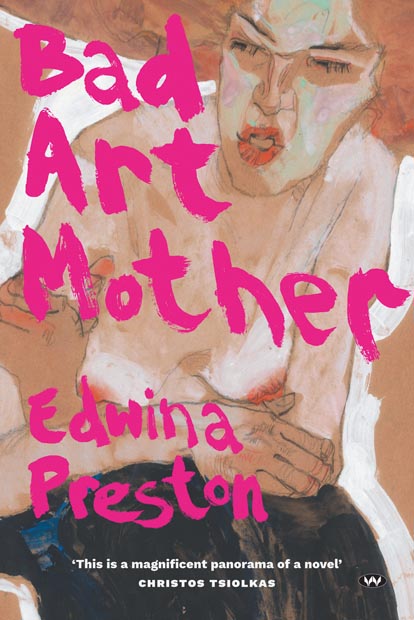
Edwina Preston’s Bad art mother was my reading group’s June book, replacing our previously scheduled book because we’d heard Bad art mother was to be the featured book in the Canberra Writers Festival session, Canberra’s Biggest Book Club. This suited me, as, coincidentally, I’d just started reading it!

Bad art mother has been shortlisted for two awards this year (so far), the Stella Prize, and the Christina Stead Award for Fiction (in the NSW Premier’s Literary Awards). Not a bad achievement for a book that was rejected by publishers over 20 times before being picked up by Wakefield Press.

The novel is mostly set in 1960s Melbourne, which was a time of social change. While feminism was around the corner but not there yet, the city’s life was being influenced by the postwar influx of European migrants. Preston captures this well, said our Melbourne-born members. The story draws its inspiration from various Australian arts practitioners who were active in the mid-twentieth century – the Heide Circle and the artist Mirka Mora and her husband Georges, in Melbourne, and the Tasmanian poet Gwen Harwood. Bad art mother is the third book I’ve read in recent years inspired in some way by the Heide story, the others being Emily Bitto’s novel The strays (my review) and Jane Sinclair’s memoir, Shy love smiles and acid drops (my review). Interestingly, all of them focus to some degree on the damage done to children.

I enjoyed the experience of reading Bad art mother, not only for its expressive language, but also for its intriguing, complex structure. It is told primarily from the point of view of a young boy, Owen, whose mother, Veda Grey, is struggling to make her name as a poet. However, we also get Veda’s point-of-view through letters she writes to her sister. After opening with Veda’s book launch in 1970, the novel is told in six parts, which to-and-fro in time, but it has an overall chronological trajectory, with part one telling of his parents’ meeting and his birth, and the final part being set around 2016 when Veda’s book is about to be republished in an anniversary edition. The central four parts commence with Owen as an adult in the 1980s, before returning to his childhood in the 1960s. It sounds complicated but it works. Lives, after all, are rarely simple and linear. Owen’s certainly wasn’t. Wanting to be just a kid, he had to be the grown-up more often than not.

The other thing to mention is that Owen tells his story first person, but to a specific person, “you”, whom we soon discover is Ornella, his father’s “sister”. That is, she was the daughter of the Italian family that “adopted” his father when he came to work in their restaurant at the age of 19. Throughout his childhood, Owen is passed between his parents, the rich but dysfunctional Parishes (to whom his mother entrusts him in a deal that buys her more time for her art), and Ornella. It is Ornella who saves him when all the others fail. She is the unimaginative one, the stern one, but also the stable, reliable one, the one who picked him up “on time, every time“. Owen knows that he owes his life to her, and now, as she is failing with dementia, he visits her and tells her his story, expressing what she means to him, while also working through his feelings for his mother.

“I will hang my anger out to dry” (Veda)

The book spans Owen’s life from the 1960s to the 2010s, but with its focus being the 1960s, it is, essentially, a work of historical fiction. Why did Preston choose to write about this time? I like my historical fiction to have some relevance to the time in which it is written. Fortunately, Preston’s novel does – and it concerns the challenge creative women face. There are three such women in the story. Rosa, the muralist, works in Owen’s father’s restaurant, and does it her way. She is not a tortured soul, but it takes a long time for her art to be accepted. Mrs Parish is an ikebana artist who quietly finds her own way by removing herself to Japan. And, of course, Veda, the poet – the only one who is a mother. She struggles big-time with her drive to create and her role as a mother. She writes to her sister:

How does one protect them? Sometimes I think I would throw in every hope of my own, every dream of literary prowess or success, to protect him, even for one second, from any hurt that might come to him.

But would I, Tilde? Would I?

If it came to it, I wonder how I would make such a choice. I should hope that if ever given that choice I would make the right one, but I know I would resent it for the rest of my life. I would never be happy. I would be a bloody, injured banshee who ruined everyone around her.

What sort of a mother chooses a book over a child?

Sometimes I am not sure what I am capable of at all.

The point, then, is that it is hard for women to make art and be recognised for it, and it is especially hard when the woman is also a mother. The tension for Veda is palpable through both Owen’s story and her own letters. And this brings me to the issue which triggers the novel’s crisis, anger. When Veda shows her anger at how she and her work had been treated, things go wrong and her life falls apart. Owen’s partner Julia tells him in 2016 when Veda’s poems are being re-released, that she remains relevant because, for all the progress that had been made in the interim, “it’s still hard to be angry, if you’re a woman. It’s still not allowed”. This was a major takeaway from the book for my reading group.

Bad art mother is an intelligent novel that offers no answers to the quandary it presents, but that asks the right questions. Good on Wakefield for taking it on.

Lisa also enjoyed this book.

Edwina Preston
Bad art mother
Mile End: Wakefield Press, 2022
317pp.
ISBN: 9781743059012

Review copy courtesy Wakefield Press

Monday musings on Australian literature: First Nations Australian non-fiction

Since 2013, I have devoted the Monday Musings that occurs in NAIDOC Week to a First Nations topic. This year I’ve chosen First Nations Australian non-fiction. I have previously written Monday Musings on biographiesautobiographies and memoirs by First Nations writers, but what about other sorts of non-fiction?

Before I get to that though, a bit about this year’s NAIDOC Week theme, which is “For our elders”. The website says that

Across every generation, our Elders have played, and continue to play, an important role and hold a prominent place in our communities and families. 
They are cultural knowledge holders, trailblazers, nurturers, advocates, teachers, survivors, leaders, hard workers and our loved ones. 

And they say more, but you can read that at the website. I will just add that it was thrilling to watch the 2023 NAIDOC Week Awards on television on Saturday night and see Aunty Dr Matilda House-Williams win the Female Elder of the Year award. She has been an absolute force for her people – and for reconciliation – in my city for as long as I can remember. She was our city’s go-to Welcome-to-Country person way back when that practice started. She was involved in the creation of the historic (and still existing) Aboriginal Tent Embassy. And so much more. These days it is often her son, Paul, who does Welcome to Country, as he did last month at the 2023 ANU Reconciliation Lecture. However, accompanying him on stage was mum, Aunty Dr Matilda, and his son. It was truly special, as they performed a song for us as part of the Welcome. Anyhow, you can read more about her on the NAIDOC Awards site.

Now, today’s topic. There’s a wealth of literature to choose from so my aim here is to give some sense of the breadth of recent non-fiction writing by First Nations Australian writers.

Bruce Pasco, Dark emu

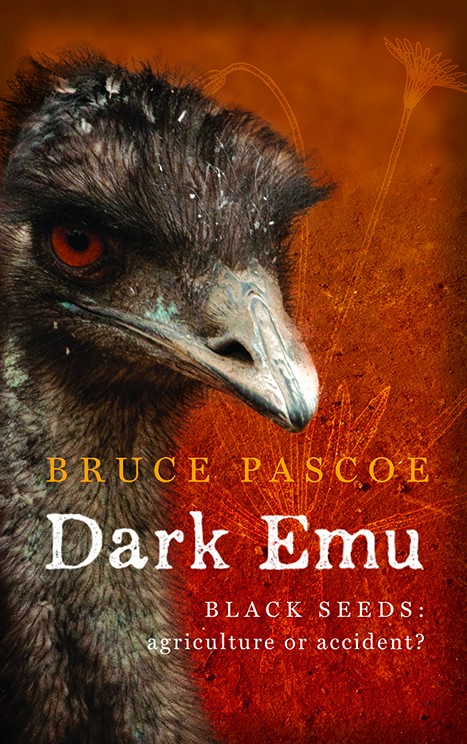
Probably the best known non-fiction book, today, by a First Nations writer is Dark emu (my review) by Bruce Pascoe. It argues for us to rethink our understanding of First Nations culture, specifically to appreciate that pre-colonial Aboriginal Australians were more than hunter-gatherers as they had been traditionally described. The book won several awards, has a younger people’s version, and was adapted into a ballet by Bangarra Dance Theatre. It has also had its share of controversy, but overall it has played a significant role in changing people’s attitudes to First Nations history and culture.

Pascoe’s book, however, is not the only First Nations book to address First Nations knowledge. Indeed, this seems to be a growing area of interest. Some of these books aim primarily to explain First Nations culture to others but most also share knowledge in the belief that it will help all Australians to better understand and thus more fully engage with our country. I’ll list a few of these, in alphabetical order by author:

  • Paul Callaghan and Uncle Paul Gordon (2022). The Dreaming path: Indigenous thinking to change your life
  • Gay’wu Group of Women (2019). Song spirals: Sharing women’s wisdom of country through songlines (Denise’s review)
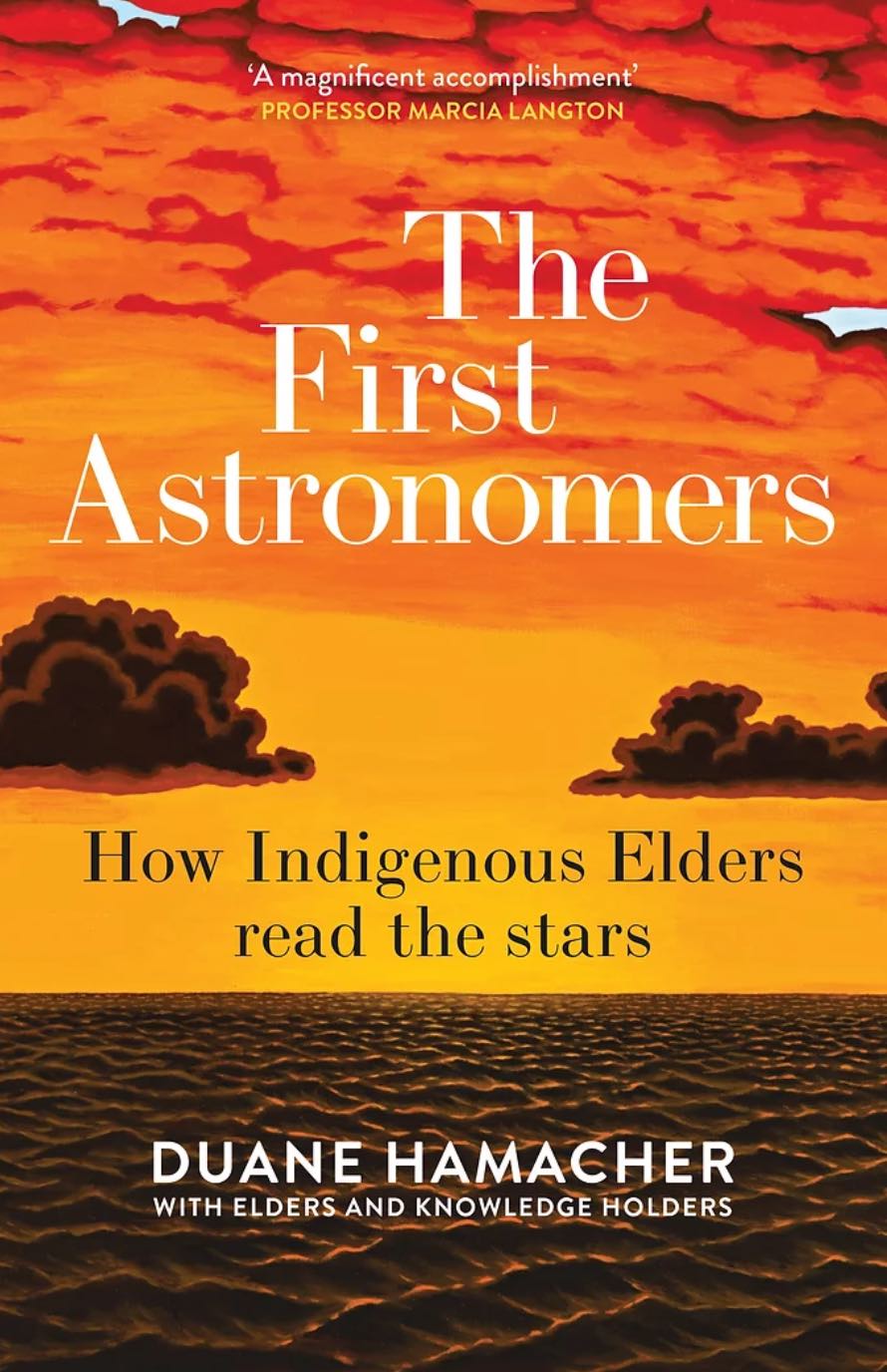
  • Duane Hamacher with Elders and Knowledge Holders (2022). The first astronomers: How Indigenous elders read the stars
  • Terri Janke (2021). True tracks: Respecting Indigenous cultural knowledge and culture (Lisa’s review)
  • Marcia Langton and Aaron Corn (2023). Law: The way of the ancestors (in the First Knowledges series (on my TBR)
  • Katie Noon and Krystal de Napoli (2022). Astronomy: Sky country (in the First Knowledges series)

As you can imagine, it is difficult to categorise the non-fiction books I’ve selected into subject areas, because there’s so much overlap, but here are a couple books that are primarily history:

  • Larissa Behrendt (2016). Finding Eliza: Power and colonial storytelling (Lisa’s review; still on my TBR)
  • Rachel Perkins and Marcia Langton (2008). First Australians: An illustrated history

First Nations historians are working in academia, and producing important texts, but I want to focus here on books that are accessible to the general reader.

Many First Nations writers have written what I would call hybrid memoirs, books which in their case combine memoir with sociopolitical commentary. By definition, memoirs tend to have a specific focus, like Biff Ward’s Third chopstick (my review) in which she, as a Vietnam War protester, later talks to those who fought to understand their experience, and Carmel Bird’s bibliomemoir Telltale (my review) which examines her life through the books she’s read. However, with many First Nations hybrid memoirs, memoir elements are used to illustrate their exploration of issues like colonialism, racism, social injustice, dispossession and reconciliation. One of the best known writers in this area is Stan Grant whose Talking to my country (my review) and, most recently, The Queen is dead (kimbofo’s review), explore contemporary Australia with reference to his own experiences along with his extensive knowledge of history and philosophy.

But, he’s not the only one. Some others include:

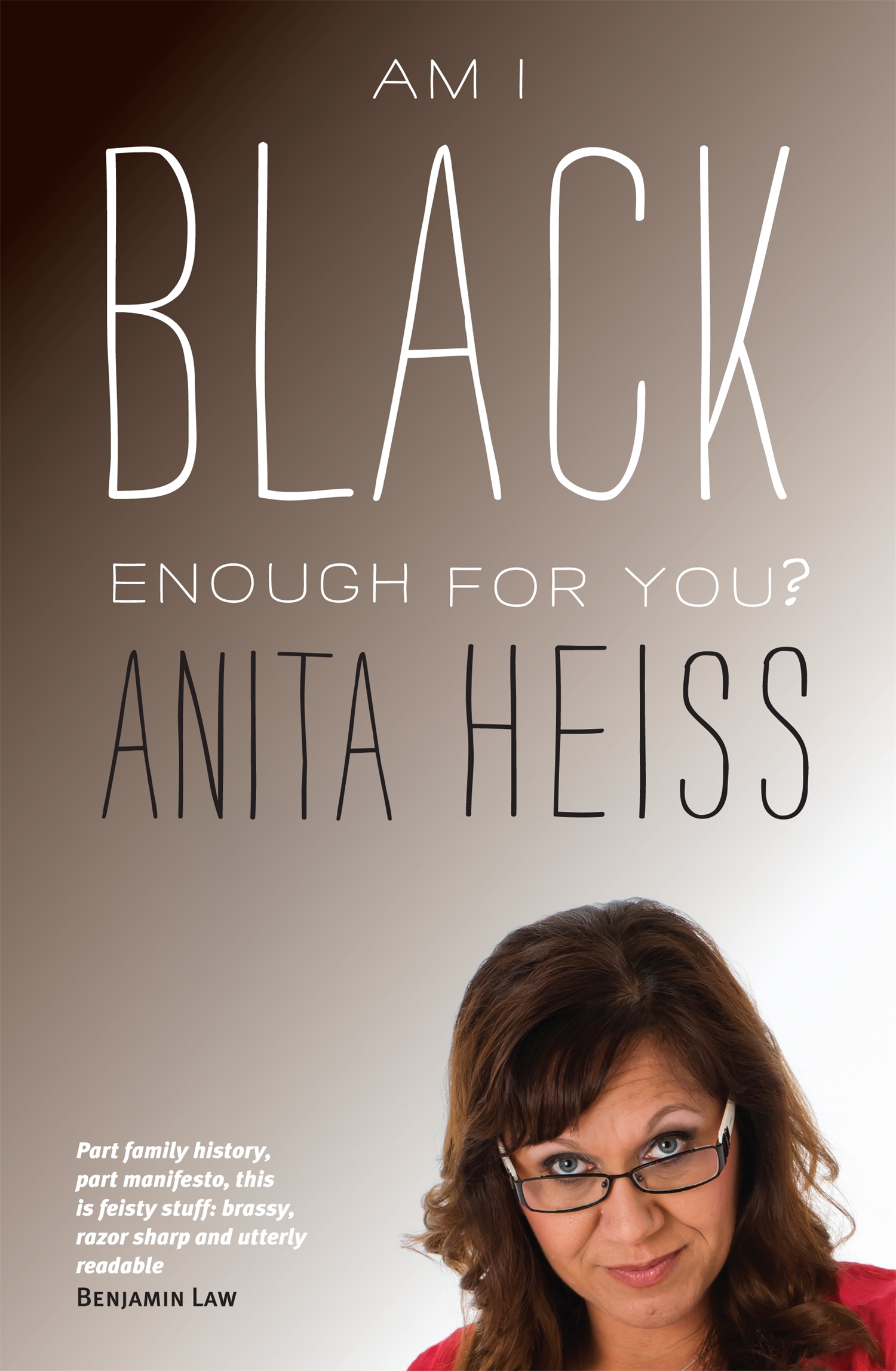
Anita Heiss, Am I black enough for you?
  • Claire G Coleman (2022). Lies, Damned Lies: A personal exploration of the impact of colonisation (Bill’s review)
  • Inala Cooper (2022) Marrul: Aboriginal identity and the fight for rights
  • Anita Heiss (2012). Am I black enough for you? (my review)
  • Chelsea Watego (2021). Another day in the colony (Bill’s review; on my TBR)

For a good list – with reviews by some of your favourite litbloggers – of First Nations Australian nonfiction, check out Lisa’s page dedicated to this topic.

Are there any First Nations non-fiction books that you’d like to recommend?

Six degrees of separation, FROM Time shelter TO …

Well, the BIG DECLUTTER is essentially done. Now it is the BIG CLEAN. Boring! So let’s move on to something far more interesting than how to clean ovens, bathrooms and windows. In other words, let’s think about this month’s Six Degrees meme. If you don’t know how it works, please check host Kate’s blog – booksaremyfavouriteandbest.

The first rule is that Kate sets our starting book. In July, dare I say it, it’s another book I haven’t read, Time shelter, by Bulgarian writer Georgi Gospodinov (and translated by Angela Rodel). It won the 2023 International Booker Prize, and it sounds like a fascinating read. In deed, it sounds like one I’d be interested to read, moreso perhaps than some of this year’s other starting books.

Book cover

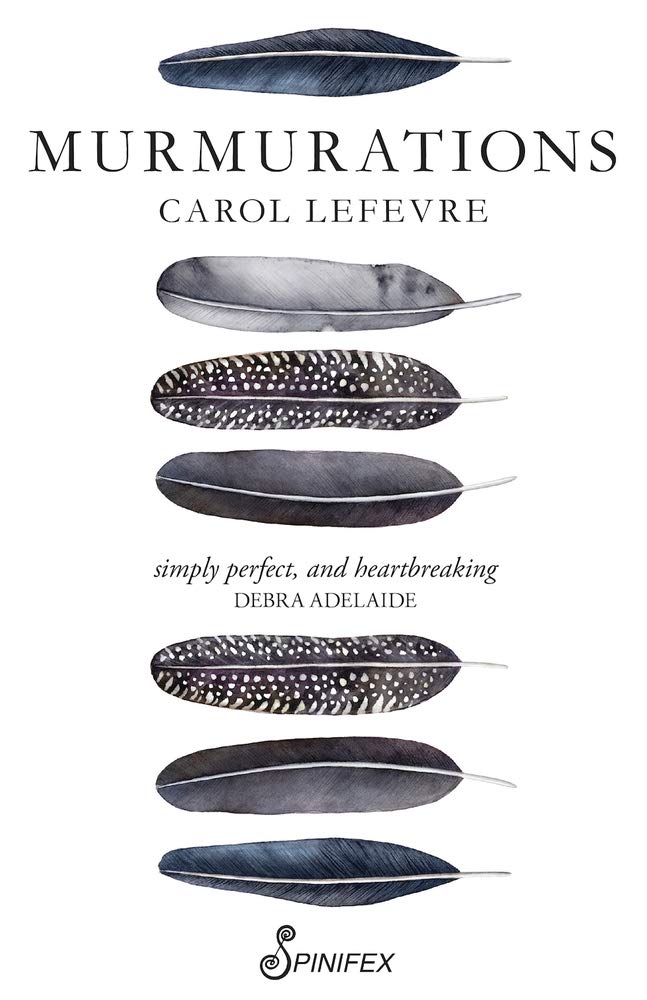
Goodreads starts its description of the book with: ‘In Time Shelter, an enigmatic flâneur named Gaustine opens a “clinic for the past” that offers a promising treatment for Alzheimer’s sufferers: each floor reproduces a decade in minute detail, transporting patients back in time’. What to link from this? I could have taken the quick way and chosen a book with “Time” in the title, as I’m afraid I haven’t read any Bulgarian authors. However, instead I’ve gone with a book in which Alzheimer’s or dementia plays a part, though it’s not the book’s main feature by any stretch, Carol Lefevre’s Murmurations (my review).

Marie Munkara, Every secret thing

Murmurations is one of those books that is tricky in terms of its form. Is it a novel? Or, is it short stories? Well, it’s probably best described as a book of connected short stories, so I’m linking to another book I’d describe that way, First Nations Australian writer Marie Munkara’s blackly funny Every secret thing (my review).

Now, each year in Australia, we celebrate NAIDOC Week in the first week of July (this year from 2 to 9 July), so in honour of that I’m linking from First Nations Australian writer Marie Munkara to the most recent work I’ve reviewed by a First Nations Australian writer, Claire G. Coleman’s short story “Nightbird” in the Unlimited futures anthology (my review).

From here I’m linking on two points, another First Nations story in another anthology, this one Native American-based. It’s Leslie Marmon Silko’s “The man to send rain clouds” (my review) in Great short stories by contemporary Native American writers. It is set in a New Mexico pueblo and deals with clashing religious practices over the death and funeral of an elder. Coincidentally, in my review, I wrote that the story reminded me, in a small way, of Munkara’s Every secret thing, so if I hadn’t already linked to that book, I could have done so now! Darn it.

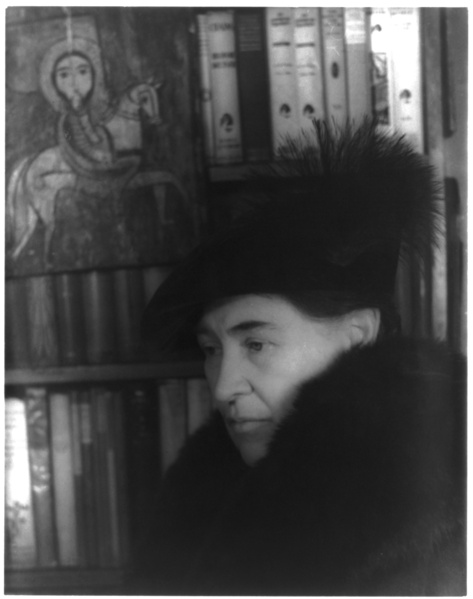
Willa Cather
Willa Cather, 1936 (by Carl Van Vechten; Public domain, via Wikipedia)

So, instead, I’m going to another short story, this one by Willa Cather, “The enchanted bluff” (my review). The story is set, in fact, in Nebraska, and is about six boys on a camping trip at the end of summer, before they return to school. As people do around campfires, the boys share stories and mysteries, and end up talking about the legend of New Mexico’s Enchanted Bluff. They all vow to go there, when they grow up, and to share their experiences when they do so … The story is told by one of the boys from twenty years later.

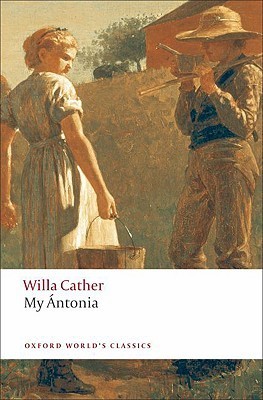
I can’t resist staying with Willa Cather, and linking to another story by her – this time a novel – in which a man reflects on past events. If you haven’t guessed already, the book is My Ántonia (my post), one of the few non-Jane Austen books I’ve read more than once. That tells you something about how much I like it, despite its completely different style, subject matter and tone to Jane’s.

Hmm … we’ve not travelled very far at all this month, having moved smartly from Bulgaria to Australia and then to North America, but we have traversed a few different cultures and eras, so that’s something at least.

Now, the usual: Have you read Time shelter? And, regardless, what would you link to?

ACT Notable Book Awards 2023

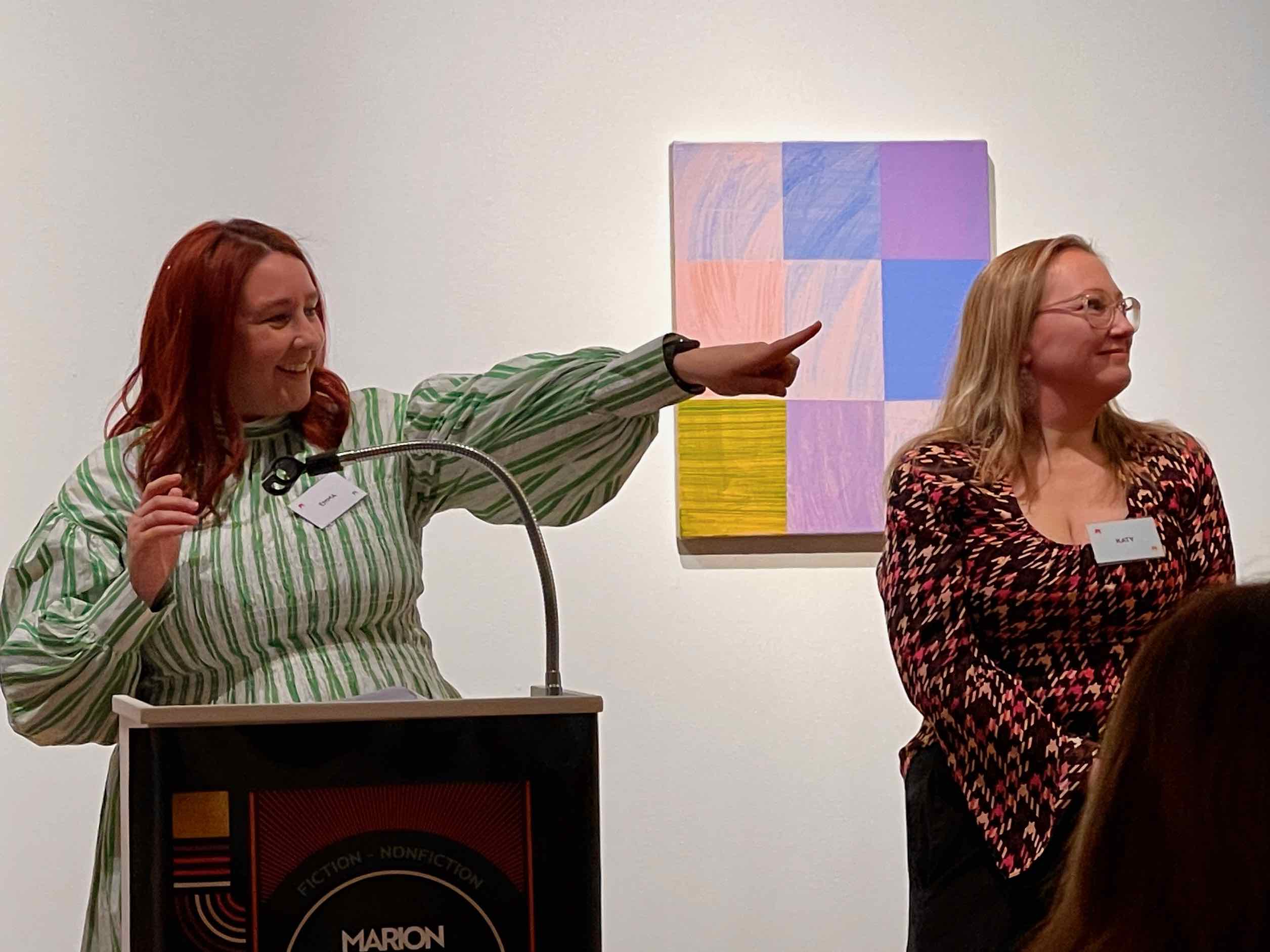
Board Chair Emma Batchelor, and acting CEO Katy Mutton, at the Awards

Tonight I attended the presentation of the ACT Notable Book Awards which are made by Marion (the ACT Writers Centre). It was a well-organised event, but had a wonderfully natural and friendly feel to it at the same time, appeals to me. I’ll take natural over glitz every time. The venue was the Canberra Contemporary Art Space, where the featured exhibition was Bodies without Organs, a group show, says the website, by queer and non-binary artists, exploring “how contemporary artists transgress and subvert our understanding of materiality and form”. There was a little time to view the art before the formalities started, but I’m afraid I used that time to catch up with people.

As I didn’t share the shortlists for these awards, I am listing those, and highlighting the winners in bold.

Poetry

The shortlist:

  • Penelope Layland, Beloved (Recent Work Press)
  • Maurice Nevile, Translating loss: A haiku collection
  • Peter Ramm, Waterlines (Vagabond Press)
  • Kimberly K. Williams, Still lives (Life before man) (Gazebo Books)

Maurice Nevile won the self-published award, and Peter Ramm was highly commended.

Non fiction

The shortlist was:

  • Tabitha Carvan, This is not a book about Benedict Cumberbatch (HarperCollins)
  • Katrina Marson, Legitimate sexpectations (Scribe Publications)
  • Michael Richards, A maker of books: Alec Bolton and his Brindabella Press (NLA Publishing)
  • Helen Topor, Neither king nor saint
  • Biff Ward, The third chopstick (my review)
  • Jan Williams Smith, The glass cricket ball (Big Sky)

Helen Topor won the self-published award, and Katrina Marson was highly commended.

Children’s

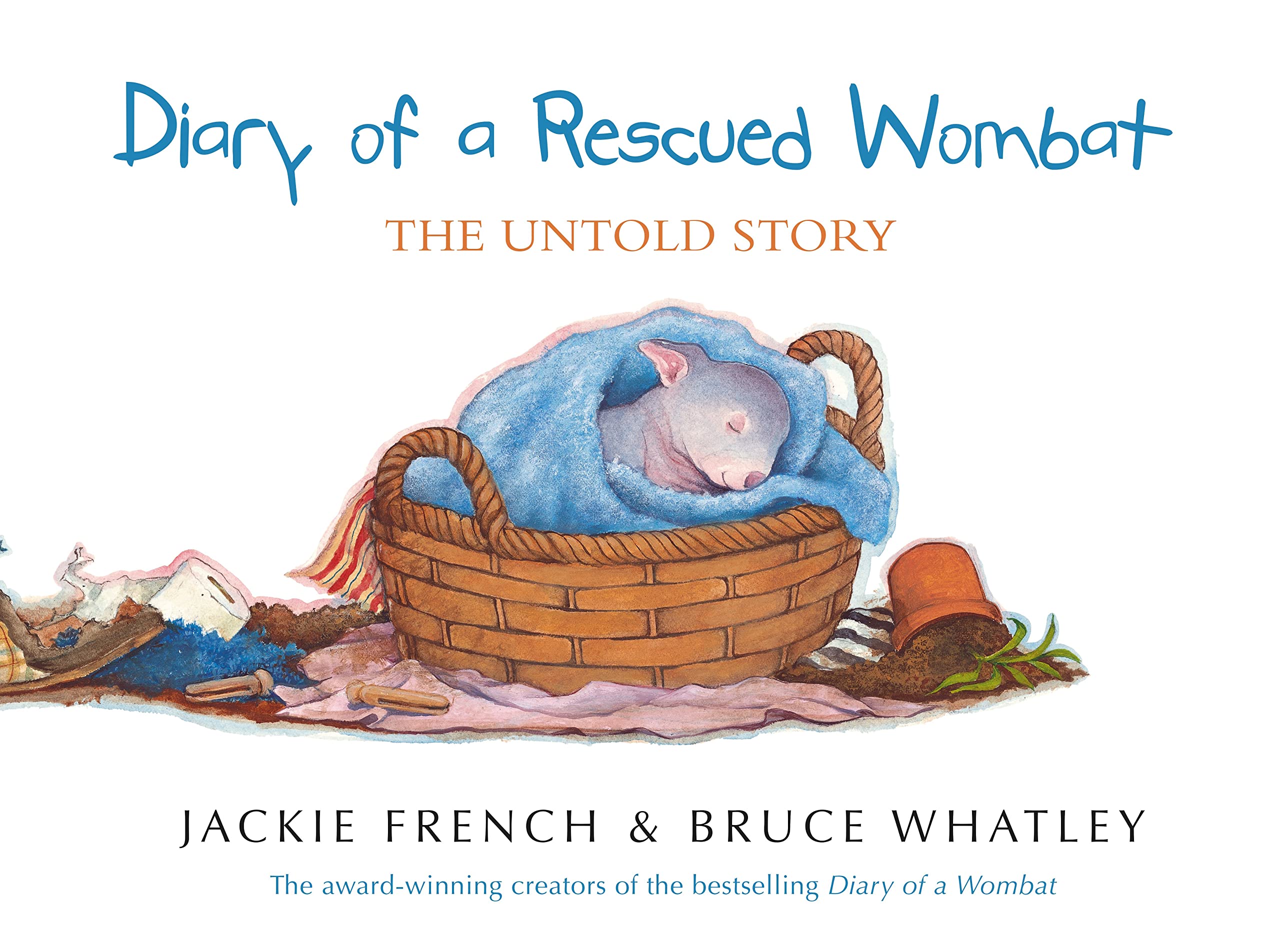
  • Jackie French and Bruce Whatley, Diary of a rescued wombat: The untold story (HarperCollins Australia)
  • Irma Gold and Wayne Harris, Seree’s story (Walker Books Australia)
  • Dr Bryan Lessard (Dr Bry the Fly Guy), Eyes on flied (Pan Macmillan)
  • Stephanie Owen Reeder and Astred Hicks, Swifty the super-fast parrot (CSIRO Publishing)
  • Barbie Robinson and Ian Robertson, Charles the gallery dog (For Pity Sake Publishing)
  • Krys Saclier and Cathy Wilcox, Camp Canberra (Wild Dog Books)

Barbie Robinson and Ian Robertson won the self-published award. Two highly commendeds were announced: Irma Gold and Wayne Harris, and Stephanie Owen Reeder and Astred Hicks. It’s interesting, but perhaps not unusual, how many of the shortlisted books feature, as an American friend of mine would say, “critters”.

Fiction

  • S G Bryant, A death in black and white
  • Paul Daley, Jesustown (Allen & Unwin)
  • Tanya Davies, Then Eve
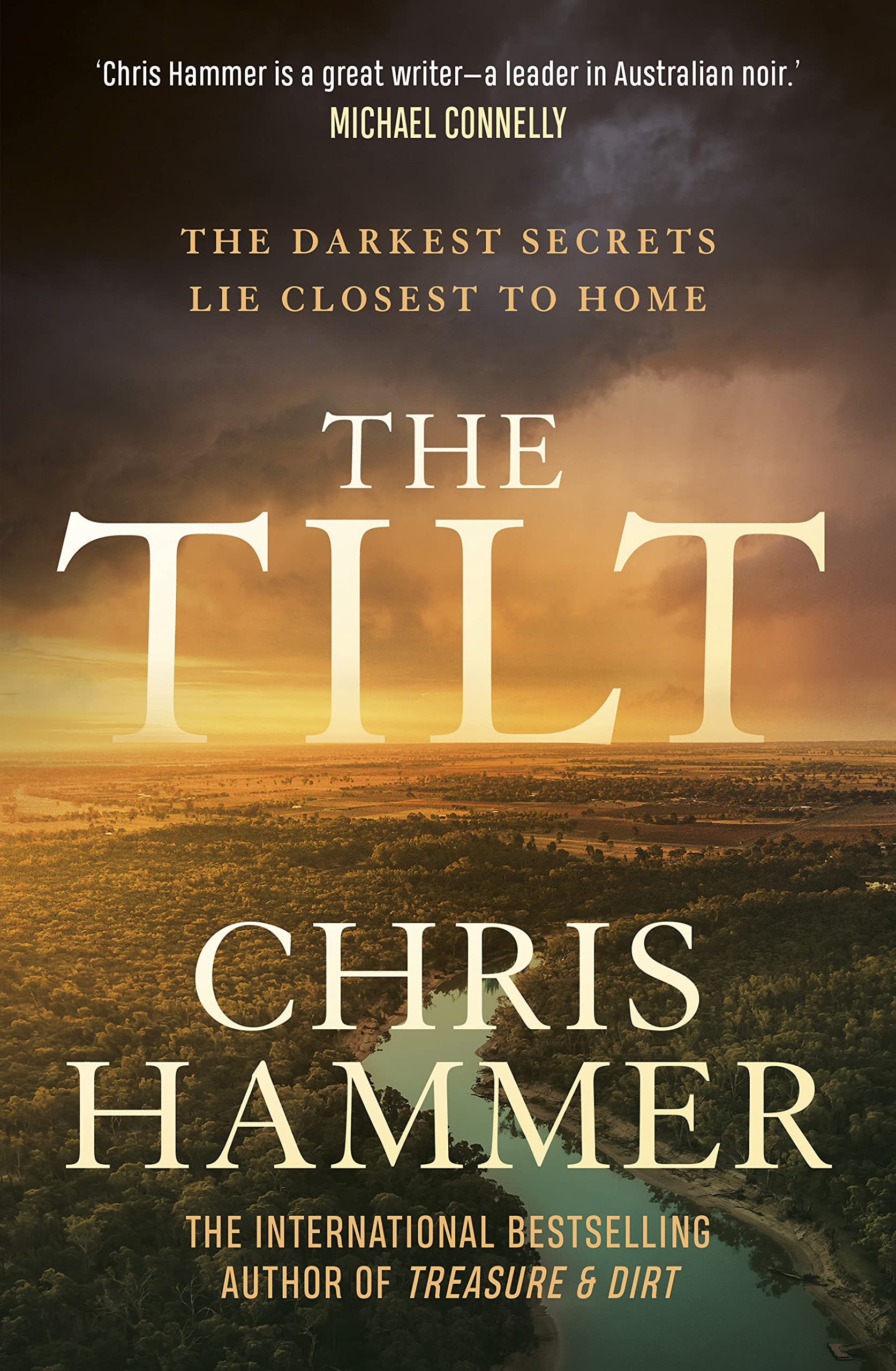
  • Chris Hammer, The tilt (Allen & Unwin)
  • Peter Papathanasiou, The invisible (Hachette)
  • Inga Simpson, The willowman (Hachette)

The self-published award went to Tanya Davies.

Marion Special Book Award

This award is not limited by genre, and this year’s was won by Dylan van Den Berg’s play, Whitefella yella tree.

Other awards

Two other awards were made:

  • The Anne Edgeworth Emerging Writers Award, now in its 11th year, is made to an emerging writer and this year’s winner was a screenwriter, Linda Chen.
  • The June Shenfield National Poetry Award for an individual poem was won by Rhian Healy from Western Australia for her poem “The gunshot”. ACT poet Rebecca Fleming won third prize for her poem “Anticipation”.

Canberra (the ACT) is a small jurisdiction, but has an active, engaged and, I’ve found, warm literary community that was well in evidence despite the awfully chilly evening outside. I’m glad I made the effort to go.

Monday musings on Australian literature: A question about things

A different sort of Monday Musings this week …

My reading group’s June book is Edwina Preston’s Bad art mother, which was published by Wakefield Press last year and which I’ll be reviewing soon. (If you don’t know it and are interested, you can check out Lisa’s review.) It was shortlisted this year for the Christina Stead Prize for Fiction (in the New South Wales Premier’s Literary Awards) and for the Stella Prize. Wakefield Press’s website describes it as being “set in the Melbourne milieu of Georges and Mirka Mora, Joy Hester, and John and Sunday Reed”. The same milieu, in fact, that inspired Emily Bitto’s The strays (my review) although that’s a very different book. However, I digress … because my little question for you today is not central to the book, just something that caught my attention. It comes from Owen talking to his aunt:

Why did you throw out everything when you sold the house in Coburg, Ornella? Was it because you knew all those things didn’t matter in the end, that without memories attached they were just junk shop rubbish? You put Nonna’s things out on the grass for the neighbours to pick through. You didn’t even keep a teapot, or a pair of earrings. You filled your place with glossy new things … But what are you now without all those things?

There’s a bit more, but the question Owen asks is one I’ve been confronting in my current big downsizing project – a project that is almost done, thank goodness. Still, it has been difficult, a wrench, to part with things that are part of the story of my life, things I haven’t used in decades but that, every time I see them, remind me of some person or event. They gave me joy, so Marie Kondo’s criterion just didn’t work!

However, to use a cliche, you can’t take them with you, and we don’t want to leave more of a headache to our kids than we have to, so decisions had to be made. And, they have been. I do expect some gnashing of teeth in the future, as well as some “I kept that!”, but overall I think we’ve done ok. My choices were not based on value, but on meaning, so out went some fine art porcelain and in stayed Mum’s funny little no-brand donkey that she kept with her through her many moves, for as long as I can remember. I never did ask her why – why didn’t I? – but I couldn’t let it go. And, of course, I kept her copy of Pride and prejudice.

I could go on, sharing all my little decisions, but will leave it there, and return to the opening question: what do our things mean to us, and does letting them go change who we are?

What do you think?

Tuesday Atzinger, The River (#Review)

Back in January I reviewed two stories from Ellen van Neerven and Rafeif Ismail’s anthology Unlimited futures: Speculative, visionary Blak+Black fiction for Bill’s (The Australian Legend) Australian Women Writers Gen 5 Week. The stories I reviewed were the second and third in the anthology because they were the first two by Australians in it. The anthology’s first story, however, is African in origin. Titled “The River”, it is by Tuesday Atzinger, who is described in the book’s Biographical Notes as “a poet and emerging writer … [who] … explores and celebrates Afro-blackness, queerness, disability and feminism. They peddle in discomfort and their primary goal is to fling words together to make you squirm”. Atzinger currently lives in Melbourne “on the unceded lands of the Wurundjeri People of the Kulin Nations”.

“The River” is worth discussing for several reasons, but specifically because it’s the first piece in the anthology, so was, presumably, chosen for a reason. Some of that reason is explained in the anthology’s introduction, which, by the by, takes the form of a conversation between the two editors. One of the topics they discuss is the cover, which was designed by Larrakia woman, Jenna Lee. Ismail describes it as looking at “the interaction of separate cultures in the most respectful and wonderful way”, and also sees it as suggesting “infinity”. It does, doesn’t it. Van Neerven adds that it also reflects “the movements of water” in the anthology. She says:

We were going to begin the anthology with water to allow those kinds of threads of connection and continuation to flow into each other. For me the cover really kind of feels like rivers connecting and the light that is created through water, but it’s also water that we protect and have a relationship and a responsibility to.

Water! Such a complex element in our lives. Most of my friends adore the sea, but for me it’s the rivers that draw me most. They can be young, direct, and fast, or slow, meandering, and somehow wise, or anything inbetween. They can be critical to creation stories, and this role is part of Atzinger’s opening story, making it particularly appropriate as the opening piece.

The first thing to say about “The River” is its form – it is a short story in verse. The River is not named, but we know it’s in Africa, partly because an African word, Ubuntu, is repeated throughout the story: “Ubuntu/Together”. According to the New World EncyclopediaUbuntu pronounced [ùbúntú], is a traditional African concept. The word ubuntu comes from the Zulu and Xhola languages, and can be roughly translated as “humanity towards others”.’ It has been adopted more widely around the world for its humanistic concepts – and is also, would you believe, “used by the Linux computer operating system” to convey the sense of bringing “the spirit of Ubuntu to the software world”. Valid appropriation? I didn’t find much concern about this use on the ‘net.

Anyhow, to the story itself. We are immediately introduced to the River, and a village that lies near it. The word “prosperous” is used, but we are warned that things aren’t so simple:

Shallow water so clear that the stones beneath it glistened brightly
Depths dark and mysterious, hiding all that lay below
The River, ever a source of sustenance
                                                                      And of danger

The story starts with creation: “Eons ago/The River had rippled in welcome as the people first arrived”. It provided refuge and sustenance; it saw “passion, grief, joy and courage”; it saw, in other words, the life of the community, of “the people who slept under the sun”. It had also seen “a lineage of Chiefs/Some wise, some brave, some imperious” until the present one “Mehluli – the Warrior Chief”. He is described in words like “proud”, “arrogant”, “dominating” and “greedy”. He desires a woman, Thandeka, but she already has a “perfect love” with Amandla, a hunter. Amandla fears the River, fears the aformentioned danger, and while she’s away hunting her fears are justified when the Warrior Chief makes his move on Thandeka.

The problem is that you “cannot refuse the chief”. Violence ensues. The River acts in an unusual way, and a dramatic story follows as Thandeka fights back, as does the River, to right the balance that has been disturbed. It is, ultimately, a story with a moral, a story to teach proper behaviour, right values.

The story is told in a beautiful, poetic style. The changing rhythms and strong use of repetition convey elemental and opposing tones – prosperity and togetherness versus power and greed. “The River” is a thoroughly enjoyable read. It is founded in the sorts of lesson-giving stories that are part of most belief systems, but its queer-love narrative brings the story and its traditional message into modern thinking and times. A worthy first story for the anthology, I think.

Tuesday Atzinger
“The river”
in Ellen van Neerven and Rafeif Ismail (ed.), Unlimited futures: Speculative, visionary Blak+Black fiction
North Fremantle: Fremantle Press in association with Djed Press, 2022
pp. 23-41
ISBN: 9781760991463 (eBook)

Monday musings on Australian literature: Trove treasures (9), Pro-novel reading, early 20th century

Last week, in my Trove Treasures series, I shared some ideas published in the 19th century arguing for reading novels. Now, I am sharing some from the first decades of the 20th century. The articles range from 1903 to 1928, with many, again, coming from London.

Diversion and instruction

Two papers – Brisbane’s The Telegraph (18 December) and Perth’s The Spectator (31 December) – reported in 1903 on the annual address given by Professor Dicey to the Working Men’s College in London. Dicey argued that the main benefit of novels was “to take a man out of himself — to afford some relief from the petty and tiresome thoughts of every-day life by substituting a world of larger and more varied interest”. (We must forgive him and the others below their gender specificity – I suppose.)

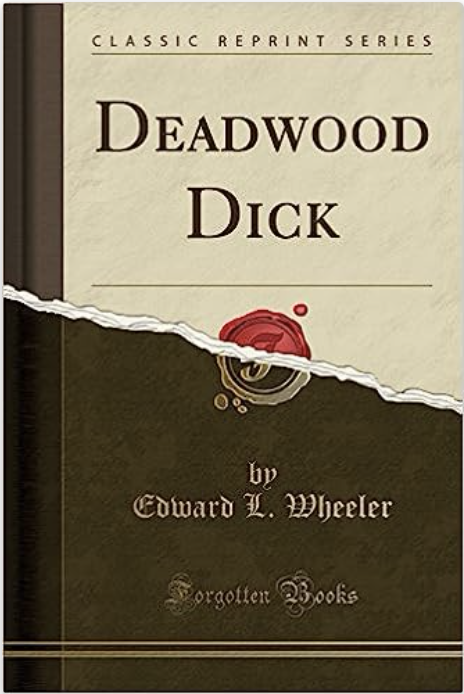
Interestingly, The Spectator says, and this seems to be its own reflection, that it’s not always “the highest class that serves this purpose best” and goes on to share a variety of novels from penny novelettes, like the Deadwood Dick novels, to Scott, Thackeray and Balzac. This idea of novels as valid – indeed useful – recreation is refreshing. The Spectator goes so far as to say that

That degree of mental absorption and excitement to be found in works of fiction, fine and trashy alike, and more often in the trashy ones, has become part and parcel of the home life.

But, this sort of reading must not be “indulged too far”. The Telegraph reports a month or so later (8 February) that Prof Dicey does comment on the issue of quality, making this recommendation:

take good care that you read novels of a good kind — each good of its kind. If you like a detective story take care you read a good detective story, and think about what you have read.

Dicey also believed – and here we are in more familiar territory – that novel reading provides “an introduction to life and thought”. This idea though, says The Spectator, is one few – including itself – “will be prepared to admit”. It fears that novels might teach readers what to expect in life but not how to meet it.

Moving to 1905, we have another Englishman’s point of view, this time Sir Richard Henn Collins*, Master of Rolls in England. The Armidale Express and New England General Advertiser (7 February) reports Sir Richard’s argument that much useful knowledge can be acquired through reading fiction. Indeed – are you listening Bill – he argued for the value of the historical novel, saying, “that he himself had won a scholarship mainly through having imbibed French history by reading Dumas’ famous Three Musketeers and other French novels of a similar class”. Even I think that might be going a bit too far – as does our newspaper. It argues that while this might be an appealing way of learning, the fact is that the public service and many professions require the passing of examinations. This means that the “the greater part of the schoolboy’s career must necessarily be occupied in the process of stuffing with dates, syntax rules, and other learned matter. The novel as an educator cannot, therefore, be recommended as an essential part of the ordinary public school curriculum”.

A year later, on 16 March 1906, The Hebrew Standard of Australasia, picks up the argument favouring the reading of novels. It suggests that “many people, especiallv men between twenty-five and forty-five, men in responsible positions, serious people engrossed by the details of a large business, consider novels simply as a kind of dross”, but this, it argues, is a “mistake”:

To read a good novel and read it with undivided attention is a means of instruction and education, which very few men below fifty can afford to entirely neglect. We have met not one, but many business men, excellent, successful and commanding our admiration in a very high degree, in whose manner of conducting business we have noticed defects, not to say faults, which most probably, would never have occurred if they had been in the habit of reading, now and then, a good novel, and had been able to extract from that reading the good which it can yield [my emph].

It then spends some time elaborating exactly what businessmen can learn from novels. It’s a thoughtful article, well worth reading.

Varying the diet

William Makepeace Thackeray, Vanity Fair

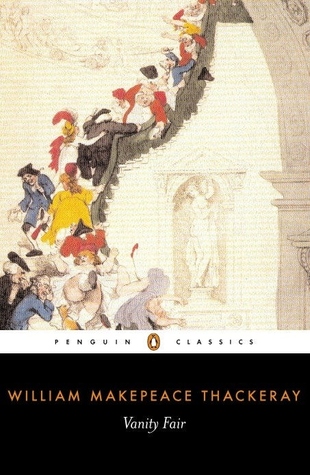
Support for novel reading continued in the 1920s, but I found some qualifications. For example, Leeton’s The Murrumbidgee Irrigator (20 March 1923), shares an argument put forward by Thackeray, half a century previously, “that all people with healthy literary tastes love novels” but “that overindulgence in them in youth spoils the taste for them in after-life, even as a schoolboy outgrows his love for pudding and jelly”. He goes on to discuss the truth of this in his era, particularly regarding those decadent modern novels which cannot hold his attention. Yet, speaking for himself and his fellow-sufferers, he admits that, regardless of having over-indulged in their youth, they can still “find a corrective in those romances which used to entrance us — ah! how many years ago”.

And in 1928, Brisbane’s Daily Standard (17 March) shared an argument from London’s Evening Standard that “the habitual novel-reader should sometimes vary his mental diet”. Indeed, the Evening Standard suggests that this is important given that the other works of literature, which preceded the novel and continue alongside it, “will no doubt be still vigorous when the novel has had its day”. Little did it know!

It then goes on to say something rather interesting:

There is no good novel which is not veiled autobiography, either from the emotional or from the intellectual standpoint; but a writer can under the protection of the veil, be franker than he could possibly be in a ‘Confession’ or ‘Apologia pro vita sus.’ There is perpetual complaint of the indecent novel; but in a sense all novels are indecent —that is, they reveal thoughts and feelings that the writer would never dream of exposing to a company of even close friends.

It says more, arguing that there is value in wide reading – hard and low-brow, fiction and nonfiction – but I’ll leave you with its closing remarks because they tickled me:

it is neither polite nor grateful to many excellent modern writers in non-fiction genres to talk as if ‘books’ were only another name for novels.

So there!

* Collins was the judge in the Wilde vs Queensberry libel case.