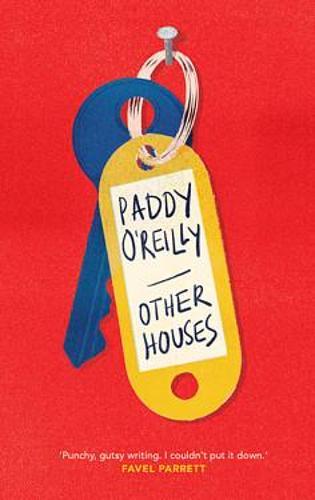
Paddy O’Reilly, Other houses (#BookReview)

It’s not totally coincidental that this week’s Monday Musings post was about a publisher of realist or social novels, that is, of novels which aim to explore social problems of their time. My reading group’s March book, Paddy O’Reilly’s Other houses, belongs to this tradition. I have been wanting to read it since it was published in 2022.

Searches of the Internet, including of Wikipedia, retrieve various definitions of the social novel (also called social problem or social protest or social justice novel), but they essentially agree that these are works of fiction which tackle some sort of inequality, prejudice, or injustice, through the experiences of their characters, and that their intention is to encourage social change. In Other houses, O’Reilly interrogates the idea of social mobility. Her protagonists, Lily and Janks, are “battlers“, working class people who struggle payday to payday, but they want more for their now 15-year-old daughter, Jewelee, who had started to run wild, heading down the path of delinquency.

“Good people live here” (Lily)

So, they move from their working class suburb to one they “could barely afford”, and enrol Jewelee in “a good school”. Jewelee might now behave as though she’s “too good” for her “bogan” parents, but they believe it was worth it. The problem is, Janks, now working in a food-factory, has mysteriously disappeared. The novel opens with Lily driving through her old neighbourhood at night, hoping to find Janks there. “Good people live here”, she says. “They try”.

From here the novel is told in the alternating first person voices of Lily and Janks, with Lily’s story occupying the greater part of the narrative. Having worked as a supermarket cashier in her old home, she is now a cleaner, which is where the title comes in. The novel is beautifully constructed around the cleaning jobs Lily does with her cleaning partner, the older, and wearing out, Shannon. While they clean houses, Lily reflects on her current and past lives, on the “entitled” Jewelee, on the lives and aspirations of the people they clean for, all the while worrying about Janks, and trying to find him. She prints “have you seen” leaflets and scours all the places he might possibly be. She does not believe he has deserted her willingly.

And, we know that he hasn’t. Having borrowed money from a bikie gang, he’d been “snatched” off the street, and coerced into paying off the loan by doing a job for them. The novel’s plot comes from this: will Janks get the job done, without being caught, and be allowed to return safely to the life they are building? Many of us in the group called this book a page-turner, but some disagreed. The plot is too straightforward, they said. It doesn’t have the breath-catching twists and turns of a thriller. Others of us, however, define page-turners differently. Ours don’t require an edge-of-the-seat plot. Rather, they are books that compel us on, because of the characters, or the writing, or the ideas, or the plot, or any combination of these. What do you think?

“Things, world, wrong” (Shannon)

Anyhow, there is a plot – whether you see it as a page-turning one or not – and there is also lightness, despite the seriousness of the protagonists’ plight. Much of the lightness comes from the house-cleaning scenes. Lily and Shannon name the houses they clean, such as the House of Hands (with its profusion of chrome dirtied by sticky hands), the House of Doom (whose owners see the world as “blighted”), Horror House (inhabited by a hoarder), and Lily’s favourite, the House of Light (which lets the sun shine in). They share their thoughts about the inhabitants and the lives they know (or think) they lead. If anyone knows how we live, it’s likely to be cleaners, eh? Lily’s and Shannon’s perspectives – their observations, opinions and reflections on how others live – are what gives this book its real heart.

Lily speaks with the dignity of a worker, when she says:

We know things no one else knows about our clients. I sometimes pick up objects in the places we clean – a vase, a notebook, a scarf … I give them attention, these things that I believe hold meaning for someone … It’s my moment of saying what I can’t say to their faces. I respect what you hold dear, even when you’re rude to me or barely acknowledge I exist. (p. 30)

Meanwhile, the older Shannon has her own mantra for how things are going, says Lily:

Something has gone wrong in the world … Shannon uses it about the eating habits for the population, the number of appliances in the kitchens we clean, leaf blowers, hair straighteners, so-called superfoods, weird weather events, toilets that wash your bottom, plastic wrapping on fruit that already has its own natural wrapping, quiz shows where she disagrees with the answers, tap water sold in plastic bottles and so much more. (p. 29)

Most definitions of the social novel say “through the experiences of their characters”, and this is true here. Telling her story through the experiences of Lily, Shannon and Janks enables O’Reilly to show what she wants to explore, without being didactic. Through these authentic characters we come to see just what the much-touted upward social mobility really is, means, and feels like. We see Lily and Janks recognising that the poverty faced daily in their old working class suburb results in lives that are lived on the edge with little opportunity to improve one’s chances, but we also see that it’s not easy to simply transplant yourselves into a different life and, essentially, culture:

Tonight my water-stained ceiling and the creeping draught taunt me that although we’ve adjusted to living here, it might be because we brought things with us when we crossed: rental damp and rot, clothes that fall apart, bank accounts that bounce between payday and zero. (p. 74)

For Lily, Broadie feels like “home” and it’s where she returns to find a solution to the problem of the missing Janks.

Other houses is a slim and accessible book, but it offers no simple answers. Rather than support the comfortable view that upward social mobility is the answer to the problems posed by socioeconomic inequity, it asks us to consider instead, how do we overcome the problems caused by inequity – indeed, how do we remove inequity – without expecting people to give up everything they hold dear about where they come from? It’s a quietly provocative novel that speaks to one of the most urgent issues of our time.

Paddy O’Reilly
Other houses
South Melbourne: Affirm Press, 2022
245pp.
ISBN: 9781922626950
Monday musings on Australian literature: the Australasian Book Society

Back in 2023, I briefly mentioned the Australasian Book Society (ABS) in my Monday Musings post for the 1962 Year Club, adding that the society deserved its own post. Finally, here it is, albeit still introductory. There is a lot to research and tease out about this initiative, and I am not planning to write a thesis.

The ABS has a very brief page in Wikipedia, which tells us that it was a cooperative publishing society that ran in Australia between 1952 and 1981. It was co-founded in Melbourne by trade union leader and community activist George Seelaf, at the suggestion of novelist Frank Hardy.

In 2021, the ANU offered a Zoom seminar, titled “The Australasian Book Society: Making a Literary Working Class During the Cultural Cold War”, with Professor Nicole Moore, UNSW Canberra, as speaker. The promotion explained that one of the Society’s “masthead aims”, was

“To encourage mass participation in and responsibility for the publication of progressive Australian literature”.

According to the Zoom promo, it was “a mid-twentieth-century, book-club style, cooperative publisher with a subscription model that promised four books a year to members and distribution through unions, industry associations, education organisations and the communities of the organised left in Australia, including the communist party”. Wikipedia suggests that it was “perhaps a unique venture in Australian publishing history”. The Zoom promo explains that it produced “a long list of notable books by Australian, New Zealand and other regional authors through the polarised years of the cultural Cold War”, and was also a “conduit for Eastern Bloc publishers”.

However, there is apparently still much research to be done into “its model of production and the readership it mobilised”, into how successful it was in “creating a literary working-class readership”, and more. Hopefully someone is out there working on this.

In the meantime, I’ll share some things I found through Trove. Tribune announced the establishment of the society with much enthusiasm. On 28 May 1952 it said that

THE formation in Melbourne the Australasian Book Society is being widely hailed as an event of outstanding importance to every Australian reader and to all our serious writers. 

Six years later, on 4 June 1958, it carried an article by the writer and Communist, Judah Waten, who was the Society’s chairman. He believed strongly in the society and its value to Australian culture. He wrote:

FROM its inception the Australasian Book Society has taken an active part in the great contemporary battle of books and ideas between the forces of reaction and the forces of progress.

On the side of advancement, the ABS, as a co-operative organisation of writers and readers, has published books by writers who have endeavored to describe life truthfully and thus deepen our understanding of human relations and problems.

Unlike today’s fashionable writers who preach pessimism and man’s helplessness, the writers whose books have been published by the ABS look to the future as well as the past, arousing in their readers a determination to end the evil conditions which give rise to unhappiness. 

These writers, perhaps more than any other group of writers in the country, have continued the democratic traditions in our literature and are outstanding exponents of Australian realism.

Back in 1953, however, Melbourne’s more conservative Weekly Times (6 May) noted that not all readers who subscribed to the Society knew who was behind it:

Many people throughout Australia and New Zealand have joined the society unaware of its association with Communists. 

The society’s printed publicity said they would get “worthwhile books at the lowest possible prices.” Instead, they have got books by well-known Communist authors such as Frank Hardy. 

It doesn’t seem like the ABS hid its origins, but it probably didn’t shout it out either.

Anyhow, ten years after its inception, in 1962, the ABS was still going, and newspapers carried little tidbits of news about its achievements, such as:

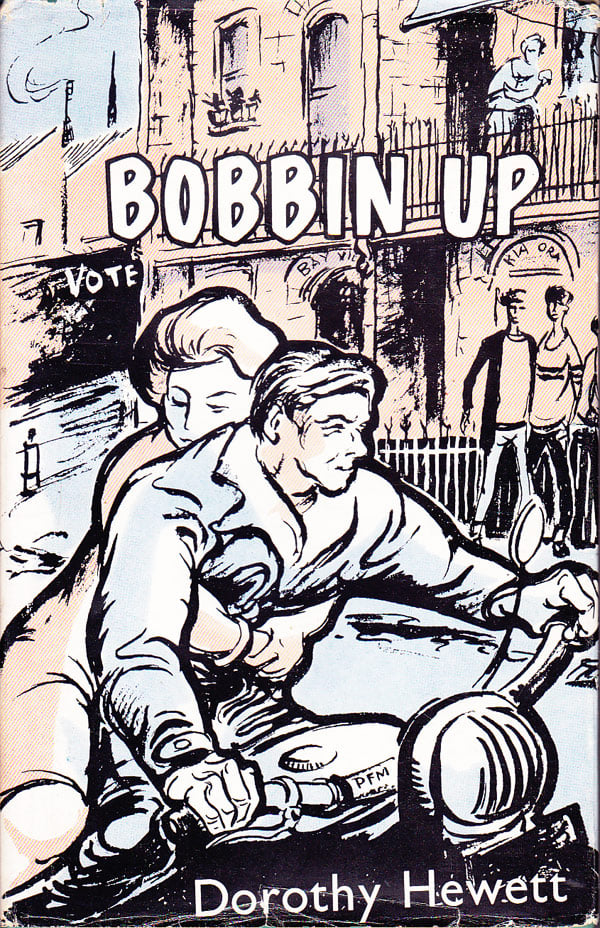
  • Many Australian books published by ABS were finding their way into foreign translated editions: Dorothy Hewitt’s Bobbin up (see kimbofo’s review), about women factory workers, had already been published in the German Democratic Republic, was soon to appear in a Rumanian edition, and Hungarian and Dutch editions were looking likely (Tribune 17 January 1962); Judah Waten’s Shares in murder, was being serialised in the New Berlin Illustrated magazine, with book editions being published in both Germany and Czechoslovakia, and a Soviet edition expected “at any time” (Tribune 7 February 1962). 
  • Gavin Casey’s Amid the plenty, was, according to R.T. (Canberra Times 24 March), a truly Australian novel that bucked the modern anti-colloquial world-aware trend. “Most of the self-elected realists in Australian writing spend too much of their time explaining their characters”, says R.T., but “Casey lets them explain themselves in rip-roaring, hell-for-Ieather, damn ’em all slang”.
  • Ron Tullipan toured northern New South Wales and southern Queensland with the secretary of the Australasian Book Society Jack Beasley to promote his book March into morning, which won the 1961 Mary Gilmore Award (Tribune 10 October 1962). Tullipan is recorded as saying that “Australian people are very interested in Australian literature — if it is sincere.”

As we move into the 1970s in Trove, there are still articles about books being published by the ABS, but I could find nothing in the 1980s about its demise. This could be because, for copyright reasons, fewer newspapers from more recent decades have been digitised.

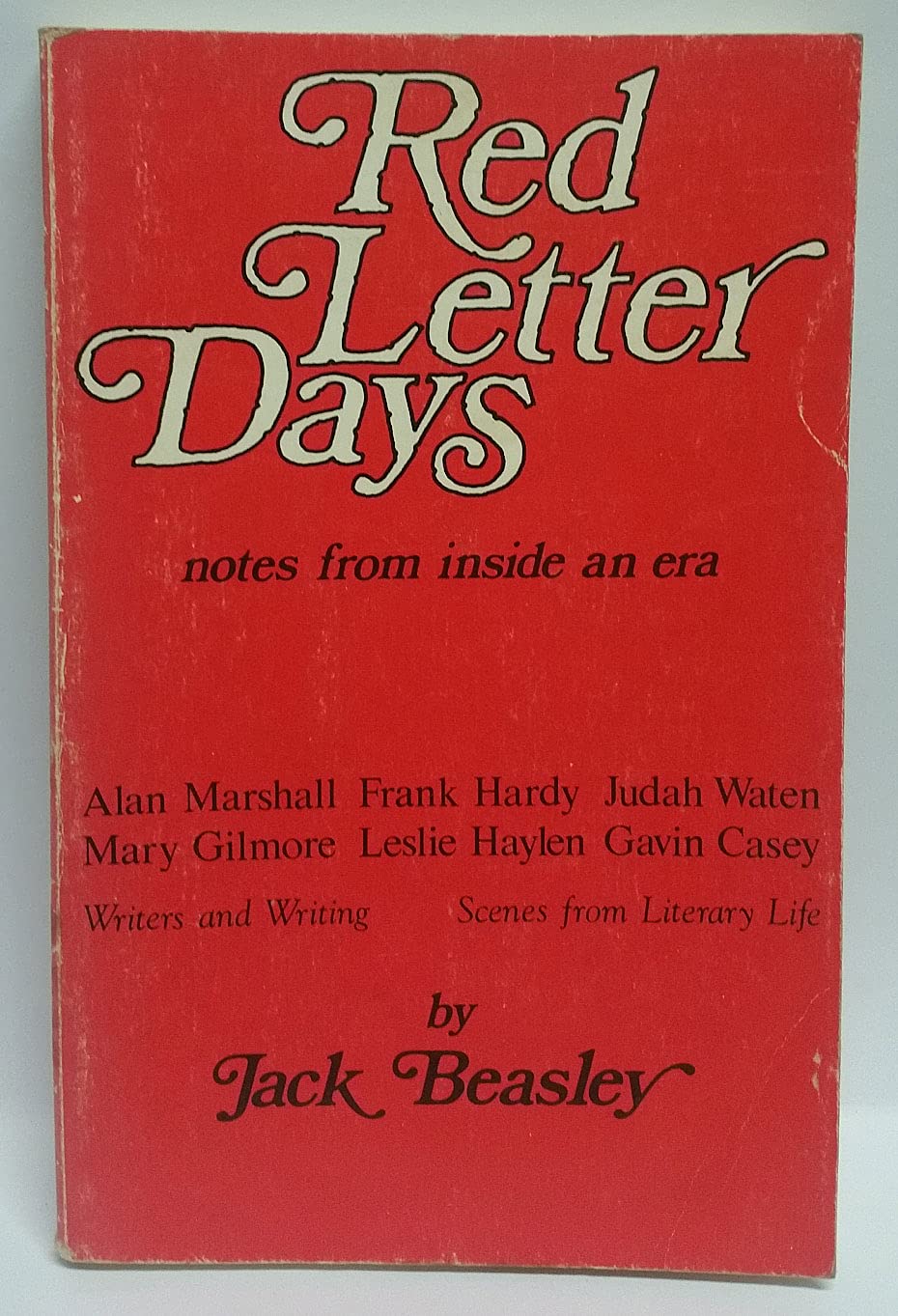
I will close with a review from the Tribune (18 July 1979) of another book published by ABS, the memoir, Red letter days: Notes from inside an era, by the above-mentioned Jack Beasley. Beasley covers the writers he knew – including Judah Waten – but also the Society as a whole. Reviewer Bob Makinson discusses the pros and cons of an insider’s view, but suggests that “those who seek to examine Australia’s cultural-political history must be prepared to accept the value of studies like this”.

Makinson concludes:

The ABS has had more than its share of problems since its official formation if 1952. The founding members had different ideas about its aims: should it publish books with “progressive social content” oriented to a trade union readership, or promote Australian literature at a time when it was stifled by establishment publishers? 

He goes on to say that “The ABS was forced to answer these questions during a period of extreme red baiting and sometimes heavy handed interference from the left” and then, concludes – he’s writing in the Tribune after all, that “it came through and still provides many Australian writers with their first publishing break. Tribune readers who wish to join ABS or find out more about it should write to …. In a period of cultural confusion and struggle ABS is worth supporting.”

A fascinating part of Australian literary culture, and one that’s ripe for study.

World Poetry Day 2025 – a day late

World Poetry Day was declared by UNESCO in 1999. It is a day, says UNESCO “to honour poets, revive oral traditions of poetry recitals, promote the reading, writing and teaching of poetry, foster the convergence between poetry and other arts such as theatre, dance, music and painting, and raise the visibility of poetry in the media”. In Australia, and we are not unique in this, we also have National Poetry Month that aims to do this too, but that is in August.

I’ve let World Poetry Day slip in recent years, and I let it slip a day this year as the actual day is 21 March, but … I have two recent poetry books on my TBR so decided to use this day to give them a little outing.

Australia’s version of the Twinkl educational resource site, tells me that the theme for the 2025 World Poetry Day is – and it’s not surprising – Poetry as a Bridge for Peace and Inclusion. It aims “to highlight poetry’s transformative role in the promotion of peace, inclusion and creativity”. Do my two books suit this theme?

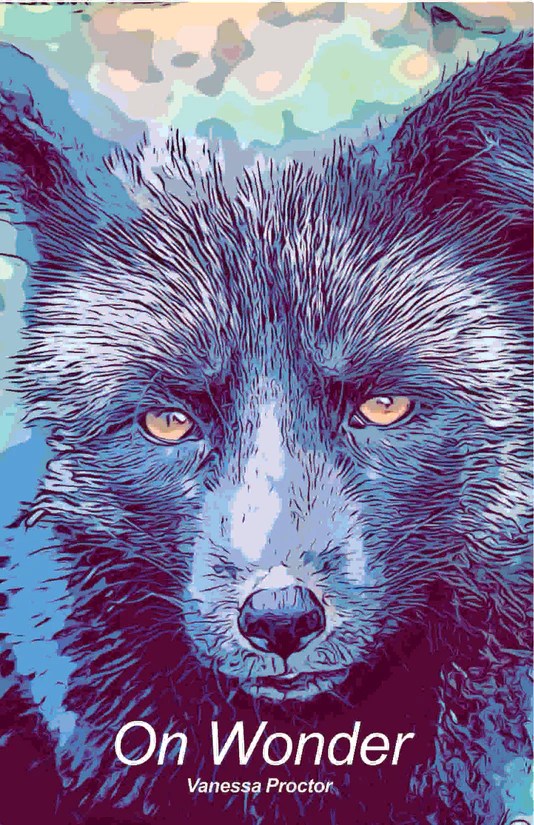
The two books were both published in 2024, and it’s a little amusing because Tasmanian poet Helen Swain’s collection, Calibrating home, was published by the New South Wales-based 5 Islands Press, while Sydney poet Vanessa Proctor’s collection, On wonder, was published by the Tasmanian-based Walleah Press.

Helen Swain’s Calibrating home is the second of hers given to me by my Tasmanian-based brother. I still hope to read the previous one, a verse novel titled When the time comes. It is speaking to me! (Sometimes I think I should give up blogging so I can read more.) The brief bio in the book tells me that Swain “lives and works on the foothills of kunanyi/Mt Wellington” and that “she works as a poet in residence in the health sector”. Calibrating home is her third poetry book.

I read the first few poems when I received the book, and then put it on my bedside table for more reading – but, well, you all know how that goes! So, I picked it up again, and somehow the very first poem, “Traced”, seems to speak to the theme. It’s about a fossilised creature, possibly a moth, that has been transformed over time. The poet asks about the traces she finds of an “unnamed creature” in the rock:

How to tell what will leave a mark,
Which struggle will be recorded?

How indeed?

She wants to hold, to own this little piece of rock. She wants to set it on a ledge in her kitchen and

draw from a soft compressible insect
rock-solid endurance.

Wouldn’t we all? I love the language, the imagery here, from the domestic kitchen and the idea of softness but also of violence in the insect’s compressibility, to a desire – and need for – something hard, for endurance. It’s a strong end to the poem – and a strong opening to the collection.

The poems in this collection slip between past, present and future, often within the same poem, as you can see in “Traced”. There is a sense of struggle, but also of tenacity and endurance. War is evident, in specific poems like “Meeting up (for Michael O’Neill, killed in Ukraine May 2022” and in gentle poems like “Teacups” (“Grandmother’s teacups/survived the war”) where the domestic collides with violence. The shock of violence or war, and the cold displacement of people, is never far away in these poems. But, neither is the domestic, the peace, the connections, the gentleness (in “Suzi and the Spider”), and the humour (in “Mary”).

And of course, there is thinking and wondering. Listening to her neighbour who is bemoaning capitalism and the ills of the world, the poet says:

and I don’t know what to think
but I do think…
and somehow
I still know deeply
about the goodness of people
(“Leaning on the Fence Listening to my Neighbour in the Garden”)

Vanessa Proctor’s On wonder was given to me by on old schoolfriend. It comes from a poet steeped in the haiku tradition, but it meets Swain at various points. One delightful synchronicity occurs between Swain’s “Suzi and the spider” which tells of Suzi gently releasing back into the wild a spider that has come into her house, and Proctor’s “A dragonfly” in which the narrator carefully unravels a spider’s silk from a dragonfly to set it free. Both speak of gentleness and respect for nature, and of connections between living things.

But now, a bit about Proctor. On wonder is her first volume of free verse, but she is an experienced haiku poet of over thirty years standing. She has been published in Australia and overseas, and her poems have been translated into many languages including Croatian, French, Hungarian, Japanese and Romanian. Her haiku artistry is evident throughout this collection in the tight gorgeous little images that appear in so many of the poems.

Other poems, however, branch out into something more expansive – not that tight images can’t also be expansive, of course. I enjoyed the gentle humour in the title poem, which, referencing Rosemary Dobson’s poem, “Wonder”, suggests a gap in understanding between teacher and student. Or, is there? There is cheeky humour too in “Helleborus Niger” whose

… roots may be used in witchcraft
to summon demons or to fight them.
Such a practical plant to grow
in the quiet of the suburbs.

Like Swain’s poems, many here are grounded in the domestic. Here too are kitchen sinks, bathrooms and gardens, but Proctor also opens with nature “stripped down” (“In the park”), albeit in her case it’s to “this moment/this place, this now”. It’s a centring to what is essential – now. “Bathroom orchid”, partway through the collection, conveys a different, but perhaps related, sense of being. “An impulse buy … a guilty pleasure”, it is “placed by the sink”:

With its glossy leaves
and velvet tongue
it knows exactly
how to be.

There’s something both unsettling and grounded here.

Proctor’s poems range widely over place – across Australia, and overseas – and over time, from 11th century Japan through world wars to now. Some respond to, or reflect on other works – on an Olive Cotton photograph, for example – or we meet historical figures like Chiune Sugihara and Murasaki Shikibu. We visit gardens and museums, experience childhood and other family memories, and are nurtured by nature. The titular theme of wonder is not laboured, but through the poems that I have read, we confront it in its various meanings of awe, curiosity, amazement, fascination – and, in the final poem, joy.

While I haven’t read these books thoroughly, my sense is they engage deeply with ideas about peace, inclusion and creativity.

This is my sixth World Poetry Day post.

And now, do you enjoy poetry? And if so, care to share any favourite poets or poems?

Monday musings on Australian literature: on 1924: 2, New novels

Then as now, newspapers regularly announced new Australian novels as they are published. In these year-based series, I’ve not done a post specifically on the new releases, so have decided to do it for this year. This is not complete but contains books by authors who had some career longevity.

New novel releases

I’ve listed the books alphabetically by title, and have included some of the assessments made by the papers. I’m not including the books published by Bookstall, of course, because I listed them last week.

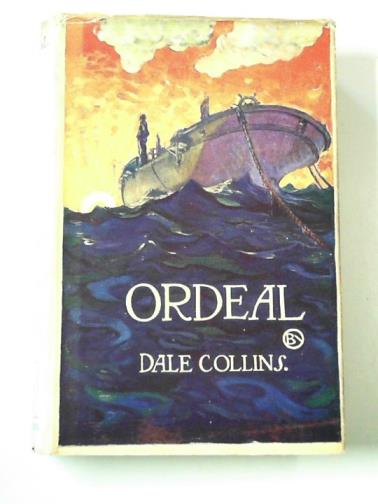
Dale Collins, Ordeal (Cornstalk Publishing): The Land (1 August) says that “it may be said without hesitation that Ordeal would be a remarkable and arresting story under any circumstances, but it is all the more remarkable for being a first essay in this class of fiction” (this class being, I think, a sea adventure). However, there are also reservations: “Occasionally the writer does not appear to be over-sure of his ground, and here and there we have lapses into excessive analyses of emotions, with a slight over emphasis of subtle suggestion, but on the whole the work is admirable. 

Zora Cross, Daughters of the Seven Mile (Hutchinson): Cross’s debut novel was praised, albeit faults were also identified by The Australasian (10 May): “It is not by any means a book without faults, but its merits are many and considerable, and most of them are to be found in the drawing of its characters. The scene is laid in Queensland, in the bush country outside a promising mining town, and the theme of the story is the difficulty of bringing two great forces into harmony, the call of the bush and the allurement of life in great cities.” The paper claims that with her first novel she has “won an important place in the ranks of Australian novelists”.

Ruby M. Doyle, The winning of Miriam Heron (Edward Dunlop): I wrote a recent Forgotten Writers post on Doyle, so I won’t say much. The Australasian (8 November) says that “its best points lie in the studies of bush life, with which the author is evidently familiar”. The plot “is slight”, but Doyle “shows a facile, kindly pen in dealing with the humorous type, and writes a straight, healthy story, that has less of morbidity than has the usual Australian bush tale”. The Advertiser (18 November) also admires her ability to write of the bush. However, The Queenslander (15 November), which also criticises the plot, concludes, interestingly, with “Miss Doyle appears to have attempted to graft something of the Ku Klux mystery into the character of the Australian bush, and so the story develops an atmosphere in places that is not Australian”.

Mabel Forrest, The wild moth (Caswell): According to The Advertiser (9 August), its strength is less its story as its descriptions of the bush. It concludes that “the vivid descriptions of the various phases of Australian life are its most enduring and attractive features”. 

Fergus Hume, The moth woman (Hutchinson): Hume is not Australian, but he did live in Australia for while, and published his detective novel The mystery of a hansom cab (my review) here, which made him of interest to Australians. The Australasian (26 January) says it is “written with a vigour and a freshness that a younger man ambitious of writing stories of the kind might envy” and that “the night life of London, the drug traffic, a mysterious murder following upon efforts to cope with the vices of the under world, provide thrills enough to satisfy the most blase reader of “shockers.” Then the little kicker: “Probabilities or possibilities matter little when one excitement follows on another, when the reader likes that sort of thing.”

DH Lawrence, ML Skinner, The boy in the bush
First US ed., Thomas Seltzer, 1924

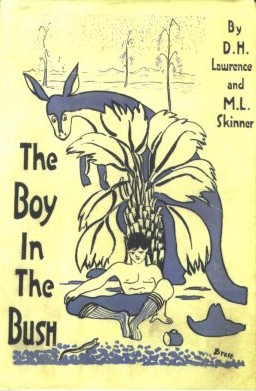
D.H. Lawrence and M.L. Skinner, The boy in the bush (Martin Seeker): Bill and I have both written about Lawrence and Skinner’s collaboration so I won’t repeat that here, but The Australasian (1 November) says that it’s “not easy to decide where Mr. Skinner [except it’s not Mr.] comes in, since there seems to be not a page in the book that is not unmistakably stamped with Mr. Lawrence’s peculiar genius”. Overall, the reviewer is not overly impressed, saying “an irritating mannerism is the repetition, of certain words and phrases, particularly in the description of physical peculiarities. While at times the story is vivid and almost overwhelmingly powerful, it lacks somehow the vital spark”. The Advertiser (22 November), on the other hand, is positive about its humour and insight, and calls it “readable”, but also comments that “at times Australians may be inclined to resent some of the severer criticisms of habits, dress, and customs”.

Vance Palmer, Cronulla (Cornstalk): The Australasian (13 December) gives Palmer’s book fairly short shrift, saying it “will be read with interest by reason of its Australian setting and the act of its being the work of a leading Australian writer”. For the reviewer, however, this station-life story is “built on well-worn lines, and has nothing new to offer either in plot or treatment”.

A few points about this list. First, there is the focus on bush and rural stories. Only two, it seems, are not; one is a sea story, and the other set in London. Even though our population was well urbanised, the bush was how we differentiated ourselves – both to ourselves, and in marketing ourselves to others. Then, there’s the fact that women writers are well in evidence, which confirms again what we know about Australia’s literary scene from the 1920s to 1940s. And, finally, I notice here, as I frequently notice in these earlier Trove articles, a willingness to identify faults. The comments are generally not smart-alecky or cruel, just clear about what they see as strengths and weaknesses. In some cases they recognise that the identified weaknesses are not important to the readers. In other cases, they note that it is a new author who can work on the problem areas. I wonder how the authors felt.

Thoughts?

Previous posts in the series: 1, Bookstall again

Sun Jung, My name is Gucci (#BookReview)

Some reading synchronicities – those coincidental connections that happen between books we read in a short period of time – are zeitgeist-related. For example, grief is not my go-to, but it is a common theme in contemporary writing so it’s not entirely remarkable that I have written three reviews since January about books focused on grief. What is remarkable is that, in the same period, I have read two books, written nearly 80 years apart, which are told from the perspective of dogs. This surely takes synchronicity to a whole new level – wouldn’t you agree?

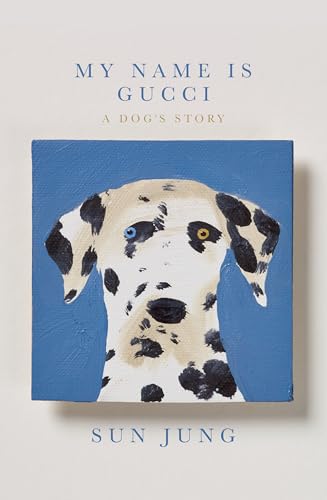
A canine perspective is, however, where the synchronicity ends, because Dusty (my review) is told third person through two main voices, Dusty’s and his owner’s, and Dusty is very much a dog. He has no knowledge beyond what he knows as a dog. Gucci, in Sun Jung’s My name is Gucci, is something very different. Not only is he the novel’s sole first person narrator, but he has been reincarnated many times, so has a wealth of knowledge and experience way beyond that of a typical dog. Indeed, as he tells us, he is a “sage”, and an erudite one at that. Now, before you click away, thinking non-human narrators and ideas of reincarnation are not for you, do read on, because Jung makes this work, creating a story that is not only charming and often delightfully humorous, but also thoughtful about life and the connections we make.

Gucci is a Dalmation-like bitzer. At the book’s opening, he is five-years-old and living in a Singaporean animal shelter. He’d given up ever being rescued, when, seemingly out of the blue, “she” appears, and whisks him off to Sydney. Is this destiny? This never-named she, it turns out, has been connected to Gucci, in earlier lives, through their inyeon. Inyeon, the book’s glossary explains, is “Karmic relation or destiny”, but in fact our two are connected through the rarer form of “perpetual-inyeon”. This is “a persistently recurring Karmic relation between two beings through their numerous past lives”, one built on the understanding that “interactions must be mutually beneficial”. Gucci tells us:

I have been reborn three times during her present life; interestingly, and quite unusually, all three rebirth were dogs and all had one absolute karmic duty – to help her to collect and rekindle the shattered smithereens of inyeon that she had long lost.

Notwithstanding this idea of inyeon, the obvious question is, of course, why choose a dog as narrator. Telling a story through a non-human character is not only not easy, it’s a risk, so why? I don’t know Jung’s reasons, but the driver must surely be that unusual narrators have something useful to offer – tone, maybe, or experience or a different way of thinking. Gucci meets all of these. He has some painful things to share about her life, but does so in a lighter tone, which feels more acceptable from a non-human character. Further, as a dog who has experienced the world differently from humans, he can offer different insights into her experiences, not to mention those of humans in general. And, finally, he can illuminate important things about human-animal relationships.

“nothing is absurd”

My name is Gucci is not a hard read, but it does require concentration because we move back and forth in time, in her life, as it intersects with Gucci’s lives – as Nari, the Jindo dog, who dies in an accident when she is 9; as General, the Sapsal-cross dog, who was forced to work as a fighting dog, and is euthanased when she is 13; and of course as Gucci in her present life, now helping her confront and perhaps reconcile the traumas of her past. She had a difficult childhood in Korea, which is where Nari and General know her. The product of an adulterous union between a married man and a melancholic young woman (jageun umma), she is removed from this birth mother when she is 4 years old to live with her father’s wife (keun umma). Keun umma accepts her, with kindness and love, but not so keun umma’s mother, the “old hyena”, who is cruel to this “filthy child” brought into her home.

The time shifting, then, occurs between her past life in Korea, with Nari and General, and her current life in Sydney’s Kings Cross and Darlinghurst, where she is married to an Irishman, but haunted by her past. It’s no surprise to Gucci that she is a “horror novelist … [of] … spinechilling and gory urban mythologies”. In telling his and her story, Gucci is often insouciant if not downright playful, but he is also wise and philosophical, as he guides her and us through the challenges of coping with past experiences which threaten to undermine the present.

Closely associated with this idea of past and present is that of “destiny”. It is a constant thread in the book, and it discomforted me a little, perhaps because as a Westerner, the idea of destiny doesn’t sit easily with my world view. However, if we reframe it to encompass the way past experiences impact present and future actions, then it works – for me, and for the book, where the idea of fate/destiny/luck is variously respected, or upended or foiled, or treated sceptically by her Irish husband. There’s no one answer – just perspective and tolerance for difference.

Much of this story is serious. Bad things happened to her in her childhood, and Gucci reflects on the hows and whys. Early on, she is ostracised at school because of her “impure heritage”. Thinking back to their Seoul home in the suburb of Itaewon, which means “village of strangers”, Gucci wonders “what is being strange or different? Different to what?” Why do humans demonise, or make fun of, those who are different? My name is Gucci is full of good questions and wise ideas, but they are not laboured. Instead, Gucci keeps the story moving forward, with warmth and compassion, leavened by humour that is, at times, lightly satirical. There is a delightful scene when she takes her young Irish boyfriend to Korea, and, after a boozy night they go out for a “hangover cure” breakfast:

Bleary-eyed and with a severe hangover, he could not believe his misfortune as he stared at the abalone congee bowl.

Finally, there are the stories about human-animal relationships. Some of the funniest scenes in the book come from these, such as the Kings Cross apartment dog-wars, between dog-lovers and dog-haters. But there are tough stories too, like the sport of dog-fighting which destroys General’s life. This book pays tribute to the importance of our relationships with our animals.

Early on, Gucci forestalls our potential scepticism about his story by claiming that “if you look at everything in the world as connected by the complex web of inyeon, nothing is absurd”. Well, I have a high tolerance for the absurd, anyhow, but even if I didn’t, Gucci is such a delightful guide that I was in for the duration. If you want to read something that’s meaningful but doesn’t weigh you down, try this one.

Sun Jung
My name is Gucci: A dog’s story
Melbourne: Transit Lounge, 2024
254pp.
ISBN: 9781923023178

(Review copy courtesy Transit Lounge, via Scott Eathorne, Quikmark Media)

Monday musings on Australian literature: on 1924: 1, Bookstall, again

During 2022 and 2023, I wrote a series of posts on Australian literature as it was read, and thought about, a century earlier, in 1922 and 1923. Last year, I researched 1924, with a view to doing the same, and in fact heralded the upcoming 1924 series, but didn’t end up writing any posts. This was partly because many of the concerns were the similar to those of 1923, and partly because other ideas overtook me. But there were some interesting things said, so, nearly a quarter of the way through 2025, I’ve decided to write at least a couple of posts relating to 2024, starting with the Bookstall Company’s Bookstall series of Australian fiction.

This series of cheap paperbacks of Australian novels, as I have posted before, were introduced to the Australian market in 1904. I featured them in posts on 1922 and 1923, and am here updating us with 1924’s output. The series continued to serve its purpose, it seems, of supporting Australian writers as well as of providing reading matter at an affordable price. The Queenslander, introducing two new books in the series, started its brief article on June 7 with:

Australian novelists owe a great deal to the New South Wales Bookstall Company, which, during the last few years, has published more than 200 novels by Australian writers. 

Sydney’s The Labor Daily made a similar comment on December 16.

As far as I can tell from the research I did, publication did slow down with significantly fewer books published in 1924 than in 1923. Here is what I found.

  • Roy Bridges, By mountain tracks
  • Ernest Osborne, The copra trader
  • S.W. Powell, The trader of Kameko: South Seas
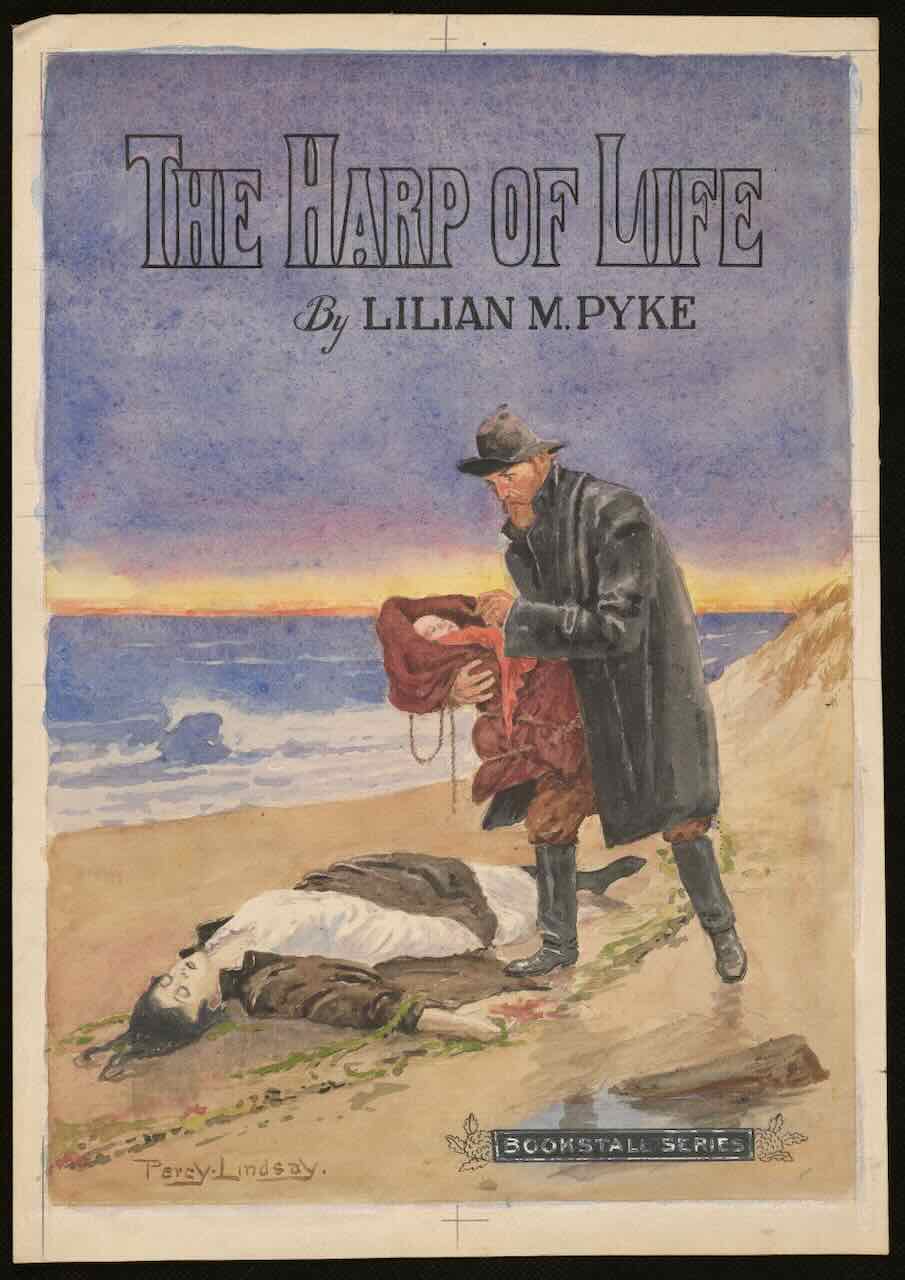
  • Lilian M. Pyke, The harp of life
  • W. Sabelberg, The key of mystery
  • H.E. Wickham, The great western road

So, just 6 books, compared with 20 in 1923, and only one by a woman. (There may have been a few more, but it’s these six that kept popping up in my searches.) Most are adventures of some sort and most feature a “love interest”.

Bushranger stories were still popular at this time, even though the worst of the bushranger era had ended by the 1880s. Both Roy Bridges’ By mountain tracks and Wickham’s The great western road belong to this genre. That said, Bridges’ book is described in The Queenslander (7 June) as “a story associated with the Kelly gang, but the theme generally is that of a romantic love episode”.

Two of the books, those by Pyke and Sabelberg, seem to be contemporary stories, Pyke’s being a tangled story about a waif rescued from the arms of its dead mother on a Queensland beach, and Sabelberg’s a mystery/thriller.

Adventures in the South Seas were apparently making a come-back around this time, with Jack McLaren (who appeared in my 1923 post), Ernest Osborne and S.W. Powell all setting books there. Hobart’s World (12 February) wrote of Powell’s novel as being “full of incident and adventure, and aglow with the rich color of the South Seas. A good shilling’s worth.” This latter point was frequently mentioned in reviews of Bookstall books. Indeed the World, in the same article, said of Wickham’s novel that

“Most of the characters in the book are well-drawn, and convincing, and there are humorous episodes to relieve the tragedies, and compensate for the author’s rather marked tendency to waste words in trite moralisings, and in a too-conscious elaboration of dialogue. Just the same, it is a marvellous shilling’s worth.”

Most reviewers of these books understood their intention as escapist reads or, what we would call today, commercial fiction, and wrote about them within that context. They either praised the works – with one, in fact, describing Osborne’s novel as “brilliantly written” – or, where they were critical, they tempered it with this understanding, as in the Powell example above. However, a report in the Murray Pioneer and Australian River Record (5 December) was not so generous. Sabelberg’s The key of mystery, it said, “is a crude murder story, crudely written”; Powell’s The trader of Kameko, “is a story, with no literary merit, of a white man, two brown girls and a hurricane”; and Wickham’s The great western road “is a story of the early gold rushes in N.S.W. of the same crude character as the other two”. Of course, reviewers do pitch their writing to their audience. Perhaps readers of the Murray Pioneer and Australian River Record had more refined tastes, and more money to spend, and our writer recognised that?

Some newspaper articles noted that some of these writers had already developed their writing skills in other forms. Sabelberg and Wickham, for example, are described as established, successful short story writers, and Lilian Pyke as a writer of “capital” stories for boys and girls – all of which proves, I guess, the point about Bookstall’s role in supporting Australian writers. How better to cut your teeth as a novelist than with a company like this?

And I will leave 1924 on this point. Life has been very busy this last week … so I have not been able to pay as much attention to reading and my blog as I’d like, but I do hope to post a review this week.

Stella Prize 2025 Longlist announced

Last year the Stella Prize longlist announcement took place on a Monday, gazumping that week’s Monday Musings. This year it’s a Tuesday, and it was again streamed online from the Adelaide Festival Writers Week …

As I say every year, I don’t do well at having read the Stella Prize longlist at the time of its announcement. In recent years the most I’ve read has been two (in 2019). Last year I’d read none at the time, but have read one since. This year, I have read one of the longlist (see below). I have read 8 of the 12 winners to date, which means I am falling behind! It’s not that I necessarily disagree with the winners, but just that my reading has been leading me in other directions.

In Stella’s spirit of keeping their judging panels fresh, none of this year’s judges were on last year’s panel, though some have judged before. This year’s panel comprises Gudanji/Wakaja woman, educator and author Debra Dank; teacher, interviewer/podcaster, and critic Astrid Edwards; writer and photographer Leah-Jing McIntosh; Sudanese–Australian media presenter and writer, Yassmin Abdel-Magied; and journalist and author with a special focus on social policy, Rick Morton. Astrid Edwards was the chair of the panel, and made the announcement.

The longlist

Here is the list, in alphabetical order by author, which is also how they were presented:

  • Jumaana Abdu, Translations (novel)
  • Manisha Anjali, Naag Mountain (poetry)
  • Melanie Cheng, Burrow (novel, my review)
  • Mantilla Chingaipe, Black convicts: How slavery shaped Australia (nonfiction)
  • Michelle de Kretser, Theory and practice (novel, on my TBR, kimbofo’s review)
  • Dylin Hardcastle, A language of limbs (novel)
  • Emily Maguire, Rapture (novel, my CWF Sessions 2 and 3)
  • Amy McQuire, Black witness: The power of Indigenous media: A family story from Gaza (nonfiction)
  • Samah Sabawi , Cactus pear for my beloved (nonfiction)
  • Mykaela Saunders, Always will be (short stories)
  • Inga Simpson, The thinning (novel) (Brona’s review)
  • Cher Tan, Peripatetic: Notes on (un)belonging (nonfiction)

So, seven fiction (including one short story collection), four nonfiction and one poetry collection, this year. You can read about the longlist, including comments by the judges at the Stella website.

Prior to the announcement, I pre-loaded this post with 15 potential longlistees, as a little test to myself on how many I might identify of the 12. I picked only three, partly because I hadn’t heard of some of the books the judges listed and partly because I didn’t know a lot about many of the others.

As always, I am not going to question the selection. The Stella is a diverse prize that aims to encompass a wide range of forms and styles, including some I don’t necessarily chase, and I haven’t read widely enough from 2024’s output, anyhow. But I have read one here, and gave a couple of the others to family members at Christmas. One was Rapture and it was loved. I’m keen to read the novels and the short story collection, in particular.

Last year there was an interesting panel discussion between the judges, but I don’t know whether there was one of not this year, because the YouTube link dropped out just as Astrid Edwards was finishing the list. Darn it.

Each of the longlisted authors receives $1000 in prize money, donated by the Copyright Agency’s Cultural Fund. The winer will receive $60,000. There were over 180 submissions this year.

“Literary prizes are subjective beasts, but I assure you, the works on this year’s longlist are remarkable.” Astrid Edwards

The shortlist will be announced on 8 April, and the winner on 23 May. You can seen more details on the Stella 2024 page.

Any comments?

Monday musings on Australian literature: Forgotten writers 10, Ruby Mary Doyle

Unlike my last forgotten writer, Dulcie Deamer, today’s writer, though a prolific contributor to newspapers in her day, has slipped into the shadows. Neither Wikipedia nor the Australian dictionary of biography (ADB) contain articles for her, but the AustLit database does. As with many of my Forgotten Writers articles, I researched and posted a versions of this on the Australian Women Writers’ site.

Ruby Mary Doyle

Ruby Mary Doyle (1887-1943) wrote short stories and serialised novels, newspaper articles including travel and nature pieces, and plays, mostly publishing as Ruby Doyle or Ruby M. Doyle. Much of her writing was published in Fairfax’s weekly magazine, The Sydney Mail. By the 1930s she had, says AustLit, gained a reputation as a writer of some standing. She was also active in the Lyceum Club and the Pioneer Club in Sydney. And yet, there are no articles for her in Wikipedia or the Australian Dictionary of Biography.

Doyle was born on the 20 February 1887 in Gunnedah, New South Wales, to Joseph McCormick Doyle, a bank manager for the Commercial Bank, and Annie (née Hooke). She was the first of six children. In 1935, in an article titled “The making of the writer”, Doyle wrote of how she came to writing:

As a child, when I walked through the bush, well behind the family party, every tree seemed an enchanted castle. Birds, butterflies, flowers talked, and I understood them. Imagination — that blessed gift from the gods — had come to me from every side of my family, and finally led me, whether I would or not, into the realm of writing.

According to Kingston, of the Dungog Historical Society, her first published serial was The Dragon, which appeared in The Sydney Mail from 4 June 1913, and was later published in book form as The mystery of the hills. Promoting the book form, which was published in 1919, The World’s News wrote that:

Those who love a story which is thoroughly and typically Australian and of the country will enjoy this tale of love and adventure … The “mystery” we shall not, of course, say anything about, except that it has to do with men who defy the law and have a chief, who is a man of importance. There are several love stories, and they have the usual course, and there is quite a fund of information as to how we Australians live in the country, and how we manage to enjoy ourselves there. 

This little piece says much about how Australia saw itself. “How we manage to enjoy ourselves there [ie “in the country”]” suggests that Australia was well on the way to urbanisation, but fascinated by its bush self.

Further stories and serialisations appeared, including The winning of Miriam Heron in The Sydney Mail in 1918, which was published in book form by Edwards Dunlop in 1924. Announcing this new serial in 1918, The Sydney Mail wrote:

She [Doyle] has already contributed to the ‘Mail,’ and has disclosed literary and dramatic ability of a high order. It is gratifying to note that she shows no disposition to ‘write herself out.’ On the contrary, ‘The Winning of Miriam Heron’ reveals that she has mastered the art of construction, and thus gives her readers a better chance than previously to fully appreciate her literary powers.

From 1924 to 1926, Ruby travelled overseas a few times – to the United Kingdom, the continent, Canada and America – during which time she regularly submitted travel articles to the Dungog Chronicle, which, according to that paper, “were reprinted in many country papers throughout the State.”

Doyle wrote for local papers through the 1920s and 1930s. AustLit lists over 30 works of hers published over this time. She also tried her hand at playwriting. Kingston writes that her play The Family Tree came second in a competition at the Independent Theatre, Sydney, in 1933, and that the following year, The Man from Murrumbidgee, was produced at the Kursaal Theatre, also in Sydney. I believe these are the same play, given The Man from Murrumbidgee is about a status-seeking wife who tries to find “a worthy ancestor” on the family tree.

Doyle’s writing reflects the versatility of the working writer. Her short stories dealt largely with domestic subjects, while her serialised novels included historical stories about the colonial days, and romantic adventure stories. Her non-fiction focused particularly on nature, travel and local history, rather than on social or political commentary. Many of her local history pieces drew on her own family’s long history in the region, and include some delightful touches of humour. For example, she describes a pioneer family (hers it seems), coming out to Australia in 1828 with various things, including merino sheep and

rolls and rolls of beautiful silks, Mr. Hooke having an idea that he would be able to deal successfully in such merchandise. It proved only a supposition, and for the rest of her life Mrs Hooke had a marvellous collection of silks from which her dresses were made. 

There is also some recognition of the original people of the land. Writing in The Sydney Mail 1931 on the town of Gresford, she says that:

Most of the homes in the vicinity bear English and Welsh names — Norwood, Clevedon, Goulston, Camyr ‘Allyn, Caergule, Penshurst, Tre vallyn, etc. The river, named Paterson by the white man, was called Yimmang by the aborigines; one of our poets has written a very beautiful poem, “Ode to the Yimmang,” in which he extols its beauty.

Ruby Doyle was regularly written up in the local Dungog Chronicle, clearly being of interest to the community. She went to England, again, in 1935, planning to be away for two or three years. On 1 March, the Dungog Chronicle,reported on a farewell for this “gifted novelist”, and named Flora Eldershaw – one half of the M. Barnard Eldershaw collaboration – as a co-guest at the event. This suggests Doyle was known to the literati of her time. Doyle died in England in 1943, having never returned home again. A small obituary appeared in various local newspapers, including The Gloucester Advocate (see under Sources). The obituary noted her three published works, but also commented on her writing overall, commenting in particular that

a keen observer of nature, she had the gift of translating her thoughts on paper in an easy readable way.

The piece I posted for the Australian Women Writers Challenge is titled “The flame” (linked below). It is an intriguing story about a disgruntled wife, and invites – particularly from modern eyes – a variety of readings. I’d love to hear your thoughts.

Sources

  • Miss Ruby Doyle, The Gloucester Advocate, 12 January 1943 [Accessed: 14 January 2025]
  • Ruby Doyle, “The flame“, Sydney Mail, 24 July 1935 [Accessed: 3 February 2025]
  • Ruby M. DoyleAustLit [Accessed: 3 Feb 2025]
  • Maureen Kingston, “Was Ruby Doyle our first local travel writer?”, Dungog Chronicle, 25 August 2021 [Accessed via the NLA eResources service: 3 February 1924]

Six degrees of separation, FROM Prophet song TO …

It’s the first Saturday in March so here we are again at Six Degrees time. My favourite season of autumn – except that it leads to winter – has officially started. It’s sunny, warm and the leaves are just starting to turn. I hope the weather is lovely wherever you are. Now, I’ll get onto it … but first, if you don’t know how the #SixDegrees meme works, please check Kate’s blog – booksaremyfavouriteandbest.

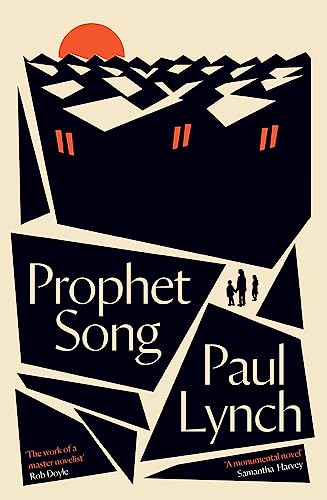
The first rule is that Kate sets our starting book. This month, it’s a book I wish I’d read – as it’s by an Irish writer and won the 2023 Booker Prize, Paul Lynch’s Prophet song – but of course I haven’t. GoodReads starts its description with, “A fearless portrait of a society on the brink as a mother faces a terrible choice”. On the Booker Prize website, there’s a reading guide for the book, which includes this question:

‘You need to relax, the GNSB are not the Stasi, they are just applying a little pressure, that is all,’ Larry tells Eilish at an early point in the story (page 28). Where does the irony lie in this statement with references to the Stasi, the secret police force of East Germany? And to what extent do you think the characters cling to the belief that a country as civilised as theirs could never descend into such a terrifying situation?

Anna Funder's Stasiland bookcover

Well! Having considered a number of ways to go, I decided that here was the link for me, the Stasi! So, I am linking to Anna Funder’s nonfiction book, Stasiland (my review), for which she interviewed several Stasi men, as well as other East Germans who suffered at Stasi hands. It’s an unforgettable book.

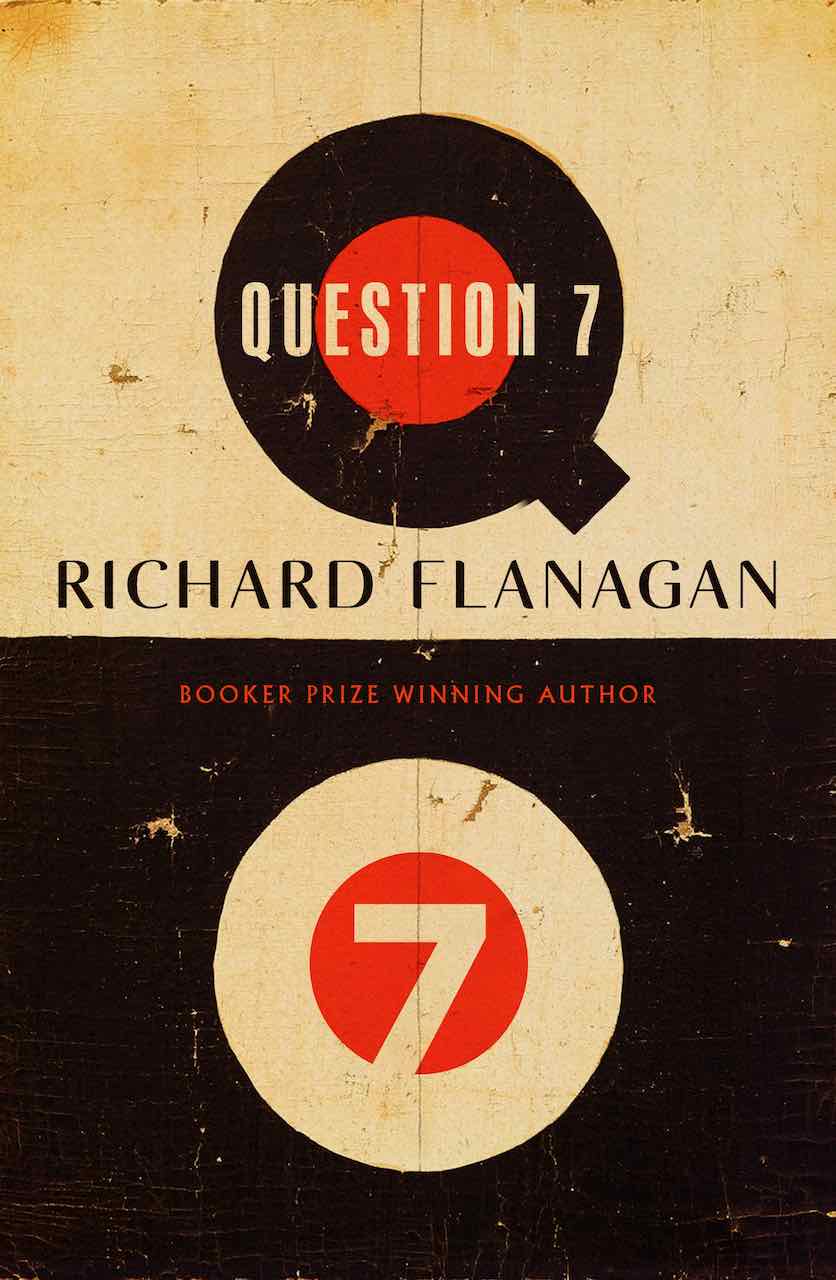
And, it won the Samuel Johnson Prize in 2004, now the Baillie Gifford Prize for Non-Fiction, which, according to the website, “rewards excellence in non-fiction writing, bringing the best in intelligent reflection on the world to new readers”. Twenty years after Funder, in 2024, the winner was Richard Flanagan’s Question 7 (my review), which I described in my post as “a humane book, a book about who we are and how we are, about what we do to each other and why”

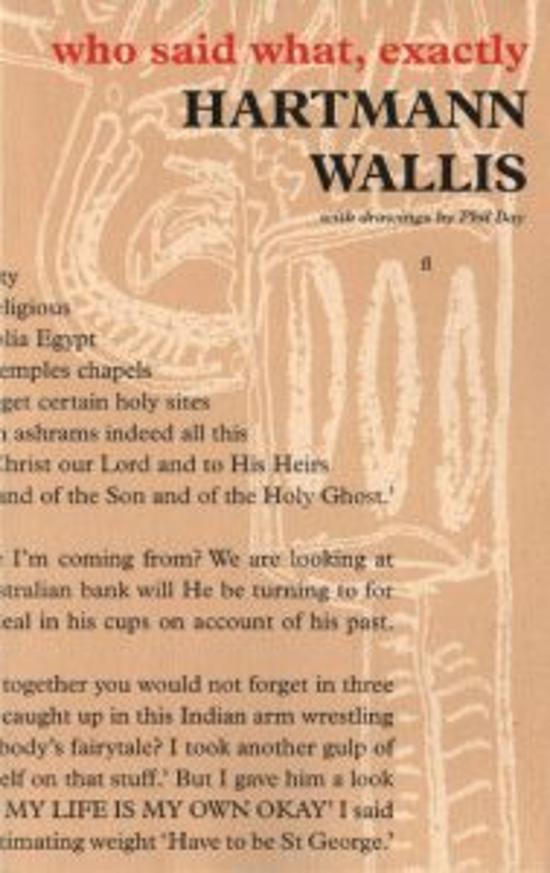
Hartmann Wallis, Who said what exactly

But, subject matter is not my link. Instead, I’m linking from Flanagan’s book about a question to a book whose title is a question, Hartmann Wallis’ Who said what, exactly (my review), though I admit there’s no question mark on the cover. Hartmann Wallis is one of the pseudonyms used by painter, printmaker and writer, Robin Wallace-Crabbe. Wikipedia says he uses this pseudonym to muse on subjects like “art, love/lust, loneliness and animals; usually with a tone of disdain regarding cruelty toward animals and our fellow man”. This is worthy of a link, but so is the fact that his book was illustrated by Phil Day. I have reviewed a few books where Day’s hand has been, including his own, A chink in the daisy chain.

However, I was surprised and delighted to notice that Phil Day is acknowledged as the artist of the beautiful rabbit on the cover of Melanie Cheng’s The burrow (my review). I assume it’s the same Phil Day – I’ve not been able to confirm it – and am making him, and The burrow, my link.

Book cover

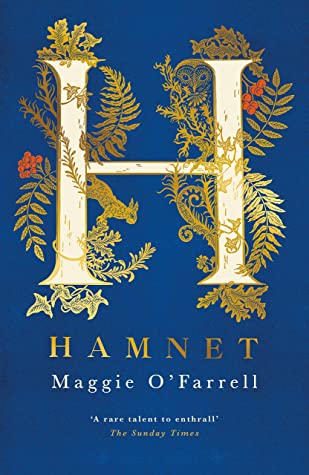
Now, I must move away from Australian authors as I shouldn’t be completely parochial, as good as our authors are! So, my next link is to another book in which a mother grieves for a child, albeit the child is 11, not a baby as in The burrow. The book is Maggie O’Farrell’s Hamnet (my review).

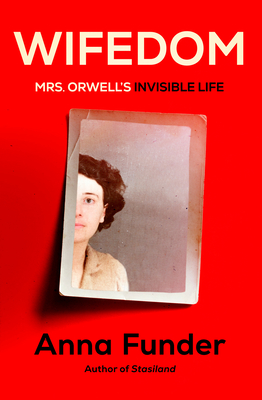
And finally, ok, I’m sorry, but I’m going to do it, I am returning to my first author, Anna Funder and her book Wifedom (my review), which does in non-fiction, what O’Farrell does in fiction, which is to bring into the light, the forgotten wife of a famous, much-lauded writer, Eileen O’Shaughnessy, wife of George Orwell.

So, five of my six books are by Australian writers, but their subject matter and settings roam widely and across some big questions. Four of my six books are by women. I guess there is a loose link back from last book to Prophet song, in that Lynch’s book is dystopian as are some of Orwell’s works.

And, have you read Prophet song and, regardless, what would you link to?

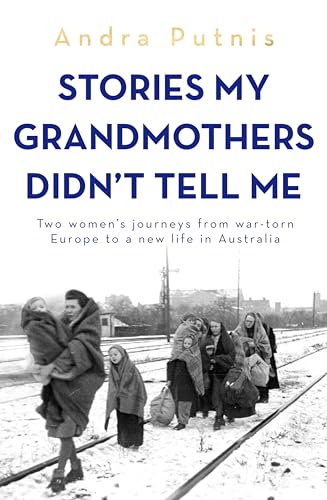
Andra Putnis, Stories my grandmothers didn’t tell me (#BookReview)

Cover

Local writer Andra Putnis’ book, Stories my grandmothers didn’t tell me: Two women’s journeys from war-torn Europe to a new life in Australia, was my reading group’s February read. Not only was it highly recommended by two members who had read it, but we were told the author would be happy to attend our meeting if we chose it. That was an offer too good to pass up, so we scheduled it.

We’ve had a few authors attend our meetings over the years, and it has always been worthwhile. Yes, it risks constraining discussion if people have any reservations about the book, but that has never really been a problem, either because there haven’t been serious reservations or because the value of having the author present has far outweighed any perceived impact on free discussion. In Putnis’ case, the story is so powerful and so well-told that it was unlikely there’d be any reservations that wouldn’t turn into questions about why or how she wrote her story.

“hidden pasts, still very much present”

Stories my grandmothers didn’t tell me is a family biography centring on the author’s two Latvian-born grandmothers, her maternal Grandma Milda (1913-1997) and paternal Nanna Aline (1924-2021). Teenage Aline was separated from her parents around 1942 to go serve in Germany’s war-time labour force. Meanwhile, in late 1944, with the war ending and the Soviet army looking set to return, 7-months pregnant Milda left Latvia with her parents and 18-month old son, enduring a tough, desperate journey. Both women ended up in UNRRA-managed Displaced Persons camps in Germany, where they experienced years of hardship before arriving in Australia in late 1949/1950. Milda, and later Aline, settled in Newcastle in the early 1950s, and met there through its tight-knit Latvian migrant community.

That’s the rough outline, but of course their stories – what they endured – are far more complicated, and Putnis wanted to understand. She told us that as a young child she had a sense of Latvia as almost an unreal fairytale place with beautiful forests, music and dancing, but she had also sensed, through family murmurs, a darker side, one that encompassed sadness and pain not only about Latvia but also about the family’s own story. She likened it to being on a boat, where you can see the surface but have no idea of what lies in the deeps below. She feared, as a granddaughter, that it wasn’t her place to go there, and worried about upsetting people. However, she did go there because she wanted to know and because Nanna Aline was willing. But, she said, she was always cognisant of just how far a granddaughter – even an older one – could, or should, go.

“moving between darkness and light”

I have read several hybrid war-related biography/memoirs written by family members, and this one is as good as any of them. This is not only because of the power of the story, and the honesty with which it is told – but also because of the structure Putnis uses. It is told chronologically, which is logical, but through the voices of Milda and Aline interspersed with those of others including, of course, Putnis’s own. I wanted to know about this and Putnis was happy to explain.

The structure was driven by Aline who told her story chronologically. She had thought deeply about and “understood the arc of her life”, said Putnis. So, with this in hand, Putnis started to piece Milda’s story – which was gathered less systematically – along the same lines. The challenge came in making the “weave” work, in getting the balance right, between them and their stories, and the wider historical, community and family framework.

Putnis worked on her book for nearly 20 years – with the occasional gap when life took over. Aline lived a long life so Putnis was able to spend a lot of time with her. Aline had also had the toughest life, particularly in terms of her personal choices and circumstances. Our hearts went out to her. Milda, on the other hand, died when Putnis was 19 years old, before she started working on her book. However, Milda had lived for nearly a decade with Putnis’s family, so Putnis had spent a lot of time talking with her, getting to know her. Putnis enhances both stories with information gleaned from conversations with other close family members, from secondary reading, and from primary research through letters, in archives, and so on.

The result is a coherent story of these two women told from more than one perspective, which has the effect of varying the intensity as we read – of mixing the light and the dark – and of enhancing authenticity, because the perspectives reinforce each other. It’s sophisticated and highly readable.

“the world is in tears” (Aline’s father)

It is a powerful and often heart-rending story, and it is to Putnis’s credit that she is able to convey both the individual personalities of her very different grandmothers and the universality of their experiences. Their experience of living under multiple invasions is both personal but, as we know too devastatingly well, political and general. Same for their experience of living in camps for years – of having your life on hold while you just survive. And for their experience of being migrants – “reffos” – in 1950s Australia. The negatives abound, with any positives achieved being hard fought. It’s a lesson in how ordinary lives are changed irrevocably by political actions way out of their control.

So, the book raises many questions – about the past and about what is happening now. Putnis also specifically raises the issue of protecting children, and I wanted to know about this too, because, given our knowledge of intergenerational trauma, how do you protect children from horror without laying them more open to ongoing trauma within? There is no easy answer, we concluded, but awareness and consideration about where to draw the line can only help.

Finally, Stories my grandmothers didn’t tell me, is fundamentally a book about the importance – and limits – of stories. Early on Putnis talks to Aline about her project, and Aline is clear about her intentions:

Alright then, I don’t remember everything. But I have my own point of view. Some old Latvian women go on about how wonderful things were before the war … You heard these stories? Well, it was not always like that. Not all the boys were good and I was not as kind to my māte [mother] as I should have been. If you want that story, you are talking to the wrong grandma.

Aline was brave, and this is a brave book about survival that doesn’t shy away from the tough and sad stories. But, more importantly, it conveys something about stories, which is that individual stories are very important, but they are not the whole story. In other words, the more stories we have the better picture we have – of history, and of the complexity of humanity that makes us who and what we are.

Putnis concludes with Aline’s funeral, and shares the words she spoke, which also encapsulate this book:

Nanna taught me nothing less than what it means to be human, to earn the grace and wisdom that come from surviving darkness and celebrating light.

I’d like to tell more stories about the book, including about Milda and the strong woman she was, but this post is long enough, so I’ll just encourage you to read the book for yourselves.

Andra Putnis
Stories my grandmothers didn’t tell me: Two women’s journeys from war-torn Europe to a new life in Australia
Crows Nest: Allen & Unwin, 2024
292pp.
ISBN: 9781761471322