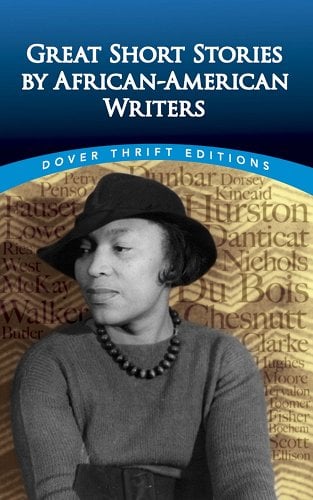
Adeline F. Ries’s short story “The scapegoat” is the sixth in the anthology Great short stories by African-American writers, which my American friend Carolyn sent me. Like the previous author, Emma E. Butler, Adeline F. Ries is barely known.
Adeline F. Ries
The biographical note at the end of the anthology, like that for Butler, comprises three sentences, starting with:
Unfortunately, Ries’s life is unknown except for her authorship of this story.
It then offers two more:
The “mammy” was an image and caricature repeatedly evoked in American fiction, and here and in Dorothy West’s tale “Mammy” we see the caricature transformed by the author’s deeper understandings of the women who had such roles. Ries’s chilling and compressed story dramatizes the suffering and restraint her heroine experienced in her long, loving life.
This was, it seems, her sole story for The Crisis. Again, I did my own searches, but wasn’t expecting to do much better than the editors of this anthology. And I didn’t … I mostly found listings for the story and some digitised versions. However, I did find a 2015 PhD thesis titled “The Women, the Indomitable, the Undefeated”: The Mammy, the Belle, and Southern Memory in William Faulkner from Lucy Buzacott at the University. Buzacott references the story a couple of times and, as the thesis title implies, she focuses on the “mammy” that my anthology’s authors do. Well, of course they do, it’s the title of the story!
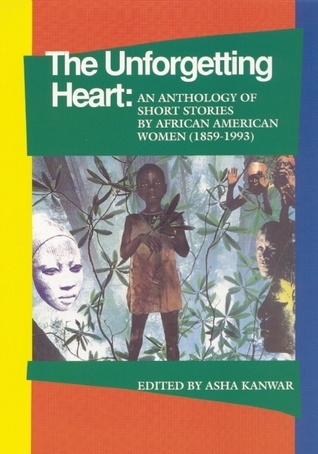
As with Butler, this story by an author about whom nothing is known has been anthologised more than once, including in Asha Kanwar’s The unforgetting heart: An anthology of short stories by African American women (1859-1993), published in 1995. Better World Books says that “The writers included here, both the famous and the less well-known, together represent the remarkable diversity of African American women’s writing across class, culture and time.” Another anthology, published by OUP in 1991, was edited by E. Ammons, and titled, Short fiction by black women, 1900-1920.
“Mammy: A story”
WARNING: SPOILER
If the last story, “Polly’s hack ride”, was a very short story, “Mammy” is a very very short story, taking up just three pages in the anthology, but it packs a serious punch. And I’m going to share that punch because you can quickly read the story at the link below (where it occupies just over a page. Do it!)
So, here goes. “Mammy” opens with our being told that she had raised a “white baby” named Shiela, who had been borne away in marriage, leaving Mammy with a heavy heart. That heart was comforted, however, by the presence of her own “black baby”, Lucy. However, the day Mammy hears the joyful news that Shiela had had her own baby is the day her Lucy is “sold like common household ware!” – in an irony not lost on Mammy – to Shiela to care for her baby. About a year later, she is told that Lucy had been found dead on the nursery room floor of heart failure, and is offered the use of a carriage to go to the coast to see Lucy before her burial. Mammy takes this opportunity, and in a shocking act drowns the baby her dead daughter had been bought to care for. Mammy’s refrain as she carries out her act is, “They took her from me an’ she died”.
As I read this story, other stories of mothers who murder came to mind, including Toni Morrison’s fictional Sethe in Beloved, and the real Akon Guode in Helen Garner’s essay “Why she broke” (my review). In fact, it was the refrain “why she broke” that came to my mind as I read “Mammy”. In her essay, Garner quotes a psychiatrist during Guode’s trial saying that it need not have been something dramatic that triggered her action, that “it can just be the ebb and flow of human suffering, and the person reaching the threshold at which they can … no longer go on”. This felt like Mammy.
Of course, “Mammy” has a twist on these two examples, because she doesn’t kill her own child, bringing the idea of revenge into the frame. Like Sethe, she is a powerless slave, but the character in “Mammy” belongs to another tradition, that of the “mammy”. Wikipedia discusses the USA’s Mammy stereotype, describing it as “Black women, usually enslaved, who did domestic work, including nursing children”. Fictionalised mammy characters, it continues, are often visualised “as a dark-skinned woman with a motherly personality”. (We all know Scarlett O’Hara’s mammy in Gone with the Wind, don’t we?) Wikipedia also says that “the mammy caricature was used to create a narrative of Black women being content within the institution of slavery among domestic servitude”. They are, in other words, taken advantage of and assumed to be happy with their lot. In Ries’ story, the slave-owners are kind enough, but Mammy also knew that “serious floggings” were never far away.
Ries tells her story well. It’s tight, with the prime focus trained on Mammy and her feelings. I see it less as a story of revenge, than one of brokenness – brokenness caused by a system that controls and disempowers, completely. (For Australians, there is also an echo here of the “Stolen Generations”.)
Either which way, it subverts the myth of “the Mammy”, by giving the Mammy an agency that she takes because no-one would have expected her to. In her PhD, Buzacott quotes Kimberley Wallace-Sanders who suggests that in Ries’s story “the symbol of racial harmony [the mammy] is distorted until the fantasy and myth dissolves into a tragic nightmare”. Buzacott suggests that the murders enacted by Sethe, “Mammy”, and Nancy in William Faulkner’s Requiem for a nun, “are part of a genealogy of black maternity outraged by slavery and its aftermath”. Whether they kill their own or another’s child, the point is made – and I certainly felt it worked in this story.
Such a shame that we have no others from Adeline F. Ries.
Adeline F. Ries
“Mammy: A story” (first published in The crisis 13 (3), January 1917)
in Christine Rudisel and Bob Blaisdell (ed.), Great short stories by African-American writers
Garden City: Dover Publications, 2015
pp. 61-63
ISBN: 9780486471396
Available online (in the whole journal)
 Whispering Gums
Wow! What a story! Thank you for the background info. When I hear the word “mammy” I will forever remember the anger and heartbreak of this story.
Thanks Carolyn – then I reckon Adeline F. Ries’ job is done!
Fun fact: Better World Books is a company local to my area, which was founded by a couple of University of Notre Dame graduates.
I love the part you quote about the “fantasy and myth” disappearing once the “mammy” drowns the white baby. There are so many myths about Black Americans either emphasizing that they are monsters out to rape good white women or happy “children” under the care of their king, loving masters. What’s extra gross is that the image of the mammy figure has shifted but still exists, especially in film, to be more feel good, more palatable, especially to white audiences. Consider characters like those in The Help, The Secret Life of Bees, or the numerous commercials in America in which Black women are shopping for house cleaning supplies or dancing around because their laundry detergent smells so good.
Thanks muchly Melanie – particularly for your examples of contemporary continuations of the idea. I never did read or see The Help but I read about it!
Love that about Better World Books! Good for those graduates.
Oh, all the controversy around The Help. From accusations that the author stole the story from a Black woman who worked for her to the loving mammy will help the nice white people trope to the fact that Americans LOVED this book — many claiming it is their favorite novel ever — because it makes them feel happy. I just can’t imagine being so into my own sense of feel good that I can’t see past it to another’s perspective….. which is probably why we’re in trouble as a country in general.
This is such a succinct description of my vague memories of discussions about this book. I think this is a powerful point “I just can’t imagine being so into my own sense of feel good that I can’t see past it to another’s perspective”. It’s one thing to want to feel good and so avoiding reading difficult books (watching films, whatever) but it’s another thing altogether to be so focused on what makes you feel good that you are oblivious to other possibilities.
I love Grab the Lapels comment. It is hard to believe that people can pack such a story and a punch in three pages. Sounds excellent.
It is, Pam, and it’s amazing (and sad) that she disappeared from view.
Ok, I finally read it. (And it was so short, you were right!) Wow. The fact that she only wrote one story makes me wonder (illogically but stubbornly) if it was a true story and the only one she could manage to write and once the writing of it was done that there was simply no need to write more.
As for The Help, I did read it and saw the movie; I often do this when there is controversy, because I want to know exactly where I fall on the spectrum of objection and reception.
If one is on a steady diet of white-savior-type stories, novels like The Help are unlikely to bring anything new/useful to a reader’s thinking or feeling; but there is a lot of sorrow in the characters’ lives in the narrative, and the injustice they experience is front and centre, so readers see the selfishness of the white characters and the necessary (and unjust) sacrifices of the titular “help” who rely on that income to support themselves and their own families. It’s clear that the power dynamic is abusive. So, maybe this kind of novel is not an ideal solution, but I think it can open conversations and introduce new ideas and, if the majority of people reading that book are white people who tend to prioritise books books written by other white people (as is mostly the case), then, in that sense, it could also be a vitally important vehicle of change. Slow change, maybe, but change all the same.
The idea of ‘mammy’ is encapsulated for me by Harper Lee In Go Set a Watchman (which only Ursula K le Guin and I ever read) when Scout begs her old nurse to tell her that she loved her and the nurse remains mute.
You see that again in this story where the plantation owner thinks that he is behaving in a caring manner to ‘mammy’, giving her progress updates each week, when he has sold her daughter away. I am glad the writer was able to express her anger, and glad that Crisis published her (though I might wish New Yorker had) as you can only imagine how many ‘mammys’ had to suppress theirs.
Ha ha Bill, I did know of a few others who read Go set… Good on that Mammy, and on Harper Lee for writing that!
Of course crisis was a Black American publication, but still it’s great they chose it. It seems from the web, that it is a respected journal (now, anyhow) and was clearly a great source for good stories for people who wanted to read about themselves. I wonder how many others read it?