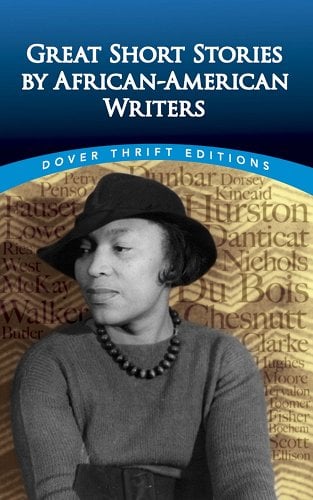
Emma E. Butler’s short story “Polly’s hack ride” is the fifth in the anthology Great short stories by African-American writers, which my American friend Carolyn sent me. Unlike the previous author, Paul Laurence Dunbar, is barely known.
Emma E. Butler
The biographical note at the end of the anthology comprises three sentences! The first two read:
This was Emma E Butler’s sole story for The Crisis. No details of her life have been published.
The third offers a one-line summary of the story.
Of course, I did my own search, but if the editors of this anthology couldn’t find anything meaningful about Butler I wasn’t hoping for much. My first search resulted in AI summarising that “Based on the search results, there appears to be a distinction between Emma Butler, an Australian author, and the renowned African American science fiction author, Octavia E. Butler”. Given my search was for “Emma E Butler African American author”, the results list focused on links for Octavia E. Butler. Hmm, it wasn’t looking good.
I then searched on “Emma E Butler Polly’s hack ride”, and got several results, including links to a digital copy of the journal containing the story. I discovered that The Crisis was subtitled “A Record of the Darker Races”, and was published monthly by the National Association for the Advancement of Colored People. It was “conducted [meaning “edited”] by” W . E. Burghardt Du Bois (whom I have posted on before). I also got indexes to The Crisis, as of course her name is in those, and references to a couple of anthologies containing the story. I gave up!
But, it is worth noting that this story – by this author about whom nothing is known – has been anthologised, including in Dover Publication’s 100 Great American short stories. And, it’s also worth noting that The Crisis’ table of contents lists her as “Mrs”, so presumably “Butler” was her married name. It’s intriguing that they know nothing about her. No death or marriage records for example?
“Polly’s hack ride”
So, let’s just get to “Polly’s hack ride”, a very short story by a very unknown writer. The one-sentence summary I mentioned above simply says it “is a well-imagined tale of a young girl’s reaction to an infant sibling’s death”. Why the accolades – including a top-100 listing – for such a story?
Well, I think because it is a well-structured, beautifully told universal story of the irrepressibility of youth. The opening paragraph comprises one sentence, and goes like this:
POLLY GRAY had lived six and one-half years without ever having enjoyed the luxury of a hack ride.
Polly’s family is poor. Paragraph 2 tells us that she and her family live in a “little shanty, merely an apology for a house” and that Polly watches “with, envy, the finely dressed ladies and gentlemen riding by…” In Paragraph 3, we hear that she’s not brave enough to steal a ride on the back, “as she had seen her brothers do on the ice wagon” because she believes the “predictions of broken necks, arms, legs …”. However, in the next paragraph things are looking up:
Who then could say that Polly was wanting in sisterly love when she exulted in the fact that she was going to a funeral? What did it matter if Ma Gray was heart-broken, and Pa Gray couldn’t eat but six biscuits for his supper when he came home and found the long white fringed sash floating from the cracked door knob?
Paragraph 4 flashes back to tell of the death of two-year-old Ella, and then the story takes us through the funeral and hack ride to Polly falling asleep that evening. It is not until after the hack ride that Polly thinks about her actions:
As Polly alighted from the hack, she began to realize how, as a mourner, she had lowered her dignity by yelling from the window like a joy-rider, and she was not a little uneasy as to how Ma Gray would consider the matter should old Rummy [her great uncle] inform her. So during supper she cautiously avoided meeting his eye, and as soon as she had finished eating she ran upstairs to change her clothes.
There are many reasons why this story works so well. First is its tight structure and focus. The structure establishes Polly’s youth, and sets her desire for something impressive like a hack ride against her poverty. The focus stays firmly with Polly’s point of view. It is, in the background as readers know, a story about poverty and infant mortality, but it is also about children, and how they respond to the world they find themselves in. It’s not only Polly, but her siblings too who exhibit child-like responses to the death, with Bobby, after platefuls of “liver, onions and mashed potatoes” working hard to suppress a whistle and Sally trying “several bows of black ribbon on her hair to see which one looked best”.
In keeping with this child-perspective, the story is told with a light touch and quiet humour. Picture, for example, Polly leaning out of the hack on the way home from the funeral, yelling “Whee” to some friends as she waves her “black-bordered handkerchief”. This tone doesn’t deny the tragedy of death, but again lets us see it from the response of children who cannot be kept down for long. The result is a hopeful story despite the toughness of life.
The story ends with one more paragraph after Polly has run upstairs after dinner. In one sentence it contrasts Polly’s contrition with the joy of the ride. She knows what’s right, but can’t help herself.
Emma E. Butler
“Polly’s hack ride” (first published in The crisis, 1916)
in Christine Rudisel and Bob Blaisdell (ed.), Great short stories by African-American writers
Garden City: Dover Publications, 2015
pp. 57-60
ISBN: 9780486471396
Available online (you can find the whole journal issue at this link)
 Whispering Gums
Why the accolades indeed? Not that I’ve read the story but a child’s simple POV makes the top 100? The USA needs Trove so that we can see if any other stories by Butler were published in newspapers.
I’ve never been in a ‘hack’ but I wonder when I first rode in a taxi. In my 20s maybe. I’ve never used taxis for nights out the way kids do now, but maybe to the airport (I’d been on a plane twice by the time I was 30).
So you don’t think a child’s POV can be great writing, Bill? What about To kill a mockingbird? I can think of others but that’s probably one of the best known. I think this story conveys something universal about children, their psychology and their psychological development, but also tells us about poverty and deprivation but with a light touch that doesn’t grind us down. And, it is a beautifully constructed story.
They so do need a Trove. Everyone needs a Trove. We are so lucky aren’t we?
And yes, good point re taxis. Love your analogy. (I guess the main difference is that I don’t imagine we were hanging out the window dying to ride in a taxi?) I have used a taxi once or twice for nights out. One I remember was in Sydney in late 30s. I went to a school reunion. I didn’t have my car as I was living in Canberra so my parents dropped me at the event and I got a taxi home.
A Tree Grows in Brooklyn is another beautiful story told from Francie’s 12 year old self in New York city. I wonder if you can search the Library of Congress library in America. If it still exists🤨
Sounds interesting and only 3 pages!
Thanks Rach … it’s impressive. (You can read it at the link – over a cup of coffee! – if you are interested.)
Yes, I think I will do that…
How curious indeed! Also curious that, given how hard it has been to locate information about her, that they chose to include it in the Dover anthology. But I’m sure there are all sorts of factors that come into play with those decisions. Not least of which could be simply that they liked it!
It is isn’t it, Marcie. I’ve noticed that there is at least another author in my anthology – a woman again – about whom they know nothing. In the case of Butler’s story, it has been anthologised in “100” best American short stories so it seems like many like it. I think it’s the subtlety with which she tells a story about poverty through a sense of the irrepressibility of a child. It was published in a NAACP journal so Du Bois saw it as something worth publishing.
That is so frustrating when a writer puts out one story or one novel, and we know nothing about them! A lot of classic horror novels are like that, and while I’m grateful that the story or novel was saved and exists, it’s so frustrating to not know who the person was! I always assume that women were much like Shirley Jackson: a housewife trying to keep everything together and writing in between all that. Housewives often don’t see their creative labor as just that—creative. Consider how quilts, crocheting, etc. are considered utilitarian but not art, rather than both.
Yes thanks Melanie. You have to assume that she was most likely a housewife writing at home between her wifely responsibilities. I guess it’s possible that she hid her writing and published under pseudonyms. But that’s probably an outside idea.
What a mystery! My story club will love this—it’s so neat to see a story in its original magazine.
Thanks Lisa … and I agree. It is. We are SO lucky that we live in a time when we can have this sort of access aren’t we?
You have a Story Club? This means short stories? Or does it include novels?
Agreed! there isn’t a lot I love about living in this crazy time, but I really enjoy our access to literature. Yes 🙂 No novels, only short stories. I have two (a weely one and a monthly one) and I belong to one other!