And so we start another year. I do hope it’s a good one for us all. I know that not everyone is as fortunate as I am, but wouldn’t it be wonderful if leaders around the world cared about their people and made the right decisions to keep us all safe and healthy. Meanwhile, I’ll just wish you all the best for 2026, including some great reading that feeds all of our hearts and minds. And with that, I will get onto the meme. As always, if you don’t know how it works, please check Kate’s blog – booksaremyfavouriteandbest.
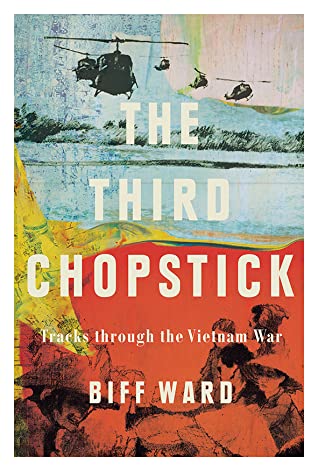
The first rule is that Kate sets our starting book. This month, she did that sneaky thing she’s done at least once before which is that she has told us to start our first chain of the year with the book on which we ended our December chain. For me, that’s Biff Ward’s memoir, The third chopstick (my review). As I wrote in December, it’s about how Ward, a pacifist and anti-Vietnam War activist, decided later in life to revisit her actions during those emotional times. She sought out, met and interviewed some of the soldiers who fought in the war she’d demonstrated against.
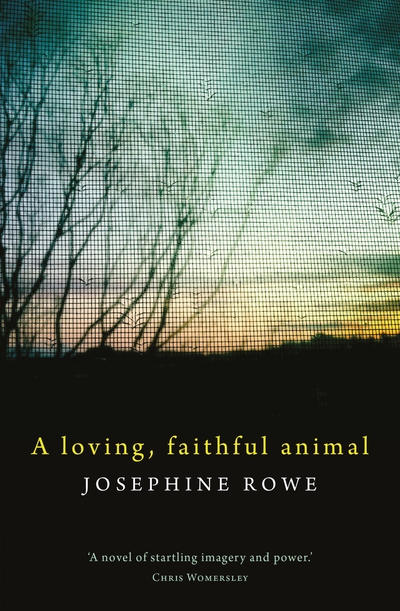
So the obvious thing is for me to link to a book about that war. Trouble is, I have read a few. I did think of linking to one written from a Vietnamese perspective. However, in the end I decided to choose another one that looks at the aftermath for soldiers, Josephine Rowe’s A loving faithful animal (my review), in which she tells of a family broken by the father’s ongoing trauma (PTSD) following his Vietnam War experience. In her book, Biff Ward calls PTSD the Vietnam vets’ gift to the world, which, as many of you will know, is because it was largely through the Vietnam vets that PTSD became a recognised condition.

Rowe’s novel is told through multiple voices, with each chapter (or story) told from a different character’s point of view. Another novel about a family struggling with trauma – in this case the accidental death of a baby – and told through the different characters’ points of view is Melanie Cheng’s The burrow (my review).
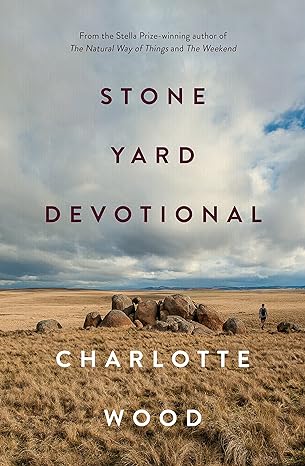
In The burrow, the struggling little family’s life is disturbed by two new additions, a pet rabbit bought for Lucie and Amy’s mother Pauline who has broken her wrist and cannot live alone for a while. These two offer potential catalysts for change. I wrote in my post that it reminded me a little of Charlotte Wood’s Stone Yard devotional (my review), where three visitations threaten the peace of a quiet little religious community in an abbey on the Monaro.

One of the visitations to that abbey is a mouse plague, so my next link is to one of my favourite novels of all time, Albert Camus’ La peste/The plague (my review), about a community on the Algerian coast that closes itself off when it is visited by the bubonic plague in the 1940s.
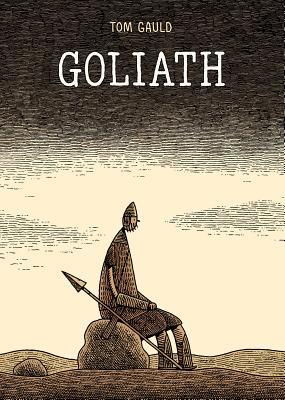
I wrote in my post on The plague that it can be read on different levels, one of which is a metaphorical story about how to live in an “absurd” (that is, inherently irrational) world. This is a bit of a loose link, but Tom Gauld’s graphic novel Goliath (my review) is specifically about the absurdity of war. It presents a Goliath who just wants to spend his time quietly doing admin work, not being an aggressor.

My final book is about a character who, like Goliath, lives in a world that can be confusing, if not sometimes downright hostile. As I wrote in my post, the overall theme seems to be: How do you live in this world? The novel is Uruguayan writer Ida Vitale’s Byobu (my review). Byobu is a more complex work to read than Goliath, but there are similarities in the description of a world where, for example, “supervision and compliance” are expected, but where defiance and imagination might be better.
Many of this month’s books, including Biff Ward’s opening one, encourage us to rethink our world view, in some way or another, to consider how much we align with “the plague” and how much we defy it. I rather enjoyed putting this together, particularly because it reminded me of some books I’ve not thought about for a while.
Have you read The third chopstick and, regardless, what would you link to?
 Whispering Gums
I’m beginning to think you should stop going clubbing, stay home and read more books …
Why didn’t I think of that! Thanks MR … will give it a go … !!
You’re welcome, ST. [grin]
When reading your chain and reaching The Burrow, my mind immediately connected it to Bunny by Mona Awad, which I finished yesterday. Quite a literal connection based on the title but honestly Bunny was such a wild ride I just can’t stop thinking about it. Even life The Plague, Bunny can be read on different levels.
Oh thanks Becky, I hadn’t heard of this one. I’m glad my post brought it to mind and enabled you to share it with us!
How do you live in the world? is an enormous theme.
I’d take an obvious route and link The Third Chopstick to Vietnam; a reporter’s war by Hugh Lunn, which gave me much to think about. I was too young to know anything about the war at the time but after having lived in military-heavy areas and gaining in-laws and friends along the way who were involved in the war, have enormous respect for how these people found ways to ‘live in the world’ afterwards.
Oh, that’s a good link, Rose, to a reporter’s war.
And yes, I guess we could almost argue that that theme underpins most books when you think about it, even if authors aren’t directly thinking about it?
Hi Sue, I have not read The Third Chopstick but my last book was on dementia. It did make me think about how we view people who suffer from dementia. The book was You Must Remember This by Sean Wilson. My Links are The Things We Keep by Sally Hepworth; The Night Guest by Fiona McFarlane; The Erratics by Vicki Laveau-Harvie; Coda by Thea Astley; Still Alice by Lisa Genova, and Elizabeth is Missing by Elizabeth Healey.
Love your links Meg. I’ve heard good things about Sean Wilson, and I’ve read your middle three (McFarlane, Laveau-Harvie and Astley). I remember when Still Alice came out, thinking I’d like to read it.
Hi Sue, I hadn’t heard of The Third Chopstick but what an intriguing title. If I had to link from this I’d go to The Mountains Sing by Nguyễn Phan Quế Mai because it’s the story of Vietnam itself during decades of famine, internal political unrest and then war.
Thanks Karen, that’s a great sounding link …
I think a link from the perspective of Vietnam is right in the spirit.
The Third Chopstick by Biff Ward. Not read.
Slapstick, Lonesome No More by Kurt Vonnegut. His eighth novel and very weird. I enjoyed it, but one for the completist.
Lonely Planet Singapore. Very useful for our week in Singapore a few years back
The Memoirs of a Survivor by Doris Lessing. One of the worst books I ever read.
Unreliable Memoirs by Clive James. Read many years ago, but I recall liking it.
A Brief History of Seven Killings by Marlon James. Loved it. One of the best books I have ever read.
Great chain John, and presented beautifully! Thankyou.
This is such an interesting chain! Great work!
Thanks Lisa
Oh neat!
I have read The Plague and Goliath. Tom Gauld has a new one out, Physics for Cats. So good
Oh thanks Emma … I should look that out.
Fascinating chain here. I don’t know any of these books. Sounds like a few worlds of confusion here, and I can surely identify with that these days.
Enjoyed the linking and the wide variety!
Thanks Stefanie.
The library here did eventually get a copy of the Charlotte Wood but the mouse storyline has put me off somewhat. (And now I’m reading from my own shelves until The Thaw.) Sometimes I can distance myself from that kind of story element, but there’s been so much grim and bleak reading in my stack lately, that I feel more senstive to some of those elements than usual. It seems like it’s a key component to the story, too, so I also don’t think it would be appropriate to skim those bits?
Oh, how to respond Marcie. When I think about this book, I don’t really think grim and bleak. But, what do I think? I think quiet and thoughtful. Yes, there is the mouse plague but it’s more like an irritation to manage than something bleak. It was a book that I wanted by my side for some time after I finished it because of its quiet glow. That might sound strange, I realise, when I think about the content, but it’s because the book is meditative, and quietly descriptive, in tone, rather than oppressive or urgent.
Hmmm, okay. I have an author in mind (Margaret Renkl) who handles difficult animal stories in such a way that they do still break my heart but somehow she connects things thematically in such a way that the emotion is suspended (perhaps because her style is literary, because it’s not actually suspended, not distant in any way) so that you can receive it rather than having it land on you hard and fast, if that makes any sense. I will keep this same idea about Charlotte Wood in mind: thank you for explaining. With that in mind, I might be able to read her after The Thaw. (And I think you’d like Renkl’s writing…there are many bits on the web, as her books probably come from indie publishers in the U.S… because, like Strout she’s always writing about grieving and loss in some way or other, even when she’s not.)
Thanks Marcie …. I hope I haven’t led you astray re Wood. We can never truly know how things will affect another reader. I hadn’t heard of Tenkomori but I will try to seek her out.