Here we are at my annual highlights time, which for me means posting my reading highlights on December 31, and blogging highlights on January 1. I do my Reading Highlights on the last day of the year, so I will have read (even if not reviewed) all the books I’m going to read in the year, and I call it “highlights” because I don’t do “best” or even, really, “favourite” books. Rather, I try to capture a picture of my reading year. I also include literary highlights, that is, reading-related activities which enhance my reading interests and knowledge.
Literary highlights
This mostly comprises my favourite literary events of the year. I never get to all that I would like – not even close – but those I attend I enjoy. Even where the books or authors may not be my favourite genre or topic, there is always something to learn from writers and other readers.

- Canberra Writers Festival (CWF): I attended seven sessions this year, and you can find my write-ups on them (plus my posts on all previous festival sessions) on my Canberra Writers Festival tag. This year I attended more panels than conversations, which was not so much intentional as that the panels popped out as offering some interesting discussions. You can seen them all at the link.
- Awards events: I attended three awards this year: ACT Literary Awards and, the ACT Book of the Year Award (which was my first CWF 2025 session), and the Stella (online) award.
- Author conversations/book launches: I attended one more than last year. They were the ANU Meet the Author series (Sarah Krasnostein and Helen Garner, and Sofie Laguna); Canberra Writers Festival’s non-festival series (Colum McCann and Helen Garner); and an author tour (Irma Gold). I never get to as many of these as I would like, which is frustrating, but life is just busy.
- Podcasts: I am not a big podcast follower, mainly because I prefer to have some moments of peace in my life rather than be constantly plugged in. However, I have continued to follow Secrets from the Green Room and this year I also listened to the ABC’s Book Show’s 5-part series, Dear Jane Austen, celebrating Jane Austen’s sesquicentenary. (I particularly loved the conversation with Colm Tóibín who discussed Austen with such a writer’s eye.) I also recommend Francie Finn’s three-part Firestarters by Francie Finn which drew in part from our Australian Women Writers blog posts on forgotten Australian women writers.
Reading highlights
I don’t set reading goals, but I do have basic “rules of thumb”. These are to give focus to Australian and women writers, include First Nations authors and translated literature in my list, and reduce the TBR pile. I didn’t do wonderfully with all these this year but they remain my rules of thumb.
2025 was a disappointing year – reading-wise, I mean – partly due to our regular trips to Melbourne where our children and grandchildren live, and to our two longer holidays (to Cape York and the Torres Strait in May-June and to Japan in August-September).
Now the highlights … each year I present them a bit differently, because each reading year is different. I love seeing how different themes and trends pop out each year. How much of this is due to the publishing zeitgeist and how much to my choices I can’t tell, but I think the former plays a big role. Here are this year’s observations (with links to my reviews on the first mention of a title):
The characters
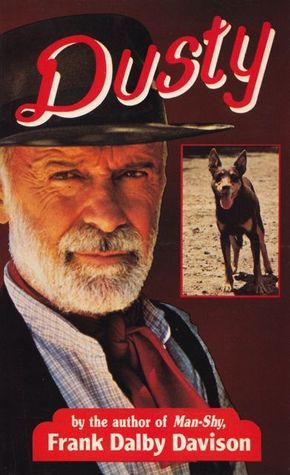
- It’s a dog’s life: Last year I came across cross a variety of animals in my reading, but this year the dogs certainly had it. Three authors let us see some or all of their stories from a dog’s point of view, Frank Dalby Davison in Dusty, Sun Jung in My name is Gucci, and Carmel Bird in her short story, “The King’s white hound” (which was published in The Saturday Paper, and which I enjoyed but didn’t manage to post about.)
- Shocking protagonists: I loved Olive in Elizabeth Strout’s Olive Kitteridge, even though sometimes she wasn’t very nice, she shocked in fact. But, she was honest and could be warm. She felt real . The other protagonist who could be even more shocking at times was Michelle de Kretser’s 24-year-old narrator in Theory & practice. She got up to some seriously unkind stuff but had a story to tell.
- Vulnerable young people: These are not uncommon in literature, but this year a few were in real peril, most particularly 15-year-old Anna in Angus Gaunt’s novella Anna, but there were also those missing young people in Shelley Burr’s third crime novel Vanish.
- Family in extremis: Families in trouble are also not uncommon, but Melanie Cheng’s family in The burrow had suffered a terrible sorrow before the novel’s start and were not coping well. My heart – along with that of many readers – went to them.
- Writers as protagonists: Also not unusual. After all, who do writers know better than writers! And this year, I come across many, including Campbell in Andrew O’Hagan’s Caledonian Road, grieving mother Amy in The burrow, Gucci’s owner in My name is Gucci, the aging, questioning Quin in Brian Castro’s Chinese postman, and the stalled-in-life Fennell in Colum McCann’s Twist.
The subject matter

- Messy lives and truths: Life – and truth – are messy. What do we mean by “truth” anyhow? I like books that recognise the greys. De Kretser talks of “messy human truths” and Colum McCann writes that “There is no logic. The world is messy”, while Winnie Dunn in Dirt poor islanders describes the “messy truth” of being an Islander.
- Can art make a difference? This is one of those imponderables, and Irma Gold explores it in Shift, through photographer, Arlie, who is asked by a community leader to “show the world the truth about Kliptown”. It’s not essential, but I do like artists who want to make a difference, even while questioning – as Brian Castro also does in Chinese postman – whether art can indeed achieve anything.
- Pushing the fiction envelope: I read several books this year – like, Olga Tokarczuk’s House of day, house of night, Chinese postman, Theory & practice – which challenged me (and other readers) because their authors pushed us to think about what a novel is and can be.
- Would you eat a mushroom? Mushrooms popped up frequently in my reading this year, quite unrelated to the year’s big criminal case, the Leongatha Mushroom Murders trial. Maybe mushrooms have appeared just as often in previous years, but I haven’t noticed? Whatever the reason, they kept popping up, including in Vanish, Anna, and House of day, house of night.
- Pandemic: With the pandemic now receding into the past, it is starting to appear in more fiction, not always as the main subject but as a backdrop. Sometimes it’s quite a significant backdrop, as in The burrow, while other times it’s a smaller part of the whole, as in Caledonian Road, or affected the writing in some way, as in Twist and Helen Garner’s The season.
- Truthtellers of the year: I am keeping this category because truthtelling, particularly regarding the “colonial project”, is not done. My favourites this year were the real Wayne Bergman in his and Madelaine Dickie’s Some people want to shoot me, and Louise Erdrich’s fictional Thomas in her historical novel, The night watchman.
The reading life
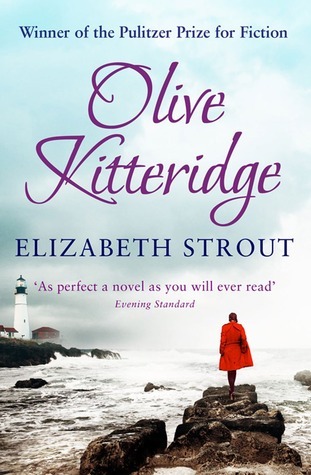
- TBR treasures: All my TBR reading this year was worth waiting for, but if I had to name one standout, it would be Olive Kitteridge. I expected to love it, and I did.
- Surprises of the year: The Russian satirical writer Teffi (my post), whom I discovered via the 1925 Year Club, was the biggest surprise. I now have a collection of her stories in my Kindle library. Others included the African American writer Alice Ruth Moore/Alice Dunbar Nelson (see my posts) and many of the forgotten writers found during my AWW research, including Gertrude Mack (my post). She has not lasted as well as her sisters Louise and Amy, presumably because she was published in newspapers not books, but she was quite the goer.
- Jane Austen sesquicentenary: I cannot not mention Jane Austen given this was the 250th year of her birth. I didn’t read more Jane, because I read and talk about her every year, but I loved all the love she got!
Some stats …
I don’t read to achieve specific stats, but I do have some reading preferences which I have shared in past years so won’t again here. There has been some skewing in my reading over the three years, and it continues, partly because my life has changed and partly because the research I do for my Australian Women Writers (AWW) blog posts has me reading more older short stories by women. This affects the balance in terms of gender, year of publication and form (short story). So, this year:
- 85% of my reading was fiction (the same as last year) and 79% of my authors were women, which is a little higher than last year. Both percentages are higher than my long-term average.
- 50% of the year’s reading comprised works written before 2000, which is around the same as last year, and also higher than recent percentages largely (again) due to my AWW research.
- 58% of this year’s authors were Australian, which is around the same as last year.
- In 2023, short stories and novellas comprised over 60% of my year’s reading. This halved in 2024 to just over 30%, and increased a bit this year to just over 40%.
- My reading of First Nations authors dropped this year, but my reading of translated authors increased by one. I hope to increase both in 2026.
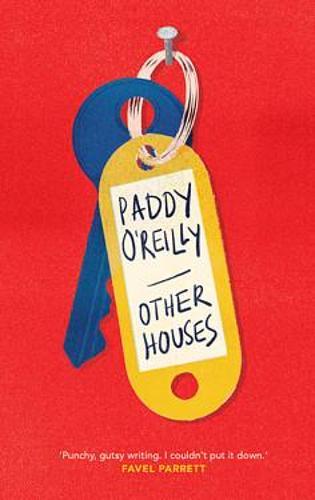
I read four books from my actual TBR, two more than last year! Woohoo! They were Frank Dalby Davison’s Dusty, Paddy O’Reilly’s Other houses, Elizabeth Strout’s Olive Kitteridge, and Margaret Atwood’s Negotiating with the dead.
Tomorrow, I will post my blogging highlights, but now I’ll leave you with a message from one of this year’s books:
Nanna taught me nothing less than what it means to be human, to earn the grace and wisdom that come from surviving darkness and celebrating light. (Andra Putnis, Stories my grandmothers didn’t tell me)
So, huge end-of-year thanks to you who read my posts, engage in discussion, recommend more books and support our little litblogging community. I wish you all the grace and wisdom that books (and life’s lessons) can bring – and a peaceful 2026.
What were your 2025 reading or literary highlights?
 Whispering Gums
I love your end of year posts WG! Don’t forget to include that amazing trip to Japan you took this year. I suspect that ate a big chunk of your reading time too. But you read some really good books nonetheless and attended some amazing events!
It’s New Year’s Eve here still, but I think you’ve already made it to 2026. Happy New Year!
It sure did Stefanie. I didn’t read one novel over those three weeks! And yes, we are nearly 9 hours into the new year as I write. Happy 2026 to you and James too. I hope it is a healthy one for you two, and a better one for the USA and the world!
Thank you for all your insights in 2025, Sue, and his to a happy new year of reading in 2026
Thanks Angela … and back at you for 2026. Here’s to a good one in every way. What are our chances?
These EOY posts do nothing so much as astound me, ST: how is it possible for one woman to fit not only so much reading but so much commenting on reading into her life ? Personally, I don’t think there’s an answer: it just is.
There is one topic that isn’t mentioned because it isn’t written about. It can’t be: it’s just not sufficiently interesting – I know, because I’ve tried …
It’s growing old alone.
Actually, I think it is very interesting MR, and I think Brian Castro does cover it in Chinese postman, though I didn’t focus much on his ruminations on aging in my post because the book covers so much. Did you know/remember that Melbourne-based filmmaker, Paul Cox. He made a short documentary film back in the 1970s titled “We are all alone my dear.” The subject was actually living in an aged care home, but the title says it all.
Thank you for all your comments and support – again – over the year. I love seeing you pop up in my comments. I hope your new abode continues to be good and that you find a community that maybe lessens the feeling of alone-ness?
❤
Hi Sue, I do not know how you fit everything in and make it all interesting. I read mostly women, and Australian women were dominant. I read mainly 2/3 fiction and 1/3 nonfiction. All the best for you and your family this year and keep those thoughts flowing.
Thanks Meg … I didn’t comment on the fiction/nonfiction split this year, but only 20% was nonfiction which is a bit more than last year but I would like to read a little more again.
I always love hearing from you… have a great 2026 too.
It is amazing how much you enjoyed and accomplished this year. I look forward to seeing what you do in 2026.🌻
Thanks Pam … and me too, you!
The closest I get to a writers festival (or awards presentations) is your reports, which are always enjoyable.
To take two of your topics, Toni Morrison’s The Bluest Eye was definitely about vulnerable young people. And a book I have just finished not just pushes the fiction envelope but shreds it: Thru (1975) by Christine Brooke-Rose
Why thank you Bill. I am glad you find my festival etc reports enjoyable. Are you going to post on Thru? (Or have you just posted, and I haven’t seen it yet?) You have of course intrigued me.
My fiction of the year. Probably The French Lieutenant’s Woman by John Fowles. I read three by this author and all were very good. I reread Brideshead Revisited by Evelyn Waugh. A classic that I can reread with ease. Love it.
Add Bluebeard by Kurt Vonnegut Jr, one that I found fantastic.
People Powered Radio by Heather Anderson a 50-year history of radio station 4ZZZ that I enjoyed and More Everything Forever: AI Overlords, Space Empires, and Silicon Valley’s Crusade to Control by Adam Becker I found very thought-provoking and very concerning.
Thanks for sharing your top fiction, John. I still haven’t read Fowles, but I have read a few Waughs including Brideshead of course. I would love to find time to read more Vonnegut.
I should read Adam Becker’s book, or something like it. I clearly understand that we need to be concerned, but I also see good things in AI. We have to work out how to use only its strengths.
I love reading your end of year wrap ups even if it takes me four days to get to it!
I’ve collated my books and lists from 2025 but that’s as far as I have got so far. I have a week’s holiday next week, so I hope to catch up then – I don’t like starting the NY behind (even though it’s just a self-imposed concept, but still, there you go, it gnaws away at me!)
Reading your travel journals was one of my reading highlights for the year – so thank you for all the time and effort you put into communicating so much interesting information about what you read and where you travel.
Thanks Brona … I understand about self-imposed concepts. They are good as they help us achieve things but we need to keep them in perspective too! I look forward to reading yours when they appear!
love your idea of having reading intentions rather than goals. The latter always me think of work rather than pleasure.
Olive is a magnificent creation. She is gasp aloud horrid but Strout also makes us feel for her.
love your idea of having reading intentions rather than goals. The latter always me think of work rather than pleasure.
Yes, that’s a good way of putting it, Karen. I think that expresses it exactly.
I already wanted to read the copy of Theory & Practice that I ordered later in the year, but your comparing it to Olive cinched the deal. Especially given the age gap between those two characters. #intrigued It’s interesting that your short stories and novellas comprise such a large portion of your reading. When it comes to your TBR (the third tenet), do you include all the books you own in that, or IS that your TBR? I used to have a separate TBR that relied very heavily on the library, and I find I think of it differently, now that I’m dependent on my own shelves more than was once the case. Four books off the TBR is… something, and in a year as busy as yours has been, perhaps much better than expected? For the first time in decades, about half my reading was off my own shelves. Being snowed in (at times) really has its up-side. (I say, when it’s probably eleventy-billion degrees outside YOUR door right now. I’m a tease, I know.)
Ooh, I hope I haven’t led you astray with that comparison Marcie. I know what I meant, but will it strike you or others that way!! You’ll have to tell me.
My TBR means many things, but in this statistical context it’s very specific. It’s books I own AND that I’ve owned for more than a year. Books I read soon-ish after I acquire them aren’t included in this, otherwise every book I read would by definition be TBR. Also, I don’t include books on my virtual TBR because my main reason for this reading intention is to reduce the physical pile (hmmm … bookcase/s). I really don’t understand people who finish a book and have to go to a library or shop for their next book. I have my own library/shop right here!
Haha re the eleventy-billion degrees outside. Fortunately tomorrow (today now) is going to be around 10°C cooler than the last few days.