Brona (This Reading Life) recently announced her main reading project for next year, Reading Nonfiction 2026, in which she plans to read 24 nonfiction books from her TBR. She has written a few posts on the project, including on two nonfiction categories on her TBR shelves, Australian Lit Bios and Environment, Climate and Travel. If you are looking for some good Aussie nonfiction – perhaps to get ahead of the game for Nonfiction November 2026 – these posts would be a good place to start.
While I also have nonfiction books on my TBR shelves, including some in the categories above, particularly the Lit Bio one, I thought I would share here some books from another “genre”, that described as creative or narrative or even literary nonfiction. As I have written before, including in my Supporting Genres post back in 2021, it generally refers to nonfiction writing that uses some of the techniques of fiction, particularly, but not only, in terms of narrative style. Wikipedia defines it as “a genre of writing that uses literary styles and techniques to create factually accurate narratives.” This is a good enough description (I’ll use “description” that rather than “definition”) for me to use here.
I do enjoy nonfiction, including history of all sorts but particularly social history, autobiography and biography, travel, science, and more, but the form which this writing takes can make a difference and, being a lover of fiction, creative nonfiction is my preferred form. As is my wont and as I explained in that 2021 post, I define it broadly, so I won’t repeat all that here. Instead, I’ll just list a few that are on my TBR right now that fill the bill.
Interestingly, several of them come from Upswell Publishing which, as publisher Terri-ann White says on her About page, publishes “books that elude easy categorising and work somewhat against the grain of current trends. They are books that may have trouble finding a home in the contemporary Australian publishing sector.” They are, in fact, the sorts of books that tend to fall into the creative nonfiction basket. Other publishers who publish in this area include Transit Lounge, Text Publishing, and, although small in output, Finlay Lloyd. Interestingly too, these books are often, but certainly not always, written by writers of fiction.
So, here is a somewhat eclectic and random list of recent books from my TBR. I have ascribed some sort of “form” to them, but because, by definition, they are hard to categorise, these descriptors are loose, even those that don’t look like they are:
- Anne-Marie Condé, The prime minister’s potato and other essays (Upswell, 2025, sociocultural studies)
- Gregory Day, Words are eagles (Upswell, 2022, landscape writing)
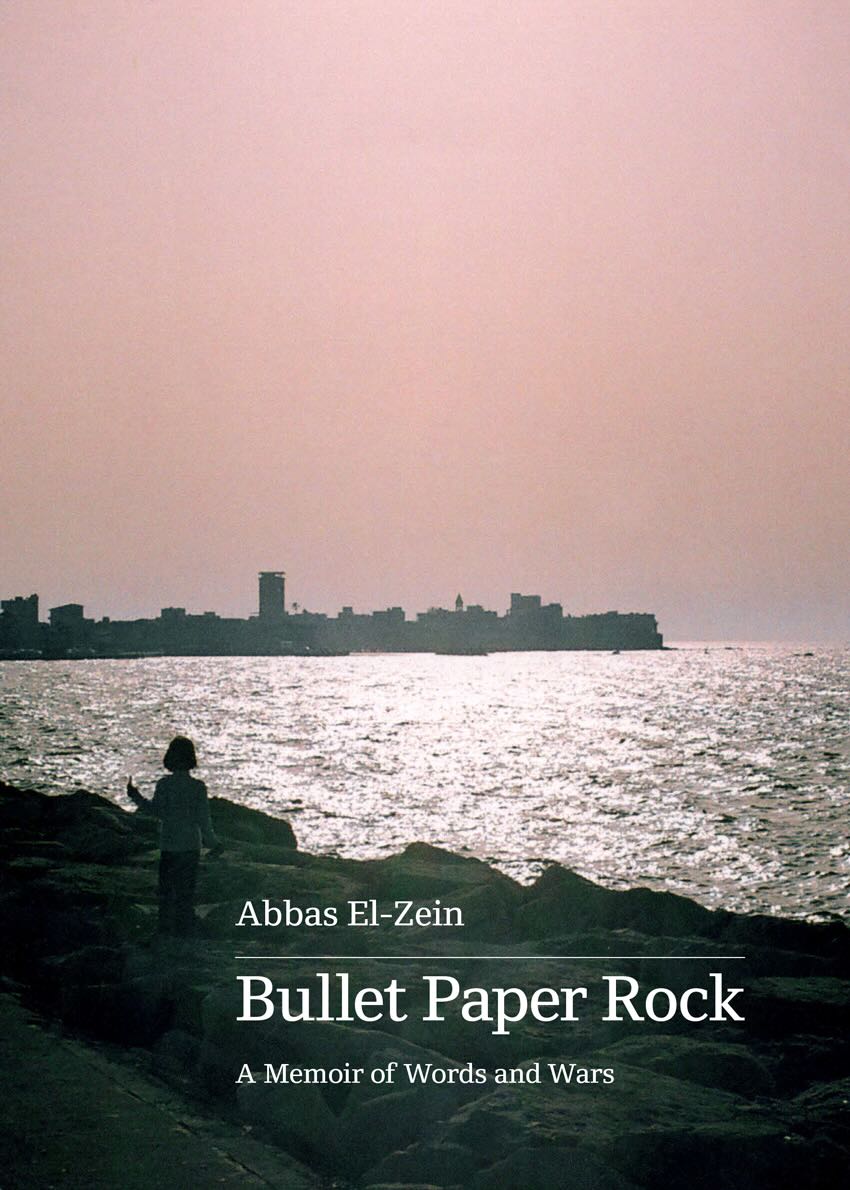
- Abbas El-Zein, Bullets, paper, rock: A memoir of words and wars (Upswell, 2024, memoir)
- Helen Garner, Chloe Hooper and Sarah Krasnostein, The mushroom tapes (Text, 2025, true crime)
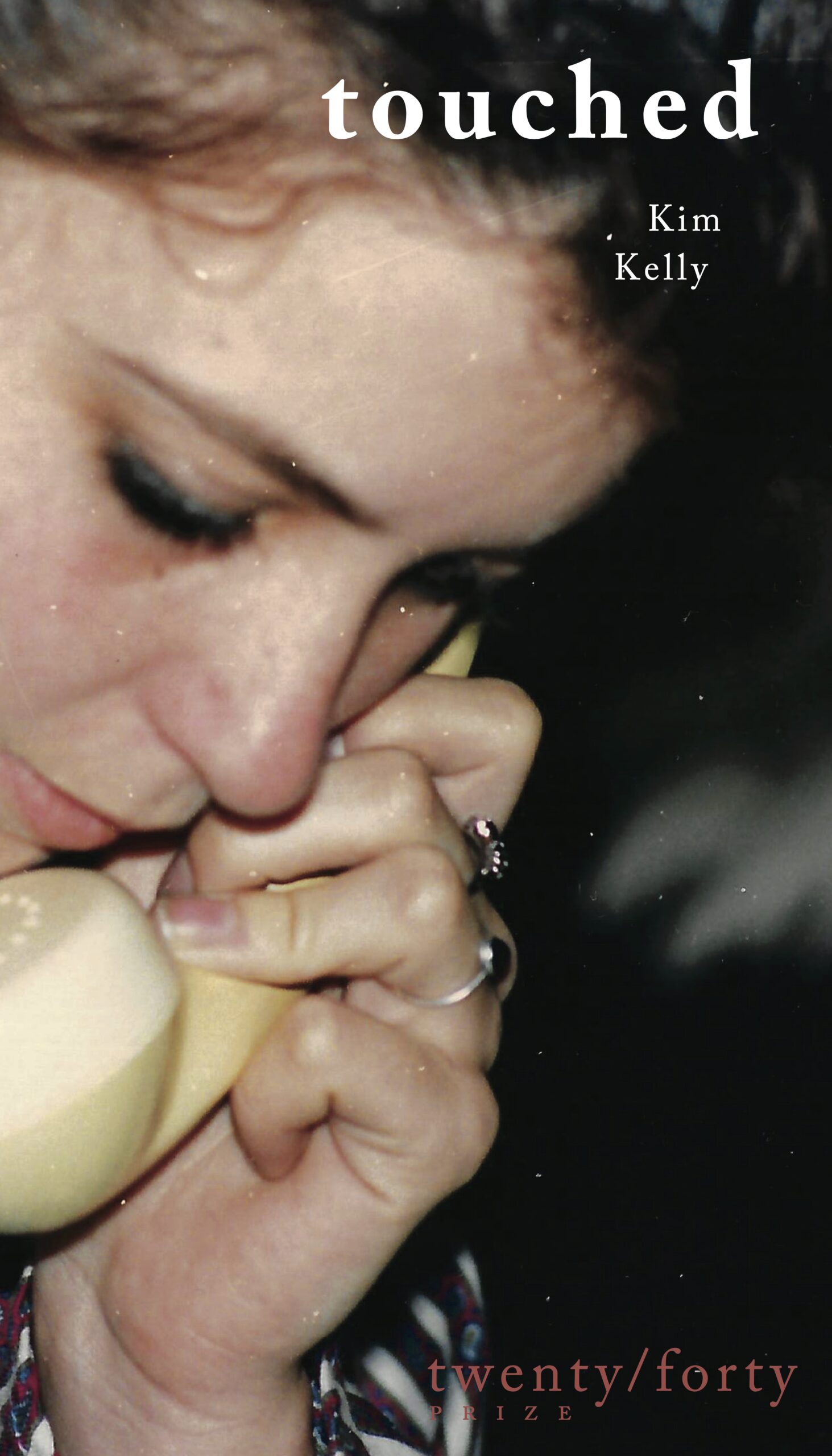
- Kim Kelly, Touched (Finlay Lloyd, 2025, memoir, review coming soon)
- Belinda Probert, Imaginative possession: Learning to live in the Antipodes (Upswell, 2021, memoir/place writing)
- Susan Varga, Hard joy: Life and writing (Upswell, 2022, memoir)
- Jessica White, Silence is my habitat (Upswell, 2025, ecobiographical writing)
What do you think about creative (or whatever you prefer to call it) nonfiction?
 Whispering Gums
If the Dewey Decimal System had died out early on, and the US had settled on the Library of Congress system, would we talk so much about “nonfiction”? My college calculus texts downstairs count as nonfiction (I hope), and so do Henry Adams’s histories of the US 1801-1817: otherwise, it would be hard to find a resemblance. But I think I have raised this objection before.
The term “creative” seems a little tricky to me. Is it implying that this is more than statistical tables, or that one has a license to soften the negation of that “non” in “nonfiction”?
Quibbles aside, I do read quite a few histories, biographies, memoirs, and so on, which seem to be what people chiefly have in mind when they use term.
Thanks for sharing your quibbles again George! Your point about nonfiction overall is a fair one. It reminds me of some of my questions about fiction versus nonfiction, such as where does poetry sit?
While histories, biographies and memoirs are the more common “types” of nonfiction you find under the creative nonfiction banner, they are not automatically so. There are many grey areas, but a “dry” (which I put in inverted commas to say I’m using this in a descriptive but not subjective/judgemental way) history or biography that stick to the formal, often structural, conventions of their “forms” would not generally be seen to be examples of creative or narrative nonfiction. But, I reckon readers could argue about this forever without coming to any resolution or agreement. I do though have a sense when I read nonfiction of which books fit where! Structure and language often come into play in my thinking.
2 years in a public library then 2 more in a teachers’ college library and I can still remember many numbers from the Dewey system (not specifying how many years ago were those four years !).
Library of Congress ? – I have to relate this thought to my detestation of the current Congress (and several past ones): I would be more than infuriated to have books ‘arranged’ by anything to do with it. Childish, I know. But what’s the beef with Dewey ?
I have no particular beef with the Dewey Decimal system.
On my shelves I have a copy of The Invasion by Janet Lewis, formerly owned by Christopher Newport College. The library there uses or used the Library of Congress system, so the book is designated PS3523.E866 16, where the class P indicates Language and Literature, the subclass PS American literature, and the range 3500 through 3549 gives the period as 1900 – 1960. The Dewey Decimal system does not classify fiction, and Janet Lewis’s fiction could be shelved right next to the fiction of C.S. Lewis, which according to the Library of Congress system would be off in the PRs.
So I think that someone who had grown up on the Library of Congress system might tend to think less of fiction and non-fiction as two top-level kingdoms in the taxonomy of the written word.
I would be obliged to agree with that thought !! 🙂
But I’m happy with keeping my collection of fiction arranged alphabetically by author, and within that in order or publication (if a series) or alphabetically by title. Long gone are the days when my husband and I had a little library of around 1,200: after he’d died, I had to downsize and they were part of that. Now I retain only my favourite Folio Society publications; and that means my Dewey system works perfectly.
Seems as though the choice is a matter of size, eh, George ? [grin]
You are cheeky MR, but yes, size – along with focus and purpose – come into play.
Thanks for this great response George. The thing is that most traditional Australian universities used Dewey (as well as public libraries almost exclusively). I happened to go to a new – at the time – university, and it did use LC, so I became very familiar with it, which was very useful when I went on to library school, because I had experienced both systems.
I think George has answered your question, MR. I went to Macquarie University for my undergraduate studies. It was a new university, established in the 1960s and I went there in the early 1970s. The library was established under the Library of Congress classification system because it was seen more appropriate to an academic library, for the reasons George gives. Dewey works well in public libraries, where they can shelve their fiction/novels in a way that suits their local communities, more like a bookshop does. Dewey does cater for the classification of literature but as I recollect it is more simple, more general. It for small or general collections but doesn’t cater as well for the specificity that an academic or specialist collection might need or want.
Big fan of creative nonfiction, though I do enjoy a more traditional or even academic nonfiction read now and then too.
Oh yes, Stefanie, I understand that. It can depend on your need can’t it? Creative nonfiction should be well sourced (and cited in some way, but not necessarily at great depth), and it may not be structured in a way that helps those seeking specific facts. Also, in my experience, indexes are less common in creative nonfiction, which if you are reading in paper form can be frustrating.
The prime minister’s potato! Hehehe, I giggled. What’s that potato doin’ that it’s worthy of an essay!? It sounds like a fun year, especially since I love to learn from nonfiction. It’s also called “creative nonficton” here in the US when it’s nonfiction but more narrative than textbook-ish. It might have flashbacks and use lots of metaphors to explore the truth of their subject. Annie Dillard is highly regarded for creative nonfiction in the states. I have a few books on public education by Jonathan Kozol that I really want to get to soon, but you know how it is: so many books, so little time. I do have some nonfiction coming up in my winter reads, though.
Ok Melanie, since you asked, here is the beginning of the potato essay: ‘”Dear Sir, I am sending you a cure for your akes and Pains.
On 9 September 1942, Mr W. Frith, an aged pensioner giving his address as Wattle Flat via Bathurst, sent then prime minister John Curtin a small package containing a potato. So important was this potato that Mr Frith felt obliged to include detailed instructions on its use. The prime minister was to put the potato in his pocket, specifically in his left pocket if he was right-handed. In “a few weaks time” it will get a bit soft, Curtin was told. Take no notice of that but leave it there and it will flatten out “like a half crown“, and then go “has hard as a pice of wood“. After three years it will “whear away to nothing“. And then the prime minister should repeat the process. “While you carrie a Potato in your pocket you will never suffer with any Pains.” Frith himself had been doing so for the previous twenty-seven years, he said, and suffered no akes or Pains.’ I have’t rad the essay yet, but am keen to.
I like your definition of creative nonfiction – as in the structure can be played with (flashbacks, for example) and it can use imagery like metaphor. I love hearing some of your “names” in this field.
🤣 the potato paragraph; I’m dyin’!
It’s great isn’t it!!!
Hi Sue, I have read a few alternative nonfiction books and usually find them worthwhile reading. I do like reading nonfiction and have read 22 this year. One alternative nonfiction read being The Positions of Spoons by Deborah Levy – observations. I also have a couple of Anne Fadiman books. I will also pick up two from the library this week, Home Body by Rupi Kaur – themes of nature and nurture, light and dark; and The Heart of a Stranger – an anthology of exile literature edited by Andre Naffis-Sahey
Oh good for you Meg. I’ve read about half that number this year. I have read one by Anne Fadiman – Ex libris as I recollect. Deborah Levy’s book sounds interesting. I don’t know those two you are picking up.
Creative non Fiction is not for me. Tom Holland, for example.
Stephen Ambrose of Band of Brothers fame is another. I consider that the worst book I have ever read, all genres considered.
I do get that some prefer their history etc to be “entertaining” but it is not a style that I have ever enjoyed. If I want creativity I look to fiction.
I haven’t read Tom Holland or Stephen Ambrose John. I don’t want my nonfiction to be entertaining – but I do like engaging writing that makes me want to understand the subject being explored. If that makes sense.
I lean towards what I call narrative non-fiction, where I get well-researched facts put together in a way that has a narrative flow. I read enough ‘dry’ academic textbooks in my uni years! Books that I only read the relevant chapters needed for my assignments or exams. Whereas every now and again one would be assigned to a course that I would start reading and couldn’t put down. That was when I first realised that some writers had that ability to present factual information shaped into a narrative arc. It wasn’t what I would call creative or entertaining either, I’m struggling to find the words to exactly describe the style that I like. Maybe the word I’m looking for is literary or polished?
I know what you mean Brona. I discovered this in high school when we were doing modern history and I had a big text called Europe since Napoleon by David Thomson. It was a revelation when I started reading it from the beginning during swot time. I wanted to keep going!
In my Monday Musings I did use the term Literary Nonfiction. But literary is such a loaded term I reverted here to the alternatives. We could probably argue though that not all literary nonfiction in narrative but all narrative nonfiction is literary?
Although I am thrilled to debate the definition of a novella with full-knowledge of the fact that no two participants would ever agree, and whereas I am not convinced that ‘autofiction’ exists (although if a certain writer defines their own work that way, fine), I feel as though ‘creative non-fiction’ is a relatively straightforward concept? Is it not simply non-fiction that employs one/several technique/s that are usually associated with writing fiction? (Say, recreating/imagining dialogue, or spending time to establish setting like weather or certain views of landscape, or as Bron says, a certain shaping of a narrative to suit a storytelling arc which wouldn’t be evident from stat’s alone.) Anyhow, yes, I love it. Although, as Stefanie says, I occasionally read more traditional non-fiction too, but only if the topic is a pet author/subject for instance.
Yes, I agree with you re creative nonfiction Marcie. There can still be arguments around the edges to do with, perhaps, how much these techniques are deployed but I usually know one when I see it!
I take your point re autofiction. I think “it” existed long before this term appeared and I always feel self-conscious using it partly for that reason. So much of what novelists write comes from within themselves. I don’t mind blurred boundaries elsewhere but this one feels like a box that doesn’t like blurred edges and I’m not comfortable with that.
I have a lot of non fiction. Most of it is travel or memoir/biography. I look forward to reading more of it.
Thanks Pam. I always want to read more than I do. But then, I want to read more one everything than I do!
Lol. I wish I could read as fast as others but I guess I mNage. So many other interests compete. Merry Christmas🌻
Same here – or commitments sometimes more than interests! But some of those commitments are social, with great friends and with family and they do take priority. I love reading but people are important to me.
Love creative non-fiction, especially nature writing, certain memoir, hybrids. Sara Baume, Doireann Ní Gríofa, Kathleen Jamie. Not e eryone gets what it is, but I have a friend with a masters in creative non-fiction and her introduction for me was a revelation, it is nowhere near the same as standard nonfiction and you know when you’ve read something whether it is or isn’t. Sentences are indeed an art form. I love the way creative nonfiction is crafted, it is literary and expressive rather than just neutral and factual.
Thanks Claire, I love it too. I agree that it might be hard to define but you know it when you read it. There’s something about the tone, for a start (which is probably what you mean by literary and expressive).