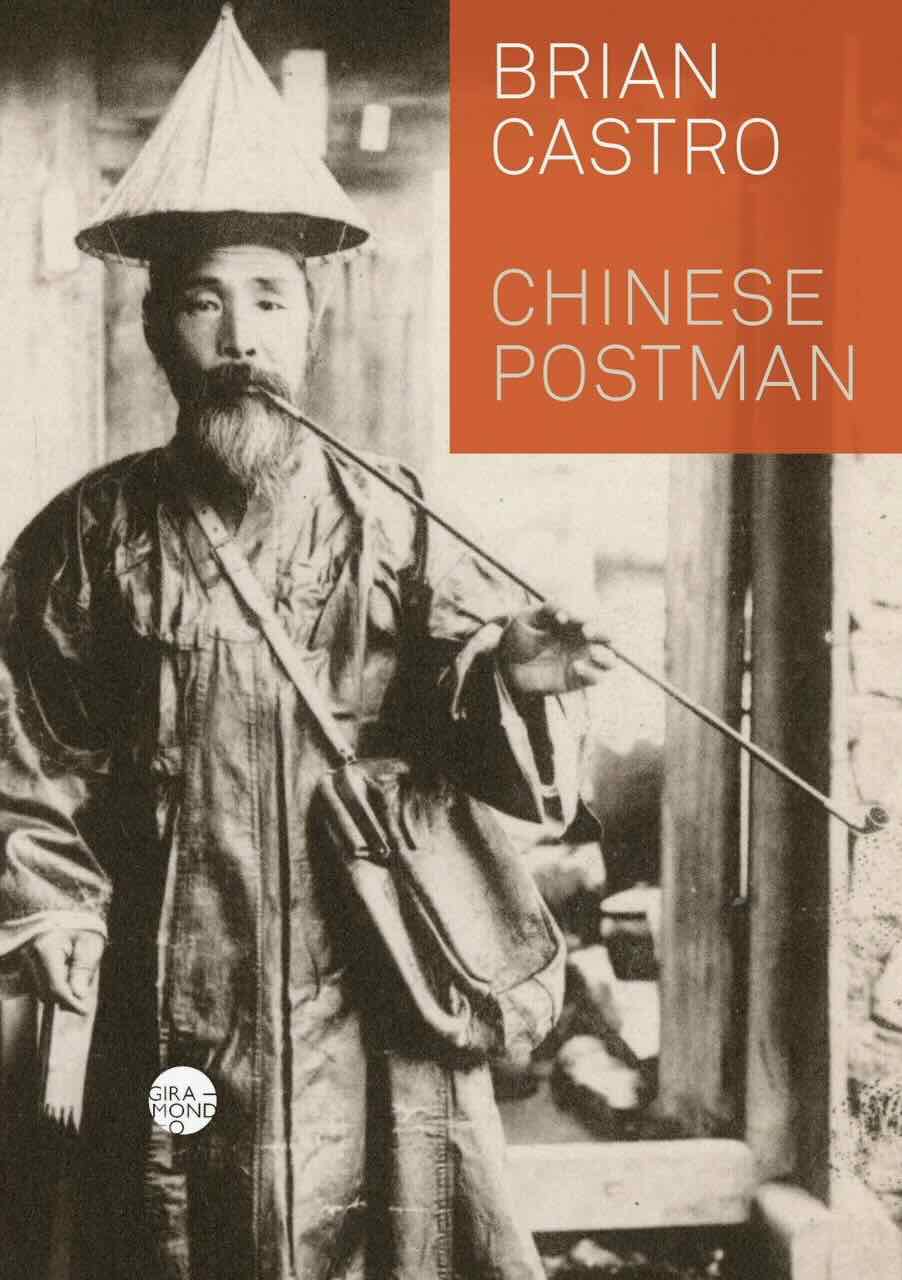
Brian Castro, Chinese postman (#BookReview)

Serendipity is a lovely word, and is even lovelier when it touches my reading. Such was the case with my last two books, Olga Tokarczuk’s House of day, house of night (my review) and Brian Castro’s Chinese postman. The connections between them are simple and complex. Both focus more on ideas than narrative, are disjointed in structure (or, at least, in reading experience), and draw consciously on their author’s lives. They also seem to be questioning the nature of fiction itself, a question that is true of two other books I’ve read in recent times – Michelle de Kretser’s Theory & practice (my review) and Sigrid Nunez’s The vulnerables (my review). None of these books are fast reads, but they are rewarding ones.

The other thing that connects these books is that, because narrative provides more of a loose structure than a driving force and because they blend that narrative with ruminations, memoir, essay, vignettes, anecdotes, recipes even, they exemplify the idea that every reader reads a different book. This is not only – or even primarily – because we are not all men in our mid-70s with mixed ethnicity, to take Castro (and his protagonist) as an example. Rather, it is because we all think about and weigh differently the issues and ideas these authors focus on.

In The vulnerables Nunez refers to Virginia Woolf (as does de Kretser) and her “aspiration to create a new form. The essay-novel”. She also refers to Annie Ernaux’s nonfiction book The years, describing it as “a kind of collective autobiography of her generation”. I’ve digressed a bit here, but my point is that these writers have things to say about their time, their generation, the state of the world – and they are looking for better ways to say it. They are suspicious of pure narrative, and yet I think they also recognise, to some degree at least, that “story” is a way to reach people. Therein lies the tension that each tries to deal with.

So now, Castro! There is a story, a sort of narrative, running through Chinese postman, and I’ll let publisher Giramondo explain it:

Abraham Quin is in his mid-seventies, a migrant, thrice-divorced, a one-time postman and professor, a writer now living alone in the Adelaide Hills. In Chinese Postman he reflects on his life with what he calls ‘the mannered and meditative inaction of age’, offering up memories and anxieties, obsessions and opinions, his thoughts on solitude, writing, friendship and time. He ranges widely, with curiosity and feeling, digressing and changing direction as suits his experience, and his role as a collector of fragments and a surveyor of ruins. He becomes increasingly engaged in an epistolary correspondence with Iryna Zarebina, a woman seeking refuge from the war in Ukraine…

The narrative arc, then, concerns this email correspondence with Iryna. It starts when she emails him:

Dear Professor, I am reading one of your books on the doorstep of war. You once wrote about war eloquently, so the critics said. I do not believe anyone can write eloquently about war. If you could find the time, could you please answer that question. (p. 29/30)

He doesn’t reply “of course”, because he suspects it’s a scam. But, the problem is, it’s got him thinking about his ‘”eloquence” in writing about war’. At this point, readers who have read the epigraphs will remember that one of them quotes John Hawkes*, who said, “Everything I have written comes out of nightmare, out of the nightmare of war”.

War – Ukraine, Vietnam, World War 2, and others – is, then, a constant presence in the novel. As is the aforementioned Iryna because, although she’s “probably a bearded scammer”, he does write back. He asks her about the “dogs in the Donbas”, hoping this “will shove aside the irritating accusation of eloquence”. And so a correspondence begins in which war and dogs, among other issues, are discussed. In other words, dogs become another thread in the novel, as do toilets, aging and its depredations, solitude, the writing life and more.

This is a “big” book, one that, as I’ve intimated, will be read differently by different people. Those concerned about where the world is heading will engage with the issues that mean something to them. Those of migrant background might most relate to his experience of discrimination and othering. Those of a certain age will relate to thoughts about mortality and managing the aging body. (To test or not to test is one question that arises.) Those of a literary bent will love the wordplay and clever, delightful allusions (and wonder how many more they missed. I loved, for example, the allusions to TS Eliot’s “The love song of J. Alfred Prufrock”, a poem about anxiety and indecision which reflects Quin’s inner questioning about action and inaction. I also loved the wordplay that made me splutter at times.) And those interested in the form of the novel will wonder about where this is all leading!

“the unreliability of reason” (p. 232)

There is so much to write about this book, and I’m not sure I can capture the wonder of reading it, how ideas are looked at from every angle – inside out and upside down – in a way that illuminates and stimulates rather than confuses. It’s quite something.

I’ll try to explain something of this through two of the interweaving motifs – toilets and dogs. Both mean multiple things as Castro is not one to close things off. So, early on, toilets reflect the sort of cleaning work migrants must do to support themselves, as Abe does at University. Later, they are part of the aging person’s concern about bowel health. But, in between they could also symbolise feelings of disorder and helplessness, his “anxiety in the gut”, including just coping with “the difficult things of ordinary life”. Similarly dogs epitomise the instinctual, simple life, but, in stories like their being used for target practice, they could also represent innocent victims of war. Here of course, I’m sharing my personal responses to these motifs. There are many others.

No wonder Quin worries about the writing life. It’s something he, a writer, is driven to do, “it pushes fear into the background”, but does it achieve anything?

I’ve always believed it is the novel that carries all the indirect notes of empathy. It may even be violence that brings empathy to war and its suffering. It may be anything. Yet, the plasticity of the novel bends to all the obtuse emotions and accommodates them. Then all is confined to the scrapheap of having been read, having been experienced, having been second-hand and second-read. Major libraries are throwing out paper books. (p.140)

Chinese postman was my reading group’s September book, and it proved challenging, but that is a good thing. We had a lively discussion during which disagreement was not the flavour, but a genuine and engaged attempt to understand what Castro was on about. Whether we achieved that, who knows, but I am glad I have finally read Castro. I won’t be forgetting him soon.

* Wikipedia des John Hawkescribesa (1925-1998) as “a postmodern American novelist, known for the intensity of his work, which suspended some traditional constraints of narrative fiction”. !

Brian Castro
Chinese postman
Artarmon: Giramondo, 2024
250pp.
ISBN: 9781923106130

Monday musings on Australian literature: on 1925: 2, fostering Australian sentiment

During 1925, two sets of articles appeared which discussed the issue of fostering “Australian sentiment”.

Australian literature and labour

During the year, John McKellar (1881-1966) gave lectures on topics relating to literature and labour or the working class. On February 12, a newspaper titled Labor Call advised that at the February 17 meeting of the Malvern Branch of the ALP, Mr McKellar would speak on “Literature: Its relation to working class progress.” I didn’t know John McKellar but he has an entry in the ANU’s Labour Australia site. He was an “engineer, trade union official, editor and author”. He unsuccessfully stood for Labor in both state and federal elections and was associated with the Jindyworobak movement which focused on promoting Australian culture. He published books of essays, and historical articles, including one on a Gippsland-based Christian Socialist commune. His political and cultural interests are clear.

Anyhow, on June 11, this Labor Call wrote on another address given by Mr J. McKellar to the ALP’s Port Melbourne branch:

The lecturer prefaced his remarks by instancing the deep and lasting pleasure to be gained from the cultivation of the love of books. He spoke of the wonderful wealth of literature in the English language, and said that a feature of modern literature was that it got closer to the lives of the people.

He said writers like Bernard Shaw, H. G. Wells, and G. K. Chesterton “held the mirror of life by their works”, and recommended other works, including The Communist manifesto. But, reported the paper, he also said that

Too little appreciation was shown for our own Australian writers. One of the planks of the Australian Labor Party declared for the cultivation of an Australian sentiment. This was not, he stated, to be taken only in a political sense. The cultivation of an Australian sentiment was equally the work of Australia’s literary men.

And he apparently named some who had done just this, including Fernlea Maurice (actually Furnley!), R. H. Long, and Vance Palmer. (R.H. Long does appear in the Australian Dictionary of Biography. It says he wrote “wrote topical verse, prompted to do homage to Nature and to denounce capitalism …”)

A few days later, on June 17, The Australian Worker reported on the same lecture. They also wrote of his comments on the lack of appreciation for Australian writers, and on the fact that one of the ALP’s planks was “the cultivation of an Australian sentiment”. They continued:

He might have added that, generally speaking, Australian writers have to go to London for an audience that will appreciate — and pay for — their songs and stories of the land that froze them out.

Ouch!

Australian literature and art in schools

Quite coincidentally, the topic of teaching Australian literature in schools that came up in my 1925 Trove research also came up, briefly, in comments on a #Six Degrees post this weekend – on host Kate’s (booksaremyfavouriteandbest) post, in fact. She linked to David Malouf’s Ransom because one of her children had studied it at school this year (as they had, the American starting book, Shirley Jackson’s We have always lived in the castle). Rose (RoseReadsNovels) chimed in saying her children had, in the past, read another Australian novel for school, Melina Marchetta’s Looking for Alibrandi. I remember being disappointed when my children were in Year 11 and 12 that there was little if any contemporary (or any) Australian literature in their curricula.

The inclusion of Australian books in school curricula was also mentioned, in passing, in a Canberra Writers Festival session I attended – Poems of Love and Rage – with both Evelyn Araluen and Maxine Beneba Clarke mentioning that their books, Dropbear (my review) and The hate race (my review), were taught in schools. I love that recent Australian books speaking to current lives and issues are being taught. I know it’s neither easy nor cheap for schools to teach recent books, but I believe it is important.

This is not, of course, a new issue. It was discussed in the newspapers in late 1925 – on December 17 in Sydney’s Evening News (briefly) and The Sydney Morning Herald, and on December 18 in Newcastle Morning Herald and Miners’ Advocate (not then part of the SMH group) – after members of the Australian Journalists’ Association (AJA) had met with Mr Mutch, the Minister for Education. They argued that “to foster a pure Australian sentiment” there needed to be “an increased study in the schools of Australian literature and art”.

The best definition of “pure Australian sentiment” came from the critic A.G. Stephens, who, said the SMH, declared that “our literature was the mirror of our lives, and naturally we desired to see reflected in it our own country, lives, and characteristics.” He argued, wrote the SMH, that it was better “for children to read of gum-trees and their 400 varieties than of oak and fir trees” but that children were only learning “scraps of Australian literature, the lives, personalities, and ideals of the writers”.

The AJA also said that “the Australian author and artist were not getting a fair show in their own country”. They wanted the Department to work towards a “proportion at least 50 per cent” of Australian works in the schools. The Minister, a political being of course, disagreed with some of their condemnation but generally agreed with their sentiment! However, he said that “The department suffered from a constant financial malnutrition, and the purchase of Australian books was restricted on this account”. (The NMH&MA described the money issue as “a chronic state of financial stringency”.) Then he offered them another tack. They could

also arrange with the grand council of the Parents and Citizens’ Association that at least half of the prizes purchased for distribution at the end of the year should be Australian-made.

Nothing like passing the buck! But, not a bad suggestion all the same. The Evening News had its own suggestion. It argued that “if Australian literature were used largely in the examination papers, it would be taught as a matter of course in all the schools” and suggested that rather than approach the Minister, the delegation approach the University! I presume examinations were set by the University at that time.

And so it goes … (to use my best Vonnegut).

Thoughts, anyone?

Six degrees of separation, FROM We have always lived in the castle TO …

If you have ever been to Japan you will know that they are deeply interested in weather. Turn the TV on and more often than not you will get a weather report or a cooking program. This now old Internet article was written by a Canadian who, at the time, had lived in Japan for ten years. It explains it well. My American friend who lived in Japan for around 7 years has told me that the Japanese often open conversations with the weather. I;m telling you this as an excuse for my frequently opening my Six Degrees posts with the weather! Not that I’m Japanese … I will say no more about the weather this post, but next post … wait and see. Meanwhile, on with the meme. If you don’t know how it works, please check Kate’s blog – booksaremyfavouriteandbest.

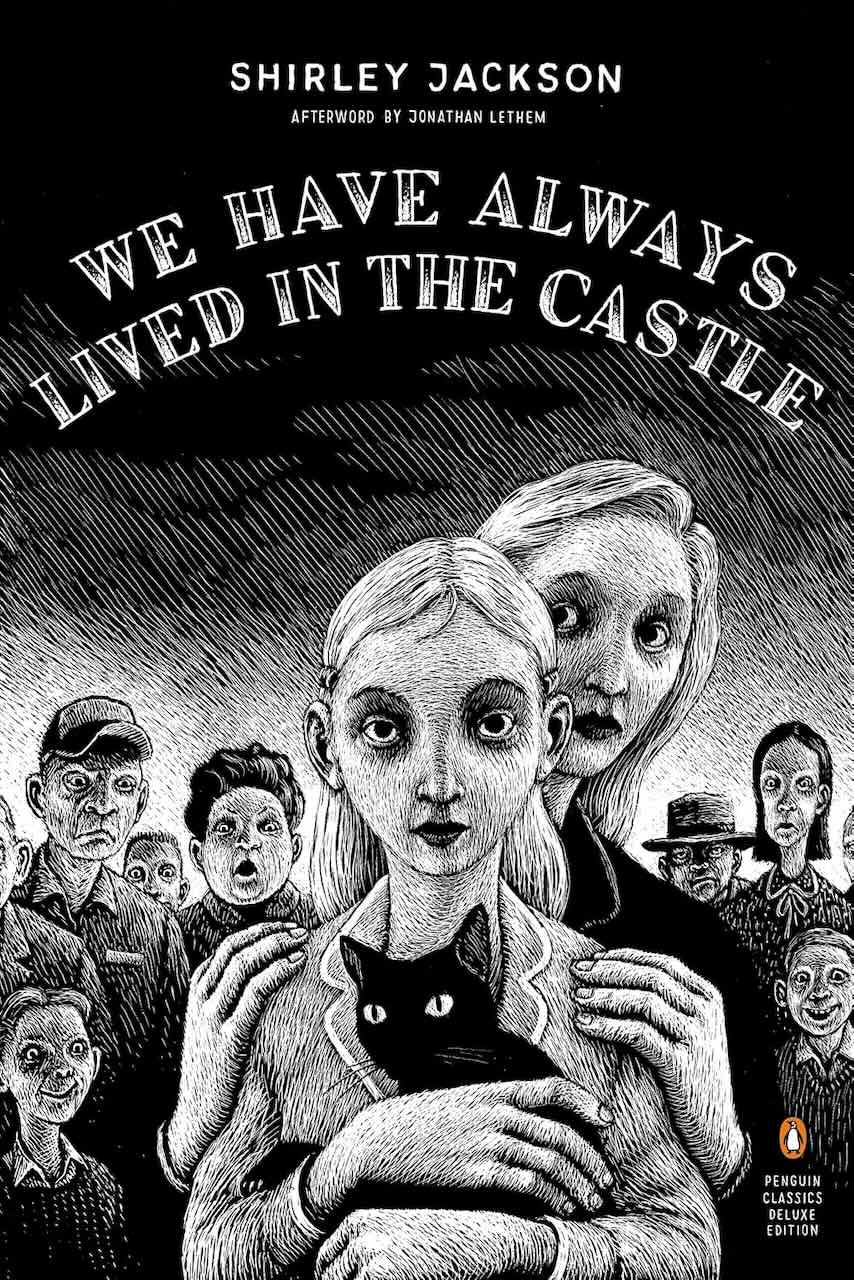
The first rule is that Kate sets our starting book, and this month she has given a nod to Halloween, given today is the day after that event. The novel she’s chosen is We have always lived in the castle, and it’s by America’s queen of gothic mystery and horror, Shirley Jackson. Of course I haven’t read it, though I have read her short story “The lottery” (my review).

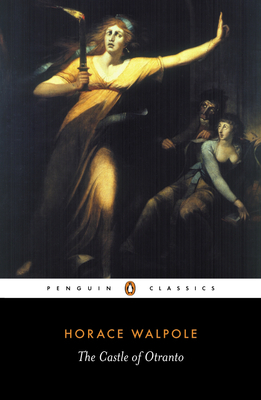
Horace Walpole, The castle of Otranto

Jackson’s 1962 novel is set in a castle – or decaying mansion. The book commonly regarded as the first Gothic novel is also set in a castle, which is not surprising, given the tropes of the genre. It’s Horace Walpole’s The castle of Otranto (my review), and was written in 1764, two hundred years before Jackson’s novel. Horace Walpole has something to answer for if you ask me.

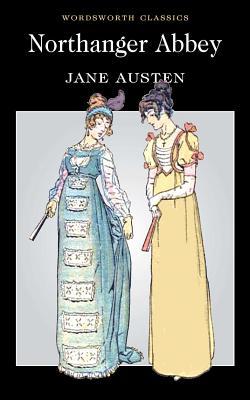
Jane Austen, Northanger Abbey

You might have guessed from that comment that Gothic horror is not my go-to reading. What is my go-to reading, on the other hand, is Jane Austen. The reason I read Walpole was to familiarise myself with the Gothic from her time because, according to many, Austen’s Northanger Abbey (one of my posts) spoofs the genre. I, on the other hand, see it more as a spoof of readers of Gothic novels, than of Gothic novels themselves, but let’s move on. (This cover doesn’t really emphasise the Gothic does it!)

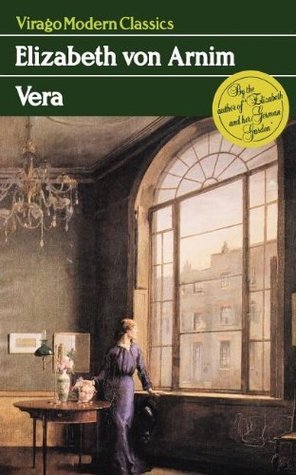
Jane Austen was a clever and witty writer, as was Elizabeth von Arnim. As I wrote in my review of her novel, Vera, some critics and readers questioned how “playful, witty Elizabeth von Arnim, author of light social comedies” had become “a gothic writer of macabre tragedy”? Good question, the answer to which has origins in her own experiences of a controlling relationship with a narcissistic man.

Elizabeth Harrower The watch tower

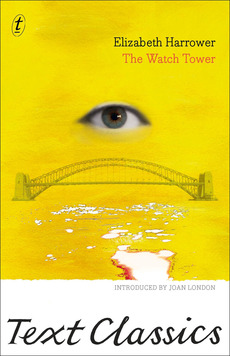
Vera was written in 1921. Forty years later, in 1966, another Elizabeth, Elizabeth Harrower, published her own frightening novel about a young woman trapped in a controlling relationship. It’s The watch tower (my review). It has a third protagonist, the wife’s younger sister who lives with the couple and is caught up in it all. She is more conscious of what is happening, and its effect on her sister (and on herself)

Book cover

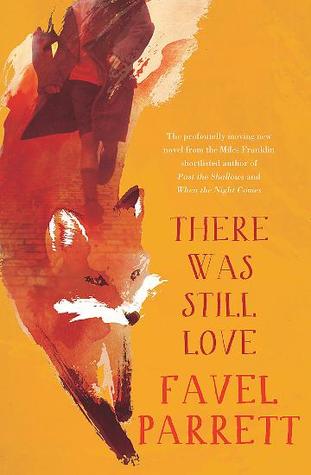
So, we are going to move on from coercive control to sisters, and Favel Parrett’s There was still love (my review), which is about two Czech sisters who lived through World War 2. One ends up in Melbourne, while the other remains in Prague. Parrett tells their story through the eyes of their grandchildren, Melbourne-based grand-daughter Malá Liška and Prague-based grand-son Luděk.

Cover

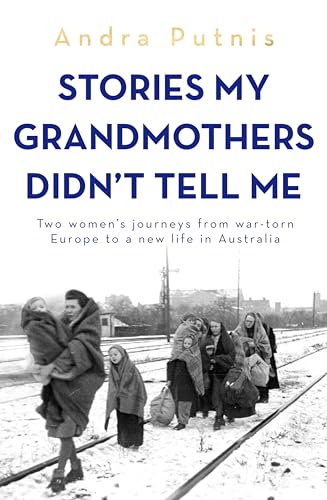
For my final book, we are staying with grandmothers, and a story told though the eyes of a grand-daughter. However, while Parrett’s book is a novel, albeit inspired by her grandmothers’ lives, my last link is a biography-memoir, Andra Putnis’ Stories my grandmothers didn’t tell me (my review). Her grandmothers, who also experienced the War, were Latvian.

Hmm, five of my six selections this month are by women, but we have again moved across the globe – from the USA to England to Australia with forays in Eastern Europe. We have spent time in the 18th, 19th, 20th and 21st centuries. And, unfortunately, we’ve met quite a bit of horror with the Gothic, coercive contol, and war. What can you expect, I suppose, with a chain whose starting book was inspired by Halloween?

Have you read We have always lived in the castle and, regardless, what would you link to?