Back in August, I wrote the first post in my Monday Musings sub-series on Quiet Achievers in Australia’s literary landscapes, meaning people like publishers, for example. My first post was on Terri-ann White from Upswell Publishing.
Of course, most of these people aren’t really Quiet Achievers. Those in the industry will know them, often well. However, for the general reading public, people in the industry are not necessarily well-known, hence this new little sub-series.
Barry Scott (Transit Lounge)
I have read and reviewed many books published by Transit Lounge over the years because they publish the sorts of books and authors I like. According to Wikipedia, Transit Lounge was founded in Melbourne in 2005 – 20 twenty years ago – by two librarians Barry Scott and Tess Rice. It is an independent Australian literary small press, which publishes literary fiction, narrative and trade non-fiction. Its focus is to “show the diversity of Australian culture”. Their website says they are
dedicated to the publication of exciting new fiction and non-fiction. Our tastes are broad and encompass literary fiction and upmarket genre writing such as psychological thrillers. We have a particular interest in creative literary publishing that explores the relationships between East and West and entertains and promotes insights into diverse cultures.
As far as I can tell, Scott works full-time on the press, while artist and photographer Rice works part-time. In 2018, Scott was interviewed by Books+Publishing, and said their books:
go in search of the outsider, the marginalised, the immigrant, the different or the disappearing. We are always searching for what seems beautiful, unique, true, and isn’t afraid to push beyond the current zeitgeist in terms of themes or genre tweaking.

And, they have been successful in doing so. AS Patrić won the Miles Franklin Award in 2016 for his immigrant story, Black rock white city (my review), and Jane Rawson’s “genre-tweaking” From the wreck (Bill’s review), won the 2017 Aurealis Award for best science fiction novel, with its blend of historical and science fiction. Many other Transit Lounge books have been listed or won significant awards, including, recently, Lisa Kenway winning the Ned Kelly Award for Debut Crime Fiction with All you took from me (my post). We often wonder about the impact of awards on sales, so I was interested to see a comment by Scott, in the Sydney Morning Herald (SMH) after Patrić’s win, that the company overall “will be more visible” and that he had “already noticed more people following the company on Twitter and wanting to see its books”.
In 2023, Scott was interviewed by ABR (the Australian Book Review), and here we hear his motivation for getting into publishing:
I was involved with administering the Victorian Premier’s Literary Awards in 2003 when the Unpublished Manuscript Prize was conceived. … I became acutely aware that there were many talented writers unable to achieve publication. Transit Lounge always has been and always will be about giving some of those new writers a voice, as well as publishing more established authors.
A bit like Terri-ann White! That said, Transit Lounge’s focus in terms of what they publish has changed a little over the years. In the above-mentioned SMH article, Scott said that he initially ‘wanted to publish Australian authors writing about other cultures and people writing from overseas about here. “We have moved away from that a bit; we were a bit more travel based than we are now”.’
Once in the publishing game, it seems that Barry Scott was fully invested, that is, he became involved in the industry. He was a director of the Board of the now-unfortunately-defunct Small Press Network. In 2009, he visited the US for several weeks, under a Copyright Agency Limited grant to find out about small independent publishers there, including the state of the industry. You can read his report at Overland.
Meanwhile, I’ll return to the ABR interview. Over the years, it has run several interviews with publishers, and I will refer to those – if or when I focus on those people. It’s illuminating to see their different reactions to the questions. For example, when asked about the significance of book reviews, Scott replied:
They are gold, even when negative. As Oscar Wilde said, ‘There’s only one thing in the world worse than being talked about, and that is not being talked about.’
Not all publishers responded so positively to this question, although most recognised that reviews mean something to authors. I recently listened to the interview with Graeme Simsion and Anne Buist on the Secrets from the Green Room podcast, and Simsion, a “data person” who has researched bookselling at some length, said that the main impact on sales comes from “word of mouth”. He didn’t talk about how you get that word-of-mouth started, but surely reviews, as Scott implies, are a contributing factor? I wonder whether the current fragmentation of book “reviewing” across traditional media, websites, blogs and social media, is, in fact, resulting in increased “word of mouth” exposure?
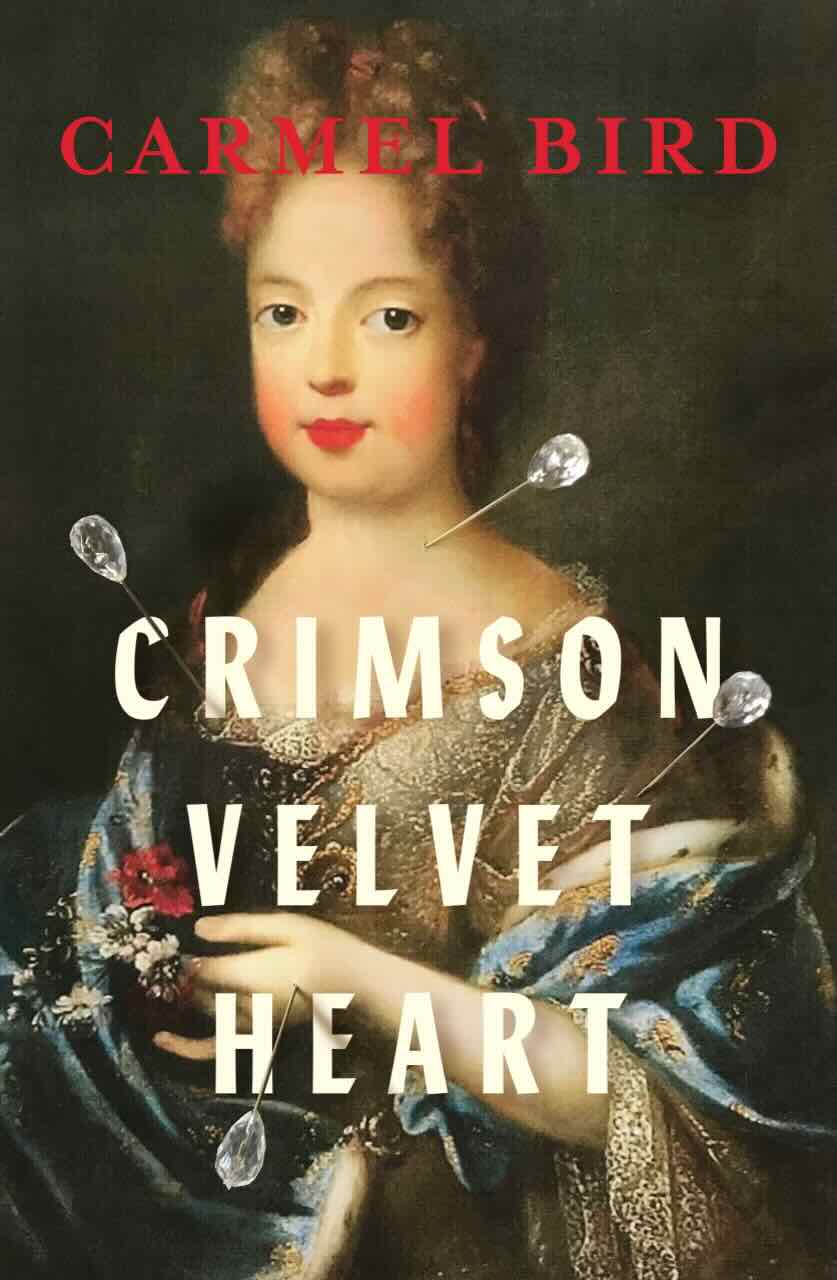
I have a few Transit Lounge books on my TBR, as I write, including Carmel Bird’s latest novel – a foray into historical fiction with Crimson velvet heart, set in Versailles at the end of the 17th century.
I’ll conclude, however, with a comment made by another author. In the blog, In Their Own Write, Mandy Sayer says
Barry Scott at Transit Lounge is a truly collaborative publisher, and I’m grateful for the opportunity to work with him.
This was August 2025, just before the publication of her memoir, No dancing in the lift. It seems that the fire is still burning in Scott.
 Whispering Gums
Lovely profile, Sue. I’m an author proud to be published by Transit Lounge. And Barry was administering the Victorian Premier’s Literary Award for Unpublished Manuscript the year I won. So it feels like I’ve come full circle.
I saw you on their list Angela. They publish great authors! I have quite a few on my TBR but am reading even more slowly than usual at the moment.
Reading you on this topic brings back to mind the question: how is it that occasionally an unknown author’s book becomes hot and gains fame – is it up to the publisher ?
I don’t think there’s any one answer to this MR. From my outsider-looking-in perspective, I’d say it’s a combination, involving one or more of, in different degrees, the zeitgeist and/or specific timing, the publisher, author’s publicists/agents, word of mouth, publicity from some other source (a review that gets noticed and people run with it), booksellers (particularly if they hand sell, ie love the book and promote it specifically), author tours, social media promotion, awards. I don’t think there’s any magical formula. I follow a few authors on Instagram and the tours they do – often organised as much by themselves as by publishers and publicists – sound exhausting. They often personally line up visits to as many bookshops as they can afford to get to. They offer themselves for author events, etc.
And you provided all of ’em ! – thanks much, me old china. 🙂
Haha MR … I did me best!!
What does “trade non-fiction” mean? I assumed it had to do with stories about blue-collar labor, but maybe it’s a term with which I am unfamiliar. As for your comment about the power of reviews: just recently, I had someone link to my review of a bio about a Deaf poet and journalist Laura Redding. It always surprises me when an old post makes a comeback, or when someone I’ve never chatted with on my blog interacts with my posts. I’m also surprised when I look at my stats to see which posts were the most popular for the day/week/month is something I wrote and posted years ago. If we have an online presence, compared to the old magazine reviews, it seems our words are even more far reaching across countries and time!
I love that you notice these things that are new to you and ask Melanie. My understanding of “trade” nonfiction is just that it’s general, for the general public, not academic. Which I guess is a different meaning to “trade” paperback which relates more to size.
Yes, good observation re our reviews. It’s fascinating how some do pop up again in popularity seemingly out of the blue isn’t it. Good point re old print reviews versus our old online ones. Ours have such better longevity and hence potential value for authors and publishers. I hadn’t really thought about that aspect of our online presence.
One of my most visited posts is still Follow the Rabbit-Proof Fence, which I find interesting. It’s an older book and movie…
You just never can tell can you, Melanie!
I looked across my shelves to see what Transit Lounge books I have, and for some reason they are all together – 3 AS Patric (I wish he’d write another novel), 1 Jane Rawson and Eugen Bacon’s Serengotti. Barry Scott’s certainly got good taste, though I can’t imagine he’s making his fortune.
I don’t think many publishers make their fortune Bill. Hopefully he’s making a decent living. It’s worth a lot having a job you like but you still have to live don’t you!
What a lovely profile Sue – and a good reminder to read another of the Transit Lounge books on my TBR. I also spotted that Carmel had another book out soon – how exciting!
Thanks Brona … glad you like it. I’m hoping to read Carmel Bird’s book once I get through Novellas and Nonfiction November!!
I like the idea of this series of posts, even though I can see the point you’re raising about what’s quiet and what’s not-so quiet exactly. It reminds me of trying to define indie presses, in the sense that it can be very simple (not one of the Big Five, for instance) but when you really down to the details, there are tremendous differences between and among indie presses (much of which is likely boring/orand inaccessible for readers who pick up their books to enjoy a good story).
Haha yes, Marcie, re indie presses. I’ve pondered that too. As you say it’s irrelevant to most readers, but those who are fascinated by the whole “industry” around books love exploring all the nuances and permutations don’t we?
For sure! And we could talk for days about the definition/usage of ‘novella’ too. heehee
We sure could!