Today I saw an Instagram post promoting the latest interview on Irma Gold and Karen Viggers’ podcast, Secrets From the Green Room. The interview was with Emily Maguire, and the promo shared this:
Other people of my age who’ve been working at something for as long as I’ve been working at writing – they have a better lifestyle than me. They’re able to live in a way that I can’t, even though I feel successful. (Emily Maguire)
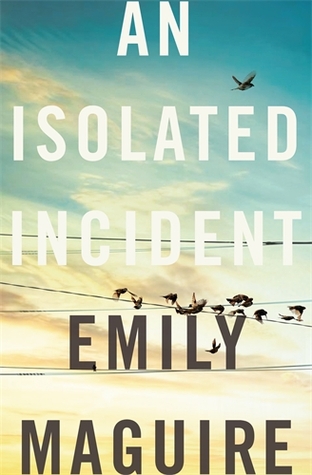
Emily Maguire should indeed feel successful. She has written seven novels, and three works of nonfiction. In 2013 she was named one of The Sydney Morning Herald Best Young Australian Novelists. Her fifth novel, An isolated incident (my review) was shortlisted for several significant literary awards including the Stella Prize and the Miles Franklin Literary Award. Her latest novel, Rapture, won the Queensland Literary Award for Fiction and was listed for other awards.
And yet, she doesn’t have the same lifestyle as her peers. This brings me to the issue which is currently causing concern among writers internationally, including those in Australia. I’m talking of course about the AI industry’s use of copyrighted material to “train AI models”. This issue has been bubbling along for some time now and I’m not going to track it all here. The Conversation published an article in September summarising the current state of play in Australia, including these points:
- The Productivity Commission’s interim report (published in August) “proposed a text and data mining exception to the Australian Copyright Act, which would allow AI training on copyrighted Australian work”.
- The Minister for the Arts, Tony Burke, said in that same month that the government had “no plans, no intention, no appetite to be weakening” our copyright laws.
- Both the Australian Society of Authors (ASA) and the Australian Publishers Association oppose the the Productivity Commission’s proposal. The publishing industry is not entirely opposed to AI, but recognises significant legal and ethical challenges. The Australian Publishers Association wants government policies on AI to prioritise “a clear ethical framework, transparency, appropriate incentives and protections for creators”. They want a balanced policy which enables both AI development and cultural industries to flourish.
The concerns make sense to me. I am a librarian by profession, which means that freedom of information is one of my founding principles. It also means that I love the Internet and all that it offers us in terms of being able to find (discover) the things we want to know. However, this doesn’t mean that I believe these things should come at a cost to others.
So, what do librarians think about this? In February this year, the National Library of Australia published its Artificial Intelligence Framework. It recognises that “AI technologies present opportunities for developing new ways to collect, understand and share the collection” (p. 3) but also that:
Responsible AI governance includes recognition of legal rights holders and their valid commercial interests. Where legal frameworks for AI are evolving or unclear, any development will proceed with caution and consent from relevant stakeholders and copyright owners will be sought. This includes engaging with external stakeholders such as the NED Steering Group, publishers and independent publishing communities. We will not on-sell or share in-copyright data under any circumstances. As discussed below, we recognise the rights of Indigenous peoples to control their own cultural and intellectual property.
And, under their principles, they include that “We will always respect Australian copyright law and protect valid commercial interests”.
Meanwhile, Australian authors and musicians spoke last week at a Senate committee hearing on the Productivity Commission proposal to introduce the exception to the Copyright Act to allow AI training. Anna Funder, Thomas Keneally and other authors spoke powerfully on the importance of copyright to sustaining writers’ careers. I loved that Keneally invoked Frank Moorhouse, the author who was significant in the development of Copyright law in Australia, but he also made his own points:
It’s not copy-charity. It’s not copy-privilege. It’s not copy-indulgence. It’s copyright.
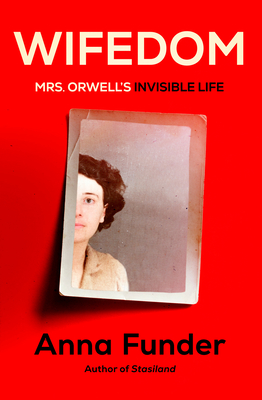
Anna Funder concluded her comments with:
If Australia would like books to delight itself, to know itself, to be itself, and not a source of raw materials for American or Australian computer companies, we will need books. But without copyright, no one will write them.’
(I saw these on Instagram, but you can read a summary on the ASA’s page.)
AMPAL, the Australia Music Publishers Association Limited, posted on Instagram that:
If AI needs our songs to learn … then our songwriters deserve to earn.
Life is tough for creatives, and yet what they create for us is, as one person told me many years ago, what makes life worth living! (Besides our family and friends of course.) So, I stand with Australian creatives in their fight to retain the right to say who can use their material, and how, and to be recompensed for that.
 Whispering Gums
AI brings so much woe with its helpfulness: seems like every day brings a new area of concern.
Better to have written a book ere it made its presence felt than to be writing now, inside its huge spread …
😦
But it also brings a lot of value too I think MR. I nearly started this post by saying I’m not a naysayer when it comes to AI (or new technologies in general). But like most things it needs understanding, and thinking through, and discussion, and tweaking, don’t you think, so we can harness the best and reject the rest.
And sorry, but I hope you weren’t thinking that your book is safe!!! All books, in and out of copyright, are potentially in its sights!
No; what I said very unclearly is that with AI writing books now, what unknown writers could expect not to be seen as suss …?
Ah, I did wonder if you might have meant something like that. Thanks for clarifying. I understand that.
Hi WG
Glad to know you are a fellow librarian!
AI is concerning, but I have to disagree with Funder: with or without copyright, people will create. The impulse to make art is already “irrational” in a capitalist world; lack of copyright won’t deter people from writing.
QQ
Oh lovely, you’re one too, QinQin. I think you’re right re that point about compulsion – history shows that people will create regardless – but I don’t think that completely undermines the argument. Or, do you not see copyright as being as important as some do.
hi WG
Could you please delete my above comment? I didn’t realise when I replied by email it included my signature block which was hidden in the phone app response.
Thank you
Hope to meet you in person one day soon. Will be at Eric Puchner’s event tonight if you’re there, or perhaps another CWF event.
Take care!
Chinwag with … so you’re not above dreadful alliteration, then. [grin]
Goodness, you’re a busy woman ! Congratulations on being so !
Cheeky, MR!
One can tell Qin Qin has a sense of humour. 🙂
Hi MR, thanks for checking out more about me 🙂 Yes that was a funny radio segment. I read a bit of your blog. Enjoy your move to Footscray – I love that area of Melbourne and yes the food is great! As for being busy, I have learnt not to be so busy, or only busy with work I enjoy rather than what I feel obliged to do. My book was recently considered part of a growing genre of ‘burn out literature’ lol 😛
Thank you to WG for creating space for words about words.
“Burnt out literature”? I haven’t heard that one. BUT I am impressed that you’ve learnt to manage your busy-ness!
Hi Sue, Technology is holding up the share market. AI is making money and evolving. The chips are getting smaller and smarter and gathering more information. I don’t see how authors or song writers will be able to protect their works. Of course, this is wrong. But, every industry in the future will be dominated by AI. Yet at the same time I think people will still continue to create, but they too will have to get smarter!
Thanks Meg for these great observations. I take your point re creatives protecting their works. We can’t stop technology and nor do I think we want to but we have to think our way through each new one to work out how to make it work to everyone’s benefit. People will continue to create I agree … I think not only do they have to get smarter but we have to do our bit to support them which I think was part of Funder’s point.
WordPress users might like to know you can opt out of AI crawling your site and using your content to train its language models. Go to Settings > General > Prevent third-party sharing.
Thanks very much Kimbofo. I hadn’t seen that.
In bookish terms, this is rather like sending one magazine a notice that requests they stop sharing their list of subscribers when your name is on the list. The list is already out there in the world, shared with others, and others can still get hold of it, even if the magazine agrees to make a gesture in the direction of privacy.
Not to discourage any single step towards privacy. It’s just that the tech has evolved so rapidly that the AI crawlers have their own little overalls and hardhats and IP addresses now: they are dressed for success!
Haha Marcie … yes, I agree with what you are saying. I’m not sure it’s worth bothering now in the individual sense but it’s worth keeping on the hustings politically to protect (if that’s the word) what we can.
I have definitely become one of those suspicious people who don’t trust anything that I see on the internet anymore. For example, I’ve absolutely curated my Facebook so that it shows me interesting or cute things. I started following this great white shark page, and I thought it was legit, but somebody pointed out in the comments that the shark in the video was missing an essential feature of sharks. I don’t remember exactly what it was, I’m not a shark scientist. Regardless, I ended up unfollowing the page because now I’m like, is it all just AI and they’re tricking me? Then, I had this moment when I wondered if the person in the comments was an AI bot. Are they trying to sabotage the shark page? Are they the kind of person who read something once from an AI summary on Google and now they think they’re a shark scientist? It’s very confusing.
It is very confusing, Melanie, I agree. I think we question everything – and the more cute or clever or amazing something is, the more we should question it. I don’t really see much of this sort of stuff except occasionally on Insta Reels but I’ve seen enough there to have a laugh, and move on. When it comes to serious stuff, I will often see an AI generated report but then I assess it with my own antennae followed by double checking on sites I know. Information literacy is becoming more and more important isn’t it?
Absolutely. I get so many robo calls every day at work. One sounds like Foghorn Leghorn. Some have coughing in them, so you think it’s a person. Others are robots that ask questions, but it sounds like a person.
This point in time reminds me of when epubs first emerged and the rush to get authors into the loop for recompense. It took about three years, and countless legal actions. It’s all included in contracts now, second-nature. But, in other ways, the efforts are still ongoing. And even today, many authors spend hours and hours trying to stem the flow of illegal digital copies (epubs and other formats) of their creative work online, all shared without any earnings going back to them. And details are still getting sorted (library agreements, for instance…how many loans a single epub can fill before another payment is required, upon which the author will earn royalties…still evolving too). Digital tech is slippery. Fascinating or overwhelming, depending on your mood in the moment!
Good example Marcie … as more of a bystander, I’m mostly at the “fascinating” end but I can be easily overwhelmed if I think too much about it.
I am listening to an audio called More Everthing Forever: AI Overlords, Space Empires and Silicon Valley’s Crusade to Control Humanity by Adam Becker. i have listened to 4 hours and have 8 to go and so far it has been a thought-provoking read. IMO writers and musicians and countless other industries have a lot to fear from the so called Tech Bros.
That’s a title and a half John. I agree that they have right to be concerned. So far artists have managed to find ways through. Here’s hoping they continue to do so.
I am actually finding this book disturbing.