We are now in spring, not my favourite season of the year, but it’s also Daylight Savings Weekend here in Australia, which is a favourite time for me. I love longer evenings and mornings being not so quickly light! I’m not sure why I frequently start these posts with the weather, but perhaps it’s because we six-degrees participants are from all parts of the world and it sets the scene for where I’m from! I’ll leave that thought there, now, and just get onto the meme. If you don’t know how the #SixDegrees meme works, please check Kate’s blog – booksaremyfavouriteandbest.
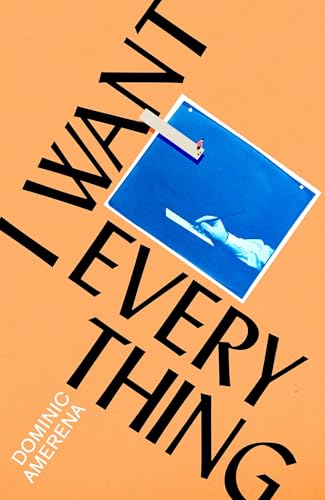
The first rule is that Kate sets our starting book. This month, it’s a recent Australian debut novel, Dominic Amerena’s I want everything. I have clearly been out of touch because I didn’t know this author or book, but my research found that it was inspired by Australia’s rich tradition of literary hoaxes.
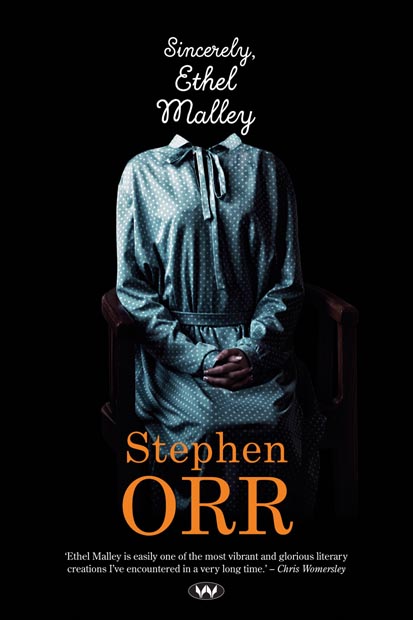
So that is where I am going, and I wonder whether others – particularly Australians – will too. The book I’m linking to is Stephen Orr’s Sincerely, Ethel Malley (my review). It is about what is probably Australia’s most famous literary hoax, the Ern Malley affair, when two poets who disliked modernist poetry wrote and submitted such poetry to a literary magazine under the name, Ern Malley.
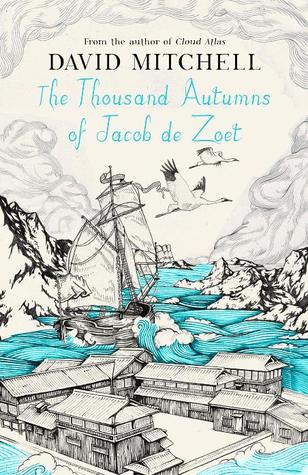
Now, I don’t want to stick to hoaxes, so I’m going on title for my next link, that is, on a book titled with the main character’s full name, David Mitchell’s The thousand autumns of Jacob de Zoet (my review). This book felt appropriate too, because it is set in Japan where I have just been. It is set during that time in history when most of Japan was closed off from the rest of the world. However, Japan and history are not related to my next link so let’s move on …

My next link is a bit cheeky. David Mitchell writes big books, and I referred in my post on his novel that he wasn’t one of Kate Jennings’ “taker-outers” or “takers-out”. Jennings wrote in praise of takers-out and I like them too, so my next link is to such a work, as an antidote to Mitchell, much as I enjoy him too. It’s a work of autofiction by Kate Jennings herself, Snake (my review). It’s a tight, memorable read.
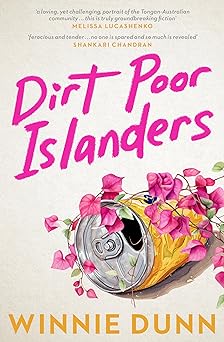
I do like to mix up the sorts of links I make, so we are shifting again, this time to genre or form, that is, to autofiction. My link is to a recent autofiction work that I’ve posted on, Winnie Dunn’s Dirt poor islanders (my review). It is the first book published in Australia by a Tongan Australian, and it makes a significant contribution to our body of migrant literature.
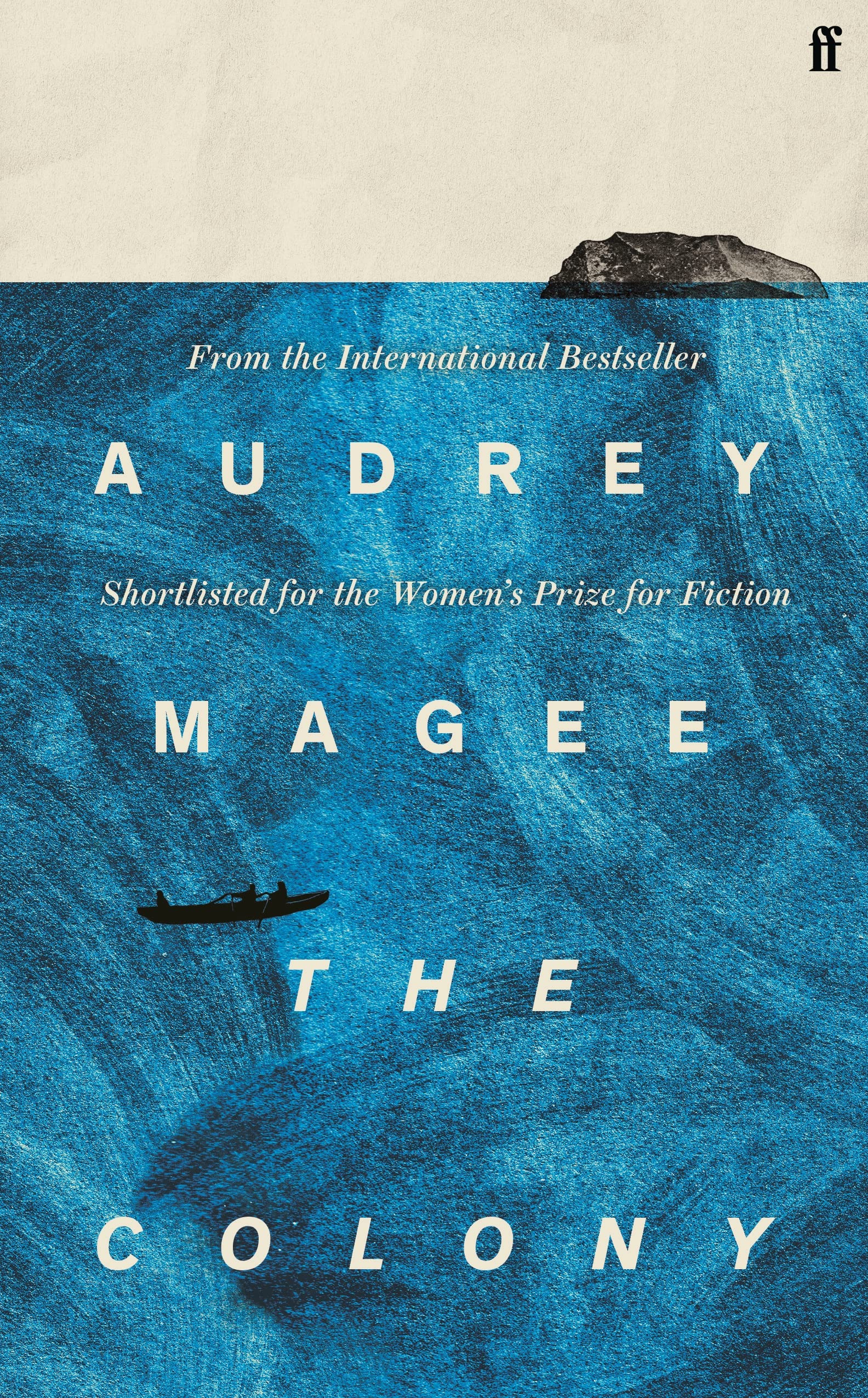
I’m not sticking with migrant literature, however, despite that hint. My next book is about islanders, albeit on their home soil. It’s Audrey Magee’s The colony (my review). This is one of those memorable books (for me) that captures at the micro level what colonisation means for those in the sights of colonisers.
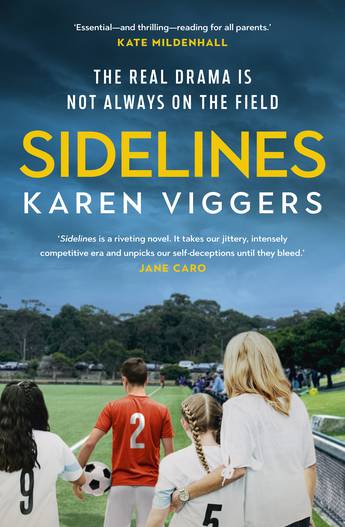
For my final book, we are shifting again, and looking at the name Audrey, but not as author. I like the name Audrey. It was one of my mother’s middle names. It’s also the name of one of the voices telling Karen Viggers’ most recent novel, Sidelines (my review). Given it’s footy final fever time in Australia (albeit a different sort of football), this novel about the challenges of youth sport seems a fitting way to close out this month’s Six Degrees.
Four of my six selections this month are by women, but we have moved a little across the globe, including spending time on three islands (in Mitchell, Dunn, briefly, and Magee). We have also confronted the challenges of growing up (in Jennings, Dunn, Magee, to some degree, and Viggers), of colonisation and migration, and of course of literary hoaxes and heists!
Have you read I want everything and, regardless, what would you link to?
 Whispering Gums
Thank you so much for including SIDELINES in your Six Degrees of Separation. What a nice surprise! I always look at these posts, even though I don’t often comment. It’s such fun to see how you link things. Kind regards, Karen
Thanks so much for including SIDELINES in Six Degrees of Separation. What a nice surprise! I always read these posts, even though I don’t often comment. It’s such fun to see how you connect different books. The name Audrey was a link I didn’t expect!
Kind regards, Karen
I’m so glad you saw it Karen … the linking is always fun to do but Sidelines ticked a few boxes which made it perfect.
Hi Sue, I have not read I Want Everything. But my links would also have to include the Ern Malley Affair – My Life as a Fake by Peter Carey; The Hand That Signed the Paper by Helen Demindeko; The Revisionists by Michelle Johnston; Three Cups of Tea by Greg Mortesen; and Echoes by Evie Wyld; and really What We Can Know by Ian McEwan.
Great links Meg. I thought of the Carey but I read it before blogging and Stephen Orr’s is a great take anyhow. Lovely as always to hear from you.
Nice chain. Literary hoaxes? Hm… What was that book I read about a “lost manuscript” supposedly written by some butcher or something, that ended up being a hoax? No matter.
Found it! “The Mystery of Henri Pick” by David Foenkinos. Yeah, really good read that one, about a library that holds manuscripts of books that were never published, and someone finds a gem among the detritus! Here’s my review! https://tcl-bookreviews.com/2020/06/12/a-revealingly-obscure-story/
Thanks Davida – it’s hard to remember these books sometimes isn’t it. I will check it out.
I hope to read Dirt Poor Islanders this year – I’ve read good reviews.
It is a good read Becky …
I’m very pleased to be introduced to the term ‘takers-out’, much more to my taste than the ‘putters in’. The Colony was such an innovative take on colonisation.
Thanks Susan – yes, it’s usually my preference too. There are good long books of course, but I do love a tight read. And, I’m glad you liked The colony too.
This was a really enjoyable chain, Sue. I’m especially interested in Ethel Malley and Jacob de Zoet, the latter in particular for its Japan setting. I am also reminded of The Colony which has been waiting on my TBR for a fair while now (being a copy I own versus a review copy, it sadly gets pushed down all the time). I also noticed Davida mentioned David Foenkinos’ Henry Pick, that’s one I mean to read to, I read the Martins by him and thoroughly enjoyed it and also have his Second Best, set around a fictional child who gets passed over for playing Harry Potter!
Oh Mallika, I know exactly what you mean about copies your own versus review copies and the former getting pushed down the pile. It’s frustrating isn’t it?
Second best sounds like a good premise. I can think of different ways to take that.
I’ve like Foenkinos’ writing (that is to say, how the translator brings it out) as well as his innovative touches in plot and structure. So Henry Pick should be fun too–it was recommended to me as well.
Very frustrating–I have plenty of books I’ve bought and want to read but I can’t seem to stop myself agreeing to/requesting review copies either.
I know what you mean about review copies.
Great links. I’ve been meaning to read The Thousand Autumns of Jacob de Zoet for years – I’ll get to it eventually!
Haha Helen, I know the feeling … I have books that category too.
In the sense of hoaxes such as Ern Malley, or Piltdown Man, traps deliberately set for unwary critics, I can’t think of many. Some on this list are cousins to hoaxes.
First will be Kipling’s short story “Dayspring Mishandled” the story of a trap constructed, but in the end never sprung.
Second is Naked Came the Stranger, a 1970s lark by a team of writers from the Long Island newspaper Newsday, a naughty sort-of novel, each chapter by a different writer. This doesn’t quite fit, since the points it proved, that it isn’t hard to write such stuff, and that the audience doesn’t require great quality, weren’t really doubted to begin with.
Third is Vortigern by William Richard Ireland, who tried to pass it off as Shakespeare’s work. The play closed after one night, and essentially nobody supposed it really was by Shakespeare.
Fourth is Fingal, James MacPherson’s purported translation from the Gaelic poetry of Ossian. Competent philogists demonstrated that it couldn’t have been what MacPherson said it was, and Samuel Johnson was outspokenly skeptical from early on.
The fifth will be Mark Twain’s “A Double-Barreled Detective Story”. As a whole it doesn’t fit, but he opened one chapter with a lyrical, and entirely nonsensical description of an autumn scene. He’d have got away with it, except that the second-last clause, “far in the empty sky a solitary oesophagus slept on motionless wing,” snapped at least some readers out of their revery.
The sixth is Pale Fire by Vladimir Nabokov, on somebody’s theory that the verse is on the up-and-up and that the prose narration is the poet’s invention of a madman’s fantasies.
I have not read Vortigern or Fingal, though I have certainly read works by authors impressed by Fingal. Nor have I read Naked Came the Stranger, I suppose because I saw no reason to buy a copy and none ever came to hand.
Of the books on your list, I have read only The Thousand Autumns.
Oh these are good George. I haven’t read any but I have vague recollections of Naked came the stranger. And the Kipling would appeal … I like the idea of a trap never sprung. And Mark Twain’s wit always appeal.
I enjoyed reading your take on the theme. Any take is fair go as far as I’m concerned.
A Thousand Autumns of Jacob… is memorable because it was so long. When Borders Books was going out of business I visited on one of the last days and there were still piles of that tome sitting around.
Haha Anne … it was memorable in our reading group because one member created a list of characters to keep track of them. That was years ago but it still comes up every now and then during discussions of other books with lots of characters.
PS I love your links … very elegantly done. I haven’t read Yellowface, but it seems like a great first link. And I love your language thread from then on.
Well, snap! I went with literary scandals and hoaxes too, and included Sincerely Ethel Malley in my chain. It’s a terrific book, I really should read more by Stephen Orr.
You should Rose, he really is great, and under recognised I think. I thought it was the perfect link for an Aussie so I’m glad you linked to it too. I’ll come have a look.
Agreed, Stephen Orr should be much better known, his books are great. You put me on to him, so I should thank you!
I accept your thanks! Seriously though, it’s always great to hear when someone loves a recommendation you’ve made.
Hi, Sue – I’m glad to know I’m not the only person for whom Spring is not a favourite season! For me it’s too windy; there’s far too much pollen in the air; and it’s a harbinger of Summer, which I do not like one bit. Autumn and Winter are definitely my favourite seasons.
Ha Teresa … the two saving graces for me of Spring are Daylight Savings and “sumer is icumen in”. I dislike Spring for the horrible wind and the changeability – the warmth comes then bang, we get 8°C. Summer and Autumn are my favourite seasons.
I haven’t read I Want Everything either. I went with the plagiarism route. The Goodreads description mentioned that a character was accused of plagiarism before she disappeared, so I linked it with Harry Potter and the Goblet of Fire because Rowling was accused of plagiarising elements in the book.
I love the books you’ve chosen for this month’s chain. I’m adding several books to my wishlist. This is my first month participating in this meme and I can already tell it’s going to be hell on my tbr lol.
Lovely to hear from you Adele, I’ll check out your chain. It’s always fun to see what routes people take. I think a few went plagiarism but still in such different ways. Books about plagiarism, books accused of plagiarism.
Phew, that was a lot of jumping around this time! Always keeping us on our toes. Audrey is a lovely name. I have a good friend whose cat is named Audrey, though I realize after typing that that some people might not appreciate animals with human names, especially favorite human names 🙂
Hah Stefanie … I’m not offended. I’ve done the same between people and a dog’s name.
What interesting choices! Dirt Poor Islanders sounds good–don’t know if I can find it or not.
Thanks Lisa … it is a good’un. It would be great to see it get more recognition.
I know nothing about the starting book – had to look it up. So it seems it’s about publishing/writing which gave me a connection to Yellowface. After that I’m stuck!
You’re not the only one Karen … I didn’t know it either. Yellowface seems a good first link. I did see one other do it but I can’t recollect where they went next.
And along the way you’ve reminded me that it’s been ages since I’ve read a David Mitchell. Not that there is ever any shortage of good reading material. Which I know you agree with wholeheartedly.
I agree with both those points … ages here too and of course the latter!!
I have not read I Want Everything, but I have read everything by David Mitchell.
Haha very good John!