
Early in 2023, I created a Monday Musings subseries called Trove Treasures, in which I share stories or comments, serious or funny, that I come across during my Trove travels. Having posted on her two sisters the last two Mondays, I thought it might be fun to round off the series with two references made to Louise Mack in contemporary newspapers, regarding her being a “colonial writer”. They are interesting because of what they directly and indirectly say about Australians as colonials.
The first is a review of her debut novel, The world is round, which was first published in 1896 and which I have reviewed. Published in Hobart’s The Mercury on 17 June 1896, It is scathing:
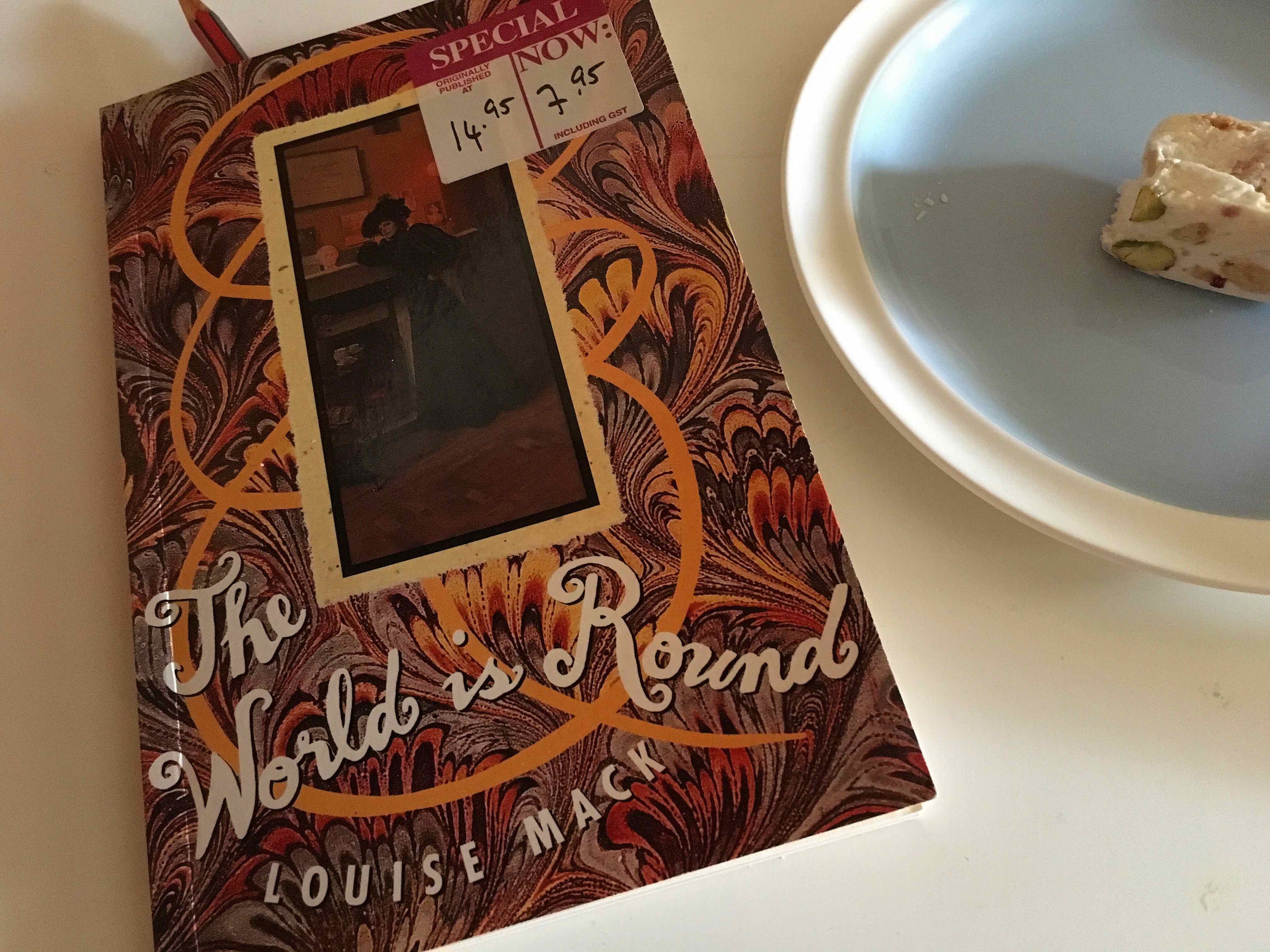
A very different book, though also of colonial authorship, is “The world is round,” by Louise Mack, of Sydney, with which Mr. T. Fisher Unwin, of London, commences a new series of short sixpenny novels. It is a mere skeleton of a story, trivial and disconnected, and making use of that cheap criticism of society foibles, of which shallow natures are so fond, to quite a nauseating extent. Whole pages of misspelt words are given to show, most superfluously, how the young Englishman, and colonials who imitate him, mispronouce the mother tongue, while the caricatures of people themselves are, it seems likely, reproductions of those whom she has really met in society, and for which she certainly deserves all-round ostracism. The book is only 6d., but is not worth that small sum.
Not all thought this. As I shared in my post, another commentater at the time said that “The reader’s report” for this novel called it a “brilliant little study of two men and two women, sparkling and witty, and told in a graphic style”. I wonder who was that reviewer in The Mercury? (The previous paragraph comprises high praised for another Australian novel, Lockwood Goodwin: A tale of Irish life by L. Anderson. It has pretty much disappeared from view, though Amazon has it in a British Library digital edition.) Meanwhile, looking at The world is round from over a century later, I found it a delightful read that still had plenty to offer.
Anyhow, writing about her after her death for Melbourne’s Advocate on 4 December 1935, “P.I. O’L” (the journalist and poet, Patrick Ignatius Davitt O’Leary) included this paragraph:
“One of the best of colonial writers,” was the description English critics in a hurry used to apply to Louise Mack. The term “colonial” was a sort of separative mark. It was meant to indicate that she was not up to the “home” standard, and this in the face of the strident fact that many English writers, men and women alike, inferior to her were accorded an acclaim which she merited much more than they. And speaking of this term “colonial” — English critics still use it. Sir John Squire, for instance, is apt at any moment to think that it really applies. Such a thought, of course, manifests one of the numerous limitations of English critics of Australian authors.
A back-handed compliment from the English, but Australian-born O’Leary makes no bones about his thoughts on the “colonial” matter.
I have talked about the “cultural cringe” before. These two examples demonstrate the sort of thinking that Australians were reading, and that fed into this cringe.
 Whispering Gums
That negative review was vicious. It makes me think of back when I was accepting reviewer copies for Grab the Lapels and would get nasty emails from authors if I didn’t write a 100% glowing review. I mean honestly, if I enjoyed the book over all but had a note or two on what could have been better, these authors were gnashing at the teeth. It’s part of why I don’t do reviewer copies except in rare cases anymore.
I completely understand Melanie. A good writer should appreciate (and learn from) a thoughtful considered review. Reviewer copies do make me anxious.
That negative review was vicious. It makes me think of back when I was accepting reviewer copies for Grab the Lapels and would get nasty emails from authors if I didn’t write a 100% glowing review. I mean honestly, if I enjoyed the book over all but had a note or two on what could have been better, these authors were gnashing at the teeth. It’s part of why I don’t do reviewer copies except in rare cases anymore.
Good example of differing standards in reviewing, ST !
It has ever been thus eh MR?
I’ve been reading some of Louise Mack’s writing lately––Teens (1897), for example. H M Saxby notes that this novel established the school story genre in Australia. Protagonists Lennie and Mabel bemoan the disadvantages they face in editing the school journal, the Chronicle, in the face of opposition from the newly established Daffodil. It’s a thinly disguised account of her rivalry with Ethel Turner at Sydney Girls’ High School in the late 1880s. Mack, editor of the Gazette, did not publish an article submitted by Turner, who promptly set up her own journal published within the school, the Iris. Turner moved from the Iris to edit the Parthenon the year after leaving school. Mack’s eventual move to London, where she established a career in journalism, led her to become the first female war correspondent of World War I as she observed and recorded Germany’s move through Belgium, returning to Australia in 1915 and giving lectures on these events. In this regard, Trove was outstanding as a resource.
Thanks very much Pamela. I was aware of that rivalry and friendship between Mack and Turner snd the story of that article rejection. I think I first read it in you Juvenilia Press publication on Turner? I have read the sequel to Teens but not Teens, yet. I think the Mack sisters are ripe for a biography.
I’ve been using Project Gutenberg to read old Canadian novels, currently the pre-Jane Austen The History of Emily Montague, but you remind me that I really should get back to Australia. The World is Round might be hard to find, but I’ve been meaning also to read her A Woman’s Experiences in the Great War.
Teens and Girls Together were fun and I see she later wrote Teens Triumphant (1933). I might have to find that too.
So much to read Bill. I’d like to read the Great War one too.
E-texts are available from various places – Booktopia, Google Play, for example.
Thanks Pamela, I’ll have a look around
I think I also told Emma I’d read a C17th French novel (in English!). I’d better start keeping track of my commitments.
Haha Bill, you’d better!
Thanks Pamela … I have sussed out a few sources. Are you talking free older works here?
I wonder if the “colonial” slight was not only a smack towards the question of quality of writing but also contained a smack for the presumption that only people of lower quality (i.e. lower caste/class) would have had to choose to make their way in the colonies? So that writing about life in the colony presumed writing about people who didn’t matter actually: grrrrrr.
Ooh, that’s a spin I hadn’t thought of Marcie. Could have an element of truth!! Grrr, too …