There are not, apparently, many prizes for humour writing around the world, but we have two here in Australia, the Russell Prize and the John Clarke Prize. Those from other countries include the Bollinger Everyman Wodehouse Prize (UK), the Thurber Prize for American Humour, and the Leacock Memorial Medal for Canadian Humour. Do you know them? I’d be interested to know of your experience with them, but meanwhile, I’ll move on to the two Australian ones I’m featuring today.
Russel Prize for Humour Writing
According to the Prize website, this prize was established through a bequest from farmer and businessman Peter Wentworth Russell. Its aim is to “to celebrate, recognise and encourage humorous writing, and to promote public interest in this genre”. Established in 2014, it was the first award to recognise the art of humour writing in Australia and, argues the website, makes “a long overdue acknowledgment of the genre” here. They believe it will “promote public interest in humour writing just as its prestigious international counterparts have done”.
The prize is awarded biennially by the State Library of New South Wales, and the winner receives $10,000.
Associated with this award is a second prize, a Humour Writing for Young People Award for “a work promoting humour and championing laughter”. It is aimed at primary school level readers (5-12 years) and “recognises the role of humour in encouraging children to read”. The winner of this award receives $5,000. I love the spirit behind this.
Past winners
A full list of the winners and shortlists can be found at Wikipedia, but here are the winners to date:
- 2015: Bernard Cohen, The antibiography of Robert F. Menzies (Fourth Estate)
- 2017: Steve Toltz, Quicksand (Simon and Schuster) (my review)
- 2019: David Cohen, The hunter and other stories of men (Transit Lounge)
- 2021: Nakkiah Lui, Black is the new white (Allen and Unwin)
- 2023: Martin McKenzie-Murray, The speechwriter (Scribe)
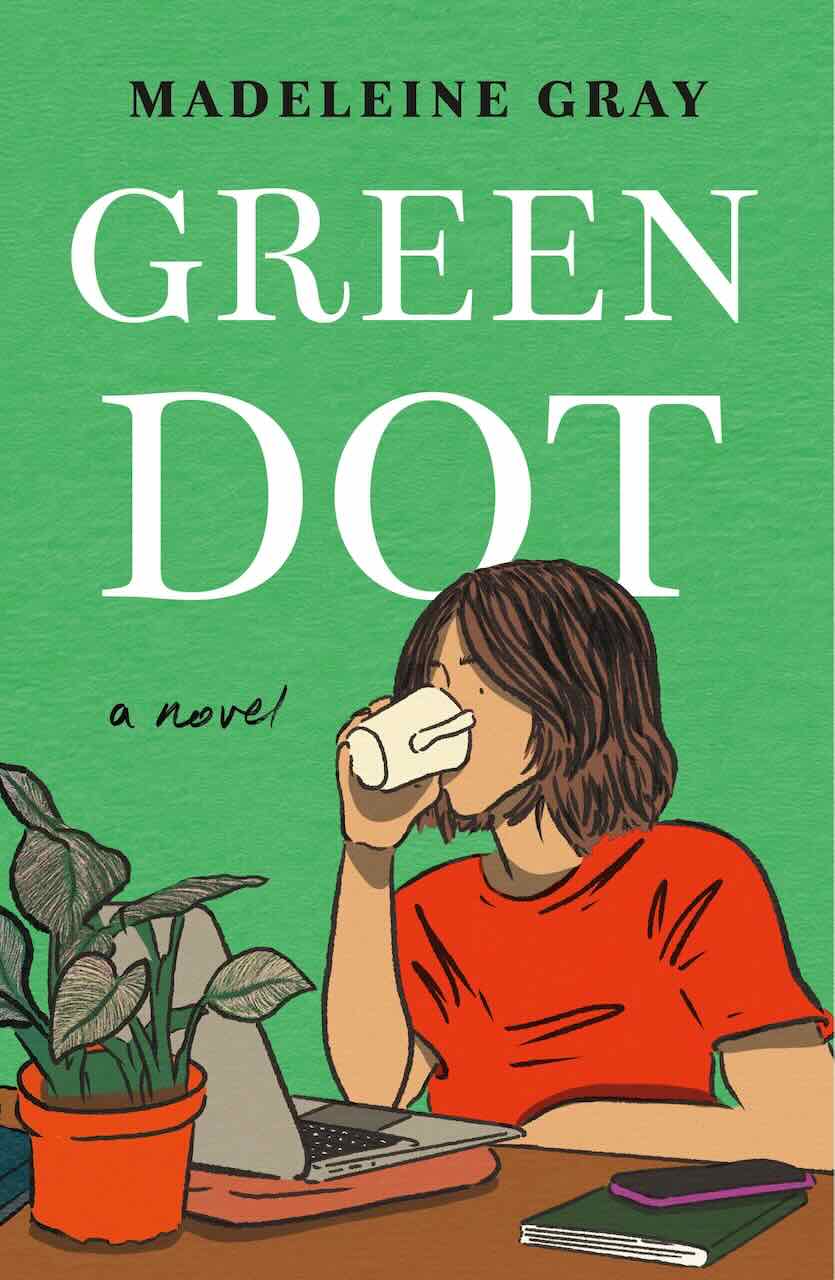
- 2025: Madeleine Gray, The green dot (Henry Holt) (Theresa’s review) : “brings a new complexity to the genre sometimes called ‘rom-com’. It’s sweet but also sour. It’s terrifically funny as well as Anna Karenina sad … hilarious about the tedious realities of the modern workplace” (excerpted from the judges’ comments)
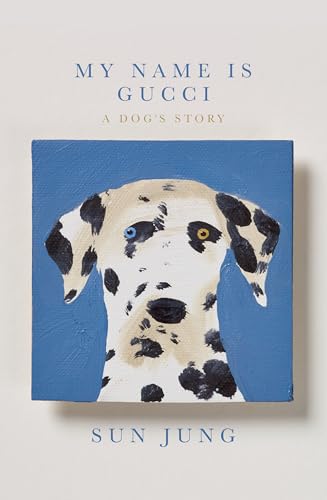
Writers shortlisted for this award over the years include some I have read and posted on, such as Trent Dalton for Boy swallows universe (my review), Chris Flynn’s Mammoth (my review) and Sun Jung, My name is Gucci (my review). They also include other writers I know or have reviewed or mentioned, just not their shortlisted books, like Annabel Crabb, Tracey Sorenson, Ryan O’Neill and Siang Lu. And, of course, there are new writers that I’m really pleased to hear about.
John Clarke Prize for Humour Writing
The second award is very new one. Titled the John Clarke Prize for Humour Writing, it is named for Australia’s much loved satirist and writer, John Clarke (1948–2017). It has been added to the suite of Victorian Premier’s Literary Awards, so will presumably be made annually. The award, which was established by the Victorian Government and the Clarke family, was open in its first year to books of comedic fiction, nonfiction and poetry published in 2023 and 2024. It offers a cash prize of $25,000.
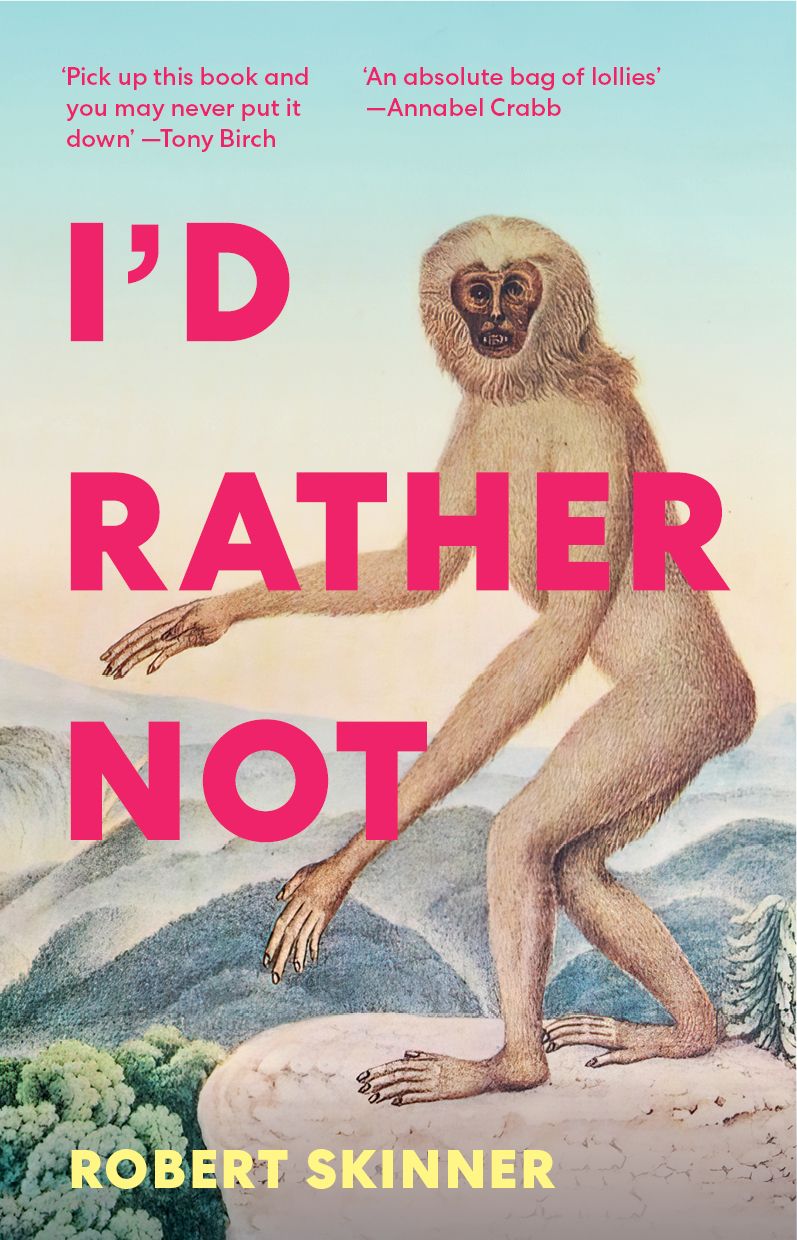
The first award was made this year, 2025, and it went to Robert Skinner’s I’d rather not say. I gave this to Son Gums for his birthday this year, but I’m not sure he’s read it. I certainly haven’t, though I’d like to. However, kimbofo has (her review). She comments that Skinner “knows how to craft a compelling narrative using jeopardy, self-deprecating humour and a deft turn of phrase”. This just makes me more keen. She also says that it was shortlisted for the Small Publishers’ Adult Book of the Year (in the 2024 ABIAs) and that The Guardian named it one of the Best Australian Books of 2023.
This award, as both the Clarke family and the Wheeler Centre’s CEO have been quoted as saying, is “a fitting tribute” to one of our greatest satirists. They hope it will help the careers of future humour writers. It will certainly help Skinner, whom the ABC reports as saying:
“When you’re writing in Australia, in the back of your mind, the question is always, How long can I keep affording to do this?” he says.
“And now the answer is: slightly longer.”
Echoing, in other words, what many authors say about awards with a decent cash prize. It buys them time.
I enjoy humorous writing, particularly at the satirical end of the spectrum, so I love that there are some awards aimed at supporting this sort of writing. I fear there’s almost a natural tendency in readers to equate better with serious, but that is not necessarily the case.
So now, my question to you is: Do you know of any other awards for Humour Writing, and, regardless, do you like Humour Writing? I’d love to hear anything you’d like to share about this.
 Whispering Gums
I don’t follow the Leacock Medal very closely; I read the news of it, but don’t often follow up. Your post made me curious, so I checked and I’ve read 11 books of the 80+ winners over the years. Almost all were familiar, but not many are on my TBR. Having said that, I agree that funny books should be valued more; I think it takes a lot of focus and attention to develop stories which are both humourous but also in-and-of this world. A recent winner, Thomas King’s Indians on Vacation (2021) does that perfectly to my way of thinking but, then, everyone has a slightly different sense of humour too.
Interesting isn’t it? Marcie? How we don’t often seek out humorous books and yet when we come across them we tend to enjoy them. I think for me I always fear they’re going to be silly but of course as with any writing the best ones aren’t. I think too that the response to humour is far more personal/individual than to tragedy, which is an interesting thing to think about isn’t it. And it can date faster (though not all of it does of course.)
A humorous author I read in my early adulthood (I was 21) was the Canadian writer Mordecai Richler (Shovelling trouble) given to me in a Youth Hostel in Tasmania. I can’t even remember whether the traveller was Canadian – but he probably was.
Yes, Richler is one whose wit is often highlighted. His acclaimed later novel, Barney’s Version, which was also filmed so might be better known than some of his other fiction which is better known in Canada, did win the medal one year. But it’s a darker, sadder sort of wit than that of the authors whose names appear more often on the medal list. It IS interesting that tragedy feels so much more immediately universal. I was going to posit that perhaps beauty is a concept that is more universal, but that’s not true either. Perhaps love? But not humour, this we know.
Yes, beauty – you are right. Not universal either. But love? I guess that’s more universal but perhaps not quite AS universal in how it is viewed.
I’ve been squirrelling away at this idea in the back of my mind, because I feel as though I am constantly thinking about what brings people together and what separates them these days. Now I’m wondering if it only seems like tragedy is more universal somehow. When I think about the variety of expressions of grief, culturally, I”m not sure it is either. Think about all the radically different grief memoirs/novels, from Jessica Au to Helen Garner (ohhhh, I am straining my AusLit references, that’s all I’ve got LOL). Perhaps it’s no more “universal” than comedy after all…
Oh no, don’t destroy a theory iv had since my university days Marcie. Let me think. I’m thinking the way we grieve is different from what we grieve about? (Eg the death of a child; the shocking death of someone through accident or suicide or murder etc? That is, I’m suggesting that, say, all or most cultures see the death of a child as tragic?) Whereas with humour I think there is difference in what makes us laugh?
LOL Oh, noes, we must leave our student-era selves’ brilliance intact, unchecked. Quick, change the subject! I think we are both observing the same truth, but it’s about the language used to express it…that’s what tripping us up somehow. I’ll put the rest in a separate comment to outwit the weird nesting-comments that are due to erupt any second! heh
Haha … we must … and good thinking re nesting.
Having known NOZZINK of awards for humour, I’m delighted to hear of them.
But you will be saddened to be told that My Favourite Author’s nine novels, categorized as crime writing, could, in my not frightfully humble opinion, be listed to win any of them.
And another crime writer I used to love, this one a Scotsman, could write some stuff so funny that I nearly choked laughing.
Humour must be absolutely ridiculous.
I have spoken.
Peter Temple? Really? Please convince me MR. I have read two but I don’t recollect a lot of humour. And, are you going to name the Scottish one. I could guess but I won’t!
I do enjoy ridiculous or, I think I’d say absurd, humour. Are they the same do you think?
Well, OK, I wuz exaggerating a bit. But the Jack Irish trio contain in their dialogue – which I would give anything to be able to replicate in terms of readability ! – a very big lot of humour. See, the attraction for me was in the characterization, the plots, the dialogue and the humour under it all.
(Impossible to tell you my opinion of what the ABC did to these terrific crime novels; but the producer/s ought to be skinned alive – just for the casting, let alone anything else !)
I have read a fair chunk of James Thurber’s work, and liked it. Wikipedia’s list of Thurber Prize winners tells me that I have read the work of a few winners, but not the books for which they received the prize. A possible exception is the anthology of Calvin Trillin’s work. I was interested to see how recently the prize was established.
I don’t ordinarily think of the category “Humour Writing”, and this is not just because I follow Webster’s in omitting the second “u”, more because it seems awfully broad. Around the house there are collections of short pieces by Trillin, S.J. Perelman, and Flann O’Brien. There is one novel by David Lodge, and a couple by Evelyn Waugh. There is a copy of Mark Twain’s Roughing It, which has some terribly funny passages, some chapters not meant humorously, and some in a style of humor that long ago went out of fashion. Some of Kipling’s short stories are very funny.
Thanks so much for engaging with this George. I agree with you about its being very broad … I’m sure judges struggle with this a bit. There’s also the issue of what’s funny to one person (even in the same time period and culture) is not funny to another.
I think too of witty books that probably aren’t defined as humour but that can make us smile or laugh. Jane Austen’s books for example.
Hi Sue, I know only of John Clarke Prize for humour. He was funny and very witty. I don’t seek out humorous books. I like dark humour and witty novels. Thea Astley, Clive James and Toni Jordan always give me a laugh. I like to read animal stories, especially about dogs, as they too give me a laugh; and I have read My Name is Gucci. Overseas writers such Nora Ephron, Kurt Vonnegut, and John Irving always make me laugh.
Thanks for this Meg. Your list of authors show just how broad a form or style it is. I’ve read all those authors but some so long ago I don’t remember their particular humour.
I don’t generally read books which are written to be humourous, though I don’t mind a bit of sly humour from time to time. My father gave me a huge hardback, The Great Book of Humour, which I haven’t read but which when you pull it from the shelf is upside down, that is the title is printed upside down on the spine. I’m sure someone thought that was funny at the time.
Thanks Bill. I don’t tend to gravitate to books promoted that way because, I guess, I’d fear they weren’t serious! But I do love humour that illuminates issues and ideas I’m interested in.
Thanks for the link Sue, I did enjoy this book!
Thanks Theresa… a pleasure, it does sound like something I’d like.
It was fresh and modern, a little bit different, and I’ve always liked that.
I love humorous writing so long as the author isn’t trying to be quirky and push too hard where humor isn’t really working. Typically, if someone sees things that are normal but talked about in an unusual way, that can be quite funny. I laughed many times when reading the Australian novel Lantana Lane. Writers who are observant are often humorous because they SEE other people, and let’s face it, lots of people are weird. As for humor prizes, I isn’t assumed the American Mark Twain prize was for humor, but now I see I am incorrect.
You are spot on Melanie re the sort of humour writing I like. I’m not sure everyone picks up on it either if it’s done subtly. I often find myself to be the only one chuckling in a movie because I see the director/scriptwriter conveying just the funny sides of the things people do. I sometimes feel as though I’m weird … hmm, I guess from what you say I am!!
I must read Lantana Lane … I’ve put it forward to my reading group in the past. I might push it again.
Lantana Lane is so good. I’ve read it twice, once because an Australian blogger reviewed it (I’m assuming Bill), and then later on I read it aloud to Nick.
I can’t remember when I read good humour. I didn’t know about the John Clarke award. I liked him so much. He really was very funny and so witty. We always lose the good ones!
He was great I agree Pam. His death was just awful – so sudden.
Well, I guess he was doing what he loved, as ‘they’ say. I never know who ‘they’ are. 😀
Haha … yes, “they” can be a bit silly really, can’t “they”. I mean, if he knew that doing what he loved that day would result in his dying, would he have done it?!
One can only wonder🌻
To carry on from our comment thread above…
My current theory (related to the convo about Chekov’s “Gooseberries”percolating between me and Bill and Bron elsewhere) is that concepts shift across time and space (the concept of Tragedy, or in the Chekov chat, the concept of Beauty) distinct from individuals’ feelings.
So, then, could we say, everyone experiences loss in a similar way? That when we feel a loss, it feels similar for different people (different creatures…thinking about how elephants and ravens have mourning rituals).
But we can’t really say that everyone defines Tragedy in the same way, can we? Thinking about the cultural belief in “honour killings” for instance, in which a girl/young woman who has behaved “dishonourably” in that culture is viewed as being better off in Paradise, better off dead, than inhabiting that “shameful” state of “dishonour”. But even the family members who sanction such deaths (commit those murders) might feel the emotions that accompany loss.
This is dropping with both feet into a semantic puddle, but I know you think that’s good fun too. Although, ultimately, we’ll have to continue stewing about it privately, cuz it just can’t fit into any comment thread. hee hee
I won’t go on too much more!!! But yes, as I wrote my previous comment I did think about some of those deaths in different cultures – including the killing of girl babies or even excess babies – and realised the ground was a bit shaky. But, ok, I think I would still argue that within our own western culture tragedy (what we cry over) is more universally understood/felt while the sorts of things we laugh over does vary more. I think we see that in our daily lives. Heck I see it in my own home and family!!
I do know what you mean, I feel like I see this too. For me, it more often comes up with viewing than reading, but they’re all narratives really. When I watch a comedy, I am constantly evaluating it to see with whom I can share it, but even once I decipher that, and think I have a match, I usually follow it with a “but everyone’s idea of comedy is different” and often a discussion emerges about other comedy shows we’ve seen recently to see where it falls on the spectrum. But, then, I never recommend sad shows (anymore) because nobody else I know watches them, so those conversations simply never happen… So I’m going to think some more on all this.