Well, I am back down south, experiencing a colder than average start to the winter, which I do NOT like. However, I do like the Six Degrees meme, so let’s get straight to it. If you don’t know how this #SixDegrees meme works, please check Kate’s blog – booksaremyfavouriteandbest.

The first rule is that Kate sets our starting book. This month, for the first time this year, it’s one I’ve read, Michelle de Kretser’s Theory & practice (my review). It won the 2025 Stella Prize, and has been shortlisted for this year’s Miles Franklin Award, which are both significant literary awards in Australia. Fundamentally about “the messiness of life, it also challenges us with its form, which mixes fiction, essay and memoir in a way that also nods a little to autofiction.
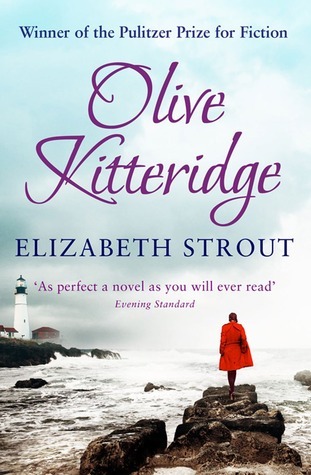
Another novel with an interesting, though not quite so innovative, form, and which could also be said to deal with the messiness of life is Elizabeth Strout’s Olive Kitteridge (my review). Here, the form is connected short stories. In some stories, protagonist Olive is front and centre, but in others she makes a cameo appearance or is only briefly referenced, which makes the novel almost as much about place and community as it is about Olive.
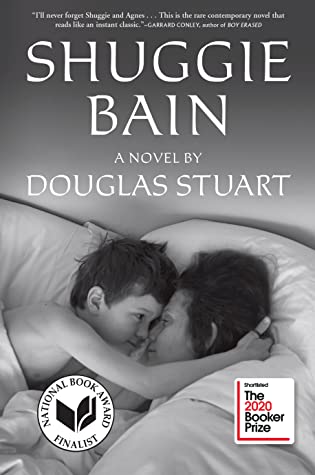
My next link is is to a novel that is also named for its protagonist, and that happens to be about some very messy lives too, Douglas Stuart’s Shuggie Bain (my review), although the focus is a dysfunctional family rather than a wide community.
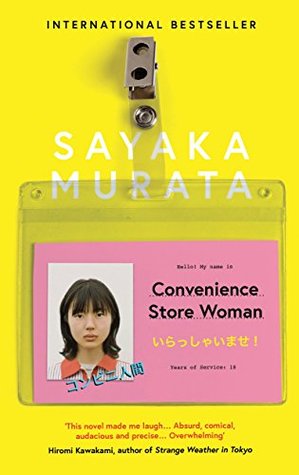
All the books I’ve named to date have been award-winners – de Kretser won the Stella, Strout the Pulitzer and Stuart the Booker. So, perhaps my next link should also be to a prize-winner, but of a different prize again. How about Japan’s best known prize, the Akutagawa Prize? The winner I am choosing is also named for its protagonist, but not by her name. I’m talking Sayaka Murata’s Convenience store woman (my review). It explores a sort of dysfunction but one that stems from society’s expectations of what is “normal” behaviour.
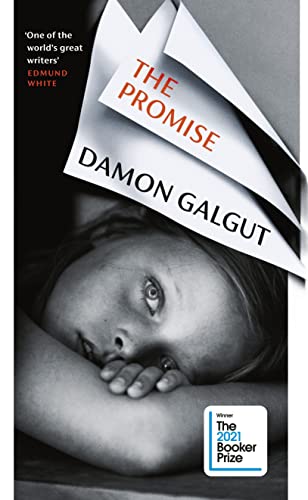
So, let’s look at normality. In my post on Damon Galgut’s The promise, I referenced its epigraph in which Fellini reports being asked, “‘Why is it that in your movies, there is not even one normal person?’”, and I suggest that this challenges us to consider what is normal. I believe Galgut, with his motley cast of characters wants readers to understand “normality” as a broad church. But, of course, the novel, set in post-Apartheid South Africa, is about much more than that. (Oh and The promise is a Booker Prizewinner.)
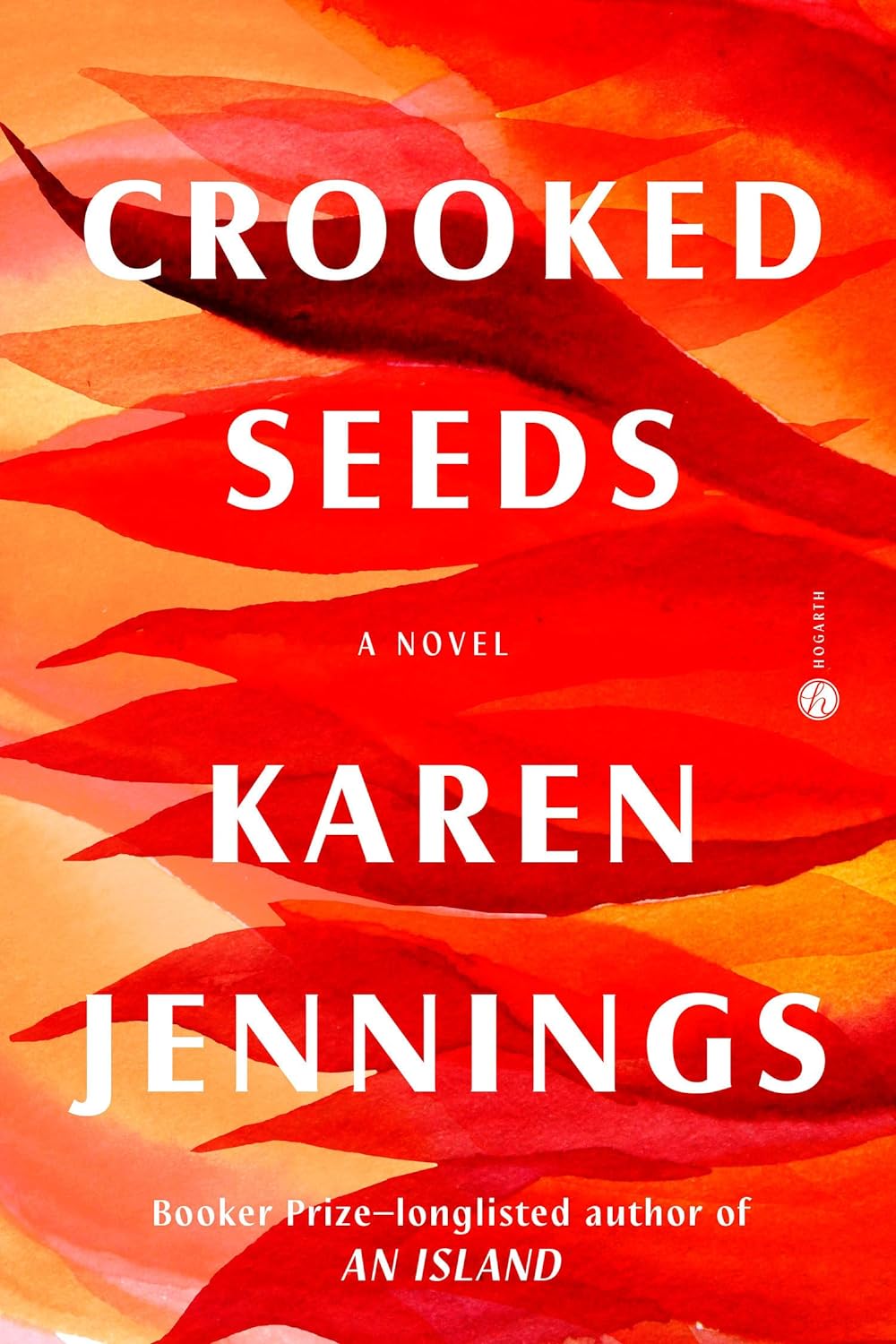
So now I’m going to leave award-winners but stay in post-Apartheid South Africa with Karen Jennings’ novel Crooked seeds (my review). It is about a challenging, self-pitying white character who can’t see beyond her own miseries, but who also seems to represent white, privileged South Africans who see themselves as victims in the post-Apartheid world. I described the novel as “a personal story with a political heart”. Crooked seeds is not an awardwinner, but it was longlisted for The Women’s Prize.

And now, to conclude, I’m going to remain in post-apartheid South Africa, but with a book written by an Australian, Irma Gold’s Shift (my review). I could also call this “a personal story with a political heart”. However, here, while our protagonist is a white Australian male, the setting is in the black South African community of Kliptown in Soweto. Shift explores how this community is surviving, or not, in a political environment in which the post-Apartheid promises of freedom have not eventuated – at least not yet. Will they ever? Shift has not won any awards, but was only published this year. I hope to see it on next year’s award lists.
So, all of this month’s books have contemporary (or near future) settings, but around the world – Australia, Scotland, Japan and South Africa. Four of the authors are women. I’m not sure I can link back to the opening book except that both authors are Australian writers, and both do explore in some way the relationship between art and life.
Have you read Theory & practice and, regardless, what would you link to?
 Whispering Gums
I think you should try to get a bit of reading into your life, ST … [grin]
Haha, MR. Actually I wish I could! I am so behind and it’s frustrating because it’s what I want to do. Nothing productive like crocheting! Just reading!
Never mind productive, woman – your horizons are possibly wider than just about anyone’s !!
You are such a great supporter, MR, and I thank you for it!
It’s nuffing: only because I admire you and what you do.
It’s something actually … and I appreciated it.
Olive Kitteridge and Shuggie Bain are great examples of stories reflecting the messiness of life! As for The Promise, I often wonder what is normal, too, and at this point, think it is everything and nothing.
As a crocheter who enjoys feeling productive, I agree – there isn’t enough reading time!
I think you are right Rose about “normal” – everything and nothing makes good sense.
And, haha re reading time. The readers’ lament, eh?
Hi Sue, I have read Theory and Practice and thought it was a great read. I do like your links. Mine are Tell Me Everything by Elizabeth Strout; The Waves by Virginia Woolf; White Fang by Jack London; Sophies World by Jostein Gaarder; Tomorrow, and Tomorrow, and Tomorrow; and Of Human Bondage by W Somerset Maugham.
Thanks Meg … good links. I clearly must catch up with Strout and finally get to Tell me everything! I’ve only read Sophie’s world and Of human bondage of your list. I’ve read a bit of Woolf, but not The waves.
A great chain, I always find books to add to my TBR list. I have a Douglas Stuart novel I have to read, I must move it up my long pile.
Thanks Claire … I’d read another of his.
i have read any of these but keep meaning to read Elizabeth Strout and have one in my audiobook reservations from the library so hopefully soon!
Here’s mine for this month: https://portobellobookblog.com/2025/07/05/6degrees-of-separation-for-july-2025-from-theory-and-practice-by-michelle-de-kretser-to-an-italian-island-summer-by-suemoorcroft/
Thanks Joanne … it took me a long time to read Olive Kitteridge, but now I’m keen to read more of her.
Lots to explore here! A very thoughtful chain.
Thanks Susan … I enjoyed your chain too!
I thought about going the unusual format route, but I didn’t have enough to make a chain. But you put some very powerful sounding books here, and lots of winners, I see.
I started a different route at first Davida but it got lost so I went the form idea instead. I didn’t think about it, but you are right, there are quite a few powerful books here.
What an interesting chain! Sorry but in Crooked Seeds I’m picturing the White South Africans just allowed to immigrate to the USA without waiting in line with the rest of the world’s applicants. Or Earl Spencer–at least he went back to UK to bleat his privilege. Maybe all of those? I loved Convenience Store Woman
I can understand that Lisa. It’s a very interesting novel about damage and entitlement.
So, Lord Spencer was truly who I should picture! LOL!!!!
Kudos for not taking the easy way out and linking first to either a Woolf or Woolf-adjacent book! I have made it to #21 in the library holds queue for 5 copies of the book. Maybe my turn will come round by September? Or I will give up waiting and break down and buy a copy 😀
Haha, thanks Stefanie. I did think of that briefly, and then I thought, would you believe, of “sense and sensibility” as sort of opposing but related ideas!
You could buy it, but I’m sure you’ve got books that can fill in your time until September!
Of the books you list, I have read only Olive Kitteridge. The first title reminds me of the quip (which I may have quoted to you in some other context) that the gap between theory and practice is smaller in theory than it is in practice. A lot of literature seems to deal with just that gap, so
Degree one will the Laputa episode of Gulliver’s Travels, as being a satire of the theorists of Swift’s day.
Degree two will be Candide, in which theory quite steadily fails to keep up the practical life, until the very end.
Degree three will be A Blythedale Romance by Nathaniel Hawthorne, set in a lightly disguised version of Brook Farm. Here the theorists–New England and perhaps middle states intellectuals–find themselves in danger of turning into practical farmers.
Degree four will be War and Peace, in which at least Pierre Bezuhov and Prince Andrei are at different times troubled by the gap between theory and practice.
Degree five, to take a break from novels, will by Kant’s Critique of Practical Reason, a work of theory about practice.
Degree six is A Theory of Justice by John Rawls, a book that draws on aspects of Kant’s work.
You may have shared that quip some time ago George, but it works well here. I have read some of the books in your list – Gulliver’s travels and Candide. I have started War and peace two or three times but I seem not to do well with long books. I would like to think I’ll read it one day but looking at my age and shelves I suspect it may not happen. I love your description of the Hawthorne!
I haven’t read any of these but they do sound intriguing – and the messiness of life is always with us! Not to mention, the messiness of one’s house due to reading instead of cleaning . . . .
I’ve been meaning to read Elizabeth Strout after vacationing on the Maine coast last September but, as you say, other books get in the way. Maybe I need to get my book group to read one. I am hosting this month but I chose the book I just finished, The Demon of Unrest, which I liked very much.
Haha, yes indeed Staircase! Re the messy house, I mean. Who wrote The demon of unrest?
I finally got to read Olive Kitteridge because my reading group decided to do it.
I have almost all of these books either on my bookshelf waiting yo be read or on my kobo wishlist waiting to be read. I’m pretty keen on getting to Shuggie Bain. There’s just always too many books to choose from.
I’m glad you have most of these books on your TBR (physical or virtual), Becky. Shows you have good taste! Haha! Seriously though, I thought this chain of mine would resonate with people more than mine often do, because most of the books are, or have recently been, in the zeitgeist.
I really enjoyed Convenience Store Woman, Olive Kitteridge and The Promise but not read the others. I liked your connections.
Thanks Pam … I was hoping with this chain there’d be more books people could engage with. That is, fewer of the more obscure books that I often include. And I think that’s happened.
Great chain of unusual books!
Thanks Emma …
Thank you for including Shift, and for your generous words. It’s in excellent company, too! Damon Galgut’s The Quarry is one of my favourite books but I haven’t read The Promise. It’s on my list now. And I adored Olive Kitteridge, but then I love everything she writes. These six degrees posts are always good fun, and I enjoy seeing how you connect them!
Thanks Irma … I loved finding a way to include your book. I need to read more Galgut and more Strout for that matter! Six Degrees is fun.
I’m glad you mentioned that Karen Jennings’ novel was listed for something; as soon as you mentioned that it wasn’t a winner, I was straining to recall for which prize it had been in contention recently (and whether the winner had been announced). I’ve been meaning to read another by Damon Galgut; the only one I’ve read is the one about E.M. Forster (I hope I’ve remember that correctly) and I really loved it.