Last week’s Monday Musings about the Les Murray Award for Refugee Recognition reminded me of the assumptions we make when engrossed in our own little world. When I first heard of this award being made to the slam poet Huda the Goddess, I assumed it was in the name of the Australian poet, Les Murray, only to find it was named for Les Murray the sports commentator. Various commenters weighed in with which Les Murray they first thought of when they heard the name.
Well, this ambiguity raised its head again this week’s post. It was inspired by Western Port Writes first literary event for 2025, held back in February. It was a panel discussion themed “The Family Lode” and featured Australian writers Tony Birch, Melanie Cheng, and Kylie Ladd in conversation with literary/arts editor Jason Steger. I heard about it through Steger’s weekly emailed newsletter:
‘Grandparents underpin each family and story,’ says Steger. ‘They are a hugely important anchor to family. We should have a category called Grandparent-Lit.’
Grandparent-Lit? My ears perked up, and I thought that would make a fun Monday Musings in the future, one of those posts where I could introduce the idea and then let you all fly with your suggestions from your neck of the reading world.
However, first I did a quick internet search to see if there’s anything out there on the topic. And, faster than you can say grandparent-lit, up popped an article from The Guardian published in late 2020. It was by Imogen Dewey and was titled “Jolly, artificial and extremely satisfying: the simple joy of ‘Grandma lit'”. Great, I thought, but my pleasure was short-lived, because her idea of “grandma [not grandparent] lit” was something very different. It was in a series framed “How I fell in love with …” which, in Dewey’s case, was – wait for it – crime fiction! For Dewey “grandma-lit” is not books about grandmas (or grandparents) but about ‘the sort of books grandmothers love … The sort some people refer to as “comforting” or “cosy”, in that Certain Tone reserved also for “comfort eating”, “comfy clothes”, “comfortable relationships” – the insinuation being that it is slovenly to crave to be comfortable’. Oh well, back to the drawing board I went.
AI – that little summary at the top of most internet searches these days – knew what I was talking about. It said this:
“Grandparent lit” is a literary genre that often explores the relationships between grandparents and their grandchildren, focusing on themes of intergenerational connections, family history, and the unique perspectives of different generations. It can include various forms of literature, from picture books for children to novels for adults, with some works specifically targeting grandparents or exploring the grandparenting experience.
AI suggests common themes in these books: Intergenerational connections which explore the relationships between grandparents and grandchildren; family history and cultural heritage meaning stories, traditions and values are shared with younger generations; the grandparenting experience which examines the challenges and rewards of being a grandparent; and memory and nostalgia which encompasses reflecting on past events and relationships.
And I found a 2024 post in Substack, titled “Where are grandparents in literature“, by novelist and journalist Penny Hancock. She writes that “she’d been told by publishers that people don’t want to read about older people’s lives because no one wants to think about getting old”. She argues that this presupposes that grandparents are old (whatever that means) and that readers are narrow-minded. Whatever the reason, she found that, with the exception of children’s books, it is unusual to get a grandparent’s point of view in novels. She asks whether we are still marginalising and generalising a group that has always been subject to prejudice. Anyhow she names a few great books, which most of you will know (but check out the post!) Meanwhile …
Select list of (mostly recent) grandparent-lit books
Now, here is where the fun starts. I will share a few books (mostly novels but with some exceptions) in which grandparents feature significantly – and then hand it over to you. I am not including children’s books because they are too numerous and geared to a different audience to my readers, albeit some of us are grandparents and might like to promote ourselves! (If you are interested, Readings has produced a list of picturebooks for grandparents.)
My books will, of course, be Australian, but you can share anything you like (even if you’re Australian. I’m generous like that!)
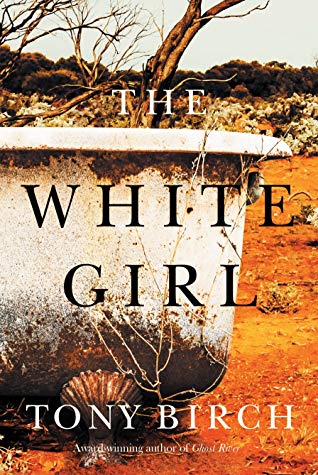
- Tony Birch, The white girl (my review): a novel about Odette, a First Nations grandmother, who is determined to save her grand-daughter from falling under the control of white authorities.
- Melanie Cheng, The burrow (my review): a novel about grief, and the role played by a rabbit and the grandmother in restoring some sort of balance.
- Helen Garner, The season (my review): nonfiction/memoir about Garner’s spending a football season with her teenage grandson, and the insights she gains into boys and men (among other things).
- Elizabeth Jolley, The orchard thieves (my review): a meditative novel in which a grandmother ponders the meaning of family and children, and quietly uses her wisdom and humanity to rebalance some family tensions.
- Jeanine Leane, Purple threads (my review): a First Nations multigenerational story told by two girls, their matriarch grandmother Nan, and two aunts, all working together to forge an authentic and sincere way to live when you are “not the ideal colour”.
- Eleanor Limprecht, The passengers (my review): dual narrative journey story of an American war-bride returning to her home after 68 years, with her 20-something Australian granddaughter.
- Favell Parrett, There was still love (my review): a novel about two Czech sisters, one who ends up in Melbourne while the other remains in Prague, told mainly through the eyes of their grandchildren who learn that love can survive, that home is wherever you make it, and the importance of keeping on going.
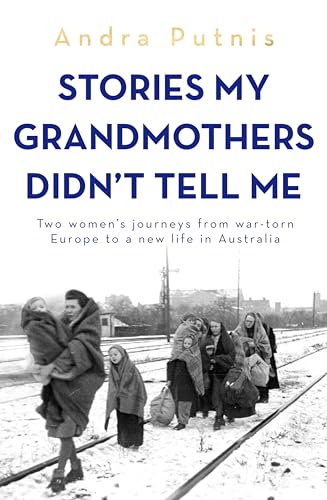
- Andra Putnis, Stories my grandmothers never told me (my review): dual biography-memoir of the author’s two Latvian grandmothers, with reflections on her relationship with them.
Various themes recur here, including the offering of protection and support, showing resilience, and passing on traditions. While some of these stories are warm-hearted, none are sentimental. These grandparents tend to be real and flawed, with their own demons, but they also tend to offer, either directly or indirectly, some wisdom about how to keep on going, even when times are hard.
Now, do you have any favourite grandparent stories?
 Whispering Gums

What a great idea and a super list!
Thanks Liz.
AI is also really good about providing lists on various themes!I recently asked Deepseek for a list featuring boarding houses and it even divided the list to cover different eras.
Being old myself now I love novels about aged women and the site/column bookword is an ongoing collection.
I was excited to see I have “The Passengers” on(one of)my tbr shelves but,true to form,I’ll give the bots something to do.
Thank you for your always engaging and helpful blog.
Haha thanks Patricia – particularly like your thoughts about the bots. I haven’t used them for lists though I did see a list produced by one during a browser search that was quite inaccurate – in that it said it was a list of novels but included several nonfiction works. Which is not to say they are not useful but we should always check what they say shouldn’t we.
That boarding house list sounds great.
Be interested if you could name some Australian ones.The Deepseek list mentioned Ruth Park’s Harp in the South..which I own and should read again .
The one that springs mind is Emma Ashmere’s Floating garden. (Besides The harp in the south). But I can’t think of others. I’m sure they exist in novels of the 30s/40s but my mind is blank right now.
Most, ok many, of Miles Franklin’s novels feature a matriarch who is a grandmother – starting with My Brilliant Career or maybe All That Swagger
Seems you’ve been readying yourself for a list such as this for a good long while, ST !!!
Haha MR – not sure about readying myself exactly but it sure appeals!
Your research is, as always, amazing.
Thanks Carmel …
She’s a researching fool, Carmel ! 🙂
It’s fun!
I’ve looong wanted to have a topic to research, but there’s nothing other than ancient scans of matters to do with my father’s lawyerish stuff in Trove – but I do like to pop in an correct the scans. Not research but.
Anything you do in Trove is worth it MR, so its great that you do that, but I wish you could find something you’d like to research.
The first one that sprang to mind was the wonderful The Summer Book by Tove Jansson. I am sure there will be others.
Thanks Josie … I think that was listed in that link I provided. I knew that others – by Haruf and Strout for example – than I knew of this one. I’ve heard of this author but not read any by her. I should.
I don’t have a favourite grandparent story but the theme os an interesting one. In my work we deal with elder abuse matters and older Australians and I’m sure elsewhere have a lot of unique and valuable experiences and perspectives it would be great to read in fiction
Thanks Becky. Elder abuse is a horrible thing. We’ll abuse of anyone who are powerless or less powerful – children, people with disabilities, elderly people – is disgusting. Good on you for supporting them.
Your ears perked up when you saw Grandparent-Lit in that newsletter and mine perked up when I saw it in the title of your post!!!
I asked DeepSeek and it came up with these:
Note that they are not all about grandparents, per se, but feature main characters that are at least 60 years old.
Haha thanks Jinjer. Love that my post title perked up your ears.
That’s quite a list and of course it has no Australian books. It also shows the limitations of AI. I’ve seen it include non-fiction in a list it describes as fiction. However, I still think it’s useful, isn’t it, because it provides a starting point.
Of those you list I’m most interested in The Pacino parlour because I’ve read and liked that author.
Oh, sorry! I got so excited I forgot to type “by Australian authors” in my Deepseek search. I refined the search and it gave me a few titles and then said if I wanted more recommendations I should check out the full list in the sources…”particularly Whispering Gums analysis of grandparent-lit”!!!!!!!
You’re joking aren’t you?! If not, my, that was quick.
Nope! 💯 serious!!!!
Wow … I guess that says there’s not much out there on the topic!
BTW you were allowed to suggest any titles from anywhere – I confined mine to Aussies because the post is Monday Musings on Australian Literature. But commenters are always welcome to roam widely in their responses!
I avoid AI – I think it will end in tears.
The (secret) grandmother- granddaughter relationship is important in Drusilla Modjeska’s The Orchard.
Thanks Bill … I never have finished The orchard. I’m sure I still have it. I maybe I’m ready for it now. I just have to find it. I just couldn’t get into it but I think my life was just too complex at the time I tried to read it.
Hi Sue, I have read all the stories you mentioned about grandmothers, except For Stories My Grandmother Never Told me. I do remember Heidi, and I watched the film on TV the other day. I think Helen Garner’s The Season is a must read for grandmothers. Today, I was out with my three grandsons, (aged 18-21), shopping and lunching. I feel that I do have a special connection with them.
Oh how lovely Meg … I will be old by the time mine are that age.
Love that you name Heidi. Loved that book. I still have my childhood copy – one of the very few I kept from our downsizing.
I suppose my first thought is why we have to conceive of all older folks as grandparents. I don’t have kids, and I just turned 40. I’ve had older friends, typically women in their 80s, who also do not have kids. I’ve noticed that those without kids tend to expand their scope to include friends of all generations under their wings, and I love that. The focus doesn’t need to be people to whom we are blood related, but those with whom we choose to associate. I would appreciate more “elder lit,” or whatever folks would want to call it, because I think when we are afraid of getting older, we’re showing that we know nothing about getting older, and aren’t stories just the best way to show different options for how to live? When I hear “grandparent lit” or “grandma lit” I definitely think of cozy mysteries, “Christian” romance, and Amish romance.
Do we conceive of all older people as grandparents, Melanie? I certainly don’t. I have very few cousins because two of my three aunts/uncles didn’t have children, and I had great aunts and uncles who didn’t either. My brother’s partner’s two siblings don’t have children. My daughter, just a little younger than you, is not having children. In other words I have no expectation that people have children. But, I did like the idea of a genre of books featuring grandparents because, unless we have been unlucky, we all have/have had grandparents and their roles in our lives can vary greatly, including some negative ones. I think a lot about mine snd what they taught me.
I agree however about two things : “grandparents” don’t have to be blood related, and more elder lit in general would be good. I have learnt a lot about getting older from the older people in my lives, but books certainly enhance that knowledge and understanding. When I was producing my list I had a few books in mind about older people who either weren’t grandparents or where the book didn’t mention or focus on that aspect of their lives.
That’s interesting that you thought of cosy lit. That idea didn’t even cross my mind!
What a great post, Sue. Another reading of the term is lit written by grandparents. My partner is currently writing a magnum opus for and with our seven year old granddaughter. Oh, and I don’t think anyone has mentioned Edenglassie which has a magnificent grandma character
Oh no … how did I forget her, Jonathan – it always happens!!! She is great. I think FN literature is rich in older women because they are so respected in that culture, from what I understand anyhow.
And love your third meaning. Will you be reviewing that magnum opus?!
Reviewing it? I think not, though I may be editing and proofreading!
I was joking of course … but what a lovely project.
It strikes me that five of the eleven persons in our neighborhood book club are grandparents, and at least one is a great-grandparent. Since selection goes by household, three eighths of the choices must qualify as grandparent lit. It would be hard to find a quality that distinguishes them from the other five eighths.
Haha, George, love your analysis. So you all take turns choosing books? Our group does it by consensus. I think I prefer that but of course it’s what I’m used to.
Yes, we take turns. In theory that could increase the chance for unexpected masterpieces and for really terrible choices. In practice, I’m not sure how far that is the case.
Oh George, this would be a perfect response on my Theory & practice post!
BTW you wrote “practice”? In my experience Americans have tended to use the “s” version for the noun as well as the verb, whereas we, and presumably you, distinguish the two.
I’ll play along, by adding one by a Canadian writer who’s probably just well-known enough to be recognisable overseas, Miriam Toews’ and her 2021 novel Fight Night.
It’s very different from Women Talking, which has garnered so much chatter, after the film was so internationally lauded (and different from her debut, A Complicated Kindness, which remains my favourite, as a coming-of-age, self-“discovery” kind of story, that examines belonging in the context of small-towns and religion).
But in Fight Night, I really loved the relationship between granddaughter and grandmother (mother, too, but that’s less relevant to this post!) and how it was sometimes comical and sometimes poignant, but mostly just ordinary and slightly bizarre as that skip-generation kind of relating can be. There’s a whole lot of attitude in both characters’ views on the world, but it feels realistic /credible all the same.
(Also, on a broader note, I absolutely love the book rec’d above as featuring an older woman as heroine, Elizabeth Moon’s Remnant Population. It is technically SF but is really a survival story that just happens to be set in space, and it asks so many fab questions that are abundant in literary fiction too.)
Thanks Marcie. I love that you have shared an author who might be “just well-known enough to be recognisable overseas, Miriam Toews”. I have heard of but not read her so I am really glad to hear a little more about her. It sounds like a great read – I like a combination of comical and poignant.
And thanks for seconding Remnant population. It sounds like the sort of SF I might enjoy.
Consensus v. household choice: Household choice does offer the possibility that someone will come up with a book that a fifth of the group will love and the rest hate. That has happened. But there is a good deal of overlap between the books chosen by my wife’s women-only group (consensus) and our neighborhood group (household).
Yes, a fine example of theory v. practice.
Practise v. practice. There is an old chestnut from New York:
Man looking for a concert: How do I get to Carnegie Hall?
Person asked: Practice, practice, practice!
And at the same time American speak of the practice of law and of legal or medical practices, meaning methods or businesses. I don’t think that the spelling with an ‘s’ is common here.
Haha I probably misremembered the “c” and “s” and thought it was the other way around. That the “c” is rarely used so I thought you were bucking the trend! I have heard that Carnegie Hall joke … an oldie but goodie.
Interesting re the choices. The congruence makes sense if you both groups contain rarely similar sorts of readers I guess. I’ve heard of some “choice” situations where the disparity in reading interests would have me out of there. I like being introduced to books I hadn’t (or had barely) heard of … it’s happened several times in my group and has usually produced good reads because we understand what our group is about and what sorts of things we like to read so books put forward are discussed along those lines … but taking turns to choose would not necessarily produce the same result I think.
I can’t recall ever hearing that phrase- grandparent lit. Don’t know how I missed it especially as I enjoy a lot of stories around older people.
I wouldn’t beat yourself up Pam. I don’t think it is a common thing. But yes, I like stories about older people too.
I’m adding Anam | André Dao to your list.