Well, unusually, this Six Degrees crept up on me! So, it will be a quick one as it’s election day here in Australia, and I have things to do, places to be, and events to watch. Now, let’s just get going … but first, if you don’t know how the #SixDegrees meme works, please check Kate’s blog – booksaremyfavouriteandbest.
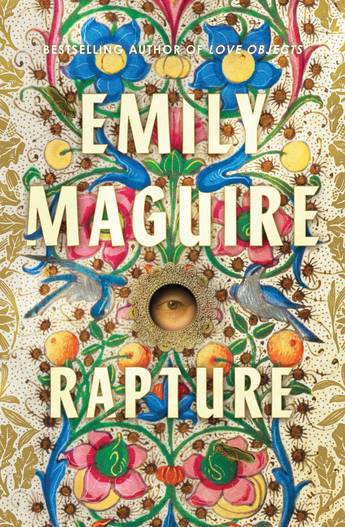
The first rule is that Kate sets our starting book. This month again, it’s a book I would like to read, Emily Maguire’s latest novel, Rapture, a work of historical fiction inspired by the Pope Joan myth. I have attended conversations about this book (here and here), and I have given it away as a gift, but I’ve not yet read it.
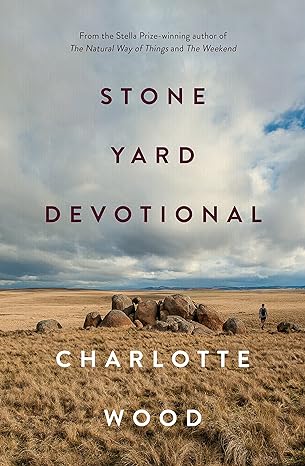
There are so many ways in which I could link this book, but I’m going to take the easy route and link it to the book it was featured with in the second conversation I attended, Charlotte Wood’s Stone Yard devotional (my review). The session was titled “get thee to a nunnery”, and referenced the fact that both books are set in religious communities.
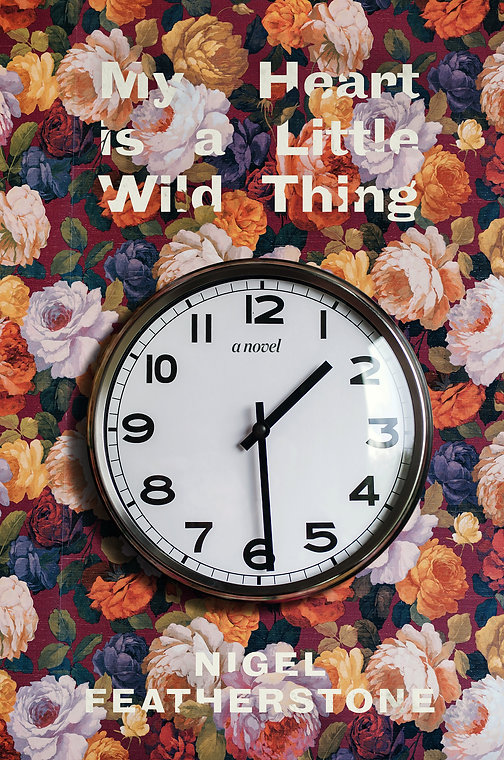
My next link is another sort of setting, a geographical place. Both Charlotte Wood’s novel, and the one I am linking to, Nigel Featherstone’s My heart is a little wild thing (my review) are set on the Monaro just south of where I live – a dry and rocky but also golden with vast skies. It’s also about a protagonist who needs to get away to resolve some inner turmoil.
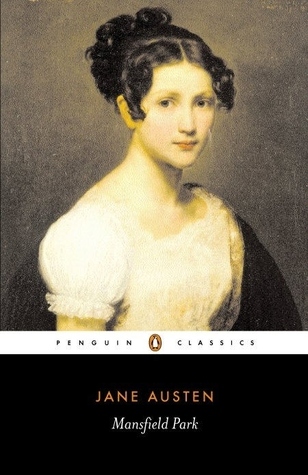
My next is a strange link, but I’m going to do it! A novel that deals a lot with inner turmoil is Jane Austen’s Mansfield Park though I don’t focus heavily on that in my post (my third volume post). However, Fanny Price spends much of her time observing and thinking about the values and behaviours going on around her. Her turmoil is not so much a modern questioning of herself, as of finding a way to be in a world where she is an outsider and of coping with a love that she thinks may never be returned.
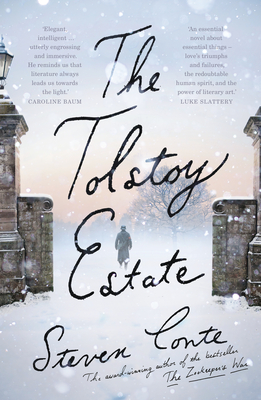
Hmm, I’ve just realised that while my main link was interior, Mansfield Park is also a place – an estate in fact. My next link is to another place which is an estate, Steven Conte’s The Tolstoy Estate (my review), which is set in late 1941, and tells of a German army medical unit which established and ran a hospital in Yasnaya Polyana, Tolstoy’s estate, near Tula, south of Moscow.
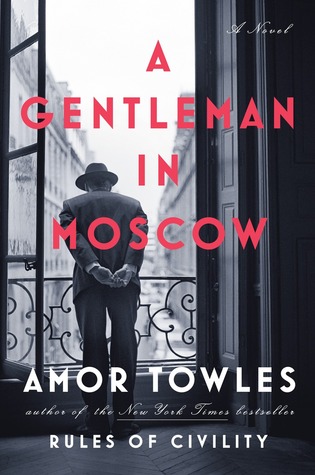
When you are on a good thing stick to it, so my next link is also on place, Moscow, and that most enjoyable (though controversial in my reading group) novel, Amor Towles’ A gentleman in Moscow (my review). It is a warm-hearted novel set in a grand hotel, the Metropole, and tells of an aristocrat who is confined there for decades by the reigning communist revolutionaries. How does he survive?

I could link to Dominic Smith’s The electric hotel, but I’ve done that segue before, so where to next? I think we’ll stay in Moscow, and go to Eva Hornung’s Dog boy (my review) about a 4-year-old feral (or wild) child who, having been left alone in a Moscow apartment for days, sets out on his own and is adopted by a dog, Mamochka. The novel tells of his life with the dogs and what happens when, four years later, he is found by two scientists/doctors working in a children’s rehabilitation centre. In a way, there’s a second link with Towles’ novel because our young boy, like Towles’ gentleman, lives a confined life for much of the book.
And you know, there could be a link back to Rapture, because there we have a woman living as a man, while in Hornung we have a boy living, essentially, as a dog. Do you buy that link? Anyhow, three of my six books are by men; and four are by Australian writers. I have focused heavily on place in my links, but many of the books are also about protagonists living in extremis in one way or another.
And, have you read Rapture and, regardless, what would you link to?
 Whispering Gums
I always love a ‘strange’ link 🙂
Phew, I’m glad Kate … I did this post more quickly than I often do my Six Degrees but it seemed to fall into place!
A great chain as usual , I’m inclined to check out A Gentleman in Moscow.
Thanks Claire. It’s a good read – fun but thoughtful at the same time.
I like that you fit Mansfield Park into your link, very timely considering your recent posts 🙂
Thanks Rose – it helps to find links when books are fresh in your mind doesn’t it!
Jane Austen made her way into my chain this week – but it was Emma. I think one of the great things about Austen’s books is that there is so much going in terms of character development, personal engagement, personal reflection – you can connect it to so much else.
No truer word has been said Becky! Hmm, that’s perhaps too big a call, but I agree with your about the fact hat she covers so much that she can be used to link to so much else.
Degree one will have to be Memoirs of a Renaissance Pope: The Commentaries of Pius II, An Abridgement, translated by Florence Gregg, edited by Leona Gabel. The memoirs include an account of his election. (If you want the unabridged version, Harvard University Press sells it, with Latin and English on facing pages.)
Degree two, then, must be Chateaubriand’s Memoirs from Beyond the Grave. Chateaubriand was French ambassador to the Papal States in 1829, and gives an account of the election of Pius VIII. He purchased what was said to be an inside account of the conclave. This he translated into French, omitting anything that could identify the source, and sent the translation to Paris, burning the original. His modern editors think he was imposed on, that the account was fictional.
Degree three, since the women have been neglected so far, will be Cloister Walk by Kathleen Norris, which largely concerns her association with the Benedictine St. John’s Abbey in Collegeville, Minnesota.
Degree four is Suitable Accommodations: An Autobiographical Story of Family Life: The Letters of J.F. Powers, 1942-1963, since Powers lived a fair bit of his life around Collegeville. The letters were selected by his daughter Katherine Powers.
Degree five will be A Habit of Being by Flannery O’Connor. One of the letters mentions having no chance to meet Powers when she lectured in Minnesota (but at the University of Minnesota).
Degree six will be the memoir What I Think I Did, by Larry Woiwode, like Norris and Powers a writer on the northern Great Plains and with an interest in the religious life–though Woiwode ended up a Presbyterian.
(I suppose that I could have fit Jane Austen in–the history of England in her juvenilia remarks that Henry VIII, though not really interested in religion, did give the country many picturesque ruined abbeys.)
I wish you had fitted in Austen then at least I would have read one book in your chain George. However, though I haven’t read any of the books I did enjoy your selections, and particularly your telling me where I could get the unabridged version of the first one and your sharing modern opinions about the veracity of the second.
I have stood in the front yard of the Metropole Hotel. But was with other people so couldn’t go in. Stunning building. Very grand. Interesting choices.
How wonderful, Pam, but what a shame you couldn’t go in.
Great chain! I loved A Gentleman in Moscow. I found it inspiring that the Count managed to live such a fulfilling life despite his confinement.
Thanks Helen … yes I loved that too. He was a model of making the best of things wasn’t he.
Very nicely done chain with some twisty links!
Haha, thanks Davida…
A very good chain!
Thanks Lisa …
Hi Sue, I do like your links, especially Boy Dog. As you say many paths could be chosen for the links. I mainly stayed on the papal path because I immediately thought of Pope Joan by Donna Woolfolk Cross when I read Rapture; then The Confessions of Pope Joan by Gary McAvoy; Conclave by Robert Harris; Cardinal Sins by Andrew M Greely; Papal Expectations: The Gospel According to St Lucia by J F David; and not papal related,and then Day of Confession by Allan Follsam.
Thanks Meg … your approach is sensible and good. I have seen one other person link to Conclave but none of your other books.
What an interesting chain and I really like your links to and from Mansfield Park! Jane Austen’s Persuasion also appears in my chain. I really must get round to reading A Gentleman in Moscow.
Thanks Margaret … glad you liked my MP link.
I think that link does work: living as someone else, by choice or fate! I love that you have Mansfield Park in your chain–am hoping to revisit it this year. Dog Boy sounds an interesting read too!
Thanks Mallika… I look forward to your reread of MP.
You’re so good at all the linking. I’ve not read Rapture, but I think I would link to The Book of Joan by Lidia Yuknavitch. It’s a Joan of Arc inspired post-apocalyptic novel. And then, who knows where next? 🙂
I saw the results of you election. I hope you’re happy with them (I suspect you probably are?).
The book of Joan is a great link, Stefanie. And it sounds an interesting read.
As for our ejection, I love that you are aware. Thankyou. To say I’m happy is putting it mildly! We just hope that this will make them a bit bolder about the climate and social justice issues we know they understand.
I feel (irrationally, which perhaps goes without saying) terribly guilty when I have not read a book that I have given as a gift. Especially when it’s a new book. As though, somehow, I’m saying “Yeah, I had this in my hand, but I simply didn’t care to read it so I gave it away.” Which is usually the opposite of what’s happened… you’ve imagined the perfect reader for a book that you somehow know/believe to be very good, but…still… /laughs
Haha, yes, Marcie. It is irrational! I reckon it is doing the recipient the greatest honour to give them a book that you think they will like, whether or not you think you would like it. It shows that you are thinking about their likes. And of course, if you think you’d like it, you can always put first dibs on borrowing it! I often did that with gifts for my mum.
I haven’t heard of Dog Boy before. It sounds fascinating. I’m always surprised where the chain takes me on this exercise. I thought I was going one direction and ended up back at the beginning.
Late to the party but finally got my chain up.
Rapture
Haha Anne … that’s the fun of the chains isn’t it. Dog boy made quite a splash when it came out – and is an interesting book – so I thought it was due another airing.
Oh of course, once again I can’t comment on your blog as me, Whispering Gums. So disappointing. I greatly enjoyed your chain. I’ve read Gillis and East of Eden, and enjoyed them both. And isn’t that other cover of Rapture unappealing. I don’t find it eye-catching even.