A year before I started this blog, Melbourne was designated as a UNESCO City of Literature, something I briefly mentioned in a 2010 post on the Victorian Literary Map. The City of Literature program is part of UNESCO’s wider Creative Cities Network which was launched in 2004, and which itself grew out of UNESCO’s 2002 Global Alliance for Cultural Diversity initiative. According to the Cities of Literature website, the Creative Cities Network encompasses seven creative fields: Crafts & Folk Art, Design, Film, Gastronomy, Literature, Music, and Media Arts. Currently there are 53 Cities of Literature, across 39 countries in 6 continents.
Edinburgh was the first City announced in 2004, with Melbourne becoming the second in 2008. Iowa City was also designated that year. Since then 50 more have been added with a second Australian city, Hobart, being among the most recent added to the list, in 2023. The full list is available online at the Cities of Literature website.
What does it mean, and how does a city become a City of Literature? To start with, it is up to cities to apply to be so designated. Once they apply, they are assessed against a number of criteria. These criteria aren’t specifically listed, but the Cities of Literature website says that these Cities “share similar characteristics”, which presumably draw from the criteria? The characteristics are:
- Quality, quantity and diversity of publishing in the city
- Quality and quantity of educational programmes focusing on domestic or foreign literature at primary, secondary and tertiary levels
- Literature, drama and/or poetry playing an important role in the city
- Hosting literary events and festivals which promote domestic and foreign literature
- Existence of libraries, bookstores and public or private cultural centres which preserve, promote and disseminate domestic and foreign literature
- Involvement by the publishing sector in translating literary works from diverse national languages and foreign literature
- Active involvement of traditional and new media in promoting literature and strengthening the market for literary products.
UNESCO has pages for some of the cities. Melbourne’s (Naarm) commences with:
Celebrated for its vibrant literary culture, Melbourne supports a diverse range of writers, a prosperous publishing industry, a successful culture of independent bookselling, a wide variety of literary organisations, a well-established culture of reading and is actively involved in many events and festivals.
It then lists other facts and figures about Melbourne’s literary credentials.
Hobart’s (nipaluna) page doesn’t seem to exist yet … But its page on the specific Cities of Literature site starts with the state’s First Nations people:
Lutruwita/Tasmania has a strong arts and culture presence, especially around nipaluna/Hobart. Over time, an authentic Tasmanian voice has developed in our literature and storytelling. The Tasmanian Aboriginal community drew on their knowledge, history, resilience and creativity to retrieve and revive their language, palawa kani, a composite of Lutruwita’s original Aboriginal languages. This has seen this island’s First People’s interpreting their own stories in their own language.
Today, nipaluna/Hobart is home to a multitude of award-winning and best-selling authors who have been recognised both nationally and internationally, winning awards such as the Vogel Award, Stella Prize, Commonwealth Writers Prize, Prime Minister’s Literary Awards, and the Booker Prize. From self-published authors to Richard Flanagan, winner of the Booker Prize, Hobartians have taken this special place to readers on every continent.
Although nipaluna/Hobart was designated in late 2023, it’s at this year’s Hobart Litfest, which is running now (from 3 to 12 April), that they are celebrating the city’s designation, with the litfest’s theme being “Celebrate Hobart’s designation as a UNESCO City of Literature at Hobart LitFest!” If you’d like to check out the program, click here.
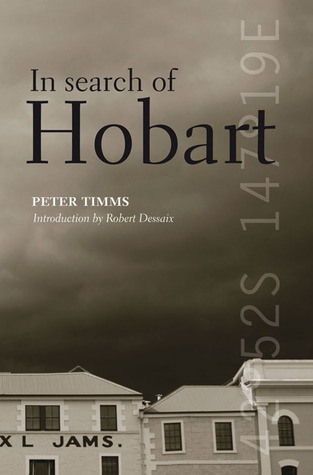
Meanwhile, the opening event featured a keynote speech by author Peter Timms in which the promotion said he would focus on how Hobart became a City of Literature & how Hobart sits against other global cities. He also, according to the promotion, was going to “delve” into Hobart’s “rich literary history, cultural influences, and key milestones” that shaped the city’s identity in the literary world, and also identify what sets Hobart apart and what it can learn from the successes of the other cities. My brother attended the keynote and reported (in comments on last week’s Monday Musings) that “he spoke about needing a regular writers’ festival (which we haven’t really had since the 1990s, if ever), support for writers through re-funding a Tasmanian Writers’ Centre and highlighted the foundation and development of the Wheeler Centre by the Victorian State Library to build on Melbourne’s declaration as a City of Literature”. I love it when people offer good, clear and aspirational but also achievable ideas.
Anyhow, do you live in a UNESCO City of Literature? Or one of the other creative cities? What do you think about the concept?
 Whispering Gums
Yep ! 🙂
I believe this is the very first time I’ve been able to reply in the affirmative to one of your comment-seeking questions, ST !
As for the initiative – why not ? Always nice to have Melbourne associated with something other than criminal activity. :-}
Haha … MR. But you know you are (Melbourne is) also associated with sport.
But that reminds me that Melbourne stole the Grand Prix from Sydney by dastardly means.
Sighh … my heart lies in this city; but it’s not one of lightness and joy.
Not sure what you’ll think of this MR, but I saw Love of an icon yesterday about John Cornell and Paul Hogan, and particularly about the making of Crocodile Dundee. It was made by Delvene Delaney as a love letter to John really – so there’s nothing negative in it – but it’s a delightful movie about what can be joyful about film making.
Um … the typo in your reply makes it hard to comprehend, ST: but I loved Crocodile Dundee !
Oops sorry. That’s what happens when I try to use the JetPack app on my phone. There’s a new documentary out called Love of an icon, and I saw it yesterday. Does that help?
I understand Iowa City. The writing program there has had some notable writers pass through. Others I do not–why Bremen and not Frankfurt, which has long had an important book fair? Why Milan and not Florence or Rome?
I suspected double-dipping when I saw Dunedin and Edinburgh, but the Dunedin turns out to be in New Zealand. (There is also one in Florida, by the way.)
I don’t live in a Literature City, which does not bother me. I joke that the greatest novel set in Washington was written by an Australian, and the greatest poem by a Frenchman. That is a little unfair, given Whitman’s time here; but Whitman wasn’t in Washington that long.
Good questions George. Who knows why, but it maybe that those cities haven’t bothered to apply because it has to come from them.
Haha, re Dunedin. I haven’t been to any of them but I have been keen for a long time to go to the NZ one. Re Washington, are you referring to Stead?
Yes, Christina Stead. There are quite a few Washington novels. I once met someone who had written one, and I think that a sort-of acquaintance of my son has it in mind to write one. But most such novels are forgettable.
Interesting, George… I wonder why, given the significance of the city.
I love living in a City of Literature. I think the Wheeler Centre plays a big part in it – there are always events happening there and lots are free. But added to that, there’s the Writers Festival, the Jewish Literature Festival, the Wheeler Centre’s Spring Fling (which I think has replaced their previous event, Mayhem. In the past, Mayhem coincided with the Sydney Writers Festival in May, so the international authors visiting for the SWF could pop down to Melbourne for Mayhem. Then the Melb Writers Festival shifted to May… I guess it makes sense but it does mean fewer opportunities / same authors for both).
I was chatting to someone recently who told me that Melbourne City Council have a goal to have one major event/ festival each month to draw people into the CBD. I love a festival and go to lots, so on reviewing my own activity I realise that their strategy is working well: I go to Melbourne Food & Wine in March, Comedy Festival in April; Writers Festival in May; RISING in June; and International Film Festival in August… and then there are sporting events on top of that.
I love a reason to visit Hobart, so will have to consider their LitFest one year.
Oh that’s a great reply Kate. I have mixed feelings about festivals. If they are on a subject dear to my heart, I do enjoy them but on the other hand I hate being surrounded by crowds and being challenged in getting seats, getting food etc.
Another plus
Yes!
Hobart/Tassie deserves to be noted, I have no recall of being disappointed with anything I have ever read from that state. When I get to read “obscure” (right word?) wonders such as Rogue Intensities by Angela Rockel, let alone the wonderful giants such as Richard Flanagan, I just wonder what it is in the water that makes the quality of output so engaging to me personally. Dunedin is an interesting one, I was aware of the superb Sound that gave me some damn fine music back in the day, but I will have to check that out literature wise.
My home town Brisbane could do well to promote itself better in its native literature, there have been some fine writers and books from Thea Astley to Zig Zag Street, but QLD in general is prone to be a bit behind the times when it comes to such things.
Olympics? For goodness’s sake!
Oh fourtriplezed, you are right about Brisbane – particularly with the wonderful work of UQP, and the way Qld immediately responded to the cancellation of the Premier’s Awards. And besides Astley, and all your amazing FN writers, there’s also Malouf. (PS I was born in Qld but left there when I was 14.)
Anyhow, thanks for commenting. I like your comment about what’s in the water in Tasmania!
Funny you should mention Malouf. I read Harland’s Half Acre many years back and thought a wonderful book. I finally got onto Johnno just last week and devoured it. Damn fine read for a Brisbaneite.
Great … I haven’t read that one, but I have read Johnno, and several of his other books. An absolute favourite of mine is his novella, Fly away Peter. Not about Brisbane but a beautiful, heartfelt book.
What an interesting concept! I’ve never really understood how the UN works with this kind of thing. There is a provincial park that’s not too far from here, with remarkable land and water features, which is also a UNESCO site. It’s one of my favourite places to visit so, for reasons of fondness, I’m happy it has this flag to wave, setting it apart from all the other parks. But although I know there are applications and criteria involved, I’ve never truly understood the behind-the-scenes details that support that designation. There is another park not far away which is not only larger but has very distinctive wildlife, for instance. I wonder if there are fees (which I think is part of the whole UN model? member countries paying in?), or if it requires certain actions that aren’t clear from the outside, or just how it works. Anyway, I love the idea of a City of Literature: it brings me closer to the dream of actually living IN A BOOK! hee hee
Oh good questions Marcie … I don’t know the answer to them all. And, for example, once a city is proclaimed a City of Literature, could it lose that? Does UNESCO monitor it?
As you say there are all sorts of UNESCO “things”. I am always interested in UNESCO World Heritage Areas. Sometimes this designation brings to my attention places I might never have noticed otherwise. Not all of them have been glamorous tourist route stuff but they’re interesting.
Living in a book ! Is there one in particular you’d like to live in? Not a dystopia I assume!
The closest to me is Iowa City, where many now-famous writers attended the Iowa Writers Workshop, which is like an MFA program, but last I knew the students didn’t graduate with an MFA. In the US it doesn’t matter because if you attend Iowa, you’re a hot commodity.
Thanks Melanie … I know of Australian authors who have attended it too. I guess it doesn’t need to offer a formal credential? Maybe too that sort of formal course that must meet accreditation criteria might cramp its style?
I’m not sure what the deal is that the Iowa writers workshop doesn’t offer an actual MFA. I think it was established like a writer’s commune, and so many successful writers have come out of that group that no one who is looking to hire a new creative writing professor cares. If Iowa writers workshop doesn’t have credentials. There are certain fields of higher education in which you just don’t need the same kind of degrees. If I remember correctly, there was one creative writing professor at Notre Dame who only had his bachelor’s degree, but he was so well renowned as a poet that it didn’t matter.
These are interesting questions Melanie. Over here, there is quite a bit of scepticism about MFAs and Creative Writing degrees in general, so no-one here, I believe, would even think about it in terms of the Iowa Writers Workshop. The feeling, amongst my cohort over here at least, is that the proof for a writer is what they produce not a paper qualification? I think I’d rather be taught writing by a writer with runs on the board than one with a paper qualification?
The goal of the MFA is advertised as having two years with tuition waived, and possibly receiving a stipend, to just write and get feedback. Really, the reason people do it is to have the credentials to become a creative writing professor. However, there are way more MFA graduates that creative writing professor positions.
Wow, that’s interesting Melanie. I would have thought that ideally you need two things to become a creative writing professor – runs on the board (that is an accepted body of work) and teaching skills.
I would assume it was to have a book published by a respectable publisher and teaching skills. Teaching skills aren’t considered in higher ed. Well, maybe they are, but you can never teach a day in your life and then become a professor. In some fields, like English, you end up teaching your second year of the PhD. In my case, I went to a school and got a master’s degree where if you were a teaching assistant, and you had to be selected, your tuition was waived, so there was high incentive to do that.
That’s somewhat similar here too re teaching skills in higher ed. No training is required though I think some lip service is paid to it occasionally. I guess the assumption is that if you are at university you are there because you want to be and are largely self-directed and self-motivated with just guidance from the academic.
I think it is a goodish idea in that in some ways the idea of a city of literature arguably makes more sense than the idea of national canons!
I wonder what naming Kiev or Moscow or Beijing as cities of world literature might do to weaken the threats of authoritarian censorship? I may well be a little too starry eyed here!
I like your thinking Ian in terms of making more sense that the idea of national canons. As for the other, hmmm, yes, I think you might be. Sounds like you are thinking along the lines of the Nobel Peace Prize being given to Obama?! Still, there’s nothing wrong about being aspirational, is there?