Many years ago, I wrote a post on litblog reviews, specifically on what blog readers look for in reviews by other bloggers. That post looked at overall content, and has provided me with a general guide ever since.
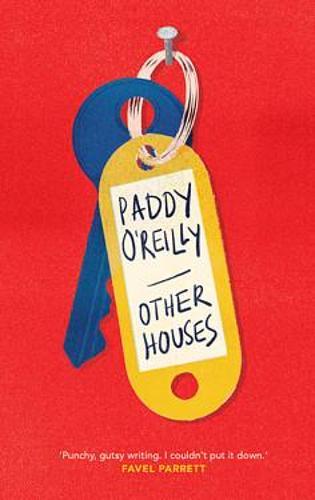
Today, however, I have a slightly different question. It relates to detail – and was inspired by my recent post on Paddy O’Reilly’s Other houses. The details in question related to relationships and place, but in a way they serve as examples for the bigger question. I’ll explain … taking relationships first.
The novel’s central family comprises Lily, Janks and teenager Jewelee. In my post, I described their situation as follows, “Her protagonists, Lily and Janks, are “battlers“, working class people who struggle payday to payday, but they want more for their now 15-year-old daughter, Jewelee …” What I didn’t spell out is that Lily had been a single mother to Jewelee for some years, that Janks had been a junkie whom Lily hadn’t dated until he got clean, and that, several years before the novel opens, Janks had moved in with Lily and Jewelee. He had proved to be a good, in fact, devoted, father to Jewelee so when the novel opens they are an established family and he is, by any account, Jewelee’s father. And that seemed to be the important point to know – at least, in terms of what I wanted to say about this novel. However, in the posts/reviews/summaries of the novel that I have seen around the web, this issue has been handled in a variety of ways. Some have gone my way, while others explain the characters’ backgrounds with different levels of detail.
The other decision I made concerns place. In an early version of my review, I wrote something like ‘…they move from their working class suburb along Melbourne’s Western Ring Road to one they “could barely afford”, Northcote, and enrol Jewelee in “a good school”.’ The final version simply read, ‘…they move from their working class suburb to one they “could barely afford”, and enrol Jewelee in “a good school”.’ The point is that for people who know Melbourne, naming the places/suburbs would add meaning, and thus value-add to the post. But, for everyone else, those place names mean very little. In the end, I decided that the majority of my blog readers probably don’t “know” Melbourne and that all the review really needed was to explain what sort of place they’d moved from and to.
So, what do you think? How do you decide which descriptive details to leave in when you write your posts and which ones can be comfortably omitted? Do you worry about misleading readers if you leave some types of detail out? To what degree does your known/expected audience affect your decision about what to include or omit? I’d love to hear your thoughts, so now, over to you …
 Whispering Gums
I prefer reviews that ask questions that can best be answered by my own reading the book. Yes, some detail is valued, and I may end up asking other questions, and that is good because I’m entering into a conversation with the reviewer, albeit a silent one.
Thanks Pamela … I like your preference, though sometimes reviewers might like to hear the questions!
I am unqualified to comment on this, seeing as how it comes from a source I consider the best reviewer I’ve come across.
But it’s my readers who keep me on my toes MR! And you are an important part of that.
My problem with your questions is, ST, that I am myself so very bad at writing book reviews.
It was that part of my exam in Non-Fiction Writing – a third of my postgrad cert in Editing and Publishing – that lost me most points and failed me by a single mark to obtain honours in all three sections.
You may, then, readily understand that when I find someone who can tell me about a book so as to enable me to grasp its contents without also providing its dénouement, and all in a highly intelligent and comprehensible manner … why, then, I am unlikely to be able to break this down into … ahh … preferences !
Oh that’s a shame MR re that cert but I reckon with your quick intelligence you could have learnt it. But I’m very glad you keep coming back to read my posts.
Hi Sue, I like detail especially about the characters and the situation they are in. Being a Melbournian I probably would have appreciated knowing the suburbs, but I don’t think that is important. I always enjoy your reviews, and find that you give enough information to spark my attention. If I am interested, I will check out my library to see if they have the book. I have read Other Houses, and Paddy O’Reilly’s other novels, and have liked them all. (I love her name!)
Thanks Meg. I’m glad that, though you would have enjoyed that information, you think posts can work without.
I’d love to read her other novels. And I agree, her names is great isn’t it.
I don’t need suburb names as I wouldn’t know where they are. I don’t mention suburbs but might mention the city or part of Tas such as southern, northern.
Thanks Pam … yes, and I realise that in not mentioning the suburbs I didn’t mention the city. Probably not essential, in terms of the ideas and themes, but I think I could have included that.
Dear Whispering Gums,
I think you’re worrying too much. It does depend on how much space you have. But beyond that, just be true to what you want to say about the book. What do you want to say about the book to your reader? What gives a good flavour of it, in your view? And don’t underestimate your reader. In relation to Melbourne suburbs, not everyone lives there, and not everyone has been there, but many people have heard of Melbourne and even some of the suburbs! “Western Ring Road” and “Northcote” are evocative even if you don’t know them yourself, so the names add something to the review and I’d leave them in myself because—primarily—they’re important to the novel as you understand it.
Have faith in yourself and you can’t go wrong . . .
Best wishes,
Bronwen Levy.
Thanks very much Bronwen … I like your point that those names are evocative, even if you don’t know them. I will take that – and your overall recommendation – on board. The associated point in all this is the wordiness that can be involved in adding detail. I am always trying to balance keeping things tight (so as not to bore people or take up their time) versus being expository. I probably do sometimes err too much on the side of tightness, and then have to explain myself in comments …
I prefer details, in general, but in the last few years I’ve been more aware that our little circle of book bloggers spans the globe, so when I write about a place I try to put in both the name (detail) and the general information (that one suburb is more working class than the other) so everybody can understand the importance of the detail.
I’m really happy to have readers from the U.K., Australia, Canada, and India!
Thanks Jeanne … so you would have preferred my original sentence? My concern is that details can make reviews and sentences more wordy when I’m keen to get to the essence of what the book is about.
I agree it’s great having readers from around the world.
Yes, I prefer the original sentence because it not only tells me about the book but I learn a little bit about places you know about.
I put detail in, but not too much in some and where relevant without giving spoilers. I’ve been seeing a lot of talk on Threads the past few days about how to review, where to review, what to review, whether or not we should give negative reviews, and everything in between including reviewers being asked to only leave certain ratings, or even debates over what information we include, like the synopsis. I’m still going to do my thing but it is starting to feel like there are people out there who don’t review who want to police how we write reviews. I use my format because I think it gives people the relevant information to know what the book is about and look it up, as well as to know if they want to read it. I think shortening my reviews now to a simple yeah this was good would be doing the books and my work a disservice.
Thanks very much Ashleigh for these thoughts. I really appreciate it. I’m not active on those social media sites like Twitter, Threads, etc, as I get too frustrated by that sort of discussion. I’m a generally calm person but the sort of inflexible, if not downright rude, discussion you can get gets my usually low blood pressure up! I don’t need it.
I agree with what you say. The amount of detail I include varies depending on the book, my reaction to it, my mood ! I don’t for example follow my usual practice with Jane Austen‘s books. I’ve read them so often my posts are more in the mode of current reflections rather than reviews. So it’s a bit horses for courses isn’t it?
Definitely – I don’t get involved in the discussion, but keep seeing them pop up. I told dad about them and he was horrified that anyone would try tell us how to review given we’re the ones doing the a favour and doing this for free! I definitely write shorter reviews if it’s a so-so book that I didn’t wholly enjoy but can find something I liked and that others will like as well. And yes, revisiting books – if I write a post – is more a reflective one too.
Oh yes… if it’s authors and publishers saying those things I’m with your Dad! I think there can be respectful discussion, but no directives. I don’t mind if those who send books for review change their minds a stop because they don’t like what we do. I don’t need review copies.
I struggle with suburb names as they carry lots of local information which is hard to convey succinctly to outsiders. So New Yorkers write ‘Brooklyn’ or ‘Manhattan’ and we are meant – and through our reading, do to some extent – know what that conveys in terms of wealth, ethnicity and so on.
So, ‘Western Ring Road’ shouts working class and migrant to me; and Northcote, relatively inner, gentrified (it was all Italian when I was a young man) and upwardly mobile.
I guess what you write in a review depends on how important you think that information is. I can’t imagine a New Yorker, or Londonite bending to explain and sometimes I don’t either, partly because Melbourne deserves the same respect, and partly because I hope the relevant information is carried by the context.
That’s such a good question. I would suggest that the book determines how much detail is required. That is what is needed to set up the general direction of the book or give an opening into it. That might include a little geographical, historical or biographical background (ie something I might have popped online to look up to get myself oriented—especially because I do read a lot of international and translated literature). Sometimes I need to go into a basic overview of the book to be able to talk about it’s style or form, but I always try to err on the side of “more is less.” If there are any questions or mysteries to considered (whether or not they are resolved) I want to be very careful not to give away anything that would influence another reader’s experience. I have seen reviews (in journals even) that give away or comment on the ending! There should be a law against that (at least outside of a book club)!. 🙂
Thanks so much Joe for engaging with this question. Your response is close to my approach I think, in that I agree that the book (and to some degree you expected audience) determines the detail. I do like to talk about style and form as you say, and I like your “more is less” philosophy.
And haha, yes, Bookgroups, like the classroom, are the exception to giving away or commenting on the ending.
Oh I love this question – I have been asking myself the same thing. So recently I moved away from including the back cover and then just launching into what I think, to including a summary of the first part of the story and then my review (this was primarily because half the time the back of the book has no resemblance to the actual book), but I wonder if people want this?
If you read a post because I posted it – then you need a summary to understand the book (what it is about). But if you search for a book – then you likely already know what it is about and you just want to know if it is good? So I am starting to vary up my reviews. On my blog I will put a bit more about why I read it, the summary of the story (without giving it away) and then what I think but on GoodReads or Waterstones, I am cutting that right back with just what I think and why…
But I think your questions are fascinating – I would say either are right and I would be happy with either as long as you don’t give away the ending (so there is still something for me to discover) and that you definitely tell me if you liked the book or not – I find this hard, sometimes bloggers talk all about the book but never say whether they think it is good or not… and that is what I value most – what do you think and why???
I’ve been thinking about your questions all day Sue and I guess it depends on the blogger and the purpose of their blog.
For me, my blog is mostly a record of my reading journey, so I include the stuff I want to remember/find interesting. But I am also conscious of audience. I value our community of readers and bloggers, so over the years I have changed the way I review that takes into account some of the stuff I think readers might like to know.
When reading other blogs, though, I usually want to know what you liked or did not like about a book and why (which could then include any or all of the things you have discussed here and on your previous posts).
Oh my Brona … I hope I didn’t spoil your day! I think your last paragraph has more or less nailed it. That is, I try to include the details that I feel are useful to describing the book and explaining my response to it, but not those that I think would only interest, or be relevant to, me or a small subset of my readers. Except, sometimes I’ll include details that are specific to me if I feel they will illuminate something about me that people would enjoy knowing! We all like knowing our favourite bloggers a bit beyond their reading lives don’t we?!
It also a record of my reading journey. The main things I omit, though, because it’s a blog not a reading journal are most of my favourite quotes/descriptions.
Thanks for this response … it was worth occupying your day for!!
I’m about middling with my details, not too many, not too few. I prefer my reviews to talk about what did or didn’t work for me, and if there’s a detail involved in that, I’ll include it. But using your example, I don’t know if I would have mentioned that or not – not unless it effected how I felt about or connected to the characters. See what I mean?
I think it depends on the goal overall of your blog. Are you sharing information about a book to educate readers on Australia? Or is the goal to review the book to convince us to pick it up and read it? If you’re convincing, what would most cause a reader to say, “Oooooo”?
Good question Melanie. I’m not sure my goal is specifically to convince people to pick up a book. Partly because I know that some books are hard to get outside of Australia and partly because most bloggers have so much to read already. And it’s not really to educate readers on Australia. I guess it’s somewhere in between. It’s to interest people in the book or author, and with Australian books, to interest them in/tell them about Australian writing.
As others have said it all depends 🙂 It’s a matter of selection, and to me I want to know the things that are important to give me a sense of what the book is about but also what you think about it and why. Since I probably haven’t read the book, that makes you the “expert” so you get to decide what is important for me to know 🙂
I agree with what you say here Stefanie … as in, it depends. And of course, readers will never know if a blogger has left out something useful to them – unless of course it comes out in the comment. Which happens a bit – and I guess that’s part of the whole book discussion enjoyment isn’t it?
It’s a challenge for sure. Without a doubt, you have one regular visitor who craves the suburban specificity and one who finds it superfluous. One person will think literary context is essential and another will think it’s pretentious. One will want it to be shorter and bullet-pointed and another will crave longer and philsophical ruminations. I think Joe has articulated the key, to keep your audience in mind (with all of our collective preferences) because otherwise you could just write it all in your private journal…but, beyond that, to prioritise your relationship as a single reader with this single book and do what best suits that story/storyteller.
Thanks Marcie … I reckon that’s right and generally what I – and most of us probably – do. But as I thought about this one a bit longer than usual, I decided it would be fun to ask the question. A newspaper reviewer would expect the majority of their readers to be the paper’s regular readership and they probably have a fairly good sense of who they are – mostly regional or national – but in the blogging world we are far more global and diverse. That probably changes how we think about writing our reviews.
Really interesting question, Sue! I think the key is including the details that help explain why you’re responding to the book in a certain way, without overwhelming readers with context that doesn’t matter to your point. Some specificity about the place can be evocative even for those who don’t know that place, but it’s all about serving your audience and the purpose of your review!
Thanks WPTP, I think this all makes good sense.