Then as now, newspapers regularly announced new Australian novels as they are published. In these year-based series, I’ve not done a post specifically on the new releases, so have decided to do it for this year. This is not complete but contains books by authors who had some career longevity.
New novel releases
I’ve listed the books alphabetically by title, and have included some of the assessments made by the papers. I’m not including the books published by Bookstall, of course, because I listed them last week.
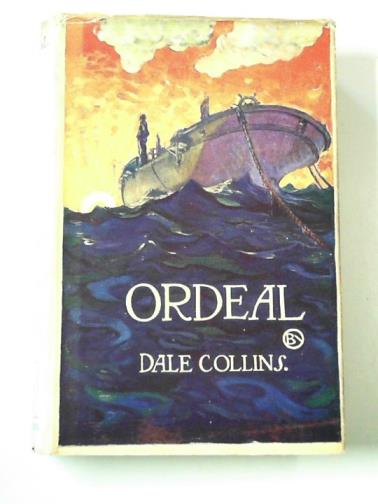
Dale Collins, Ordeal (Cornstalk Publishing): The Land (1 August) says that “it may be said without hesitation that Ordeal would be a remarkable and arresting story under any circumstances, but it is all the more remarkable for being a first essay in this class of fiction” (this class being, I think, a sea adventure). However, there are also reservations: “Occasionally the writer does not appear to be over-sure of his ground, and here and there we have lapses into excessive analyses of emotions, with a slight over emphasis of subtle suggestion, but on the whole the work is admirable.
Zora Cross, Daughters of the Seven Mile (Hutchinson): Cross’s debut novel was praised, albeit faults were also identified by The Australasian (10 May): “It is not by any means a book without faults, but its merits are many and considerable, and most of them are to be found in the drawing of its characters. The scene is laid in Queensland, in the bush country outside a promising mining town, and the theme of the story is the difficulty of bringing two great forces into harmony, the call of the bush and the allurement of life in great cities.” The paper claims that with her first novel she has “won an important place in the ranks of Australian novelists”.
Ruby M. Doyle, The winning of Miriam Heron (Edward Dunlop): I wrote a recent Forgotten Writers post on Doyle, so I won’t say much. The Australasian (8 November) says that “its best points lie in the studies of bush life, with which the author is evidently familiar”. The plot “is slight”, but Doyle “shows a facile, kindly pen in dealing with the humorous type, and writes a straight, healthy story, that has less of morbidity than has the usual Australian bush tale”. The Advertiser (18 November) also admires her ability to write of the bush. However, The Queenslander (15 November), which also criticises the plot, concludes, interestingly, with “Miss Doyle appears to have attempted to graft something of the Ku Klux mystery into the character of the Australian bush, and so the story develops an atmosphere in places that is not Australian”.
Mabel Forrest, The wild moth (Caswell): According to The Advertiser (9 August), its strength is less its story as its descriptions of the bush. It concludes that “the vivid descriptions of the various phases of Australian life are its most enduring and attractive features”.
Fergus Hume, The moth woman (Hutchinson): Hume is not Australian, but he did live in Australia for while, and published his detective novel The mystery of a hansom cab (my review) here, which made him of interest to Australians. The Australasian (26 January) says it is “written with a vigour and a freshness that a younger man ambitious of writing stories of the kind might envy” and that “the night life of London, the drug traffic, a mysterious murder following upon efforts to cope with the vices of the under world, provide thrills enough to satisfy the most blase reader of “shockers.” Then the little kicker: “Probabilities or possibilities matter little when one excitement follows on another, when the reader likes that sort of thing.”
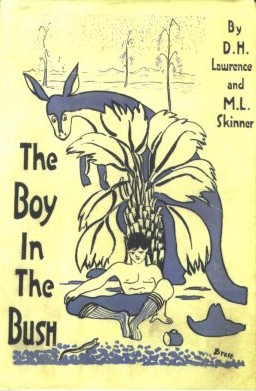
D.H. Lawrence and M.L. Skinner, The boy in the bush (Martin Seeker): Bill and I have both written about Lawrence and Skinner’s collaboration so I won’t repeat that here, but The Australasian (1 November) says that it’s “not easy to decide where Mr. Skinner [except it’s not Mr.] comes in, since there seems to be not a page in the book that is not unmistakably stamped with Mr. Lawrence’s peculiar genius”. Overall, the reviewer is not overly impressed, saying “an irritating mannerism is the repetition, of certain words and phrases, particularly in the description of physical peculiarities. While at times the story is vivid and almost overwhelmingly powerful, it lacks somehow the vital spark”. The Advertiser (22 November), on the other hand, is positive about its humour and insight, and calls it “readable”, but also comments that “at times Australians may be inclined to resent some of the severer criticisms of habits, dress, and customs”.
Vance Palmer, Cronulla (Cornstalk): The Australasian (13 December) gives Palmer’s book fairly short shrift, saying it “will be read with interest by reason of its Australian setting and the act of its being the work of a leading Australian writer”. For the reviewer, however, this station-life story is “built on well-worn lines, and has nothing new to offer either in plot or treatment”.
A few points about this list. First, there is the focus on bush and rural stories. Only two, it seems, are not; one is a sea story, and the other set in London. Even though our population was well urbanised, the bush was how we differentiated ourselves – both to ourselves, and in marketing ourselves to others. Then, there’s the fact that women writers are well in evidence, which confirms again what we know about Australia’s literary scene from the 1920s to 1940s. And, finally, I notice here, as I frequently notice in these earlier Trove articles, a willingness to identify faults. The comments are generally not smart-alecky or cruel, just clear about what they see as strengths and weaknesses. In some cases they recognise that the identified weaknesses are not important to the readers. In other cases, they note that it is a new author who can work on the problem areas. I wonder how the authors felt.
Thoughts?
Previous posts in the series: 1, Bookstall again
 Whispering Gums
“a slight over emphasis of subtle suggestion” is a bit of a baffler, eh …? [grin]
Ha ha MR, yes … in some of those reviews you can see their care taken to be measured in their critique, can’t you stop? I see I forgot to close the quote mark there so when I’m back on my computer I’ll fix that.!
You can see in your selection that (in 1924) we’re at the tail end of the Bulletin years – lots of bush stories (even Zora Cross, which was a surprise) including one or two ‘yarns’ which wasn’t something I’d thought about till this year. Still a few years to go until Eleanor Dark and Christina Stead introduce us to Modernism.
Thanks Bill … yes, the Zora Criss surprised me a little too.
What do you mean by “including one or two ‘yarns’ which wasn’t something I’d thought about till this year”?
“Doyle “shows a facile, kindly pen in dealing with the humorous type”‘
I mean that I hadn’t thought about Bush writing including tall stories until Bron and Kim suggested a couple for Men’s Week.
Ah thanks Bill … I do remember that discussion now.
Fergus Hume sounds interesting, and I’ve made a note. Not an author I’ve come across before, so thank you for the introduction. 🙂
Thanks Jacqui… The mystery of a hansom cab is worth reading for a start.
Until I paragraph, I hadn’t really thought about how few Australian novels seem to be about the ocean. You’re surrounded by it, and I have to imagine a lot of commerce happens around the ocean. However, when I think Australia, I think about the land.
Yes, good point Melanie. I guess we have a lot of coast, which is where the majority of Australians live, but we have a lot of land too, and you are right that it’s the land that seems to capture our imagination the most. I did a post on beach-set books in December and I remember I had to work hard to find a selection particularly at once I read. It would be interesting to do one on the sea as a bigger entity. I’ll think about that.
I find the comments on Cronulla interesting, the gap between readers who will want to read it because they know this sort of story and the readers who know this story and will crave something different. I’m simplifying it, but only because it feels like a debate that continues to play out, with slight variations, across the years and across the miles. Each of us draws our lines differently with how we value, compared to how we tire of, familiarity (stereotyped elements, even) and what we rate as a variant/something unusual is naturally going to be different for every person (even assuming that many Australian readers would be reading at least some Australian books so have some shared ideas about what’s published and read). But of course some reviewers will celebrate and some will dismiss the same book.
Oh yes, Marcie. You are right, it is a debate that continues to play out over the decades. I see it all the time in Trove – including other aspects of the argument which is readers who want to support Australian literature, or that particular author.
I like your discussion about each of us drawing different lines. (I had reading group last night and we had an interesting discussion about page-turners which I plan to mention in my post on the book).
Reviewers are interesting because it does seem to depend on the balance they find between supporting national literature/certain authors/certain publishers, their understanding of the audience they are writing to and what they like, and their assessment of the quality of the book/writing. I enjoy seeing the different ways I think they are balancing these balls.