Back in 2014, I wrote a Monday Musings post on Unpublished Manuscript Awards. Since then, more of these awards have appeared, including the Finlay Lloyd 20/40 Publishing Prize (my posts), which made its first award in 2023. Before that, however – and not long after my 2014 post – came The Richell Prize for Emerging Writers.
Those of you who follow Australian publishing closely will recognise the name Richell. English-born Matt Richell was the CEO of Hachette Australia – and was well-recognised and loved for his support of Australian writing and writers. He died tragically in July 2014 due to a surfing accident.
The Richell Prize was launched in his memory in 2015. It is “open to unpublished writers of adult fiction and adult narrative non-fiction”. unusually, writers don’t need to have a full manuscript at the time of submission, but must intend to complete one. Richell’s widow, Hannah, explains it this way, “Unlike some prizes, we don’t ask for a completed manuscript. We simply ask for the first three chapters, a clear vision and your commitment to finishing your project”.The winner receives $10,000, and a year’s mentoring with one of Hachette Australia’s publishers. This usually ends in the work being published by Hachette, but not always.
Winners to date
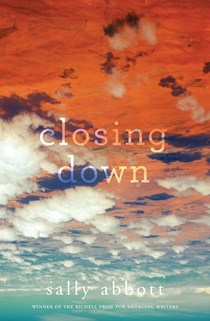
- 2015: Sally Abbott, Closing down (Hachette, 2017) (Lisa’s review)
- 2016: Susie Greenhill, The clinking (Hachette, 2025)
- 2017: Sam Coley, State Highway One (Hachette, 2020)
- 2018: Ruth McIver, I shot the Devil (Hachette, 2020)
- 2019: Else Fitzgerald, Nearly curtains (short story collection, published as Everything feels like the end of the world, Allen & Unwin, 2022, and subsequently shortlisted for the 2022 Aurealis Awards and the 2023 University of Southern Queensland Steele Rudd Award) (Brona’s review)
- 2020: Aisling Smith, After the rain (Hachette, 2023)
- 2021: Simone Jordan, Tell her she’s dreamin’ (Hachette, 2023)
- 2022: Susannah Begbie, When trees fall without warning (published as The deed, Hachette, 2024)
- 2023: Alex Sawyer, Rat Daniels (nothing published yet)
- 2024: Myles McGuire, Stroke (nothing published yet)
As you can see, the majority have been published by Hachette, but not all, and the lead time varies quite a lot. In fact, prize partner, the Emerging Writers Festival, explains it a bit more on its webpage for the 2024 prize. It says that “Hachette Australia will work with the winning writer to develop their manuscript with first option to consider the finished work, and the shortlisted entries, for publication [my emph]”.
It then says that
To date [early 2024, I think], Hachette has published or contracted ten authors who have been discovered through this annual Prize, including Sally Abbott (2015 winner), Brodie Lancaster (2015 shortlist), Sam Coley (2017 winner), Julie Keys (2017 shortlist), Ruth McIver (2018 winner), Mandy Beaumont (2018 shortlist), Zaheda Ghani (2018 shortlist), Allee Richards (2019 shortlist), Aisling Smith (2020 winner) and Simone Amelia Jordan (2021 winner).
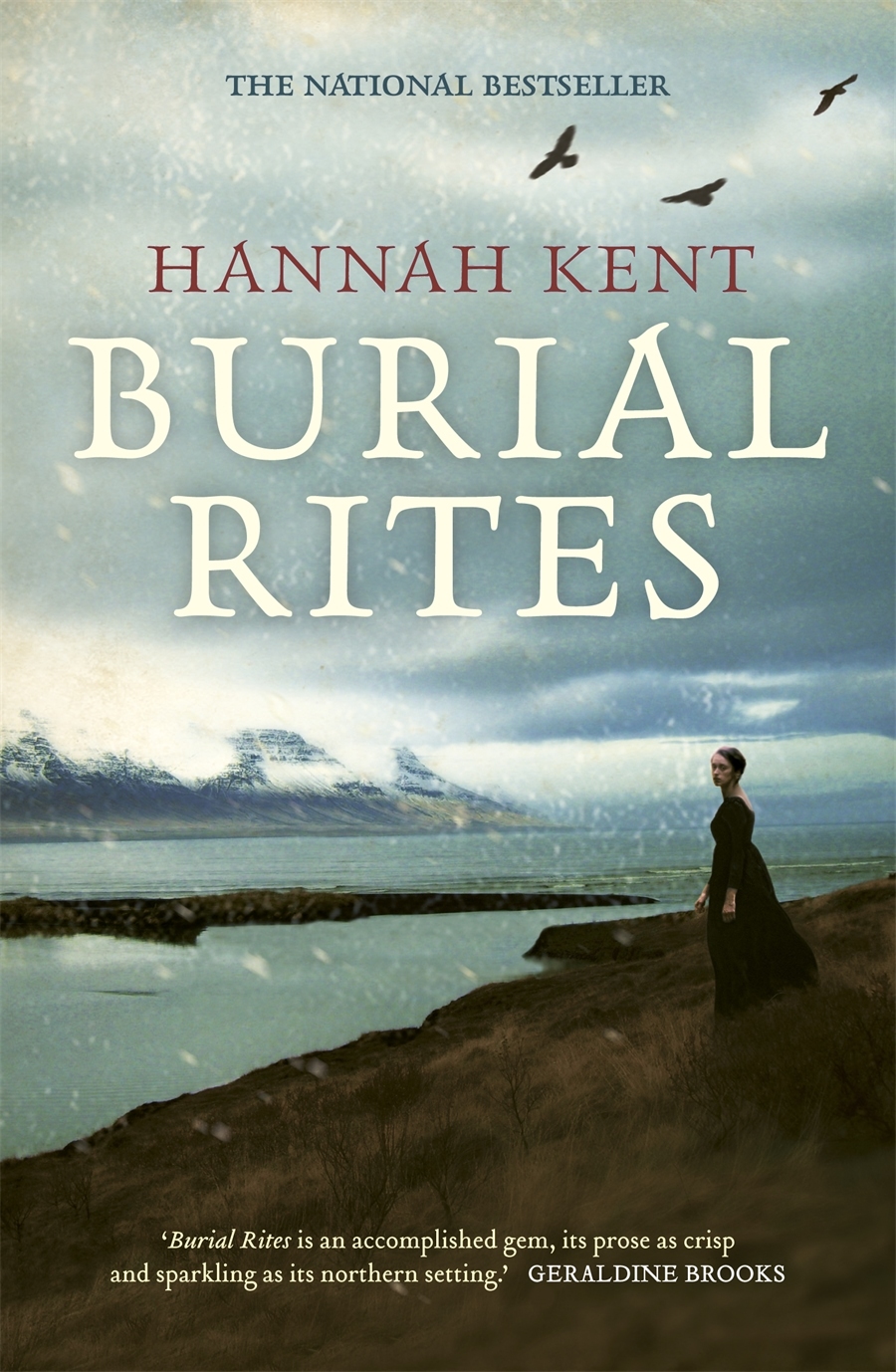
In my original Monday Musings, I quoted Hannah Kent, who won the inaugural Writing Australia Unpublished Manuscript Award in 2011 for her hugely successful historical novel, Burial rites (my review), as saying, “these sorts of awards are so important. They help you get that foot in the door”.
And, it’s not only the winners who benefit. Long- and shortlistees also often benefit, as clearly happens with the Richell Prize. We can see this happening with long- and shortlisted published works, because we read the lists, see the books in the bookshops, and often buy them. But, we rarely know what happens to those who are listed for manuscript awards. Even if we see the long- and shortlists, the work may not be published for years, and if it is, may be published under a different title. Also, the promotion may not mention the listing. Sometimes, however, we do know, as we do with Lisa Kenway’s All you took from me (my post), because it is mentioned in the book’s promotion. And why not? Any award listing is a feather in the cap, and could give a book an edge with readers.
Unfortunately, like any awards, these unpublished manuscript awards don’t survive forever. I cannot, for example, find much about the inaugural Writing Australia Unpublished Manuscript Award that Hannah Kent won in 2011. And The Australian/Vogel Literary Award, which has long been recognised as one of Australia’s most prestigious unpublished manuscript awards, made its last award last year. It has been replaced, apparently, by The Australian Fiction Prize. It is still supported by The Australian newspaper, but now in partnership with the publisher, HarperCollins, rather than the Vogel’s Allen & Unwin. It remains an unpublished manuscript award, but there is now no age limit, and it excludes science fiction, young adult, poetry, plays, works for children. The prize still offers cash and publication.
Do you follow manuscript awards? If so, which ones most closely suit your interests?
 Whispering Gums
Despite the outcome not being predictable, I think these awards would be a boon to young writers or those starting out since the prize money can may be get them some time to concentrate just on their work. But of course, to actually finish and get it through publication involves so many factors, not least commitment and discipline
Thanks Mallika … good point regarding money giving them “some time” to work on their book. And also re the “commitment and discipline” needed!
Whenever I read you mentioning an award even remotely relevant, I sigh heavily and feel frightfully sorry for myself re publishers who don’t give a rat’s about 1-off writers; and reflect upon how helpful it might have been to have received any guidance at all about such things.
Then I get real, and remind myself how very far from award-worthy was wot I done. I now realize that another few editing passes – or maybe just one genuinely committed one – were required.
I am going to cease reading about awards !
I think that’s a good idea MR if they cause you distress. I wouldn’t say at all that your book was far from award-worthy. Instead I would get real and say that the percentage of books published that win awards is minuscule, regardless of how worthy they are. And dare I add that many books don’t ever get published? My guess is that there are many writers out there who would envy you?
Anyhow, I’ll remember in future not to be concerned if you don’t comment on an awards post, and be pleased that you are looking after your mental health!
Hevvings !! – didn’t see it that way. But I bow to your superior wisdom, ST, and will indeed care for it. It sure needs it. 🙂
I wouldn’t say superior at all, MR, but just looking at it from a more objective perspective! And do look after yourself.
We are very old friends now, aren’t we ? I enjoy it.
So do I, MR … I like that we can banter, and that we respect each other too.
Hi Sue, I don’t follow unpublished manuscript awards. Though I do read the Vogel Prize award, because of the Australian. I googled and there seems to be a few awards for unpublished manuscripts. I do wonder how many people have received such an award and gone on to publish more novels.
Thanks Meg. Like you I have usually kept an eye out for the Vogel because it’s been well promoted, I guess. And I am now interested in Finlay Lloyd’s 20/40 Prize. I also have a look at those that are part of bigger awards, like in the Queensland Literary Awards. I’d also be interested to know how many develop a career, but it would take more time to research than I have!
I knew Matt a little bit, and Hannah as well, as they used to live in my suburb and frequent my former bookshop, so I have always followed this award. But I’ve only read one – Else Fitzgerald’s spec fiction short story collection – which was absolutely tremendous & curiously the only one not published by Hachette in the end. Perhaps it caught up in all the Covid-era disruption?
https://bronasbooks.com/2023/01/16/everything-feels-like-the-end-of-the-world-else-fitzgerald-awwshortstories/
He sounded like a great person, Brona, how nice to have known him a little. I remember feeling so sad for his wife being left with such young children so suddenly. Life can be cruel.
I have added your review to my list above. I didn’t go looking hard for reviews. I usually find Lisa’s at GoodReads when I go looking for cover images. And of course she reads so much. Otherwise I try to rely on my memory, but I should have thought you might have read such a short story collection! It’s interesting that their judges chose it as the winner and then they didn’t publish it. I wondered if there might have been some creative differences at the end? Or whether it was just that the judges thought they were great short stories but that SF short stories are not really Hachette’s thing? Who knows?
I follow the bellwether prize, which originates with Barbara Kingsolver. But only in the published form (maybe that goes without saying). There is a fairly new novella prize too, isn’t there? Out of England, I think? Perhaps with Ali Smith connected somehow? I believe that’s manuscript too. In short, I value the idea…but I suppose I’m more focused on the awards for previously published stuff.
Oh I missed that new one. Yes it’s the Weatherglass with the first award being 2025. Like our 2-years-old Finlay Lloyd one it’s 20-40K. Finlay Lloyd though accept nonfiction in that length too, which I like.
I suspect most of us gravitate more to the published book awards, partly because we have a fighting chance of having our own thoughts about them!