It’s been a very busy weekend, and I have a few posts waiting to do, plus a reading group book to finish for tomorrow, so this post is a quick one. Phew, you are probably saying if you stuck with me over the weekend!
Today’s topic recognises that our litblogosphere’s annual Nonfiction November event, currently coordinated by Liz Dexter, starts today. I don’t usually write a Monday Musings for this event, but I thought it might be interesting to look at what Australian works of nonfiction won awards this year. Most of the awards are specific nonfiction awards, but some are more general awards which can be won by fiction or nonfiction (like the Stella, albeit was won by fiction this year.)
I’ll list the awards alphabetically by title of award:
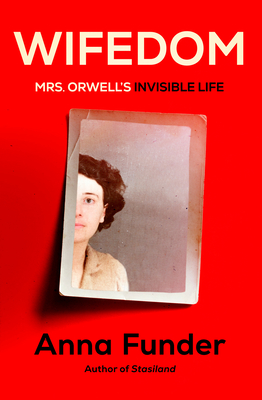
- ABIA Biography Book of the Year: Anna Funder, Wifedom: Mrs Orwell’s invisible life (biography) (my review)
- ABIA General Non-Fiction Book of the Year: Thomas Mayo and Kerry O’Brien, The Voice to Parliament handbook (handbook)
- ACT Literary Awards, Nonfiction: Kate Fullagar, Bennelong & Phillip: A history unravelled (history)
- Finlay Lloyd 20/40 Prize, Nonfiction Winner: Sonya Voumard, Tremor (I’ll be reporting more on this prize and the Fiction winner next weekend) (memoir/essay)
- Indie Awards Book of the Year Non-fiction: David Marr, Killing for country: A family story (history)(Jonathan’s post)
- Magarey Medal for Biography: Ann-Marie Priest, My tongue is my own: A life of Gwen Harwood (biography)
- Mark and Evette Moran Nib Literary Award: to be announced on 27 November, but 5 of the 6 shortlisted titles are nonfiction
- National Biography Award: Lamisse Hamouda, The shape of dust (memoir)
- NSW Premier’s History Prize, Australian History: Alecia Simmonds, Courting: An intimate history of love and the law (history)
- NSW Premier’s Literary Awards, Douglas Stewart Prize for Non-fiction: Christine Kenneally, Ghosts of the orphanage (history) (Janine’s review)
- Northern Territory Literary Awards, Charles Darwin University Creative Non-Fiction Award: Dave Clark, Remember (creative nonfiction about truthtelling)
- Prime Minister’s Literary Award, Australian History: Ryan Cropp, Donald Horne: A life in the lucky country (biography) (Lisa’s review)
- Queensland Literary Awards, The University of Queensland Non-Fiction Book Award: Abbas El-Zein, Bullet, paper, rock: A memoir of words and wars (memoir)
- Victorian Premier’s Literary Awards, Prize for Non-fiction: Ellen van Neerven, Personal score: Sport, culture, identity (memoir and polemic)
So 14 awards here, and life writing (biography and memoir) is by far the most represented “genre”, partly because some of the awards are specifically for biography (life writing). History is second, and again, this is partly because there are specific history prizes (some of which are won by biography!) It is noteworthy, however, that other genres – nature writing and eco-nonfiction, for example – rarely get a look-in in these sorts of awards. And yet, there is some excellent writing in these genres being published (by Upswell, for example).
And a little survey…
Do you write nonfiction or non-fiction? In my admittedly minimal research, I have read that Americans are more likely to drop the hyphen, and this seems to play out in American versus English dictionaries.
I note that:
- Liz has nonfiction in her banner, which is how I first titled this post
- the above Australian awards vary in their usage – some using the hyphen and some not, but the hyphenated form seems to be winning.
I am tending to go with not, just as during my lifetime (or is it life-time!!) we’ve dropped the hyphen from tomorrow and today. (Hmm, a little research into these revealed that Chaucer for example had “tomorrow” – in his form “tomorwe” – unhyphenated. It was then later hyphenated and later again, re-unhyphenated – and I think I really need the hyphen there! Actually, it’s not as simple as this because through much of time the two forms have coexisted!)
What do you do?
 Whispering Gums
I still write ‘non-fiction’, but I’ve always found it a very unsatisfactory term. Why define something by what it’s not, rather than by what it is? However, I can’t come up with a satisfactory alternative!
I hear you Teresa but I don’t have an answer to this ”non” thing either.
Are we brave enough? Let’s just go with Truth (or Fact – I seem to remember Fact and Fiction used to be a thing once).
Fact perhaps … I don’t like Truth because fiction deals with Truth or Truths all the time. Fact feels a bit narrow somehow but it does have the advantage of not being a “non” (as in a “not something”) word. Non words feel inherently negative don’t they as in rather than BEING something that bare NOT something.
Lemme think …
Nonentity. Nonpartisan. Nonlinear. Nonrenewable.
Looking more and more like nonfiction, eh ?
I think so MR – I noticed your state library (SLV) had “non fiction” in its introduction to a page about the subject then talked about “nonfiction”. But I think it was intentional as in, this is about things that aren’t fiction, and then this nonfiction work, etc etc.
The apostrophe is probably heading for extinction but the hyphen is surely here to stay
Haha Jonathan … let’s not get started on the apostrophe! Too distressing in a way the hyphen isn’t!
Hi Sue, I write “non fiction”, no hyphen, but a gap. I just checked my library catalogue, and they have ‘non-fiction”. I think I maybe wrong!
Haha Meg … my sense is there’s no wrong or right in this. The important thing is that people know what you mean and I reckon they will.
I walked to Swansea Heads to-day and to-morrow I plan to walk only as far as Swansea Bridge. I love the hyphen…. Jim
And how old are you Jim? Love it!
I thought you might. It is rare to see another to-day or to-night or to-morrow. Sure, I’m 75 but I would swear that Joe Shanahan – my West Tamworth PS teacher in both 3A and 5S – was a hyphen-user. Were he still living I think he’d now be nearing 110. He loved Australian literature – ballads, poetry. I think it’s where I caught the love… Jim
You know me too well … and yes I’m was thinking back to my primary school days in Brisbane and was sure the hyphen on those words was de rigueur.
I tend to write nonfiction, largely because I don’t want to pause and add in a hyphen! I think Ghosts of the Orphanage sounds like a rather difficult read. So many children have disappeared or been mistreated (even to death).
Thanks Melanie … I think it’s certainly true that without the hyphen is the preferred way on the USA. Maybe it’s for the reason you give. Americans are in a hurry!
Oops, and yes I agree. Ghosts of the orphanage does sound difficult but I’m sure worthwhile.
Ha – I’m not the only one running this, there are five of us, but thank you for the link, and I actually usually style it non-fiction, but the challenge came to me as nonfiction and the people who made our banners did it that way, too! A great post with some very interesting books to explore.
Thanks Liz … you have confirmed I guess the national difference which is that Americans tend to use it without the hyphen, and the British use it with – more commonly anyhow. At least I’m guessing the challenge came from America.
I named you in this post because I think you’re coordinating it? As I write other posts for the month, I will refer to this specific week bloggers. Is that ok?
I thought you might like this post.
The five of us are coordinating it together, actually. And yes, per week. I’m Week 3: Pairings.
Ah I hadn’t quite realised that. I’ll remember in future!
I don’t plan to do weekly posts but a couple of combined-week posts mainly because the weeks are similar to previous years’ weeks, so I’d get a bit repetitive. For example my favourite sorts of Nonfiction don’t change. But I do love the pairing week because it’s always fresh.
Yes, I struggle with that and Week 2 how do you find nonfiction! Mind you, I struggle with pairings!
Yes, week 2 also. I’ll probably combine weeks 1-3, and then do 4 & 5. I’ve done this before. I never really find pairings a struggle. Although I don’t always pair two books from the same year, just make the nonfiction from one this year.
I’ve got books I haven’t read yet in mine!
Oh that’s a step too far for me – haha. Though it’s tempting.
I find myself going back and forth. Sometimes I have the hyphen, sometimes I don’t. lol
I’ve been like that too Jinjer – all through this blog!
I not only hyphenate but capitalise especially in regard to this annual event – Non-Fiction November – simply because I prefer the way it looks 🙂
I have Abbas El-Zein’s memoir on my TBR. His sons used to play football with B24 and I’ve been meaning to read all his books for quite some time. I even have sihned copies….
I’ve justed started the new Thomas Mayo book for Non-Fic Nov, Always Was Always Will Be. I’d be surprised if it doesn’t win some awards in 2025.
Thanks Brona … yes I capitalise the named event too but I think I am going to go non-hyphenated or nonhyphenated!!!
My next nonfiction will be a short one that will suit Novellas as well (though it’s not a novella of course!)
Ha ha
Even though I have met some very interesting people through the NFN event, I haven’t been able to keep up, not since MARM anyhow. But I admire your efforts to participate, despite all your recent festival-ing. (I’m sure the organizers really appreciated your posts; I enjoyed them too, but of course they are so much more rewarding when one has been able to attend and can see how another audience member interpreted things and what they’ve found remarkable compared to what has lingered in your mind.)
In my day-to-day working life, every publication I work with has slightly different combinations of American and English style preferences, and because they often change when a single editor’s role changes, I’ve almost given up trying to memorise them. (Strike-through that, and change it to memorize.) But the overall pattern is to move towards the American model, with everything from spelling to quotations and end puncutation. So I’ve gone the other way in my personal writing….hence, non-fiction for me, and as many hyphens as I can muster.
Haha, Marcie … we, over here, use memorise, so I’d strike through memorize.
I am not keeping up with NFN nor with N in N. Nor with MARM, nor the other November themes. I’m going to try to find another short Atwood to read, but I have a busy month with an annual lecture to help coordinate, an AGM to organise, on top of the usual meetings and events I and we are committed to. I love reading so much, but it gets squeezed. Of course, I could be reading now, but I also want to keep up with my favourite bloggers.