I do think it’s jumping the gun, rather, to be listing best books of a century when that century is barely a quarter through! However, it seems that critics and reviewers around the world are giving it a go, including the esteemed New York Times, so who am I to quibble? Certainly Readings Bookshop and The Conversation, motivated by the non-inclusion of even one Australian book in NYT’s list, decided they wouldn’t. And, after all, what reader doesn’t love a list?
That said, listmakers rarely agree with each other, neither in their actual lists, nor in their approach to making their list. Some take it deadly seriously, and do their best to produce something authoritative (however you define that) whilst others see, perhaps, that authoritative lists in artistic/creative endeavours are not possible so take a looser approach. So it seems to be here. Readings, for example, asked members of the Australian literary community to nominate their best Australian books of the 21st century, and created a ranked top 30. The Conversation, on the other hand, asked 50 Australian literary experts for their top pick, and they listed all 50, starting with the books that had the most “top pick” nominations. Their experts were allowed to identify two honourable mentions. These “mentions” are not included in the list, but they are in the pickers’ comments. (Check out the lists, including NYT’s, at the end of the post.)
In The Conversation’s list, five of the 50 books were nominated by more than one expert, and they are listed first, but this is not a ranking they say – and perhaps that’s a fair point given their survey was very small. So, their list is indicative rather than thorough in any way, but indicative is still interesting:
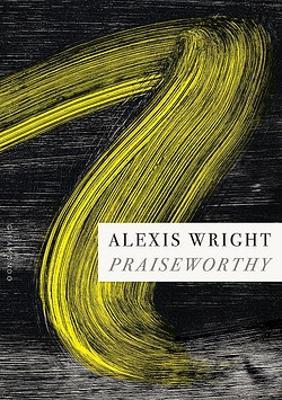
- Alexis Wright’s Praiseworthy (3, Bill’s second post)
- Alexis Wright’s Carpentaria (3, my review)
- Helen Garner’s How to end a story (2) (on my TBR)
- Michelle de Kretser’s Questions of travel (2, my review)
- Kim Scott’s That deadman dance (2, my review)
Three books by First Nations authors, and four by women writers. Interesting. Some authors appear more than once in the list, including, obviously Alexis Wright, whose The swan book is also in the list, but also Kim Scott and Fiona McFarlane. Theirs is a diverse list reflecting the diverse experts, and that makes it a “good” list to me, because it will speak to different readers.
For me, the most significant book published anywhere this century is Carpentaria (2006). Wright’s larger-than-life, all-too-human characters enact their dreams across a vast tract of earth, water, sky and the “alltimes”. The writing crackles. In this story of Country, ancestral voices offer wisdom and hope. (Nicholas Jose)
Readings’ list on the other hand was drawn from 600 “votes” from members of the Australian literary community – writers, publishers, and Readings’ own booksellers. They were asked “to nominate their favourite Australian books, published since 2000”. I don’t know whether 600 people nominated one book each or whether some nominated one and others more. Whatever method Readings used, they came up with a ranking, presumably based on the number of times each book was nominated. Their top 5 is:
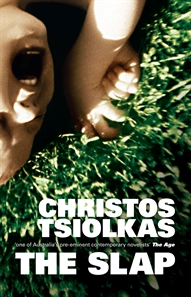
- Christos Tsiolkas’ The slap (my review)
- Markus Zusak’s The book thief (my review)
- Hannah Kent’s Burial rites (my review)
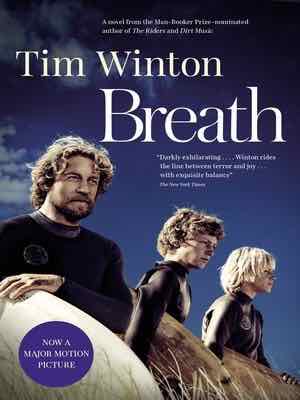
- Tim Winton’s Breath (my post)
- Robbie Arnott’s Limberlost (my review)
A more popular list, dare I say, than The Conversations’, which is not surprising given its genesis in a bookseller. I have read all of these. Indeed, it’s not until no. 15 on their list – the Garner that also appears in The Conversation’s list – that I hit a book I’ve not read.
Conclusion
Jason Steger wrote about these three lists in his most recent weekly email. He explained that NYT’s aim was to “take a first swing at determining the most important, influential books of the era”. Which of those will still be there in 75 years time? Care to take a guess? You may as well go out on a limb as I’m assuming most people reading this post will not be here on 1 January 2100 to say “I told you so”, or not, as the case may be!
Links to the Lists
- New York Times, Best books of the 21st Century (100)
- Readings Bookshop, Best Australian books of the 21st Century (30)
- The Conversation, Best Australian books of the 21st century: as chosen by 50 experts (50)
 Whispering Gums
The Readings list includes several books I’ve either read or listened to, and others by authors I love for books not listed. I’m pretty chuffed ! 🙂
Woo hoo MR … and I have read 25 of their 30. I may have read more of the authors. I didn’t note that. It’s a good list though not as provocative or exciting as The Conversation’s I think but probably better reflects the reading public?
I would say definitely, ST: The Broken Shore was given to me by my beloved second-eldest sister a thousand years ago, and from that I became a lifelong fan of my very favourite author. She was amazing at selecting books for me that I fell upon with joy; and I think I am a true representative of the reading public. 🙂
I think you could be MR – you want a good read written well without getting readers too tied up in knots.
I had fun reading these lists; I love a good booklist and all the chatter that erupts (I’ve read four from The Conversation-mainly thanks to Alexis Wright’s books, and six from Readings, so I suppose your theory of one being more popular does fit for me). In all, my disappointment surrounds the idea of multiple books by a single author but, then, when it’s an author like Alexis Wright, I don’t mind…which perfectly illustrates how personal and contradictory the whole she-bang really is…and that’s just fine with me. 🙂
And I second those opposing POVs Marcie. I probably have a little less concern than you about multiple works by a single author but I absolutely get where you are coming from.
I was thinking about my question re who will be there in 2100 … Ulysses is still here over 100 years later so maybe books like Carpentaria and Praiseworthy will be too.
Hi Sue, I do like lists, I went through all of them. I have read all of “Readings’. Didn’t do as well on Conversations. I did well on the New York List, and I have reserved some of their nominations at my library. I certainly won’t be here in 2100, but hopefully Atonement, Hilary Mantel’s trilogy, and some Australian novels will still be making the lists.
Thanks Meg … I’m not surprised you’ve read all of Readings. I was surprised I’d read 25. Like you I’ve not done so well either The Conversation’s though there are several there that I intend to read or are actually on my shelves to read! We’ll have to see if we can time travel to 2100 before we depart this earth to sneak a look at the lists!
Some names that are old and some that are new. I will follow them up the new ones. Thank you.
I loved Zuzaks writing.
Thanks Forestwood … I’ve only read The book thief and I did enjoy it.
For me, the Conversation list is a far better reflection of the best Australian fiction of the century so far (the fact that Wright wasn’t mentioned on the Readings one pretty much nullifies its legitimacy as far as I’m concerned!).
One addition from me that didn’t make either list – Elliot Perlman’s ‘Seven Types of Ambiguity’ 🙂
Thanks Tony … they are very different lists aren’t they and both have value, but I think The Conversation’s is more interesting though it perhaps is weighted more to the last ten years. I liked Seven types of ambiguity too. But then I’d also say what about Malouf? We can always think of those we’d like to have seen, eh?
Yes, I read and reviewed ‘Ransom’ earlier this year, and that would have made for a worthy inclusion.
That’s the one I was thinking … it’s interesting how quickly books are forgotten… I sense both lists are weighted to the the last decade or so, though I haven’t sat down and counted them all up.
My library will let me sign up to get a 1-day pass to read the New York Times. I really like that; however, the New York Times then proceeded to spam me about 15 times per day with different headlines in my inbox. Even though I only had the one-day pass, they just kept coming, and finally I had to mark them as spam. I tried unsubscribing, but they subscribe me to every little listserv that they have, and there are so many that I could unsubscribe and keep up with it. Your post got me thinking about some of my favorite books, and I realized that most of them I have read and reread, and sometimes even taught, and read to Nick, and still have yet to actually review them on my blog. I guess it’s because many of these books are pre-blog.
Ha! I had the same problem with the NYT. It was very difficult to unsubscribe from all their various emails, but I patiently unsubscribed each one as it came in. Reading your comment has made me realise that I haven’t had one for over a week now, so perhaps I have got them all!
I checked my spam and saw 127 NYT emails. It boggles the brain.
That sure does … it should be seen as unethical.
Crazy!
Oh yes, it wasn’t NYT but I had some other site that kept producing different lists – took me forever to unsubscribe from
them all.
Yes, Melanie, I think you are not alone in having all those older books from the past we’d love to have recorded on our blogs.
A couple of years ago I would have said Australia had four writers of the first rank – Kim Scott, Alexis Wright, Gerald Murnane and JM Coetzee. But I think Wright has now drawn ahead of the other three, whose best work may in any case be in the previous century.
There are too many in The Conversation list that I haven’t read, but I’m glad The Natural Way of Things is there, and Blakwork, and No Friend but the Mountains. One book I can’t see is The Museum of Modern Love. Of course I would have included A Wrong Turn at the Office of Unmade Lists, but that’s just me.
Thanks Bill. I think you are right about your list of first rank writers of this century to date though I might include some others.
I’m with you on The Conversation’s list. Too many I haven’t read that I’d like to.
I did like A wrong turn … too.
I’ve read 21 from the Readings List (and it includes some of my favourites – Foal’s Bread, Museum of Modern Love and Burial Rites. I wouldn’t include The Slap as a ‘favourite’ but it’s a book that I think about a lot, so….).
Of The Conversation list, I’ve only read four! (that feels like a very poor effort). Glad to see Charlotte Wood finally gets included.
Thanks Kate … we are all alike I think. I love The Conversation’s list but it is so diverse that I suspect different readers have read different ones. I’ve finally counted mine from their list and it’s 10
(versus 25 from Readings). I’d like to have read more snd some are on my TBR.
I did like The slap … I think it captured something important which I guess is why you keep thinking of it?
I don’t really care for “Best” lists but tend to enjoy lists as a means of introducing me to new books.
The Reading list has The Dry. Very middling for me. I have never got the love of what seemed an average detective yarn and just OK writing. Is it really worthy of being in a “Best” list?
Yes, I think that’s the main purpose of them for me too fourtriplezed. I think the presence of books like The Dry on the Readings list is what confirmed for me the fact that it was strongly affected by booksellers. It’s a fine list for general readers I think, but not so much a best of century sort of list, not a list of books that we think might endure?
And that begs the question as to what will lists like these look like in a few more years and beyond? Very different IMO.
I suspect so, but will a few, like Wright, continue on in future lists. That’s going to be the interesting thing.
These lists are always fun to peruse, irrespective of whether we agree with them or not! The Conversation’s list seems especially interesting to me, and it’s great to see some children’s books on there, too. Andy Griffiths’ Treehouse books are wildly popular with young readers at the bookshops I work with. We’ve done some events with him in the past when he’s been over in the UK, and they’ve been a great success!
Thanks Jacqui. Of course I agree re lists. But how interesting re Andy Griffiths. I don’t usually have any idea how our authors travel, but I’m aware that we do have a great children’s author tradition, so that’s lovely to hear about him. I liked seeing him on the list too.