For what it’s worth, given I’ve not read any of them, here is the Stella Prize shortlist. The announcement I received via email this morning describes it as comprising:
a diverse mix, featuring novels, memoir and an essay collection. Three of these works are by debut authors, showcasing fresh voices in Australian literature.
To summarise from my longlist announcement, this year’s judges are writer, literary critic, Artistic Director of the Canberra Writers Festival and this year’s chair, BeeJay Silcox; Filipino-Australian poet, performer, arts producer, and advocate, Eleanor Jackson; First Nations award-winning poet and arts board member, Cheryl Leavy; noveslist, occasional critic and full-time dad, Bram Presser; and writer and historian, Dr Yves Rees.
The shortlist
Here is the list, in alphabetical order by author, with brief comments from the judges (found on the Stella website’s page for each book, linked on the title):
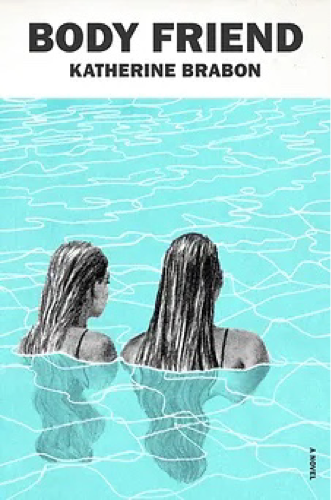
Katherine Brabon, Body friend (novel): “a novel of experiential heft and eloquence, which gives shape to the complexities of chronic pain”
Emily O’Grady, Feast (novel) (Kate’s review): “told from the perspectives of three connected women, Feast reminds us not so much to be wary of unreliable narrators, but of the deep subjectivity of moral value.”
Hayley Singer, Abandon every hope (essays): “experimental and jostling in its use of poetic, lyric, academic and reflective writing styles, this book grapples with the industrial meat complex”
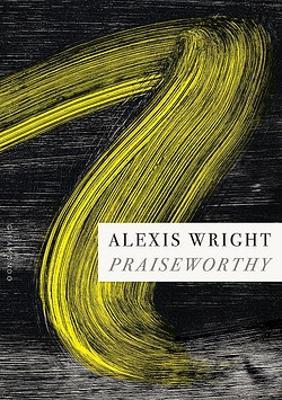
So four novels, and two works of nonfiction. No poetry on this year’s shortlist. I have added a couple of reviews from my blogger friends, including Bill’s for Praiseworthy (which was also included in my Longlist post). Kate, as you will have seen, has managed to read two of them since the announcement. I am certainly interested in some of these.
PS: Darn it, I copied my longlist post and then edited the title incorrectly so it was published as “Stella Prize 2023 Longlist” not “Stella Prize 2024 Shortlist!! Shows how distracted I am.
In a long past Monday Musings I mentioned the names of several people who had commented on the state of Australian literature. Many of these were pseudonyms, including the intriguingly named “6×8”. I decided to dig further, and back in 2015, I pretty quickly discovered that his “real” name was Dick Holt. (It’s not always easy to track down pseudonyms used in the newspapers.)
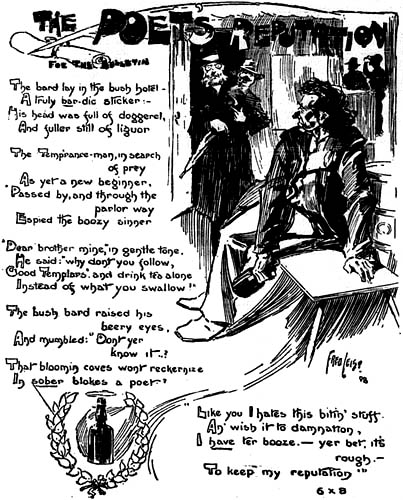
First published, The Bulletin, 29 October 1898, from Middlemiss
I didn’t find a lot about him back then – besides his own writings – but from what I could gather, I ascertained that Dick Holt had travelled the outback doing charcoal drawings and writing articles for the Bulletin and other journals and newspapers of the time. I presume his “6×8″ pseudonym refers to the old (non-metric) picture size of 6″ x 8”, and the fact that he included drawings in his articles. Presumably there’s a metaphorical layer to this pseudonym, too, in that his stories provided little windows on his world.
In the 1890s, according to a 1934-written reminiscence by “Stockwhip”, Holt travelled with Henry Lawson. “Stockwhip” describes him as ‘the jocular writer and “charcoal” artist, Dick Holt” and says he was “a well-known writer to the Sydney Bulletin and Western Herald of Bourke”. He had his own newspaper column “On the Wallaby”. This title references the phrase “on the wallaby track”, which is Australian slang for travelling from place to place looking for work, which is exactly what he and Lawson were doing in Stockwhip’s anecdote. His columns, at least those I’ve seen, ran anywhere from 1500 to 3000 words, and tended to comprise a collection of anecdotes.
I haven’t found a biography for him – he doesn’t appear in the Australian Dictionary of Biography, for example – but returning to my old draft post this week in order to actually post it, I found that AustLit has documented him a little more. They give him as Richard Holt (a.k.a. Dick Holt, and also writing as 6 x 8), and say that he “wrote a weekly column called ‘On the Wallaby’ in the North Queensland Register from January 1899 to August 1920″. So, over twenty years. AustLit says he was born in 1868, and died ca. 1923 in Tasmania (though a reference to him in February 1923 said he was now “living near Melbourne”.) Anyhow, this roughly accords with my research, which had uncovered that he had died by the mid 1920s. The reference came from columnist, Bill Bowyang (pseudonym of Alexander Vindex Vennard, 1884-1947), who wrote the following little anecdote about him in 1926 in his column, “On the track”:
It was the late Dick Holt (‘6×8’) of ‘On the Wallaby’ fame in the ‘N.Q. Register’ who once stated that when he visited a bush township he always gazed into the jail yard to see if there was a load of wood within. If the wood was there it was a certainty that the police would be searching for some inebriated individual to use the axe or crosscut. The sight of that wood was sufficient for Dick Holt, and without wasting any time he always passed on to another town where there was no lone wood piled up in the jail yard.
Holt was, it seems, a character – but one of his time. I’ve only read a tiny proportion of his voluminous output, much of which is in a jocular vein. (Indeed, a 1923 article, identifying Bill Bowyang as his successor, describes them as writing “racy bush yarns”.)
In the post that inspired this one, I shared that “6×8” had criticised Australian literature as being characterised by too much exaggeration of characters and incidents, to which another had replied that the problem was not this sort of exaggeration but a “diseased hankering after the abnormal”. Anyhow, “6×8” clearly didn’t think he was exaggerating character and incident – and perhaps not. But he did like to put a humorous spin on his wanderings about the bush, commenting on anything from a terrible Australian stamp design to what you can read from the newspaper in which the butcher has wrapped your meat. He also saw the poverty that often attended life in the “backblox” noting that country people didn’t like to pay newspaper subscriptions (which affected him), school masters, and parsons. He frequently makes comments like “do these people expect parsons [or whomever] to live without food and clothes?”
However, there’s a problematic side too. Given he’s an outback “wallabist”, he comes across many characters, including non-white Australians. He identifies First Nations Australians with terms like “black fellows” or “dusky brethren” or “dark son of the forest” or, even, “n****r”, and the Chinese are “chows”. In one instance, when listing people of Asian and Islander origins, he adds “and other colored abominations”. I looked for anything that suggested an awareness of the racism implicit in these terms, but I didn’t see it. This makes distressing reading, but for contemporary readers it’s instructive about the attitudes of the day to those they saw as other. Also, by mentioning these “others”, he also tells us about the people who populated Australia and something about their relationships with each other, which I’d argue is better than rendering them invisible.
You can see, perhaps, why I’ve taken a while to write this post, but in the end I thought there was value. Hope you agree …
 Whispering Gums