As I did last year for 1923, I plan a series of posts through this year about Australian literature in the year 1924. What I write about will be driven by what I find. So far, I’ve found articles on the Platypus Series, but I wrote about that inititiative last year, and of course about new releases, which I will feature in a future post. However, out of the blue I found a little article titled “Gloomy books” which I’m sharing this week. It’s a one-off rather than part of an ongoing discussion as far as I can tell, so I’m not including it in my 1924 series.
The article was written by one W.M.S. in Sydney’s The Land newspaper. I’m building up quite a list of mysterious by-lines that I’d like to identify one day, but it is often difficult. W.M.S. is an example. I found a reference to a W.M.S. in Wagga Wagga’s Daily Advertiser (10 October 1928). They identify him as W.M. Sherrie, and say that he had been an editor of the paper (for ten years) but was by 1928 a contributor. The paragraph says that he was “equally at home on a wide variety of subjects, and to his advocacy may be largely attributed the healthy tone of public life in Riverina”. This W.M.S. was ‘bred in “the bush,”‘. He “cultivated a love of nature” and wrote “delightful nature stories” which were popular state-wide. Trouble is, I can’t find much about this W.M. Sherrie.
However, I did find at the Mitchell Library transcriptions of letters written in 1916 and 1917 by Noel Hunter Sherrie, who was “wounded at Gaza taken by Turks & died in Damascus”. The addressee was his mother, Mrs. W.M. Sherrie, of Wagga Wagga. I believe this Wagga Wagga Sherrie is the W.M.S. who published in The Land, because while The Land‘s W.M.S. wrote occasionally about literature, most of the pieces I found were from his “Bush Notes” column.
So now the article (The Land, 18 January 1924). It starts with:
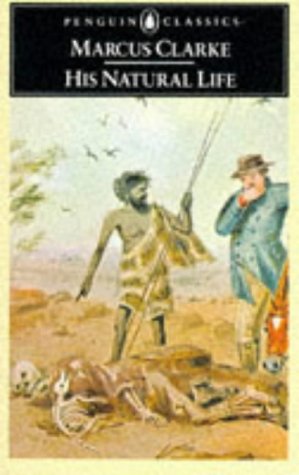
The brilliant Marcus Clarke wrote that the dominant note of the Australian bush “was weird melancholy.” If Clarke had known Australia better he would not have written that erroneous estimate of the bush. But the mental attitude of the author of “His Natural Life” towards the Australian bush seems to find parallel these days in the mental attitude of most of our fiction writers to life itself. There was a time when all the intolerably gloomy and unhappy books were turned out by Russians and Scandinavians. To-day we find a similar tendency among English writers.
You can see in this opening his love of the bush – but it’s also clear that he was a man of his those optimistic early Federation times. The way he sees it, life can be gloomy or unhappy enough at times, “without having the same thing served up to us in our literature.” He doesn’t name contemporary names, but says, for example, that ‘much of the “new humour” of the Americans is more depressing than the gloom-saturated works of such great Russians as Turgeniev, Tolstoy, and Dostoievsky’. He’s talking, presumably, about the early 20th Century realists and modernists, such as D.H. Lawrence (whom we will meet in our 1924 Aussie Lit travels), and T.S. Eliot. Did he include, in this, Katharine Susannah Prichard who’d started publishing by then but wasn’t really in full swing? I must admit that most of the writers I’ve read from these schools were published in the second half of the 1920s and into the 1930s and 40s, but the trend was well under way by the early 1920s, and W.M.S. didn’t like it.
As far as he was concerned, “life is not all gloom”. What the nation needed, he wrote, was “more light and shade in literary work”, because without it, “no work of the imagination can be entirely true”. Unfortunately, though, what he saw rising was “a new school of fiction writers” in which “the lens of the camera, register[ed] nothing but the dark patches of the object upon which it [was] focussed.”
I understand his point, but I don’t fully agree that every work needs some right amount of “light and shade” to be “true”. I share this because I know several readers who, like W.M.S. back then, worry about negativism in much of our contemporary literature. I see it a bit differently. When life gets challenging, as it was in those between wars years, and is again now with climate disaster looming, among a host of other challenges I’m sure I don’t need to elaborate, our writers want to capture and/or explore it. Some see hope, while others don’t. C’est la vie?
What do you think?
 Whispering Gums
I think that the paragraph you’ve quoted from the article is astonishingly modern: if you hadn’t set the context, I would’ve thought it to have been written today.
Exactly, MR … this is partly why I love researching Trove – plus ça change!
You certainly love your research, ST !! :D
I’ve been into Trove and corrected a good few newspaper scans about my father’s days as a solicitor in Perth, and there is something very satisfying about that.
Oh good for you … it really is satisfying though it can slow me down significantly sometimes.
Ian could think of his book as a kind of enormous Trove correction, eh ? [grin]
WITH talent, of course !
Haha MR … I suppose he could
Following on from what MR says about this issue being modern…
BY coincidence, I’ve just been listening to a podcast at the Guardian about how the overuse of phones affects the brain (in very scary ways), and amongst other things, it mentions doom scrolling. Yes, we want to be informed, but doom scrolling causes anxiety.
I have always believed that writers should write about whatever interests or concerns them, but my position is shifting a little. I wrote in a review last week that I was concerned about the effects of a diet of dystopias on young people because we know that many of them feel a sense of hopelessness and anxiety and the worst of the really depressing dystopias reinforces that mood.
But now I’m starting to question whether authors are really ‘writing about the issues that concern them’ or whether some of them are canny observers of the zeitgeist and are writing to what they see is The Market. Or, less cynically, whether it’s that they themselves are so influenced by the zeitgeist (as they perceive it) that they can’t escape it to think about anything else.
That science researcher podcast said that the average person checks their phone 55 to 144 times a day. (I check mine 2, 3 or sometimes 4 times a day. I don’t have it near me but in another room so that I can hear if it rings.) I wonder if some authors have that level of addiction so their attention span and capacity to make memories is affected, and apparently it’s less effort for a brain to process things that make us anxious, so that’s what the human instinct to protect itself focusses on. Authors would find that as hard to escape as anybody else would.
Fascinating Lisa, thanks so much for sharing… There probably is some truth in what you say but I think you are not giving readers and particularly authors enough credit for being able to think. I don’t see as much hopelessness around as you do. I read less than you do and I certainly don’t avoid “sad” stories but most of the grim or bleak stories contain some hope somewhere I find because, and I hear this often at writers festivals, most authors want to give their readers that. Interestingly though, I do find that with some books some readers will see hope where others don’t. That always intrigues me.
BTW I wonder how many people doom-scroll. I can see some on social media because they keep bringing up more and more terrible stories on a topic. But I don’t have the time!
I don’t follow authors on social media but sometimes they pop into my Twitter or Blue Sky feed anyway… don’t you ever see them complaining about how they can’t concentrate, can’t get on with something to finish it? Until listening to this podcast today, I didn’t think it meant anything more than the kind of inertia we all feel from time to time. But now I think, hang on, I used to feel like that when I had an assignment due, and why was that when I was such a diligent student and knew my material thoroughly? Because I was anxious, that’s why… I had a record of straight As and HDs to maintain (though nobody cared about that but me!)
Now I’m not so sure that that kind of mental paralysis is just ‘normal’… as it says on the podcast link, the scientist, “Prof Barbara Sahakian of Cambridge University, explains why many of us are drawn to looking at bad news on our phones, and what it’s doing to us” — our brains, specifically. That’s not me, not giving people credit for being able to think, that’s a science researcher, telling us about the findings from neuroscience. IMO we ought not to ignore what she says, and we ought to think about its implications.
Obviously she’s talking about a cohort of people who use screens and phones like that all the time. There’s mention of TikTok which I’ve never seen, for example, so she’s most probably talking about a younger cohort than us. (I don’t know anyone our age who’s obsessed by a phone, and I never see my visitors’ phones). This isn’t judging younger generations, this is being concerned about them because companies like Meta know exactly how to capture their attention and distractibility and have no moral qualms about the harm they’re now known to be doing.
Oh yes I do see those sorts of complaints, but I’m inclined to think that it was always thus with writers. It’s a tough gig (as I know you know) and anxiety, writers’ block, lack of inspiration for what to do next or how to “fix” something bothering them has always been an issue. Sure there are some easier opportunities for distraction now, but I don’t think this is a new issue for writers?
And sorry, no I didn’t think it was you saying that about people looking at grim stories on the phone and the impact on them. It was more your extrapolation to authors’ behaviour. Some authors are likely to be so affected, but I think history shows that authors have always written about social/political/economic issues, about the zeitgeist. It would take a bit to convince me that the sorts of authors I like to read aren’t still doing that. When authors write to the market you tend to feel the inauthenticity, don’t you think?
And I’m with you, the only TikTok I’ve seen are posts (is that what they’re called) shared on other media as part of a news story. I don’t spend a lot of time of social media … mainly because my kids are spending less time and my main use of social media has always been as a way of keeping in touch with them (in addition to more personal contacts like phone, sms, email!)
Ha, you’ve used the magic words ‘the sorts of authors I like to read’. Our reading choices insulate us from the problem I think, because we are not reading YA or commercial fiction.
Ah, when you said authors, I assumed you were meaning the authors we read … I really can’t comment on what others are doing or how things are affecting them because I’m barely keeping up with those I like to read, let alone all the others out there.
I agree with Marcus Clarke, the bush is gloomy, especially in southern Australia where the trees are so tall and close together, and even the greens are pretty drab. Then once you’re even a little way in, you can’t help thinking of a lost child story. I admit cannibal convicts don’t spring so readily to mind, but FTToHNL was 50 years earlier.
WMS though seems to be referring to English writers in general.
Thanks Bill. Yes, I think WMS was talking English language writers in general but he does say “most of our fiction writers” which I took to mean Aussies as well. I wish he’d named who some of these “most” were, as most of the writers and books I could think of – English, American, Australian, for example – were published after this comment of his.
I have never really thought of the Australian bush as gloomy, though I can sort of see what you are saying. Somehow gloomy seems dark – like dense English forests – whereas I feel that the Aussie bush never gets to that level of dense darkness. The greenery is never as dense or dark, light seems to come through more, though in the Dandenongs I guess it can get pretty dark. Is that what you are talking about? And, I guess some of Tasmania’s bush, like the Tarkine. Hmm … yes, I suppose we do have some bush like that.
I’ve been listening to a podcast interview with Ruha Benjamin about her new book Imagination: A Manifesto and she was addressing this idea of whether/how we look/listen and how we can choose to adopt the idea of everything’s-gloomy or to consider what’s not being presented that counters that presumption. I’m finding her thoughts about the connection between technology and fiction especially intriguing (how such spheres should be allowed to overlap, not be viewed as people being interested in one and not the other and I bet you would too. She talks about all kinds of stories in the context of how she develops her ideas, and how she remains engaged with solutions because she has children, and so she is constantly observing and considering things from their perspective (i.e. with hope, visions of a future).
Oh I like this, as you’ve guessed Marcie. I am particularly interested in the idea of choice in how we react to things. In the idea that we are actively engaged in how we respond to or think about what’s happening. We can choose to think positively which is not the same as choosing to put one’s head in the sand. That’s a bit what Arboreality was about too I guess? Hmmm, I’ve gone off at a tangent now a bit, perhaps.
Perhaps it’s an American thing but we sure love our gloomy stories, especially if they are true. I couldn’t believe how many people would come to the library and ask for help finding A Child Called It, despite that book being published 1995.
Haha, Melanie … I’m not sure Americans are the only ones who like groovy stories, though … hmmm … were you the home of misery memoirs? Do we blame you for the spate of them that filled the bookshops in the 90s and 00s?
I can remember reading something about the 19th century novelist George Gissing (author of New Grub Street and The Odd Women, both superb novels) which described his life and writings as being of “almost unrelieved misery”. I HAD to read him! Also Zola, Dreiser etc,etc. That naturalist “depressive realism” vibe is something that literature can’t ever let go of.
I’m a bit like you Ian. That would more likely draw me in than turn me off. I don’t recollect New Grub Street as being that miserable? I’d love to read more of him.
You are right to recollect New Grub Street as not being simply a slab of misery. I last read it a few years ago and its fairness to all its characters and its superb portrayal of the processes of literary change show realistic fiction of the best kind.
Phew, thanks Ian … that’s how I remembered it. It’s a book I’d happily read again, except I really should read more Gissing.