
Last week, Mr Gums and I drove back from Melbourne where we had spent the holiday season with family. Having spent over two weeks in the city – very lovely because we saw family – I did want a little country respite before hitting our own (much smaller, admittedly) city. Bright, in Victoria’s Alpine Shire was our chosen destination and it was truly delightful. Mountains and rivers are my happy places.
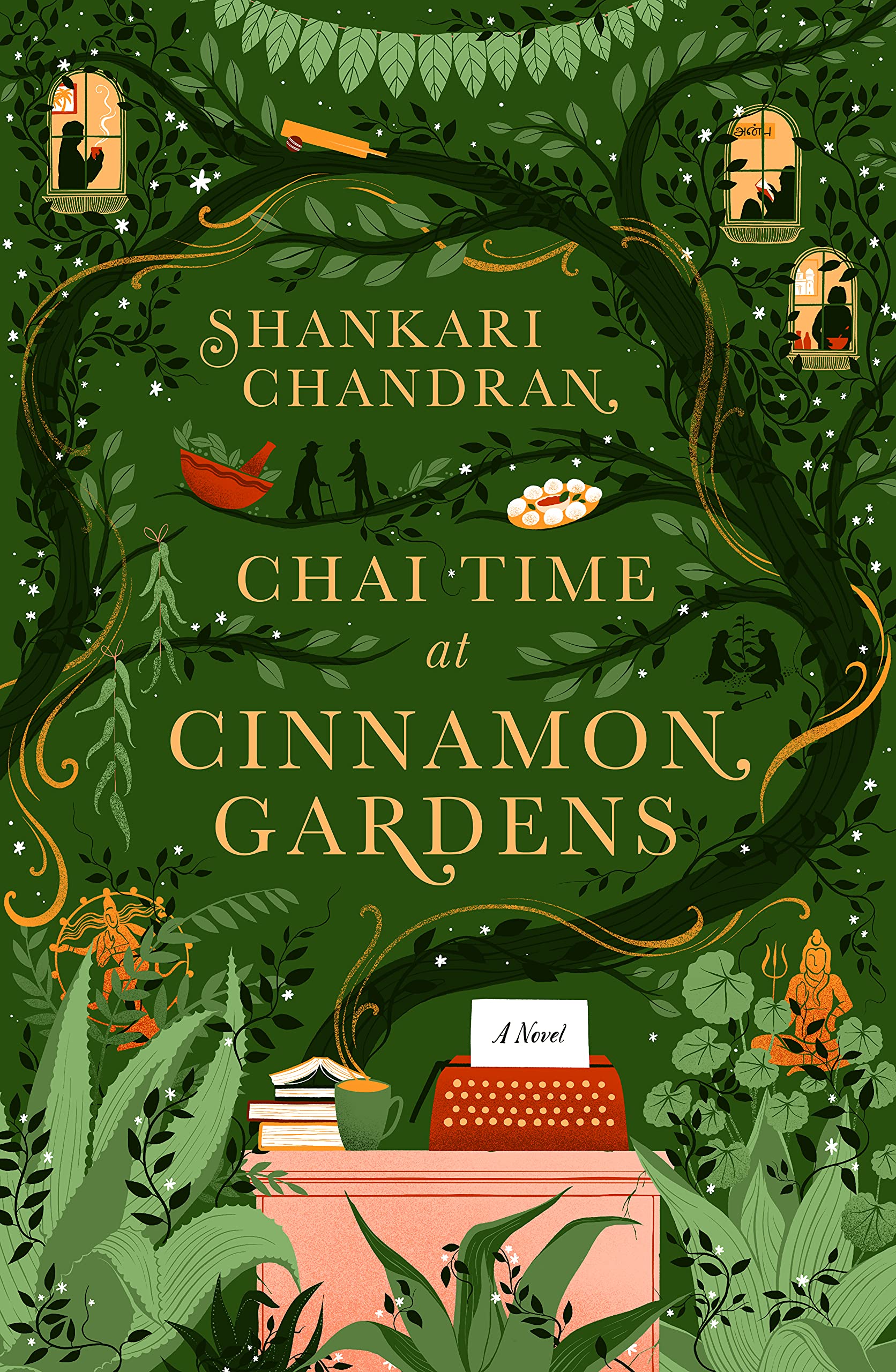
However, it wasn’t all road-tripping and bushwalking. The township of Bright has some good restaurants and, I noticed, a lovely little independent bookshop called, yes, The Bright Bookshop. I mean, you’d have to wouldn’t you? It’s a small shop but its inventory was excellent and with much to tempt me. But I just bought one book, Shankari Chandran’s Chai time at Cinnamon Gardens, which is on my reading group schedule this year.
None of this, though, is the point of my post. There was one other person browsing in the shop while I was there, and I overheard her asking for advice from the bookseller. She told him that her 18-year-old daughter wants to be a reader. She didn’t like science fiction, fantasy or dystopian novels, she said. In fact, she didn’t like anything involving suspension of disbelief. But the book couldn’t be “too literary” either, as her daughter preferred a nice linear story. Oh, and she wouldn’t read any books her sister read! I didn’t ask about historical fiction or crime, which is a shame, but the conversation kept spearing off, and I was running out of time.
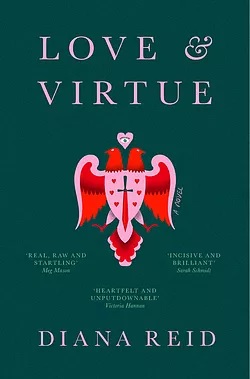
However, I had to go, we did throw around a few ideas, including the American Curtis Sittenfeld, the Australian Diana Reid, Robbie Arnott’s Limberlost (“no”, said the mother to the bookseller), Jack Kerouac’s On the road (the mother didn’t think so, and nor did I), and older American writers like Anne Tyler (which the mother thought a possibility). The mother also suggested Sally Hepworth, whom I don’t know, and I wondered about other Aussies like Toni Jordan, Karen Viggers and Irma Gold – to name a few – who have written young women well. By the time I left, a decision hadn’t been made. But, my question to you – my litblogging community brains trust – is, what would you have suggested to get a wannabe reader keenly reading?
Over to you …
 Whispering Gums
I wouldn’t recommend anything. The girl is 18, perfectly capable of making her own choices, and much more likely to listen to her peer group anyway.
There is a library in Bright where she can borrow books to discover which ones she might like.
Fair enough Lisa … but if they were on holidays libraries aren’t always possible or convenient – will the library lend to out-of-towners, will the reader have time to finish the book? But maybe a book voucher would be a good approach.
There are 31 libraries in Victoria that are part of a one card consortium. So depending on where they live (City of Yarra, Moonee Valley), they could borrow from the Bright Library 😀
Thanks Angela. I thought that some libraries had arrangements like this but wasn’t sure how widespread it is. Thanks for confirming this with some real information.
Sounds like the beginning of a joke !!!
I wish I were a good joke maker MR!
Ann Patchett’s Tom Lake? Seems to be a universal favourite. Love the comment that it must be different from her sister’s reading choices
So enjoy your blog Ms Gums
A
Thanks Queen of the Park. And thanks for that suggestion. Tom Lake seems to be getting a lot of interest at the moment. I loved the comment about the sister too. Sounded like she wanted to put her own stamp on her reading life!
My Ms 18 is currently reading Tom Lake as apparently it involves a production of Our Town, which she did last year at school. I have kept my glee at her reading Anne Patchett to myself!
Sensible woman! I’ve been hearing so much about this book. How great that she’s been inspired to read it.
What a wonderful dilemma.
When they were teenagers and reluctant readers, I suggested the writer Stephen King to my nephews. Happily, Stephen King started them reading.
Today, I wonder if young women writers might do the trick for a young woman. I recommend two clever books – Rebecca Kuang’s ‘Yellowface’ and Gabrielle Zevin’s ‘Tomorrow and Tomorrow and Tomorrow’.
Many thanks for your blog. I enjoy the weekly emails. With warm wishes, Mary Daley, Melbourne.
Thanks very much Mary … and thanks for these suggestions. Kuang’s was another recommended, but the mother rejected that as “over-rated”! (Seemed like she’d read it – said she’d read other books by that author but didn’t like that one. However, others I know, including people who have commented here, have liked it very much.)
Thanks for thinking of me! I’d say Deven and Hannah in The Breaking would be perfect for her, but then I’m slightly biased!
Anecdotally, I studied Anne Tyler’s The Accidental Tourist at school. I couldn’t relate to the middle-aged characters and found it all very boring. Fast forward to many years later and I picked it up again and adored it. I am reading her Vinegar Girl at the moment and absolutely savouring it. So that’s a longwinded way of saying that Tyler is fab but I would not recommend her for a fledgling teenage reader.
Diana Reid is a great recommendation. Sally Rooney would be a good one too.
So sorry Irma, for not replying to this sooner. I’ve just discovered three or four perfectly fine comments in my spam folder. It sounds like WordPress has changed its spam algorithm so there’s almost no bad spam. No idea where they have gone, but some good comments are ending up in spam, which rarely happened before.
Anyhow, yes I thought Devon and Hannah would be perfect for her daughter. Interestingly when I said and Tyler, she immediately thought The accidental tourist. Maybe she hadn’t read any of her others. I did think though that Tyler tends to deal more with middle-aged people. I don’t recollect ever finding them boring when I was young – I think I’m a bit of a voyeur! – though I probably didn’t read a lot of middle-aged people focused books until my late 20s. I did read Patrick White when I was 18 however and loved him. Voss isn’t quite your dashing young hero!!
I must read Rooney!
Doesn’t bode well with so many pre-conditions. Especially the ruling on science fiction and fantasy, which precludes the vast body of mind-expanding “speculative” fiction.
True Throsby, but at 18 I would have had the same stipulations – no sci-fi or fantasy for me, or crime or really much historical fiction unless it was earlier in the 20th century. I still don’t read fantasy or much sci-fi but I’m not averse to dystopian fiction and some flights of fantasy. (I have never read Lord of the Rings, for example.)
It’s very challenging to recommend a book that an unknown eighteen-year-old girl might read for pleasure; without knowing about her taste, her sense of humour and interests,
and her attitudes; her knowledge of and interest in stories set in different eras, and/or countries. I would recommend Great Granny Webster by Caroline Blackwood, which may not be in libraries here, and is expensive to purchase online, published by the New York Review of Books. But, you never know, if she can get her hands on a copy she may like it. (There again she may well not, but one must at least try reading books, and read widely, to find what one likes). It is a very individual process, and it can be challenging to find books that one’s friends and family members like, let alone love, or that change their lives, or ways of thinking.
Great point Ruth. You are right that we don’t know enough about “her taste, her sense of humour and interests, and her attitudes”. They are critical to making good suggestions aren’t they? However, I love that you’ve given it a shot. I don’t know that book but will check it out, even if I don’t get to read it!
Perhaps the young reader could start with historical fiction and something by Marie Benedict. Her books are straightforward and usually based on a little known woman (often American—sorry) in history.
Thanks Carolyn … she sounds an interesting author. I didn’t ask about historical fiction but if she likes reality then I can imagine she would like historical fiction based on real people’s lives.
Hi Sue, I can’t believe you didn’t mention Jane Austen. I suggest Tomorrow and Tomorrow and Tomorrow by Gabrielle Zevin, The Dictionary of Lost Words by Pip Williams, and Normal People by Sally Rooney. There are a novels running through my head but the three I have suggested are all different and good reads.
Thanks Meg … haha, but the way the mother said not “too literary” made me think classics, with their tendency to long complex sentence, may not be the way to go. I like the variety in your suggestions – good ones.
I would have suggested Alice Pung, Melina Marchetta, Markus Zusac or John Marsden’s Tomorrow series if she was buying a book as a gift as their characters are closer to the daughter who wants to be a reader’s age (such a gorgeous description). Really, I’d be happy if they were reading any old rubbish at all and enjoying it, in the hope that it led to a lifetime love of reading. At that age I was reading Stephen King, Georgette Heyer, Jane Austen and the Flowers in the Attic books, and couldn’t turn the pages quickly enough to find out what happened next.
Oh thanks Rose. The mother expressly said not YA – I didn’t say that did I – which puts out your good suggestions of Marchetta and Marsden. But Zusak is interesting because he’s a crossover isn’t he. The book thief is such a moving read.
Interestingly I really can’t remember what I was reading at 18, outside literature texts for school and university. I think they had really grabbed me. Just before that, however, (from around 15 to 17), I was reading (in addition to school texts), authors like Neville Shute (my favourite page-turning author!), John Wyndham, and, I guess what I’d call social justice novels and nonfiction like To sir with love, I the Aboriginal, Black like me. I wish I’d kept a reading journal back then.
The mother (or the daughter who wants to be a reader) might do better to get a gift voucher and let the daughter choose for herself! There are a lot of ‘No, not reading that,’ in their list of wants.
I loved Neville Shute and read my way through his books at that age, too, but I also roared through Jackie Collins and Sidney Sheldon and the like. I don’t think a reading list from that age would do me much credit!
Yes, that’s what I suggested to Lisa – a voucher. I think you are a bit younger than I am, so Collins and particularly Sheldon were coming into their own as I was moving away from best seller sort of fiction. I do remember reading a bit of Leon Uris and James Michener. (I just looked up Sheldon because I could remember his name on books but not the books themselves, and I discovered that he was behind two 1960s TV shows I adored – The Patty Duke Show, and I dream of Jeannie.
I suppose the best-seller phase is something all readers go through. Perhaps Taylor Jenkins Reid and JoJo Moyes’ books might have been better suited to the daughter right now, even though her mother said she was looking for more literary books.
I read some James Michener books years ago, but missed Leon Uris. Would you recommend his books still?
I adored I Dream of Jeannie, too and had a row of colourful bottles on my windowsill for a while because they reminded me of the show. I think Mum used to watch Hart to Hart, which he also wrote. It was very glamorous.
Actually the mother said “not too literary” so I’m not sure what she meant by that. So those ideas might be good.
I can’t really say about Uris because it’s been do long. He might be a bit dated is my guess… Neville Shute sure is.
I saw Hart to Hart in Wikipedia’s list and I remember it vaguely – husband and wife – but it wasn’t one I or my family watched.
Oh well, whatever she ended up buying the conversation has been interesting.
Neville Shute’s works have dated, but I find his writing style to be comforting. I like the characters’ stiff-upper lip, get on with whatever life throws at them attitudes.
Yes, that’s what I was hoping Rose, and it’s turned out that way.
True re Shute.
I find it hard enough buying for my grandchildren without starting on strangers. I wonder what put her off SF; and I wonder if we could sneak in some really good dystopian like, say, The Natural Way of Things (or Arboreality – are you finished yet?)
I thought of Marchetta too, though her adult one The Place on Dalhousie didn’t particularly grab me.
I’m going with Victoria Hannan: Kokomo and Marshmallow.
Haha, fair enough Bill. I think if she’s said no SF (as I did at that age, though I did make an exception for John Wyndham in my teens) that the best thing would be to get her engrossed in reading and then try to encourage her to try other forms and genres.
Victoria Hannan – one I’ve heard of but not read. I have been intrigued by Kokomo, though.
And yes, I’ve finished Arboreality. Really enjoyed it and am working on my review now, though I keep being distracted. I hope to get it up on Friday or Saturday at the latest. I’ve finished my Gaskell too and hope to have that ready to go early next week. I’m not sure I can work a Gen0 Monday Musings but am thinking.
Maybe Sally Rooney’s “Normal People” (Irish) and Emily Maguire’s “Love Objects” (Australian)? What about Helen Garner’s “Monkey Grip” or is a book with drug taking a “no no”?Googling ‘coming of age novels’ runs the gamut of “Little Women” and “Ballet Shoes” to “Catcher in the Rye”
(from Margaret Pender)
Thanks Margaret … Monkey Grip crossed my mind after I left the shop, but I suspect the mother would have rejected that for the reasons you’ve given. Maguire has also crossed my mind, and I think she and Rooney sound good. The mother really wasn’t – disappointingly to me – up on Australian writers.
It’s hard to advise without knowing about the girl’s tastes and interests etc I never had anyone advising me. I just tried things and binged on horror novels at that age 😆
I have a 19yo niece who’s only just got into reading. She’s a very well travelled 19yo and lived abroad, so probably has sophisticated tastes… she’s gone straight for literary novels. In the last year or so she has adored James Baldwin’s If Beale Street Could Talk, Stephen Chbosky’s The Perks of Being a Wallflower and Claire Keegan’s Foster.
Thanks kimbofo … no I didn’t either except to some degree my mum sharing her loves.
But, your niece’s reading sounds excellent. I haven’t read any of those but I’ve seen the film versions of the first two and would love read them.
It is a tricky question .First we need to know taste and temperament of young aspiring reader here.As you said see doesn’t like fiction or such narratives, and books that her sis has read, we can suggest simple travel stories or commedy books ,having straight links to her needs and life style.
I like your thinking dascp … we just need to know her needs and lifestyle, don’t we?
I might suggest a novel by Nick Harkaway, probably Tigerman, because the idea is based on comics and the novelist is a former screenwriter, so his stories maintain a fast pace and there’s lots of action.
Oh interesting, Jeanne. I’ve not read him at all. I’m enjoying hearing about writers I’ve not heard of.
He’s one of my favorite living writers. Incidentally, he’s the son of John Le Carre.
Oh wow, both those things are fascinating, Jeanne!
Wow, that’s tough one for which I’m no good because I like to read all the things she is not interested in! I bet my bookseller husband would have been able to come up with a few titles though.
Ha ha, Stefani. You are not the only one here I think, but I bet he would have. He probably gets all sorts of recommendation requests, and enjoys responding to them!
Check out my book list which I just posted. The first two could be recommended to her. Just sayin’ 😉
Haha Arti, will do!
When I get this question at work I also go for Diana Reid’s book, but also Zevin’s Tomorrow and Tomorrow and Tomorrow, Sally Rooney, Kiley Reid’s Such A Fun Age and anything by Taylor Jenkins Reid. If these still don’t illicit the right response, I go to Colleen Hoover.
Yes, thanks Brona, Diana’s Reid’s was my first thought. I don’t know Kiley Reid or Colleen Hoover.
I find odd the assumption that linear and literary are opposed. Is War and Peace not literary? Where is its narrative not linear? (I guess that after the fall of Moscow, Pierre’s story goes in parallel with that of the Rostovs and Bolkonskys; but this isn’t hard to follow.)
This might be a case for a novella or novellas, to reduce the commitment of time. The collection Pale Horse, Pale Rider: Three Short Novels by Katherine Anne Porter, containing also Old Mortality and Noon Wine still seems to be available (well, in the US). One might consider Old Mortality a bit literary, but nothing a young woman of eighteen should find intimidating.
Your reading group seems to be very well organized, having its program for the year set out.
Yes good questions George. Austen is linear after all, and I’d call her literary (though, what exactly is literary). I think the mother was not thinking classics at all and was wanting to steer thoughts away from the many modern dual narrative, or multiple perspective books. I suspect (hope) she used the term as a shorthand for that sort of writing rather than that sort of writing being a definition of literary.
Old mortality – at first I thought what has Scott’s novel to do with Porter, and then I checked the internet and understood! I don’t know Porter beyond her name.
I guess we are organised. In February we turn 36, and we’ve pretty much always done it this way to enable people to plan their reading (including getting access to books.) We don’t have the whole year planned: in November we organise our January to June schedule, and in May, we do July to November. December is party time and sorting out our top reads of the year.
Interested in fact based espionage and ungentlemanly officers and spies? Try reading Beyond Enkription. It is an enthralling unadulterated fact based autobiographical spy thriller and a super read as long as you don’t expect John le Carré’s delicate diction, sophisticated syntax and placid plots.
What is interesting is that this book is apparently mandatory reading in some countries’ intelligence agencies’ induction programs. Why? Maybe because the book has been heralded by those who should know as “being up there with My Silent War by Kim Philby and No Other Choice by George Blake”. Maybe because Bill Fairclough (the author) deviously dissects unusual topics, for example, by using real situations relating to how much agents are kept in the dark by their spy-masters and (surprisingly) vice versa.
The action is set in 1974 about a real British accountant who worked in Coopers & Lybrand (now PwC) in London, Nassau, Miami and Port au Prince. Simultaneously he unwittingly worked for MI6. In later books (when employed by Citicorp and Barclays) he knowingly worked for not only British Intelligence but also the CIA.
It’s a must read for espionage cognoscenti but do read some of the latest news articles in TheBurlingtonFiles website before plunging into Beyond Enkription. You’ll soon be immersed in a whole new world which you won’t want to exit.
Thanks Jim, and sorry for the delay in replying. I’m not sure this book is what the mother is looking for for her 18-year-old daughter. We didn’t discuss mysteries and crime, but it seemed like that was not what she was looking for. As for me, espionage is not my favourite topic for reading or viewing so it’s probably not something I will follow up. However, it might interest others who read my post.
Many thanks. The Burlington Files should interest any of your readers who like reading genuine espionage thrillers based on real life but I reckon reading the news before the first book is well worth it. Further books should follow but they have been put on hold, inter alia, for reasons of national security. Exactly which nation’s national security is anybody’s guess as the books cover global activities! Best wishes – Jim
Thanks … over now to any of my readers interested in the subject matter and approach.
Why not let her daughter chose for herself? At 18 she’s an adult so is surely capable of making her own choices and decisions?
Good point, Karen. Maybe the mother just wanted to give her a gift? But as we have discussed, maybe a book voucher woulld have been a good idea?
Fair point though the voucher idea would be far better.
Theoretically, yes, I agree. But we wouldn’t have had the fun here we’ve had discussing it all, ha ha! And what if the daughter had asked her mum to recommend something, or to surprise her, or the daughter couldn’t get to the shop (because she was in hospital, or was otherwise occupied, but needed a book for a road trip the next day!) Unlikely, but you know… who knows the situation sometimes when people appear with questions like this.
I would’ve gone straight to Toni Jordan. Addition is being made into a film; and all her books have appeal.
Yes, thanks Angela, I was particularly thinking of Addition and Fall girl, but like you I also thought that she’s a good storyteller so if you are interested in people stories told with a warm heart, she’s a good choice.
Hah! So funny that this hypothetical situation has us all scratching our heads and really thinking hard about the options. I would have snagged a teenager off the street and asked them to randomly pull something from the shelf, even if only based on the cover, and then said that it was recommended but not by me, almost as if I held something against the book. That might add a small element of sensation….it seems to me it’s the idea that she doesn’t enjoy reading that’s the challenge here, rather than what kind of book might appeal.
Haha, you rebel you, Marcie. Yes, there was that interesting statement the mother made at one point that “she wants to be” a reader. What makes an 18-year-old decide she “wants” to be a reader?
Exactly what caught me up. I think she means that she wants to be more like the person someone else wants her to be (or kind of wants that, at least). Speaking of unanswerable questions (in some other thread, about some other book)!
Complex … I can think of various reasons but all involve some sort of expectations. Question is where from. Could be internal, but even internal ones are based on some understanding of expectations. It may not though be from a “specific” person?
Sally Rooney’s Normal People is the novel that immediately springs to mind. Or maybe Françoise Sagan’s Bonjour Tristesse, which features a protagonist roughly the same age as the reader? It’s a fascinating challenge!
Thanks Jacqui. I thought so. Sagan is a good choice. I really should read Rooney.