This week’s Monday Musings is one I’ve been waiting to post ever since I saw the announcement a month ago. This time of year is so busy and I have my traditional little suite of posts that I wanted to keep to, so this post had to wait.
The announcement, as you have guessed from the post title, concerned the appointment of Parramatta’s first (or inaugural) Laureate for Literature. For those of you unfamiliar with Australia, or, with Sydney in particular, Parramatta is a suburb of western Sydney. It’s a big suburb, or, as Wikipedia describes it, “a big CBD”. It was home to the Dharug People for at least 30,000 years before the colonists started settling it in 1788, and was the setting for First Nations author Julie Janson’s historical novel Benevolence (my review). Set in colonial times, the ironically titled Benevolence opens in 1816, when a young motherless girl is handed over by her trusting father to the British to be taught English at the Parramatta Native Institution.
Parramatta is also the second location of a non-profit organisation called the Story Factory, whose aim is to “help Indigenous and disadvantaged school-aged children (generally 7 to 17 years old) to develop their writing and storytelling skills”. It started in Redfern in 2012, with the Parramatta site opening in 2018. Perhaps, though, I’ll leave this for another Monday Musings.
All this, however, is simply to set the scene for sharing the announcement made on 4 December 2023 that local Parramatta author, Yumna Kassab, had been made the inaugural Parramatta Laureate in Literature. This role is the result of a partnership between the Sydney Review of Books literary journal, the City of Parramatta, and Western Sydney University’s Writing and Society Research Centre. Their aim was to “select a highly regarded writer with links to the Parramatta region”, and who is “making an outstanding contribution to literature”. The expectation is for this person to “help animate a vision for the future of Parramatta as it cements its position as the true heart of global Sydney”. I’m not sure about the “true heart of global Sydney”. That’s perhaps a bit of a reach that other parts of Sydney might quibble about, but I love their vision of a laureate in literature as able to make a meaningful difference to a place.
The announcement goes on to say that Kassab ‘will receive a stipend of $50,000 to write what she describes as “a dictionary of Parramatta”, grounded in the city’s complex histories and diverse communities’. She will also run some writing workshops with local participants, and “advocate publicly for writing cultures”.
You can read the announcement at the link I’ve provided above, but I will just highlight two things. One is the comment by the Editor of the Sydney Review of Books, Dr James Jiang, that “She brings to the role exceptional talent, and the cosmopolitan sensibility and civic-mindedness that are hallmarks of the city’s culture and ambitions”. And the other is that, reading between the lines, I understand that applications for the role were called for, and that applicants were asked to suggest projects they would undertake. The announcement also shares the rest of the shortlist, which comprised Gary Dixon, Eda Gunaydin, Bilal Hafda, Fiona Murphy and Vivian Pham.
Who is Yumna Kassab?
Some of you will know of Kassab as, although she’s relatively new on the literary scene, she has garnered some excellent critical attention. According to various sites, including GoodReads and Giramondo which published her first book, she was born and raised in Western Sydney, and completed most of her schooling in Parramatta, “except for two formative years when she lived in Lebanon with her family”. She studied medical science at Macquarie University and neuroscience at Sydney University.
She has written four works of fiction:
- The house of Youssef (short story collection, 2019, Giramondo): listed for the Victorian Premier’s Literary Award, Queensland Literary Award, NSW Premier’s Literary Award, Readings Prize, and The Stella Prize (kimbofo’s review)
- Australiana (novel, 2022, Ultimo)
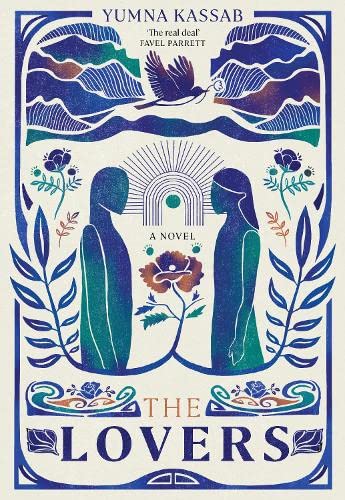
- The lovers (novel, 2023, Ultimo): shortlisted for the Miles Franklin Literary Award, the Prime Minister’s Literary Award for Fiction, and the Victorian Premier’s Award for Fiction
- Politica (novel, 2024, Ultimo)
She has also written for newspapers and journals, including The Saturday Paper, Meanjin, Griffith Review, Kill Your Darlings, and the Sydney Review of Books.
Kassab’s themes seem to be family and relationships; and migration, class, and othering. Critics describe her work with terms like “unsparing”, “unnerving”, “poetic”, “unobtrusive realism”. Promoting her latest book, Politica, which is due out this month, Ultimo calls it “a powerful new novel that asks again if it’s possible to ever measure the personal cost of war.” Oh my … how relevant is that.
My question for you: Does a city or place (not a whole country) near you have a Laureate for Literature? If so, I’d love to hear your thoughts.
 Whispering Gums
Thanks for the link to my review. That first book of hers was astonishingly good but I never did get around to reading her follow up.
I’d heard this news awhile back, too, and did think it was an interesting idea. In the UK and Ireland the laureates are there there to champion certain types of literature (ie the poet laureate is poetry, the children’s laureate children’s literature etc), which makes more sense to me. Restricting to a specific place sounds a little limiting and also exclusionary because why would people in other suburbs of Sydney be interested in reading about Parramatta? It could come across as being territorial (like football clubs). Or maybe I’m overthinking it. It will be fascinating to see how it pans out…
Thanks kimbofo. I remember when The house of Youssef and The lovers came out and got some recognition. Your review of the first one has convinced me I’d love to read it.
I think there’s a Children’s Laureate in Australia, or there was a couple of years ago. Your concern about a place-focused one is interesting. I can see this two ways. One is it seems to be about developing culture within Parramatta, so your concern is perhaps not a big one. But, there does also seem to be an aspect of promoting Parramatta as something worth reading about. My answer is why not? I think we all like reading about place if it’s done well and if it conveys something meaningful to us, either by helping us understand that place or by saying something that has some universal application? As you say, it will be interesting to see how it plays out, and if they continue the idea.
Yes our current children’s Laureate is Gabrielle Wang. A new one for 2024-25 is due to be announced.
This was in SPAM – so thanks for the advice. And, as you say there wasn’t much there.
Thanks re Gabrielle Wang. That’s what I’d read. Was Ursula Dubosarsky before her?
After I added the Covid update to my latest post, I checked my spam again & found Bill’s last comment in there 🤷🏼♀️
And yes I think it was Ursula. The first were Alison Lester and Boori Monty Prior together but I can’t remember who was in between them.
I agree with kimbofo: creating a Laureate for a place is exclusionary and more likely to annoy everyone else than create local pride.
Thanks MR, are we saying that places – Iike, say, municipal councils, can’t initiate ideas in their own area because they exclude others? I can see how if a Laureate, like this, started saying Parramatta was “the true heart of global Sydney”, others would have something to say about it. Is Parramatta the most diverse part of Sydney? Or, is, I wonder, social cohesion an issue there? I can see that encouraging cultural pride and mutual respect in its denizens could be a good thing. I’m guessing this is what the storytelling focus is about. I’d love to know the origins of this, and its true motivation.
Of course not, ST: I am saying that the ‘by-and-large’ interpretation of laureate is greater than that of a local council’s reach. By far.
This is interesting MR. I can’t really see that that has to be. That said, in the ACT the Chief Minister created a Children’s Ambassador for Literature rather than Laureate, with the focus being on promoting and encouraging children’s literature.
I have nothing but bad memories of Parramatta. Late at night, on my first trip to Sydney by car, with The Offspring asleep in the back seat, I was monstered by some thugs in a hoonmobile who thought it was funny to tail gate a young woman apparently alone and swerve around the sides and front of my car, all along that long, long Parramatta Road until I finally saw the lights of a police station and they melted away. I was terrified.
The University of Western Sydney writing movement gets a whole chapter in the recent Cambridge Companion to the Australian Novel. They really do think that they are something special and different.
There’s a .. a culture that Sydney has in toto, Lisa, and its west has it in microcosm. (I lived in Sydney for 41 years, and to be back in Melbourne is a release and a joy.) Isn’t it interesting that ST’s post arouses feelings that weren’t anticipated, I must assume ..?!
Perhaps so. I should add that I haven’t formed my opinion solely on this traumatic incident. I’ve read some products of the Western Sydney writing movement: stories of migrants who are racist about refugees, about angry men kicking pregnant women, about revenge and vendettas and enmities imported from other places. I suppose they would call it raw and authentic but since it insists on the ethnicity of its characters, it doesn’t create a good impression of Western Sydney cultures.
I guess I would say that it’s not the role of literature to create a good impression of anything? CliFi fiction doesn’t create a good impression of what is happening now? (We thought can decide what we want to read, can’t we.) But, I won’t say more because I haven’t read much of this literature, just about it and have seen some programs about the region.
They can’t have it both ways: if they claim to be capturing the zeitgest, and they say on their website that they “support marginalised communities and individuals to identify issues that affect them, take control of how they are portrayed and perceived” we can hardly be blamed for forming impressions created by that writing.
Though I would say that it depends on who’s publishing their work. Uhlmann’s novel was published by UWAP and Polites by Hachette and his most recent by Ultimo Press.
I agree that we can’t be blamed for forming impressions from writing that is produced, but are we being blamed? (Perhaps though, part of this Laureate is to help produce a more diverse image of a diverse community?)
Your comment makes me think of how I used to think about how I might feel if my children became writers and wrote about my failings as a parent. I would want to support them in their creative endeavours but I would have to be prepared, perhaps, for some uncomfortable truths to come out!
You are right I’m sure about role of the publishers – and what writing and what subject matter they decide to support or think will sell.
Haha MR, perhaps not quite anticipate, though I did know that Lisa doesn’t enjoy writing from this region, so I was interested to hear her response.
That sort of experience it terrifying Lisa. I can imagine your remembering it. Mu only additional comment it that it could have happened in many places in Australia (and the world), I think. We had Summernats here this weekend, with its usual moronic (as the police called it) behaviour. Brawls, unsafe burnouts, the lot. Not what people think of when they think boring, “ sterile” Canberra!
While they don’t say it, I’m wondering whether this initiative is in response to some of the challenges the local government sees in its diverse community, and if so, I love that they see literature as one of the antidotes or ways for bringing people together? I also think it’s wonderful that they are proud of their writing culture. I think Melbourne thinks it’s special too? Canberra is proud of what it achieves as a small city. I guess my feeling it that as long as each place respects the other’s specialness and uniqueness it can only be good.
Oh, Sue, we know already what she will write about: migration, class, and othering.
Working class white guys are unlikely to have their stories told…
Perhaps, I guess we’ll have to wait and see. But maybe, if she runs writing courses some other stories might come out? So often these things are announced but we never see the outcomes. Which is understandable I suppose.
I enjoy the idea of the Laureate positions. When it’s attached to a place I live or have lived, I’m most keenly interested. But sometimes just that extra detail, referenced in an article or a bio, nudges me to investigate a writer/poet further. A couple of times (at least!) it’s brought a new favourite into my stack.
Thanks Marcie, I’m with you. I like the idea too. It creates all sorts of possibilities and, as you say, it also creates new avenues for writers to be noticed.
I have nothing to offer on the subject of Laureates but as for the brief being “a dictionary of Parramatta”, grounded in the city’s complex histories and diverse communities’, I can only say, good luck with that! The obvious starting place is indigenous – but where to from there? I grew up in the vicinity and sometimes had after school jobs in Parramatta – there are so many histories and changing communities.
Last year I read Felicity Castagna’s YA ‘Riding in cars with Boys” and the Parramatta she describes, while I am familiar with it through a granddaughter, has nothing to do with the Parramatta of my youth*, which in turn, was much more developed from what my mother discovered in 1955.
So what style did the communities of the previous 150 years take and how did they evolve? And what about its darker histories, including the Female Factory, Parramatta Gaol, Parramatta Girl’s Home, Parramatta Psychiatric Asylum? – The list goes on. I’m feeling overwhelmed. Thank goodness I’m not the one tasked with writing it.
* The adoption topic memoirs Ten Hail Marys by Kate Howarth, and Daughter of the River Country by Diane O’Brien show the Parramatta I was raised in. Hardly surprising, as both authors are only five years older than me. Obviously I’ve read both and can recommend.
Oh thanks Gwendoline. I love hearing the perspective of someone who has lived there. I spent 9 years on the North Shore from 1966 to 1975, and Parramatta was where I went to my one and only live football (Sydney football) game when I was a teen. Then when I moved to Canberra my route home would take me through Parramatta, so it feels very familiar, but that Parramatta was I think, more like the one you describe.
You’d be spot on there.
I like that Parramatta is asserting its separate identity from Sydney – which is really two cities anyway, a wealthy enclave around the harbour to whom all the rest, the remaining 4 million, are ‘West’, beneath contempt.
Thanks Bill … I agree with you re Parramatta wanting to document and promote its own identity. Practically, I would see Parramatta as a “city” but administratively it isn’t of course. I like the way Wikipedia called it a large CBD to try to get around all this.
Hi Sue, I have read the Lovers and The House of Youssef, and liked them both. . Helen Garner who lives in Ascot Vale, and not far from where I live, would be the most recognised author for awards in literature. She did win the Australian Council Award for Lifetime Achievement in Literatue – is that close enough?
Thanks Meg, I tried to buy The house of Youseff today as the short story aspect appeals to me. I think, given I couldn’t, I might just jump to Politica.
I think your Helen Garner example is good enough! Hard to beat really.
It’s not the region, it’s what they choose to write about that matters to me. There *is* writing from this region that I like….
There are writers from Western Sydney who’ve outgrown the ‘Sweatshop’ and its grievances:
The Pillars (2019), by Peter Polites and also (though I wasn’t keen on An Elegant Young Man) An Ordinary Ecstasy (2022), by Luke Carman. I have Polites’ latest — God Forgets about the Poor — on the TBR too, though I haven’t read it yet.
And I absolutely loved Saint Antony in His Desert (2018), by Anthony Uhlmann (who’s the director of the Writing & Society Research Centre at Western Sydney University).
For a moment there Lisa, I thought “sweatshop” was a reference to the working-class socioeconomic of my years, compared to the relative wealth of those who now call Parramatta home. When Australia still had a manufacturing industry, many of my friends worked at the nearby Hestia bra factory, famous for holding every size t*t in Australia.
Anyway, Google has set me straight. You were of course referring to the Western Sydney University literacy movement “Sweatshop”. Silly me 🙂
*chuckle*
Well, it’s interesting to note that in the Cambridge Companion to the Australian Novel, they say that the Sweatshop movement is not as new as it thinks it is, because it has precursors including Patrick White, David Ireland and Peter Carey.
But of course they are white guys, (one of them spectacularly patrician), so *chuckle* they don’t count!
No, seriously, what’s different, they say, is that the Sweatshop writers are influenced by American writers.
I wondered if Mena Calthorpe was from Western Sydney because she wrote that novel The Dye House, but I Googled her and found out that she lived in southern Sydney suburbs.
Ms Gums really has kicked off a discussion here, hasn’t she? I’ve now caught up with all the comments, I had missed your earlier ones, Lisa.
I am sorry you had that hooning experience, although, as mentioned above, it happens elsewhere also.
But this part of Western Sydney: I’m loosely referring to Villawood>Granville>Parramatta>Fairfield, not Bankstown where I think UWS is based, has always been edgy, as happens when the incomes are low and the education lower. It’s a sad indictment on our society, then and now, that people leave school early because they need the money, and don’t see any brighter future for themselves than living hand-to-mouth. I left home at sixteen, and when life pitched me into the Eastern Suburbs of Sydney a couple of years later, I never wanted to return to the west. I was forced back for a few years in the 80s but I rarely go there now, so my below comments must be taken in that context.
I loved going to the Rivoli dancehall on a Saturday night. “They” pulled it down and erected a tax office – sacrilege. But in the day, it was close to the railway station and about midpoint of the CBD. The Gypsy Jokers ruled one end of town, the Hells Angels the other, so guess where those bikies met up on a Saturday night to sort out their differences? Yep, right outside the dancehall.
Another time I had a second job working nights going around pubs selling fluffy toys and fake flowers in cylinders. I was in an open carpark of a pub loading the basket in the boot when I was caught in crossfire between a couple of rival gangs. Head down, I managed to scuttle to the bottle shop, and crawl in behind the counter. People had to shove up to make room for me.
And I walked past Ivan Milat’s house twice a day on my way to and from school. Never spoke to him though.
With this sort of thing going on in the open, you can imagine how it was like for some behind closed doors. Although – it was not all bad! Some of my schoolfriends still live in the area. It comes down to the family dynamics and many would give the shirt off their back. Our neighbours were huge support to my Mum in raising me. But you walked around with your eyes open, and kept an eye over your shoulder, that’s what I’m saying.
I went to high school opposite the Villawood migrant hostel (now the detention centre). It boasted a thousand students and all you had to do to be in the A class was speak English. We were happily multicultural before Al Grassby. Many of those postwar to mid70s students (refugee/displaced persons & 10pound Poms but not only from Europe & Scandinavia – although the White Australia policy was still in force, so no Asians or sub-continent) will tell you they felt racism (even though we thought we were good-guy whites and actually those same former students are still close buddies of many).
Okay, didn’t mean to bang on so much – coming back to literature. Is it that as people became more affluent and moved from the area (i.e. me), and were gradually replaced by a more recent, different mix of ethnicities, coupled with more education and encouragement to speak/write about your personal experiences, that we now see this rise in stories that have not “done” it for you? Or maybe, in my time, because there still was such a white working-class population in situ, we mixed more; whereas now, the cultures are in something of an echo chamber?
And, do you really think Yumna Kassab will limit her writing to the more recent diaspora and their experiences? Excuse my ignorance, but is that how these things work? Isn’t it meant to span the “complex histories and diverse communities” over time? Or did time start when the author arrived?
Thanks Lisa … I guess my answer to that is that what they write about matters to me too, and that I think people need to write what they honestly feel, whether it’s palatable or not. It seems like you think some writers are flogging a dead horse there? I can’t answer that, but I’ve really enjoyed the discussion this post has generated.
Yes, it’s been interesting.
But as you said on mine, we should stop chatting and go read a book!
Ayyy, apparently West Hollywood has a city poet laureate. I saw other sites about how to set up a city laureate in the US.
Oh thanks, Melanie. It’s 1.15am so I’m turning my light out, but I’ll check this tomorrow (this morning.
Thanks Gwendoline, you must have thought that I decided not to reply to your lovely long message, but I’ve just found it and two or three others in my spam folder. WordPress used to only put real spam in spam and I would never find anything sensible there, but lately there’s almost no real spam and every now and then some good sensible comments. So sorry after the work you put into this.
I really appreciate what you’ve said here, and starting at the bottom I’ll say that I agree with you about Kassandra. I don’t think she will only write narrowly. I haven’t read her yet, but from what I’ve read about her, it sounds that there is already some variety in her writing and in what she’s saying. I also think she sounds committed to the goals of this laureate.
Thanks for sharing your experiences of living in Sydney’s Southwest – sounds pretty scary for someone who spent her teens in the leafy North Shore, but you reminded me that occasionally, and I mean just a handful of times, some friends and I from my St Ives based YMCA social ballroom group would sometimes go to Saturday night Scottish dances. Some of those were held in Parramatta. This was back in the early 1970s. I have no idea where these were held, but I don’t recollect any concerns, so it was either in some safe place or we were sublimely oblivious!
I’ve just now seen your response. I had thought you’d had the wisdom to delete my comment as I may have gone overboard. (By the way, we rate Parramatta as west – Bankstown is southwest; and somewhat different demographic. Although I haven’t lived there for ages).
I also used to attend a Scottish dance. Mine was at Auburn. The Scottish community was closely-knit in the 1960/70s (I almost said tight, but that would have conveyed a different meaning). The bands were live. Families attended. Inside, all was good. I had one of the best New Year’s Eve celebrations of my life there – and I was only thirteen, so there’s been a heck of a lot more since then! One night though, and I can’t remember the details, my friend and were “approached” as we were outside walking somewhere (again, can’t remember why – because her father would have driven us to the dance). Luckily, the police station was nearby, and we sprinted there. No harm done.
When I read Jimmy Barnes’s memoir Working Class Boy, set in Elizabeth which I also know well as I lived in Adelaide for four years and one of my best male friends grew up in Elizabeth (and became a policeman on account of it), the Scottish families Barnes described were not the type I knew. His came from a grim part of Glasgow and didn’t manage to escape their demons. It makes me wonder where “my” group originated from. Maybe they were Highlanders 🙂
So, I’ve rabbited on again.
Also, I have an old comment of yours I haven’t answered. It was about the bank in Moree. You set me thinking about something else I had seen on that day related to a local bank and I was going to remind myself what it was. As luck would have it, that’s still on my to-do list.
Everything in good time. I’m going off now to check my WordPress spam folder.
Thanks Gwendoline. I assume I’ve told you that my grandmother was Gwendoline and we gave that as a middle name to our daughter.
I didn’t know much about the Scottish communities. We were social dancers and blew in and blew out!
Ah, you may have and then it slipped my mind. 🙂