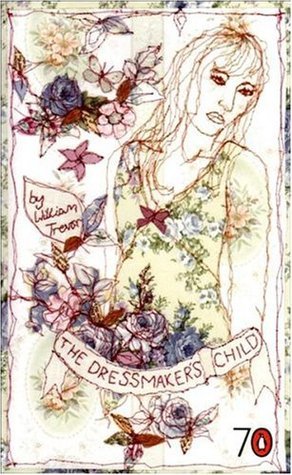
Well, Kim (Reading Matters) and Cathy’s (746 Books) “A year with William Trevor” project is all but over, and I’ve only done one post – on the titular story in the little The dressmaker’s child collection. The second story, “The hill bachelors” (as in bachelors living in the hills), was first published in his collection titled The hill bachelors.
William Trevor (1928-2016), as most of you will know, is an Irish writer of novels and novellas, short stories and plays. He is particularly good at writing about marginalised people, or those who are loners or outsiders, and writes authentically about them, regardless of their age or gender. “The hill bachelors” is another of these, though perhaps more a variation on the theme. Is the protagonist Paulie marginalised? In a sense perhaps? Is he a loner or outsider? Again, it depends on how you see him, and the choices he makes.
Trevor is one of those writers who lets the reader work out who’s who, what’s what, as we go. The first two paragraphs of this story describe a 68-year-old woman, wearing mourning clothes, waiting for “them” who will decide her future. Very little is overtly explained, but by the end of the second paragraph, we know that she has worked hard and got on with whatever life has thrown at her – and, it seems, she will continue to do so with a calm resignation.
Then, we are introduced to a man we come to realise is her 29-year-old son, Paulie. He is coming for his father’s funeral/wake. He is the youngest of five children, and had not had a good relationship with his “hard” father. It soon becomes apparent that the mother expects the children to work out what will happen to her now – and what will happen to her now, as soon becomes apparent, is that Paulie will return to the family farm. After all, “he was the bachelor of the family”, and his job as a lorry driver “wasn’t much”. However, to do this he will have to give up the woman he loved as she is not interested in a farm life.
While he is working out his notice back in town, his mother is helped by neighbours, the bachelor Hartigan and his sister. It is this sister who introduces the idea of the hill bachelors. She suggests that Paulie would not want to come back because
“It’s bachelors that’s in the hills now. Like himself,” Miss Hartigan added, jerking her bony hand in the direction of the yard, where her brother was up on a ladder, fixing a gutter support.
“Paulie’s not married either, though.”
“That’s what I’m saying to you. What I’m saying is would he want to stop that way?”
Seeing bewilderment in Paulie’s mother’s face, she goes on to explain that “the bachelors of the hills found it difficult to attract a wife to the modest farms they inherited”.
And so Paulie comes back. He “harboured no resentment … it was not the end of the world”. What was “the end of the world”, however, was hearing the woman he loved say that life on a farm did not attract her. He works hard, and he starts dating local women, but Miss Hartigan seems to have known whereof she spoke.
The story is told third person, through the alternating perspectives of the mother and Paulie. We hear what the the rest of the family thinks, or has done, mostly through Paulie’s and his mother’s thoughts and assumptions, through their deep knowledge of how their family works and of the rural traditions within which they live. There is a little dialogue, but not much. Paulie and his mother are both “types” and yet quietly individualised too.
There’s no big drama in this story, just ordinary people making the decisions that seem right at the time. Paulie’s mother is not unkind or demanding. Indeed, she offers to move in with a married daughter, and, in a little revelatory moment, Trevor lets on that she’d shed some private tears in her early days on the farm. She would do her best to make it easy for a new wife, unlike her own experience. However, marriage to a man from the hills has taught her passivity, to do what she’s told, so she resigns herself – as we are led, from the opening paragraphs, to expect she’d do – to see out her lot. Paulie, too, seems resigned, like his mother, to play out the role set for him, even if it means joining the titular hill bachelors.
All this makes it a far more complex story than it might seem on the surface. It means that, as much as we’d like to, it’s hard to see Paulie as a victim, because he does have a choice, difficult though it may be. But the pull of tradition and responsibility is strong, and while Paulie is aware of what is happening to him, he is resigned to it. Ultimately, as he himself realises, “guilt” and “goodness” have nothing to do with it, it just is what it is, “enduring, unchanging” – and he is not going to buck it.
Trevor thus leaves it for us to think about – to think what the different choices might mean for his mother, for Paulie, and, more widely, for the rural way of life that, regardless of their decisions or their own thoughts about it, does seem to be on its way out. It is up to us readers to ponder the bigger picture, to wonder where that will get him, them or the farm. After all, if he doesn’t marry, what will happen? In continuing their rural traditions, will anything be ultimately achieved, or will this be another sad little life?
Cathy (746 Books) has reviewed the collection.
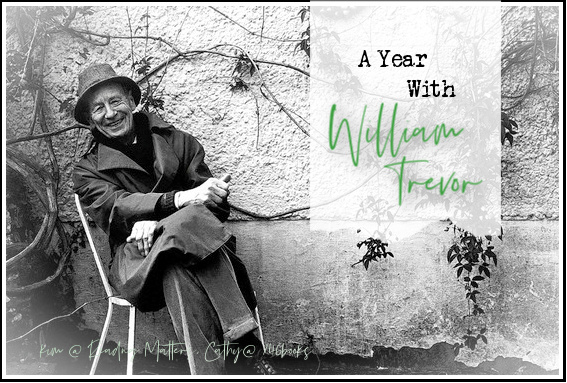
William Trevor
“The hill bachelors”
in William Trevor, The dressmaker’s child
London: Penguin Books, 2005
pp. 21-39
ISBN: 9780141022536
(First published in The hill bachelors, 2000)
 Whispering Gums
A review of a book I would avoid like the plague. I’m FAR too escapist to willingly pick up a novel about downtroddens who accept their lot.
Don’t you wish I’d just disappear off the planet, ST ? [grin]
Of course I wouldn’t MR. You are not the only one in my ken who thinks like this. (They just don’t all tell me here! But, I like to know what people think so keep bringing it on …)
Escapism is an interesting thing, I’ve just realises. I like to escape too – but into other lives, which don’t have to be better or lighter or more exciting, just interesting.)
It’s been a beaut year, this Year of Reading William Trevor. I think they’re doing John Banville next year, that should be fun.
And here speaks the critic of ‘sad girl’ stories !!
Haha, MR. I see you are taking note.
Yes, it should be I agree Lisa. I’ve only read one or two of his, but he’s another beautiful writer. Ireland has produced some wonderful writers.
Love William Trevor’s work.
And I can understand why Sara.
Thanks for such a wonderful review, Sue, and for taking part in our year.
You are so right in saying that Trevor “is one of those writers who lets the reader work out who’s who, what’s what, as we go”. I think that’s the thing I like most about his writing: he treats his readers with respect and let’s them figure things out for themselves without spelling everything out. He’s not interested in painting things in black and white terms, he’s there in the grey areas, and if that means sometimes things are ambiguous, well so be it.
I have also read this story; it features as an extra at the back of the Penguin Classics edition of his novella “Nights at the Alexandra” which I read a few years ago.
Thanks Kimbofo … it helps to hear you agree because I’ve read so little of him. I do like this sort of writer
You’ve reminded me that I need to read Trevor again. It’s been a while.
Just too many good writers around aren’t there Guy?
Well yes.. and a lot of crap ones
I think I would love his writing. I love stories of people who are downtrodden or live on the fringe. I get very tired of middle class white people lol.
Then you sure would Pam, because he writes about ordinary, real people, and often those from small communities, rather than the middle-class urban/suburban milieu that is the stuff of many contemporary Australian writers.
William Trevor is one of those masters of the short story that provide readers with almost endless satisfaction- my Penguin Collected is one of my favourite of all books.
Thanks Ian … I would love to have that collection.
A beautiful review of a very poignant story. I completely agree with your comments about Trevor’s approach. He treats the reader with intelligence, allowing them to piece together the picture as they progress through one of his stories. It must take genuine skill to do that, to know when to hold back and when to give. He also leaves enough space for a bit of ambiguity and interpretation, which I love.
Thanks Jacqui. I’m enjoying these responses. You are right that it has to take real skill to find the right balance in how much you tell. And yes I like the space he leaves for us to consider.
You’ve highlighted what I love most about Trevor – he leaves a lot to the reader to work out. He trusts us and knows when to step back.
Thanks Cathy. As I said to Kimbofo, this reassures me about my Trevor reading. Such writing is great to read but can be nerve-wracking to write about.
My mother’s family were all farmers, yet in not much more than one generation they were all gone, or all bar one. Mum’s four siblings, all farmers, now have between them just one descendant still farming. It wasn’t a matter of profit, nor even I think, of getting partners to come and live in the Mallee, my cousins just wanted to do other stuff.
Yes, thanks Bill. I’m seeing this happen among my friends with farming families too. I like it when families don’t pressure the next generation to stay. It must be tough to see farms go.
There is a weird trend in the U.S. happening right now. Beautiful white women in cute cotton boho dresses claiming they just want to “raise their babies,” feed some chickens, grow a little vegetable garden — and call that farming. As in they actually think this is some way to “get off the grid” and not just a hobby.
This is interesting, Melanie … so, they are not truly going subsistence. Sounds part way there – as in perhaps wanting out of the rat race – but sounds a bit entitled too. What real mother of a baby wears white for a start.
They are going for that “I’m cute and not like other girls and definitely don’t use any toxic products or foods” aesthetic that can only be accomplished when you already have loads of money.
Thanks … yes, that makes sense.
Trevor is terrific: I’ve had his collected stories in mind for a project for several years now, but he keeps getting “bumped” by some Canadian lass/lad. It’s great when a group read pulls a long-time shelfsitter into your stacks though (and is so rewarding, to boot).
It sure is Marcie … I have a friend who has loved Trevor for a long time so I’m glad to have finally read some on her account too.