It’s Christmas Day, so the the question was, do I do a Monday Musings post or not? Will anyone be looking at blogs. If you take part in this holiday season, I hope you are enjoying it in the way you most enjoy – with family, on your own, at the beach or in front of a fire, around a table or with plates on your laps somewhere comfortable. And, if it’s not a holiday season for you, well, then, you just might appreciate things continuing as normal.
But then, the next question was, what to post, because it needed, I felt to be something non-demanding. So, how about a couple of little recaps.
Recap 1: Top Ten Monday Musings posts
I started posting Monday Musings in August 2010, and since then have written 674 of them, making this one no. 675. I love writing them, though at times I leave it a bit late, and they end up being more rushed than I’d like. I can’t promise this will improve as life just seems to keep being busy, but I hope that even the ones that aren’t as comprehensive as I’d like offer some readers something to think about to look into further.
Now, though, I’m sharing the ten posts that have had the most all-time hits. Most of them are older posts – over half are ten plus years old – which is not surprising, I guess. However, in a sense I am surprised to find how many older posts still have a life. I wouldn’t necessarily call these Top Ten my best Monday Musings, and some feel dated to me now, but they are still attracting some attention. Here they are, with their all-time ranking (out of all my posts), and the year they were posted):
- The lost child motif (50th, 2011)
- Australian Gothic (19th century) (62nd, 2011)
- White writers on indigenous Australians (69th, 2014)
- The gum tree in the Australian imagination (84th, 2010)
- Australian Christmas imagery (85th, 2010)
- Unpublished manuscript awards (86th, 2014)
- Novels set in Sydney (87th, 2015)
- Books banned in Australia (102nd, 2019)
- Literary hoaxes and identity scandals (104th, 2012)
- The little Aussie battler (122nd, 2013)
Recap 2: Australian Women Writers Challenge
Over the past decade or so, I have devoted my last Monday Musings of the year to the Australian Women Writers Challenge, largely because it was an actual challenge, so I would report on what I had read and on the challenge’s overall stats for that year. However, in January 2022, it changed from being a challenge to a blog/website devoted to promoting often under-recognised or overlooked women writers, from the 19th- and 20th-centuries. We want to bring them back to wider notice.
As in 2022, we continued this year to post twice a week: articles or reviews on Wednesdays, and actual writings by women, related where possible to the previous Wednesday’s post, on Fridays. While our change in focus resulted in a drop in stats (that is, in visits to the site) last year, they picked up this year, increasing by nearly 30%. I put this down to the hard work put in by Bill (The Australian Legend), our commissioning editor and writer of monthly posts, and to Challenge founder Elizabeth Lhuede, who prepares all the Friday posts, as well as doing her monthly post. We welcomed a fourth member to our team this year, Stacey Roberts (allforbiblichor), who is doing a PhD in Australian literature. It has been good having another head take part in our discussions and decisionmaking, and she wrote two fascinating posts on female domestic service in colonial women’s fiction, here and here.
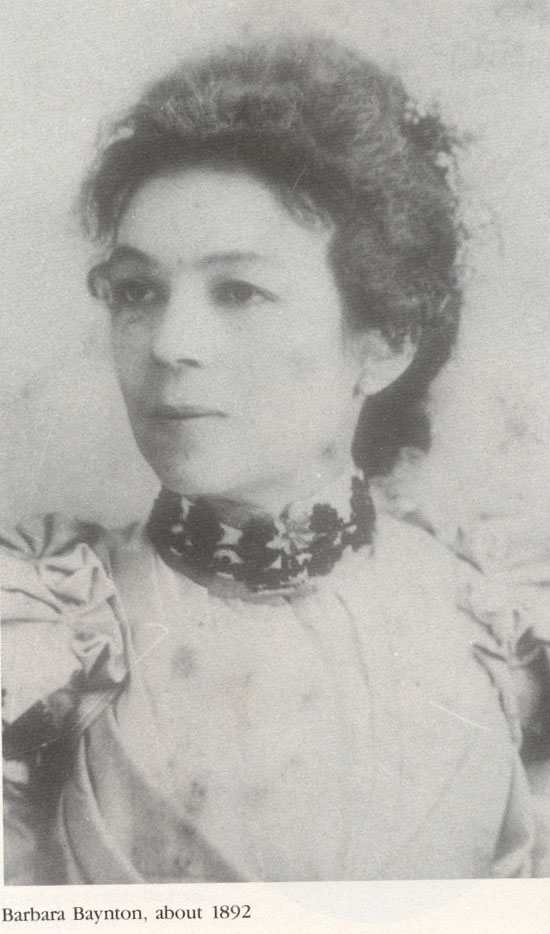
Our most visited 2023-published post turned out to be mine on Barbara Baynton’s short story, A dreamer. I don’t take great credit for this, however, because I believe its popularity is due to the story being a set text.
The blog does take a lot of time, and we are currently talking about future plans. We expect to do things a little differently in 2024, but we will be continuing.
Recap 3: Books given for Christmas
This is probably not, technically, a recap, but what better day than this to share the titles of Australian books I gave as Christmas presents this year. They are not necessarily my favourites – indeed, I haven’t read them all – but were chosen to suit the recipients’ likes. (I hope I got it right.) Here they are:
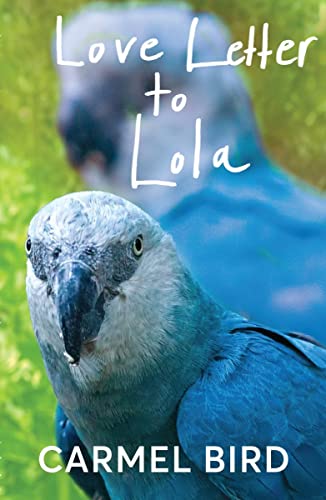
- Carmel Bird, Love letter to Lola (my review)
- Rebecca Burton, Ravenous girls (my review)
- Garry Disher, Consolation
- Michael Fitzgerald, Late: A novel (Lisa’s review) (on my TBR)
- Toni Jordan, Dinner with the Schnabels
- Kim Kelly, Ladies Rest and Writing Room (my review)
- Mori Ogai, The wild goose (not Australian, but translated to English by the Australian Meredith McKinney) (on my TBR)
- Tracy Ryan, The queen’s apprenticeship (Lisa’s review) (on my TBR)
- Benjamin Stevenson, Everyone in my family is a murderer
- Ian Terry, Uninnocent landscapes (my review)
- Emma Young, The disorganisation of Celia Stone
And, here I will leave it, as I don’t want to take too much away from my annual Reading and Blogging Highlights posts which are coming soon. In the meantime, I wish all of you reading this, all the best of the season, whether you celebrate it or not. I look forward to seeing you all on the other side, whenever you raise your heads again.
 Whispering Gums
MORI Ōgai – wow! From the “litt
Did you mean to write more here Jim?
Definitely did write much more – out of my time in Japan – but it was clearly cut off. Oh, no.
Just docked now in Hobart – will come back to it later…recreating as best I can…. Jim PS and I see Lisa has written a review and it involves Judith Wright’s daughter. I must click on that…
Yes, Meredith McKinney is her daughter and lives in Canberra. I look forward to hearing what you had/have to say!
I found Lisa’s assessment very insightful – concerning MORI Ōgai. He was born in a little town called Tsuwano in the far south-west of modern-day Shimane-ken – a small town outstanding for a host of high achieving men and women from the mid-19th century onwards. My favourite coffee shop was run by the grandson of a noted playwright (died during WWII days) NAKAMURA Kichizō. The daughter of a local traditional (wa-shi) paper-making family – married into the local pharmacy family but Ibsen’s play – The Doll’s House – persuaded her that the life as the wife of the pharmacist was far too boring. She left husband and child and ran off to Tōkyō where she acted and became to lover of Tokugawa Mūsei and died young – as did many in those days – of “consumption”. In her grandson’s pharmacy window- a biography of her has prominent display – his wife is from Mongolia, He is a cousin to the sister-in-law of my homestay family wife back in 1990 in the Yamaguchi-ken city of Ube (sister-city to Newcastle, NSW). Anyone who knows children’s picture books will know the name ANNO Mitsumasa. Born diagonally across from the Nakamura coffee/eatery – he completed his secondary schooling in Ube – was a mathematician then a writer/illustrator of some amazing books (google his name). I taught one of his younger kinswomen at the university where I was for some 13 years. Now to MORI Ōgai – born and raised in Tsuwano – a family who were traditional doctors to the local lord. Wrote what is regarded as the first modern novel in Japan – Vita Sexualis. Went to Berlin to further his medical studies. His wife remained in Japan. While in Berlin he had a relationship – and she (described I read once – as “aJewish princess”) followed him:back to Japan – a revelation not appreciated by his wife – who promptly left him. A story told me by people in eastern Japan who knew/were associated with the descendants of the family member who provided her sanctuary. I can’t say whether there was a reconciliation – I haven’t looked into it to that extent. He became Surgeon-General of the Imperial Japanese Army. A dashing kind of figure, really. I try to caution people who make assumptions about the place of women vis-à-vis men in Japanese society – not meek and submissive at all – far from it. I knew many women of strength during my time there – medical specialists, school principals, university professors, running major hotels, teachers, dentists, truck drivers, pharmacists, town councillors, city mayors, etc etc. Running family businesses, restaurants and families not too different from here in Australia to be quite honest. MORi Ōgai when he died was buried (his ashes interred) in a grave in Yomei-ji an important Temple in Tsuwano – the characters on his headstone can be read as SHIN Rintarō. Tsuwano is also famous/infamous in the latter 1860s early 1870s (when Christianity was finally legalised and not punishable with death) as a town to which a number of previously Hidden Christians from Nagasaki were sent for torture/to recant. (My pen-friend from 1963 – youngest daughter of a Shintō priest – married the son of an historical Hidden Christian family whose faith had remained from the early 1560s through the proscribing of Christianity till the 1870s when they were legally again able to be open about their faith.) Every Golden Week (clump of public holidays – end of April/ early May – Catholics from around the western end of Japan gather to walk the Stations of the Cross to honour the martyrs who lost their lives there – little Jesuit Church and a chapel up the hillside where the tortures/deaths took place remember that time. About which MORI Ōgai would surely have known. I have not read the Wild Goose story but want to – now. Lisa in her review mentioned that the title is sometimes translated as Wild Geese. There are ways to indicate number in Japanese but words themselves don’t indicate singular or plural – that comes from context or other ways – so depending on the story itself maybe there is reason to make it plural? Jim
Thanks Jim for all this insight. I really will try to read the book soon. Wikipedia says Wild geese also translated as Wild goose, but it seems like McKinney went with the singular. I wonder if she has translator’s notes in the book and discusses this. I’m in Melbourne and my copy of the book is in Canberra so I can’t check. The person I gave it to lived in Japan for around 7 years, and taught Japanese in American high school for a couple of decades, so she might have ideas about that too.
Sorry I didn’t read this early enough to wish you Merry Christmas – missed by 40 minutes
I mightn’t have seen it anyhow, Bill, as I went to bed soon after posting as it had been a long (but lovely) day of two Christmas lunches.
I try to keep up with the posting at this time, because I know from the pandemic that at least some of my readers live alone and feel it more at Christmas, and not everyone celebrates the day anyway. I set it up in advance ad then I just keep an eye on it on the day in case anyone responds.
Plus it’s nice to have something to read besides the media… it’s usually either cheesey stories or maudlin misery!
BTW this will surprise you because you know I don’t get on with J-Lit, but I have reviewed The Wild Goose: https://anzlitlovers.com/2014/07/05/the-wild-goose-1911-by-mori-ogai-translated-by-meredith-mckinney/
PS I meant to add, but had muffins in the oven and had to go and attend to them, I only gave two books this year, both to The Spouse: Orwell’s Roses by Rebecca Solnit and An Intimate History of Evolution: the story of the Huxley family (I forget the author). LOL the Orwell one was a catalyst for a terrific conversation with friends about Orwell at lunchtime!
How great when books encourage a good conversation over a meal. Love it!
This is why these are friends to treasure.
We have become closer in the years since all four of us became ‘orphans’; we have become more like family to each other.
That’s truly special …
No it doesn’t surprise me actually … I had a feeling you might have this one because of Finlay Lloyd and Meredith McKinney but I just ran out of puff last night to check!
Yes, Lisa, so do I really – as I indicated too, not everyone celebrates Christmas and some of those who do do it on different days. I did write two-thirds of this a couple of days ago. The final editing though was done down to the wire! As you say, the media doesn’t offer a lot though I don’t mind a bit of cheese! It’s a change at least!
Yes, we can see from our stats and the ‘likes’ that it’s worth doing.
I’ve done a little keyboard warfare on Twitter today. The ABC is running an inane story about the popularity of crime fiction, which is fine, each to his own, until one of them says that LitFic “Doesn’t tell us much about the world”. Clearly not a reader of LitFic, so you’d think this person would keep his silly opinions to himself and not get them reported as fact by Nicola Heath who obviously doesn’t read LitFic either.
I quite enjoyed bombarding the Twitter feed with examples of recent LitFic that are very much about the world we’re in, from CliFi novels to novels about violence against women and corporate corruption and so on!
Why is it that authors of genre fiction feel this need to belittle literary fiction? What is their problem??
Good question … I guess it’s that they feel they need to justify the value or worth of their work because they feel maligned by the critics. But they are the ones who make the big bucks. I would have thought they can argue their case without putting down others particularly when, as you say, they clearly haven’t read what they are putting down.
Exactly!
Some years I have time to check blogs, write posts etc, but this year…no!
I scheduled one post and left a space in case In had time to finish something, but…no.
And as you can see by the date, I’m only just catching up now, so I will wish you a very happy NY instead – and looking forward to your annual round-up posts 🙂
Yes, I understand Brona. I’m hoping to fresh one by tomorrow but am spending too much time on the post! Ha ha!
Happy NY to you too.
You were so right; I was busy on Christmas! However, here I am now. I actually skipped my Sunday Lowdown this week because it was on New Year’s Eve. I figured I would give folks a break. Now I am wondering what your did on Christmas. I always try to remember you guys are in summer months (not that it’s snowing here).
Good on you for skipping Sunday Lowdown, Melanie, though I’d love to have heard what you did last week. Our Christmas was fun but nowhere near as hot as last year, which was around 35°C (can you convert that to °F?) This year it was a little grey and drizzly, and around 23°C, so it was spent inside. Much better weather for the fairly traditional meals we had but not so good for the children. Our main meal was with our son’s family, with our daughter and partner coming for part of the time. We had turkey and ham, roast veggies, and salad, followed by pavlova. We then went to our daughter and partner’s home and joined his family for desert. There were about 8 desserts for 10 people! Including a pavlova, the traditional plum pudding, chocolate tartlets, carrot cake, and lemon curd tart. His family have an annual paper plane flying (throwing) competition. The day after Christmas here is Boxing Day, and it is a public holiday too. Having been out eating from 11am to 9pm on Christmas Day we spent it quietly.
I will still share what I did last week, just all together in the next Sunday Lowdown. That is a lot of dessert! A woman in my school cohort did some pie thing with family for Thanksgiving. Each person made a pie and brought it, so it was basically one pie per person.
We don’t do Boxing Day here. What do people typically do that day?
Recover mostly, haha …. But there are the traditional big Boxing Day sales; people who didn’t go to the beach on Christmas Day will often go on Boxing Day; people who stayed at home for Christmas will set off on their summer holidays. On Boxing Day when my children were young and the grandparents and aunt were around, we used to do a Boxing Day picnic down at the river, using our leftover food from Christmas Day.
In Australia too, there are a couple of big annual sporting events. The start of the Boxing Day cricket test match (goes for 5 days) and the beginning of the Sydney to Hobart yacht race.
It’s quite a big day but this year Mr Gums and I spent quietly, recovering.
I love the idea of leftover Christmas picnic. 🙂
I do too … I love leftovers, and Christmas has the best!
You make an excellent point: I think I’ll plan to post on the day next year, too, with all that in mind. We celebrate the Solstice but, this year, because of how the weeks played out, we had to go out and pick up our last local produce order (a longish walk up and down a mountain, doesn’t that sound like a fairy tale? but, if so, one in which pairs of wings should appear so it’s more enjoyable!) on the Solstice on Thursday afternoon, so we had our celebrations on the 25 instead. I hope you had a wonderful holiday and are enjoying 2024 so far!
Haha Marcie … many’s the time I’ve wanted wings! Wouldn’t they be something?
We had a lovely holiday … good mix of family and quiet time. We are now en route home. Here’s to a better 2024 for us all!