Nonfiction November 2023: Choosing nonfiction AND Book pairings

My participation in Nonfiction November has been sporadic, but this year I have done Week 1, and am now combining Weeks 2 and 3, partly because there’s an element of repetition in my Week 2 responses.
Nonfiction November is hosted by several bloggers. This year, Week 2 – Choosing Nonfiction is hosted by Frances at Volatile Rune, and, my favourite, Week 3 – Book Pairings, by Liz at Adventures in Reading, Running and Working from Home.

According to the plan, Week 2 finished last Friday (10 November), and Week 3 commences tomorrow (Monday 13 November), so I am dragging the chain for the first and jumping the gun for the second, by posting today, Sunday 12 November.

Choosing Nonfiction

This week the questions relate to what sort of nonfiction we like to read. My answers will mostly be known to regular readers here, but there are some new twists on the questions.

What are you looking for when you pick up a nonfiction book?
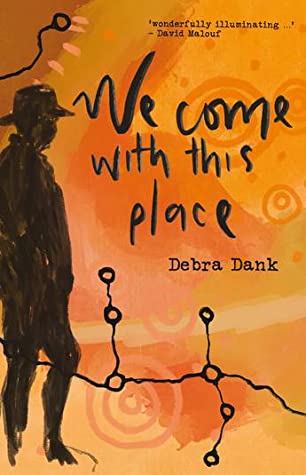
Depending on the book and the topic, I am looking to learn something new, to increase my understanding of something I already know, and/or to have my perspective challenged (which might result in my changing that perspective, or, being able to better defend it.) The two books I named in my Week 1 post – Debra Danks’ We come with this place (my review) and JD Vance’s Hillbilly elegy (my review) – satisfied at least one of these criteria.

Dank’s book, in fact, satisfied all three – I learnt new things about First Nations history and culture; I better understand it, particularly in terms of connection to Country; and, as a result, I can better explain and defend my support for First Nations’ people’s fight for fairness.

Do you have a particular topic you’re attracted to?

I haven’t changed from what I’ve said before, which is that my overriding interests are literary biographies/memoirs, nature writing, and works about social justice/social history (which includes First Nations history and decolonisation, climate change and feminism.)

This year, as you already know, I’ve read very little nonfiction, but those I’ve read have been memoirs in the social justice/social history area.

Do you have a particular writing style that works best?

For want of a better word, I enjoy what is broadly called creative or narrative nonfiction. Because I love fiction, I like the writing to be engaging and evocative, which tends to mean writing that draws on some of the techniques of fiction to tell a nonfiction story. This does not mean playing with the facts, but making the facts, shall we say, accessible. Where a case is being argued, I want it to be clear and logical, not characterised by academese or jargon that is understood only by those in the know.

While this question doesn’t specifically ask it, I also like, where it’s appropriate, to know what sources have been used (either through an author’s note or footnotes/endnotes), and I LOVE an index. I know indexing is expensive, but, unless you are reading an eBook with search functionality, the value of a nonfiction book can be seriously diminished by the absence of an index.

When you look at a nonfiction book, does the title or cover influence you? If so, share a title or cover which you find striking.

I wouldn’t say I am influenced by titles and covers, because with nonfiction – for me, anyhow – content or subject matter is queen. However, this is not to say that a good titles and beautiful covers don’t enhance the experience, because they do.

Debra Dank’s We come with this place is a powerful title. It categorically announces that First Nations people were always here, that is, they WERE HERE when the settlers/invaders arrived. More than that, it suggests they are an intrinsic part of, if not essential to, this place. WE. COME. WITH. THIS. PLACE.

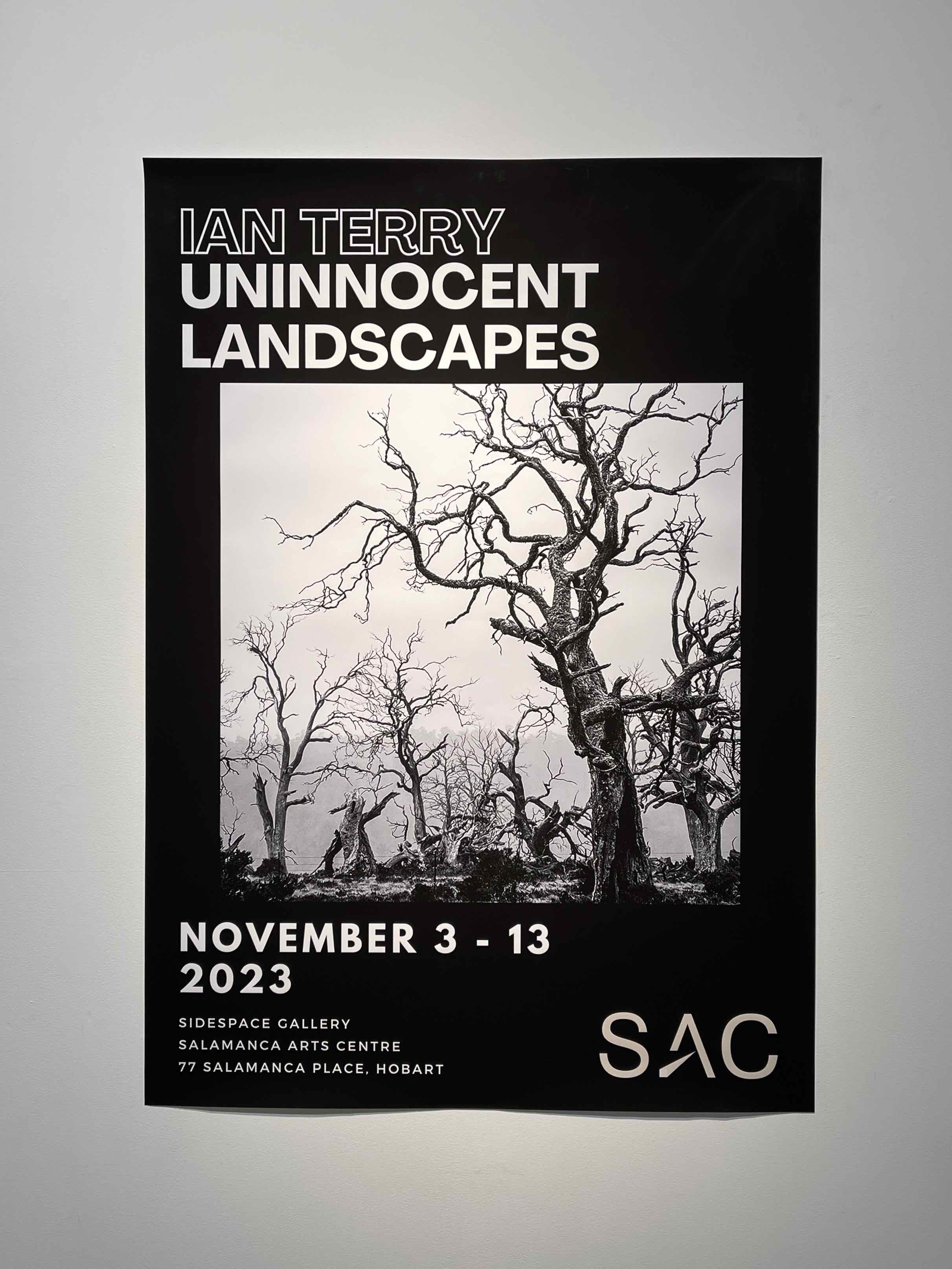
By brother Ian Terry’s book, Uninnocent landscapes, also has a strong title (but I will discuss that in my review). The book’s design and its cover are also glorious. The cover is striking in a minimalist restraint that also happens to be literal, in that it depicts Robinson’s journey that Ian followed.

Book Pairings

Our instruction is to “pair up a nonfiction book with a fiction title. Maybe it’s a historical novel and the real history in a nonfiction version, or a memoir and a novel, or a fiction book you’ve read and you would like recommendations for background reading. You can be as creative as you like! “

Okay, so my creativity will extend to two pairings:

Nonfiction read this year, paired with fiction from any year
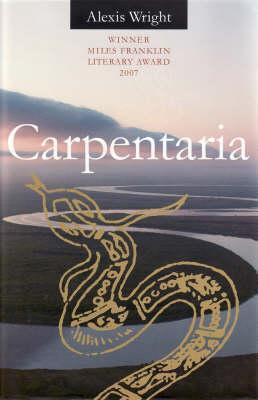
Alexis Wright, Carpentaria

Debra Dank, We come with this place with Alexis Wright’s Carpentaria (my post). For a start, both books are set in neighbouring parts of northeast Australia, just south of the Gulf of Carpentaria. Secondly, both convey, in powerfully descriptive ways, the catastrophic dislocation experienced by First Nations peoples when they are separated from Country and/or when they are not able to interact with Country in the ways that are essential to their (and Country’s) wellbeing.

Fiction read this year, paired with nonfiction from any year

I have read a lot of First Nations and other non-white/BIPOC fiction this year, but I’ve already focused on First Nations writing in the post, so I’m changing tack, and am pairing Edwina Preston’s Bad art mother (my review) with Jane Sinclair’s memoir Shy love smiles and acid drops (my review), which I read early last year. Preston’s novel was inspired by several Australian artists (visual artists and writers) including the story of Sunday and John Reed’s adoption of Joy Hester’s son Sweeney. Jane Sinclair’s parents were part of the Reeds’ Heide Circle, and in her book Sinclair includes letters written by her mother to Sunday Reed, which include discussions of Sweeney. These are just two of the books I’ve read which deal with or reference in some way Heide. There are many more I haven’t read, as this Circle was not only fascinating but one of the most influential in Australia’s arts history, particular in terms of Modernism.

What would you pair (and/or do you have anything to share regarding the first questions)?
Novellas in November 2023: Week 2, What is a novella

The thing about these annual memes is that the questions became somewhat the same, which is fair enough as new bloggers appear on the scene as do new ideas. However, my challenge is whether I have anything to add to what I have written about novellas before? The answer is not a lot, but I did listen to the beginning of the 20/40 winners’ interviews on the Finlay Lloyd website. I didn’t listen for long, because it’s a combined interview and I haven’t finished reading the second book. My preference, where possible, is to gather and write my own thoughts before I hear other ideas (including those of the authors).

However, the interview started on the topic of novellas, and the two winners did have some interesting things to say about them which add to what I’ve said before. I’ll recap those ideas first by (re)sharing the Griffith Review’s Julianne Schultz on novellas. She said they are

stories that are longer and more complex than a short story, shorter than a novel, with fewer plot twists, but strong characters. Condensed tales that are intense, detailed, often grounded in the times, and perfectly designed for busy people to read in one sitting.

Most of the novella definitions out there say things like this – in more or less words, and with different emphases here and there. In the 20/40 Prize interviews, authors Kim Kelly and Rebecca Burton put their own interesting spins on it.

Kelly said novellas are books you can read in a couple of hours, without racing but also taking your time. Yes! Good call, I thought, because I do like to take my time with what I am reading, and this works well with novellas. I can take my time but not take forever! Kelly also commented on the value of novellas from the writer’s perspective. As a busy person, she says, she has little time for writing, but once a story “presents itself as a novella” she can see the finishing line and get there faster! I love insights like that into the practicalities of a busy writer’s life.

The interviewer and, more relevantly, the publisher, Julian Davies, made a point about structure, suggesting that a novella is long enough for the writer to develop something but not so long that such development can get away from them. Burton picked this up, saying that, with a novella, writers have time to develop but can still retain “a fleetingness”, a sense of “capturing a moment in time, a breath, a mood”.

Kate Jennings, Moral Hazard

Somewhat less poetically, Kate Jennings, as I recorded in my in praise of the “taker-outers” post, described novellas as “sinew and bone”, which Davies captured in the interview by using my favourite cliche, “less is more”.

I agree with all these definitions, but I’d like to add that novellas can also offer writers the possibility of experimentation. Writers can try things out without getting lost in excessive verbiage, or they can simply be experimental without being constrained by any expectations of form. I’m thinking, for example, of Ida Vitale’s Byobu (my review) or of Kate Jennings’ Snake (my review).

For this week 2 of the meme, we are also encouraged to suggest works that best capture the ‘spirit’ of a novella. I have done that before (Little Treasures and Classic Australian novellas), but let’s just say that in recent years I could add some new memorable books like Sayaka Murata’s Convenience store woman (my review) and Jessica Au’s Cold enough for snow (my review) which are condensed, intense, detailed tales focusing on a limited set of characters. But I could also add experimental books like Byobu, that aren’t that at all.

What about you?

Written for Novellas in November 2023

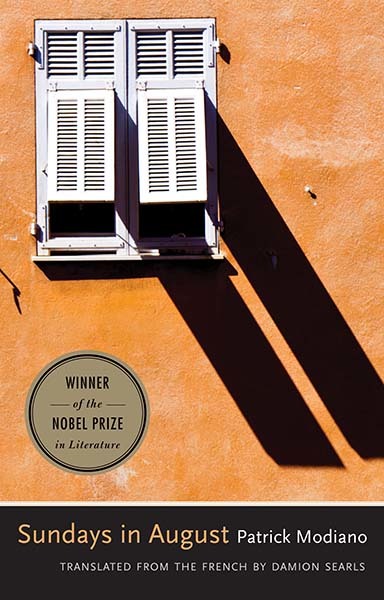
Patrick Modiano, Sundays in August (#BookReview)

Disappointingly, I ended up missing my bookgroup’s discussion of the book I had encouraged us to read, Sundays in August by 2014 Nobel prize-winner Patrick Modiano. I have no-one else to blame but myself, since I did the schedule and should have remembered that I was going to be in Hobart for my brother’s exhibition. C’est la vie.

I recommended this book for a couple of reasons, one being high praise from Kim (Reading Matters) and the other being to include translated fiction in our reading diet. Also, the book intrigued me. Kim described it as a “jewel heist”, albeit qualified by “with a difference”. That seemed unusual subject matter for a Nobel prize-winner. Having now read it, however, I see that he is a skilful writer. I loved reading it. But the subject matter?

According to Wikipedia, Modiano (b. 1945) is “a noted writer of autofiction, the blend of autobiography and historical fiction”. He has published over 40 books, and in them, Wikipedia continues, has “used his fascination with the human experience of World War II in France to examine individual and collective identities, responsibilities, loyalties, memory, and loss. Because of his obsession with the past, he was sometimes compared to Marcel Proust”. I’m not sure about the “was” here, as he is still alive. Anyhow, it is this obsession with the past, with its associated exploration of memory and loss, that made Sundays in August (Dimanches d’août) so fascinating. I am drawn to stories about the past that are told in well-controlled melancholy tones, stories that involve a later reflection on what had happened and the implications for the protagonist’s present. (By the way, this does not appear to be one of Modiano’s autofiction works.)

The novella is set in Nice, and starts with a first person narrator (identified partway through the book as Jean) spotting someone he’d known seven years ago. The man is Villecourt, and he is selling leather goods in the market. Neither man, in fact, has done well in the years since they’d met. Both are alone, and not living the apparently secure lives they had been. We quickly realise that this is not a case of old acquaintances happily re-uniting. Instead, there is palpable tension. After they meet for a drink, Jean makes clear he wants nothing more to do with Villecourt, while Villecourt tries to keep the contact going. He does little to ingratiate himself, however, reminding Jean that he, Villecourt, was the only man someone called Sylvia had loved. He also says that he and Sylvia had not been married. Why had she lied to him about that, Jean thinks to himself?

In this way, in the first few pages, we are drawn into a mystery involving these three. Soon after, the aforementioned jewel – a diamond, with a “long and bloody history”, called the Southern Cross – is introduced, and we learn that Jean and Sylvia had been on a mission to sell it. Then, a little further down the track we meet the mysterious Neals, who seem to live in a grand home named Château Azur, and who all too soon offer to buy the diamond.

It sounds like a simple story involving a love triangle and a heist, but in fact, it is a complex crime story in which it behoves readers to attend carefully for hints and clues about what’s really going on. These are conveyed through the narrative, as Jean tries to “rejoin the invisible threads”, and through gorgeously written imagery that creates an oppressive, foreboding atmosphere, occasionally lightened by the Riviera’s bright sun, and blue skies and water.

“blurred … dissolving”

As we read, the ground constantly shifts beneath our feet. People appear and disappear, and sometimes shapeshift. Virgil Neal, for example, sounds American, then he doesn’t, then he does again, before finally turning out to be someone else. Cars and buildings, too, aren’t always what they seem. Nonetheless, through cleverly managed flashbacks and foreshadowings, we gradually start to see – or, think we see – the set-up. It is all complicated, however, by that tricky beast, memory. Jean writes:

I don’t know anymore whether we met the Neals before or after Villecourt arrived in Nice. I have searched my memory, looking for points of reference, but am unable to sort out the two events. Anyway, there’s no such thing as “events.” Ever. It’s a false term, suggesting something definitive, spectacular, brutal. In fact it all happened gently, imperceptibly, like the slow weaving of a design into a carpet…

Soon after this reference to meeting the Neals, Jean says

The word “meet” doesn’t apply, any more than “event.” We didn’t meet the Neals. They slipped into our net.

Who slipped into whose net is the question. And how many nets were there? Jean will probably never know it all, but by the end he’d learnt that “our anxiety didn’t come from our contact with that cold stone with glints of blue – it came from life itself”.

Typical for a novella, the book is tightly written. Every word counts, and is worth noticing. I loved, for example, that Jean was a photographer who now can’t seem to remember the necessary details, and that Sylvia’s last name is (ironically?) Heureux. These little details aren’t casual, and make us readers think and question at every step, as we are alternately unsettled then proffered glimmers of light.

Sundays in August is an accessible, noir-ish tale about loss and the emptiness that accompanies it. It explores life’s shadows and uncertainties, shows how innocence can be so easily taken advantage of, and it doesn’t wrap everything up neatly, leaving us to ponder the possibilities. I won’t spoil the ending, but it is spot on, and explains, at last, the title, leaving us on a little up despite it all. I’ll be reading more Modiano, if I can.

POSTSCRIPT: I believe we know the main culprit in it all, but the question is, who else was in on it and who else was taken in. It would take more reads to work through that, but in the end I think we can’t ever know it all because we can only know what Jean saw and tells us.

Read for Novellas in November.

Patrick Modiano
Sundays in August
Translated from the French by Damion Searls
New Haven & London: Yale University Press, 2017 (Orig. French pub. 1986)
156pp.
ISBN: 9780300223330 (Read on Kindle)

Monday musings on Australian literature: Uninnocent Landscapes opened and launched

Those of you who know me on other social media will already have seen some of this, but I am keen to spread the message wherever I can about my brother’s wonderful, and significant, project. I introduced it back in September – and later in Nonfiction November I will review the book. That, however, will be after the exhibition has closed, and I want to encourage anyone who is in Tasmania to see it.

Uninnocent Landscapes – the exhibition and book – is the culmination of an idea Ian started thinking about a decade ago, but that he actively worked on over the last two to three years. It involved his following the journey taken by George Augustus Robinson on his 1831/32 Big River Mission, which was a poorly conceived attempt to conciliate between settler and Aboriginal Tasmanians. Needless to say it was a disaster, that effectively ended First People’s resistance in lutruwita/Tasmania (at the time anyhow!) For Ian, who has come to call lutruwita home, there is discomfort in reconciling his privileged life as a middle-class white man with the devastating impact of colonialism on Tasmania’s First Peoples. This is his truthtelling project, and he found a unique way to do it by combining the three big passions of his life (besides family) – history, photography and the bush.

I will write more about this when I review the book because what Ian has done feels original and exciting. Essentially, though, the book and the exhibition comprise photographs accompanied by excerpts from Robinson’s journal, resulting in an experience that is enlightening, engrossing, and sobering. The exhibition contains a selection of 11 from the book’s over 50 photographs.

The venue, Sidespace Gallery, is in a heritage building that dates back to the mid-1800s. This means two things – there are some restrictions on how items can be affixed, and the walls and floors are not what you would call square. However, Ian and his “crack instal team” did the research and, by the time I got there, were ready to go. The photographs – large-scale archival prints – were “hung” through a clever system of special Japanese tape (that doesn’t mark walls), double-sided tape, and magnets. I enjoyed being a little part of it all on the first day of installation, and loved meeting Ian’s delightful, hardworking team, Erica and Nikki, who made me feel so very welcome.

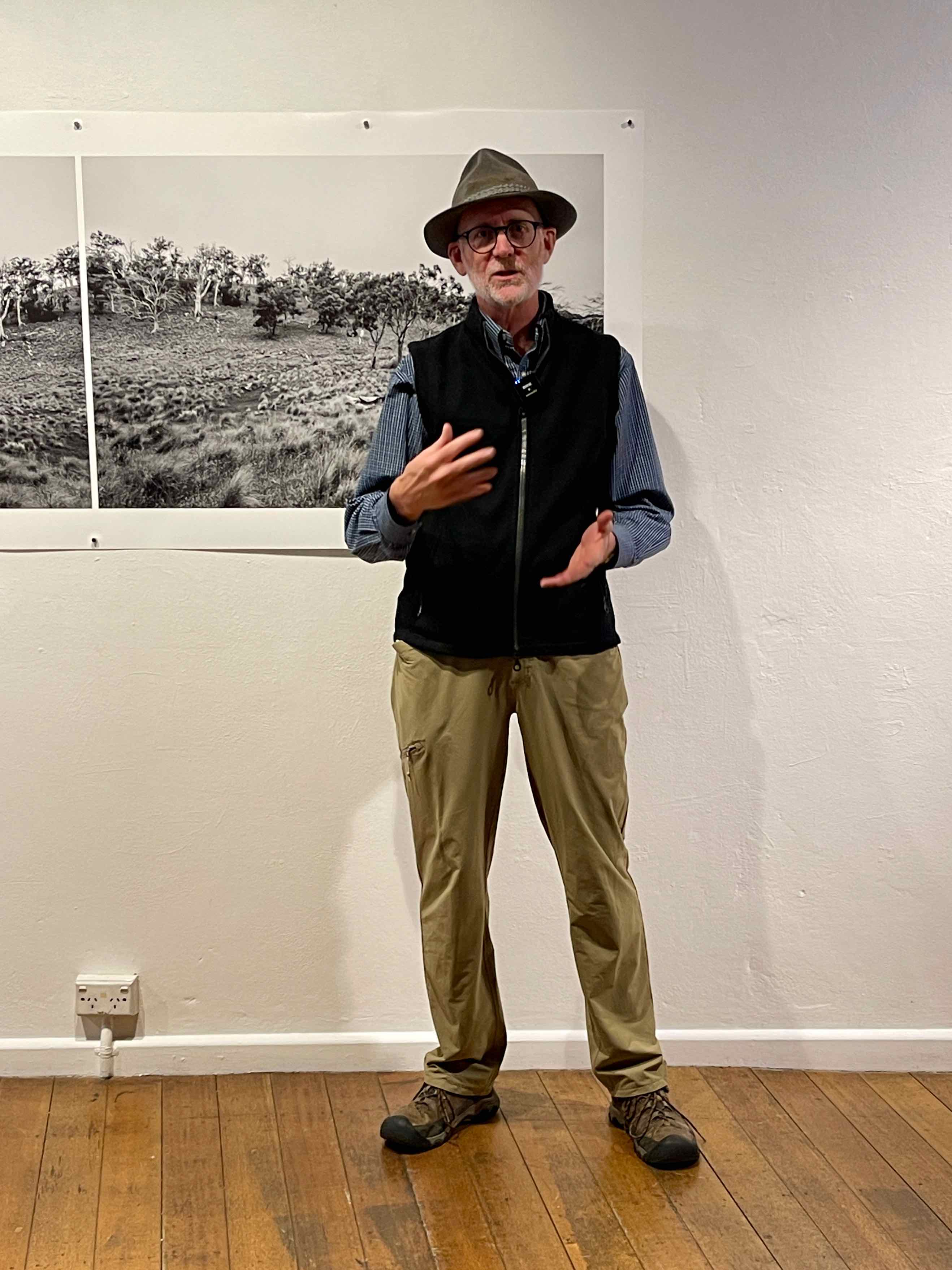
The opening (and book launch) went very well, with 50 or 60 in attendance. The MC was writer and researcher Steph Cahalan, and the exhibition was formally opened by Tony Brown, a First Nations man and museum colleague of my now-retired brother. Ian of course then spoke to his project, explaining, among other things, that he had discussed his project with many in the local Aboriginal community, and had made clear that he was not trying to tell their story, but his own. His good relationships with the community suggest that they accept this.

It was a warm-hearted event attended by historians, artists, museum professionals, bushies, activists, not to mention family and friends. I met and talked with so many interesting, thoughtful people who support Ian’s project and believe in what he is doing. I can’t name them all, but before it all started I had a great chat with the two women who designed and published the book. Our conversation ranged from technical issues like fonts to more personal ones like downsizing and philanthropy. It was truly a privilege to be there.

Ian calls Uninnocent Landscapes a photographic conversation. By this he means, I think – though I didn’t ask him while we were together – that he is using photography to reflect on (to interrogate, in fact) his relationship with the Tasmanian landscape he loves so much but which has been indelibly affected by over two centuries of colonialism. The idea of conversation, however, also encompasses something ongoing and inclusive, something inviting us all to join in as we engage with his photos and, for those of us living in colonised places, as we engage with “our” places. I will discuss this more, and talk about the title, in my review!

Uninnocent landscapes, the book, is published and distributed by OUTSIDE THE BOX / Earth Arts Rights under their imprint An Artist’s Own Book. It costs $65, and all proceeds are going to the Aboriginal Land Council of Tasmania’s Giving Land Back fund. You can order it here.

Ian Terry
Uninnocent Landscapes
Sidespace Galley, Salamanca Arts Centre
3 – 13 November, 2023
Admission is free


Nonfiction November 2023: Your year in nonfiction

My participation in Nonfiction November has been sporadic, until last year when I managed to complete the whole series. Maybe I will again this year, maybe I won’t. We’ll see.

Nonfiction November, as most of you know, is hosted by several bloggers. This year, Week 1 – Your Year in Nonfiction is hosted by Heather at Based On A True Story, with variations on the usual first week questions.

But, here’s the thing. As we come to the end of 2023, I’m having to come clean on what a strange reading year I’ve had. You will hear more in my end-of-year roundups, but by then you’ll have had inklings from posts like this! Last year, I wrote for this post that I’d read about 25% more nonfiction than I’d read in each of the preceding few years. Last year’s (that is for 2022) non-fiction reading had comprised 45% life-writing, 45% essays, with the rest being “other” non-fiction. This year, since the end of last November, I have read only TWO nonfiction works and both have been memoirs.

What were your favorites?

The two books are Debra Dank’s We come with this place (my review), and JD Vance’s Hillbilly elegy (my review). We are asked to name our favourites, which is always tricky for me, as I don’t tend to think in terms of “favourites”. Both these books provided truly fascinating insights, albeit in diametrically opposed directions. Dank is a First Nations Australian writer who conveys with impressive clarity just how the interconnectedness between her people, the ancestors and Country works, and how that translates into knowing Country, while Vance was a poor white hillbilly from Kentucky who is now a Republican politician and, last I heard, a Trumpian. You won’t be surprised I think to hear me say that while I found Vance enlightening in terms of contemporary US politics, Dank’s book is by far my favourite. She bowled me over with her generosity.

Have you had a favourite topic, and Is there a topic you want to read about more? 

I’m bundling there two questions together because clearly I didn’t review enough nonfiction this year to have a favourite topic, but what I’d like to read more are books on my favourite interests areas – literary biographies, nature writing, and works about social justice/social history.

I have several literary biographies, in particular, on my TBR, so maybe next year I’ll have a fuller report to make. In terms of the third area – social justice/social history – I must say that reading more nonfiction from First Nations writers, like Debra Danks’ book, is what interests me right now.

What are you hoping to get out of participating in Nonfiction November? 

As I wrote last year, I am not looking for more recommendations – not because I am not interested but because I have too much on my TBR already without adding to the pile (physical and virtual). However, I always like book talk, and the book talk I most like is that which focuses on areas that interest me (see above), and which talks about wider issues like why do we read nonfiction, what do we look for, and what makes a good nonfiction read?

What do you think?

Six degrees of separation, FROM Western Lane TO …

Time has been tight for me this last month so I’ve rushed this month’s Six Degrees a bit, but I hope it satisfies my regular readers’ different needs! So, let’s just get to it … the Six Degrees meme, I mean. If you don’t know how this meme works, please check host Kate’s blog – booksaremyfavouriteandbest.

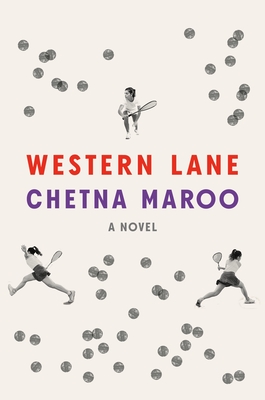
The first rule is that Kate sets our starting book. In November we are back to books I haven’t read. Indeed, this is one I hadn’t even heard of, Chetna Maroo’s Western Lane. It’s a debut novel that was shortlisted for this year’s Booker Prize. GoodReads starts its description with “a taut, enthralling first novel about grief, sisterhood, and a young athlete’s struggle to transcend herself…”

Louise Mack, The world is round

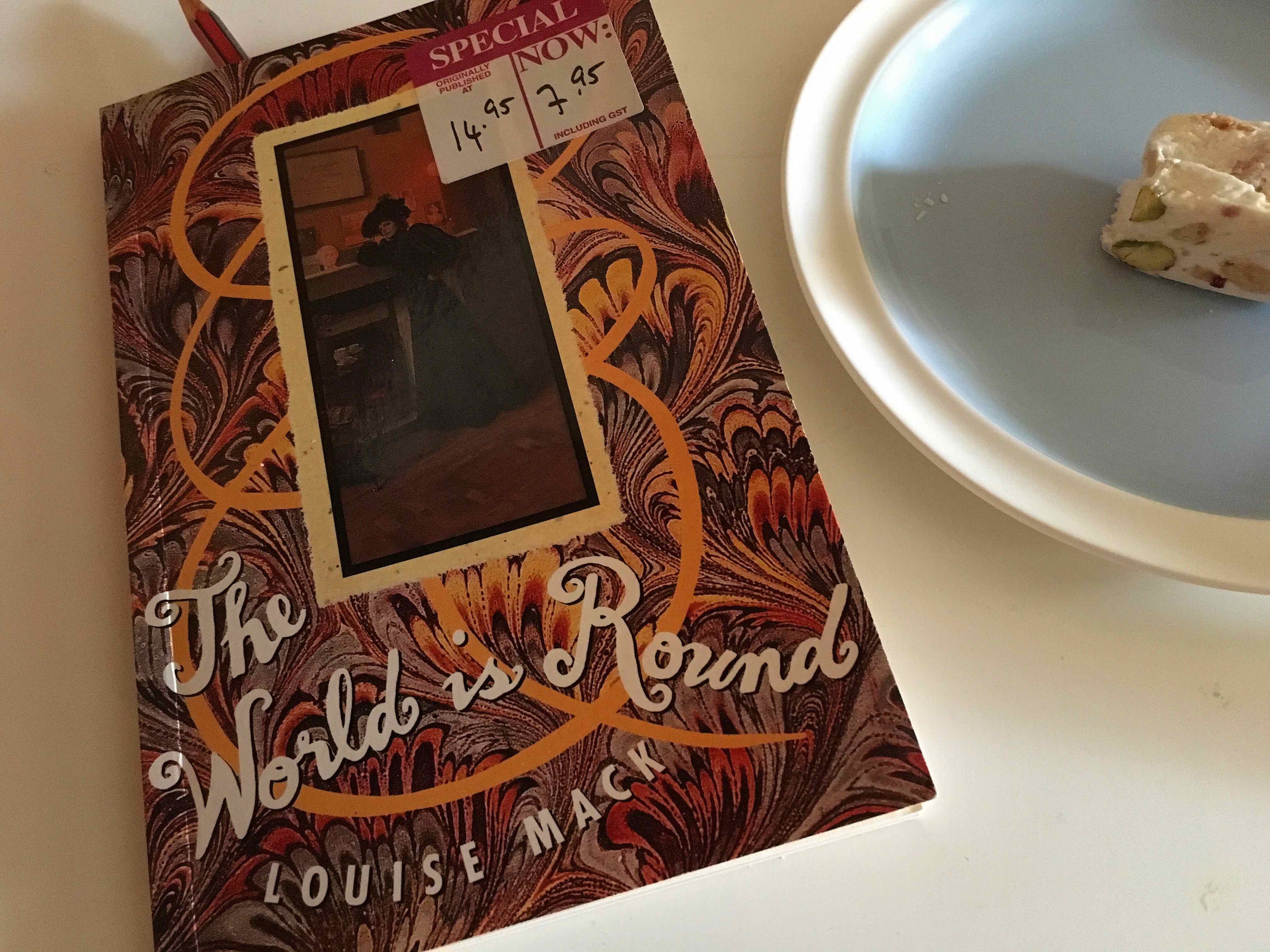
I could go with books about sisters, or athletes, as I’ve read a few of those on my blog, but I’m going in a different straightforward direction instead, to another debut novel by a young writer, albeit this one a century or so ago, Louise Mack’s The world is round (my review). It’s not about a struggling athlete, but it is about a would-be writer.

Book cover

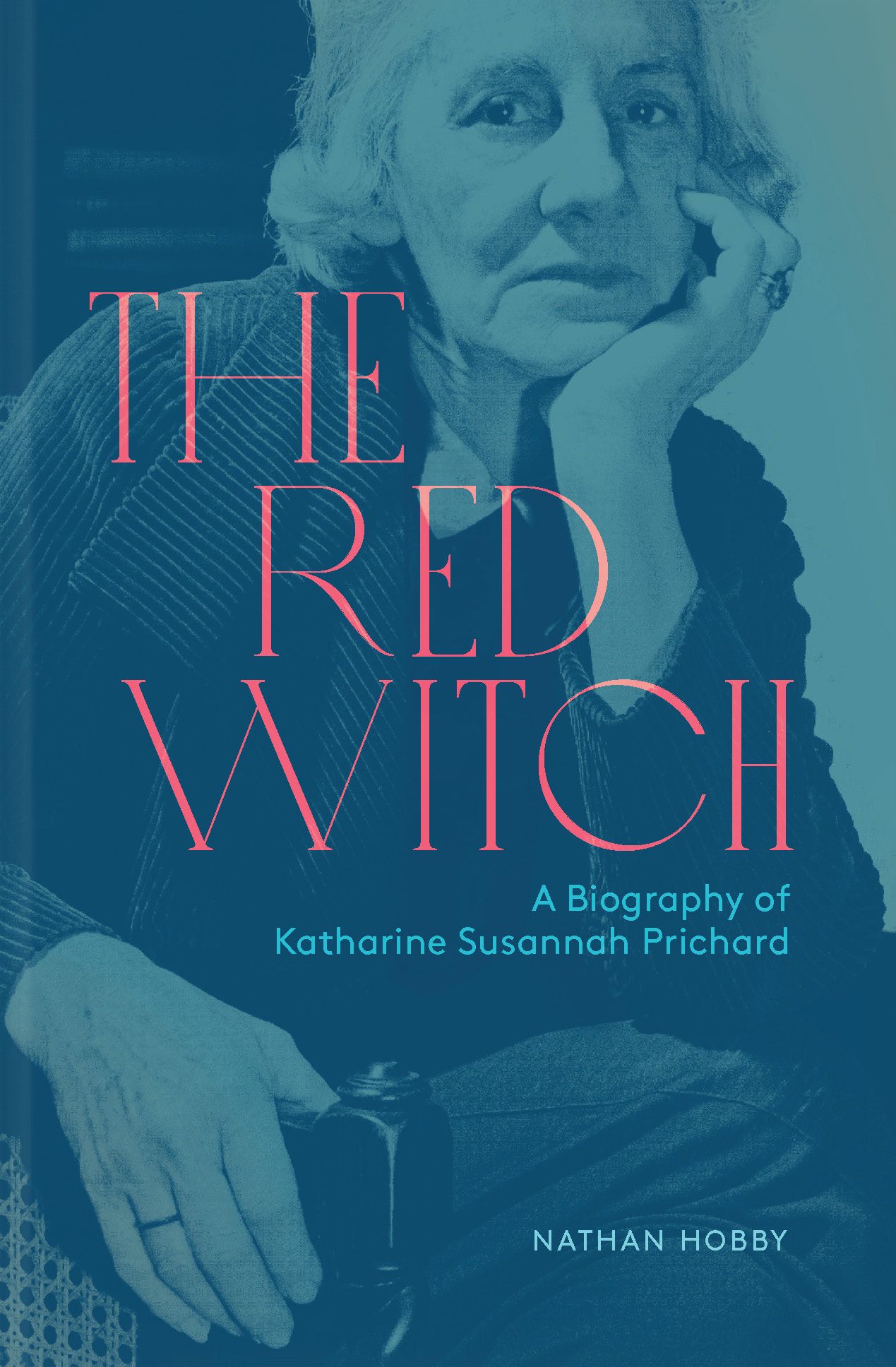
Now, I don’t want to go down the content path though that would be easy – and, you never know, we might meet a would-be or struggling writer or two a bit later in this chain. Here though I’m going for a word in the title, and so it’s to Michelle Scott Tucker’s biography, Elizabeth Macarthur: A life at the edge of the world (my review) that I’m linking next. Round worlds, edges of worlds, where to now? Not to worlds, in fact … but to …

Jane Fletcher Geniesse, Passionate nomad, book cover

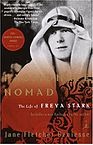
Another strong woman. Elizabeth Macarthur had to be strong to keep the family farm going in colonial Australia while her husband spent months if not years travelling to and from England. Freya Stark was another strong Englishwoman who made her way in a man’s world, a century or more after Macarthur. The book I’m linking to is Jane Fletcher Geniesse’s biography, Passionate nomad: The life of Freya Stark (my review).

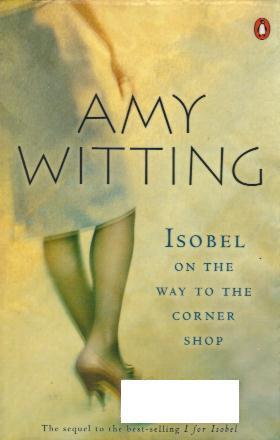
Geniesse’s biography was published in 1999, as was the wonderful Amy Witting’s gorgeous novel, Isobel on the way to the corner shop (my review). Here come the would-be writers! Isobel is a young woman who is struggling to be a writer. Poor, starving and isolated, she ends up contracting TB and, after a dramatic collapse, is admitted to a sanitarium, where she starts to recover in more ways than one.

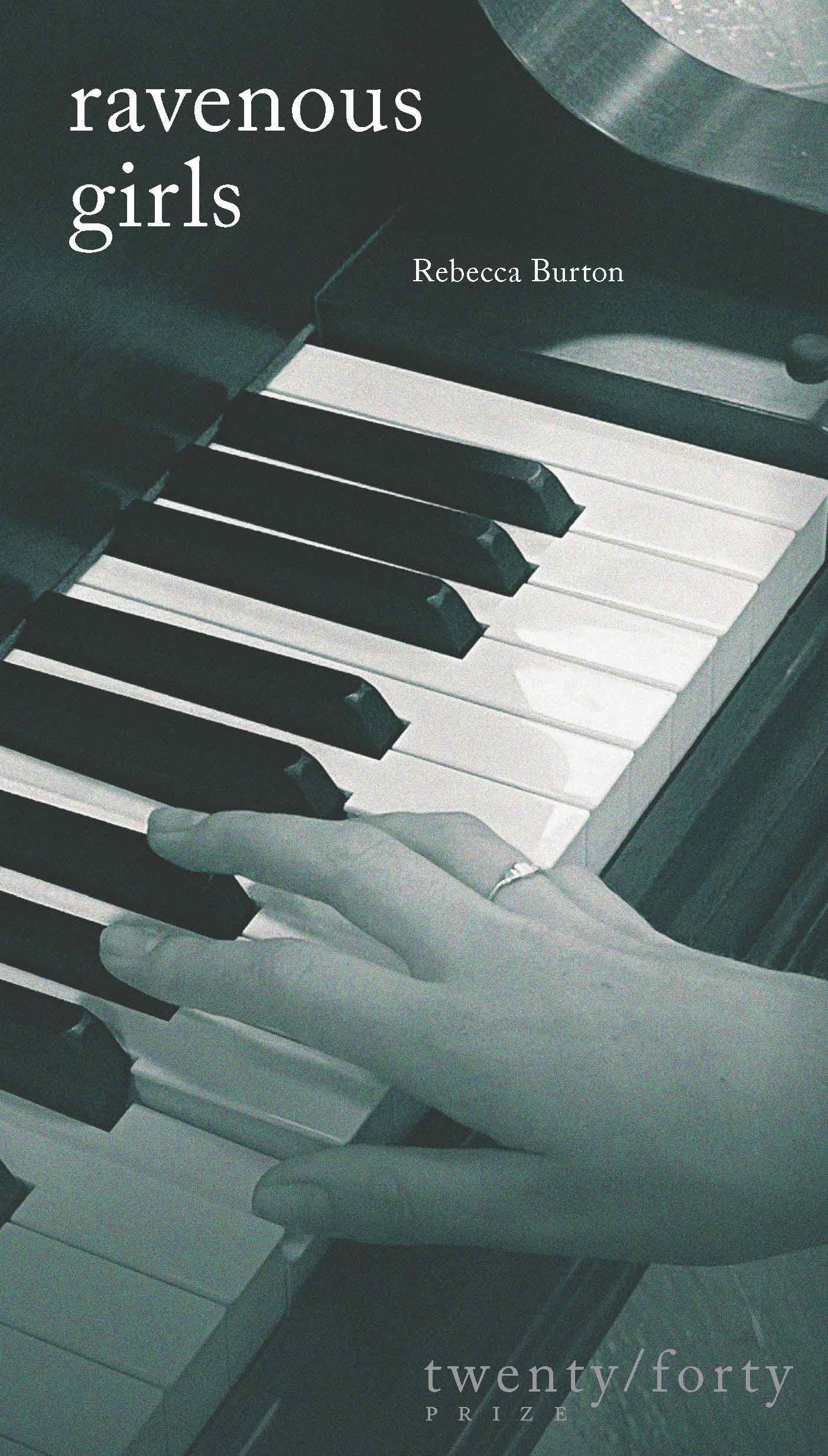
From Isobel I am taking us to my most recent post, Rebecca Burton’s Ravenous girls (my review) which is about another young woman – starving for different reasons – who ends up as a long stay patient in hospital. Justine is a different person to Isobel, and the story is from her sister’s perspective, but the link still works!

John Clanchy, Sisters

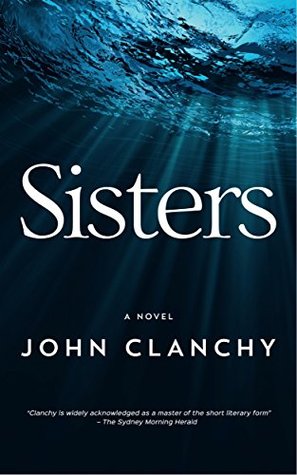
And now, I’m going to do something I don’t usually do, which is to close the circle. Maroo’s book is apparently about sisterhood, and so, in a large way, is Burton’s Ravenous girls, so it’s on sisters that I’m going to conclude, but with sisters at the older end of the spectrum. John Clanchy’s Sisters (my review) are not struggling to find themselves, or to make their way in the world. Instead, they are needing to resolve secrets from the past, which just goes to show that when you solve one of life’s challenges, there’s sure to be another waiting! In fiction, at least!!

I’ve spent far more time in Australia than I usually do, but we did make a quick foray to the middle east, and we have traversed Australia from its early colonial days to through to the present. I have also been, as last month, rather one-sided in author gender, with just one male author again bringing up the rear.

Now, the usual: Have you read Western Lane? And, regardless, what would you link to?

Rebecca Burton, Ravenous girls (#BookReview)

When I announced the two winners of Finlay Lloyd’s inaugural 20/40 Publishing Prize, a few days ago, I said I planned to read them for the Novellas in November challenge/meme/reading month. (What do we call these things?) So here, now, is my post on the first I’ve read, Rebecca Burton’s Ravenous girls.

Rebecca Burton, as I’ve said in previous posts on the prize, is an editor, and author of two young adult novels, Leaving Jetty Road and Beyond Evie, both published by HarperCollins Australia. This book, I’d say, is a cross-over. It could be read by YA readers, but its subtle perspective of looking back from some years later, means that it is particularly geared to adult readers.

Finlay Lloyd writes on their website that

Stories of family dysfunction often expose us to relentless failure. And while Ravenous Girls is about the tensions and growing distance between two sisters—the elder burdened by anorexia, the younger by self-doubt—it is distinguished by its lithe and tender understanding of the complexities of growing up.

It is, I suppose, a story of family dysfunction, but in the sense that most families, dare I say, can be dysfunctional to a point. By this I mean that many families face trauma and challenges that can affect how well they function. Which is the chicken, which is the egg? It’s probably not worth much going there – and this book doesn’t. Nonetheless, there is a bit of backstory to why things may be the way they are.

So, Ravenous girls. It’s told first person from the point of view of 14-year-old Frankie, which puts her slap-bang in the coming-of-age category, and like most her age she is unsure about who she is. She feels “the wrongness of me”, which includes sometimes being “too much me”. She is challenged by her friend “racing away” from her, as can often happen at this time of life, with neither the racer-ahead nor the left-behind having the tools – the experience – to manage it gracefully. Frankie feels the loss deeply, just when friendship is most needed.

Meanwhile, Frankie’s family life is challenged by the fact that Justine, her seventeen-year-old sister, is, as the book opens, about to enter an Eating Disorders Unit as a live-in patient. The third person in this family is Iris, their mother. She – and all of them – still suffer from the premature death of husband and father some eleven years earlier. I have seen this happen – a mother’s grief over the early death of her husband derailing family relationships. That seems to be part of the situation here.

The story primarily covers the months over the summer holidays when Justine is in hospital. Frankie, at loose ends because friend Narelle has secured a holiday job, visits Justine every day. She observes Justine, and thinks about what is happening to her and why. She and her mother attend, with Justine, a poorly-handled family therapy session, and she also attends a family support group. Neither of these provide much help or support. She doesn’t see either Justine or her family in these, so she continues to try to work it out for herself. She sees her mother’s tiredness and pain, and she sees there is no space for her own concerns when Justine’s needs are so great, which is something Justine, bound up in her own growing-up challenges, doesn’t appreciate.

What elevates this reading from what could have been a “woe is me” tale are the occasional foreshadowings or hints from later Frankie, telling us what she now knows, or in some cases, still doesn’t know. These references play several roles, from recognising their naiveté at the time (“It astonishes me now that this is the way we thought”) or her own self-absorbed inattention (“maybe if I’d listened more carefully”) to sharing lessons learnt or hinting that character development had occurred (“But now I think that I may have been a monster too”). Burton handles these later reflections adroitly – they add richness and depth without spoiling the conclusion or losing the tension or reducing our care for the characters.

The novella is set in 1985/1986 Adelaide, and Burton captures the era well – the political happenings from Queensland’s Joh Bjelke-Peterson to America’s Unabomber, the technology (cordless phones appearing, but certainly no mobiles!), the films and music. I could ask why the novel is set then, which is my usual question for novels set in the past, but, for a start, an earlier time-period is necessary to enable the inclusion of that perspective, I’ve mentioned, of the much older Frankie.

There are references during the novella to Frankie and her mum reading books about anorexia and other recovery memoirs – as readers will do when confronted by difficult situations. I liked this comment – or warning – about such memoirs:

It didn’t occur to me that what was truth for one person might not be true for another – or that the truth as people wrote about it wasn’t always the truth as they’d experienced it.

Fortunately, Ravenous girls isn’t a memoir!

As with all Finlay Lloyd books, the design is gorgeous. It has their unique shape, a dust jacket despite being a paperback, and a stylish but minimalist overall design aesthetic with elements that carry through to the other winner.

Before I close I must mention the title, Ravenous girls, which relates to anorexia and the hunger its sufferers experience. In anorexia, as we know, the hunger, and hence the title, is not purely literal. For Justine, as she articulates to Frankie, it’s about “wants”: “I don’t want to want the things I want, you know?” “Ravenous” perfectly encapsulates the intensity of need explored here.

Ravenous girls is a compassionate book that sensitively charts the emotional ups and downs that are part of the anorexia landscape, and explores the helplessness about understanding what is such an individual and complex mental condition. It also conveys something more generally relatable about family relationships – sisterhood and daughterhood, in particular – and about how darned hard it is to grow up. But, grow up we do.

Read for Novellas in November. Lisa (ANZ Litlovers) and Theresa (Theresa Smith Writes) have reviewed both winners in one post, but I am doing them separately. Watch this space.

Rebecca Burton
Ravenous girls
Braidwood: Finlay Lloyd, 2023
103pp.
ISBN: 9780645927009

Novellas in November 2023: Week 1, My year in novellas

I love novellas and have written on and reviewed novellas almost since this blog started, because I love the form, but I have only tinkered around the edges of Novellas in November (run by Cathy of 746 Books and Rebecca of Bookish Beck). Last year, I wrote a Monday Musings on Classic Australian novellas and the year before I did one on Supporting Novellas (here in Australia). Otherwise, I have written a few novella reviews for the month. But I have not focused on the weekly themes suggested by Cathy and Beck. I may not again, because I might become a bit repetitive, but I’m going to start at least.

However, this has been a very strange reading year for me, so I won’t have a lot to say, which is probably good, as it means my posts will be short for you to read! For Week 1, which just runs from 1 to 5 November, the theme is “My year in novellas”. It asks us to write about novellas we’ve read since last November.

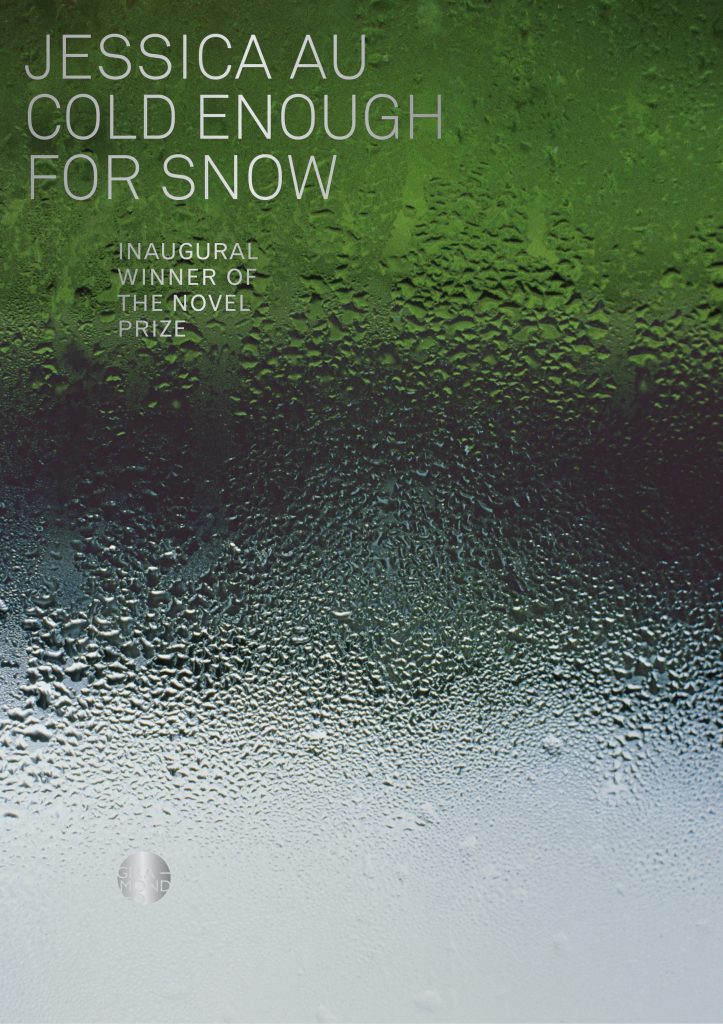
Well, I’ve only read one, and that was Jessica Au’s quiet, meditative, award-winning Cold enough for snow (my review). It was the inaugural Novel Prize winner, and also won the Victorian Premier’s Literary Awards prize for fiction (as well as being the overall winner). It’s been shortlisted for more prizes, including, most recently the Prime Minister’s Literary Awards fiction prize. It’s one of those books that’s perfect for the novella form, because it’s an intense, concentrated book rather than a plot-driven page-turner. It says a lot that it has held its own so well in the “novel” world – in terms of awards and overall critical reception – despite its short length. (See publisher Giramondo’s site for its awards to date.)

Cold enough for snow tells the story of a mother-daughter trip to Japan, but its focus is not the trip. Told from the daughter’s point-of-view, it tells about a relationship that is characterised by closeness and distance, by tender caring and frustration, by needs that aren’t always satisfied perhaps because they can’t always be, by a desire to connect. For me it was about the paradoxical nature and mutability of life. But everyone who reads this book – as in my reading group – seems to see something different because it speaks so closely to our individual experiences of life and close relationships. The Prime Minister’s Literary Award judges capture this well in their comment (see the Giramondo site above) that it is “intricately structured and with a flow and reach that, like all remarkable writing, is without boundaries”. “Without boundaries” is a good description …

Au’s book might have been my only novella review in the last twelve months, but all has not been quiet on the novella front. Back in July I wrote a Monday Musings about support for “short novels” from various points of view over the first half of the 20th century – that I found in Trove. And, just a few days ago I wrote about the winners of the new 20/40 novella prize being run by Finlay Lloyd publishers. I plan to read these two winners for this year’s Novellas in November.

Written for Novellas in November 2023