It’s fascinating just how many book awards there are in specialised areas. Last week I posted on the Dame Mary Gilmore Award, which started as a trade union supported award, but is now a more general poetry award. Yesterday I posted about the winners of the 20/40 short form prose award. Another specialised award is the Australian Political Book of the Year Award.
This is a new award that was first made in 2022. It is not a huge award in prize money, but it’s not minuscule either. The winning author (or authors) receives $15,000 and each shortlisted author receives $1,000. It’s great to see, in fact, more and more awards offering a monetary prize to the shortlisted books.
The award’s website says that the award
recognises the vital part political books play in better understanding Australian politics and public policy. Well researched, balanced and compelling political books that engage Australians are vital to the strength or our democracy.
Further, it says, the longlisted, shortlisted and winning books will be those the judges determine to have
provided the most compelling contribution to the understanding of Australian political events and debates.
The award is sponsored by a Melbourne independent bookshop, Hill of Content Bookshop, and the York Park Group.
Last year’s lists (that is winner, short and long for 2022) are available on the site. The shortlist for 2023 is on the site too, but I’ll also share them here:
- James Curran, Australia’s China odyssey: From euphoria to fear (NewSouth Publishing): looks at the relationship between China and Australia through Australia’s prime minister from Gough Whitlam in 1972.
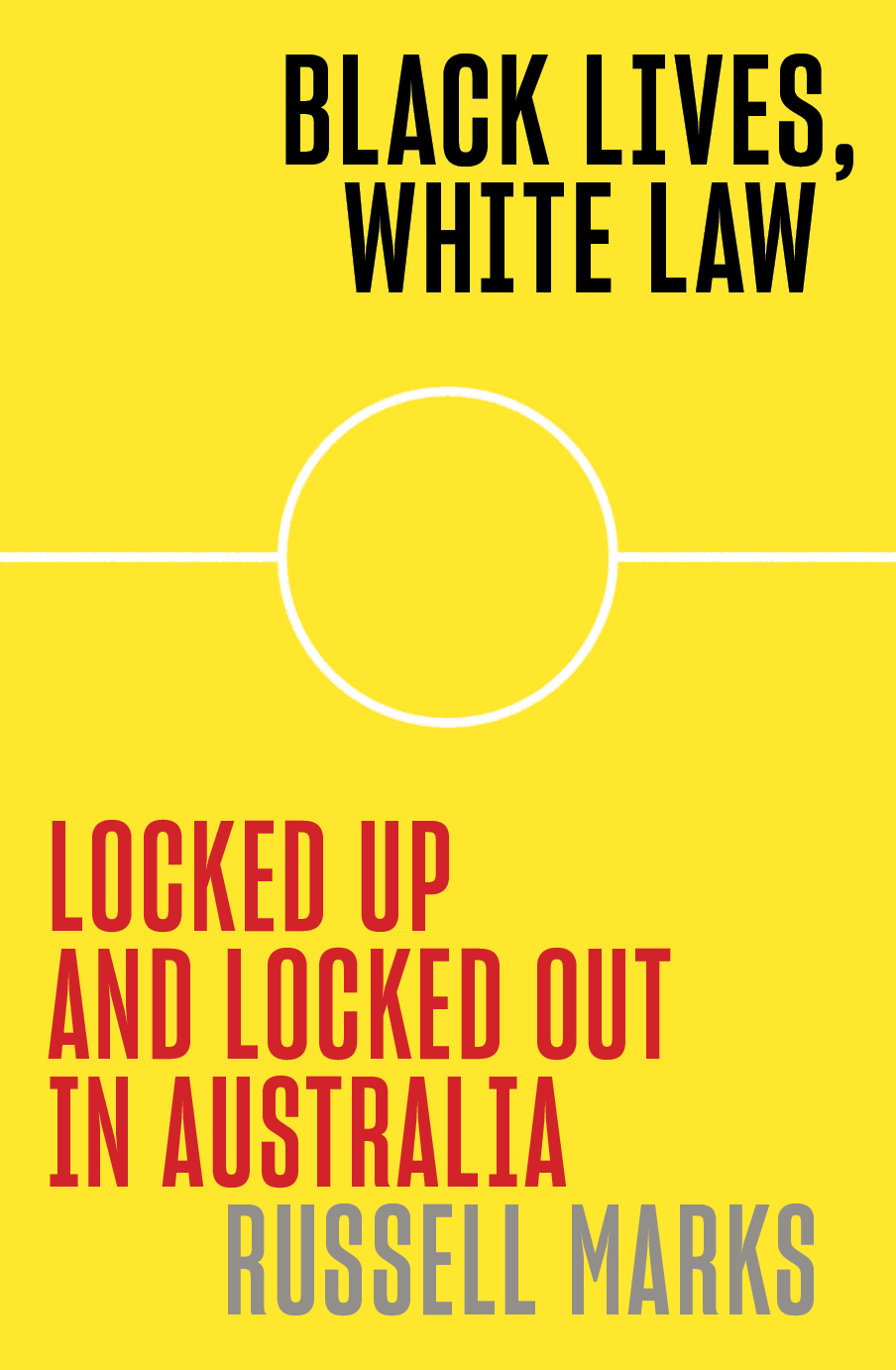
- Russell Marks, Black lives, white law: Locked up and locked out in Australia (La Trobe University Press): interrogates the fact that First Nations Australians are the most incarcerated people on the planet. This book has also just been shortlisted for the Australian History section of the 2023 Prime Minister’s Literary Awards.
- Nick Mackenzie, Crossing the line (Hachette Australia): exposes the story behind the fall of SAS hero Ben Roberts-Smith.
- Nikki Sava, Bulldozed: Scott Morrison’s fall and Anthony Albanese’s rise (Scribe Publications): self-explanatory, I’d say!
You can see the 2023 longlist on the same page. It includes books by the historian Frank Bongiorno, First Nations author Stan Grant, and author, ex-political advisor and speechwriter, Don Watson. This year’s judges are well-known political journalists Laura Tingle and Barrie Cassidy, and the academic John Warhurst.
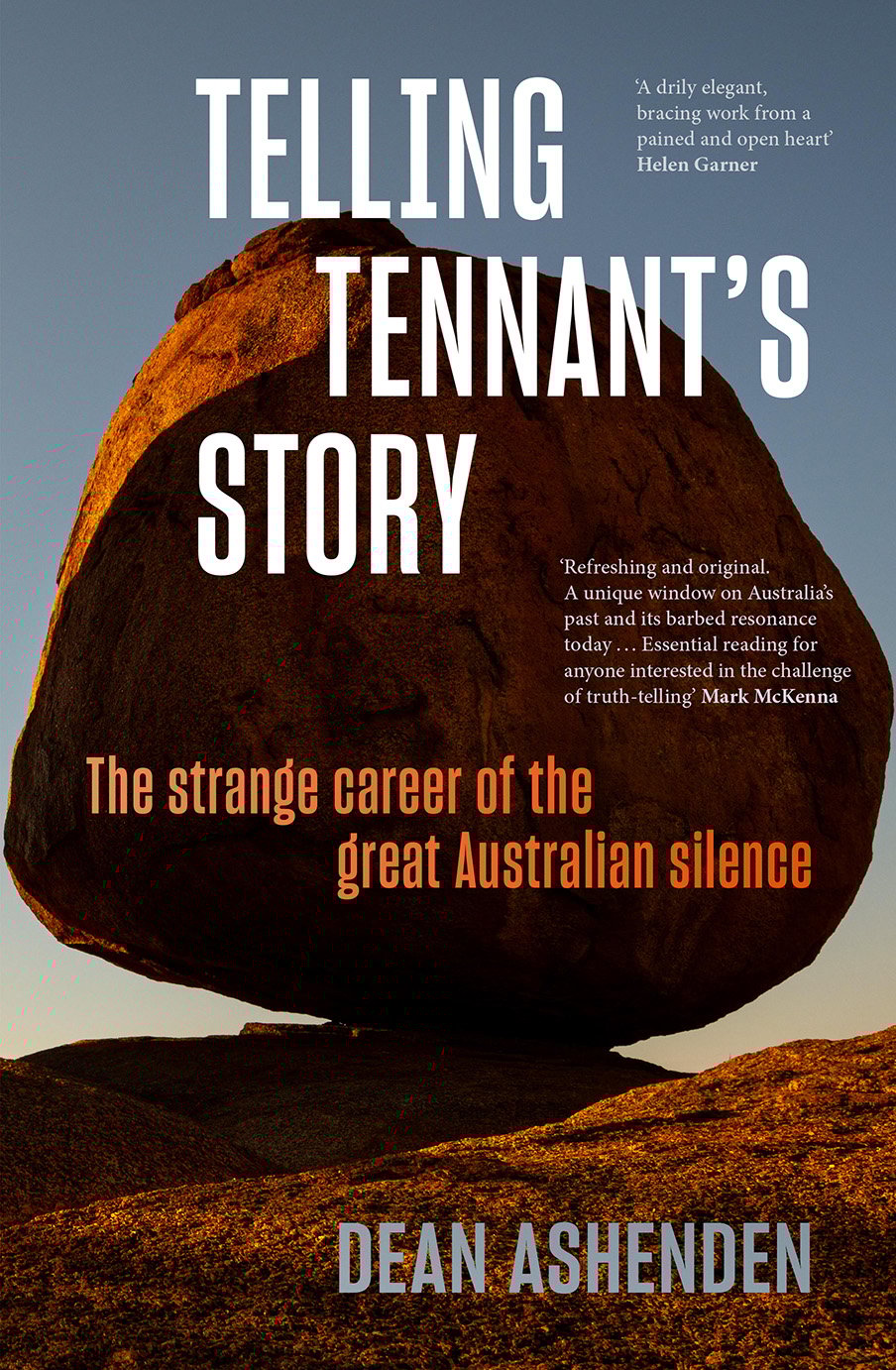
Australia’s current treasurer, Jim Chalmers, announced the 2022 winner at a National Press Club event, the winner being Dean Ashenden’s Telling Tennant’s Story: the strange career of the great Australian silence. It’s about Tennant Creek’s, and by extension, Australia’s silence about the past, about the truth of what happened between settler and First Nations Australians.
Anyhow, back to Chalmers … he spoke, of course, about the prize, the judges and the books. I particularly liked this point he made about political books:
A good book is never just a collection of speeches or an extra-long feature piece – it’s a true study of an issue or idea, full of complications and confirmation, and with the pleasure of illustration, story-telling, portraiture.
He says more, but I’ll just share one more excerpt from his speech, in which he talked about “narratives that don’t just help us recognise patterns but also help us question our assumptions about the patterns we think we see”. That’s the important thing, isn’t it – to keep questioning the assumptions we make, because it is too easy to get locked into them, even when the world and/or our own lives and experiences change.
POSTSCRIPT: Nancy Elin noted in the comments that she has read all the shortlist, and has predicted the winner. Rather than link to each post, I’m giving you this link to her blog as she is an assiduous reader of Aussie books.
Had you heard of the Australian Political Book of the Year Award, and, regardless, does such an award interest you?
 Whispering Gums
Australian Political Book of the year….surely interests me! Read the complete shortlist this year and predicted the winner! Reviews of the shortlist on my blog with Mark Russell’s book review scheduled for November. Last year’s winner , read and reviewed. There are so many good NF Australian writers at the moment. Next award will be the Walkley Book of the Year announcement. Shortlist will be made known on Thursday 02 November and the winner …on 23 November. Thanks for highlighting this great book award, Sue.
You are a wonder Nancy. I’m at the airport now but will try to remember to link to your blog when I get to Hobart.
Have a good trip to Tasmania!
Thanks Nancy … I am having a lovely time.
I hadn’t heard of this award – but I’m very interested in political books – helping me to dig deeper than journalistic long-reads allow – and which I devour. I’d say awards to encourage and honour good political writing are more relevant now than almost any time in recent decades. I completely agree with the point of making sure we question our assumptions, too.
Thanks Kitty for commenting. And you make a good point about the relevance of good political writing now.
Long story short – as they say (with total relevance) – no and yes.
Any book about politics that can bring clarity to its subject must be worth reading !
I have spoken.
And I have heard MR! Thanks.
Now that there is so little cogent political commentary in the media, political books matter more and more, and so I think this award is an important one.
However, I’m surprised to see Bulldozed in the 2023 list, because it’s everything a good political book shouldn’t be. Like that plethora of Rudd-hating books that came out too soon after his demise, Bulldozed is another one that hasn’t allowed for the dust to settle.
FWIW without ever having set eyes on the book, I would give my vote to Australia’s China odyssey because it’s about something critically important for our future. By the sound of it, it’s covering some of the same territory as Rudd’s The Avoidable War, taking the long view of the China-Australia relationship. (I’ve read a fair bit about this via my subs to Australian Foreign Affairs, which, by and large, has avoided rattling the drums of war).
Thanks Lisa … you read more political writing than I do, but your point about letting the dust settle makes good sense to me.
It seems the judges disagree with you, Lisa 🥺 Bulldozed is the 2023 winner.
Well, I still don’t see the point in reading a book that’s just a rehash of everything we read about at the time. I mean, if I’m keeping up with current affairs while they’re happening, what I want from a book is considered reflection on events.
Agree. Did you read Nancy’s review? It does sound good. I always thought Morrison was our Trump and Nancy makes that comment.
We have the book at home because The Spouse bought it, but I have read Nancy’s review, and (based on Nancy’s summation and scanning the book) I would say that I knew all that already. I mean, for Nancy, who says herself that she doesn’t know much about our politics, it’s possibly worthwhile, but for me, it would be a waste of time. I am a regular reader of my subscriptions to the Quarterly Essay, Australian Foreign Affairs, The Guardian, Inside Story, Pearls and Irritations and The Conversation, plus the ABC stuff that’s not tabloid lifestyle rubbish and The Saturday Paper, I also listen to France 24 and (at the moment) Al Jazeera and BBC. Plus Planet America when it’s on.
I don’t read a lot of NF so when I do, I’d rather read about stuff that I don’t know much about.
But that’s just me. The judges have a different opinion. Good luck to them.
I was going to say yes I know all about this award…thanks to N@ncy, but I see she got in first 🙂
She has been reading up a non-fiction storm for AusReading Month.
I read the occasional political/current affairs book if the topic/author/timing comes together for me. Many of them sound intersting/worthy but fiction will usually win out in the end for me.
She sure has, Brona, so impressive. I do like non-fiction, but I’m more likely to read literary biography or creative non-fiction, which could of course be political writing but often isn’t I think. In my experience, political writing tends to be more traditional prose, whereas you can get what I would call creative nonfiction in areas like enviro-literature, history, life writing. But don’t quote me. I’m probably talking through my hat!
It’s the same hat I talk through, Sue. We lean towards the same kind of nonfiction 😊
Haha … Brona, I’m not surprised.
There has been some discussion in the Canadian media/social media recently (in response to a recent change in a prominent writing institution’s non-fiction programming here…the name of the program and the accreditation offered) about how the non-fiction publishing landscape has changed in recent decades. They’ve mentioned the growing trend towards memoirs and away from traditional research-based non-fiction, which I thought was interesting; I’d not really thought of it, but I can see how that’s been true, and I’ve just been busy reading mostly fiction. (Well, heheh, not quite, but almost.)
Oh yes, we here in Australia have seen a huge growth in the memoir industry but there’s still a good trickle of other non fiction … I particularly like Helen Garner, Chloe Hooper, and Anna Krien for their non fiction.
I would be so curious to see how an award like this played out in the US. I’m sure folks would say it’s just a “woke” liberal prize. Interestingly, I can’t think of any nonfiction prizes off the top of my head, so at first I assumed these were fiction stories about politics/politicians.
Oh that’s a bit sad Melanie but you are probably right. Not a reason perhaps for not doing it?
I think you have some Pulitzers for nonfiction don’t you?
After your comment, I did a Google and discovered there is the Pulitzer Prize for General Nonfiction. However, I looked all the way back to 1962, which is where the list stops, and see I don’t recognize a single title.
Oh I meant Pulitzers across different nonfiction genres? There are still some aren’t there? I guess it’s not surprising that Nonfiction titles don’t stand the test of time as much as fiction can?
I’m not sure if there are different nonfiction genres. I didn’t see any.
Wikipedia seems to suggest that currently there are Pulitzers for biography/autobiography, history and general nonfiction. Or am I misunderstanding something?
I have no clue. I don’t really follow book prizes.
I did know about it – because of Nancy’s sterling sharing – and I am interested. I have Stan Grant’s The Queen is Dead TBR and because I didn’t get as much read for AusReading Month as I wished, I will be making an effort to read one of my Australian books every couple of months to keep the impetus going.
Oh that’s great to hear Liz. I’ve read a couple of Stan Grant’s books and heard him interviewed about one of them, but have not read this. He is a truly erudite man but writes with great clarity too.