
You heard it here first – or, first(ish) anyhow, as the webpage is up and orders are already coming in for a new, beautiful book, Uninnocent landscapes: Following George Augustus Robinson’s Big River Mission. Yes, I admit it isn’t out yet so I haven’t actually seen it, but I know it is beautiful because I’ve seen some of the content over the years, and I’ve seen the cover on the website. It looks stunning.
Of course, I’m biased because the creator is my brother, Ian Terry. However, it goes without saying that I wouldn’t be writing this if I didn’t feel his project was worthwhile.
So, the project … Ian introduces his motivation on the publisher’s website:
Without invasion, colonisation and the near destruction of lutruwita’s First People, without Robinson’s ‘Friendly Mission’, I would not have had the opportunity to feel so much at home on this island. This is a reality that, as much as we might try to ignore it, non-Indigenous Tasmanians cannot escape. How do we come to terms with our privilege and its Janus face, the violent and continuing dispossession of palawa/pakana?
Now, Ian’s last job before retirement was a senior curator of history at the Tasmanian Museum and Art Gallery, during which time, among other things, he mounted exhibitions on First Nations history. He has, for nearly three decades, been an active and contributing member of THRA, the Tasmanian Historical Research Association. History was his undergraduate major, and in the early 1990s he complemented these studies with a Graduate Diploma in Cultural Heritage Management, after which he began working as a freelance history consultant – in lutruwita/Tasmania. History, you could say, is in his blood – and was not going to stop flowing after he retired. Enter the project …
But first, I need to add that in addition to his love of history, Ian has been a photographer since early adulthood. Way back in the the fall of 1983, he joined Mr Gums and me on a road trip through New England and Eastern Canada. We all took photos, but Ian was the one who would climb the hill behind the gorgeous white-spired church, or run across the bridge to the other side of a pretty river, to get the best shot. That interest has never waned and he has honed his skills to the point that he is now achieving recognition in photographic competitions.
This project, which involved his following the steps of George Augustus Robinson’s 1831 Big River Mission (brief description), combines these two passions. It has required historical research to identify Robinson’s movements and actions. It also called on Ian’s negotiating skills when, for example, he needed to enter private property to take the desired photos. It used his well-developed bush skills when he needed to explore more difficult landscapes. And, it depended on his photographic skills because photographs form the core of the book.
Of course, Ian’s tracing of Robinson’s path was not aimless. As the above-linked publisher’s website says, he had various questions in his head as he worked through his project, questions like
What memories do the landscapes of lutruwita/Tasmania hold? What stories are embedded in the rocks, the trees and grasses, the waters of rivers and lagoons? What could the landscape tell us about invasion, colonisation and the destruction of First People’s life and culture? What could it tell us about our own lives here on this island?
Uninnocent landscapes, the book, comprises a selection of Ian’s photographs documenting the landscape in a way that also expresses his ideas about it. It also contains an introduction by Tasmanian art historian, curator, essayist and commentator on identity and place Greg Lehman (a descendant of the Trawulwuy people of north-east Tasmania), and four essays, one by him and three he commissioned from:
- Rebecca Digney (manager, Aboriginal Land Council of Tasmania)
- Roderic O’Connor (woolgrower and Connorville custodian)
- Nunami Sculthorpe-Green (activist/artist and proud palawa and Warlpiri woman)
I can’t wait to see and read it – and, isn’t it a great title?
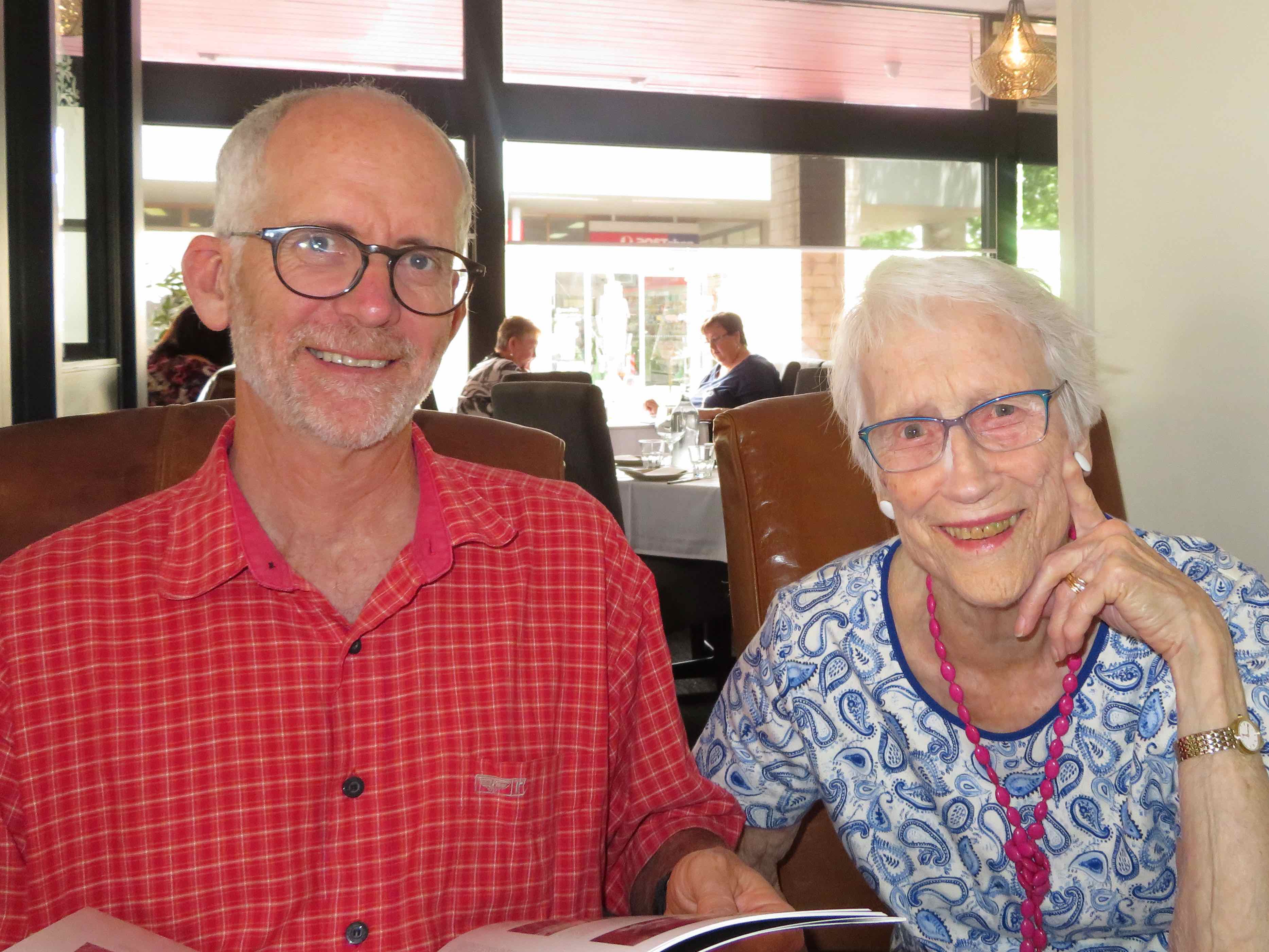
But wait, there’s more … there is also Uninnocent landscapes, the exhibition. It will feature large-scale archival prints from the book, and will be held in the Sidespace Gallery at Salamanca Arts Centre in nipaluna/Hobart from 2–14 November 2023. I will be there at the opening.
Uninnocent landscapes is published and distributed by OUTSIDE THE BOX / Earth Arts Rights under their imprint An Artist’s Own Book, and will be available from early November. It costs $65, and all proceeds will go to the Aboriginal Land Council of Tasmania’s Giving Land Back fund. You can preorder here.
To fully disclose: Ian did not pay (or even ask) for this announcement, but he is accommodating me (I hope) on my trip to lutruwita to attend the exhibition opening!
 Whispering Gums
Surely this will only secure your planned accommodations?!
I’m pleased to know about this project and hope it garners all the attention it deserves, both on WG and beyond.
Hopefully, ha ha, Marcie… cheaper than hiring a publicist I’m sure!
It will appear again here after I’ve got my copy – a Christmas present I’ve heard…
We’ll be able to upgrade her to a larger tent in the back yard, Marcie! Thank you for your positive comment.
Very kind of you, I’m sure
Dumb lot, you Terrys.
Your beloved Mum would be so proud of the genetic line.
She would be SO proud of lan, MR, which is why I thought to include a pic with her in it.
We do our best with the genes we’ve been dealt, MR.
complimenti bello ! 🙂
What a wonderful project. Having recently learned a little more about the bloody and complex history of the colonisation of Tasmania (one of my favourite parts of Australia) I am even more aware of the ‘Janus face’ of my appreciation for the place.
I hope the book and exhibition do very well.
I love hearing about passion projects such as this. I think this one could be an effective piece of the truth telling that still needs to be told in this country.
Thanks for telling us about it!
Thanks Denise… I can’t disagree with anything you say here. I think It’s going to be a very sensitive piece of truthtelling.
Thank you for your positive comments, Denisenewtonwrites.com. This has been a very important project for me.
It sounds a beautiful and thought provoking work of appreciation, reflection and love! I look forward to seeing it and can’t help but believe it will add greater depth to our awareness of the real costs to our First Nations Peoples of what so many – but sadly, not all – enjoy in life in Australia today. Advance congratulations to Ian for his achievement, and a lovely photo of him with your Mum, WG.
Thanks TC! I promise to show it to you… and yes, well said re its potential value.
I couldn’t resist showing a pic of him with her.
Thank you for your support, Treble Clef. Fortunately my face didn’t break the camera in that pic!
Apart from the unlikely misfortune of dropping the camera, Ian, I can’t imagine how you could break it! All the best for every success with ‘Uninnocent landscapes’ and for a wonderful exhibition in November!
Thanks Treble Clef … I agreed … and I can’t wait to go to Hobart next week for the exhibition.
Congratulations to all!
I foresee a nomination in the Tas Literary Awards:)
Haha, thanks Lisa, wouldn’t that be nice.
Ha! Better put you on the judging panel, Lisa!
It wasn’t just an idle comment.
I was thinking of a book with the same kind of gravitas that was nominated for the Tas Premier’s Prize in 2019
Ian knows Danielle Wood I believe, Lisa, so let’s see if he knows this book.
I very definitely know this book, Sue and Lisa. I was one of the museum collaborators on the book with Danielle and Ralph and selected some of the objects featured in it. It was a very interesting idea they had.
Thought so, Ian.
I’m not surprised that he does!
Anyway, good luck with it:)
Thanks … I think his main hope is that it will encourage more thought and discussion, and raise some money for the cause.
Fascinating project! Congratulations to your brother. Thanks, Madame gums.
Thanks Sara … I think Ian will be reading this, and will see your congratulations.
Thank you for your kind words, Sarah.
I’m glad Ian has come up with a book you can be proud of. I have a relative bringing out a book ‘soon’ (last May originally) and I have not the faintest idea what I will say about it.
I have no idea what your relative’s book is about Bill, but yes, Ian’s book is very easy to be proud of.
Thank you for your kind words, Bill. It takes a long time to get a book out.
Sue, you look so much like your mom! Is your family from Tasmania and you wound up in Australia, or vice versa?
What a special post this is Sue! I was reminded of Bob Brown’s book Green Nomads re the photography, although his aims were different, they’re probably not that far apart. If I wasn’t down-sizing and decluttering I’d be very tempted by the pre-order option!
I can probably google this, but I’m curious that the palawa/pakana do not use capital letters for their names. Many Indigenous sites ask us to use capitals out of respect and as part of a positive framing approach. Do you know why it is different in lutruwita? (you may have covered this elsewhere – in which just case point me in the right direction…)
Thanks very much Brona … I know the feeling (re decluttering!)
And no I don’t know that, but have been wondering myself. I’ve read quite a lot of writing by Carmel Bird over recent years and she uses lower case lutruwita all the time. My guess is that they’re not wanting to follow colonial language traditions, but I really don’t know. I’ll try to remember to ask Ian if he doesn’t notice this question.