A straightforward post this week, and one shared in the spirit that readers love lists of books. This list is not Australian (despite my posting it in my Monday Musings series) but it was shared in multiple Australian newspapers in 1910 which makes it part of Australia’s literary history, don’t you think?
The list was headed in most newspapers as “A short list of masterpieces of fiction” and the explanation provided was essentially this, “An American paper offers the following as an excellent though, of course, limited list of the best books for one to read”. The papers don’t value add, so we don’t know which American paper produced the list or under what circumstances. However, I thought it was a fun one to share because it’s not just a list of recommended books, but of the “best” in different categories. Here they are:
- The best historical novel — Ivanhoe (Sir Walter Scott, Scottish)
- The best dramatic novel — The Count of Monte Cristo (Alexandre Dumas, French)
- The best domestic novel — The vicar of Wakefield (Oliver Goldsmith, English)
- The best marine novel — Mr. Midshipman Easy (Frederick Marryat, English)
- The best country life novel — Adam Bede (George Eliot, English)
- The best military novel — Charles O’Malley (Charles Lever, Irish)
- The best religious novel — Ben Hur (Lew Wallace, American)
- The best political novel — Lothair (Benjamin Disraeli, English)
- The best novel written for a purpose — Uncle Tom’s Cabin (Harriet Beecher Stowe, American)
- The best imaginative novel — She (H. Rider Haggard, English)
- The best pathetic novel — The Old Curiosity Shop (Charles Dickens, English)
- The best humorous novel — The Pickwick Papers (Charles Dickens, English)
- The best Irish novel— Handy Andy (Samuel Lover, Irish)
- The best Scotch novel — The heart of Midlothian (Sir Walter Scott, Scottish)
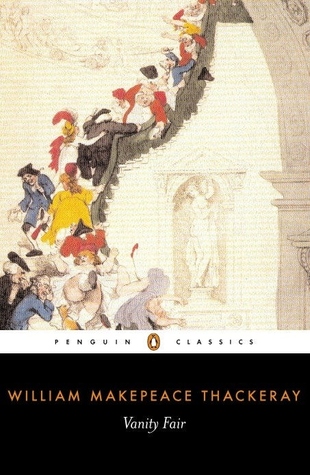
- The best English novel — Vanity Fair (William Thackeray, English)
- The best American novel — The scarlet letter (Nathaniel Hawthorne, American)
- The best sensational novel — The woman in white (Wilkie Collins, English)
And:
- The best of all — Vanity Fair (William Thackeray, English)
I was interested, and infuriated, that the authors’ names were not included in the over ten published versions I saw, so I’ve added them in parentheses. I don’t care whether readers at the time knew the names of the authors or not, the authors should be identified. It is a little soap-box issue of mine that there is often not enough recognition of the authors of the books we read. This is why I always start my review posts with the name of the author not the title of the book. It’s my little bit of literary activism!
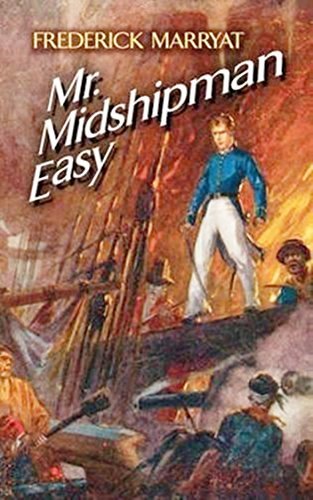
Like all such lists, this one is interesting for what is and isn’t there. Where are Austen or the Brontes for example, while other authors like Dickens and Scott appear twice? Clearly their popularity hadn’t waned. More to the point, perhaps, why only one non-English language book? No Russians, for example? It’s also interesting to see which books have dropped off the radar. Does anyone know Mr Midshipman Easy for example? Wikipedia tells me that it’s been adapted to film twice,
The “best” categories also tell us about the interests and reading habits of the time – “best pathetic novel” anyone? Or “best religious”? Or “best novel written for a purpose”? And so on.
Anyhow, I’ll leave it there … and ask you,
Just for fun, what categories would you suggest for a similar list today?
Source: The first paper in which I saw the list was Victoria’s The Elmore Standard, 12 February 1910.
 Whispering Gums
It is an interesting snapshot. No Russians but I suspect that the Constance Garnett/Louise and Aylmer Maude translations of Tolstoy had not yet appeared or not for long enough to make a lot of impact – not sure about that. Odd that isn’t an Australian title!
Thanks Ian, yes Iwondered about the translations and timings, but didnt rersearch them. I plan to share a later list a little down the track.
As for an Australian title, as this was an American paper in 1910, I didn’t expect it!
I’m interested to see Frederick Marryat on the list! I loved Children if the New Forest as a child, and have been meaning to reread it now that I live up the road from the New Forest myself to see how his descriptions hold up. I’m not sure what categories I’d put on the list now – probably political, historical, crime, science fiction, fantasy would all be on there.
Thanks Lou … I had never heard of Marryat so wondered if others had, though when you mention that title, I do recollect having hear of it.
Thanks for engaging with my question. I certainly thought more genres too – and wondered about dystopian in particular, as it has quite a long history now.
Lou, I’m late getting to this post, but I couldn’t go past your comment. I grew up with Children of the New Forest and at least one other Captain Marryat (I don’t know what he was a captain of). Even as a youngster I found it very political. Like so many children’s books it takes the royalist side against Parliament.
Haha, thanks Bill. I really and truly am on the outer when it comes to Marryat. Wikipedia says “He was promoted to command the 28-gun HMS Tees, which gave him the rank of post-captain”.
The book being royalist doesn’t bother me. I mean, I’m glad that after the dust settled we had something closer to a constitutional monarchy than we had before, but the Protectorate was one of the most brutal governments in English history, both at home and abroad. I can’t get that worked up about supporting a military dictator over an absolute monarch, or vice versa!
‘Mr Midshipman Easy’ was one of the books in my father’s library: Marryat wrote not much less than 30 books, but that one was the only one I ever heard of. I never read it because I was too much absorbed by CS Forester and Hornblower.
Another who knew of Marryat, MR. I love how posts like this show the breadth of and differences in all our reading. His is not a name that is well known to me at all, but then I always eschewed adventure novels so perhaps that’s not surprising. I didn’t read Forester either but at least I’ve heard of him.
Imnsho, you oughta be ashamed to admit your failing, ST ! [grin]
I am, MR, deeply ashamed! I see I am well and truly outnumbered here!
Same here, I have a review of Mr Midshipman Easy on my blog. It was the choice of an online book group I belonged to but my father also loved the series and was delighted when I was able to source the few he hadn’t read using the internet.
Oh, I didn’t even think to look Lisa! Shows what I know! I don’t recollect my father ever talking about these books.
I think it was an English schoolboy thing. My father was taken to the Maritime Museum as a schoolboy and raised on tales of the heroic British navy. As an adult of course, he recognised the jingoism, but he still enjoyed the adventure.
But in WW2, he enlisted in the RAF, not the RAN!
Obviously that generation was sufficiently motivated to read old stuff, she said crudely .. 😉
Ah well, it was not ‘the old stuff’ that he encouraged me to read. His contribution to shaping my reading when I was a teenager was to introduce me to authors I never encountered at school such as Orwell, Huxley, H G Wells, Jerome K Jerome and (though he was an atheist, from his religious exploration phase) The Cloud of Unknowing and CS Lewis. (It was my grandmother who set me off reading the classics (Austen, Dickens, the Russians &c) when a *huge* box of books arrived from England.)
I found it interesting, but rather sad, that as an old man, my father lost interest in reading anything demanding. That was when the late Tom Cunliffe at A Common Reader was a great help to me in finding books for birthday and Christmas presents, commercial fiction authors such as C J Sansom. And I read these too sometimes, so that we could continue to chat about shared books.
It was when he was very old, that I took a role in helping him to find ‘the old stuff’ which was ‘comfort reading’ from his teenage years.
That’s very heart-warming, Lisa – truly ! My lawyer father influenced ALL my reading: my mother was a languages teacher and had nothing but scholarly texts in French and Spanish (some in German). Dadda never got to be very old: he died at 64.
I went looking for your post but it looks like you have Mr Midshipman Hornblower by Forester on your blog? Not Marryat’s novel?
Oh doh! I’ve got them mixed up…sorry!
I’ve read almost all of those, and I suspect that this list was compiled as a lightweight lifestyle piece on the instructions of an editor and the process consisted of group brainstorming by journalists who were, of course, mostly men.
(Is it still true that we women read books that men like, but mostly not vice versa?)
The only ones I’ve never come across are Handy Andy, Charles O’Malley and Lothian, and I haven’t read The Heart of Midlothian or Ben Hur.
What’s interesting is the choice of Best American novel: not Huckleberry Finn? Not Moby Dick?
Suggested category? Well, why not have Best Translated Novel? Or, to rectify its glaring omission: Best Novel by a Person of Colour?
BTW I don’t often come across the omission of author’s names, but translators are routinely omitted from book covers and title pages and sometimes not acknowledged anywhere in the book. There’s even a hashtag #NameTheTranslator. I’m always having to add them at Goodreads, it’s so insulting to the wonderful people who make it possible for us to read books in other languages.
Thanks Lisa. You are probably right about the list’s origins. I suspect that gender reading pattern is still true, but perhaps some inroads have been made.
I’d home across Lothian (not read it though), but not Handy Andy, Charles O’Malley or Midshipman!
Yes, the Best American choice is very interesting.
I like your category choices.
No, I don’t often come across authors’ names being omitted but they are often forgotten in conversations with readers. I just see then as the most important thing (though I’ve probably forgotten a name or two at times, I admit.) I agree re identifying translators.
Lisa, I knew I had this somewhere, it’s by Amateur Reader (Tom): If you want a Scott protagonist who is not wishy-washy, who is pure backbone, try The Heart of Midlothian. The strongest Strong Female Character of 19th century English literature.
I miss Tom. He was such a nice man…
He really was …
We’ve lost a few along the way, haven’t we.
Yes. You know else I miss? Iris, from Iris on Books. She read such interesting books. I think she stopped to have a family.
I enjoyed Mr. Midshipman Easy as did my brother and his daughter, but I can think of a number of more recent marine novels that I think better. Frederick Marryat, by the way, was a schoolmate of Charles Babbage, and gets a mention in Babbage’s Passages From the Life of a Philosopher.
Herman Melville had published Moby Dick almost sixty years before this piece. It spent many years forgotten, 1910 clearly among them. I wonder how many now would rate The Scarlet Letter above it for best American novel–I suspect few.
And why Ivanhoe rather than one of the Waverly novels if you want to pick Scott for best historical novelist? The former seems to me to bring out more of Scott’s weaknesses.
I am clearly outnumbered George here … and I’ve enjoyed the comments and reminiscences.
Wikipedia says that Marryat was also an acquaintance of Dickens, so he was clearly in the action.
And good question re Moby Dick, and The scarlet letter. Not many I would have thought but I’m not an expert on the American Literary cannon.
As for Ivanhoe, yes, I wondered too – though I can’t really comment as I’ve only read volume 1 of Waverly, and Old Mortality. They chose another one for the Best Scotch Novel too.
I’ve read about half the list and I would say that the author has at least an arguable case for all his selections, Vanity Fair is an excellent novel, and Jane Austen was out of fashion for a long time.
Personally, I think that while Ivanhoe is an excellent novel, Waverley is much better Historical fiction – better researched and closer to the real facts of the time.
Thanks Bill … I agree with you in the sense that these lists are so subjective that if you choose from within a wide field of decent works it’s hard to disagree?
I love that “The best sensational novel” is basically code for detective fiction. Even back then people were prone to renaming genre, maybe so as not to be associated with it.
Haha good point Melanie re genre naming.
No Russians possibly because the most influential English translations hadn’t yet appeared or were very recent. Moby Dick was really discovered in the 1920s and Scarlet Letter , perhaps unfairly, a safer choice than it or Huckleberry Finn.
Two Scotts – nowadays the Great Unread novelist.
Thanks Ian … yes that’s what I expected re the Russians though hadn’t researched it. I didn’t know the trajectory of Moby Dick’s fame.
And yes, haha, re Scott. I read Old Mortality at university and remember nothing, but I read Dombey and Son and remember a lot.