Some of you have probably heard of “shadow juries”. I took part in one a decade ago, for the now defunct Man Asian Literary Prize. It was great, but I haven’t taken part in any blogger-inspired shadow juries again because of the time commitment needed. If I was already impressed by the work of literary award juries, I was even more so after that experience. But, had any of you heard of a Shadow Jury for the Miles Franklin Award? I hadn’t.
It was a project of the University of Queensland’s Writing Centre. Their jury is a bit different to the blogger-run ones I’ve seen, because their aim was not to select a winner. Here is how they describe their idea of a shadow jury, its composition and its aims:
A shadow jury is an independent panel of passionate readers, critics, and literary enthusiasts who come together to review a longlist of books. While the official judging panel ultimately determines the award-winning book, the shadow jury offers an alternative lens through which to appreciate and analyse the longlisted works.
In this post, we present reviews from our shadow jury, which included students, writers and critics from UQ who delved into each longlisted book. Through these reviews, we aim to provide readers with a multifaceted understanding of the longlisted works and spark engaging conversations about their literary significance.
So, what I am going to do here is add an excerpt from the Shadow Jury’s reviews, for each book, to whet your appetite. You might then go on and read the review (which you can find at the UQ link above) and/or, perhaps, the book itself! I’ve added UQ’s reviewer’s name in brackets at the end of the excerpt

- Kgshak Akec, Hopeless kingdom (UWAP): “This impressive first novel is less about immigration itself, and more about family as a living organism that once uprooted, wills itself to do more than survive.” The reviewer also comments on the losses that come with immigration, such as “the normalcy of being Black in Sudan, [which is] replaced by minority status and the accompanying racism in Egypt and Australia” (Doreen Baingana)
- Robbie Arnott, Limberlost (Text): “The first chapter is a revelation and a masterclass in the economy of words”. The whole novel is, I’d say. “Would I go as far as to declare that Arnott is Tasmania’s Tim Winton? Yes, I would, and I am willing to die on that hill. Limberlost is a superb rendering of a coming-of-age story. Tender, evocative, brutal and radiant.” (Carly-Jay Metcalfe)
- Jessica Au, Cold enough for snow (Giramondo): “The novel’s elliptical tone plays constantly with time and memory. How much we can know another person, even those as intimately connected as mother and daughter, haunts the book, as does how much we can know our (past, present, future) self…New Australian fiction, especially from the second- and third-generation diasporic communities of Western Sydney, is quietly but determinedly shattering the white male ceiling of Australian literature, as Maxine Beneba Clarke notes elsewhere, creating a provincial literature that is both local and global in scale. ” (Professor Anna Johnston)
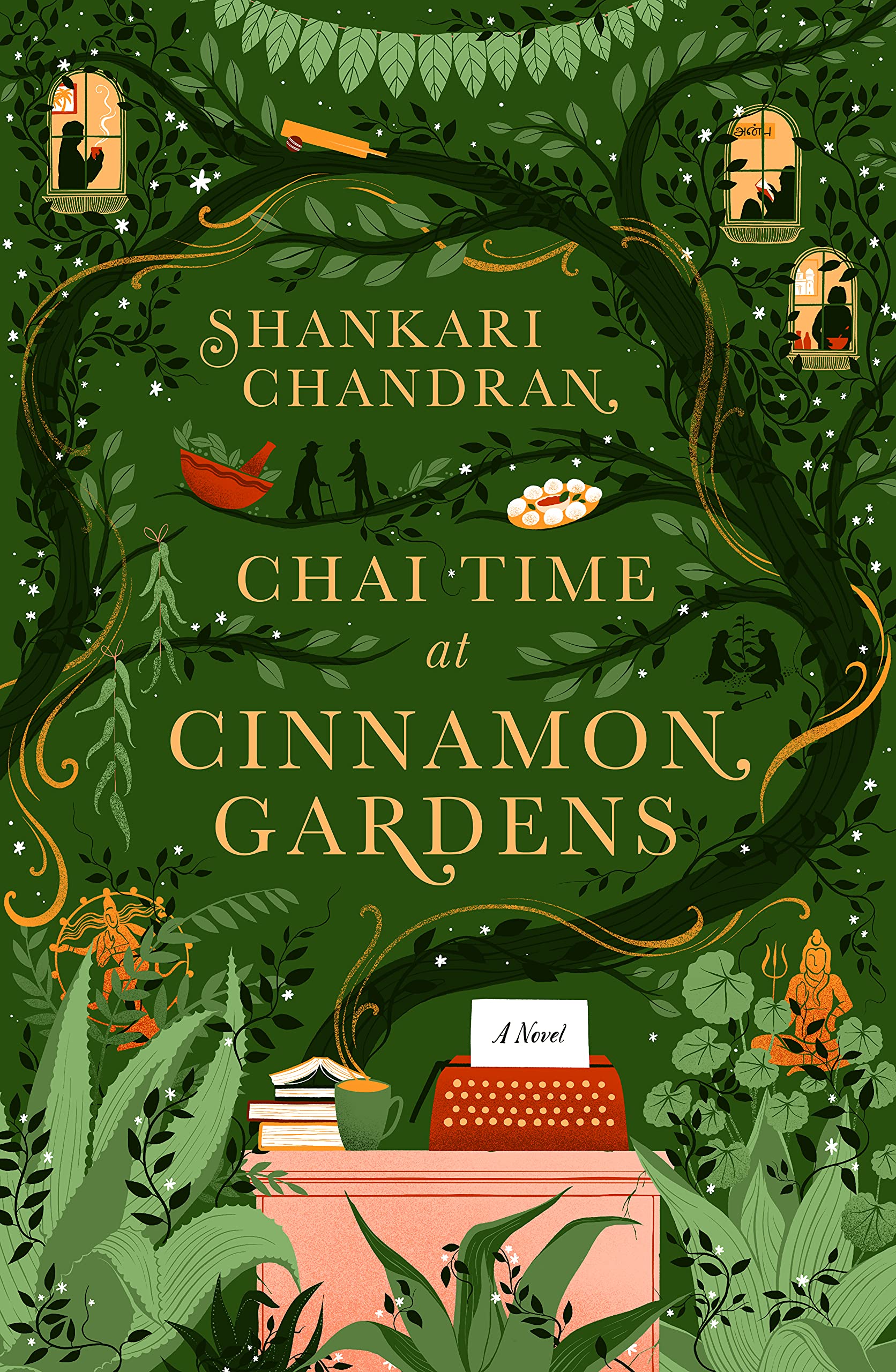
- Shankari Chandran, Chai time at Cinnamon Gardens (Ultimo Press): “What does it mean to be Australian in the 21st century? Shankari Chandran’s Miles Franklin shortlisted novel Chai Time At Cinnamon Gardens ponders this question with grace, humility, and confronting depictions of racism raging with Shakespearean levels of drama and tragedy…Chai Time at Cinnamon Gardens is an important and enthralling read. While it lacks subtlety on some occasions, the message it evokes is damningly clear.” (Olivia de Silva)
- Claire G Coleman, Enclave (Hachette): “Few works of speculative fiction have been considered for Australia’s most prestigious literary award, a symptom of the genre’s uneasy relationship to literary fiction and culture…In addition to its literary merits, Enclave is concerned with decolonising Australia’s stories about itself and its future. In the process, the unexamined racism still driving speculative fiction’s narratives of empire, progress, or pastoral idyll are also decolonised.” (Dr Natalie Collie)
- George Haddad, Losing face (UQP): “Ivan and Joey’s romance is what makes this an understated, lovely book with an episode of Special Victims Unit wedged inside. It’s the unusual parts of Losing Face that make it a remarkable Australian novel, not the parts ripped from the headlines.” (Pierce Wilcox)
- Pirooz Jafari, Forty nights (Ultimo Press): “Forty Nights is a debut work of literary fiction by Pirooz Jafari, who has fictionalised his own life story in this novel…Insightful, tender and whimsical, Forty Nights is a standout novel on this year’s longlist.” (Martine Kropkowski)
- Julie Janson, Madukka: The river serpent (UWAP): “While at times I struggled to understand how Janson’s first foray into crime writing had qualified for the longlist of the Miles Franklin, Madukka’s handling of issues of racism, climate change, drug use, and the ongoing First Nations’ struggle for land back and recognition ultimately makes it worthwhile. I’ll end with my initial thought; I actually think I’d really enjoy seeing this story adapted for the screen.” (Rani Tesiram)
- Yumna Kassab, The lovers (Ultimo Press): “I expected a modern fable underscored by Arabic folklore with more traditional, less didactic conventions. What I found instead was something far more poignant, raw and real…Irrespective of whether The Lovers is the recipient of the 2023 Miles Franklin, its nomination speaks to the state and tenor of contemporary Australian literature embracing the novel as an experimental form.” (Bianca Millroy)
- Fiona Kelly McGregor, Iris (Pan Macmillan Australia): “The blurb of this book asks a simple question: is Iris Webber innocent or guilty? At the end of some 430 pages, however, such a dichotomy feels terribly pale. It is the larger questions of history, reclamation, oppression, and humanity that mark McGregor’s work and transform the form of the historical novel into something alive and urgent, innovative and instructive. At its heart, Iris is (as Peter Doyle notes) a remarkable work of conjuring. With charm and grit, Iris conjures up Sydney of the 1930s, in all its grim glory. And Fiona Kelly McGregor, in a feat of sensitivity and skill, has conjured Iris Webber.” (Madeleine Dale)
- Adam Ouston, Waypoints (Puncher & Wattmann): “an anxiety dream of a novel… In a breathless spiralling narrative told (more or less) in a single feverish paragraph, Cripp [the protagonist] pinballs from one association to another, circling back to grasp at his bearings before bouncing off again into further tangents, digressions, curlicues and cul-de-sacs. In lengthy, slippery sentences, he details the history of Houdini’s failed record-breaking attempt, he dips into Victorian showmanship, the swirl of misinformation around the disappearance of MH370, the history of powered flight, Alzheimer’s disease and Australia itself…It’s a strange, ambitious, reckless thing. But it flies; it really flies…” (Vince Haig)
It is damning – but true to our time – that so many these novels address racism. But there are other subjects here too, plus a variety of forms, and, it seems, some bold new writing. I enjoyed these reviews, particularly because, as you’d expect, they critiqued the books as literary works, as content, and against the forms or styles they represent.
Shankari Chandran won the official jury’s prize with Chai time at Cinnamon Gardens – as most of you know.
Thoughts?
 Whispering Gums
I saw a tweet about this and took a quick look at it, but, not meaning to be mean, it’s not my idea of a shadow jury. It’s a bunch of people (whose credentials I don’t know) who’ve reviewed the longlist. It wasn’t clear to me whether they had read all (or at least most of) the books or not, as we were expected to in the shadow juries that I’ve been part of. One of the reviews I looked at said something about being disappointed about ‘her’ book not winning, which might mean that each person was assigned a book to review, i,.e. just one. If that was the case, it’s a bit like voting in a people’s choice award when you’ve only read one book.
Their process is not clear but it doesn’t appear to have included discussions about the relative merits of the books, and coming up with a winner.
It’s always good to have more people writing book reviews, but for me, a shadow jury is something very different to this.
I understand this Lisa, but as I think I said this was not the sort of Shadow Jury that we are used to, so I wouldn’t judge it on that basis. I saw that Tweet to which you refer – it was what inspired this post – and I saw that comment about “her” book (the Au), but I don’t think the tweeter was one of the Jury. I think she was saying that the book SHE would have liked to win didn’t, but have a look at this Jury.
I agree that what I found was not what I was expecting when I saw the tweet, but I did think the reviews were really interesting. I thought about researching each of the reviewers, but some will be students as they said, while some a clearly academics, and so in the end I decided to provide their names and let my readers research them if they’d like.
I don’t mind them doing it, in fact I welcome it and I think (if it was a student exercise) that it’s a good practice for students to have some experience of writing reviews. (Not to mention a cunning way of getting them to read some Oz Lit!)
Or maybe read anything at all. (I’m remembering what Tegan Bennett Daylight had to say in The Details, about the loss of a reading culture. Someone else quite recently (who? I can’t remember) talked about creative writing students who don’t read.)
I just don’t agree with them using the term Shadow Jury because it’s not. Juries make decisions. They’ve called it something that it isn’t, and then changed the definition to suit themselves.
Not a major crime. But those of us who’ve put in the hard yards on real shadow juries, as initiated by the late great Kevin from Canada can have a say about that, I think.
Fair enough … that sort of thing doesn’t really bother me. The first reviewer is a short story writer.
I have added links on most of the names which provides some background to who they are. A couple of others are PhD or MPhil students.
If a shadow jury proves one thing it’s that the whole business of awards, being ENTIRELY dependent upon UTTER subjectivity, is dubious. What one reviewer sees as superb another can see as mediocre, and that’s a fact. Imnsho, for a book to be satisfactorily judged, it needs to be put before .. oh, let’s say five juries, not a miserable one. Needs readers like you and Lisa and Bill and Carmel – lots of ’em. And as that will never happen owing to you all being too selfish to give up what teeny bit of your own time remains to you, I’m obliged to say that I don’t derive joy from reading awards results.
*chuckle* Thank you MR for including me in that august company of, ha-ha, selfish people!
And you are right, which is why the Shadow Jury as pioneered by Kevin from Canada was born. It was a way of gathering more opinions about the nominated books and giving more air to them.
It was also a very good experience as a jury member to have to read books not necessarily to one’s taste, and to debate with the rest of the jury about who the winner should be. Because as you say, that reveals the subjectivity. Occasionally Kevin’s juries would ‘call in’ a book that wasn’t nominated, that they should have been.
And because we all published our reviews of all the books we’d read, the process was transparent.
You are, as the Yanks say, a book reviewing fool !! [grin]
#NodsHead Yup.
It’s quite possible that UQ was not aware of “shadow juries” in the litblogging world? They have a different meaning in the legal world, which seems to be where the term originated, though don’t quote me. In the legal world their role is to report back their thoughts on a trial, as it is happening I think, to a legal team.
Haha M-R re us giving up our “teeny bit” of our time! We all appreciate your support!
I agree that Awards are subjective, which is why a lot of us particularly like the long and short lists because that’s a much better guide for readers about what’s worth checking out than one winner. I should say that most – though not all – judging panels/juries comprise a few readers. For some of the smaller prizes around, there can sometimes be one judge, but for the big ones there are usually a few and I think there’s often a lot of argy-bargying about the winner.
AND you. And Bill, too ! 😀
I have to agree with Lisa. It is an interesting list of topics , and as you say much about racism. It’s the first time I’ve heard a reviewer compare Robbie Arnott to the Tim Winton of Tasmania, the same words I used to describe him in my post about Limberlost.
Oh did you Pam … did I miss that? I’ll check … I’m just at the cinema waiting for Oppenheimer to start!
I am not sure the Winton comment was on a post. It may have been Instagram. I know I wrote it as I certainly think it. Hope you enjoy the 3 hours of Oppenheimer. Too long for me. Will watch it when it goes to streaming.
The length was off-putting but it was engrossing from beginning to end, in fact.
That is what I have heard. With the MS in my legs I start to cramp after 2 hours. I love streaming ince Mr P, the dogs and cats have all settled and there are no interruptions😃🌻🐦
MS in your legs? Oh, poor you Pam. But I see you have workarounds!
It isn’t bad at all but I need to move around. Also my Apple watch scolds me if I don’t stand enough. I don’t know what a workaround is🙄
So does Mr Gums’ watch – not Apple but similar!
I like it as it tells me when I need to slow down. Now if they just made a watch to kick me in the bum to get going I’d be good!🤪
That’s what his does too – Says Something like ”time to get moving” !
I would love to have the time to do thee sorts of things (regardless of the format). Years ago the Stella Prize did a ‘read along’ of the long-listed books which was convened on Twitter – I pretty much kept up with the reading schedule and loved taking part, and missed it when it stopped. Was a lovely way to engage with other readers and worked well because we were all reading the same book at the same time, so it kept the dialogue focused.
Yes, I know what you mean Kate … I’d love to do these things too, because the discussion can be so invigorating. As a retired person I should, theoretically, be able to, but I’ve come to hate the pressure of having to read a lot to tight time-frames.
I was on the aforementioned Kevin from Canada’s shadow jury for the Giller prize for about 5 years and it was a fun way to read an entire long list (although the Canadian books were difficult to get in the UK so I used to focus on the shortlist) with three other participants.
I have previously been on The Sunday Times/Peters Fraser & Dunlop Young Writer of the Year Award Shadow Panel 2016 , in the UK, which was arranged by the award sponsors. We met twice to discuss the books in person and had an adjudicator/moderator and everything to chair our discussions. I remember there was a bit of argy bargy to begin with but we were able to come to an unanimous decision in the end. It was as much a reading exercise as a debating one: you really had to be able to defend your opinion of a book. I found it a helpful and enjoyable experience.
Thanks for this Kimbofo. I certainly remember Kevin from Canada and your involvement in his Giller Shadow Jury. I admire all of you bloggers who have taken part in these juries.
l’m intrigued about that Young Writer Award – why did the sponsors arrange a shadow panel presumably in addition to the “official” panel?
I suspect it was just a marketing thing… they were very good at engaging with book bloggers. Every year they would hold a Sunday afternoon event at the Groucho Club exclusively for bloggers so we could meet the authors and get free copies of the books. They knew we’d all blog about it so I suppose it helped them spread the word for next to no cost. The 2016 shadow panel was the first… not sure they still do it because the sponsor has dropped out and it’s just the Sunday Times running it 🤷🏻♀️
Well good for them… I can’t help thinking that book bloggers’ influence has waned a bit with the rise of tik too, blogs, Instagram etc? I think we are still part of the landscape but a smaller part? Do you have any sense of this?
I think TikTok is the most popular form now but it’s only aimed at a particular age/demographic cohort. I think all these platforms/channels have a role to play and cater to different audiences and different needs… so it makes me mad when I see things saying TikTok is replacing all forms of book influencing because it’s most definitely not, it’s just another channel.
Yes, I agree… My question was more about the fact that the proliferation of platforms has reduced the influence of any particular one. I feel for the poor publicists,
Publicists have never had it so good! All those channels, all those eyeballs, they can segment everything according to age and income and goodness knows what else and really target the right people. And they can track it all and retarget accordingly. I think the days of having one platform (ie mainstream media) have long gone…
I now to your greater knowledge! Makes sense to me… so I’ll stop feeling sorry for them!
The reviewer lost me at ” Arnott is Tasmania’s Tim Winton” . One, is more than enough.
I like the idea, expressed in one of the reviews, but implied in a number of others, that second and third generation non-Anglo migrants are smashing the White ceiling. About time!
Fair enough Bill, but I think Tim Winton has a lot of heart. Why do we like to bring down our tall poppies? Still, I can understand it can be reductive to describe Arnott that way. It takes way his own agency.
And I agree that it is good and exciting to see such increasing diversity in our literary landscape.
Olivia’s review of Chai Time was spot on!
An interesting idea, thank you for sharing these. I have Hopeless kingdom saved to read for Brona’s AusRead month in October, my Readings order having sped over here beautifully!
Thanks Liz … that’s great re your Readings order.
I shared a picture of what I got in my State of the TBR post, and a link to Readings for others who are interested in Australian books.