Since 2013, I have devoted the Monday Musings that occurs in NAIDOC Week to a First Nations topic. This year I’ve chosen First Nations Australian non-fiction. I have previously written Monday Musings on biographies, autobiographies and memoirs by First Nations writers, but what about other sorts of non-fiction?
Before I get to that though, a bit about this year’s NAIDOC Week theme, which is “For our elders”. The website says that
Across every generation, our Elders have played, and continue to play, an important role and hold a prominent place in our communities and families.
They are cultural knowledge holders, trailblazers, nurturers, advocates, teachers, survivors, leaders, hard workers and our loved ones.
And they say more, but you can read that at the website. I will just add that it was thrilling to watch the 2023 NAIDOC Week Awards on television on Saturday night and see Aunty Dr Matilda House-Williams win the Female Elder of the Year award. She has been an absolute force for her people – and for reconciliation – in my city for as long as I can remember. She was our city’s go-to Welcome-to-Country person way back when that practice started. She was involved in the creation of the historic (and still existing) Aboriginal Tent Embassy. And so much more. These days it is often her son, Paul, who does Welcome to Country, as he did last month at the 2023 ANU Reconciliation Lecture. However, accompanying him on stage was mum, Aunty Dr Matilda, and his son. It was truly special, as they performed a song for us as part of the Welcome. Anyhow, you can read more about her on the NAIDOC Awards site.
Now, today’s topic. There’s a wealth of literature to choose from so my aim here is to give some sense of the breadth of recent non-fiction writing by First Nations Australian writers.
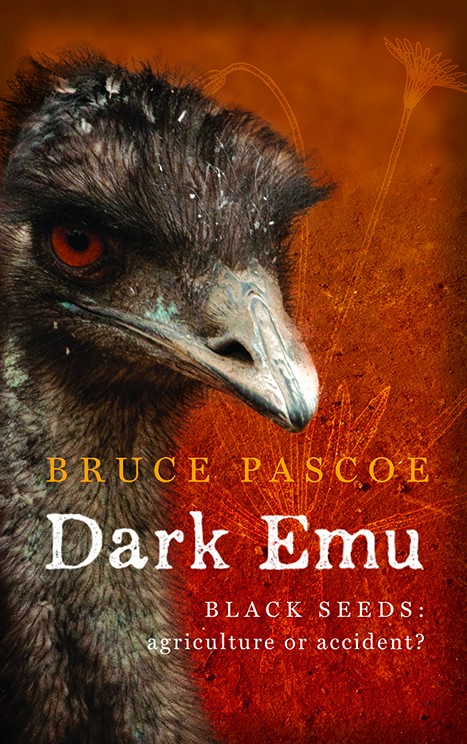
Probably the best known non-fiction book, today, by a First Nations writer is Dark emu (my review) by Bruce Pascoe. It argues for us to rethink our understanding of First Nations culture, specifically to appreciate that pre-colonial Aboriginal Australians were more than hunter-gatherers as they had been traditionally described. The book won several awards, has a younger people’s version, and was adapted into a ballet by Bangarra Dance Theatre. It has also had its share of controversy, but overall it has played a significant role in changing people’s attitudes to First Nations history and culture.
Pascoe’s book, however, is not the only First Nations book to address First Nations knowledge. Indeed, this seems to be a growing area of interest. Some of these books aim primarily to explain First Nations culture to others but most also share knowledge in the belief that it will help all Australians to better understand and thus more fully engage with our country. I’ll list a few of these, in alphabetical order by author:
- Paul Callaghan and Uncle Paul Gordon (2022). The Dreaming path: Indigenous thinking to change your life
- Gay’wu Group of Women (2019). Song spirals: Sharing women’s wisdom of country through songlines (Denise’s review)
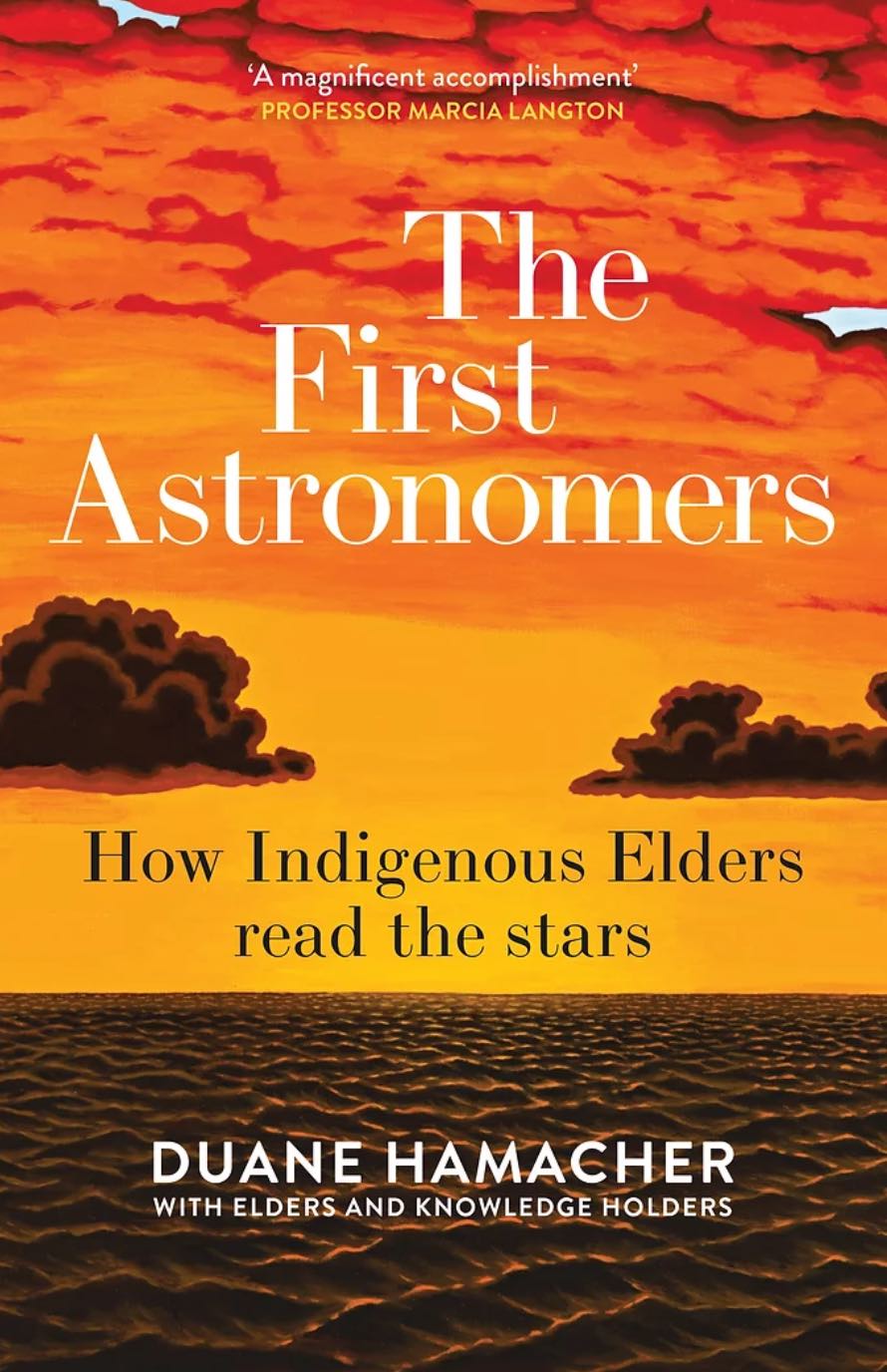
- Duane Hamacher with Elders and Knowledge Holders (2022). The first astronomers: How Indigenous elders read the stars
- Terri Janke (2021). True tracks: Respecting Indigenous cultural knowledge and culture (Lisa’s review)
- Marcia Langton and Aaron Corn (2023). Law: The way of the ancestors (in the First Knowledges series (on my TBR)
- Katie Noon and Krystal de Napoli (2022). Astronomy: Sky country (in the First Knowledges series)
As you can imagine, it is difficult to categorise the non-fiction books I’ve selected into subject areas, because there’s so much overlap, but here are a couple books that are primarily history:
- Larissa Behrendt (2016). Finding Eliza: Power and colonial storytelling (Lisa’s review; still on my TBR)
- Rachel Perkins and Marcia Langton (2008). First Australians: An illustrated history
First Nations historians are working in academia, and producing important texts, but I want to focus here on books that are accessible to the general reader.
Many First Nations writers have written what I would call hybrid memoirs, books which in their case combine memoir with sociopolitical commentary. By definition, memoirs tend to have a specific focus, like Biff Ward’s Third chopstick (my review) in which she, as a Vietnam War protester, later talks to those who fought to understand their experience, and Carmel Bird’s bibliomemoir Telltale (my review) which examines her life through the books she’s read. However, with many First Nations hybrid memoirs, memoir elements are used to illustrate their exploration of issues like colonialism, racism, social injustice, dispossession and reconciliation. One of the best known writers in this area is Stan Grant whose Talking to my country (my review) and, most recently, The Queen is dead (kimbofo’s review), explore contemporary Australia with reference to his own experiences along with his extensive knowledge of history and philosophy.
But, he’s not the only one. Some others include:
- Claire G Coleman (2022). Lies, Damned Lies: A personal exploration of the impact of colonisation (Bill’s review)
- Inala Cooper (2022) Marrul: Aboriginal identity and the fight for rights
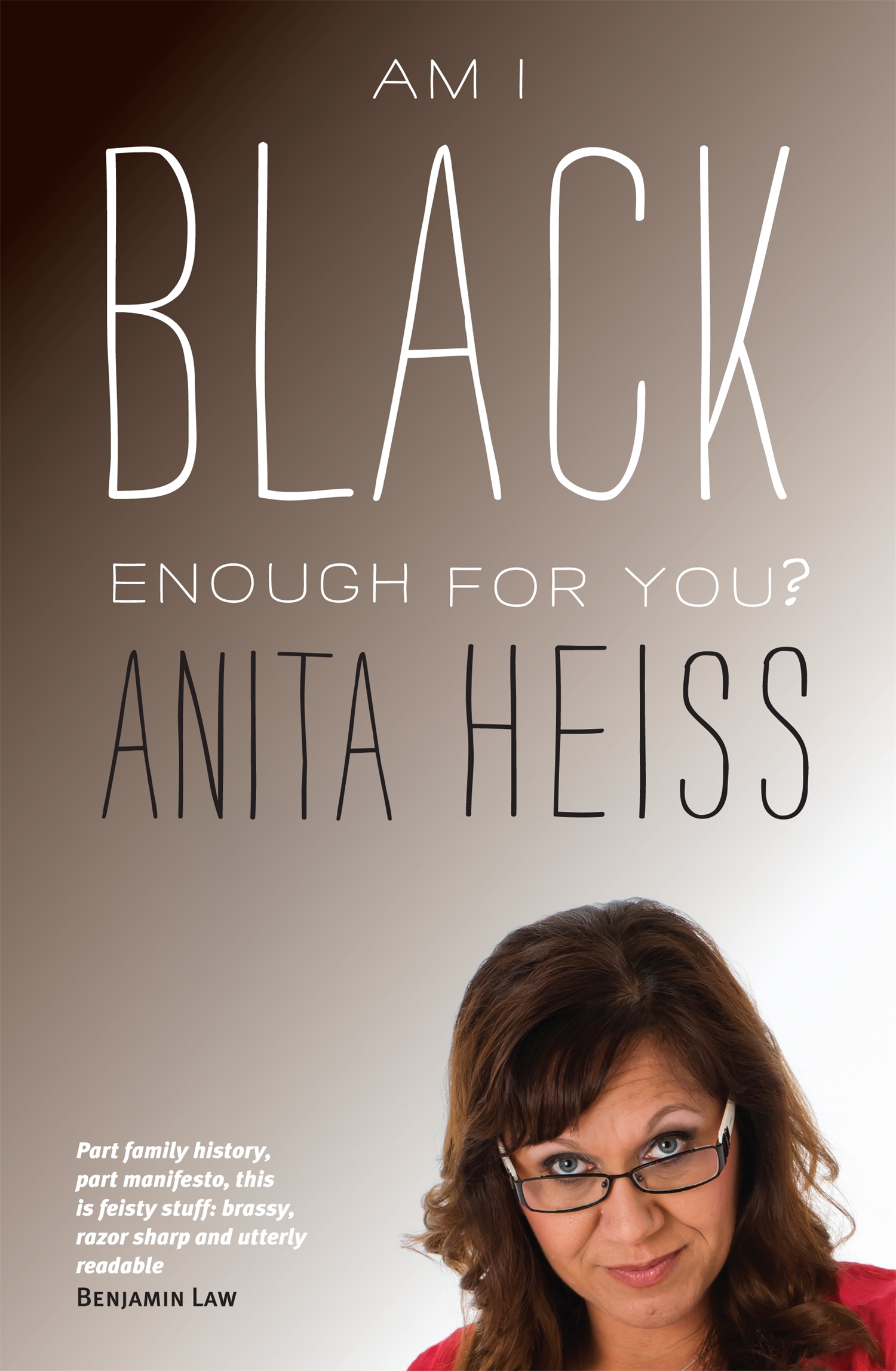
- Anita Heiss (2012). Am I black enough for you? (my review)
- Chelsea Watego (2021). Another day in the colony (Bill’s review; on my TBR)
For a good list – with reviews by some of your favourite litbloggers – of First Nations Australian nonfiction, check out Lisa’s page dedicated to this topic.
Are there any First Nations non-fiction books that you’d like to recommend?
 Whispering Gums
Thanks for the mention, Sue… it’s wonderful to see the explosion in First Nations writing across all genres.
One of the best from my reading is Our Mob Served, not just because it covers the topic of First Nations service in the Defence Forces, but also for its excellent explanation of the methodology they used which contributed a great deal to my understanding of some of the silences in the historical record.
Oh yes, I remember your reviewing this one Lisa. Would have been a good one to include.
Your usual display of thoughtful knowledge.
Do you ever lie in bed with your head spinning ?
Right now, with some tinnitus, yes M-R!!
I’m lucky, I suppose: I’ve had tinnitus for so long that I’m only aware of it in totally peaceful environments – of which there aren’t a plethora around ..
I’m with you MR, I can’t tell my tinnitus from the noise made by my truck, and for a long time was unaware I had it. Even at night I thought it was just traffic noise through my open bedroom window.
This is encouraging Bill and M-R … though I’m hoping it’s temporary due to earwax. The next few days will tell. I’m expecting though that I’ll end up with it.
I inherited it from my revered mama, Bill, like the other physical nastiesI have, and I knew it was coming. Feared it, but in the end it was perfectly tolerable, – thank all the gods ! 🙂
I hope for a reprieve but think I’ll end up with it – and, if I do, I think from this experience that it will be manageable (compared with other conditions due to ageing.)
I promise you it will be, ST !!! 🙂
Thanks M-R. I’ll hold you to that.
I’ve just been given a freebie by Audible, called Sand Talk (sorry I can’t see, can’t copy the author on my phone) which I think is about Indigenous ways of thinking.
I still think Dr Watego’s Another Day in the Colony is the most important
Sand talk! That’s the one I was trying to find yesterday Bill. I had in my head Sand song – but that’s a ballet by Bangarra Dance Theatre! Darn it. I had planned to read Watego’s book this month. If I can find it in my piles (my First Nations TBR pile) – is it in my piles or is it still in a box, I still might!
Thank you for reminding me of Am I Black Enough for You which I have added to my Readings basket along with Sand Talk (shipping amount is still staying the same!). I would add Beyond the Rabbit Proof Fence and Anita Heiss (ed.) Growing up Aboriginal in Australia, if I may dare to do so from over here in the UK (but of course remaining interested in the atrocities my nation imposed on the world and their restitution).
Thanks Liz – they are good additions and you are always welcome to contribute. I didn’t mention those though because I was avoiding too much memoir as I’ve done a separate post on those.
Oh, I’m sorry, that makes complete sense.
No need to apologise … I’m glad to have non-Aussie bloggers engage with the issue!
I have a book by Heiss on my TBR, added recently. I think it’s new? It’s interesting that there were a couple of titles that mention astronomy. I’d be interested in the law book, probably because that is the direction my brain is going after recently finishing Leviticus.
Yes, Melanie, I was interested in that too.
Ha ha re law and Leviticus.
Re Heiss, is it her novel “Bila Yarrudhanggalangdhuray” Or the new anthology “Growing up Wiradjuri”
Oh, it’s Growing Up Aboriginal in Australia, which she edited.
I wondered if it were that one … a good one to read I reckon because you get a wide range of experiences in it.
It’s the only one my library has, which is why I chose that one in particular.
I see that Bill has already mentioned Sand Talk.
I’ll be talking more about the First Knowledges series next month, as they are about to bring our younger readers versions of the books. I’ve read the first one, Songlines.