Last week, in my Trove Treasures series, I shared some ideas published in the 19th century arguing for reading novels. Now, I am sharing some from the first decades of the 20th century. The articles range from 1903 to 1928, with many, again, coming from London.
Diversion and instruction
Two papers – Brisbane’s The Telegraph (18 December) and Perth’s The Spectator (31 December) – reported in 1903 on the annual address given by Professor Dicey to the Working Men’s College in London. Dicey argued that the main benefit of novels was “to take a man out of himself — to afford some relief from the petty and tiresome thoughts of every-day life by substituting a world of larger and more varied interest”. (We must forgive him and the others below their gender specificity – I suppose.)
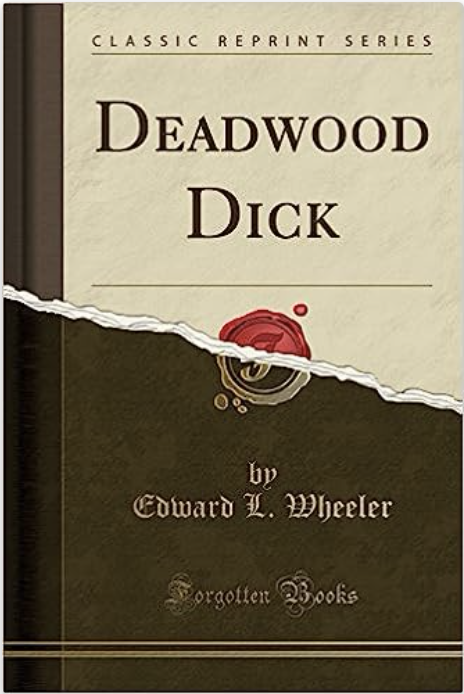
Interestingly, The Spectator says, and this seems to be its own reflection, that it’s not always “the highest class that serves this purpose best” and goes on to share a variety of novels from penny novelettes, like the Deadwood Dick novels, to Scott, Thackeray and Balzac. This idea of novels as valid – indeed useful – recreation is refreshing. The Spectator goes so far as to say that
That degree of mental absorption and excitement to be found in works of fiction, fine and trashy alike, and more often in the trashy ones, has become part and parcel of the home life.
But, this sort of reading must not be “indulged too far”. The Telegraph reports a month or so later (8 February) that Prof Dicey does comment on the issue of quality, making this recommendation:
take good care that you read novels of a good kind — each good of its kind. If you like a detective story take care you read a good detective story, and think about what you have read.
Dicey also believed – and here we are in more familiar territory – that novel reading provides “an introduction to life and thought”. This idea though, says The Spectator, is one few – including itself – “will be prepared to admit”. It fears that novels might teach readers what to expect in life but not how to meet it.
Moving to 1905, we have another Englishman’s point of view, this time Sir Richard Henn Collins*, Master of Rolls in England. The Armidale Express and New England General Advertiser (7 February) reports Sir Richard’s argument that much useful knowledge can be acquired through reading fiction. Indeed – are you listening Bill – he argued for the value of the historical novel, saying, “that he himself had won a scholarship mainly through having imbibed French history by reading Dumas’ famous Three Musketeers and other French novels of a similar class”. Even I think that might be going a bit too far – as does our newspaper. It argues that while this might be an appealing way of learning, the fact is that the public service and many professions require the passing of examinations. This means that the “the greater part of the schoolboy’s career must necessarily be occupied in the process of stuffing with dates, syntax rules, and other learned matter. The novel as an educator cannot, therefore, be recommended as an essential part of the ordinary public school curriculum”.
A year later, on 16 March 1906, The Hebrew Standard of Australasia, picks up the argument favouring the reading of novels. It suggests that “many people, especiallv men between twenty-five and forty-five, men in responsible positions, serious people engrossed by the details of a large business, consider novels simply as a kind of dross”, but this, it argues, is a “mistake”:
To read a good novel and read it with undivided attention is a means of instruction and education, which very few men below fifty can afford to entirely neglect. We have met not one, but many business men, excellent, successful and commanding our admiration in a very high degree, in whose manner of conducting business we have noticed defects, not to say faults, which most probably, would never have occurred if they had been in the habit of reading, now and then, a good novel, and had been able to extract from that reading the good which it can yield [my emph].
It then spends some time elaborating exactly what businessmen can learn from novels. It’s a thoughtful article, well worth reading.
Varying the diet
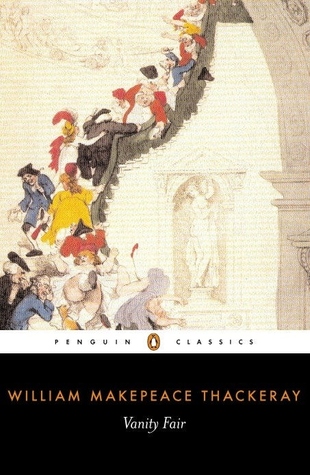
Support for novel reading continued in the 1920s, but I found some qualifications. For example, Leeton’s The Murrumbidgee Irrigator (20 March 1923), shares an argument put forward by Thackeray, half a century previously, “that all people with healthy literary tastes love novels” but “that overindulgence in them in youth spoils the taste for them in after-life, even as a schoolboy outgrows his love for pudding and jelly”. He goes on to discuss the truth of this in his era, particularly regarding those decadent modern novels which cannot hold his attention. Yet, speaking for himself and his fellow-sufferers, he admits that, regardless of having over-indulged in their youth, they can still “find a corrective in those romances which used to entrance us — ah! how many years ago”.
And in 1928, Brisbane’s Daily Standard (17 March) shared an argument from London’s Evening Standard that “the habitual novel-reader should sometimes vary his mental diet”. Indeed, the Evening Standard suggests that this is important given that the other works of literature, which preceded the novel and continue alongside it, “will no doubt be still vigorous when the novel has had its day”. Little did it know!
It then goes on to say something rather interesting:
There is no good novel which is not veiled autobiography, either from the emotional or from the intellectual standpoint; but a writer can under the protection of the veil, be franker than he could possibly be in a ‘Confession’ or ‘Apologia pro vita sus.’ There is perpetual complaint of the indecent novel; but in a sense all novels are indecent —that is, they reveal thoughts and feelings that the writer would never dream of exposing to a company of even close friends.
It says more, arguing that there is value in wide reading – hard and low-brow, fiction and nonfiction – but I’ll leave you with its closing remarks because they tickled me:
it is neither polite nor grateful to many excellent modern writers in non-fiction genres to talk as if ‘books’ were only another name for novels.
So there!
* Collins was the judge in the Wilde vs Queensberry libel case.
 Whispering Gums
“If you like a detective story take care you read a good detective story” .. How the devil do I do that ?
I shall pass this on to Audible Customer Service next time I return a ‘book’ for credit. 😀
Haha M-R you do that and tell them
Prof Dicey said so!
Thank you for the mention, though I’m not sure the argument was persuasive. Leaving aside learning French history from the Three Musketeers, too much Hist.Fic has a concealed agenda, generally, in the case of old novels, the promotion of militarism, nationalism and conservative forms of government, particularly royalty.
Haha yes, Bill, I didn’t find that particular argument one to recommend! And fair point about some Hist Fic, particularly “genre” Hist Fic. Other Hist Fic can have mor explicit agendas of course about issues like sexism, racism, etc.
” The Murrumbidgee Irrigator” … That has to be the best newspaper standard I’ve ever come across.
It is startling that now we have immediate access to information, making it easier to turn out noses up at “trashy” fiction, and the result is we’re all anxious about world events we can’t control.
Veiled autobiography seems a stretch to me. The writer leaves an out with the emotional arm of the disjunction, but at the cost of meaning. From what emotional standpoint is The Great Gatsby or Wise Blood or The Age of Innocence autobiographical? I think that the notion of veiled autobiography has given a lot of scholars an excuse for wasting time, their own, that of anyone who knew their subjects, and that of their readers.
Historical fiction has its axes to grind, but perhaps it is better to have learned of e.g. Prestonpans from Sir Walter Scott than not to have learned of it. One is more likely to follow up in the former case.
Thanks George. Yes I thought the autobiography statement was a bit black and white. Some fiction is of course but to imply all is a stretch. I mean you could I suppose argue that any work is autobiographical because it presumably expresses something important to the author but that’s pretty weak!
And yes, I agree with your point re historical fiction. It does have a place. I just ask that readers understand its limits (as we should when we read history too.) We should always think about form when we read, n’est-ce pas?
I think there is still a prejudice against reading fiction. Probably always has been (Orwell says somewhere that people were often rather proud of never reading novels).
I will own up to my own prejudice in that I find it harder to get excited about new fiction as I get older. I used to be very interested in the shortlists for the Booker prize instead of my current sense of jaded ennui. That makes me sad.
That’s interesting Ian. Do you think that’s more a male thing?
Age though is playing havoc with my reading, I’m feeling. I still love fiction but I am feeling this pull to nonfiction. I’ve always liked nonfiction but there’s this little pull to it at the moment that I am finding interesting. I’ve always liked essays.
Question is, is you current jaded ennui a long term change but just a little hiatus?
People have been writing the novel off for decades so its probably fairly temporary – I know I could never completely give up on fiction.
I do think that perhaps over the past few decades non fiction has greatly improved with past vogues for popular science or literary biography producing the problem of far too many books to try to keep up with!
Oh yes I think you are right re nonfiction Ian. I put it down to the, what shall I call it, the “creative nonfiction” style of writing. That is to the use of more fictional narrative techniques to writing nonfiction without losing the focus on facts or information.