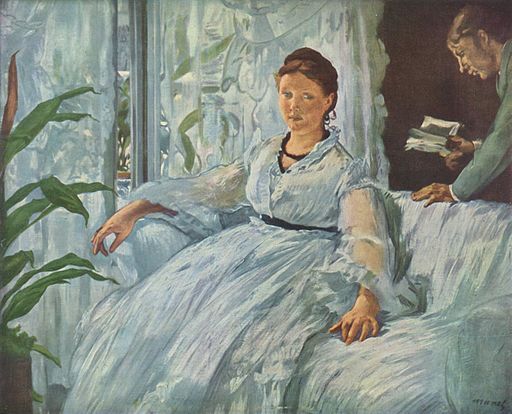
Continuing my Trove Treasures series, I am turning this week to some of the discussions I found about the value of novel-reading. Three months ago, I shared some of the arguments made against novel-reading, but in fact, in the papers I found, there seemed to be more arguments pro such reading. So much so that I’m planning two posts – one on the mid-to-late 19th century, and the other on the beginning of the 20th century.
Today’s 19th century articles range from 1867 to 1899, and they traverse the topic from some interesting angles.
Prose vs Poetry
The earliest article was published in the Geelong Advertiser, on 7 May 1867, but appears to be from London’s Saturday Review. So, not Australian-written but published here. Several of the articles I’ll discuss comment on what reading novels can teach us, but this one did surprise me. It commences:
As every novel turns upon love and matrimony, the first effect of universal novel reading must necessarily be to familiarise the young imagination with the idea of both.
What’s this assumption that “every” novel is about love and matrimony? Was this so at the time? Well, not “every”, because then our writer offers exceptions. Regardless, the writer recognises that novels aren’t the means by which people become aware of the “matrimonial adventures to come”. Fairy tales, for example, contribute to the construction of “masculine and feminine ideals”. What is “left” for novels to do is “to train and develop an instinct which is already in existence in the germ” but, says our writer, this knowledge must “ripen gently”. Indeed,
premature cultivation tends to every species of social mischief. Nobody ever yet knew a very sentimental boy, unless indeed he came under the exceptional category of a genius, arrive at much good; and though to pass the same general censure upon sentimental girls would be hard upon the sex; it may be believed that women who go through life most happily whose capacity for sentiment has flowered late.
The language is convoluted but I think you get the gist. Basically, the article claims that sentimentality stimulates imagination at the expense of observation:
Sentimental boys and girls seldom notice nature, keenly, and with the eye of a student or an inquirer. They get into a lazy habit of liking sunsets, and deriving a number of prematurely solemn impressions from them; but they have no healthy interest in butterflies, birds nests, and fossils.
The problem, according to the article, is that this sentimentality – that comes, remember, from understanding “matrimonial adventures” too quickly – results in high sensitivity to natural phenomena but limited understanding of how it all works. For these reasons, the writer does not greatly like poets – particularly Byron. Wordsworth is acceptable, because the writer believes his “sentimentality” is that “of a middle-aged genius, not of an overgrown and morbid boy”.
Was this a common view of romantic poetry? The article then describes the value of novel-reading:
a fairly good novel presents young minds with a better and more correct notion of the relations between men and women than they would be likely to form if left to their unassisted efforts. It does away with a good deal of unnecessary mystery in which young people are inclined to clothe the idea of love. Marriage is not what it appears to be in most romances, but it is more like the literary pictures than it is like the vague and hazy conception which emanates from the youthful brain. Fiction in prose is truer to nature than fiction in verse, and novelists may be trusted more than poets.
Take that, poets! The reason, says our writer, is that “prose fiction is generally written by less morbid people”. The article then discusses the sorts of people who write novels. Its point is that novelists (aka “literary men”) mix in the world while poets live in the closet or within garden walls. Surely a generalisation! Anyhow, then he gives a recommendation – Mr Trollope. Our writer is concerned about
flirtation with married women becoming an unnecessarily frequent ingredient in his literary conversaziones; but life is life, and it is probably difficult to produce monthly humour without a little impropriety. On the whole, the bent of his pen is to sketch love and matrimony as healthy domestic pleasures, and not to depict them in the artificial colours in which diseased imaginations dress them.
Basically, Trollope is a good example of the “better class of novel writers” and is much better for the English youth than French romance! I’ll leave you with that thought and move to the 1890s …
A practical education
The two articles from the 1890s were published in Queensland’s Darling Downs Gazette (17 December 1890) and Sydney’s Sunday Times (26 February 1899). The first article quotes two British men on the value of novel reading. The first was Sir Edward Clarke QC MP, who, opening a “free library” in London, said that reading novels “was not a mischievous but a good thing”. “Good novels”, he believed, contain “elements of history” that are more valuable and easier for readers to digest than can be found in other books.
The other was the Scottish poet, biographer and translator, Sir Theodore Martin, who was presiding at the annual meeting of another free library, this one in Wales. That year, 2,492 novels had been read versus 811 of everything else combined. This disproportion was similar in other libraries, and Sir Theodore had some qualms. He didn’t criticise “reasonable indulgence in the delights of good novels and romances” because they widen our sympathies, and, he hoped, they inculcated a taste for reading which might lead readers to more demanding studies in areas like natural history, biography, poetry, and science. (He, clearly, saw poetry as having a higher value than prose fiction!) For Sir Theodore, reading fiction does not leave the lasting impression or give the satisfaction that other reading does.
The 1899 article was titled “The reading of novels and the morals of the public” and came from Women’s World, edited by Vivienne. Vivienne’s interest is in whether reading novels is “a judicious measure of education” and whether it should be encouraged. Her response? She failed to see that such reading caused “any great harm or moral wrong”. Indeed, she argued that novel reading provided “a kind of practical education”.
Novels illustrate the mechanism of the world at large, and show the various points of the machinery of life. They tell of every-day episodes; of the romance of days gone by; and, in fact, deal with life in all its forms, from the lowest to the highest grades of society, and from the earliest ages to present times.
Sounds right to me, but the passing comment at the end did stop me: “of course, children should not be allowed to read novels, for obvious reasons”.
So, there you have it … there were those who viewed novel reading positively, even where they had some reservations. This is a tiny sample, but you can see some progression from the idea mid-century that novels were primarily about marriage to the end of the century when they were seen to have broader relevance to understanding the world. I’ll be interested to see if things change in the next few decades …
 Whispering Gums

“The language is convoluted” !!! – there should be some kind of hyperbole for ‘convoluted’ so that I could use it here: I had to read this several times before more or less understanding.
(Off-topic note: I recently listened to a book wherein the narrator read out “hyper-bowl”. I would very much like to’ve been able to chuck it on the floor.)
Haha M-R, I did too. I worried at times that I didn’t quite get the point but I hope I did.
Hyper-bowl indeed. Pronunciation is going to the dogs, but what can we di? This is how language changes, for better or worse!
[grumble grumble ..]
There are still some people who seem to think that poetry is ‘nobler’ than prose.
I say, each to her own, and mine is the novel.
(I’m not downsizing, but I have just had a big cull of my NF shelves. Heaps of books I bought because they sounded interesting at the time and now I know I’m never going to read them. This has given me space to shelve my literary biographies properly so that I can see what I’ve got. They look beautiful!)
Ah, but are they arranged in author order or subject order ?? 😉
Alphabetical order by the subject’s name, Martin Boyd next to Barbara Baynton; Randolph Stow next to John Scott…
A woman after my own heart !!
That’s the librarian way for biography! It’s how I do it too.
Well done Lisa… It’s hard (even with books you haven’t read) but it’s liberating too sent it to let other books breathe.
The only sensible way!
Agreed. Usually for me the author is paramount but in this area, while they are important its usually the subject you remember, send then maybe the author if it’s Rowley, Niall, et al.
My first two jobs out of school were in libraries: I even remember some Dewey codes !
Great first job I think M-R. What’s not to like about spending all day with books and readers even if some tasks are boring.
i just adore the fact the novel has been so contentious! what a history. and for the love of god, keep them away from children! haha
Yes, I do too “allfor”! You get to learn so much about values at certain times. And of course any publicity keeps them in front of the public which is a good thing.
I must say I read novels to learn about relationships and matrimony – now.
I wonder if my marriages might have lasted longer if I wasn’t reading so much SF in my 20s and 30s.
What your reported articles don’t say is that free schooling only became universal in the 1870s (from memory, but earlier in Scotland) so that novel reading was a decided improvement on the alternative – illiteracy. Which links to the Free Libraries (and Mechanics Institutes) which I think were to encourage working class reading and self education.
I’m certainly interested in novels about that Bill, but its not the only topic I like to find in my reading.
Good point re education and literacy.
Wait, was Bill expecting his wife to be a space alien, but she just wouldn’t conform? I tease, Bill…!
The nerds who wrote (and read) SF had a very stereotypical idea of women, very 1950s. Enough said.
Too bad you didn’t read more Conan the Barbarian, because Valeria is AMAZING.
I took a few continued learning classes when I worked at the library, and I love how there is such argument now about whether libraries should loan videogames, but for some reason it just seems “silly” to think that not that long ago people thought libraries were for educational purposes only, which means fiction was not welcome.
Thanks Melanie… Fortunately libraries have moved on discontinue to do do, eh? It’s great to. Seeing these issues, like the video games one, discussed in the public arena us do good for the health of libraries isn’t it.
There has always been the problem of do do in the children’s section
Haha, Bill.
I think I understood most of that….!