It’s April down under. Actually, it’s April everywhere – I know that – but, down under, April is autumn, not spring. All those Easter cards with baskets of pretty flowers, not to mention eggs with their hints of fertility and birth, have always seemed out of place. Gradually, though, we are making this time our own. Easter Bilby anyone? And now, with that important message off my chest, let’s get onto this month’s Six Degrees. As always, if you don’t know how this meme works, please check meme host Kate’s blog – booksaremyfavouriteandbest.

The first rule is that Kate sets our starting book, and for April it’s a debut novel I’ve never heard of – so clearly I haven’t read it (yet again). It’s Julia Armfield’s genre-bending, from what I can see, Our wives under the sea.
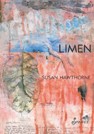
Armfield’s novel is apparently a queer story about a relationship that starts to fall apart after one partner returns from “a deep-sea mission that ended in catastrophe”. I thought a lot about where to go from here, riffing at first on Armfield to Aussie theatre director Armfield who has staged several novelistic adaptations – but that was getting a bit tortuous, even for me. So, I’ve gone with something a bit watery, albeit concerning a flooding river rather than the sea, Susan Hawthorne’s Limen (my review). It’s a verse novel about two women on a camping holiday whose safety is threatened by a rising river, but while there is suspense and tension, there is more here than a simple adventure or suspense story.
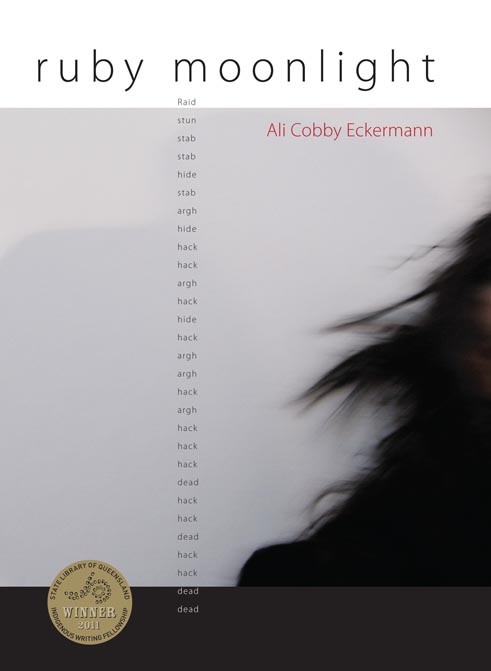
From here I’m linking on form, because I love to give my favourite verse novels a little push when I get the opportunity. I’ve posted on a few verse novels over the years, but the one I’m choosing is First Nations’ writer, Ali Cobby Eckermann’s Ruby Moonlight (my review). A work of historical fiction about a young Indigenous girl survivor of brutal massacre, this book has a subtlety that I found impressive.
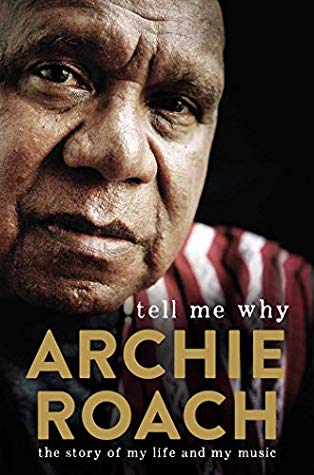
Next, I’m staying with First Nations’ writers, but moving to a memoir and linking on name. In Tell me why (my review), Archie Roach pays great compliment to his late wife Ruby Hunter who provided much of the stability he needed to turn his life around and become the success he now is.
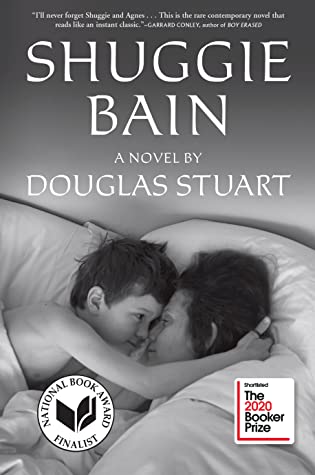
One of the main issues Roach confronted, and for which Ruby Hunter’s support was important, was alcoholism. For my next link, I’m returning to fiction, and Douglas Stuart’s Shuggie Bain (my review) in which alcoholism plays a significant role in the poverty-stricken life that young Shuggie lives.
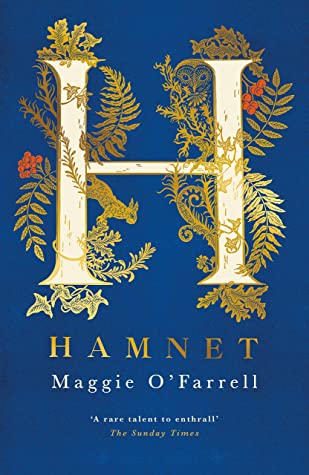
And now, I’m drawing on this very meme to provide my link. Shuggie Bain is one on the many many starting books I hadn’t read at the time of the meme. It is also one of the very few that I read some time after the meme. Another book in this category is Maggie O’Farrell’s Hamnet (my review). If these two books are any guide, I guess I really should try to go back and read more of those unread starting books!
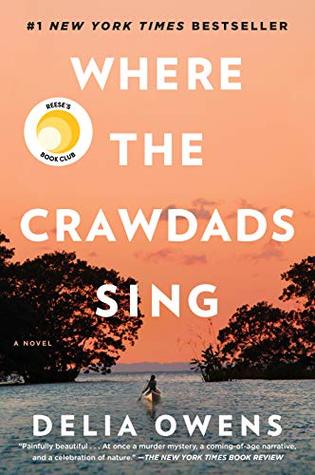
My final link is another one personal one. Hamnet was not one of my reading group’s Top Three picks at the end of last year, but it was one of our two highly commendeds. The other highly commended was Delia Owens’ Where the crawdads sing (my review) and so I’ve chosen it for my last link. Not a perfect book, by any means, but a good, heart-felt story.
And there, I am back to four women writers and two men in my links. I could perhaps argue that we’ve come full circle given the starting book and my last one are set in watery domains. The authors all come from English-speaking countries – the United Kingdom, Australia, and the USA.
Now, the usual: Have you read Our wives under the sea? And, regardless, what would you link to?
 Whispering Gums