Monday musings on Australian literature: Australian ghostwriters

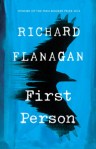
John Friedrich, Codename IagoIf you’ve read my blog recently, you’ll know exactly what inspired this post. Yes, Richard Flanagan’s novel First person (my review), which was inspired by his experience of ghostwriting Australian fraudster John Friedrich’s memoir. The book was called Codename Iago.

You probably all know what a ghostwriter is, but just to make sure, here’s the definition from the editors4you blog:

A ghostwriter is a writer who writes books, stories, blogs, magazine articles, or any other written content that will officially be attributed to another person – the credited author.

So, how much do you know about Australia’s ghost-writers? Did you know, for example, that crime-fiction bestseller Michael Robotham once made his living as a ghostwriter, or that published author Libby Harkness currently spends more time on ghostwriting than her “own” writing? Did you know that Anh Do’s best-selling memoir started out with a ghostwritten manuscript? Or that the two biographies of Hazel Hawke, Hazel: My mother’s story and Hazel’s journey, were written by her daughter, Sue Pieters-Hawke, with the assistance of ghostwriter Hazel Flynn. As I started to delve into this shadowy – ghostly, let us say – area, I uncovered a fascinating world of professional writers who help people who have stories to tell to, well, tell them.

My focus here is Australia, for obvious reasons, but I’ll be including information from further afield, starting with an article in The Guardian from 2014. Titled “Bestselling ghostwriter reveals the secret world of the author for hire”, it’s about English ghostwriter Andrew Crofts who at the time had written 80 titles over 40 years, and sold some 10 million copies, but mostly under “more famous names”. The article, which you can read at the link, names many of them. That year, he published his “own” book, Confessions of a ghostwriter.

Rober McCrum, the author of The Guardian article, says that the term

was coined by an American, Christy Walsh, who set up the Christy Walsh Syndicate in 1921 to exploit the literary output of America’s sporting heroes. Walsh not only commissioned his ghosts, he imposed a strict code of conduct on their pallid lives. Rule one: “Don’t insult the intelligence of the public by claiming these men write their own stuff.”

American ghostwriter David Kohn was interviewed by the ABC Book Show in 2009. He said it suited introverts like him. He doesn’t have to go to book signings or do promotional tours!

Not just memoirs

McCrum notes, as we probably would all guess, that the types of works best known for being ghostwritten are the “misery memoir, sporting lives and celebrity autobiography”. We have examples of all of these in Australia.

Jelena Dokic, UnbreakableSporting lives, for example, to pluck out just a few Australian examples, include footballer Wayne Carey’s The truth hurts, which was cowritten with Charles Happell who is credited on the cover; cricketer Brad Haddin’s My family’s keeper which Hazel Flynn “helped” write though she is not on the cover; and tennis player Jelena Dokic’s Unbeatable (my report) which was cowritten with Jessica Halloran who is credited on the cover.

However, another area well known for being ghostwritten are the “how-to” books, including cookbooks. Google “ghostwritten cookbook” and you’ll find articles galore. And, apparently, as I found on a comprehensive American website on ghost-writing, medical ghostwriting is a big thing. I also found references to ghostwriters doing fiction, too. Fascinating, eh?

Crediting ghostwriters

Sue Pieters-Hawke, Hazel's Journey

Hazel Flynn credited on the cover

Not all ghostwriters are credited. Some appear on title pages, or even on covers, and some might be mentioned in acknowledgements (as happened with Anh Do’s book), but others are not mentioned at all. Where credited, their names are usually preceded by “and” or “with” or “as told to” (with the ghostwriter’s name less prominent to indicate the “lesser” role). As the editors4you blog says, credit depends on the nature of the ghostwriter’s contract with their client. They note that the client can ask the ghostwriter to sign a nondisclosure contract forbidding them from revealing their role. This is fair enough I suppose. It’s a fee-for-service business deal. However, as a reader, I’m another sort of client of that service, and I’m not sure I like the idea that I don’t know who really wrote, or contributed significantly, to the work I’m reading.

Reading around the ‘net, I found, not surprisingly, quite a bit of sensitivity about this issue. Read, for example, this article about Gwyneth Paltrow’s cookbooks. There’s sure to be ego involved, but also, just plain lack of clarity.

Finally, some Australian ghostwriters

Here are three of Australia’s “top ghostwriters”, from the 16 in this article):

  • Michael Collins has had various jobs, including undercover cop and photo-journalist before turning to full-time writing around 20 years ago. He has written in several genres, he writes on his blog, including self-help, fiction, biographies and memoirs, though I’m not sure whether all these are ghostwritten. One of his recent books is Carolyn Wilkinson’s Blood on the wire about prison escapee Daniel Heiss.
  • Libby Harkness has been ghostwriting in several non-fiction areas since 1992, and in 2013 was a guest at the first international ghostwriters conference in California, as she writes in this blog post for the NSW Writers Centre. Her most recent book, for which she is credited on the book’s cover, is Simon Gillard’s Life sentence: a policy officer’s battle with PTSD.
  • John Harman is English-born but West Australian-based now it seems. He has written crime fiction, television and film scripts as himself. However, ghostwriting is a major part of his work. On his website, he says that he has ghostwritten “a number of books, from popular romantic fiction to corporate histories, biographies and autobiographies.” His most recent ghostwritten book is Arthur Bancroft’s WW2 memoir, Arthur’s war, on which Harman is identified on the cover.

Many of the ghostwritten books I found were published by the big publishers like Allen & Unwin, HarperCollins, and Penguin, indicating it’s a well-entrenched segment of the industry.

Are you aware of having read ghostwritten books? Does it matter to you whether the book you read has been ghostwritten or not – and do you like to know?
Six degrees of separation, FROM The tipping point TO …

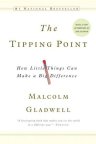
June! Wah! It’s winter here downunder and I’m miserable. Give me summer anytime. Just as well there are books to distract my mind … and one great distraction is playing with the Six Degrees of Separation meme. It’s currently hosted by Kate (booksaremyfavouriteandbest). Please click the link on her blog-name for her explanation of how it works. The book she’s chosen for this month is a non-fiction work, Malcolm Gladwell’s The tipping point: How little things can make a big difference. I haven’t read it, but I have read all the linked books.

Malcolm Gladwell, The tipping pointI know Malcolm Gladwell has made a big splash with several of his books, including Blink, The tipping point, and Outliers but I’ve read none of them. You all probably know who Gladwell is, but just in case you don’t, he’s a British-born Canadian journalist …

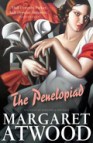
Margaret Atwood, The PenelopiadAnd so it is his Canadian-ness that I’m going to use for my first link – to Margaret Atwood’s The Penelopiad (my review). This book is Atwood’s retelling of The Odyssey – or of part of it anyhow – from Penelope’s point of view, thereby giving the story a female or feminist perspective.

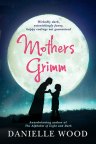
Danielle Wood, Mothers Grimm, book coverA very different approach to retelling – but also from the female perspective – is Danielle Wood’s collection of stories, Mothers Grimm (my review). In these stories, Wood doesn’t so much as retell stories – in this case fairytales by the Brothers Grimm – as springboard from them to explore aspects of modern motherhood. Like Atwood’s book, there’s humour in its bite, and I love bringing it to people’s attention.

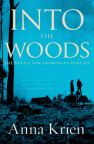
Anna Krien, Into the woods

My next link is a bit cheeky. Danielle Wood is a Tasmanian author, while Anna Krien is not – but, her non-fiction book Into the woods (my review), is about forestry and the logging industry in Tasmania – and it has “wood” in the title. How could I resist that link?

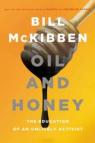
Bill McKibben, Oil and Honey

Now, like a good blogger I carefully categorise and tag my posts, and one of the tags I’ve given Krien’s book is “environmental literature”. Another book I’ve so tagged is Bill McKibben’s Oil and honey (my review) about, as the subtitle tells, his education as an activist – in the climate change area. It’s a fascinating book about a man who would much rather be writing in his office than out on the hustings.

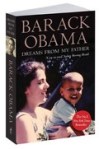
Barack Obama, Dreams from my fatherBill McKibben’s book reminded me – at least somewhat – of another American book about its writer’s development of (or growth into) his political identity, as conveyed by its subtitle, “a story of race and inheritance”. The book is, of course, Barack Obama’s Dreams from my father (my review).

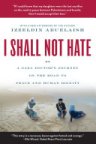
Izzeldin Abuelaish, I shall not hateI read Dreams from my father with my reading group. Another politically motivated book that my group read, also by an admirable man, was Izzeldin Abuelaish’s I shall not hate (my review). This book is by a Palestinian doctor who lost three daughters and a niece in an Israeli bombing of Gaza. His response was not revenge, not “the path of darkness” but the “path of light”. I would love the think I would choose the same in a similar position (but I hope I never get tested!)

We have – again – spent most of our time in Australia and North America, but we did manage to make a brief foray to the Middle East. The gender balance, though, this time is 50:50 (excluding the starting book which I didn’t choose!) Also, unusually for me, the majority of the books this month are non-fiction. This is probably not surprising given the starting book, except that my first two links from it were fiction!

And now, my usual question: Have you read The tipping point? And regardless, what would you link to? 

Richard Flanagan, First person (#BookReview)

Richard Flanagan, First PersonRichard Flanagan’s latest novel First person, which I did with my reading group, is a challenge to read. By this I don’t mean it’s “hard” to read but that it requires careful attention to pin down. On the surface, its subject is straightforward. It’s the story of struggling as-yet-unpublished writer, Kif Kehlmann, who accepts the job of ghost-writing a memoir for a con-man, Siegried Heidl. It’s autobiographically-based in that Richard Flanagan himself did just this for the fraudster or imposter John Friedrich, who headed the National Safety Council of Australia. However, the novel takes off in directions far removed from Flanagan’s life. At least, so I believe, though as Kif very quickly learns, how do we know what to believe! Who to trust!?

Anyhow, why write this now, 25 or more years after the events? Well, the title might give you a hint, as well as the subject matter … but, it is a tricksy book, starting from its very nature as a pseudo-memoir about a ghost-written memoir. If you know Flanagan, you’ll know he’s setting himself – and us – up for quite a ride. It’s a complicated ride, and perhaps got a little sidetracked at times, but is nonetheless fascinating …

“ceaselessly self-making”

The story describes, in Kif’s first person (ha!) voice, his experience of ghostwriting Heidl’s memoir and its aftermath. The ghostwriting task doesn’t go well, with Heidl evading Kif’s attempts to obtain the information he needs. Flanagan describes this with the wonderfully evocative language that we love reading him for. “I may as well have used a pair of scissors to pick up spilt mercury”, he writes of his early attempts to get some facts. He tries a different method: ask some direct questions, write up his understanding of the answers, and then check his version with Heidl:

The more outlandish, the less related my story was to the few, vague facts he had outlined, the more ludicrous I was, the more pleased Heidl seemed, and the more he would claim that it accorded exactly with his own memory.

After which, apparently, Heidl would contact 60 Minutes or some other program or newspaper, to line up “paid interviews about himself on the basis of such inventions.”

You can perhaps see where this is going in terms of my Why now question. It’s that Heidl (Friedrich) was continuously reinventing himself. Sound familiar? Heidl lived “in a constant state of transformation”. The end result, as Kif sees it, is that Heidl, “the great story maker … was everywhere present in his creations but nowhere visible”. He was not, as Kif tells it, “so much a self-made man as a man ceaselessly self-making”. This narcissism, this solipsistic way of being in the world, this mania for self-invention, makes this book relevant now.

“Trust is the oil that greases the machine of the world”

The other main issue relating to the Why Now question concerns trust. Heidl was a con-man, which means of course that he played on people’s trust. And my, he did it with bells on. He managed to defraud banks of $700 million by, for example, convincing them that he had a fleet of shipping containers (CIRILs) full of the technology and equipment required for responding to disasters. Heidl says, continuing the heading quote above:

Even people we hate we trust. That’s how it is. And, amazingly, mostly it works. The bankers trusted that the CIRILs were real, that ASO was real, until finally it was real. Like you trust the mechanic did service the car or that the bank is honest; like you trust that the people who run the world know what they’re doing …

Every day now, every single day it seems, we are confronted with organisations and individuals failing to live up to our trust – the churches, the banks, the police, the politicians. This is why, it’s patently obvious, Flanagan wrote this story now.

The novel, then, is about what happens when we buy into this world of make-believe. And it’s not pretty. In the book it is most vividly exposed, at the personal level anyhow, through what happens to Kif during and after his writing of the book. The more time he spends with Heidl, the more he finds himself, against his will, being drawn into Heidl’s world and starting to “think like Heidl”, until finally “all that divided him from me evaporated.” You’ll have to read the book yourself, if you haven’t already, to see how this plays out.

“The novel is dead”

The book is also an apologia for fiction. Like Flanagan, Kif was a struggling novelist when he accepted the ghost-writing job. It’s something that Heidl regularly throws back in his face, whenever Kif questions his truths. Why is a fiction writer, Heidl asks him, concerned about truth and facts when what he does in fact is lie? Hmm … I’d tell him there’s lying and there’s story, and that the former obfuscates while the latter illuminates, but he probably wouldn’t believe me!

Near the end, an entertaining (there’s much humour in the book in fact) but significant set piece occurs when, visiting New York decades later, Kif meets a young writer. She’s in her late twenties and has just published the third volume of her autobiography. The novel, she says, “as a mode of narrative“, is dead:

It’s fake, inventing stories as if they explain things … Just the thought of a fabricated character doing fabricated things in a fabricated story makes me want to gag […] Everyone wants to be the first person. Autobiography is all we have.

Kif says he doesn’t agree … and nor does Flanagan, which he demonstrates most obviously through the very act of writing this story as a novel not a memoir. Fiction, he shows, facilitates the exploration of alternatives, the asking of questions.

Overall, I loved Flanagan’s exploration of our current mania for self and of the issues surrounding truth and our desire (need, even) to trust. I also enjoyed Flanagan’s language. But when I got to the end, I couldn’t make it fully cohere. This is partly to do with the breadth of targets and topics, of which I’ve only touched the surface here. It felt at times that Flanagan had a few points to make – scores to settle even – regarding, for example, publishing and writing in Australia. These confused the main thrust a little – though maybe I have conflated Kif with his author! Finally, the second part of the novel, post Heidl’s death, could have been tighter. Kif’s life diverges significantly from that of his model, Flanagan, and is explored at some length. It’s perfectly logically developed, but the “message” started to feel a little laboured.

Nonetheless, First person is well worth reading – for its (novelistic) insight into that time in Flanagan’s life not to mention into a fascinating episode in Australia’s history; for its intelligent exploration of some critical issues that don’t seem to be going away; and for Flanagan’s marvellous prose. I should probably read it again.

Lisa (ANZLitLovers) loved this book.

Richard Flanagan
First person
North Sydney: Knopf, 2017
392pp.
ISBN: 9780143787242