Monday musings on Australian literature: Australian novels adapted for opera

Today’s post is inspired by an article, “Fly away Peter: When Australian literature goes to the opera”, published in May this year in The Conversation. Written by Associate Professor of Vocal Studies and Opera at the University of Sydney, it was inspired by the production of an opera based on David Malouf’s wonderful novel, Fly away Peter.

Now, as some of you may remember, I’ve mentioned Fly away Peter several times in this blog, one being in my second Monday Musings post. Fly away Peter is one of my favourite Australian novels and is also one of a fairly select group of Australian novels dealing with the first world war. I have also mentioned David Malouf in relation to opera before, most recently in a Monday Musings post on Australian novelists and poets who have also written libretti. Malouf has written a few libretti, the most famous being for Patrick White’s Voss, about which I wrote in a post on The Voss Journey. You can probably see, by now, why I was interested in Halliwell’s article.

Halliwell discusses a number of Australian novels/short stories that have been adapted for opera – and I’m going to share them here, in alphabetical order by novelist (with links to my reviews, where I’ve done one):

  • Barbara Baynton’s “The chosen vessel” (my review) was adapted by Australian-British composer and festival director, Jonathan Mills, with libretto by Australian poet Dorothy Porter. It was retitled The ghost wife and premiered in 1996. Halliwell writes that “Baynton’s bleak story, debunking the dominant male myth of the noble bushman, was translated into a confronting music theatre work”. It was performed in Melbourne and Sydney, and had, says Halliwell, a “well-regarded run in London”.
  • Peter Carey’s Bliss was adapted by Australian composer Brett Dean, with libretto by British librettist Amanda Holden. It premiered in Sydney in 2010 to a positive reception, says Halliwell, and was similarly positively received in Melbourne and Edinburgh. It was later presented, in a new production, in Hamburg, under Australian conductor and supporter of the work, Simone Young.
  • Helen Garner’s The children’s Bach (my review) was adapted by Australian composer Andrew Schultz, with libretto by Australian librettist Glenn Perry. It premiered in Melbourne in 2008. Halliwell describes it as “a lightly-scored and evocative chamber opera which took the central metaphor of the fugue from the novel”.
  • Patrick White’s Voss was adapted by Australian composer Richard Meale with libretto, as I’ve already said, by David Malouf. It premiered at the Adelaide Festival in 1986. Halliwell says that it was “hailed at its premiere in 1986 as the ‘Great Australian Opera'”, but it has never been produced again – at least not yet. There have been attempts to adapt Voss for film but some have argued that, while its mystical, visionary aspects translate well to opera, this is not so easy for film.
  • Tim Winton’s The riders was adapted by Australian composer Iain Grandage with libretto by Australian poet, novelist, playwright and librettist, Alison Croggon, It premiered in Melbourne last year (2014). Matthew Westwood wrote in The Australian that “Grandage uses a hunting instrument — the horn — to evoke a man’s odyssey across Europe for the wife who has deserted him. (Frustratingly for that man, Scully, and many of Winton’s readers, the elusive Jennifer never appears.)” Oh dear. I must say that The riders is one of Winton’s least memorable works for me – and I don’t think I’m the only one to feel that way. However, the adaptation was very positively received, says Halliwell.

Alison Croggon is reported in The Guardian as saying that although it’s daunting, it’s logical to write libretti if you write poetry. This makes sense to me: rhythm is critical to poetry, songs and music. Three of the five librettists here – Porter, Malouf and Croggon – are poets.

Halliwell commences his article by quoting Malouf’s statement that “No libretto can reproduce the novel from which it is drawn”. Grandage and Croggon like to call their opera “a reimagining rather than an adaptation”. I’d argue that this is true of all adaptations of a work from one form to another. It’s surely unrealistic to expect a work to be the same. The challenge for the adaptation is to decide what is the essence of the work and to convey that – and for audiences to see if they agree!

Anyhow, if you are interested more widely in the subject of novels adapted for opera, you can check out this Wikipedia category page. It’s by no means complete – indeed not all of the operas I’ve listed here are included.

I’d love to hear whether you have seen any operas adapted from modern novels. Or, do you have a favourite novel you’d love to see adapted for opera?
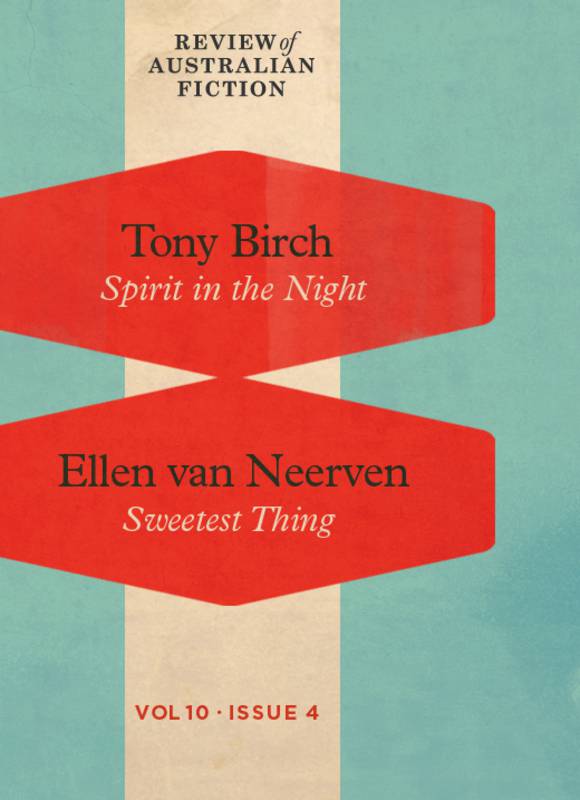
Tony Birch and Ellen van Neerven in Review of Australian Fiction 10 (4)


Review of Australian FictionI have been wanting to write about the oddly titled Review of Australian Fiction for some time. I say oddly titled because, contrary to what it might sound like, this does not contain reviews but short fiction. Established in 2012, it is published, electronically (or digitally), every two weeks. Each issue contains two stories by Australian authors: one by an established author, and the other by an emerging author, chosen by the established author. Funnily, in the issue I’m reviewing here, it’s the emerging author, Ellen van Neerven, whom I’ve read before, not the established one, Tony Birch. But, I’m so glad that Lisa’s Indigenous Literature Week has given me the opportunity to a) finally read something by Birch, and b) finally read Review of Australian Fiction issue.

Tony Birch, “Spirit in the night”

Birch’s story is told first person by a young indigenous boy, the 11-year-old Noah Sexton. He’s dirty, smelly, poorly dressed, and no-one wants to know him – except the new girl, Heather, who invites him to sit next to her. She’s “the cleanest person I’d ever seen” with “no pox rashes, bites or scars like I had”. At lunchtime, Heather offers the hungry Noah a sandwich and engages him in conversation. She asks him why he sits alone, and he gives the classic reply:

‘I sit here because I’m a Sexton.’

She doesn’t know what that means of course. When he discovers that her father is the policeman “in charge of the station”, he assumes:

Our mob was well known to the police, and I knew straightaway that as soon as her father got the story on the family name, she wouldn’t be sitting under any tree offering me a vegemite sandwich.

But, it doesn’t quite work out the way he expected. When he explains to the friendly Heather that he’s from “the only abo family left in town”, she tells him that “abo” is “a dirty word” and that “people like you, we call them half-castes. It’s more proper”. Noah disagrees, telling her that “an abo’s an abo, no matter how black or white he is … Far as whitefella is interested, the shit smells just the same.” Heather shows discomfort at this language, but Noah doesn’t care. He’s “beginning to think she was only another do-gooder”. He tells her about how his people have been treated in town, but Heather tells him her father will be different, that “he’s always fair, to both sides”. Not surprisingly, Noah is (silently) sceptical. Nonetheless, this little bit of kindness from Heather brings out a new sense of self in Noah – he doesn’t wolf down the sandwich, pretending he has a few manners, and when he gets up to go into school after that first lunch he dusts his pants off “for maybe the first time in my life”.

And so Heather spends most lunchtimes with Noah, because she’s a Christian and it’s “a sin to turn away from those in need”. Noah doesn’t like being seen as a “charity case” but is so enamoured of Heather that he’ll “put up with anything”. Understandable, given his treatment at school before.

I won’t describe any more. This is a clever story about do-gooders. Birch has astutely chosen for his protagonist a young boy on the cusp of puberty. Noah, straddling that line between childhood and adulthood, has a sense of his agency, and yet not quite the experience, nor the resources, to insist on enacting it. It’s a story about confused emotions, and about smugness and self-satisfaction. It’s about the right to dignity, and, of course, about power.

Ellen van Neerven, “Sweetest thing”

awwchallenge2015Unique, original, fresh are words I avoid when writing reviews, not only because they feel cliched but because they can be contested by anyone whose reading experience is wider than mine. So, instead, I’ll just comment on Ellen van Neerven’s capacity to surprise. I found it in her Heat and light which I reviewed earlier this year, and in “Sweetest thing”.

“Sweetest thing” is a third-person story about Serene, the child of an indigenous mother and the town’s Dutch baker. She is addicted to having her breasts suckled. It all started in puberty (“that pertinent time of a woman’s life”) with her first experience of having a man suckle her breast occuring with a male tutor when she’s nearly fourteen. He lifts up her shirt:

Beautifully out of herself, she was open and messy and dislocated like a bouquet being readied for a vase, flowers, stems, spores spread everywhere.

Nothing else happens besides this suckling, but Serene feels “bliss” and “knew then that this was what she had been programmed to need”. Slowly, as Serene schemes and positions herself to have her need met, we learn about loss. We learn, for example, about the Kedron pub, which “had refused Serene’s grandparents entry” but which is now

a haunt for women of her mother’s ilk: divorced, discarded, with loose threads of long silent and secret relationships carried under their shirts.

Under their shirts. A reference to their breasts? We learn about the gradual withdrawal of her father as he starts to focus on his “real daughter”. Serene feels anger at “the silence in her life, at his hypocrisy”.

Born into this in-between world – not quite rejected as her grandparents were, but not fully accepted either – Serene believes she deserves “comfort, worship, devotion. Trust and understanding”, but fears “hollowness”.

And so, her life progresses through school and early womanhood into mature adulthood. She has friends, she experiences casual sex, she becomes a masseuse – but still there’s the need for suckling, to have “the most basic of her needs met”. Again, I’ll leave the story here. It’s longer than Birch’s and spans a few decades of Serene’s life, which includes a meaningful relationship and a successful career.

“Sweetest thing” is an edgy story. Serene’s unusual addiction works as a rather confronting metaphor for what all humans need – love and acceptance. What I like about Van Neerven, here and in Heat and light, is that her indigenous characters are not “types”. Their indigeneity is part of who they are, and is fundamental to the challenges they confront, but her characters are also “universal” – that is, they are needy, flawed characters who muddle along, just as the rest of us do, in the lives they find themselves in. It’s powerful stuff.

ANZ_ILW2015Read for ANZLitLovers’ Indigenous Literature Week.

Tony Birch, “Spirit in the night”
and
Ellen van Neerven, “Sweetest thing”
in: Review of Australian Fiction 10 (4), May 2014