Shadow Man Asian Literary Prize 2011: Reviews from the week December 4-10

Shadow Man Asian Literary Prize 2011 Badge

Image created by Matt Todd of A Novel Approach

Week 4 of our Shadow Man Asian Literary Prize 2011 longlist reviewing project and we’re moving along with …

  • Jamil Ahmad’s The wandering falcon (Pakistan) by Stu of Winston’s Dad. He, like Lisa who has already reviewed it, liked it for what he felt to be its authentic portrayal of the tribespeople of an area that now encompasses parts of Afghanistan, Pakistan and Iran.
  • Tahmina Anam’s The good Muslim (Bangladeshi) by Lisa of ANZLitLovers. She liked it a lot. Her description of the way it explores the domestic (personal) and the bigger picture (political) – and the fact that it’s a Bangladeshi novel – have tempted me!
  • Rahul Bhattacharya’s The sly company of people who care (India) by Fay of Read, Ramble who calls it “a captivating first novel”. It’s about a cricket journalist who goes to Guyana for a year … that in itself intrigues me!
  • Anuradha Roy’s The folded earth (India) by Matt of A Novel Approach. He’s impressed, with reservations.
  • Tarun J Tejpal’s The valley of masks (India) by Lisa of ANZLitLovers. She says “It’s not for the faint-hearted, but it is an outstanding book.”

I hope you are finding this an easy way to keep up with the team reviews … and that what I’m doing here is not redundant. The last thing I want to do is post for posting’s sake. (And, I know you won’t believe a word I say, but my first Man Asian review will appear next week!)

Meanjin’s Tournament of Books 2011, Finale

… and now we have a winner! Those of you who have been following the tournament will know that the two books facing off in the Finale were Helen Garner‘s The children’s Bach and Joan London‘s Gilgamesh. I would not have guessed this at the beginning (and neither, they say, did the organisers). Not because these aren’t great books – I’ve read them both – but because they are not the ones on the top of people’s tongues (like, say, My brilliant career) or the ones with critical weight behind them (like, say, The man who loved children or The fortunes of Richard Mahony). That said, I’m surprised but not sorry, because it’s no bad thing to expose other works to wider attention. The question is, will they get it?

Anyhow, onto the finale. It was judged a little differently: there was a panel of 5, with each giving a brief reason for his/her vote. You can read their reasons on the Meanjin site, because here I’m simply going to announce that the winner.  And it is, drum roll please, with 3 votes to 2,  Zombie Round returnee, Helen Garner’s The children’s Bach.  I’m happy – after all it’s one of the few from the original list that I’ve reviewed on this this blog. It was a reread too, which tells you something: Garner is a great writer.

The real question, though, is what happens next? Has the Tournament achieved anything for Australian literature, and Australian women’s writing in particular? Is it worth doing again next year? Well, I’m not sure. Leaving off the question concerning the merits of judging books, and looking at it from a consciousness-raising point of view, which were, I believe, its main goals, did Meanjin‘s Tournament achieve what it set out to. I fear it didn’t … and that I suspect is due less to the tournament itself than to lack of promotion of it. I didn’t see or hear much buzz about it around the traps – in neither the formal print and electronic media nor in less formal places like blogs.

Appropriately, the following quote from The children’s Bach has some application here:

Like many women of her age whose opinions, when they were freshly thought and expressed, had never received the attention they deserved, Mrs Fox had slid away into a habit of monologue, a stream of mild words which concealed the bulk of thought and knowledge as babbling water hides submerged boulders.

I fear that, like Mrs Fox’s wisdom, the submerged boulders of good Australian literature have stayed submerged … what must (can) we do to expose them?

Delicious descriptions from Down Under: Andrew O’Hagan’s Maf meets some bedbugs

I can’t not share at least one humorous little treasure from Andrew O’Hagan’s The life and opinions of Maf the dog and of his friend Marilyn Monroe, because I think my review focused a little too much on the serious.

Some of the delights of the book, if you suspend your disbelief, can be found in the conversations Maf has with other critters, such as squirrels, spiders, bedbugs, ants, flies, cats, and of course other dogs. There are some gems, with their point usually being how much more together, or knowing, these critters are than the humans around them. Take, for example, the bedbugs Maf meets while Marilyn is in the Columbia-Presbyterian hospital:

There were bedbugs. I saw them and immediately assumed they were little Karamazovs. I don’t know whether it was the general environment, or the condition of the people they’d been close to, but the bedbugs had a perfectly Russian attitude, seeming to doubt the reliability of everything. ‘We admit it is our time,’ said one of the bugs in a mournful way. ‘Russian values, if we may speak of anything so nebulous and bourgeois as values, are understood, in America as elsewhere, to be a central feature in what we might call the great duality and contradiction of the age.’ He meant the Cold War. ‘The Americans envy us. They are fascinated by Russian literature’.

‘And what has that to do with you?’ (Sorry to have been so rational, but on these visits I’d spent a lot of time around very rational young doctors. And the times were paranoid: I thought they must be spies.)

‘We are weaned in hospitals. In flop houses. In asylums. In cheap hotels and in housing projects. Our soul is Russian.’

‘But you are Americans, right?’

‘No,’ said a tiny voice, ‘we are bedbugs’.

That punch-line says it all! There’s more to unpack in this little interlude … some of which makes more sense in the context of the book. Still, there’s enough here to give you a sense of this kinda-out-there book which, as Maf tells us, continues the tradition, established in prose fiction by Cervantes, of animals speaking about humans.

Monday musings on Australian literature: Women of letters

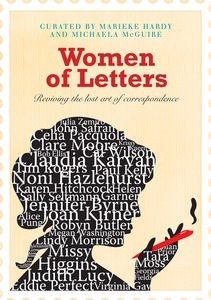
Women of Letters, edited by Marieke Hardy and Michaela McGuire

Women of letters (Courtesy: Penguin Books Australia)

Letter-writing has a long literary tradition – both fictional and non-fictional. Epistolary novels, according to Wikipedia, go back to the 1400s, and I’m sure if you’re a reader you’ve read at least a few. My favourite Australian example is a gut-wrenching young adult novel Letters from the inside by John Marsden. But these are not my topic today. The other sort of letters are the “real” letters written to “real” people. If the letters are good enough and/or the people significant enough these also have a long publishing tradition. I’ve reviewed some here – by Jane Austen (of course)! Collections of published letters can be found for some of Australia’s famous women writers, including Christina Stead, Henry Handel Richardson and Miles Franklin. But these aren’t today’s subject either.

My subject is a specific book of letters compiled by two Australian women, Marieke Hardy and Michaela McGuire, from an initiative of theirs in which they asked Australian women (initially) to “‘pen’ letters to a theme and read them aloud”. Their aim was to raise funds for Edgar’s Mission, “a not-for-profit sanctuary for neglected, discarded and abused farmed animals” in Victoria. Their project commenced in March 2010, and has involved live “shows” in several Australian cities – and now, this book.

The letters have been organised under 16 “recipients”, such as “To the night I’d rather forget”, “To my first boss”, and “To the photo I wish had never been taken”, which gives you a sense of where this collection is going. They are written by 69 well-known (though not quite all so to me) Australian women (mostly!) writers, performers, politicians and so on. I will admit that I have not read the whole 400+ pages book yet, but with Christmas around the corner and a good cause, now seemed to be a good time to write about it. (No, I am not under a retainer for Penguin!). Three of the contributors are writers I’ve reviewed in my blog, so I reckon they’d be a good place to start:

  • Anna Krien “to my first pin-up”. Trouble was Anna Krien was a tomboy and not like other little girls. When they wanted “love”, she wanted friends, so she turned to her cat, Tiger. It’s a light-hearted letter with a serious core about the damage that little girls can do to little girls (“the twisted best-friend bully dichotomy”), something Margaret Atwood explored to great effect in Cat’s eye.
  • Alice Pung “to the moment it all fell apart”. It contains anecdotes from her latest book, Her father’s daughter, presented as a letter to her father. She leads us on about an online relationship only to … but I won’t tell what, except to say it’s to something typically reflective of her and her father’s experiences.
  • Helen Garner “to the letter I wish I’d written”. That sounds like an apposite recipient for a writer who has never shied from controversy – but in fact, being Garner, her contribution isn’t the expected. Rather, it’s a series of letters to her “gazombies”, to people who’ve died, friends who’ve suddenly disappeared from her life, and people who crossed her path but became missed connections. They’re “fragments” that add up to a disjointed but very Garner-ish whole. She thanks the science teacher who taught her that “hot air rises”, she’s sorry that she lost contact with her “nanna” because “my adolescence extended right into my thirties”, she tells a man she regrets not accepting his offer to dance because blokes who can dance “are very thin on the ground”, and she writes to her three ex-husbands thanking them for what they gave her and telling them “there is nothing to forgive”.

There are a few contributions from men, mostly “To the woman who changed my life”. There are light-hearted letters such as actor Jane Clifton’s to her “1991 Nissan Pintara with only 20 000km on the clock” that she calls “the Nissan Piñata, because no matter how many times you get hit, you are the gift that keeps on giving”, and singer Georgia Fields’ to Mariah Carey telling her that “next time I’m at a party and your name comes up, I’m not going to sit quietly and pretend I don’t know you …”. But, I’ll conclude with actor Claudia Karvan’s letter to love, itself, in the “A love letter” section. It’s a cheeky little number telling love she is “eternally grateful for your landing on my shores” but suggesting:

You have a strange habit of departing, and departing quite swiftly. So quick your footsteps aren’t heard. No doorbell sounding the arrival of your cab, just bang, you’re gone […] You really are quite the magician.

This is, as you’ve probably worked out, a book for dipping into. The letters might be artificially created but there’s a lot of art in them – of letter writing, of life. Just the thing, really, for a post-Christmas read.

Do letters play a role in your life? Do you like to read them? Do you write them?

Marieke Hardy and Michaela McGuire (curated)
Women of letters: Reviving the lost art of correspondence
Camberwell: Viking, 2011
413pp
ISBN: 9780670076093

(Review copy supplied by Penguin Books Australia)

Shadow Man Asian Literary Prize 2011: Reviews from the week November 27 to December 3

Shadow Man Asian Literary Prize 2011 Badge

Image created by Matt Todd of A Novel Approach

Week 3 of our Shadow Man Asian Literary Prize 2011 longlist reviewing project brings you …

  • Mahmoud Dowlatabadi’s The colonel (Iran) from Lisa of ANZLItLovers. This sounds quite different in style and structure, but worth reading, particularly since it’s from a country whose literature is little known to me.
  • Yan Lianke’s Dream of Ding Village (China) from Matt of A Novel Approach, and Yan Lianke’s Dream of Ding Village (China) from Fay of Read, Ramble. Matt and Fay have inspired me with their reviews to put this on my high priority list.

Ad hoc Man Asian News

kimbofo of Reading Matters advised us earlier this week that Wandering falcon won  the Shakti Bhatt First Book Prize 2011. Does that suggest it might be a high contender for the shortlist?

PS: My promised review didn’t eventuate this week as I’ve been in Sydney for the weekend. But I’ve nearly finished my first book, so my review is not long coming!

Meanjin’s Tournament of Books 2011, Zombie Rounds

Just one round of Meanjin‘s tournament of books to go … after this one, that is.

The Zombie round comprises the winners of Semifinals 1 and 2 being pitted against the books returned to the fray by reader vote in the Zombie poll (on which I reported at the end of the Semifinals post).

Zombie Round 1: Joan London’s Gilgamesh defeated Alexis Wright’s Carpentaria

Well, hmmm … I don’t have a particular problem with the winner here as they are both very fine books. I love Gilgamesh and would not be sorry to see it win, though I did have a slight preference for Carpentaria because of the “bigness” (to use my best litcrit terminology) of its idea/s and language. It is a larger than life novel that takes you on a very wild ride. And it explores some of the conflicts and challenges faced by contemporary Indigenous Australians, something we need to see more of in our contemporary literature. But, this judging was odd. Firstly, the judge was First Dog on the Moon, the pseudonym of Andrew Marlton, the cartoonist for the independent electronic magazine Crikey. This is fair enough, but he got his facts wrong. He described the two books he was judging as “zombie” books. However, only one is. And then, the judging took the form of a cartoon. It was just a little too light-hearted, a little too minimal … but perhaps, really, he took just the right tack. We’ll get a winner in the end but we all know, don’t we, that all the books are winners!

Zombie Round 2: Helen Garner’s The children’s Bach defeated Miles Franklin’s My brilliant career

Ah well, the grand old dame of Australian literature, the bequeather of our (arguably) most important literary prize, has been toppled off her perch by the zombie! Just shows it’s never over till it’s over, eh? Lorelei Vashti, the judge, uses some rather odd criteria to make her decision – she likes the old-fashioned (or, is that, oldfashioned) way Garner’s book used “ear-rings” for “earrings”; she believes (and gives examples) that men called Harry always get the girl but Franklin’s Sybylla rejects her Harry for a career! In the end, being (semi-) serious, she gives it to Garner because, and I’ll quote:

So, in conclusion: near the end of The Children’s Bach, Philip instructs a girl who is trying to write pop song lyrics: ‘Make gaps. Don’t chew on it. Don’t explain everything. Leave holes,’ and that there is a Garner masterclass; it’s precisely what her book does. You never find her doing something so obvious as, for example, rhyming Harry with marry; this book is all about the gaps and holes.

I do think Garner is a very fine writer, so I won’t argue – though I probably wouldn’t have argued with the alternative either. It’s that sort of tournament after all.

Next …

The Final. Who will win? Gilgamesh or The children’s Bach? Which would you vote for?

Andrew O’Hagan, The life and opinions of Maf the dog and of his friend Marilyn Monroe

Andrew O'Hagan 2009

O'Hagan 2009 (Courtesy: Treesbank, CC-BY 3.0, via wikipedia)

Andrew O’Hagan‘s The life and opinions of Maf the dog and of his friend Marilyn Monroe is a fun – though also serious – book, so I’m going to start with something trivial, just because it will provide a laugh to those who know me:

Like all dogs, I take for granted a certain amount of sanctioned laziness, but beaches, tanning, ice-cream? To me the beach is an unfixed term on a roasting spit, a stifling penance …

Yep, Maf and me, we don’t like beaches*! Enough digression, though … on to the book. First off, I liked it – but how to describe a book that roams so widely yet has such minimal plot? The story is told first person by Maf the dog. Maf (short for Mafia Honey) is a Maltese Terrier who was given (in reality as well as in fiction) to Marilyn Monroe by Frank Sinatra. In the first few chapters Maf moves from Scotland, where he is born, to the home of Vanessa Bell and Duncan Grant (of the Bloomsbury set), to the Los Angeles home of Natalie Woods’ parents, to Frank Sinatra to … well, you know who now. In the rest of the book we follow Maf as he lives with Marilyn Monroe, in New York and Los Angeles, in the last couple of years of her life.

The book though is less about Marilyn Monroe (that “strange and unhappy creature”) than it is about America and the author’s exploration of the issues that occupied, or typefied, America in the early 1960s. They were years of hope and excitement, when people believed they could (re)make themselves (“Let me start again” say the migrants coming in through Ellis Island). John F Kennedy was elected in 1960 and the Civil Rights movement was about to take centre stage. But Maf sees the American paradox, sees that the ideals of liberty and happiness are by no means assured.

A repeated motif in the book is that of interior decoration – and its literal meaning can be overlaid with something a little more symbolic:

My hero Trotsky would have made a great interior decorator: after all, decoration is all about personality and history, the precise business of making, discovering, choosing the conditions of life and placing them just so. The best decorators finding it quite natural to inject a splash of the dialectical into their materialism.

It’s a clever motif because it encompasses the perspective (the floor) from which dogs (like Maf) see and describe the world, the (often superficial) fascination with home decoration (which sees, for example, Monroe going to Mexico to buy goods that she never unpacks), and the more existential notion of “decorating” or fashioning oneself.

Another motif running through the book is Trotsky. The above quote comes early in the book, but there are many other references, including this one quite late:

Wasn’t he [Trotsky] the god of small things and massive ideas, a cultivator of man’s better instincts? That, my friends, is the greatest work of the imagination: not action, but the thought of action.

Maf sees Trotsky as an enlightened being, who might, just might have shown us the way, had he been given the chance. But, let’s move on, because this book – chockablock as it is with philosophers, artists, writers, actors, critics and politicians – rarely stands still. We are continually on the move, either physically as Maf moves from place to place, or mentally as Maf explores idea after idea, such as fiction and art versus reality, tragedy versus comedy, humans versus animals, interior decoration, psychoanalysis, politics and fame, master versus servant (even in the great democracy). These are not didactically or artificially explored in a let’s-tick-off-another-obsession way. They are neatly integrated into the story as Marilyn, with Maf in tow, experiences the last years of her life. She dines with Frank Sinatra, discusses books with Carson McCullers, is treated by her therapists, attends Lee Strasberg’s Actors Studio, discusses civil rights with JFK, works with Cukor on Something’s gotta give, and so on. As far as I can tell, all the facts of her life presented here are “real” – as are the major cultural movers and shakers depicted within. It can be daunting to confront so many names in such a short space, but there are some good laughs here if you just go with the flow.

While the facts are interesting, however, what makes the book are Maf’s observations. Somehow, O’Hagan manages to imbue Maf with a persona, a voice, that works. It’s not twee or sentimental. It’s a little tongue-in-cheek, it’s knowing, and it’s clear-eyed but with compassion where compassion’s due. Maf notices for example the paradox contained in:

… the upper classes arguing in favor of radical politics while their servants set down their tea in front of them.

One of the issues that crops up regularly is the line between art/fiction and reality, which is not surprising in a book populated with actors and other artists. Early in the book Maf tells us that dogs**:

have none of that fatal human weakness for making large distinctions between what is real and what is imagined.

I like this. I fear that too often we polarise life/reality and art/imagination, particularly in literary analysis. We might express discomfort, for example, with a dog narrating a story about people! We “trust” realism, and we distrust or are uncomfortable with the opposite, with what we deem to be “not believable”.

A little later, playing with this idea from a different tack, he tells us:

We are what we imagine we are: reality itself is the true fiction.

Marilyn’s inability to sort this out probably contributes to her undoing. The book’s title suggests that we will get to understand Marilyn, but we don’t. She is, at the end, as elusive, “unearthly”, “abstracted”, as ever she was … which is probably the most realistic (ha?) way to go!

Maf says Marilyn taught him that:

A novel must be what only a novel can be – it must dream, it must open the mind.

Can’t say better than that … and this book, I reckon, gives it a good shot.

Andrew O’Hagan
The life and opinions of Maf the dog and of his friend Marilyn Monroe
London: Faber and Faber, 2011
279pp
ISBN: 9780571216000

* A footnote, emulating Maf whose footnotes add to the fun of the book. I do like to visit the coast, to look at the sea. It’s the beaches – the spending hours on them – that I don’t like.

** In a footnote, Maf tells us there’s been a long tradition of animals speaking for humans, listing such writers as Cervantes, Orwell, Woolf, Swift, Checkhov, Gogol and Tolstoy, just in case we decide to question a tale told in his voice!