Charles Dickens, On travel

Charles Dickens, On travel

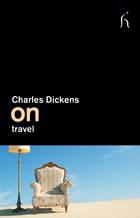
On travel bookcover (Hesperus Press, via LibraryThing)

In the 3rd essay in Hesperus Press’s lovely little volume On travel, which comprises a selection of Dickens’ travel essays, Dickens (1812-1870) makes a reference to Laurence Sterne’s character Yorick. In one of those lovely bits of reading synchronicity, Hungry Like the Wolf posted last week on Laurence Sterne’s A sentimental journey through France and Italy which features said Yorick. In it Yorick lists various types of travellers including Idle travellers, Vain travellers, and Sentimental travellers. Yorick’s type that best suits Dickens would, I think, be his Inquisitive type. However, I think Yorick needed another category to describe a traveller like Dickens: the Observant traveller. (Hmm…I wrote this before checking out the Introduction by Pete Orford. In the first para he praises Dickens’ “talent of observation”. Great minds, and all that!)

There are 6 essays in this slim but rather gorgeously produced volume – don’t you love the allusion to the “armchair traveller” on the cover?:

  • The last cab driver and the first omnibus cab (1836)
  • The passage out (1841)
  • By Verona, Mantua and Milan, across the Pass of the Simplon into Switzerland (1843)
  • A flight (1851)
  • The Calais Night Mail (1863)
  • Some account of an extraordinary traveller (1850)

Reading these reminds me yet again why I love Dickens. I enjoy his acute observation of humankind and his sense of humour. He makes me laugh. Regularly. And then there is his versatile use of the English language. The man can write.

Four of the essays describe train and boat travel, including to America, and to and through Europe. His descriptions of the actual experience of travel and of the various passengers (such as the Compact Enchantress, Monied Interest and the Demented Traveller) he meets on the way are highly evocative. You feel you are on the trains and boats with him because he captures that sense of being tossed about in the sea and of rushing in a train through landscapes and – “bang” (his word) – through stations. But it’s not all sensory – as engaging as that is. There is satire here too – against others, and against himself. For example, in “The Calais Night Mail” he sends up his own love-hate relationship with Calais as well as the behaviour of an English traveller who “thinks it a quite unaccountable thing that they don’t keep ‘London time’ on a French railway”. (It was ever thus, eh?)

The thing about his writing is its diversity – he mixes up his rhythm; he uses allusions, irony and metaphor; he plays with tense and punctuation; and he uses repetition, to name just a few of the “tricks” in his writer’s bag. Just look at the variety in the following examples.

A wickedly satirical description of a man who was transported twice to Australia:

If Mr Barker can be fairly said to have had any weakness in his earlier years, it was an amiable one – love, love in its most comprehensive form – a love of ladies, liquids and pocket handkerchiefs. It was no selfish feeling; it was not confined to his own possessions… (“The last cab driver and the first omnibus cab”)

On a rough crossing to Calais:

I am bumped rolled gurgled washed and pitched into Calais Harbour… (“The Calais Night Mail”)

A description of the Demented Traveller:

Faculties of second Englishman entirely absorbed in hurry. Plunges into the carriage, blind. Calls out of the window concerning his luggage, deaf. (“A flight”)

And then this little pointed comment written in 1863 but alluding to an earlier trip in 1843:

and I recognise the extremely explosive steamer in which I ascended the Mississippi when the American civil war was not, and only its causes were. (“The Calais Night Mail”)

Dickens was, as we realise from the last essay in the collection, more than aware of the horrors of slavery, not to mention the plight of “the fast-declining Indians”. His willingness to express such awareness did not always endear him to Americans but, as Pete Orford writes in the Introduction, Dickens was equally prepared to be satirical of home as abroad.

These essays provide a fascinating insight into how Dickens viewed his world and the people in it, and present wonderful exemplars of his writing. They also demonstrate how widely travelled he was, which, by broadening his understanding of humanity, must have fed his fictional muse too. Orford concludes his Introduction with some lines from the last essay. I can’t really think of a better way to end this than to repeat some of them too. Dickens wrote:

The more man knows of man, the better for the common brotherhood among us all. (“Some account of an extraordinary traveller”)

Some of Dickens’ words and allusions (though there are “notes” in this edition) may be a little obscure now, and some sentence structures are a little complicated to our modern eyes, but if you have any interest in Dickens or travel writing in general, you will enjoy this. I certainly did.

Charles Dickens
On travel
Hesperus Press, 2010
91pp.
ISBN: 9781843916123
(Review copy supplied by Hesperus Press via the LibraryThing Early Reviewers Program)

NOTE: I must apologise for once again hitting the Publish button too early and sending some half-finished gobbledy-gook to your various readers and email accounts. I should either take Tony’s advice and draft in Word or adopt Farnoosh’s recent “Slow down” admonition (to herself), because clearly I’m not getting it right at present! I beg your forgiveness.
Nathanael West, Business deal

This week’s Library of America offering was (or “is” since it’s still this week, but “was” cos I’ve read it – all this tense stuff can be so bothering!) Nathanael West’s Business deal. It’s short, and I’d just finished my novel for bookgroup, so I decided to read it.

I don’t know much about Nathanael West, other than recognising his name, but according to Wikipedia he lived from 1903 to 1940. Another writer who died young – though he wasn’t quite so young as the likes of poor Keats and Stephen Crane, neither of whom even made 30, and he died not of illness but in a car accident. Anyhow, Wikipedia describes West as “author, screenwriter and satirist”. The brief introductory notes accompanying the story say essentially the same thing. These notes suggest that his recognition as a writer comes mainly from his novels, but his money came from his plays. This LOA offering, however, is a short story. It was published in 1933 in a magazine called Americana, which apparently published a lot of satirical writing.

Business deal is about the head of a movie production company, which is rather aptly named “Gargantual Pictures”, planning his next takeovers while at the same time preparing not to pay a very successful young scriptwriter what he’s asking. This is not a subtle story, and neither character is particularly appealing:

The mongoose [the scriptwriter] sat comfortably and waited for the cobra [the company head] to strike again.

Effective image, eh? It is, in fact, a pretty typical negotiation story in which one side holds its ground while the other pulls out all arguments until one of them either capitulates or plays the winning card at just the right moment. I won’t tell which one is which, but if you think of which profession West was you may just work out who wins this particular deal! It’s a humorous if rather predictable story, but it does demonstrate the well-honed skills of a successful satirist. It is worth reading for that.

Andrea Goldsmith, Reunion

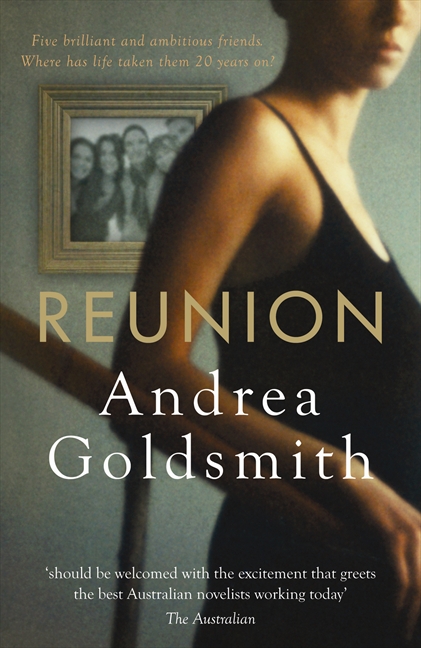
Andrea Goldsmith, Reunion bookcover
Reunion bookcover (Courtesy: HarperCollins Australia)

I wanted to love Andrea Goldsmith’s Reunion. And I expected to, as I remember enjoying the last book of hers that I read. But, somehow, I found it a bit of chore to read, though it did pick up towards the end. I think I understand why it was not listed for the 2010 Miles Franklin Award.

Friendships become swaddled in invisible protective layers and nothing short of a cataclysmic blow can break through to the inevitable stress points beneath.

The plot is fairly straightforward. Four university friends (three students, borderline baby-boomers and now in their mid-40s, and a lecturer, now around 60) find themselves all living in Melbourne again after some 20 years apart. All four had met in Melbourne, had moved together to England to continue studies and work, but had then gone their separate ways. At the beginning of the novel Jack, an academic and Islamic expert, is single and still in love with Ava; Ava, a novelist, is married to the unpopular Harry; Helen, a scientist, is a single parent; and Connie/Conrad, a philosophy lecturer, is on his third marriage but still philandering. Harry, who met them in England, is on the outer, but it is he who has engineered the reunion under the auspices of an organisation he has created, NOGA (Network of Global Australians).

The novel, then, is about this time of reunion: it explores who they are now, and the state of their relationships with each other. Sounds like the sort of thing that would interest me – Melbourne setting, characters with whom I would expect some level of identification, themes exploring love and friendship, and a writer whom I’ve enjoyed before. None of these, I should add, are essential for my reading enjoyment – I also like books set in exotic places and about very different characters – but familiarity often appeals too (doesn’t it?).

And yet, for me the book fell a little flat. It just didn’t feel quite original enough – in either ideas or language. It felt a little same-old-same-old. That said*, I found the characters interesting and convincing, although only one, Jack, changed in any significant way as the novel progressed. The narrative mode is multiple 3rd person subjective, with Jack’s perspective starting and ending it. It is told, chronologically, but with flashbacks to fill in the past. All this is well controlled and keeps the story moving nicely.

Goldsmith ranges across a lot of themes – love and friendship (of course); truth and fiction; secrets and memory; passion and obsession; modern communications; revenge and forgiveness; and science, ethics and politics. It is probably here that the novel palled most for me because many of these themes seem to go nowhere. Take the truth and fiction one. Those of you who read my blog know that I enjoy seeing this issue explored, but in this novel it’s raised, often with a nice level of irony, but is not really developed. For Ava, the novel writer, “there was no better vehicle for truth” than fiction, whereas for the scientist, Helen, “Ava’s work is only fiction – none of it is true”. Well, I thought, Goldsmith will unpack the ironies contained in these, but she doesn’t really. Perhaps that’s OK, perhaps it’s enough for us to notice them, but I wanted more.

At other times, the themes seem more like the author’s soapbox than ideas fully integrated into the story, albeit that the characters are her mouthpieces. Here, for example, is Jack expressing a rather stereotyped view of modern communication:

Whenever Jack looked back to his university experience and compared it with today’s university student life, so much seemed to have changed – even friendship itself. Without computers and mobile phones, face-to-face communication ruled the day.

The implication is that modern friendships are somehow less meaningful, but what does he really know and, further, what does the novel show us about it? Nothing really. Similarly, Helen rages about political interference in science, but the issue, while valid enough, seems a little fabricated in the context of the novel.

There are some funny set pieces, such as the young television make-up artist trying to hide Connie’s aging neck. Goldsmith does irony well – something I, as a Jane Austen aficionado, rather enjoy – and she peppers the novel with a lot of effective literary allusions – to Waugh, Wharton, James, and others. Moreover, there are some lovely descriptions, such as this one on Ava’s discomfort during her first weeks in England: “It was like being stranded on a sheet of clear glass with nothing but blackness underneath”. I’m not sure why I like this, but I do.

I’ve struggled to write this review, really, because there are things to like about this book. I decided to do a quick review of reviews out there and what I mostly found were positive reviews that each had some little reservation: “despite that minor misgiving”, “a rich and at times frustrating novel”, “despite a few stylistic glitches”, and “the novel was marred but not spoiled for me by …”. None though explored these reservations in any depth.

And so, rather than labour any more, I will close with the words of Helen’s teenage son, Luke. He says, in that simple, direct way that the young can do:

The truth can hurt. But that doesn’t make it less right.

The final irony is that Harry is hurt by a truth – but the truth he is hurt by and the real truth of the matter are two quite different things. And that, in the end, made the novel an interesting if not totally engaging read.

For a more positive perspective on this novel, check out Lisa’s at ANZLitLovers.

Andrea Goldsmith
Reunion
London: Fourth Estate, 2009
414pp.
ISBN: 9780732287832

*See my previous post on words to avoid!

Book Review Bingo, or Words to Avoid in Book Reviews

Am I the last to hear about Michelle Kerns list of twenty most annoying book review clichés, published in examiner.com in March last year? I think it flickered across my radar briefly a little while ago but it was brought vividly to my attention last week when Ramona Koval (presenter of Radio National’s The Book Show here in Australia) interviewed Michelle Kerns and salon.com reviewer, Laura Miller. I’m not going to report fully on the interview: you can listen to it here if you want to.

Since writing that article, Kerns has created a “game” called “Book Review Bingo“. It contains 24 clichés – with some changes from the original 20 – and they’re listed below (in alphabetical order so you can quickly locate, or not, your favourites):

  • at once (as in something is “at once a romance and a mystery”)
  • beautifully written
  • compelling
  • epic
  • fully realised
  • gritty
  • haunting
  • in the tradition of
  • lyrical
  • nuanced
  • pitch-perfect
  • powerful
  • readable
  • riveting
  • rollicking
  • stunning
  • sweeping
  • that said
  • thought-provoking
  • timely
  • tour de force
  • unflinching
  • unputdownable
  • x meets x (such as “McCarthy meets Hemingway”)

In the interview, the three speakers (Koval fully engaged in this one) discussed (and disagreed to some degree on) favourite (can you call them that?) clichés. One disagreement concerned “that said”. Miller, and I agree with her, suggested it’s not a cliché but more of a connecting word/phrase, a word you use to move from one point or sentence to another. Miller suggested that “however” is used for similar purposes, and that you would never call it a cliché.

That said(!), my questions to you are:

  • Do you agree with these clichés?
  • What is your view on clichés? Do you actively avoid them? Are there times when you think they can be used?
  • Do you have your own pet clichés (that you use, or hate to see used)?

I do try hard to avoid clichés but I know I don’t always succeed – and sometimes there just doesn’t seem to be a better word. What about you?

And, if you are further interested in the subject, you may also like to read Kerns’ report on Robert McCrum’s (of the Guardian) publisherspeak (aka blurbspeak) list. It will make you laugh, if nothing else.

Stephen Crane, When man falls, a crowd gathers

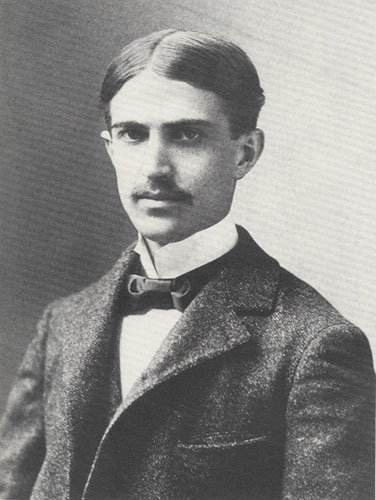
Stephen Crane

Stephen Crane (Presumed public domain, via Wikipedia)

This week’s Library of America offering is a sketch/article by Stephen Crane. Now, while I suppose most Americans have read what I believe to be Crane’s most famous work, The red badge of courage, I’m afraid I haven’t – and so, when this opportunity to read something by him arose, I was more than happy to take the opportunity. You can too, by reading it here. (It’s well worthwhile, and is less than 5 pages.)

According to the Library of America’s notes, the story was published in 1894 in The New York Press under the following heading:

When man falls, a crowd gathers
A Graphic Study of New York Heartlessness
Gazing with Pitiless Eyes
“What’s the Matter?” That too Familiar Query

That pretty much sums it up really. The notes also say that it was based on a real incident. It’s a simple story: a man and a boy are walking in the street one evening, when the man suddenly falls to the ground. Immediately a crowd gathers, ready to criticise (“Oh, a jag, I guess”) rather than help. The boy indicates, however, that it’s a fit but this still doesn’t result in any obvious sympathy or assistance. Instead, the crowd pushes closer and closer wanting a view. The language used to describe the crowd’s behaviour leaves us in no doubt as to the intent:

Those in the foremost rank bended down, shouldering each other, eager, anxious to see everything. Others behind them crowded savagely for a place like starving men fighting for bread.

This is writing that pulls out all stops to make its point: the rhythm (“shouldering each other, eager, anxious to…”), the word choice (“savagely”) and the imagery (likening their behaviour to that of survival) work together to create a powerful picture in just two sentences. The language continues in this vein building up a tension between the crowd, which shows more interest in the spectacle, and the helpless boy who is unsure what to do to help his companion. It’s not until halfway through the story that someone offers some help – but still the majority stands by:

There were men who nearly created a battle in the madness of their desire to see the thing.

Meanwhile others with magnificent passions for abstract statistical information were questioning the boy. “What’s his name?” “Where does he live?”

Eventually, a policeman (“a man whose life was half-pestered out of him by the inhabitants of the city”) appears, exhibiting “the rage of a placid cow”. (A wonderful oxymoron that reminded me of Tony’s recent post on the subject.) Gradually, but with continued difficulty described in similar evocative language, the man is helped.

This is delicious writing: it’s almost, but not quite, over the top in the way it piles up the imagery. What saves it from being hyperbolic is that it is, unfortunately, all too believable – for then, and for now. It’s not for nothing I think that Crane titles it “when man falls” not “when a man falls”, making it rather clear that this is not a one-off situation. What a shame Crane (1871-1900) died so young.

NSW Premier’s Literary Awards, 2010

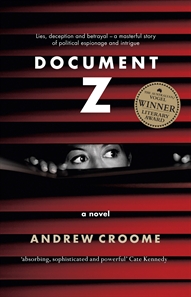
Document Z bookcover

Document Z cover image (Courtesy: Allen & Unwin)

The literary awards season is well and truly here downunder … and last night, just before the opening of this year’s Sydney Writers Festival, the NSW Premier’s Literary Awards for 2010 were announced.

The  full list of winners can be found here, so I’ll just name the critical ones, from my point of view (with links to relevant posts of mine):

  • Christina Stead Prize for Fiction: J.M. Coetzee, Summertime
  • Script writing award: Jane Campion, Bright Star & Aviva Ziegler, Fairweather Man
  • UTS Glenda Adams Award for New Writing for Fiction: Andrew Croome, Document Z
  • The People’s Choice Award: Cate Kennedy, The World Beneath
  • Special Award: The Macquarie Pen Anthology of Australian Literature

Not a bad result from my point of view. I have been meaning for some time to dip into the Macquarie Pen Anthology of Australian Literature properly. I wonder at myself sometimes really. What have I been doing posting on various offerings of the Library of America, when I could (should) in fact be choosing some choice items from this volume to share with you. I really must (want to) rectify this. (That said, another Library of America offering will be winging its way to you soon!)

Anyhow, I’m not going to ramble on about the Awards, but I would like to make one comment, and that is that the People of NSW seem to like what our judges tend to dismiss! Last year, they voted for Steve Toltz’s wonderful A fraction of the whole and this year they’ve gone for Cate Kennedy’s The world beneath. Both these books were longlisted for the Miles Franklin Award in their years, and were well reviewed around the traps, but both were not shortlisted. An interesting state of affairs, n’est-ce pas?

Shaun Tan, Eric

Shaun Tan, Eric cover

Eric bookcover (Courtesy: Allen & Unwin)

When I bought Eric on a whim the other day (as you do!), I didn’t realise that it had been excerpted from Shaun Tan’s Tales from outer suburbia which I haven’t yet read, but have given to others. That’s okay though, because it means  that I’ve finally read a little of Shaun Tan, something I’ve wanted to do for a while.

Shaun Tan is an Australian multi-award-winning artist-writer (or is it writer-artist?) who has published books, worked in theatre and film, and had his work adapted by such luminaries as the Australian Chamber Orchestra. He is one versatile man! His best known works include The arrival (a wordless graphic novel about migrants) and Tales from outer suburbia (an anthology of 15 short illustrated stories about all sorts of strange things that happen in suburbia).

Eric picks up on what I believe is one of Tan’s common themes, that of being different or strange, an outsider. It is about a foreign exchange student who comes to stay with a family in – yes – suburbia, and how they all get along.

Tan’s is not a negative presentation – at least, not here. The mostly monochromatic drawings are whimsical and all focus on Eric, the visiting student, while the text is in the voice of a child of the house. The story is about tolerance and acceptance of what you don’t understand. It’s also about expectations that aren’t met – but accepting the things that happen instead. As Mum says in the book, “It must be a cultural thing”. Overall, it’s about the fact that other can reside with other – and yet it also allows discomfort and incomprehension to be an acceptable feeling.

This sounds like a simple book, and in some ways it is, but it’s not simplistic. Producing it as a gift-edition like this is a lovely idea. It will, I hope, introduce more people to Shaun Tan and his rather unique view on the world. It has certainly whetted my appetite.

Shaun Tan
Eric
Crow’s Nest: Allen & Unwin, 2010
[48pp.]
ISBN: 9781742372921

Musica Viva: The Harp Consort do Carolan’s Harp

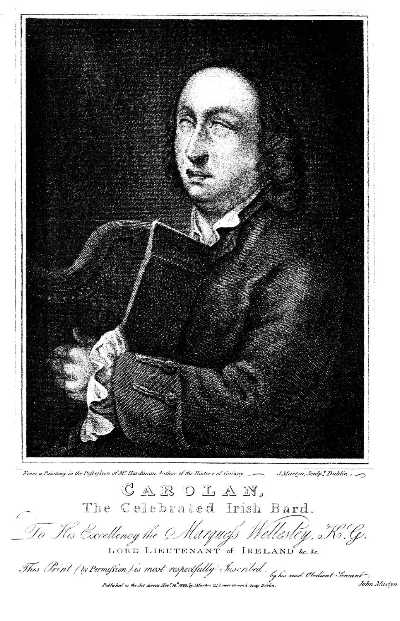
Turlough O'Carolan

Carolan (Presumed Public Domain, via Wikipedia)

Can you pronounce this? Toirdhealbhach Ó Cearbhallaín? Perhaps you’d prefer the English transliteration: Turlough O’Carolan. O’Carolan was a blind Irish harper* who lived from 1670 to 1738, and, according to Wikipedia, is believed by some to be Ireland’s national composer. He was also the composer and subject of this week’s Musica Viva concert.

Carolan’s music, the program notes said, “spans the divide between high art and popular styles and is a mixture of fashionable French Baroque dance forms, including minuets and jigs, combined with ancient Gaelic forms including laments and planxties**”. The Consort’s director, Lawrence-King added, during the concert, that he also incorporated Italian music that was being played in Ireland at the time. A true cosmopolitan it seems.

We’ve seen and enjoyed The Harp Consort before (around 2006), and so I was looking forward to this week’s performance. I was not disappointed. It was, by turns, wistful, humorous, lilting and lively – and thoroughly engaging. Mr Gums did hear one member in the audience suggest that they might as well have been at the Folk Festival! I can think of worse places to be – but this was, really, of a somewhat different ilk, albeit covering some similar ground. Anyhow, if you click on this link, you will hear some music emanating from their website. Go on, do it! If you are disappointed, I won’t expect you back here!

The performers at tonight’s concert were:

Celtic harp

Celtic Harp (Courtesy: OCAL via clker.com)

Before you read on, remember that I am not musically trained and would in no way call myself qualified to comment on technical skill and interpretation. However, this was the perfect performance for one such as me, who loves literature, dance and music, because it incorporated all three. Not only were there songs – with the words (fortunately with translation) printed in the program – but Andrew Lawrence-King told us Carolan’s story throughout the evening’s performance. I particularly enjoy concerts in which the musicians engage directly like this with the audience.

Then there was the dancing. If the other performers hadn’t been so engaging themselves, Steven Player would have stolen the show. He has a wonderful ability – as all good dancers do of course – to inhabit the character of each dance. The dancing style seemed to combine elements of Irish stepdancing and Scottish highland dancing – which probably makes sense since presumably these dance forms have all had some similar roots and influences. Anyhow, whatever it was, Player performed with grace and feeling – and gave his all.

And finally, the music. I have a soft spot for early music – for the lovely melodies and the gorgeous (in looks and sound) instruments. You can see from the performer list above that there was a wide range of instruments played. The music, including several songs performed with a lovely sweet voice by O’Leary, was appealingly diverse, ranging from laments to jigs, from love songs to comic ones.

It’s hard to pick a highlight from such a concert, but, I often find myself drawn to percussion. Metzler was fascinating to watch. He played numerous percussion instruments, including some unfamiliar to me, and a couple of novelty instruments (one to emulate birdsong, another the wind). And he, too, fully engaged with the character of the music he was performing, acting out parts when appropriate.

Overall, what I liked about the concert was the sensitivity with which the Harp Consort played the music, and the energy and exuberance they invested in the performance. It was, as they say, the total package.

Late in the concert came the comic drinking song, “Bumper Squire Jones”. It seems appropriate to end with some lines from it:

Ye clergy so wise

Come here without failing
And leave off your railing
‘Gainst bishops providing for dull stupid drones;
Says the text so divine,
“What is life without wine”
Then, away with the claret –  a bumper, Squire Jones.

None of us needed a claret that night. We were high enough without it.

*Harper: You learn something new everyday. According to Wikipedia, “harper” is used in the folk tradition, and “harpist” in the classical. The Musica Viva program used both, indicating perhaps that this was a bit of a cross-over concert!

**Planxty may, say the notes, have been coined by Carolan. It signifies popular, animated pieces in jig rhythm.

Alex Miller, Lovesong

Alex Miller, Lovesong

Lovesong bookcover (Courtesy: Allen & Unwin)

Lovesong is my first Alex Miller novel, which is a bit embarrassing, really, given that he has won the Miles Franklin Award twice.

John was the quiet type … Except when he was telling me his story. Even then there was something quiet and private in the way he spoke about himself and Sabiha; as if he was telling himself the story; going over it to find its meaning for himself. Looking for something he’d missed when it was happening to him.

As you can probably tell from this quote, Lovesong is one of those story-within-a-story novels. Its basic plot is fairly simple. John, an Australian, tells the story of his life in Paris with his Tunisian wife, Sabiha, to Ken, a retired novelist. Retired? Well, so he says, but can he resist a good story when he hears one?

John and Sabiha’s love story is not exactly straightforward, which is foreshadowed early in the novel when Ken first meets Sabiha and notes “a sadness in the depths of her dark brown eyes”. He begins to wonder about “her story”. Adding a little complexity to this is a loose parallel in Ken’s life. He lives with his 38-year-old daughter, Clare, who during the novel starts a love affair of her own. Sabiha is, coincidentally, about 38 when the “crisis” in her life occurs. There are other parallels in the novel, such as Sabiha’s aunt Houria and her marriage to Dom, and Ken’s marriage to his wife Marie. Again, these are loose. They provide depth and perspective rather than the direct commentary that parallels often seem to do.

This is a surely structured novel. Miller manages to be simultaneously subtle and obvious so that you are conscious of being led along, but you are not always sure where to or what it might mean. Early in the novel, Clare tells her father that “Love is never simple”. A little later, Sabiha’s father reflects on his daughter and wonders, rather more prophetically than he realises, what “makes some people so different from others that they cannot share a common fortune with them”.  Alongside these early thematic hints is a whole slew of comments about story-telling and writing, about story-telling as “confession”, as “craving for absolution”, as, in fact, catharsis. In other words, the novel is also self-consciously metafictional, which is not surprising given that the first person narrator, Ken, is a novelist.

Meanwhile, there is John and Sabiha’s actual story – and again, the plotting is sure. We learn early that Sabiha wants just one child, “her child. There was only one”. And we learn of her closeness to her maternal grandmother. These two things, dropped lightly in the book, play a significant role in the development of the plot.

The novel is full of irony, starting with the title and its romantic connotations being undercut by other sorts of songs. And there is this from Sabiha’s aunt Houria:

Don’t try sorting out the rest of your life tonight, darling. You’ll see, it’ll all work out in the most unexpected ways.

This is doubly ironic because, eventually, Sabiha does attempt to sort out her life, rather than let it work out, and the result, while giving her what she wants, is also not what she expected. What’s that adage? Be careful what you wish for? And yet, that’s not what the novel is about. It’s not a cautionary tale. Rather, without being coy, it’s a meditation on the mystery and power of love – and, I would say, on innocence and experience in its many guises.

But it’s about other things too, such as the importance of home and place. Both Sabiha and John spend much of their lives living away from their respective homes. Ken, at the novel’s start, has just returned from spending time in Venice and is trying to decide whether to return. It’s also about Life – and the inevitability of change: “Change being forced on them, even as they stood still”. John feels it, Ken feels it.

But again and again, we come back to stories and storytelling. Partway through the novel Ken thinks:

There were things I could have added to his story, but I didn’t want to make it up this time. The truth is … I have never really liked making it up. My imagination, such as it is, needs the facts to feed off. I could see the directions I might go in with John and Sabiha’s story, but I resisted. I wanted to hear the truth from John.

And yet, it is not so simple as it sounds. At the end, he wonders:

I had her story now, but it is one thing to have a story and another to write it. How was I to articulate the delicate complexities that must give weight and depth and beauty to her story, those things that most easily elude us?

I found Lovesong an engrossing read. Its writing engaged me, it’s accessible, and it tells a great story, while also exploring the art and meaning of storytelling. I am left though with one question: Whose story is it to tell?

Lisa at ANZLitLovers also liked this book. You can read her review here.

Alex Miller
Lovesong
Crows Nest: Allen & Unwin, 2009
368pp.
ISBN: 9781742371290

We unfold – or do we?

It’s been a while since I reviewed something other than books and writing here, but tonight Mr Gums and I went to the Sydney Dance Company’s performance of We unfold, and so it’s time I thought for another performing arts review.

We Unfold, photo by Tim Richardson

We unfold (Image: Tim Richardson, via twitpic, http://twitpic.com/9up5t )

The choreographer – and artistic director of the company – Rafaela Bonachela describes his creation as follows:

I wanted to create a piece about our needs and desires to slowly unfold, revealing ourselves to those around us … we unfold is collective discovery, a self-examination of our emotional cores. [Program]

The work uses 14 (or so) dancers, and incorporates music by Ezio Bosso, video art by Daniel Askill and costume design by Jordan Askill.

The dancing was beautiful. It was fluid but also had a feet-planted-firmly-on-the-ground muscularity, resulting in a performance that had both strength and beauty. The music was powerful, but perhaps a little too insistent at times. There wasn’t a lot of dynamic range – it seemed either strong and loud, or stronger and louder. The video art, on the other hand, was quite mesmerising, making it sometimes hard to know where to look – at the dancers or the video behind them. The costuming was effectively minimal for a dance about “emotional cores”, with neutral colours and, for the women, light barely-there diaphanous shifts/tops/dresses (take your pick).

So, what was it all about? The video art suggested a range of things. At times I thought I was seeing a progression of the elements: Earth, Air, Fire and Water. At other times I thought I was seeing evolution, or at least its commencement in the Big Bang Theory. Then again, there was also a suggestion of Adam and Eve in two sequences, one featuring a man rising from a crouching position, and the other featuring a woman who was, at the end of the sequence, suspended in mid-air. Perhaps it was all of these? Perhaps it was about all these basic things that make us who we are.

In the program notes, Bonachela said that the work was developed collectively with the dancers by encouraging them to improvise during the creation process. He wanted them to explore their willingness to open up, or not, to each other and said that this resulted in different connections and relationships being developed. There was certainly that. I enjoyed, for example, seeing gender roles played with. Not only did men lift women, but men lifted men, women lifted women, and women lifted men. Dancers moved fluidly from solo to duet, trio and larger groupings – and they did it surely.  Overall, it was a very “ground-based” piece, earthy rather than light and airy. In fact some moves were reminiscent of something primeval (which made me think evolution) but neither these nor anything else seemed to turn into any sort of “narrative”, even in an abstract sense. In other words, the unfolding connections weren’t particularly obvious to us. By the end, we felt like we’d watched a sequence of beautiful, well-executed and very watchable moves, but something that was a bit repetitious or, as Mr Gums so succinctly put it, somewhat one-dimensional.

This is the first time we have seen the company since Graeme Murphy and Janet Vernon (artistic director and associate director) left in 2007 after 30 years with the company. We unfold didn’t grab us quite the same way as previous performances (such as Boxes, Tivoli, GrandThe Director’s Cut) have – but the dancing was excellent, as we’ve come to expect, so we’ll be back.